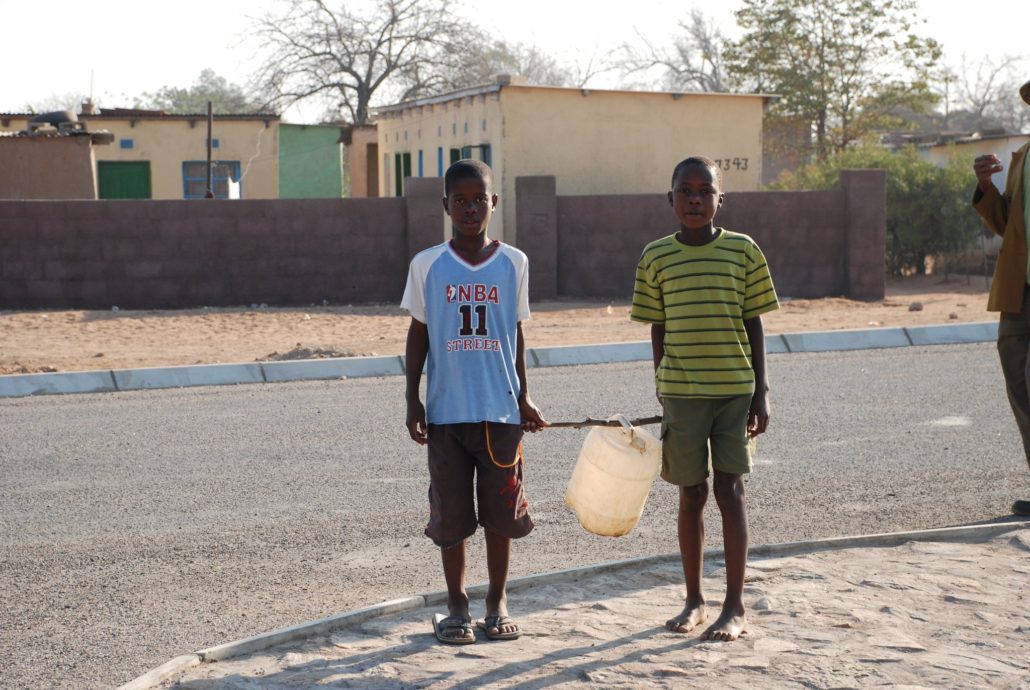
 Botswana is a southern African country with just over 2 million residents living inside its borders. Every Batswana lives with the threat of tuberculosis, an infectious disease that remains one of the top 10 causes of death on the African continent. Tuberculosis has a 50% global death rate for all confirmed cases. Investing in tuberculosis treatments and prevention programs is essential. Botswana has one of the highest tuberculosis infection rates in the world with an estimated 300 confirmed cases per 100,000 people, according to the CDC. Preventative and community-based treatment shows promise in combating tuberculosis in Botswana.
Treating Tuberculosis in Botswana
Tuberculosis treatment cures patients by eliminating the presence of infectious bacteria in the lungs. The first phase of treatment lasts two months. It requires at least four separate drugs to eliminate the majority of the bacteria. Health workers administer a second, shorter phase of treatment to minimize the possibility of remaining bacteria in the lungs.
Early identification of tuberculosis is a crucial step in the treatment process and significantly reduces the risk of patient death, according to the Ministry of Health. Preventative treatment methods are vital because they inhibit the development of tuberculosis infection. They also reduce the risk of patient death significantly.
Health workers detect tuberculosis with a bacteriological examination in a medical laboratory. The U.S. National Institutes of Health estimate that a single treatment costs $258 in countries like Botswana.
Involving the Community
Botswana’s Ministry of Health established the National Tuberculosis Programme (BNTP) in 1975 to fight tuberculosis transmission. The BNTP is currently carrying out this mission through a community-based care approach that goes beyond the hospital setting. Although 85% of Batswana live within three miles of a health facility, it is increasingly difficult for patients to travel for daily tuberculosis treatment. This is due to the lack of transportation options in much of the country.
Involving the community requires the training and ongoing coordination of volunteers in communities throughout the country to provide tuberculosis treatment support. Community-based care also improves treatment adherence and outcome through affordable and feasible treatment.
The implementation of strategies such as community care combats tuberculosis. For example, it mobilizes members of the community to provide treatment for tuberculosis patients. The participation of community members also provides an unintended but helpful consequence. For example, community participation helps to reduce the stigmas surrounding the disease and reveals the alarming prevalence of tuberculosis in Botswana.
A Second Threat
In addition to the tuberculosis disease, the HIV epidemic in Africa has had a major impact on the Botswana population, with 20.3% of adults currently living with the virus. Patients with HIV are at high risk to develop tuberculosis due to a significant decrease in body cell immunity.
The prevalence of HIV contributes to the high rates of the disease. The level of HIV co-infection with tuberculosis in Botswana is approximately 61%. African Comprehensive HIV/AIDS Partnerships (ACHAP), a nonprofit health development organization, provides TB/HIV care and prevention programs in 16 of the 17 districts across the country in its effort to eradicate the disease.
Fighting Tuberculosis on a Global Scale
The World Health Organization (WHO) hopes to significantly reduce the global percentage of tuberculosis death and incident rates through The End TB Strategy adopted in 2014. The effort focuses on preventative treatment, poverty alleviation and research to tackle tuberculosis in Botswana, aiming to reduce the infection rate by 90% in 2035. The WHO plans to reduce the economic burden of tuberculosis and increase access to health care services. In addition, it plans to combat other health risks associated with poverty. Low-income populations are at greater risk for tuberculosis transmission for several reasons including:
- Poor ventilation
- Undernutrition
- Inadequate working conditions
- Indoor air pollution
- Lack of sanitation
The WHO emphasizes the significance of global support in its report on The End TB Strategy stating that, “Global coordination is…essential for mobilizing resources for tuberculosis care and prevention from diverse multilateral, bilateral and domestic sources.”
– Madeline Zuzevich
Photo: Flickr
6 Facts About Hunger in Liberia
Liberia is a country on the West African coast. Neighboring the Ivory Coast, Guinea and Sierra Leone, it spans just under 100,000 square kilometers of land. A long civil war, consistent disease outbreaks and widespread economic instability have led to prevalent hunger and malnutrition. Here are six facts about hunger in Liberia.
6 Facts About Hunger in Liberia
Fighting Hunger in Liberia
While hunger, malnutrition and poverty are persistent issues, many humanitarian organizations such as the WHO, UNICEF and the Action Against Hunger are working toward improving Liberia’s living conditions. Action Against Hunger, for example, recently assisted more than 90,000 people and helped the country’s government implement policies to make progress in alleviating Liberia’s hunger.
Action Against Hunger started Liberian programs in 1990 and has continually improved the lives of hundreds of thousands in the country. One of the prominent programs started by the organization involved training of mother-to-mother support groups to ensure healthy child-feeding practices. With widespread malnutrition, Action Against Hunger also worked with Liberia’s Ministry of Health to implement clean water, sanitation and hygiene improvement programs.
Moving Forward
Hunger in Liberia, while affecting millions every day, is on the path of improvement. With the help of numerous humanitarian organizations, hunger in Liberia will hopefully decrease. The United Nations aims to end hunger and diminish food insecurity in Liberia within the next ten years. Accomplishing this will require a continued focus on decreasing hunger in the nation.
– Omer Syed
Photo: Flickr
10 Facts About Sanitation in Kyrgyzstan
With a population of just over six million people, Kyrgyzstan is a small, mostly rural country in Central Asia, nestled between the fertile Fergana valley and some of the highest mountain ranges in the world. Today, much of Kyrgyzstan’s population does not have access to proper sanitation facilities. However, with a rise in international support, Kyrgyzstan is making hopeful strides towards better health and sanitation. Here are 10 facts about sanitation in Kyrgyzstan.
10 Facts About Sanitation in Kyrgyzstan
While sanitation in Kyrgyzstan remains one of the country’s most pressing issues, it is clear that progress is being made. With continued support, Kyrgyzstan may soon overcome one of its most critical issues, enabling people across the nation to transform their lives for the better.
– Shayaan Subzwari
Photo: Flickr
4 Myths About Overpopulation
4 Myths About Overpopulation
The Population Reference Bureau (PRB)
The Population Reference Bureau (PRB) is one of the largest organizations in the U.S. doing invaluable work. PRB is a private, nonprofit organization that provides information and population demographics that guide global action against overpopulation. PRB, as well as many other organizations, must continue to receive funding to further its work that effectively combats overpopulation.
The four myths about overpopulation show that overpopulation is a complex issue that requires accurate information in order to facilitate effective action. Misconceptions regarding overpopulation can be greatly damaging to our collective understanding of the causes and effects of overpopulation. Overpopulation does not just threaten the environment but eliminates the possibility of economic growth for impoverished areas, due to the strain overpopulation places on education, health and infrastructure. However, organizations like PRB are making progress.
– Lily Jones
Photo: Pixabay
Tackling Tuberculosis in Botswana
Treating Tuberculosis in Botswana
Tuberculosis treatment cures patients by eliminating the presence of infectious bacteria in the lungs. The first phase of treatment lasts two months. It requires at least four separate drugs to eliminate the majority of the bacteria. Health workers administer a second, shorter phase of treatment to minimize the possibility of remaining bacteria in the lungs.
Early identification of tuberculosis is a crucial step in the treatment process and significantly reduces the risk of patient death, according to the Ministry of Health. Preventative treatment methods are vital because they inhibit the development of tuberculosis infection. They also reduce the risk of patient death significantly.
Health workers detect tuberculosis with a bacteriological examination in a medical laboratory. The U.S. National Institutes of Health estimate that a single treatment costs $258 in countries like Botswana.
Involving the Community
Botswana’s Ministry of Health established the National Tuberculosis Programme (BNTP) in 1975 to fight tuberculosis transmission. The BNTP is currently carrying out this mission through a community-based care approach that goes beyond the hospital setting. Although 85% of Batswana live within three miles of a health facility, it is increasingly difficult for patients to travel for daily tuberculosis treatment. This is due to the lack of transportation options in much of the country.
Involving the community requires the training and ongoing coordination of volunteers in communities throughout the country to provide tuberculosis treatment support. Community-based care also improves treatment adherence and outcome through affordable and feasible treatment.
The implementation of strategies such as community care combats tuberculosis. For example, it mobilizes members of the community to provide treatment for tuberculosis patients. The participation of community members also provides an unintended but helpful consequence. For example, community participation helps to reduce the stigmas surrounding the disease and reveals the alarming prevalence of tuberculosis in Botswana.
A Second Threat
In addition to the tuberculosis disease, the HIV epidemic in Africa has had a major impact on the Botswana population, with 20.3% of adults currently living with the virus. Patients with HIV are at high risk to develop tuberculosis due to a significant decrease in body cell immunity.
The prevalence of HIV contributes to the high rates of the disease. The level of HIV co-infection with tuberculosis in Botswana is approximately 61%. African Comprehensive HIV/AIDS Partnerships (ACHAP), a nonprofit health development organization, provides TB/HIV care and prevention programs in 16 of the 17 districts across the country in its effort to eradicate the disease.
Fighting Tuberculosis on a Global Scale
The World Health Organization (WHO) hopes to significantly reduce the global percentage of tuberculosis death and incident rates through The End TB Strategy adopted in 2014. The effort focuses on preventative treatment, poverty alleviation and research to tackle tuberculosis in Botswana, aiming to reduce the infection rate by 90% in 2035. The WHO plans to reduce the economic burden of tuberculosis and increase access to health care services. In addition, it plans to combat other health risks associated with poverty. Low-income populations are at greater risk for tuberculosis transmission for several reasons including:
The WHO emphasizes the significance of global support in its report on The End TB Strategy stating that, “Global coordination is…essential for mobilizing resources for tuberculosis care and prevention from diverse multilateral, bilateral and domestic sources.”
– Madeline Zuzevich
Photo: Flickr
5 Facts About Poverty in Mongolia
Mongolia is a landlocked nation in East Asia, caught between Russia to the north and China to the South. Since transitioning into a capitalist democracy in the 1990s, it has become one of the region’s fastest-growing economies. However, various issues such as poverty and uneven economic growth are holding Mongolia back. Here are five facts about poverty in Mongolia.
5 Facts About Poverty in Mongolia
The Good News
Mongolia has been experiencing nearly 30 years of economic growth and social development. Many experts describe Mongolia as “The Wolf Economy” due to its massive growth and supply of natural resources. The nation has tripled its GDP since 1991 with help from international groups and smart government investments. Health care industries have seen a massive improvement, with Mongolia seeing declines in maternal and child mortality rates. The government has also instituted various programs to help people out of poverty in Mongolia and raise the general standard of living. The United States has provided aid and development funds to help strengthen the Mongolian economy and promote democratic political reforms. As a result, the US is Mongolia’s fourth-largest import partner, valuing more than $200 million in items such as machinery and consumer goods. Various American businesses also operate within Mongolia such as Visa, Caterpillar Inc. and GE.
– Malcolm Schulz
Photo: Flickr
The ACIP Digital Health Platform
ACIP in a Health Crisis
The ongoing COVID-19 pandemic prompted the creation of the ACIP digital health platform. Statistics from June 27, 2020, show over 370,000 active cases of COVID-19 and 9,500 deaths in Africa. The rapid spread of the COVID-19 virus forced the African continent and the entire world into a major health crisis, affecting the social and economic wellbeing of governments and its citizens. As economies shut down, industries closed and job losses increased, more and more people became economically vulnerable and fell into deeper poverty.
Key Functions of ACIP
ACIP serves as a disease surveillance and data collection tool that will help mitigate the socio-economic effects of COVID-19 in Africa by informing resource allocation and response decisions.
A key part of the platform operates similarly to a search engine, identifying and predicting trends and providing information on where resources or responses are most needed. The ACIP digital health platform will also enable users to access locally relevant health advisories and medical advice, including a symptom checker.
The goal of the platform is to improve the way governments communicate with people to learn more about the current pandemic and how to help citizens. The data collected will be analyzed by the National COVID-19 Taskforce, the Ministry of Health, Ministry of Finance and other African organizations, to gain better insight on the pandemic in order to form better health responses and strategies. By having a solid network to gather information on the virus, governments can better manage the virus and possibly reduce its spread. ACIP will gather public health data from user surveys conducted on the platform.
Collaboration is Key
The ECA collaborated with four major mobile network providers to make the free ACIP digital health platform easily accessible to everyone. However, there are still many people who cannot afford internet access, especially during the economic uncertainty that COVID-19 has brought. The ECU is working alongside stakeholders to resolve internet access and cost issues that may pose a roadblock in accessing the platform. Currently, the platform can already reach over 80% of Africa’s mobile users without additional costs placed on them.
The ACIP digital health platform shows African governments the importance of having a more connected society. It shows the knowledge that can come from pooling together data from across the continent, relaying information found and using the data to inform decisions to best combat a health pandemic. The International Telecommunications Union (ITU) has pledged its full support of ACIP and is working alongside the World Health Organization in Africa to raise awareness about the importance of using online communication networks as a way to respond to a health crisis.
– George Hashemi
Photo: Flickr
Poverty in Bulgaria
Bulgaria is a small nation off of the west coast of the Black Sea. It faced a dramatic government shift in the early 1990s. In 2007, Bulgaria joined the European Union (EU) in hopes of prolonged prosperity. Instead, studies show that Bulgarian citizens are the least happy in the EU. This is the result of many social issues and lifestyle changes over the past couple of decades, but the largest factor that surrounds the dark atmosphere of Bulgaria is its struggling economy. In addition, because of its minimum wage, poverty is still prevalent in Bulgaria.
Economic Growth
After transitioning to an open market system in the early 1990s, Bulgaria has seen extreme growth in its economy. Its GDP has been rising over the last three decades. Additionally, there have been increases in the average salary, improved working conditions and developments in finance technology. Moreover, Bulgaria is currently in a demographic dividend. This means that the majority of its population is of the working-class age and is contributing to the economy through employment. According to the OECD, the “working age” refers to the population of individuals aged 15-64.
Minimum Wage and Poverty in Bulgaria
Bulgaria’s minimum wage is one of the lowest in the European Union at BGN 610 per month, or $350.4 in the United States. Many common jobs reside within low-skilled labor, such as security guards, factory workers or shop assistants. Poverty in Bulgaria reached a prevalence rate of 7.5% in 2017. Based on a population of nearly 7 million people, this means approximately 525,000 Bulgarians were living on less than the U.S. $5.5 each day. For unemployed citizens, the government subsidizes up to 60% of their income. However, it is not always a stable amount and can range from BGN 9 to BGN 74.29 per day (equivalent to U.S. $5.20 and $42.90, respectively).
Solutions
The World Bank is working to reduce poverty in Bulgaria through a plan established and verified in 2019. This plan aims to strengthen the nation’s disaster risk management program, follow efforts to combat climate change, improve air quality and increase access to clean water. Additionally, risk management will help to overcome economic issues and a recession predicted by the World Bank as a result of COVID-19. Even as unemployment rates increase due to COVID-19, the Bulgarian economy is protected by a product that is unlikely to decrease in value in the near future– petroleum. Petroleum is Bulgaria’s top export and brought the nation nearly $2 billion in 2018. As it becomes scarcer, the price will increase, leading the nation into a sustainable economic boost.
Telerik Academy School is combating poverty in Bulgaria from the ground up by offering free courses in computer science for students ages 7-18. This is especially important as Bulgaria becomes more technologically advanced every day and jobs in computer science become more valuable. Telerik’s mission is to instruct computer expertise at a young age. This will help develop and instill creativity, innovation and logic in younger generations. This will pave the way for their success as adults. Along with coding lessons, Telerik offers programs in Game Development and Algorithmic Programming. Since its establishment in 2002, the academy has earned more than 250 medals and awards. Telerik Academy School reached over 12,000 students and plans to instruct 12,000 more by the end of 2024.
The issues surrounding poverty in Bulgaria can not be fixed overnight. However, the country’s long-term economic growth, government transformation and social improvements will rise to the challenge of implementing policies and enacting changes that benefit its citizens. Small nonprofits across the nation assist in fighting poverty in creative ways that enable them to develop sustainably.
– Becca Blanke
Photo: Flickr
The Key to HIV Prevention in Sub-Saharan Africa
HIV/AIDS’s Effect on Africa
Eswatini, Lesotho, Mozambique, parts of South Africa, regions in Zambia, Namibia, Southern Malawi and Kenya are the countries in Africa whose populations have the highest rates of being infected or affected by HIV. In Kenya, only about 30% of sexually active individuals practice safe sex methods. Additionally, only 47.5% of adolescent women could properly identify methods that would prevent them from contracting HIV sexually. With that said, women are at an extremely high risk of contracting HIV in sub-Saharan Africa.
An Increased HIV/AIDS Risk Factor for Women
One of the main factors contributing to women being at a higher risk of contracting HIV in sub-Saharan Africa is that the rate of school attendance is extremely low for girls in sub-Saharan Africa. Girls are more likely to be exposed to social and economic scenarios that could potentially threaten their survival and put them at an increased risk of contracting HIV. Therefore, it is important to increase both the school attendance rate for girls and the amount of sex education offered at school. This would include information on HIV and STI prevention.
Sex Education’s Impact on Adolescent Health and Choices
UNAIDS analyzed a series of studies in order to determine whether or not sex education makes a significant impact on school-aged children’s sexually based decisions. Out of a total of 53 studies, 22 studies showed that, after sex education was implemented, three things changed– individuals waited a longer amount of time to initially have sex, the number of sexual partners per person decreased and the number of unplanned pregnancies and STI diagnoses decreased. Additionally, 27 studies showed that HIV/AIDS rates, alongside overall sexual health, did not improve or worsen the amount of sexual activity, pregnancies or STI rates.
Overall, the results of these studies support the claim that implementing sex education in schools’ curricula is an efficient way to reduce practices that could result in the spread and contraction of HIV/AIDS and other STIs in school-aged children.
Africa’s Implementation of Sexual Education
South Africa has taken the initiative to create and implement a plan for discussing HIV prevention in the school setting. The priorities of this plan include generating attention toward HIV/AIDS for both students and teachers, including information on HIV/AIDS in the school’s curriculum and creating models that display the effects of HIV/AIDS on the school district. This initiative also ensures the protection of students’ and teachers’ constitutional rights and confidentiality about HIV/AIDS status.
Due to these precautions, HIV-positive individuals will not be discriminated against. In order to ensure that the students are learning the best methods of HIV-AIDS prevention, the curriculum will remain up-to-date and teachers will be trained accordingly.
Comprehensive Sexuality Education
Eleven sub-Saharan countries have introduced various courses into their schools’ curricula to educate them on sex education in varying degrees. Rwanda and Zambia adhere to what the United Nations has deemed necessary for students to learn through sex education. These classes fall under the category of “Comprehensive Sexuality Education” (CSE). These classes discuss healthy relationships between genders and how to decrease sexual violence; in addition to sex education in a way that is appropriate for younger children and adolescents. The main objectives of CSE are to teach children:
Various projects and initiatives throughout the world have provided crucial information pinpointing which countries need HIV prevention through sexual education implementation. The collaboration between many organizations has allowed third world countries to access resources that would be more difficult to achieve independently. Fortunately, the difficult challenges that impoverished countries have faced to prevent the spread of HIV in sub-Saharan Africa are becoming more attainable.
– Amanda Kuras
Photo: Wikimedia Commons
4 Facts about Poverty in Turkmenistan
Turkmenistan is a country in the Central Asian region with a population of more than 5.6 million and a coastline along the Caspian Sea between Kazakhstan to the north and Iran to the south. Prior to gaining independence in 1991, Turkmenistan was a Soviet republic.
The country is well-endowed with energy reserves including natural gas and oil, and its economy is highly dependent on energy production and exports. In addition, Turkmenistan is rich in cotton, another highly exported commodity. Although 48.2% of the country’s labor force works in agriculture, this sector represents only about 8% of its GDP. Turkmenistan, moreover, continues to grapple with substantial barriers to economic and political progress, subjecting many of its citizens to poverty and other sources of hardship. Here is some information about poverty in Turkmenistan.
4 Facts About Poverty in Turkmenistan
Looking Ahead
While official estimates for poverty in Turkmenistan are low, at 0.2%, there are several drawbacks that the country faces in regard to both its economy and its social and political standing. These range from the need to diversify its economic model from its heavy reliance on energy export revenues to the promotion of a more free business and investment climate. In the meantime, international cooperation and coordination ought to strive to ensure that the recent food shortages in Turkmenistan do not escalate into a full-fledged hunger crisis.
– Oumaima Jaayfer
Photo: Flickr
Poverty in Djibouti: A Galvanizing Government Invests in Action
The Republic of Djibouti is a small country situated in the Horn of Africa between Eritrea, Somalia and Ethiopia. The nation is home to nearly one million Djiboutians today, and as many as 42% of them are living in extreme poverty.
A Harsh Climate
The region’s harsh dry climate has exacerbated poverty in Djibouti, especially in rural areas where most practice nomadic farming. While one-third of the population tends to livestock, farming only represents around 4% of the annual GDP in Djibouti. Unprofitable farming means Djiboutians rely on imports for nearly 90% of their food and are heavily dependent on variable international market prices. Such dependence coupled with insufficient rains, long droughts and high unemployment rates put many farmers at risk of extreme poverty.
The Effects of Poverty in Djibouti
Government Investments in the Fight Against Poverty
The Djiboutian government under President Guelleh has been working to provide relief to its impoverished citizens since 2003. The Guelleh administration passed both “the Strategic Document for Reducing the Poverty (SDRP) in 2003 and the National Initiative for Social Development (NISD) in 2007” to enhance entrepreneurship opportunities for Djiboutians. However, such efforts were unsuccessful in reducing the high unemployment rate and addressing poverty in Djibouti.
Despite the high rates of poverty in Djibouti, the Djiboutian government is cautiously optimistic that it can create jobs and pull its people out of famine. The country’s GDP continues to grow steadily on the back of foreign investments, increasing by approximately 6% in 2024. The Republic of Djibouti is of particular interest to China, which is interested in making the country a customs-free zone, harnessing its available natural resources such as salt and energy and developing tourism services.
The Djiboutian government is also investing heavily in developing hydroelectric, port and railway infrastructure in the hopes of lifting its people out of poverty. These investments show that the country is interested in moving toward more of a transport and shipping economy, using its proximity to the Gulf of Aden to assert itself as a crucial trading partner in the Horn of Africa. These efforts to diversify its economy intend to provide new opportunities for Djiboutians to earn living wages, provide food for their families and lift themselves out of poverty.
The Vision Djibouti 2035 Plan and SCAPE
To encourage entrepreneurship and continue to push the fight against poverty in Djibouti, the Guelleh administration also laid out the Vision Djibouti 2035 plan in 2014 and the Accelerated Growth Strategy and Promotion of Employment (SCAPE) in 2015. The long-term strategic framework in Vision Djibouti 2035 intends to push the country toward emerging status by 2035, while the five-year plan laid out in SCAPE aims to provide relief in the short term. Among its many lofty goals, SCAPE outlines how the government intends to provide financial support to those working in agriculture and livestock, create infrastructure for economic valuation in important growth sectors like tourism and resource mining, speed up job creation to help Djiboutians find gainful employment and reduce extreme poverty in Djibouti by 20%.
– Riddhi Bhattacharya
Photo: Flickr
“The Borgen Project is an incredible nonprofit organization that is addressing poverty and hunger and working towards ending them.”
-The Huffington Post
Inside The Borgen Project
International Links
Get Smarter
Ways to Help