 In an increasingly digital world, reducing paper consumption and productions seems like a good option. However, cutting out paper is not always just an issue of sustainability. Electronic voting in developing countries is a means of preserving democracy.
Electronic voting (e-voting) in developing countries is quickly gaining traction to replace paper-based voting. The technology is flexible. Citizens are able to vote remotely via the internet or use a variety of electronic kiosks. Developing countries’ reasonings behind making this switch lie in various prevailing issues around the world. These include election corruption and ballot cheating, low voter turnout or political violence.
Many developing countries historically experience rigged or unsuccessful elections. However, electronic voting in developing countries may hold the key to not only average but high voting rates. If implemented efficiently, it could appeal to youth voters and encourage marginalized people to vote. In addition, it could allow voting in different languages with instant translation features (a major advantage in countries with multiple native languages). There has been much success in the endeavors of electronic voting in developing countries.
India
India boasts a population of over 1.3 billion. Despite this, the country’s transition to e-voting is often hailed as an example of successful political technology. Experimentally implemented in 1998, India’s e-voting has skyrocketed to success in recent years. India’s main motivation for pursuing e-voting stemmed from the recurring high costs of paper-based elections and to “strengthen the electoral process” in general. This optimistic goal proved largely successful.
According to a 2017 study by Brookings, “the introduction of EVMs [Electric Voting Machines] led to (i) a significant decline in electoral fraud, (ii) strengthening the weaker and vulnerable sections of the society and (iii) a more competitive electoral process.”
Three major issues in previous Indian elections prompted these necessary solutions. Citizens would stuff ballot boxes, which led to untraceable fraud. Women, disabled citizens and lower castes were discouraged to vote since their ballots would often be deliberately uncounted by human talliers. Finally, as a result of years of voting fraud, politicians did not have much competition because fraudulent elections created a monopoly around the majority candidate.
E-voting largely solved these issues. The machines only register five votes each minute to combat virtual ballot stuffing. Marginalized groups are encouraged to vote since their vote will not be counted by a biased and politically motivated person. More candidates have a better shot at being elected due to the higher representation of all voices.
Philippines
Electronic voting in developing countries, such as the Philippines, also serves as a model of success. After implementing e-voting through the British company Smartmatic, the country’s 2016 election brought 81% of the Philippines’ 100 million people to the polls in a record turnout. At the time, the election stood as “the largest electronic vote-counting project in history.”
Aside from the high turnout, the election also broke a record for the fastest voting count. The e-voting machines immediately tracked and published the results online as votes came in. The technology was also carefully surveilled preceding and during the election with the aid of more than 200,000 citizen volunteers to prevent crashes.
After the election, Smartmatic CEO Antonio Mugica lauded the victory, calling it “a landmark in electoral automation with the largest ever manufacture and deployment of Vote Counting Machines making this a truly historic moment.”
While the Vote Counting Machines experienced widespread technical difficulties in the country’s 2019 midterm election, Filipinos are working to get their machines up and running in order to produce another smooth election like in 2016.
Nigeria
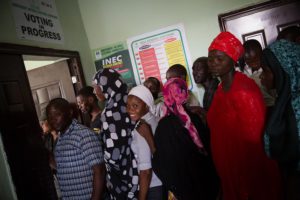
Nigeria looked to implement e-voting in the 1990s due to concerns that plague many African nations. It is among many countries in the continent that consistently report election violence, ballot stuffing, government-manipulated results and voter suppression as pressing issues in elections.
Nigeria formed the Independent National Electoral Commission to integrate Electronic Voting Systems into their elections. The group plotted out polling locations across the country. They used a Geographic Information System technology to map out the country’s population density to more accurately monitor the votes coming in from all areas.
While e-voting is still in its infancy in Nigeria, “it has been considered a necessity and as the only solution for credible elections.” The initial instating of e-voting proved largely unsuccessful in Nigeria. However, technology is seen as a promising means to curb the overflow of political violence and issues rampant in the country’s elections in the future.
Problems with and the Future of Electronic Voting in Developing Countries
While electronic voting in developing countries has promoted healthy, democratic elections in many instances, it is not without its problems. Technology, especially the type being sent to developing countries, has an easy tendency to glitch and lend itself to user errors for those unfamiliar with the technology.
Furthermore, many countries have used e-voting to combat top-down corruption. However, the technology would still be under the jurisdiction of the government. Therefore, it carries the potential to be just as rigged and produce more fraudulent, difficult-to-trace results. E-voting also makes recounting virtually impossible due to the lack of a paper trail.
However, many developing countries have nonetheless used this technology to their advantage. They are in the process of making e-voting a dependable reality. Namibia, Ghana and Khazakstan are in the early stages of e-voting and hoping to solely run elections with e-voting soon. With the aid of continuing technological advancement, e-voting can hopefully plant a successful footing in developing countries.
– Grace Ganz
Photo: Flickr

Coronavirus and Inequality in South Africa
The coronavirus pandemic is revealing underlying scars of inequality in South Africa, the world’s most economically unequal country. Townships, still often segregated along racial lines due to legacies of housing policies during the era of apartheid, are reporting different levels of coronavirus cases. Crowded, majority-Black townships with little space for social distancing and self-isolation are reporting higher rates of coronavirus infections than areas that were designated all-white under apartheid. According to Edward Molopi, a researcher with the Socio-Economic Research Institute in Johannesburg, “townships become virus hotspots because we haven’t dismantled the apartheid city.”
Varying Impacts of Coronavirus
As of July 17, 2020, South Africa has reported over 324,000 cases of COVID-19 and nearly 5,000 deaths. Many of these cases are found in the Western Cape. Within this province, in Cape Town, the Khayelitsha township reported the highest number of coronavirus cases in the area. In contrast, Stellenbosch, a university town, reported only 1% of the Western Cape’s cases. The stark difference in numbers of cases in these areas cannot be explained by the proportion of the population living in them, and likely have to do with overcrowding and a lack of resources in historically Black areas.
Additionally, with lockdown procedures being enforced more strictly in poor, Black, high-density townships, many are unable to work and find themselves at risk of going hungry. Coupled with the country’s worsening economy, these measures do not bode well for those in precarious economic conditions. The country’s unemployment rate is expected to exceed 35% by December of this year.
Combating the Issue
Despite these disheartening statistics and their discouraging outlook for South Africa, many individuals and non-governmental organizations are fighting for equality and economic security amid the pandemic. One such group is the Socio-Economic Research Institute, home to the researcher Edward Molopi quoted previously in this article. Based out of Johannesburg, an area severely affected by the coronavirus, the institute aims to provide legal assistance, research and advocacy for communities in South Africa afflicted by poverty and inequality. The organization’s belief is that “it is the people who are on the receiving end of poverty and inequality who are best placed to devise and implement strategies to challenge them.”
It goes without saying that the coronavirus pandemic has exposed many flaws in governments and civil societies worldwide. Not only are countries’ inadequate healthcare systems and inefficient disease control protocols revealed, but the presence of poverty, racial biases and other social ills. However, in the face of these many formidable challenges, the best of humanity has been shown as well. Ordinary people across the world are standing up for themselves and their neighbors through collective action and individual acts of kindness, providing hope in tumultuous times.
– Addison Collins
Photo: CA Times
Progress in Addressing Poverty in Malta
Considerable progress has occurred regarding addressing poverty in Malta. Malta has experienced substantial increases in its GDP, with a real GDP growth rate of 5.4% in 2017. The unemployment rate in 2018 was also relatively low at 3.7%, exhibiting a -2.5% change from 2012, compared to the European Union average of 6.8%. Malta has further experienced a positive improvement in almost all of the 2030 Sustainable Development Goals (SDGs) including no poverty and zero hunger. In addition, Malta is among one of the fastest-growing economies within the E.U., further exhibiting its ability to effectively address poverty.
Solutions
The government of Malta is fighting poverty through its National Strategic Policy for Poverty Reduction and for Social Inclusion 2014-2024. The strategy works to address poverty in Malta through a focus on income and benefits, employment, education, health and environment, social services and culture.
The national strategy has been successful in that it has led to continued increases in the figures for At Risk of Poverty and Social Exclusion (AROPE). The World Bank is also measuring progress in addressing poverty in Malta. It found that from 2010 to 2015 the income of the bottom 40% in Malta experienced a 3.6% increase, a growth rate faster than the average of the total population.
Pushing Forward Further Progress
While Malta has experienced considerable improvements in addressing the 2030 SDGs, progress has stalled in addressing sustainable consumption and production, inequality and environmental challenges. Malta has put forth policies to push forward progress with regard to these stalled SDGs.
The reform package measure “Making Work Pay” works to address inequalities through the introduction of a guaranteed minimum pension, reduced income tax and introduction and extension of in-work benefits. The success of these measures is evident through the country’s low unemployment rate and rising GDP. Additionally, gender inequalities continue to persist in terms of employment. However, the rate of women in employment has seen a considerable increase in recent years. The fact that the gender employment gap has reduced by 4.6% from 2015 to 2018 demonstrates this.
Despite the fact that progress addressing environmental changes in Malta has stalled, when compared to other countries within the E.U., Malta is among the countries with the lowest greenhouse gas emissions per capita. Malta’s Sustainable Development Vision for 2050 addresses the lack of progress in regard to weather changes, as well as envisions the eradication of poverty and social exclusion.
Tourism in Malta
The Maltese government is also using tourism, a major contributor to their economic development, as a means of pushing forward the green economic transition and progress towards sustainable consumption and production and changing climate. The restoration of historical and cultural sites in the country is making this progress possible. One such example is the restoration of the Grand Master’s Palace in Malta. Tourism contributes to the alleviation of poverty in Malta by increasing economic opportunities and generating taxable economic growth which can be used towards poverty alleviation.
While work is still necessary to resolve environmental challenges and the gender employment gap in Malta, the country is well on its way to meeting its 2030 Sustainable Development Goals (SDGs).
– Leah Bordlee
Photo: Flickr
How ECHO is Fighting Global Hunger and Poverty
Areas of Impact
Southwest Florida’s unique climate allowed ECHO, in 2001, to develop six different areas of tropical climate zones on the global farm. This allows researchers and farmers to test different growing methods and food production for different nations. Today, the farm includes tropical lowlands, tropical highlands, monsoon, semi-arid, rainforest clearing, community garden and urban garden as its areas of focus. ECHO spreads the technology it has developed through its Regional Impact Centers in Thailand, Tanzania and Burkina Faso, delivering information and improved farming practices to Asia, East Africa and West Africa, respectively.
The Importance of Seeds
Seed development and protection is a primary focus of ECHO. A heavy rain season can harm seeds for future planting and can set farmers back on producing a bountiful crop. Also, without diversifying the types of crops they grow, farmers are at risk of losing food and money without having the right seeds. ECHO in Florida is home to a seed bank that provides up to 300 different types of seeds to farmers around the world. These seeds are adaptable to different climates and terrains and help farmers diversify their crop production, allowing them to grow crops that are best suited for their environment.
Another problem that farmers face is keeping seeds dry and ready for the growing season — a difficult goal to achieve with humid climates and high temperatures. ECHO Regional Impact Center in Thailand is utilizing earthbags in its seed banks, which can keep seeds up to 16.5°C cooler than the surrounding environment. Seed drying cabinets also keep seeds dry by using heat and air circulation to keep seeds in a low humid environment so that they can be stored for a year or more.
Successful Practices
ECHO’s agricultural developments have been successfully used in communities around the world. In Togo, farmers are using resources provided by ECHO’s West Africa Regional Impact Center for the System of Rice Intensification, or SRI. SRI “reduces the need for water by half, requires only 10% of the seeds traditionally needed, and can increase yield by 20-100%.” This leads to farmers earning more than they would by using traditional farming methods. SRI is a practice that initially requires more labor and teaching to fully understand. However, with ECHO’s Regional Impact Centers, the organization is spreading the technology to help fight global hunger and poverty.
ECHO’s vital impact rests on teaching methods that farmers can share with each other. When one farmer has a successful crop, he is more likely to share the new methods he used with other farmers so that they can also have strong crop yields. This provides communities with more food, which helps to fight global hunger, and with more crops to sell, which helps lift farmers out of extreme poverty. By teaching farmers better practices that are sustainable and easily accomplished, ECHO is helping people around the world become more efficient and self-sustaining.
– Julia Canzano
Photo: Pixabay
How Groundswell Aid is Mobilizing Surfers to Impact Poverty
Groundswell Aid is mobilizing surfers in the world’s most renowned surfing locations to help address the burden of poverty. It was born from passionate surfers scouring the earth for a perfect wave. Founders Roy Harley and Jeff Ryan created Groundswell Aid as a way to connect the surfing community to disadvantaged people that live only minutes away from the most impressive surf breaks around the world. The organization partners with local leaders’ in locations such as Mauritius, El Salvador, Chile and South Africa, and uses surfing as a way to inspire and mobilize these impoverished communities.
Groundswell Gardens
Jeffreys Bay is the new home to Groundswell Gardens, a homegrown project that provides sustainable ways to address food insecurity in surfing communities in South Africa. In 2017, 20% of South Africans struggled to access food. The Republic of South Africa reported that agricultural development and subsistence farming is an effective way to address the issue.
As a result, Groundswell Aid is taking unused land and transforming it into a community garden filled with fruit, and leafy and root crops. The project has built 36 garden planters so far and hopes to create 270 for the community. After the crops are ready for harvest, the food will be given to the locals and the gardens will be reused for a sustainable farming process.
Indonesian Mercy Huts
The Mentawai Islands Regency, Uluwatu of Bali and the T-Land of Rote Island are world-class surfing locations in Indonesia. However, the side of Indonesia that many surfers do not see is the 80% of people in Mentawai living in poverty in 2017. However, Groundswell Aid partnered with a grassroots project called Mercy Huts to address and provide resources to those suffering from poverty in rural Indonesia.
Mercy Huts creates beachfront surf retreats for tourists that then give back to the islands of Indonesia. The profits of Mercy Huts are invested in community resources that promote education for youth, community development training and creating a stronger tourism industry. The tourism industry, which includes surfing tourism, is vital to the Indonesian economy because it is predicted that tourism will account for $141.3 billion annually for the country by 2027.
COVID-19 Campaign
Amidst the COVID-19 pandemic, impoverished communities are more susceptible to high mortality rates. It is also predicted that 49 million people in the world will sink into poverty by the end of 2020. Groundswell Aid is mobilizing surfers to help address the impacts of COVID-19 on poor surfing communities through the organization’s Groundswell Aid COVID-19 relief campaign. The campaign has raised more than $10,000, which has been donated to surfing communities in Indonesia, South Africa and El Salvador.
Groundswell Aid has created an impact as strong as a wave crashing against the sand. The organization is mobilizing surfers through a variety of projects that address poverty and the issues that come along with it. The humanitarian work that the organization has completed is helping relieve many people from the burden of poverty, while also providing opportunities for local leaders to become involved with their communities and move one step closer to ending poverty for all.
– Josie Collier
Photo: Pixabay
Mud-Based Cooking Stoves in Uganda
The Problem
Deforestation in Uganda poses many concerns for the population. With only 10% of Uganda’s population receiving electricity, the only option to create energy to cook food for many people is to cut down trees and burn firewood. The effects of wood-burning stoves in Uganda are detrimental to the population. In fact, Uganda’s National Environment Management Authority predicts that Uganda’s forests will disappear in less than 20 years if the current conditions do not change.
Deforestation creates irregular weather patterns, which can lead to intense droughts and heavy floods during different times of the year. In May 2020, floods affected thousands of people, destroying schools, a hospital, roads and power lines. Irregular weather patterns and storms leave many people without homes, schools to attend and electricity to cook food and conduct other daily activities. This contributes to the issue of poverty in Uganda, as more than 21% of Ugandans live in poverty. The irregular and extreme weather also causes high rates of crop failure in Uganda, which affects farmers who hope to earn money and plant food to feed their families. In the Rwenzori Mountains, floods left soil loose and unfarmable. Since many Ugandans have low incomes and cannot afford many basic necessities, the few crops that they harvest sell for money to pay for schooling for children and other essentials, leaving many people hungry as a result. Additionally, many women in Uganda have respiratory issues due to indoor air pollution from typical wood-burning stoves.
The Solution
After witnessing all the problems that traditional stoves in Uganda were causing, Kyewalyanga was determined to create a solution. He developed a stove using mud, water and straw, all of which are abundant in Uganda. The stove is essentially free to make and easy to build. To make a stove, Kyewalyanga forms the ingredients into small balls and attaches them together around a matooke tree, a common plant in Uganda which is much like a banana tree. As the mud hardens into a chimney, ventilation pockets and combustion chambers, the trunk of the tree rots away, thus forming an oven.
Kyewalyanga’s energy-saving stove reduces the amount of wood needed to cook food by 50%. However, the stove not only helps to reduce the number of trees that people must cut down, but it also provides the population with a sustainable alternative to traditional stoves in Uganda that cause respiratory illnesses and problems among farmers. A woman who cooks for her family of six people described how the smoke-filled walls of her kitchen caused health problems and how she hopes that Kyewalyanga’s stove will help her “get rid of [her] respiratory illness.” Since 2017, Kyewalyanga has created 100 stoves, but he hopes to develop many more in the future to combat deforestation and provide a more healthy lifestyle for the inhabitants of Uganda.
– Shveta Shah
Photo: Flickr
Poverty and Obesity: A Paradox Amid COVID-19
The fact that both poverty and obesity simultaneously rose amid the COVID-19 pandemic, possibly tipping 130 million people into chronic malnutrition by the end of 2020, may initially come across as surprising. Yet, researchers have long documented the paradox of how impoverished individuals experiencing food insecurity are more likely to suffer from obesity than the wealthy. Poverty and obesity often go hand in hand as signs of food unavailability and a lack of healthy eating, respectively, but these conditions of malnutrition also carry more subtle risk factors like unemployment, lower education levels and limited social networks.
The Problem: Food Access, Not Just Food Availability
Food insecurity manifests itself in many ways beyond undernourishment from an insufficient quantity of food — the prominent of which is unreliable access to nutritious, healthy options. With COVID-19 exacerbating pre-existing inequities and inadequacies in global food systems, poor diets and their resultant boosting of obesity present an urgent problem for vulnerable populations in developing countries. “The pandemic is creating a problem not of food availability, but of food access because people will have less income because of the recession,” explained Maximo Torero, chief economist of the UN’s Food and Agriculture Organization.
UN Data further showed that if the trend of limited food access continues, the world’s hungry will surpass 840 million by 2030 — the very same year 193 countries have set as their target by which they will have eliminated all forms of malnutrition. And with disruptions to agricultural supply chains due to COVID-19, governments face growing pressure to take unprecedented action to tackle the worldwide spikes in food prices if they are to meet this target. It is also no coincidence that nearly all of the 50 countries with the most risk for sustained food-price swings have developing economies, according to Nomura’s Food Vulnerability Index.
Healthy eating emphasizes fresh produce and lean meats, ideally locally-sourced with minimal processing and preservatives. However, the agricultural and meat industries were the first and most affected when governments implemented COVID-19 quarantines and travel restrictions. The successive disruptions meant it was more difficult for farms to receive agriculture inputs of seeds, fertilizer and equipment, further delaying production of healthy eating staples: rice, maize, wheat, vegetables and other produce. Producers of unhealthier, more processed foods don’t face the same problem of financial losses from rotting food. Thus, during this time, those foods are more accessible and affordable at the expense of poorer consumers’ health.
The Effects: COVID-19 and Obesity
Unfortunately, the connection between COVID-19, poverty and obesity works in reverse as well. Obesity is a major risk factor for a more severe infection, resulting in higher hospitalization and death rates once one has caught the virus. Most recently, a number of studies and anecdotes have noted obesity as the predominant risk factor in youth, with cardiologist David Kass concluding “in populations with a high prevalence of obesity, COVID-19 will affect younger populations more than previously reported.” The CDC has incorporated these findings by specifying that obesity is just as significant a risk factor for severe COVID-19 illness as a suppressed immune system or chronic lung disease.
Though researchers have mostly focused on the link between COVID-19 and obesity in high-income countries, it may have more devastating effects in the developing world. Not only does evidence show “over 70% of the world’s 2 billion overweight and obese individuals live in low or middle-income countries,” obesity also leads to higher health care costs and lower work productivity, which go hand-in-hand with greater consumption of cheaper, unhealthy food options. The created feedback loop is referred to as the “double burden of malnutrition.” Moreover, as Kass’s findings suggested, the victims of COVID-19 in developing countries are younger. In India and Mexico respectively, less than 12% and 17% of deaths were of individuals older than 75, and both of these countries report much more deaths of middle-aged and younger individuals than the U.S. and Europe do.
Solutions to Improve Global Food Security
One estimate of how much governmental spending is needed to combat COVID-19’s effects on hunger and obesity was $10 billion, put forth by the International Food Policy Research Institute. However, even this amount may be insufficient when considering that food insecurity will only continue compounding if addressing poverty isn’t a cornerstone of the solutions put forth. The World Food Programme has prioritized this need for financial safety nets and social protection programs until investment in nutrition and expansion of social protections. Their Executive Director David Beasley plans to allocate $1.9 billion of already pledged funding to build food and cash stockpiles as a “life-saving buffer,” protecting the world’s poor from food shortages and food-price hikes. They also requested a further $350 million to set up transportation systems, limiting shortages and disruptions in the agricultural industry from occurring in the first place.
In combination with these correctional measures, governments should adopt a preventative approach to addressing obesity. “One of the most effective ways to address obesity and other non-communicable diseases is by ramping up investments in affordable, quality primary health care,” says Dr. Muhammad Pate, Global Director for Health, Nutrition and Population at the World Bank. “This makes sense both from a health and an economic perspective. Putting more resources on the front lines to detect and treat conditions early, before they become more serious, saves lives, improves health outcomes, reduces health care costs and strengthens preparedness.” With these efforts in place, the paradoxical relationship between poverty and obesity may begin to ease.
– Christine Mui
Photo: PXFuel
The World Bank Fragility Forum Addresses Poverty and Fragility
What is Fragility?
There is no simple definition for a fragile setting or context since each fragile region is circumstantially unique. The Fragile States Index (FSI), though, says there are many common indicators that include state loss of physical control of territory or social legitimacy, loss of state monopoly on legitimate force, loss of connection to the international community and an inability to provide basic public services. The Organisation for Economic Co-operation and Development (OECD) also explains that there are common characteristics of fragile settings, like extreme poverty, authoritarian regimes, high rates of terrorism, high rates of armed conflict and short life expectancy. The majority of fragile settings currently exist in sub-Saharan Africa, and the Fragile States Index lists Yemen, Somalia and South Sudan as the three most fragile contexts in the world.
Poverty and Fragility
The World Bank explains that addressing poverty and fragility go hand-in-hand. While only 10% of the global population live in fragile contexts, more than two-thirds of the people around the globe who live in extreme poverty live in fragile contexts. Experts expect this figure to rise to 80% by 2030. Poverty and fragility exist in a sort of feedback loop, as it becomes more difficult to escape poverty in a fragile setting given poor living conditions and likely economic ruin, while poverty is also an initial driver of fragility. Global Washington reports that fragility hurts economic productivity – violent conflict caused a 12.4% decrease in economic activity in 2017 alone – and is the main driver of both global hunger and refugee crises.
Fragility Forum Highlights
Three lectures from the Forum in particular address key components of poverty and fragility by looking at case studies: the social and economic inclusion of refugees, the use of country platforms to increase the effectiveness of global aid and the effectiveness of existing economic programs in fragile contexts. These lectures were:
The World Bank Fragility Forum has made the link between poverty and fragility apparent. Hopefully, an increased understanding of how these two topics interlink will help eliminate poverty in fragile settings.
– Emily Rahhal
Photo: Wikimedia
Electronic Voting in Developing Countries
Electronic voting (e-voting) in developing countries is quickly gaining traction to replace paper-based voting. The technology is flexible. Citizens are able to vote remotely via the internet or use a variety of electronic kiosks. Developing countries’ reasonings behind making this switch lie in various prevailing issues around the world. These include election corruption and ballot cheating, low voter turnout or political violence.
Many developing countries historically experience rigged or unsuccessful elections. However, electronic voting in developing countries may hold the key to not only average but high voting rates. If implemented efficiently, it could appeal to youth voters and encourage marginalized people to vote. In addition, it could allow voting in different languages with instant translation features (a major advantage in countries with multiple native languages). There has been much success in the endeavors of electronic voting in developing countries.
India
India boasts a population of over 1.3 billion. Despite this, the country’s transition to e-voting is often hailed as an example of successful political technology. Experimentally implemented in 1998, India’s e-voting has skyrocketed to success in recent years. India’s main motivation for pursuing e-voting stemmed from the recurring high costs of paper-based elections and to “strengthen the electoral process” in general. This optimistic goal proved largely successful.
According to a 2017 study by Brookings, “the introduction of EVMs [Electric Voting Machines] led to (i) a significant decline in electoral fraud, (ii) strengthening the weaker and vulnerable sections of the society and (iii) a more competitive electoral process.”
Three major issues in previous Indian elections prompted these necessary solutions. Citizens would stuff ballot boxes, which led to untraceable fraud. Women, disabled citizens and lower castes were discouraged to vote since their ballots would often be deliberately uncounted by human talliers. Finally, as a result of years of voting fraud, politicians did not have much competition because fraudulent elections created a monopoly around the majority candidate.
E-voting largely solved these issues. The machines only register five votes each minute to combat virtual ballot stuffing. Marginalized groups are encouraged to vote since their vote will not be counted by a biased and politically motivated person. More candidates have a better shot at being elected due to the higher representation of all voices.
Philippines
Electronic voting in developing countries, such as the Philippines, also serves as a model of success. After implementing e-voting through the British company Smartmatic, the country’s 2016 election brought 81% of the Philippines’ 100 million people to the polls in a record turnout. At the time, the election stood as “the largest electronic vote-counting project in history.”
Aside from the high turnout, the election also broke a record for the fastest voting count. The e-voting machines immediately tracked and published the results online as votes came in. The technology was also carefully surveilled preceding and during the election with the aid of more than 200,000 citizen volunteers to prevent crashes.
After the election, Smartmatic CEO Antonio Mugica lauded the victory, calling it “a landmark in electoral automation with the largest ever manufacture and deployment of Vote Counting Machines making this a truly historic moment.”
While the Vote Counting Machines experienced widespread technical difficulties in the country’s 2019 midterm election, Filipinos are working to get their machines up and running in order to produce another smooth election like in 2016.
Nigeria
Nigeria looked to implement e-voting in the 1990s due to concerns that plague many African nations. It is among many countries in the continent that consistently report election violence, ballot stuffing, government-manipulated results and voter suppression as pressing issues in elections.
Nigeria formed the Independent National Electoral Commission to integrate Electronic Voting Systems into their elections. The group plotted out polling locations across the country. They used a Geographic Information System technology to map out the country’s population density to more accurately monitor the votes coming in from all areas.
While e-voting is still in its infancy in Nigeria, “it has been considered a necessity and as the only solution for credible elections.” The initial instating of e-voting proved largely unsuccessful in Nigeria. However, technology is seen as a promising means to curb the overflow of political violence and issues rampant in the country’s elections in the future.
Problems with and the Future of Electronic Voting in Developing Countries
While electronic voting in developing countries has promoted healthy, democratic elections in many instances, it is not without its problems. Technology, especially the type being sent to developing countries, has an easy tendency to glitch and lend itself to user errors for those unfamiliar with the technology.
Furthermore, many countries have used e-voting to combat top-down corruption. However, the technology would still be under the jurisdiction of the government. Therefore, it carries the potential to be just as rigged and produce more fraudulent, difficult-to-trace results. E-voting also makes recounting virtually impossible due to the lack of a paper trail.
However, many developing countries have nonetheless used this technology to their advantage. They are in the process of making e-voting a dependable reality. Namibia, Ghana and Khazakstan are in the early stages of e-voting and hoping to solely run elections with e-voting soon. With the aid of continuing technological advancement, e-voting can hopefully plant a successful footing in developing countries.
– Grace Ganz
Photo: Flickr
5 Businesses that Support Ending World Hunger
Many people in developed countries take things for granted, whether a clear blue sky or a cheeseburger from McDonald’s. However, across the world, approximately 805 million people around the world are undernourished, consuming well under the recommended number of calories per day. Those suffering from poverty often do not have the money to purchase food or land on which to produce it, resulting in global suffering. Some businesses are aware of this issue and want to help make a change, using their influence to make an impact on world hunger.
5 Businesses that Support Ending World Hunger
World hunger is a problem that will not be solved overnight. Companies such as those listed above understand the importance of aiding those who struggle to obtain proper sustenance every day. These five businesses that support ending world hunger have partnered with incredible organizations devoted to providing children and their families with nutritional food and vitamins needed for healthy growth. Through their efforts, they are making a large impact on world hunger.
– Ciara Pagels
Photo: Flickr
Healthcare in Lebanon During COVID-19 and Beyond
The recent economic crisis in Lebanon has led to a massive shortage of medical supplies and hospital capacity, worsening an already strained healthcare system. The COVID-19 pandemic is further intensifying the nation’s economic crash and incidents of supply shortages. However, relief programs are stepping in to help improve health conditions in Lebanon.
Causes and Contributing Economic Factors
Lebanon has held substantial debt since the country began accepting aid to recover from its 1975 civil war. On top of this, Syria and the surrounding region experienced turmoil in 2014 that significantly reduced the value of the Lebanese pound relative to the U.S. dollar. This process has been exacerbated by government mismanagement and the decreasing amount of money being sent in payment from the Lebanese diaspora. The country has now racked up debt equal to 170% of its gross domestic product.
As COVID-19 challenges the global economy, the situation is rapidly intensifying. The value of currency in Lebanon has decreased by 78% since October 2019. The main issue facing healthcare in Lebanon results from the country’s lack of U.S. dollars. Depositors are withdrawing their money from Lebanese banks due to fears of further inflation, bank restrictions on withdrawals to curb the crisis and decreased foreign investments as a result of Lebanon’s perceived instability. Since Lebanon imports four-fifths of its consumer goods and depends on U.S. dollars to facilitate these transactions, the country is now facing shortages in all sectors of the economy, including healthcare.
The Current Hospital Crisis and COVID-19
The Lebanese government cannot pay both private and public hospitals using funds like the National Social Security Fund due to its present debt and currency inflation. This financial setback jeopardizes hospitals’ capacities to provide essential surgeries or import medical supplies. Private hospitals make up 82% of all healthcare in Lebanon. The national government only paid private hospitals 40% of what they were meant to receive in 2019, and has yet to fulfill any of its regular payments this year.
Public hospitals have also received a fraction of their regular government aid in recent years. This lack of funding limits hospitals not only from purchasing critical supplies, but also from paying employees. Hospitals are being forced to delay salary payments and even to consider cutting salaries in half. Lebanese hospitals import 100% of their medical equipment and rely on U.S. dollars for these shipments, so the absence of U.S. dollars has created a supply shortage. Since September, the country has imported less than 10% of the supplies it needs.
The recent rise of COVID-19 has not only left hospitals unprepared to meet increased patient demand, but also places immense strain on healthcare in Lebanon as a whole. Hospitals lack appropriate protective gear like masks and gloves, ventilators and spare parts. Furthermore, without the money to pay their employees full salaries or hire new workers, hospitals are finding themselves understaffed amidst the surge of demand precipitated by the pandemic.
Solutions and Relief
Many organizations like the United Nations (UN) have offered aid to help improve healthcare in Lebanon. The Central Bank has also intervened, guaranteeing half of the money withdrawn for imports will be exchanged at the official rate, rather than the inflated rate, in an effort to help hospitals purchase supplies. In March, the World Bank also gave Lebanon a 39 million dollar loan to prepare public hospitals for COVID-19.
The World Health Organization (WHO) and the UN have committed to help Lebanon obtain medical supplies during the pandemic. The Chinese government also shipped medical supplies to Lebanon and pledged to continue providing relief.
Nonprofit groups are working on the ground to address the needs of healthcare workers in Lebanon. Direct Relief, a humanitarian aid organization that addresses poverty worldwide, delivered a shipment of N-95 masks, face shields, gloves and other supplies in May. Direct Relief will continue to cooperate with local organizations to provide essential resources during the pandemic.
The economic crisis in Lebanon has led to a strained healthcare system. COVID-19 has served to exacerbate the already difficult situation. However, acts of global partnership and aid show promise for eventually strengthening the system of healthcare in Lebanon.
– Emily Rahhal
Photo: Flickr