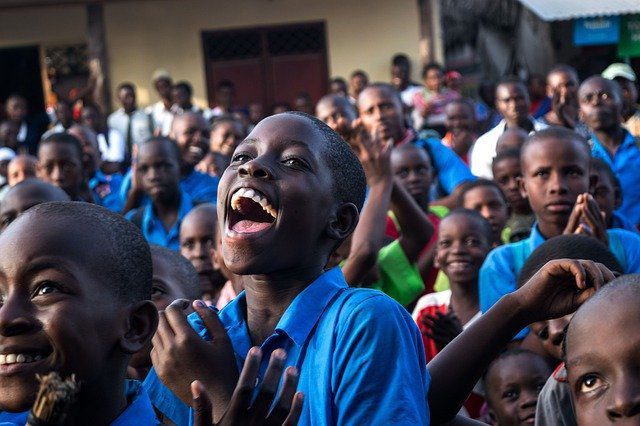
As a means to control the rampant virus that is COVID-19, Kenya closed all of its schools in March 2020. Although school closures in Kenya have occurred to maintain citizens’ safety, there are problems and concerns. George Magoha, Education Prime Minister of Kenya, stated that, due to schools closing just three months into the school year, students will be a year behind in their studies once school resumes in January 2021. The school closures could further marginalize certain children and families. Additionally, teenage pregnancy is another problem that learning at home could bring.
Further Marginalization of Kenyans
Once schools shut down worldwide, many students seamlessly transferred to online learning. This, however, was not the case for rural, remote areas in Kenya like Kajiado and Samburu county. According to the World Economic Forum, only 17% of Kenyan households had internet access as of 2016. With little to no access to internet connectivity and technology itself, online learning is nearly impossible. These children are at a strikingly harmful disadvantage in comparison to students residing in more urban areas, like Naibori country. Students in rural areas cannot academically progress like other students who have the means to learn online.
Not only are students with little internet access often behind, but school closures in Kenya also greatly impact refugee students. For many refugee students living in the Dadaab refugee complex, for example, going to school and receiving an education is their best opportunity for future success. Considering lower retention rates and even being a year behind, this success may prove to be more difficult to attain.
School closures in Kenya also place a heavy burden on parents and guardians. With little to no preparation for home-schooling, parents and guardians now have to teach their children. Little to no academic planning creates major problems with information retention, causing students to be even more behind in school.
Teen Pregnancies
Only 10% of teenage girls who leave school ever go back. Due to the virus, young girls cannot attend school, thus potentially lowering this percentage even more. The longer teenage girls are out of school, the worse the consequences may be for their futures. One example is teen pregnancies.
According to a Kenya government-administered health survey, teen pregnancies are rapidly increasing. As of 2015, Kenya had the largest number of teen pregnancies in East Africa. According to Plan International, “98% of pregnant girls were not in school, and 59% of the pregnancies among girls aged 15-19 years were unintended.” Prior to the pandemic, education and resources for young teenagers were not readily available for many. Now, those resources are even more difficult to receive.
Moreover, going to school every day was an escape for teenage girls from predatory family members in the home. With school closures in Kenya, young women do not have the protection from family members and neighbors that their schools provided. Sexual violence in Kenya affects about 33% of girls; due to school closures, this number may rise.
Solutions
Although many students do not have access to necessary resources, learning by the radio has been a very helpful resource for both Kenyan and refugee students. For the 100,000 students who reside in the Dadaab refugee complex, radio lessons have been able to reach all 22 of the complex’s schools. This allows refugee students to continue their education, thus, continuing their mobilization in society.
To promote the health and safety of all Kenyans, UNICEF delivered many basic needs to Kibera in April 2020. Kibera is the largest informal settlement in Africa where nearly 1 million individuals live on less than a dollar a day, according to UNICEF. The delivered supplies included 26,000 bars of soap and 100 disinfectant sprayers for the Nairobi City Government’s use in public spaces. Aid like this keeps Kenyans safe and should later create safer conditions for schools in Kenya.
School closures in Kenya have created countless problems and concerns for its citizens. With delayed schooling, lack of necessary technology and the potential of increased teenage pregnancies, the effects of school closures in Kenya may persist for years to come. However, organizations like UNICEF are working to provide compulsory resources, like proper education.
– Anna Hoban
Photo: Pixabay

8 Facts About Homelessness in Portugal
Portugal’s idyllic location near the Atlantic Ocean has made it a popular location for tourists around the globe. The Mediterranean nation’s legacy as a maritime empire, beaches in the Azores region and specialty seafood dishes such as grilled cod come to mind for many. While it enjoys its status as a developed country, it is not immune to social and economic problems. One of Portugal’s most pressing issues is homelessness. The nation has taken several initiatives to address the situation within its borders. Here are eight facts about homelessness in Portugal.
8 Facts About Homelessness in Portugal
The economic implications of the 2008 recession paired with the effects of the current COVID-19 pandemic have aggravated what the Portuguese president defined as a national challenge. Luckily, both national and local governments are introducing initiatives to weather and reduce homelessness in the upcoming years. If Portugal continues to zero in on this issue and make good on its promise to provide housing for all, then perhaps this challenge will become a thing of the past for this developed nation. In addition, Portugal could inspire other countries struggling with homelessness to do the same.
– Faven Woldetatyos
Photo: Flickr
The Effects of School Closures in Kenya
As a means to control the rampant virus that is COVID-19, Kenya closed all of its schools in March 2020. Although school closures in Kenya have occurred to maintain citizens’ safety, there are problems and concerns. George Magoha, Education Prime Minister of Kenya, stated that, due to schools closing just three months into the school year, students will be a year behind in their studies once school resumes in January 2021. The school closures could further marginalize certain children and families. Additionally, teenage pregnancy is another problem that learning at home could bring.
Further Marginalization of Kenyans
Once schools shut down worldwide, many students seamlessly transferred to online learning. This, however, was not the case for rural, remote areas in Kenya like Kajiado and Samburu county. According to the World Economic Forum, only 17% of Kenyan households had internet access as of 2016. With little to no access to internet connectivity and technology itself, online learning is nearly impossible. These children are at a strikingly harmful disadvantage in comparison to students residing in more urban areas, like Naibori country. Students in rural areas cannot academically progress like other students who have the means to learn online.
Not only are students with little internet access often behind, but school closures in Kenya also greatly impact refugee students. For many refugee students living in the Dadaab refugee complex, for example, going to school and receiving an education is their best opportunity for future success. Considering lower retention rates and even being a year behind, this success may prove to be more difficult to attain.
School closures in Kenya also place a heavy burden on parents and guardians. With little to no preparation for home-schooling, parents and guardians now have to teach their children. Little to no academic planning creates major problems with information retention, causing students to be even more behind in school.
Teen Pregnancies
Only 10% of teenage girls who leave school ever go back. Due to the virus, young girls cannot attend school, thus potentially lowering this percentage even more. The longer teenage girls are out of school, the worse the consequences may be for their futures. One example is teen pregnancies.
According to a Kenya government-administered health survey, teen pregnancies are rapidly increasing. As of 2015, Kenya had the largest number of teen pregnancies in East Africa. According to Plan International, “98% of pregnant girls were not in school, and 59% of the pregnancies among girls aged 15-19 years were unintended.” Prior to the pandemic, education and resources for young teenagers were not readily available for many. Now, those resources are even more difficult to receive.
Moreover, going to school every day was an escape for teenage girls from predatory family members in the home. With school closures in Kenya, young women do not have the protection from family members and neighbors that their schools provided. Sexual violence in Kenya affects about 33% of girls; due to school closures, this number may rise.
Solutions
Although many students do not have access to necessary resources, learning by the radio has been a very helpful resource for both Kenyan and refugee students. For the 100,000 students who reside in the Dadaab refugee complex, radio lessons have been able to reach all 22 of the complex’s schools. This allows refugee students to continue their education, thus, continuing their mobilization in society.
To promote the health and safety of all Kenyans, UNICEF delivered many basic needs to Kibera in April 2020. Kibera is the largest informal settlement in Africa where nearly 1 million individuals live on less than a dollar a day, according to UNICEF. The delivered supplies included 26,000 bars of soap and 100 disinfectant sprayers for the Nairobi City Government’s use in public spaces. Aid like this keeps Kenyans safe and should later create safer conditions for schools in Kenya.
School closures in Kenya have created countless problems and concerns for its citizens. With delayed schooling, lack of necessary technology and the potential of increased teenage pregnancies, the effects of school closures in Kenya may persist for years to come. However, organizations like UNICEF are working to provide compulsory resources, like proper education.
– Anna Hoban
Photo: Pixabay
7 Things to Know About Poverty in the Middle East and North Africa (MENA)
The Middle East and North African region, commonly referred to as MENA, is traditionally considered to include the geographical area from Morocco in northwest Africa to Iran in southwest Asia. Rich in history, culture and natural resources, this region consists of approximately 20 nations. As a result of vast reserves of oil, natural gas and petroleum, MENA has quickly grown in geopolitical importance. However, the region is also afflicted by persistent conflict and poverty. Here are seven recent trends in the rates of poverty in MENA.
7 Facts About Poverty in MENA
The past 50 years have been incredibly tumultuous for the MENA region, characterized by an abundance of violence and poverty. As recent data has confirmed, the region’s poverty is not subsiding anytime soon and the succession of Western-backed conflicts is not helping. Despite these difficulties, the region is very quickly evolving into a state of uniform solidarity. With more regimes beginning to reject foreign intervention and more civilians addressing their governments directly, particularly in the cases of Egypt and Lebanon, structural change could come to the region soon. However, this area of the world continues to be a prime example of just how dangerous extreme poverty can be when mixed with conflict, both for the host state and the international system.
– Angie Bittar
Photo: Flickr
Healthcare in Kazakhstan: Problems and Solutions
In the midst of a global health crisis, easy access to healthcare is more important than ever. Unfortunately, most people in Kazakhstan were already struggling with limited healthcare funding, high levels of chronic disease and restricted access to care prior to the COVID-19 pandemic. While the country’s daily new COVID-19 case numbers approached 2,000 in early July 2020, social reforms and organizations like the World Bank have worked to combat this crisis and improve healthcare in Kazakhstan.
Background
Kazakhstan is a country in Central Asia that Russia, China, the Caspian Sea and a number of former Soviet republics border. Once a member of the former Soviet Union, the world around Kazakhstan has shaped both it and its culture. The exploitation of its natural resources and the migration of surrounding peoples into the country have influenced its development and geography. A new movement to reinstate traditional Kazakh culture has resulted in various reforms in both its society and government, including reforms in healthcare.
Health and Kazakhstan’s Population
Poor diet, pollution and inadequate healthcare negatively affect the health of Kazakhstan’s population. Compared with the countries surrounding it, Kazakhstan’s infant mortality rate is one of the highest at 17.9 deaths per 1,000 live births. Additionally, Kazakhstan’s average life expectancy is at 72 years. Moreover, access to healthcare in rural areas has limitations. According to IntegratedCare4People, a website that the World Health Organization manages, the northern, rural region of Kostanay has 266 physicians per 100,000 people, while the rest of the country has, on average, 388 physicians per 100,000 people.
The Current Healthcare System
In the past, the healthcare system has failed to focus on the significance of chronic diseases, such as diabetes and cancer, and blood pressure issues, focusing more on transmissible diseases. Recently, the government has expanded primary-care services (generalized care aiming to improve the life expectancy of a population) to combat the growing chronic disease mortality. The ultimate goal of Kazakhstan’s reforms is to transition to a universal healthcare system with greater cost transparency and a better quality of life. Over the years, the government has steadily increased healthcare funding and reduced the influence of private insurance.
The Shift Toward Universal Healthcare
The newest reform, the Compulsory Social and Medical Insurance (CSMI) program, which went into effect in January 2020, aims to create a single-payer healthcare system. The intent is for public insurance to pay for certain medical expenses and regulate healthcare quality. The goal of the program is to reduce out-of-pocket expenses (the cost of care that patients are responsible for), which made up 45.14% of Kazakhstan’s total health spending in 2014. However, despite steady growth in funding, healthcare financing in Kazakhstan is still very limited. Health spending makes up 3.1% of the GDP, in comparison with the global average of 9.89%, as of 2017. With an average yearly income of $26,300 per capita, Kazakhstan cannot achieve widespread public insurance without stimulating its economy.
The World Bank and Kazakhstan
In 2019, economic expansion caused wages in Kazakhstan to increase by 8.9% and poverty to decrease to 8.5%. Though the quick spread of COVID-19 in the country will likely backtrack some of these achievements, the World Bank has set up the Country Partnership Framework, a strategy for increasing economic support for Kazakhstan from 2020 until 2025. The goals of this framework are to expand economic diversity, minimize the healthcare gap between rural and urban areas, decrease carbon usage and increase energy efficiency. Part of the World Bank’s work in Kazakhstan includes offering grants to businesses to improve health and economic outcomes. The World Bank has sponsored and commercialized inventions like X-matrix (a wound dressing for burns) and invested in agricultural technology to boost Kazakhstan’s economy.
Healthcare in Kazakhstan is majorly dependent on its economy. While government funding for healthcare is far behind similar countries, the steady growth of business and investment will allow it to slowly increase. The effects of COVID-19 in Kazakhstan are meeting with productive and long-term funding from organizations like the World Bank. With steady growth and progress, Kazakhstan’s healthcare system and overall health should be able to improve over time.
– Ann Marie Vanderveen
Photo: Pixabay
Mercy Bakery: Combating Yemeni Hunger
The United Nations (U.N.) declared the Republic of Yemen home to the largest humanitarian crisis in the world. Yemen may also soon become the most impoverished country in the world. The U.N. Development Programme anticipates this change by 2022 if the five-year-long conflict continues. As a result of this conflict, many people in Yemen face hunger. Humanity for Relief and Development is an organization working on combating Yemeni hunger through its project Mercy Bakery.
The Situation in Yemen
About 80% of the population, 24 million Yemenis, are in need of humanitarian assistance due to hunger and disease. More than half of Yemen’s population comprises of young children, who are the most at risk during the conflict. With limited access to education and health care, 2 million children are out of school and an additional 2 million children under the age of 5 are suffering from acute malnutrition with little-to-no access to treatments.
More than 40% of Yemeni families lost their primary source of income and are unable to purchase food, according to The World Bank. The loss of income pairs with an increase in poverty, which now affects three-quarters of the population. The World Bank also estimated that 17.8 million Yemenis live without safe water and sanitization, which has caused outbreaks of preventable diseases, such as cholera.
The COVID-19 pandemic further complicated Yemen’s situation. As of August 17, 2020, Yemen reported 1,873 cases of the virus. In addition to the challenges present within the country, COVID-19 information and testing are limited. According to an article by The Economist, doctors have received threats for sharing information about the outbreak. One aid agency said that due to the number of deaths, gravediggers are working overtime to keep up.
Combating Yemeni Hunger
Mercy Bakery is a project that volunteers from Humanity for Relief and Development founded and is based in New York and Yemen. The project’s main aim is to provide bread as a free form of sustenance. The first branch of the bakery opened in Sana’a, the capital of Yemen in 2018. The organization aims to provide at least 4,000 loaves of bread a day, which adds up to 120,000 loaves per month.
Nagi Alsubai, executive assistant for Humanity for Relief and Development told The Borgen Project that when a family enters the bakery, they receive a card registered to them. The family then receives a bag of bread. Volunteers, many of which are Yemeni orphans, deliver bread to families who cannot go to the bakery. Persons with disabilities, the elderly and beneficiaries who wish to remain anonymous for safety reasons can receive bread deliveries.
The project has three bakeries and two kitchens in Sana’a, Alsubai said. Two bakeries and one kitchen are open in Alhodaidah, a city in western Yemen. Alsubai said the organization is discussing expanding to other areas of Yemen. The kitchens provide hot, nutritious meals for hundreds of families every day. The project also has 10 full-time staff members, who are also locals, who dedicate their time to making sure that the projects run smoothly in the field and in the office, Alsubai said.
“Our staff works tirelessly to ensure the people in their community do not go without bread or meals,” Alsubai said. “Overall, we work hard to provide the food to the poor while trying to empower more members of the community to aid those in need.”
Humanity for Relief and Development began after the Founder and CEO, Maeen Ali, lost his brother in the crossfire, leaving behind a wife and children, Alsubai said. Maeen decided to secure the livelihood of his late brother’s family and eventually expanded to help others suffering as a result of the war and famine.
According to the website, “Through the Mercy Bakery project, we could quickly see the issues surrounding regular food for families around Sana’a, and while we knew the bread service was helping, we also wanted to do more. The Mercy Kitchen initiative helps us do that, fulfilling a need that we identified and improving life for hundreds of families.”
United Mission for Relief and Development
United Mission for Relief and Development (UMR) formerly partnered with Mercy Bakery on staple food delivery. UMR developed its own similar project, Charity Bakery, in Aden. The bakery employs Yemenis from the local community, many of whom are vulnerable, food insecure, widowed or elderly. Like Mercy Bakery, families receive vouchers that they can use in exchange for bread. All ingredients are local to support Yemenis, as security concerns have limited international organizations from distributing aid in the past. UMR uses on-the-ground contacts to sustain families struggling to survive.
Despite the critical humanitarian situation in Yemen, international groups have partnered with locals to sustain Yemeni families. While 80% of the population is still in need, Mercy Bakery and UMR are aiding in combating Yemeni hunger. These organizations are helping Yemen one loaf of bread at a time.
– Grethel Aguila
Photo: Flickr
Giraffe: Addressing Unemployment in South Africa
Although South Africa’s GDP is the second-highest in Africa, more than 50% of the population lives in poverty. One of the factors preventing people from escaping poverty is the nation’s staggering unemployment rate. With over 28.18% of the population looking for work in 2019, South Africa’s unemployment rate is one of the highest in the world. Giraffe is a job recruitment platform that Anish Shivdasani created in 2015 with the mission of alleviating unemployment in South Africa.
3 Causes of Unemployment in South Africa
Giraffe: A Solution
More than 1 million job seekers use Giraffe’s platform, and the software has invited more than 500,000 applicants for an interview in the last five years. The app is convenient for both employers and applicants, as it takes just a few minutes to post a job with the employer’s desired criteria. Here are three ways Giraffe addresses the problem of unemployment in South Africa.
3 Ways Giraffe Addresses Unemployment
Impact of COVID-19
With more than 380,000 cases and over 5,000 deaths, COVID-19 has taken a toll on unemployment in South Africa, which experts expect to increase to 35.31% by December 2020. Additionally, 8.1% of people reported having closed their businesses or lost their jobs due to the COVID-19 lockdown in May 2020.
Giraffe’s platform will be integral to the thousands of people who lose their jobs in the wake of COVID-19, as more people will be looking for work once the virus subsides. The company also adapted to COVID-19 by educating other start-ups about how to conduct business productively from home.
Looking Forward
In the future, Giraffe aims to provide job training through its app. This should provide even more opportunities for job seekers to improve their skills, become qualified for higher-paying jobs and to meet more employers’ criteria. The start-up also intends to expand internationally and to continue to narrow its focus on small businesses.
Giraffe is a fast-growing company using modern technology that has garnered support and funding from around the world. Unemployment remains one of the most pressing issues in South Africa. However, companies like Giraffe provide tangible solutions that will help address the issue of unemployment in South Africa.
– Melina Stavropoulos
Photo: Flickr
Maternal Health in Refugee Camps in Burundi
The African country of Burundi exists between the Democratic Republic of the Congo, Rwanda and Tanzania. Despite being slightly smaller than the U.S. state of Maryland, Burundi is home to over 10 million people. The poverty-stricken nation, independent since 1962, is currently one of the poorest countries in the world, and it relies predominantly on aid from outside donors to support its people and economy. Considering the ongoing humanitarian crisis in Burundi, maternal health in refugee camps in Burundi is a significant concern that requires attention.
The Humanitarian Crisis in Burundi
Burundi was recovering from a 10-year-long civil war when the nation descended into turmoil in 2015. The widely contended decision of President Pierre Nkurunziza to run for an unconstitutional third term in office sparked a period of intense political unrest and violence in Burundi. Occupied with dismantling resistance efforts, the government of Burundi failed to meet the basic humanitarian needs of many of its citizens. As of 2015, estimates determined that an alarming 67.3% of the population experiences undernourishment. Additionally, ongoing climate hazards continue to destroy life-sustaining farmlands and livelihoods in rural communities. Coinciding food insecurity and economic decline have also led to severe outbreaks of disease.
Burundian Refugee Camps
The instability afflicting Burundi has displaced nearly half a million people, forcing hundreds of thousands of Burundi’s citizens into refugee camps in Burundi and into neighboring countries. The quality of life in refugee camps is often poor due to overcrowding and limited resources.
Maternal Health in Refugee Camps
The influx of Burundi refugees fleeing to neighboring African countries strains pre-existing, inadequate public health infrastructures. The rise in the number of refugees seeking sanctuary in refugee camps accompanies the increased demand for health care workers and services and essential medical supplies.
The situation is particularly concerning for women as limited access to quality maternal health care in refugee camps results in alarmingly poor maternal health outcomes. Burundian women in refugee camps face high maternal mortality rates, a lack of birth preparedness and maternal services and poor treatment of obstetric complications.
Addressing the Situation
The Burundi refugee situation stands as one of the most underfunded humanitarian crises in the world. The U.N. Refugee Agency, UNICEF and other humanitarian organizations continue to fight for funding and donor support in efforts to ensure that refugees in struggling refugee camps throughout Burundi and its neighboring nations can meet their basic needs.
The U.N. Refugee Agency works specifically to improve maternal health in Burundi refugee camps. By ensuring that skilled birth attendants are available and supporting health workers with clinical training and necessary medical supplies, maternal mortality rates in refugee camps have decreased in recent years. The U.N. Refugee Agency also works to promote other central aspects of maternal health care for Burundian refugees by increasing access to care before, during and after pregnancy. Additionally, it works on granting testing and treatment of cervical cancer and fistula to women along with providing education about sexual and reproductive health and health services.
In addition to these efforts by the U.N. Refugee Agency, the United Nations Population Fund has improved maternal health in refugee camps by distributing emergency reproductive health kits, hygiene supplies and contraceptives. For Burundian refugee Chantal Uwamahoro, support from this international agency ensured the safe, healthy delivery of her baby in a fully operational maternity ward in the Mahama Refugee Camp. Uwamahoro did not expect to deliver her baby normally, as she had been walking for days to reach a camp, carrying her son on her back. However, the humanitarian efforts of the United Nations Population Fund ensured the health of both her and her baby.
Moving Forward
Though political tension and humanitarian crises endure in the nation of Burundi following the tumultuous 2020 presidential election and the ongoing COVID-19 pandemic, various agencies’ work to improve the quality of life in refugee camps is critical, as are efforts to better maternal health in refugee camps and bolster maternal health outcomes across the region.
– Alana Castle
Photo: Flickr
Pool Testing Helping Rwanda Control COVID-19
How Pool Testing Works
The basic principle behind pool testing is as follows: between five and 50 samples are collected from different individuals. These samples are then all mixed together and tested as one big pool. If the pool results are negative, it can be safely assumed that none of the individuals are COVID positive. If the pool results are positive, each individual’s sample must be tested separately to determine which sample contained the positive test.
In regions expected to have generally low rates of positive tests, this method saves an enormous amount of materials, as well as reduces cost for individuals and government agencies. A recent paper that details the optimal algorithms behind the testing hypothesizes that this method could reduce costs by a factor of “ten to a hundred or more.” The paper also recorded data from real-world settings. They took 1,280 real samples from Rwanda, and found only 1 positive test. It only took 64 total tests rather than the 1,280 it otherwise would have taken.
Pool testing was originally developed in the 1940s to test US army drafts for syphilis, by Robert Dorfman. Developing countries such as Rwanda and Ghana have been the first to implement this strategy in response to COVID-19. This form of testing is most effective, though, in regions with an expected low density of positive tests. In an area where lots of positive tests are expected, such as New York City, a large pool would more often come back positive, requiring more tests. This would mitigate much of the benefits that this form of testing provides.
Rwanda and Ghana’s Success With Pool Testing
Rwanda has responded quickly and effectively to COVID-19, partially due to recent experiences with other outbreaks, but also in part because of pool testing. The country is home to 12.3 million people, but has only reported five deaths. Similarly, Ghana has seen impressive results. As of July 22, the country, with 30 million people, has only had 153 deaths.
The Chinese city of Wuhan, the former epicenter of the pandemic, was able to conduct over 6.5 million tests in only nine days due to the utilization of pool testing.
Applications for developing countries in the future
As was mentioned earlier, pool testing is far more effective in areas with a lower density of positive cases. Most of Africa, home to lots of poor and developing countries, has yet to see the cases spike as they have in Western Europe and the United States. Since pandemics have the potential to cause far more damage to economically fragile countries, implementation of pool testing as early as possible would be incredibly beneficial for developing countries. Since costs are a particularly pressing issue for poor countries, pool testing’s reduction in costs would help immensely. Beyond mere financials, the logistical problem of the raw number of tests is aided through pool testing.
Novel solutions to the COVID-19 crisis exist. Strategies such as preemptive pool testing in developing countries could save millions of dollars and, more importantly, thousands upon thousands of lives. Developing countries should implement pool testing whenever possible, and continue to search for unique solutions to help minimize the negative impacts of COVID-19.
– Evan Kuo
Photo: Department of Defense
Healthcare in Oman: A Success Story
The country of Oman (officially know as Sultanate of Oman), located on the Arabian peninsula, can provide an example of a recovered and thriving healthcare system. Since 1970, Oman has been developing a highly esteemed healthcare system that is based on an efficient three-tiered system. The primary care model has produced a considerably healthier population compared to 50 years ago.
Oman’s Healthcare Progress
The progress of healthcare in Oman is represented in the statistics. Before His Majesty Sultan Qaboos first sat on the Omani throne in 1970, only 13 doctors were working for the 724,000 citizens of Oman. Since then, the number of doctors, as well as the number of hospitals, have grown tremendously. In 1958 there were only 2 hospitals while today there are 70 hospitals that are world-renowned for their medical treatment. There was also a significant growth in life expectancy from around 50 years in 1970 to over 76 years today.
At the beginning of his reign, His Majesty Sultan Qaboos made universal healthcare a goal, pushing for additional resources and policies to create accessible healthcare. The commitment of the government, including a law that ensures that the government will invest “in health care as a means of ensuring citizens’ well-being,” proved to be the momentum that the healthcare system needed to expand. With this commitment, a large amount of the government’s revenue from gas and oil, one of Oman’s largest exports, provided the healthcare sector the funding it needed to build hospitals, and improve medical staff and policy. By 2000, healthcare in Oman was ranked number eight in the world by the World Health Organization.
Moving Toward Universal Care
In addition to funding, healthcare needs policies to create a strong and lasting infrastructure. The platform on which Oman would grow its healthcare sector toward universal care was the focus on free primary care for all citizens. The aforementioned three-tiered healthcare system implemented in the Oman consists of primary care (hospitals at a local level), secondary care (care from a regional and district level), and tertiary care (any national care a citizen might receive.) By funding and creating ubiquitous accessibility for primary care, citizens can access healthcare in their community and be directed into a higher level or specialty if needed. Free primary healthcare for all has increased the quality and efficiency of healthcare in Oman.
Preventative Care
Healthcare in Oman has been effective in increasing life expectancy, decreasing child mortality and detecting diseases because there is a focus on preventative care. Preventive care is intertwined with the idea of accessible primary care because it encourages early detection of disease as well as easy and unburdened emergency care. Citizens can access the care they need without worrying about the cost of visiting a hospital in an emergency. In addition, the increasing amount of doctors who have an international perspective allows citizens to be better informed about their health issues and for doctors to take proactive measures in stopping development.
The progress made by Oman’s healthcare sector has caused significant positive change. From the efficient use of oil and gas revenue in the funding of hospitals to free primary healthcare for all, healthcare in Oman has arranged a secure and community-based framework that promises even greater future progress towards exemplary healthcare for all citizens. As the country continues to grow its investment in preventive care as well as the expansion of privatized healthcare, other healthcare systems can learn from Oman’s effective resource and policy implementation that has greatly improved healthcare for its citizens.
– Jennifer Long
Photo: Flickr
The Fight Against Hunger in Germany
Germany plays an enormous role in the battle against global poverty, from its sweeping refugee integration efforts to its special initiatives against world hunger. It was also one of the three largest UNICEF contributors in 2019, alongside the United States and the United Kingdom. Given the country’s position, it may come as a surprise that hunger persists in Germany. However, as of 2015, nearly 20% of children were at risk of poverty. The majority of the population has a high standard of living, but around 4% experienced moderate to severe food insecurity between 2016 and 2018.
Poverty in Germany
According to Ulrich Schneider, the chief executive of Germany’s Equal Welfare Organization, the gap between rich and poor German states has increased since the reunification in 1990. Poverty is heavily concentrated in areas such as North Rhine-Westphalia, Germany, Lower Saxony, Germany and some Eastern German states. Lack of access to nutritious food has affected the health of the German population. The prevalence of obesity was 26% in 2016, with an average risk of premature death due to non-communicable diseases (NCDs) at 12%.
Unemployment in Germany
Although unemployment rates have fluctuated during the past 30 years, low-paying employment among low- and middle-skill workers and women is a driving factor of poverty and hunger. Unemployment surged past 12% in 2005, and the current rate is 6.4%. Since the rapid influx of refugees began in 2015, Germany has seen lower unemployment rates and higher economic growth. The majority of asylum seekers are working in low-skilled, low-paying jobs, but the long-term trends are encouraging. As of 2019, around one-third of refugees have a job, but many individuals rely on social welfare and federal expenditures in order to feed their families. Unemployment and underemployment among parents in Germany is the main factor in putting families at risk of poverty.
Delivering Aid
The federal government provides a variety of programs and subsidies to make up for disadvantages resulting from poverty and a lack of societal integration. German municipalities and states are primarily responsible for this task, but many other actors also work to resolve poverty and food insecurity. Thankfully, Tafel Deutschland food banks are widely accessible throughout the country. There are more than 940 nonprofit Tafel locations, which together serve more than 1.5 million people. Nearly one-third of them are children and youth. Many locations temporarily closed due to COVID-19 risks, but numerous new volunteers have gotten involved to deliver needed assistance in various regions.
Private organizations and religious communities play an increasingly important role as well. They complement the work of food banks and often extend the reach of aid to residents facing food insecurity in Germany. For vulnerable groups such as women, children and the elderly, the solidarity and tolerance these organizations provide has been paramount.
Hunger may not be as prevalent in Germany as in other parts of the world, but the work of private and nonprofit organizations helps mitigate food insecurity across the country. Ensuring that no one goes hungry is a complicated task, but the current course in Germany is positive.
– Rachel Moloney
Photo: Flickr