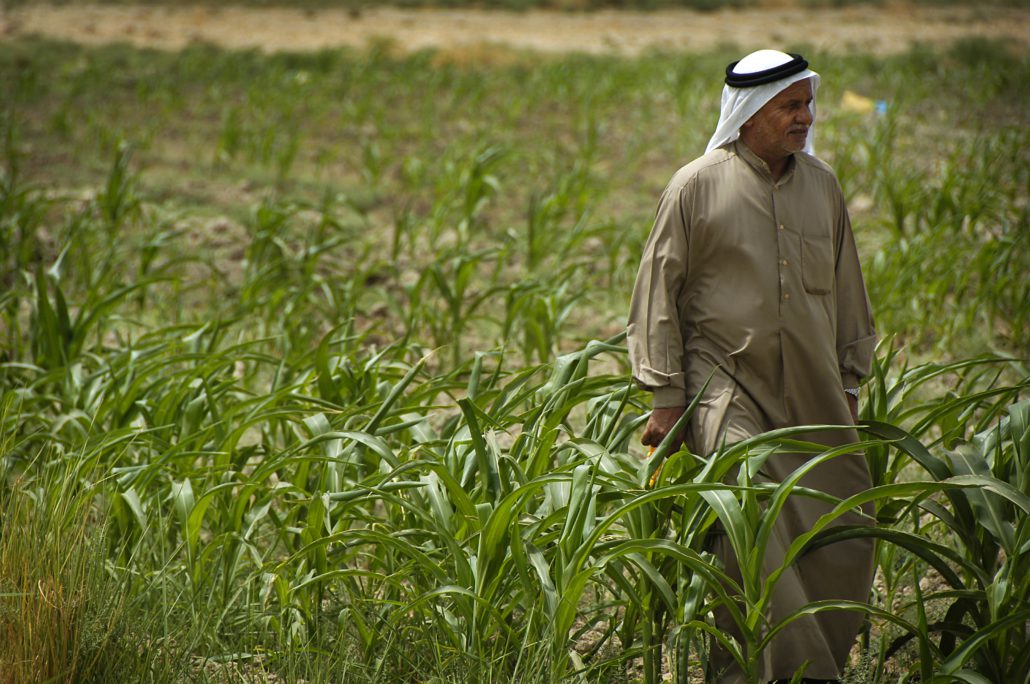
Decades of conflict in Iraq have effectively destroyed what was once the center of human civilization. Many view Iraq as a country very costly to the U.S.—another war from which the U.S. must recover. However, the international community’s job is not done. Today, millions of Iraqis are displaced and suffer from food insecurity, a problem that the government has struggled to control. This article will delve into the background of food insecurity in Iraq and what various groups are doing to combat it.
Governance Issues
The oil industry accounts for 90% of Iraqi government revenue. The crash of oil prices caused a $40 billion deficit in the Iraqi budget, cutting this revenue in half. Iraq’s government has been unable to properly fund various institutions. Combined with a 66% rise in population since 2000, this has placed immense stress on the country’s food supply. Constant conflict and the corrupt management of resources have hindered any ability to keep up with this population boom. USAID labels just under one million Iraqis as food insecure. The World Food Program, however, estimates that this number is closer to two million.
While much focus is on obtaining aid from the international community, Iraq has not necessarily focused as much on reforming its own institutions governing agricultural industry networks. Iraq’s State-Owned Enterprises are involved in every step of food production, processing and distribution. The government attempts to distribute food products and support the industry through its bloated Public Distribution System (PDS), which in 2019 cost $1.43 billion, and its yearly $1.25 billion effort to buy wheat and barley from Iraqi farmers at double the international price. Despite these expensive programs, Iraq still ends up importing 50% of its food supply.
Inefficient growth, processing and distribution methods and a reliance on food imports place Iraq in a delicate position. They are susceptible to global food chain supply network failures and the threat of a budget collapse due to the crash of oil prices. Such an occurrence would likely cause the food system to implode without the current level of government intervention. These governance issues, on top of decades of conflict and displacement, have exacerbated food insecurity in Iraq.
The Pandemic
The COVID-19 pandemic has exposed many of the aforementioned issues confronting the Iraqi food supply. Cases in Iraq have skyrocketed during May and June as Iraqis faced the decision of staying home without reliable state support and suffering from lack of income or holding onto their jobs and risking infection.
The pandemic has worsened the already pervasive levels of poverty and food insecurity. Inefficient state institutions and bureaucracy have combined with the pandemic to display the fragility of the Iraqi food supply. There have already been severe shocks in the global supply chain. For a government that relies on imports for 50% of its food supply, this pandemic could cause the crisis of food insecurity in Iraq to spiral. The Iraqi government has faced issues of governance for decades. The pandemic has only emphasized these issues while placing millions of Iraqis at further risk of conflict and disaster.
Humanitarian Efforts
The stark problem of food insecurity in Iraq has caught the eye of many different aid organizations, both in the U.S. government and the intergovernmental level. USAID, the primary U.S. foreign aid organization, has spent years trying to help meet Iraqis’ basic humanitarian needs, especially in the face of seemingly endless conflict. USAID has provided almost $240 million in emergency food assistance to Iraqis since FY 2014. This money goes toward food vouchers, food baskets and cash for food, all under the coordination of the World Food Program (WFP), which the UN Food and Agriculture Organization (FAO) established with the UN General Assembly.
USAID has also supported WFP efforts to create an electronic distribution platform for Iraq’s PDS, which would allow Iraqis to update their locations, use biometrics for identification and improve overall access to food supplies. The WFP, in turn, supports 280,000 internally displaced Iraqis and 76,000 Syrian refugees in Iraq, providing monthly food support mainly through cash transfers. It also provides local, healthy food for over 324,000 schoolchildren in Iraq. The organization is currently looking to expand cash transfers and food access to over 35,000 refugees and 10,000 internally displaced people in response to the COVID-19 pandemic.
The FAO has worked with the WFP in Iraq by focusing on agricultural sustainability. To improve food security and Iraqi self-reliance, the FAO has supported livestock production through capital, seeds, fertilizer and resources to counter disease. It also uses “cash-for-work activities” to enhance local markets and support infrastructure in addition to its efforts to promote labor-saving technology to counteract food insecurity in Iraq.
Looking Forward
Poor food access has been an issue for many years, but the pandemic is making the situation worse. Constant conflict and a lack of effective governance are both serious obstacles to creating a stable food environment for Iraqis, but there is a significant commitment from the international community to shore up Iraqi agricultural sustainability and provide support to individual Iraqis. While many are still in dire need of access to food, organizations like these provide hope for the fight against food insecurity in Iraq.
– Connor Bradbury
Photo: Flickr

Food Insecurity in Iraq
Decades of conflict in Iraq have effectively destroyed what was once the center of human civilization. Many view Iraq as a country very costly to the U.S.—another war from which the U.S. must recover. However, the international community’s job is not done. Today, millions of Iraqis are displaced and suffer from food insecurity, a problem that the government has struggled to control. This article will delve into the background of food insecurity in Iraq and what various groups are doing to combat it.
Governance Issues
The oil industry accounts for 90% of Iraqi government revenue. The crash of oil prices caused a $40 billion deficit in the Iraqi budget, cutting this revenue in half. Iraq’s government has been unable to properly fund various institutions. Combined with a 66% rise in population since 2000, this has placed immense stress on the country’s food supply. Constant conflict and the corrupt management of resources have hindered any ability to keep up with this population boom. USAID labels just under one million Iraqis as food insecure. The World Food Program, however, estimates that this number is closer to two million.
While much focus is on obtaining aid from the international community, Iraq has not necessarily focused as much on reforming its own institutions governing agricultural industry networks. Iraq’s State-Owned Enterprises are involved in every step of food production, processing and distribution. The government attempts to distribute food products and support the industry through its bloated Public Distribution System (PDS), which in 2019 cost $1.43 billion, and its yearly $1.25 billion effort to buy wheat and barley from Iraqi farmers at double the international price. Despite these expensive programs, Iraq still ends up importing 50% of its food supply.
Inefficient growth, processing and distribution methods and a reliance on food imports place Iraq in a delicate position. They are susceptible to global food chain supply network failures and the threat of a budget collapse due to the crash of oil prices. Such an occurrence would likely cause the food system to implode without the current level of government intervention. These governance issues, on top of decades of conflict and displacement, have exacerbated food insecurity in Iraq.
The Pandemic
The COVID-19 pandemic has exposed many of the aforementioned issues confronting the Iraqi food supply. Cases in Iraq have skyrocketed during May and June as Iraqis faced the decision of staying home without reliable state support and suffering from lack of income or holding onto their jobs and risking infection.
The pandemic has worsened the already pervasive levels of poverty and food insecurity. Inefficient state institutions and bureaucracy have combined with the pandemic to display the fragility of the Iraqi food supply. There have already been severe shocks in the global supply chain. For a government that relies on imports for 50% of its food supply, this pandemic could cause the crisis of food insecurity in Iraq to spiral. The Iraqi government has faced issues of governance for decades. The pandemic has only emphasized these issues while placing millions of Iraqis at further risk of conflict and disaster.
Humanitarian Efforts
The stark problem of food insecurity in Iraq has caught the eye of many different aid organizations, both in the U.S. government and the intergovernmental level. USAID, the primary U.S. foreign aid organization, has spent years trying to help meet Iraqis’ basic humanitarian needs, especially in the face of seemingly endless conflict. USAID has provided almost $240 million in emergency food assistance to Iraqis since FY 2014. This money goes toward food vouchers, food baskets and cash for food, all under the coordination of the World Food Program (WFP), which the UN Food and Agriculture Organization (FAO) established with the UN General Assembly.
USAID has also supported WFP efforts to create an electronic distribution platform for Iraq’s PDS, which would allow Iraqis to update their locations, use biometrics for identification and improve overall access to food supplies. The WFP, in turn, supports 280,000 internally displaced Iraqis and 76,000 Syrian refugees in Iraq, providing monthly food support mainly through cash transfers. It also provides local, healthy food for over 324,000 schoolchildren in Iraq. The organization is currently looking to expand cash transfers and food access to over 35,000 refugees and 10,000 internally displaced people in response to the COVID-19 pandemic.
The FAO has worked with the WFP in Iraq by focusing on agricultural sustainability. To improve food security and Iraqi self-reliance, the FAO has supported livestock production through capital, seeds, fertilizer and resources to counter disease. It also uses “cash-for-work activities” to enhance local markets and support infrastructure in addition to its efforts to promote labor-saving technology to counteract food insecurity in Iraq.
Looking Forward
Poor food access has been an issue for many years, but the pandemic is making the situation worse. Constant conflict and a lack of effective governance are both serious obstacles to creating a stable food environment for Iraqis, but there is a significant commitment from the international community to shore up Iraqi agricultural sustainability and provide support to individual Iraqis. While many are still in dire need of access to food, organizations like these provide hope for the fight against food insecurity in Iraq.
– Connor Bradbury
Photo: Flickr
Ending Forced Child Begging in the Era of COVID-19
In many impoverished countries, especially Greece, India and Senegal, forced child begging is prominent. This practice means that parents or another group of adults will send children out on the streets to beg for money from tourists. With the COVID-19 virus, tourism has decreased drastically. This means that these children no longer have anyone to beg from, which is both good and bad. Child begging is very damaging to the children forced into it, but it is also how many families suffering from extreme poverty sustain themselves. Here’s what the impact of COVID-19 means for both child beggars and their families.
The Problem
Forced-begging is incredibly damaging for children. Not only does it put them in dangerous situations and leave them vulnerable to abuse, but it also keeps them out of school. If a child is being forced to beg by an adult who is not their parent, it can lead to them being separated from their families. Since this practice involves child trafficking, it is hard to record exactly how many children are victims of forced begging, and very little data exists on the issue.
While data in forced begging is almost non-existent, data on general child labor is more plentiful. Forced-begging takes place primarily in impoverished countries. In fact, child labor in general is overwhelmingly a sign of a poor country. According to data published by the United Nations Children’s Fund, in the world’s poorest countries, just over one in four children is involved in child labor. While this statistic may look bleak, it also means that if these countries were to become more developed, child labor would likely become drastically less prevalent.
An Unfortunate Necessity
Forced begging is also how many families keep themselves fed. In the era of COVID-19, child beggars face a number of hardships. First, they are at risk of catching the disease. These children spend much of the day on the crowded streets where they are exposed to many people and their risk of contracting the virus is higher. Second, there is hardly anyone left to beg from. According to data published by the World Tourism Organization, the change in international tourism in April 2020 was -97%. These families have lost a major source of their income, in a time when their country’s economy is likely struggling, especially if that economy relied heavily on tourism.
Solutions
The human rights organization Anti-Slavery has been fighting to end forced child begging for almost a decade. The organization works specifically to end forced child begging in Senegal, where child begging is commonly perpetuated through Koranic schools, where students’ schoolmasters will often require that the children beg. The organization has been working to get the government of Senegal to recognize how drastic the problem of forced child begging is, and to take action to prevent it.
Making sure that education is available to child beggars is also a vital step in getting these children off the streets. The World Bank has been working to support Senegal’s government in its efforts to improve education and bring education to poorer areas.
The drop in tourism hurting the forced child begging industry is both a positive and a negative; it could leave families without income, but it could allow child beggars a chance to get an education and stay off the streets. However, this outcome is only possible if education is available. When the tourism industry begins to grow again, it is vital that these children don’t return to the streets.
– Sophia Gardner
Photo: Flickr
Why the Blue Economy is the Economy of the Future
With over 70% of the world covered by the ocean, economists across the world are working to discover ways to integrate its varied resources into the world economy. One of the newest and most innovative visions of the future of the marine economy is termed the “Blue Economy.” This vision states that the responsible use and stewardship of the world’s maritime resources can be used as a tool for unprecedented economic growth, the fight against world poverty and the sustainability of the ocean environment. The strategic and sustainable use of the oceans has incredible growth potential and is also appearing to be a key factor in the development of small island nations.
Growth Potential
The Organization for Economic Co-operation and Development has projected that by 2030, the ocean economy will double from 2010 levels, adding $3 trillion to the global economy. The World Bank has already invested $3.67 billion USD in its Blue Economy program, underscoring the universal acceptance of its potential. Today, fisheries contribute $270 billion USD to the global economy, and with more sustainable fishing practices in place, their contribution to the global GDP will only continue to grow. Eighty percent of global trade currently operates via ocean transport and, according to the World Bank, the volume of seaborne trade is expected to quadruple by 2050.
One country that is currently experiencing the results of the Blue Economy is Bangladesh. Bangladesh has large growth potential in the maritime arena given that, according to the World Bank, it has recently gained international clearance to use the resources of a 121,110 square kilometer marine area “equivalent to more than 80 percent of the country’s total land area”. The highest growth sectors of the new Bangladeshi Blue Economy are fisheries, shipbuilding, offshore renewable energy, shipping and tourism. The World Bank projects that further key investments in the Blue Economy could produce a “ten-fold increase” in the production of aquaculture in Bangladesh. The prospect of job creation and economic transformation for the country’s poorest coastal populations is promising.
Includes the World’s Poor
Some of the world’s poorest countries have broad access to ocean resources: thus, the integration of the Blue Economy could provide economic benefits for countries and individuals as well as greater food security and improved health. By reducing pollution in the oceans, more people could be able to find work in the booming aquaculture economy. Governments’ efforts to maintain sustainability has the potential to increase their transparency and stability, leading to better resources for their citizens. Rising ocean levels disproportionately affect the world’s poorest countries; however, the blue economy will work to stem these changes.
Evidence of the inclusivity of the Blue Economy comes from the West African nation of the Gambia. In 2012, an organization of female oyster harvesters gained exclusive rights from the Gambian government to a key fishery. Due to the high quality of the local natural resources, the price of oysters harvested in this area doubled. As a result, nearly 400 women in the organization gained access to microloans and financial literacy programs able to aid in their fight against poverty.
Future Focused
The Blue Economy has a focus on sustainable technologies. Offshore renewable energy would provide small developing island and coastal nations with many high demand jobs in addition to energy benefits. Offshore renewable energy is more reliable than land-based technologies and does not have the same adverse effects on the environment that fossil fuels do. Offshore renewable energy is taking off across the globe, and if the world’s poorest countries are included in its growth, it could lead to developmental benefits for those nations.
The Blue Economy is a vision for the future that maximizes sustainability, production and anti-poverty mechanisms. Since many of the world’s poorest countries have a lot of access to ocean resources, aquaculture could provide them with new economic possibilities. With rising ocean levels, which have a greater effect on poorer countries, the Blue Economy could stem those changes and hold the key to a more prosperous future.
– Garrett O’Brien
Photo: Flickr
Thyroid Cancer: A Radiation-Caused Healthcare Crisis in the Marshall Islands
Carlton Abon is a singer, songwriter and musician. For his whole life, he carried out the thousand-year-old musical traditions of the people of the Marshall Islands, singing about their stories and legends. His successful career as a recording artist, however, was brought to an end when a cancerous growth near his thyroid required a surgery that cost him his singing voice. He has worked a desk job in the nation’s capital of Majuro ever since.
A Paradise with a Dark History
The Marshall Islands is a nation comprised of 29 coral atolls, spread out over a remote swath of the Pacific Ocean roughly the size of Mexico. It is also a sparsely populated country. Most of its 58,000 residents live on the two densely populated atolls of Majuro and Kwajalein, leaving the rest of the country an isolated and idyllic paradise of pristine beaches, untouched lagoons and coral reefs.
Its remote location, however, also made the Marshall Islands a target for U.S. nuclear tests during the Cold War. Between 1946 and 1958, the US detonated 67 nuclear devices in the Marshall Islands. This had a cumulative radioactive impact of more than 7,000 Hiroshima bombs. Hundreds of Marshallese were relocated by the US government as their home atolls became saturated with levels of radiation more than six times the livable amount.
The Healthcare Crisis
These tests sparked a healthcare crisis in the Marshall Islands. There was a massive rise in the number of radiation-linked diseases in the Marshallese population. Record numbers of stillborn and deformed babies were born in the years following the end of the tests, and many citizens suffered permanent eyesight and skin damage as a result of the intense heat. Decades later, the pain of the blasts is still being felt in the Marshall Islands in the form of a debilitating disease.
Thyroid cancer has become one of the leading causes of death for those in the Marshall Islands. US government studies predict that 50% of those cancer cases are a direct result of the radioactive fallout that blanketed these islands decades earlier. These daunting figures are compounded by the fact that there are no permanent oncologists practicing in either of the nation’s two hospitals. Common cancer treatments, such as chemotherapy, are not offered due to the nation’s dated healthcare infrastructure. The combination of these factors has turned radiation-caused thyroid cancer into a public health crisis in the Marshall Islands.
A Culture in Jeopardy
Thyroid cancer, as well as high rates of other communicable diseases, have also had a disastrous effect on the culture and livelihood of the nation. Like Abon, many victims of the healthcare crisis in the Marshall Islands are from an older generation of islanders. High mortality rates among this demographic means that indigenous traditions and native ways of life are slowly disappearing in the modern population of islanders.
As Marshallese music producer Daniel Kramer explains, “You have an older generation that was unable to pass down what it could if it was at its full potential. If even one or two of its talented artists are affected, it has a big impact on a small community.”
As artists like Abon lose their ability to pass on their cultural knowledge, thyroid cancer has begun to destroy the ways of an entire people, a threat that has prompted leaders in the Marshall Islands to take action.
Action Being Taken
Since the nuclear testing in the mid-1900s, the US government has repeatedly attempted to provide reparations and attempt to build up treatment capacity in the Marshall Islands’ hospitals. However, these actions have been proven ineffective; high rates of poverty and high prohibitive costs make adequate treatment unfeasible for many Marshallese. This is why in 2017, the Marshallese government established a National Nuclear Commission, one of the first of its kind. Working closely with nuclear-justice-focused NGOs such as REACH-MI*, the commission aims to:
Additionally, a Marshallese initiative in the US is trying to preserve the deeply-rooted musical traditions of the island nation through modern technology. KMRW, a radio station run out of Springdale, Arkansas, has become the first island music station in the United States. Residents of Springdale, which is home to a sizable Marshallese immigrant population, can enjoy island music, culture and even public health information from the station.
Since the U.S. used the Marshall Islands as a target for nuclear tests, the people have been facing a health crisis. Radiation related cancers, such as thyroid disease, have taken a toll. However, the government of the Marshall Islands and NGOs such as REACH-MI* are stepping in to help. Although the long-term impacts remain to be seen, initiatives like these are crucial for fighting the healthcare crisis in the Marshall Islands and preserving its unique culture.
– Shobhin Logani
Photo: Flickr
Immigration, Welfare and Hunger in Norway
The nation of Norway utilizes comprehensive social service programs in order to provide medical care, education and pension to its citizens. These policies have assisted in maintaining a low rate of poverty and hunger in Norway. In the previous decade, Norway has experienced an increase in labor and refugee immigration. Though only 3% of the nation’s citizens suffer from food insecurity, immigrants often face hardships in gaining adequate nutrition.
Immigrant Hunger
Asylum seekers are defined as individuals who are forced to immigrate to another country and await refugee status. In Norway, such individuals often represent the countries of Syria, Turkey and Eritrea. The nation experienced a steady increase in refugee applicants beginning in 2006, peaking at 30,470 applicants in 2015 and declining in the following years. In 2017, Norway granted each asylum seeker 250 euros per month while they awaited approval. However, a typical adult in Norway spends 250 euros each month on food alone, and food-related costs account for only 11% of an average family’s total spending.
Language barriers, low income, unfamiliar cuisine customs and religious standards also contribute to immigrant hunger in Norway. For instance, a study conducted in 2014 discovered that immigrant women shopping for food in Norway largely purchased what appeared “familiar or safe” due to lack of knowledge about meal preparation and ingredients that would affect religious customs. Along with acquiring monetary means to purchase food, lack of nutritional savvy poses a barrier to sustaining a healthy diet.
School lunches also pose a threat to immigrant food security. While equal access to free public education is a norm, school lunches must either be purchased or provided. A study analyzing the influences of ethnicity, financial constraints and food consumption revealed that immigrant families must often make small sacrifices to supply the standard packed lunch of bread and meat. Thus, the inability to provide packed lunches contributes to hunger in Norway among school-aged children.
Immigrant Statistics
Welfare Policies
Generous social policies and relatively equal wage distribution are trademarks of Norway’s welfare model. Such policies, however, are contingent upon a qualified labor market and a high rate of employment in order to generate the economic stability required to fund the country’s programs.
When considering immigrants, this model presents negatives and positives. Negatively, integration into the labor market has proved difficult among immigrant populations due to differences in qualifications, educational backgrounds, professional experiences and instances of discrimination. Positively, educational systems and equal wage distribution provide foundations for crafting a prosperous life.
An article published in the New Political Science journal in 2018 revealed that strict immigration policies of right-wing populist groups (exemplified in Norway by the Progress Party) have contributed to the groups’ recent successes across Europe. Debates between the coalition government of the Progress and Conservative Parties and the Labor Party reveal a wide range of stances. Opinions vary, from tightening the immigration policy to celebrating the increased economic productivity and diversity.
These debates concerning how to address the new realities of immigration have the potential to affect the Norwegian welfare model. Specifically, these beliefs could impact the educational system frameworks, training for employment and qualifications for government assistance.
Norwegian Humanitarian Initiatives
Domestically, a humanitarian foundation called Caritas provides career services, housing accommodations and healthcare counseling to immigrant families in Resource Centers across five major Norwegian cities.
In 2019, the Norwegian government developed an action plan titled “Food, People and the Environment” to promote global food security through sustainable food development in accordance with the U.N. Sustainable Development Goals. This action plan is an integrated governmental approach that addresses malnutrition and inefficient agricultural practices as a part of Norwegian foreign and development policies.
Additionally, Norway has worked with the U.N. Food and Agriculture Organization to utilize its knowledge of aquaculture to promote responsible fishing practices among developing countries. This partnership also works to combat deforestation, provide emergency relief and establish prosperous legislative frameworks.
As a leader in foreign assistance and domestic development, Norway exhibits strategies for promoting food security. Though there is a relatively low rate of hunger in Norway, it remains necessary to resolve immigrant food insecurity, and this nation has taken steps to do so.
– Suzi Quigg
Photo: Flickr
Hunger in South Africa: 5 Facts and What’s Being Done
5 Facts About Hunger in South Africa
Actions Taken by Multiple Nonprofit Organizations
Several nonprofits are taking action to address the challenges of hunger in South Africa. Food Forward SA collects surplus food from farmers and distributes them to the people in need in six regions of South Africa. Since rural areas and children are more vulnerable to food insecurity, the organization carries out the programs to provide food. Moreover, the organization has launched a Youth Internship Program. In this program, young South Africans can gain practical experience and learn about logistics and food safety.
In addition, the EACH 1 FEED 1 project by the Nelson Mandela Foundation distributes grocery items purchased by donors and financial donations to communities in need. Also, the South African Food Sovereignty Campaign tackles the systematic issues of food insecurity in the country and provides a place for other food distributing organizations to increase effectiveness and communicate with each other.
Although multiple nonprofit organizations and the government are working to deal with hunger in South Africa, the country still has a severe situation that requires urgent help.
– Sayaka Ojima
Photo: Flickr
5 Facts about Homelessness in Guatemala
Guatemala has a population of 17 million people. Although Guatemala contains vast industries like tourism and agriculture, the nation still has a large problem with homelessness. Guatemala’s homelessness correlates with the poverty occurring in the country. In 2014, 8.7% of the population fell under extreme poverty. People that made $5 a day make up 48.5% of the population. Because of this dire poverty situation, most families in poverty in Guatemala reside in makeshift homes that do not protect against weather conditions. Here are five facts about homelessness in Guatemala.
5 Facts About Homelessness in Guatemala
Many factors cause homelessness in Guatemala, but it takes an approach from the Guatemalan government, non-government organizations and developed countries to improve the situation in these countries. Despite Guatemala having large pockets of inequality, the situation is improving, as the economy’s GDP grew from 68% in 2016 to 85% in 2020. Along with this, multiple non-government organizations help to house people that live in unstable houses. Organization Asociacion Nuestros Ahijados is another NGO helping to shelter people in poverty. Through these measures, people are able to have stable homes, but it will take reductions in violence, pollution and poverty to end homelessness in Guatemala.
– Sarah Litchney
Photo: Wikimedia Commons
Roadblocks to the Elimination of Poverty in Gabon
For many citizens of the nation of Gabon, living on less than $2 a day is a harsh reality, with a third of the population living below the poverty line. However, this affliction of poverty in Gabon sharply contrasts the economic success of wealthier citizens, showcasing significant inequality within the country.
Economic Successes and Failures
Gabon had a GDP per capita of more than $7,600 as of 2019, the fourth-highest on the continent. Oil is by far the top industry in Gabon; as a small African country on the Atlantic Ocean, 80% of its exports are based on oil production, along with 45% of its GDP. However, some consider this dependence on the abundant supply of oil to be more of a curse than a blessing, as fluctuations in prices have the potential to significantly damage the Gabon economy. Additionally, oil dependence has also contributed to inequality, with only 20% of the population holding around 90% of the wealth in the nation. Gabon has done little to expand economic possibilities in spite of these effects, leaving approximately 400,000 people unable to find work and reinforcing the affliction of poverty.
Urbanization
Urbanization is incredibly high in Gabon, with more than half of the population living in two cities, Libreville and Port Gentil. In the overcrowded slums of Libreville, Gabon’s capital and largest city, many immigrant workers and local Gabonese live in absolute poverty. Thousands of people in Gabon’s urban areas do not have reliable sources of food or proper means of sanitation.
A positive for those living in the urban areas of Gabon is that clean drinking water is readily available: more than 97% of citizens living in cities have access. In rural areas, however, the percentage drops to less than 55%. Gabon’s government is working to make clean drinking water accessible throughout the country. In 2018, the African Development Bank (ADB) granted Gabon a fund of $96.95 million to improve the water deficit in Libreville by expanding the drinking water infrastructure into the greater Libreville area and other municipalities.
Lack of Infrastructure
The lack of developed infrastructure in rural areas has been a crippling issue. Most of the country’s roads are unpaved and impassable during the rainy season. The postal system is a nightmare for businesses trying to move products and raw materials around Gabon. To combat issues like these, Bechtel, an American engineering company, agreed to a partnership with Gabon in 2010, to complete projects improving transportation, housing, education, medical facilities and water and waste management. After six years of work, the partners agreed to extend the partnership by an additional $25 billion. The project will build 17 schools capable of housing 15,000 children, provide 64,000 homes with clean energy and repair roads and railroads, among other improvements. This modernization effort could prove revolutionary for industries in Gabon as well as the country’s poor. At the very least, this overhaul is bringing jobs to a population in desperate need, as the project hired much of its workforce locally.
In recent years, there have been great strides toward repairing Gabon’s economic issues. Reducing poverty in Gabon by diversifying the economy and repairing infrastructure both seem to be successful initiatives. With plans in place to modernize the country, prosperity could be on the horizon for the less fortunate citizens of Gabon.
– Matthew Beach
Photo: Flickr
The Global FoodBanking Network Fights Hunger
COVID-19 continues to disproportionately impact impoverished communities. The nature of the pandemic is continuing to force many people into unemployment. Consequently, the pandemic has exacerbated the hunger crises among those who already survive on so little.
Interim Executive Director of nonprofit group Oxfam Chema Vera described the pandemic as the final straw for millions of people already struggling to survive through one challenge or another. These challenges stem from conflict, environmental challenges, inequality and a broken food system. Over many decades, this inequitable food system has impoverished millions of food producers and workers. The Global FoodBanking Network, however, is working to combat this COVID-19 hunger crisis with a strategic response.
About the Organization
The Global FoodBanking Network is a nonprofit organization that works in over 40 countries to alleviate food insecurity and hunger. It works with a variety of food banks to offer support and education. It also hopes to create a community more secure in its access to nutritional needs. The network has a variety of corporate partners aiding it in its COVID-19 food relief endeavors. These partners include Bank of America, BlackRock and Kellogg’s.
Additionally, the Global FoodBanking Network served 16.9 million people across 44 countries in 2019. It also supplied over 1.4 billion meals in the same year. Almost all of the countries the Global FoodBanking Network works with are developing economies. The largest areas of focus for the network are the Asia-Pacific region and Latin America at 56% and 27% respectively.
Responding to COVID-19
When COVID-19 received designation as a pandemic in March 2020, the Network released a statement regarding its intentions for food relief the following day. The statement indicated a desire to employ resources to prevent a COVID-19 hunger crisis from struggling communities. The Network’s plan included designating a COVID-19 fund as well as advocating governments and corporations for aid on behalf of local food banks. It also included sharing crisis education with food banks, making them better equipped to handle how the pandemic has impacted food distribution.
A major aspect of the Network’s COVID-19 hunger crisis response plan includes taking account of research. The Harvard Law School Food Law and Policy Clinic has published this research. The research team worked with The Global Food Donation Policy Atlas to create guidelines to maximize aid potential in food distribution. The study identifies that one-third of all food goes to waste, largely due to legal barriers. The research that the clinic conducted lays out steps to take in order to get more food to communities grappling with food insecurity.
Impact of The Global FoodBanking Network
Furthermore, the study introduced policy initiatives that could apply to several countries. These recommendations include establishing effective and explicit food safety guidelines on a national level. Recommendations also included that governments provide incentives to donate food by making it cheaper than food disposal. Professor Emily Broad Lieb is the faculty director of the Food Law and Policy Clinic. She says that this research represents actions the United States and the international community must take. These should help countries address the COVID-19 hunger crisis more effectively.
Despite the debilitating effects of COVID-19, the Global FoodBanking Network is working towards accomplishing its original goal of fighting hunger internationally. Its efforts combined with the guidance of new research could have important and positive implications on how the nonprofit community deals with food insecurity in a COVID and post-COVID era.
– Riya Kohli
Photo: Flickr
5 Facts about HIV in the Central African Republic
The Human Immunodeficiency Virus (HIV) has affected millions of people around the world for many decades. If left untreated, HIV can slowly develop into Acquired Immunodeficiency Syndrome (AIDS) and leave those infected with a compromised immune system. Thousands of individuals have suffered from the disease or lost their life to it since the first reported case in the Central African Republic in 1984. The country has mobilized numerous efforts to combat the disease but still requires assistance to ensure that the citizens have adequate testing and access to medicine. Here are five important facts to know about HIV in the Central African Republic.
5 Facts About HIV in the Central African Republic
HIV has been prevalent in the Central African Republic since the first case was reported in 1984. While the virus impacts many people, weakening their immune systems, organizations are stepping in to help. Outside funding and support from agencies like UNHCR and UNICEF are helping reduce the prevalence of HIV in the country.
– Danielle Kuzel
Photo: Flickr