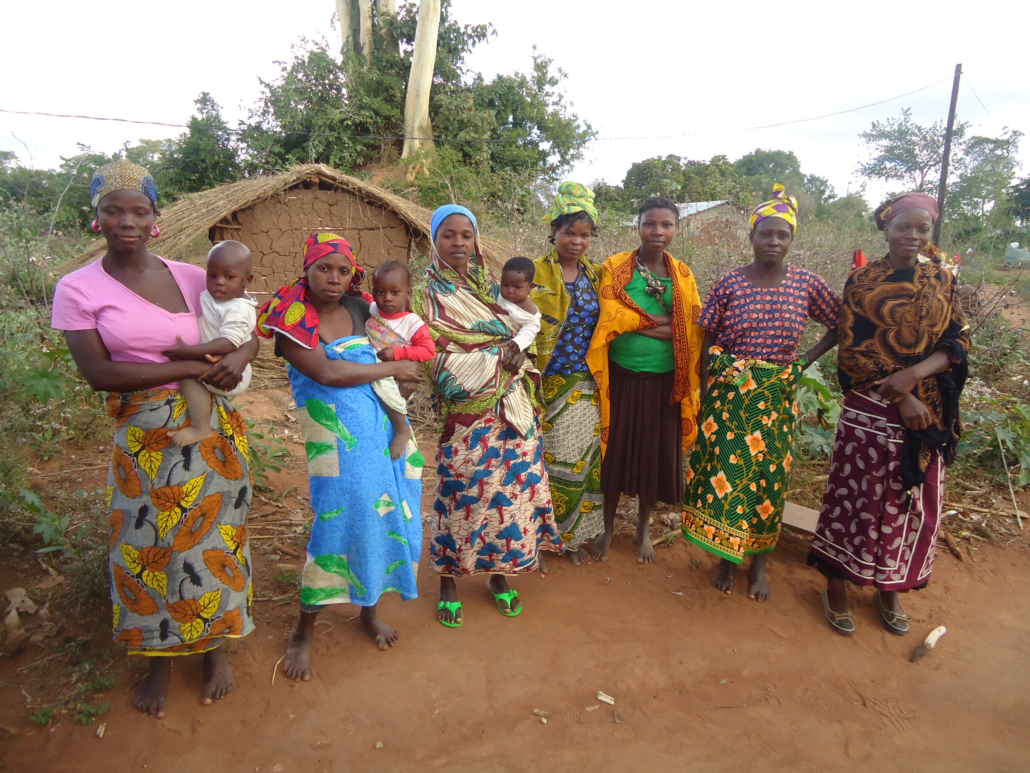
Young women between the ages of 15 and 24 make up approximately 9.8% of sub-Saharan Africa’s total population, but they account for 20% of the region’s confirmed cases of HIV. While part of the reason why HIV affects women the most is due to basic biology and the fact that women are more likely to contract HIV, it also has to do with economic, cultural and legal factors present in sub-Saharan Africa.
Poverty and the Spread of HIV
The good news is that poverty is declining globally. The bad news is that extreme poverty is becoming ever more prevalent in sub-Saharan Africa, where experts believe that 90% of impoverished people will live by 2030. A struggling economy warrants little room for government expenditures on healthcare and education, so not only are many poor people in sub-Saharan Africa not able to access affordable methods of HIV prevention and treatment, but they also do not receive substantial education on how to prevent its spread. Specifically, in this region, 70% of young women have not learned about the risks, treatments and preventions of HIV.
Without promising futures, it is not uncommon for young women to resort to transactional sex or early marriage for support. Both customs are associated with less condom use, sexual violence and multiple partners. Both transactional sex and child marriage often result in a significant age gap between partners. Evidence shows that HIV in men becomes more prevalent with age, so higher age gaps cause HIV to affect young women.
Cultural and Political Barriers
Gender norms that accompany older man/younger woman relationships also add how HIV disproportionately affects women. In order to feel masculine, men tend to assert their dominance by having many partners, refusing to get tested for sexually transmitted infections and not wearing a condom during sex. These practices reinforce ideals that perpetuate sexual health as a woman’s responsibility and are some of the reasons for why HIV affects women so significantly.
Culturally, there is much stigma surrounding premarital sex, having multiple partners and being a woman with HIV. There are many reports of unsupportive healthcare professionals, denial of service and miscommunication about results concerning HIV status. Coupled with the fear of horror stories of forced sterilization, forced abortions and forced virginity examinations, there are high barriers discouraging women from accessing the care they need.
Restrictive policies also make it difficult for young women to access information about their sexual health. In a study that received results from 110 countries, over half of the responding African countries required parental or spousal consent for women under 18 to receive HIV testing. Although these laws may be to protect children, it actually prevents young women from accessing sexual and reproductive medical care. For places that do offer HIV services, many are exclusively for married women with children, so most young women do not fit the criteria to obtain testing. Additionally, nearly half of the responding African countries reported having age restrictions for buying condoms.
Action Plan
The statistics look grim, but the World Health Organization’s five-year plan to reduce the number of HIV infections and deaths is in full swing. Its goals include increasing testing, eliminating discriminatory laws and creating larger global access to testing for sexually transmitted infections.
The plan includes five specific tactics the WHO intends to use, which cover assessing the situation, deciding which services to provide, how to provide these services, financing the efforts and implementing structural change. In the end, the WHO aims to end the AIDS epidemic by prioritizing preventative measures like wearing condoms and education about injection safety, allocate more resources towards ending gender-based violence and discrimination, introducing a harm-reduction intervention package and much more.
If WHO carries out this plan correctly, it will reach hundreds of thousands of people, many of whom are young women residing in sub-Saharan Africa. It should also equitably deliver HIV services to those who are most in need.
– Rebecca Blanke
Photo: Wikipedia Commons

Record Breaking Sandwiches Fight Hunger in South Africa
Ladles of Love
Ladles of Love is a volunteer soup kitchen for the homeless. Although the organization is honored by winning a world record, it’s main focus remains to provide food aid to hungry Capetonians. Ladles of Love was founded by Danny Diliberto in 2014. While walking the streets of Cape Town providing free soup, the restaurateur observed a homeless man shouting and swearing. When Diliberto approached him with the soup, the man stopped to thank Diliberto and continue walking. Realizing the power of a simple gesture in restoring dignity as well as a basic human right, Diliberto founded the soup kitchen. Since then, Ladles of Love has served over four million meals.
Hunger in South Africa
South Africa has a population of 53 million people, of which 7 million suffer from hunger. More than half of the South African population is at risk of hunger with the poorest groups spending 50% of their income on food. In comparison, the average American spends 9.5% of their income on food. Many factors have contributed to food insecurity in South Africa, including unemployment, rising food prices and the disproportionate effects of apartheid on communities of color.
To improve hunger in South Africa, many large organizations such as the WHO and CARE have also invested in food aid. These efforts have made a positive impact. The percentage of hungry individuals in South Africa fell from 30% in 2002 to 13% in 2017. During this time, the crime rate also fell from 46% to 34%. This observation supports studies that show that improving food security reduces conflict and improves economies. Every dollar invested in childhood nutrition programs and interventions yields around $16 in return.
Hunger and COVID in South Africa
As the COVID pandemic puts more South Africans out of work and weakens the economy, more food aid is crucial to helping the country recover. Organizations like Ladles of Love have already stepped up. The non-profit said that, in addition to making record-breaking sandwiches, it is now supplying various soup kitchens, shelters and 110 beneficiaries and NPOs (who support 250 beneficiaries of their own) in order to help provide food where it is needed most.
With the help of organizations like Ladles of Love and support from government institutions, South Africa is working to overcome food insecurity. Currently, the country has the highest number of COVID cases on the continent. In addition to record-breaking sandwiches, the nation is in need of greater investment in food aid. As demonstrated by a local initiative that feeds hundreds of thousands of South Africans year-round, improving access to food for the hungry and malnourished is possible through cooperation.
– Beti Sharew
Photo: Flickr
HIV Affects Women in Sub-Saharan Africa
Young women between the ages of 15 and 24 make up approximately 9.8% of sub-Saharan Africa’s total population, but they account for 20% of the region’s confirmed cases of HIV. While part of the reason why HIV affects women the most is due to basic biology and the fact that women are more likely to contract HIV, it also has to do with economic, cultural and legal factors present in sub-Saharan Africa.
Poverty and the Spread of HIV
The good news is that poverty is declining globally. The bad news is that extreme poverty is becoming ever more prevalent in sub-Saharan Africa, where experts believe that 90% of impoverished people will live by 2030. A struggling economy warrants little room for government expenditures on healthcare and education, so not only are many poor people in sub-Saharan Africa not able to access affordable methods of HIV prevention and treatment, but they also do not receive substantial education on how to prevent its spread. Specifically, in this region, 70% of young women have not learned about the risks, treatments and preventions of HIV.
Without promising futures, it is not uncommon for young women to resort to transactional sex or early marriage for support. Both customs are associated with less condom use, sexual violence and multiple partners. Both transactional sex and child marriage often result in a significant age gap between partners. Evidence shows that HIV in men becomes more prevalent with age, so higher age gaps cause HIV to affect young women.
Cultural and Political Barriers
Gender norms that accompany older man/younger woman relationships also add how HIV disproportionately affects women. In order to feel masculine, men tend to assert their dominance by having many partners, refusing to get tested for sexually transmitted infections and not wearing a condom during sex. These practices reinforce ideals that perpetuate sexual health as a woman’s responsibility and are some of the reasons for why HIV affects women so significantly.
Culturally, there is much stigma surrounding premarital sex, having multiple partners and being a woman with HIV. There are many reports of unsupportive healthcare professionals, denial of service and miscommunication about results concerning HIV status. Coupled with the fear of horror stories of forced sterilization, forced abortions and forced virginity examinations, there are high barriers discouraging women from accessing the care they need.
Restrictive policies also make it difficult for young women to access information about their sexual health. In a study that received results from 110 countries, over half of the responding African countries required parental or spousal consent for women under 18 to receive HIV testing. Although these laws may be to protect children, it actually prevents young women from accessing sexual and reproductive medical care. For places that do offer HIV services, many are exclusively for married women with children, so most young women do not fit the criteria to obtain testing. Additionally, nearly half of the responding African countries reported having age restrictions for buying condoms.
Action Plan
The statistics look grim, but the World Health Organization’s five-year plan to reduce the number of HIV infections and deaths is in full swing. Its goals include increasing testing, eliminating discriminatory laws and creating larger global access to testing for sexually transmitted infections.
The plan includes five specific tactics the WHO intends to use, which cover assessing the situation, deciding which services to provide, how to provide these services, financing the efforts and implementing structural change. In the end, the WHO aims to end the AIDS epidemic by prioritizing preventative measures like wearing condoms and education about injection safety, allocate more resources towards ending gender-based violence and discrimination, introducing a harm-reduction intervention package and much more.
If WHO carries out this plan correctly, it will reach hundreds of thousands of people, many of whom are young women residing in sub-Saharan Africa. It should also equitably deliver HIV services to those who are most in need.
– Rebecca Blanke
Photo: Wikipedia Commons
Energy for All: Empowering Women in Senegal
One of the most crucial needs for countries around the world is widespread renewable energy access. In Senegal, limited energy access in rural areas has impeded economic development for years, with only 44% of households in rural Senegal having access to electricity in 2018. With such a lack of access, rural communities are limited to rudimentary energy sources such as wood-burning fires for cooking, lighting, warmth and other needs. For rural Senegalese businesses, renewable energy could dramatically improve food production and work efficiency. For example, instead of drawing water from a well one bucket at a time, farmers in Senegal could simply use a solar-powered water pump, saving a lot of time and expending far less physical energy.
Rural agricultural businesses, like market gardens, are in dire need of these technology upgrades as well as equal energy access between rural men and women. Market gardening is a popular agricultural technique utilized by smaller-scale farmers in Senegal, and most of the market gardening businesses are run by women. In fact, women in Senegal comprise 70% of the total rural employment workforce, making them the cornerstone of the country’s agricultural and livestock farming sectors. The empowerment campaign Energy 4 Impact is supporting rural women not only in their pursuit of widespread access to clean and renewable energy but also in the promotion of women’s autonomy and equality.
Energy 4 Impact’s “Energy Opportunities for Women in Senegal” Project
Energy 4 Impact is a non-profit organization partnering with local businesses to extend access to energy in Africa. It is working alongside Siggil Jigeen, a non-governmental organization that promotes and protects women’s rights in Senegal through the Energy Opportunities for Women in Senegal Project. The project aims not only to supply rural communities in Senegal with sustainable, efficient energy, but also to increase women’s contribution across the entirety of Senegal’s energy value chain. The project is active within the Tambacounda and Kedougou regions in Senegal, marked by characteristically high poverty and unemployment rates, low access to electricity, the dependence on solid fuel, the high level of working poor and the untapped potential for agricultural development.
So far, the program has empowered over “250 women-led Micro and Small Enterprises (MSEs)” in rural areas. It hopes that by increasing the presence of sustainable energy sources, more economic opportunities will manifest themselves for women-run agricultural operations. The project has provided Senegalese women and women-run MSEs with reusable energy technologies (solar-powered pumps, solar lamps and freezers) and improved equipment for crop treatment. Besides supplying equipment, the project has held seminars providing women in Senegal with key entrepreneurial information that further empowers them as businesswomen. The project teaches business skills like record keeping, using financial services, networking and business autonomy, among others. Women are at the heart of Senegal’s agricultural scene, and this empowerment campaign has further secured their position as the country’s main actors along the energy value chain.
Project Impact
The project’s impact on women in Senegal is significant. A study found that married women entrepreneurs who participated in the project were more directly involved in decision-making, household investments/spending and health than other married women. Moreover, it was noted that most of the women who attended the informational seminars were more cognizant of “women’s energy needs,” their part in the energy sector and the numerous benefits yielded by actively participating in the country’s energy sector.
The Energy Opportunities for Women in Senegal Project has made tremendous progress by disseminating useful information and energy technologies throughout rural Senegal, but the country’s fight for energy is far from over. Energy access gender gaps and low female employment rates still plague Senegal’s urbanized areas. However, Energy 4 Impact has given hundreds of businesswomen in Tambacounda and Kedougou the tools needed to reach out to other women throughout Senegal, and hopefully empower them in the same way that they have been.
– Maxwell Karibian
Photo: Flickr
7 Facts about Healthcare in Egypt
In early 2020, the population of Egypt increased to more than 100 million. Overcrowding in urban spaces, with an estimated 95% of the population living on about 4% of the land, has aggravated pollution and traffic while placing a strain on resources, such as clean drinking water. The poverty rate was at 32.5% in 2019, and unemployment, especially among youths, has elevated the need for affordable, accessible and quality healthcare. In recent years, these concerns have led to the implementation of measures to reform Egypt’s underfunded public healthcare system. Here are seven facts about healthcare in Egypt and measures to reform the system.
7 Facts About Healthcare in Egypt
Egypt still requires work to reform its healthcare system. However, the implementation of the Universal Health Insurance Law and continued support from international organizations, such as The World Bank, is helping make a change. These combined efforts are working to make quality healthcare accessible to all citizens of Egypt.
– Amy Olassa
Photo: Wikimedia Commons
Poverty in Singapore: A New National Priority
Despite the enormous wealth present in Singapore, poverty is also a pressing issue within the nation. With the lack of a minimum wage, there is no guarantee that Singaporean citizens have the opportunity to make enough to live on. Leaders within the country, however, are bringing the issue to the forefront of the national conversation. Poverty in Singapore increased by 43.45% in just three years, from 2012 to 2015. Poverty affects the elderly the most, with their rates increasing 74.32% within the same time period. This rapid increase has spurred government officials to address the issue. Various government policies, such as the lack of a minimum wage and restrictions on the withdrawal of retirement money, often receive critiques as possible causes of the growing problem of poverty in Singapore.
PSP Talk
The Progress Singapore Party is a major national political group, that describes itself as the ‘party for the people.’ It supports increased attention toward rising poverty rates. The party’s rhetoric largely focuses on fighting for all Singaporeans, not just elite classes that possess money and power. The party hosted a talk series, PSP Talk, in September 2019 to highlight pressing issues and direct the national conversation. Poverty in Singapore was one of the major topics of discussion during the event. Yeoh Lam Keong, the former chief economist at GIC Private Limited, spoke at the talk series, notably proposing several poverty reforms based on the findings from his research. Keong took the opportunity to emphasize the severity of poverty in Singapore.
“To my shock and horror, I [realized] that the position of the poor in [Singapore] was much worse and much more awful than I [could] imagine,” said Keong about his research.
PSP Talk opened up an opportunity for education and reflection on Singapore’s relationship with poverty and welfare reform. Keong defined three classes of poverty in his presentation– the elderly poor, the working poor and the unemployed poor– to establish an academic understanding of the situation in Singapore. He went on to explain his research-based policy initiatives, which the government could enforce to support its impoverished citizens. Keong’s initiatives included raising funding for the Workfare Income Supplement and Silver Support Scheme, programs that provide funds to those in need, by $500-$600 a month. He argued that this was a fiscally achievable action that would aid the suffering populations of the poor and elderly. Since Keong’s presentation on these policy reforms, the Singaporean government has set up expansions to the Silver Support Scheme. In January 2021, the program will expand its qualifying criteria and increase quarterly payouts by 20%.
Party member Secretary-General Tan Cheng Bok also spoke at the event. Dr. Tan made a public commitment to understanding the complexities of poverty in the nation and working to create solutions. He continued to support this assertion in July 2020 while campaigning for the General Election, pushing voters to elect representatives who ask the “right questions,” and value trust and transparency. After a narrow defeat, Dr. Tan vowed to continue to serve the people on these issues.
Looking Forward
PSP Talk represents a promising step toward addressing the growing rate of poverty in Singapore. The Progress Singapore Party’s decision to highlight poverty at this gathering of academics and national leaders suggests a new focus for Singapore’s government. The party continues to push for increased influence within the government while holding the current elected officials accountable for the needs of all Singaporean citizens.
– Riya Kohli
Photo: Flickr
Key Facts About Homelessness in Colombia
Poverty in Colombia
About 34% of Colombians live in “poor conditions.” This number is especially stark because Colombia is home to massive wealth inequality. Many of the richest members of Colombian society own disproportionate amounts of wealth.
Internal conflict has worsened conditions for people in Colombia. For more than 50 years, Colombia has experienced relatively severe internal conflicts, most of which originated from drug trafficking that swept the nation in the 1970s and 80s. This led to many people migrating into urban slums, where homelessness was rampant. More than 5.7 million people have been displaced due to the ongoing violence present in the country. As a result of this conflict and the frequent migration of communities, living conditions in settled areas have been notoriously bad. Homelessness in Colombia has affected 662,146 families, and more than 3.8 million families do not have “adequate” housing.
Organizations Are Working to Help
Organizations like Habitat for Humanity have tried to make a dent in these high rates of homelessness in Colombia, pledging support to hundreds of thousands of families in need. While helping to build up neighborhoods, Habitat for Humanity has also worked with Colombians to instill technical skills for construction and to build better community infrastructure. In addition, the organization is helping to provide financial education and making targeted investments in communities.
Another organization, called the Homeless World Cup Foundation, is combating homelessness in Colombia through athletics. The foundation’s mission is to provide access to soccer in some of the poorest communities in the country — not only bringing social cohesion and opportunity to disadvantaged communities but also creating new avenues for players to pursue careers in sports and other fields. The organization has touched the lives of more than 20,000 children and their families.
Tackling Homelessness in an Emerging Economy
Colombia is recognized as one of the world’s “emerging economies.” While homelessness in Colombia is a dire problem, the economic outlook for Colombia is relatively positive — with a consistent 3% expected economic growth for the first half of the 20th century. Through proper planning and prudent public policy, Colombian leaders can use this economic growth to tackle homelessness in Colombia and improve the lives of citizens in need.
– Zak Schneider
Photo: Pixabay
5 Facts About Healthcare in Angola
After a 40-year-long civil war that displaced one-third of Angola’s population and killed approximately 1 million people, the nation’s infrastructure was severely damaged. Following the civil war, healthcare in Angola suffered, with nearly 50% of the population living without adequate access to healthcare services. The lack of availability of healthcare services has contributed to high mortality rates for children under 5 years of age, high incidences of mother-to-child HIV transmission as well as a high risk of contracting malaria. Here are five facts about healthcare in Angola.
5 Facts About Healthcare in Angola
Despite facing a number of challenges, government programs and aid from international agencies are improving the outlook for healthcare in Angola. Community health workers are helping to increase access to essential healthcare services in high need areas of the nation. With government plans and the implementation of initiatives, Angola is well on its way to meeting the goals that its National Health Development Plan has outlined.
– Maddi Miller
Photo: Flickr
The ONE Campaign
In 2004, Bono and Bobby Shriver co-founded the ONE campaign. It is an international non-partisan campaign that believes the fight against poverty is not about charity but bringing justice and equality. ONE aims to end extreme poverty and preventable diseases by 2030.
What ONE Is
ONE pressures governments, either through grassroots campaigns or lobbying with political leaders, to do more to fight extreme poverty and preventable diseases. The campaign is not government-funded, and is financed entirely by individual philanthropists and corporate partners.
The ONE campaign is made up of several celebrities and world leaders. U2- lead singer Bono and activist Bobby Shriver continue bringing in other leaders to aid in their efforts. The team, which includes former Prime Minister of the United Kingdom David Cameron and U.S. Senator Kelly Ayotte, works worldwide to fight extreme poverty. Volunteers make up the backbone of the ONE campaign. These volunteers mobilize education and advocacy efforts for people facing global poverty. Anyone can be a volunteer; artists, activists, students, leaders and celebs, including Ellen DeGeneres, Brad Pitt, Ryan Gosling, Liam Neeson and Jewel, are all working together to end extreme poverty and preventable disease by 2030.
Who ONE Helps
The ONE campaign aims to end extreme poverty mainly in Africa’s Sub-Saharan region where 51 percent of the world’s poorest live. The campaign fights for several issues including no poverty, zero hunger and gender equality.
To address zero poverty, ONE campaign leaders propose:
How ONE Helps
The ONE campaign took more than 23 million actions towards alleviating global poverty. ONE championed 35 policy changes, with more than 128,000 supporters mobilized in Abuja, Berlin, Brussels, Dakar, Johannesburg, London, New York, Ottawa, Paris and Washington DC educating and lobbying governments.
“In Europe, ONE has been a key part of several victories shoring up support for development. In March 2013, the UK became the first G8 country to reach the 43-year-old 0.7 percent target for international aid as a share of national income, which meets the commitment made by the coalition government after the general election of May 2010.”
Also, the ONE campaign played a large role in lobbying for a provision of the Africa Growth and Opportunities Act (AGOA) to pass. The provision “increases mutually beneficial trade ties between the U.S. and Africa and promises to lift people out of poverty and into employment and prosperity.” It passed the U.S. House and Senate in 2012
Since starting the campaign in 2014, Bono and Bobby Shriver have been working to bring in leaders and volunteers to join them in the fight against poverty. By mobilizing volunteers to educate and lobby governments, the ONE campaign has been able to influence a number of policy changes. These successes continue bringing the ONE campaign closer to its goal of eliminating extreme poverty by 2030.
– Danielle Beatty
Photo: Flickr
Projects That Have Boosted Development in Guyana
Guyana is a nation that is full of rich history. It received its name from its early indigenous populations who named it “Guaina” or “land of water.” Guyana was its own land for many centuries before the Age of Exploration. However, in 1498, Christopher Columbus was the first European to see the country and he claimed it for Spain. It was not until numerous decades and many European leaders later that the nation declared its independence in 1970.
Since declaring its independence, the nation of Guyana has faced many struggles including widespread poverty and hunger, however, throughout the past three decades, there have been significant improvements in both of these areas. The Guyanese government’s development projects as well as numerous nonprofits have made lasting changes throughout the country. Here are two examples of projects that have helped advance development in Guyana.
Guyanese President Desmond Hoyte’s Economic Recovery Program
Due to long-lasting droughts, high rates of emigration, political uncertainty and many other factors, the nation of Guyana has experienced many economic stalls throughout its time in independence. In addition, competing parallel markets and decreases in agricultural production have played roles in Guyana’s economic struggles. In the 1980s, the country faced a complete economic collapse, while also having almost 50% of its population living in extreme poverty.
In an effort to address these issues and approach development in Guyana from an economic standpoint, Guyanese President Desmond Hoyte announced his Economic Recovery Program in 1988. The goal of this project was to restore economic growth, absorb parallel markets, eliminate payment imbalances and to normalize international financial relations. In order to meet these goals, the government liberalized harsh regulations on foreign exchange relations, removed price controls on key goods and devalued the Guyanese dollar to match market rates. These were only some of the decisions and changes that Hoyte and his government made while implementing his program, however, each of them was very impactful in its own ways.
Almost no positive change occurred within the first two years of the project and there were even some negative effects. However, by 1991, Guyana’s debt had lowered to a point at which the nation could receive international loans and foreign investment had surged. This program was the foundation for the nation’s sustained economic stability and opened the door for further development and growth.
The Guyanese Government and Global Partnership for Education’s (GPE) Long-term Investment in Early Childhood Education
The Guyanese education system has lacked sufficiency for decades. There is a significant disparity between the education that students living in the more urban and populated parts of Guyana receive and the education that students in the more remote regions receive. For example, it is very common for students living in remote areas to lack the necessary resources to facilitate adequate education as well as to have teachers with less training.
In an attempt to address these issues and disparities and to approach development in Guyana from a human capital standpoint, the Guyanese government and the GPE decided to make a long-term investment in the nation’s education system. This program focused on strengthening teacher forces through training, constant monitoring and evaluation. It also provided students with learning materials in the form of resource kits and teacher use manuals. The project also held training sessions for the primary caregivers of students across the nation in order for them to be able to support their children’s education at home. This project took a very well-rounded approach to mitigate education disparities and issues in Guyana and continues to have a lasting effect today.
According to the Guyanese Ministry of Education, this program helped improve literacy rates within students living in the hinterland and riverine regions by 139% and improved numeracy rates by 133%. There were also significant improvements within coastal and urban populations. Although this project ended in 2018, the Guyanese government made sure that it could provide identical services going forward in perpetuity.
A Bright Future Lies Ahead
Guyana has proven to be a model for development and growth. The projects and programs that have emerged throughout the nation have turned the country around and set it on a positive path towards continuous success. These projects and many others have accelerated development in Guyana and have made clear that the possibilities are endless for this small South American country.
– MacKenzie Boatman
Photo: Flickr
The Hidden Effects of COVID-19 in India
The most devastating effects of the COVID-19 pandemic in India may not be those caused by the virus itself. For the first time since India’s independence from the British crown, the already inordinate poverty rate is rising. The 69% of the nation that is on or below the poverty line are those who are at the greatest risk for infection. However, they are likely to face even more substantial damage from falling deeper into economic trouble.
The Problem
India has reported 1.24 million cases of COVID-19, but this data does not tell the full story of the country’s experience with the virus. With a population of over 1.35 billion, India actually has a lower rate of infection than the US. Many simply credit the nation’s sweltering climate to their proportionately low infection rate. While there may be some truth to this assumption, it is not a sufficient explanation. Another important factor is India’s astonishingly large poverty rate. Many of the country’s poor have little to no ability to practice social distancing, lack homes to shelter in place and do not have access to testing. The poverty-ridden sector of the population is therefore not only at great risk for infection but is also rarely accounted for in nationwide data.
The Causes
Throughout the pandemic, India has taken relatively strict action in terms of enforcing lockdown. This method has effectively impeded the spread of the virus among the wealthy, significantly contributing to the lower infection and mortality rates. With policies such as this in place, the most affluent citizens avoid crowded streets. Not only does this reality render many of the poorest members of the pre-virus workforce jobless as businesses close, but it even inhibits begging, something a great portion of the four million homeless people in India rely on for survival.
The Effects
In lieu of proper homes, virus protection and economic stability, the poorest members of society are finding new ways to try to combat their unfavorable circumstances. Slums are even more crowded than before and government-created hospitals have become the new shelter for many. Dr. Zarir Udawadia, an infectious disease specialist treating coronavirus patients in Mumbai, recognizes this problem: “How does one quarantine someone who has no home, or someone who lives cheek to jowl with ten others in a small room?”
Those especially discontented with their circumstances resort to migration, seeking to travel sometime hundreds of miles on foot in hopes of refuge. Migrants move through India in thousands, further risking infection from COVID-19 among other lethal diseases.
Who’s Helping
Although it is difficult to collect COVID-19 data in impoverished communities, there are organizations trying to combat this issue directly and provide aid to those suffering from the disease and its aftermath. For instance, Give2Asia provides funding for medical supplies for frontline workers, meals for those whose means of obtaining them are slashed by the effects of the pandemic and financial support to marginalized families.
India’s large number of people in poverty renders their numbers of infected with coronavirus inaccurate. However, the poorest sector of the nation has larger issues than the virus itself, as the nationwide lockdown takes away street vendors’ customers and, in extreme cases, the revenue of beggars. Many people resort to migration or are utilizing slums and government-created hospitals to find shelter. Though this situation is far from optimal, there are numerous organizations and frontliners that are continually combating the pandemic.
– Ava Roberts
Photo: Flickr