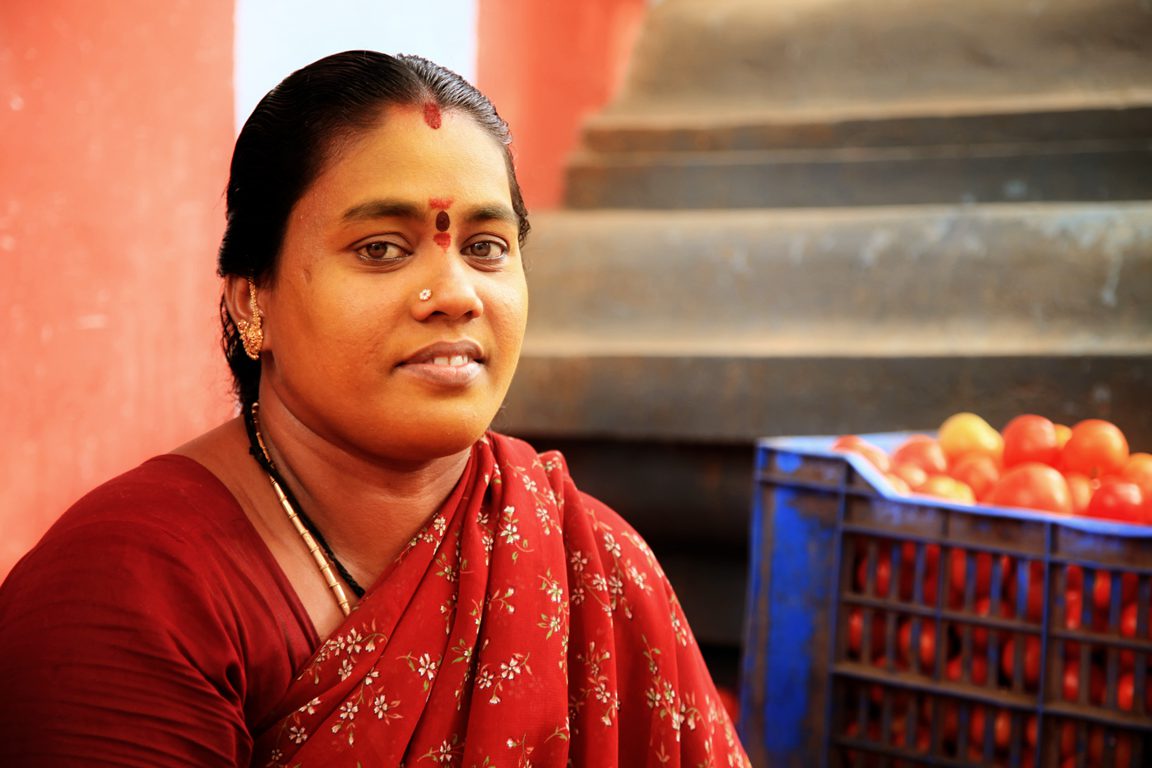
The coronavirus is disproportionately affecting women across the globe, setting back progress for global gender equality. Confined inside homes, women are shouldering more of the housework and childcare than their husbands, fathers and brothers. In India, a country where women are expected to fulfill homemaking roles, the gender disparities in housework between men and women are only growing more apparent, especially as more women exit the workforce. For Indian women, domestic unpaid labor consumes hours of their days and limits them to a life of financial dependence on their partners or a life of poverty. In India, two-thirds of the population lives in poverty. With the unemployment rate being as high as 18% for Indian women, compared to 7% for men in India, it’s inevitable that women make up a large percentage of this impoverished population.
Women’s Unpaid Role in India
While men in India complete less than an hour of unpaid labor each day, Indian women spend six hours of their day on unpaid labor. In comparison, men around the world typically spend around two hours a day on unpaid labor, while women spend four and a half hours.
Although the time and energy women put into cleaning and caring for children and the elderly are essential roles in economies, housework isn’t widely recognized as a form of labor. As part of their domestic responsibilities, Indian women must also retrieve water from wells, a chore that spans several hours and multiple trips in one day. Often lacking the aid of technology, Indian women must cook, clean and do laundry by hand.
Because women in India bear the burden of housework, they can’t maintain stable jobs outside their homes. This requires them to rely on their partners. This is in part due to the traditional patriarchal system India upholds. From a young age, Indian women are trained to fulfill roles inside the home. As a result, Indian women are excluded from the workforce, and young girls are pulled from schools to work inside the home, jeopardizing their education.
This reality has only grown over the years, as more and more women have exited the workforce. Over the past decade, the percentage of women in the workforce has dropped from 34% in 2004 to 25% in 2018, compared to the nearly 80% of men who work.
Why Female Employment Is Declining
The decline in female employment directly impacts Indian women’s risk of falling into poverty, as they are unable to financially support themselves. But up to 64% of women said they had to be responsible for housework as there were no other family members who would perform these responsibilities.
With a population of over 1.3 billion people, it’s increasingly difficult to secure a position in the Indian job market, and work positions designated for women are slim. On top of this, upon completing the same job as men, women earn 34% less in wages than their male coworkers. For women who manage to secure a job, their time is stretched thin as they complete both paid work and unpaid work. As a result, they are less likely to spend time on education, cultural and leisure activities.
There are exorbitant economic losses, though, when women are not welcomed into the workforce. According to an Oxfam report on female unpaid labor, the value of global unpaid labor performed by women amounts to at least $10.8 trillion annually, or, as the study suggests, “three times the size of the world’s tech industry.” By putting into context the monetary value of unpaid labor in society, the true economic loss of excluding Indian women from the workforce is undeniable.
In a step toward creating a more inclusive workforce environment for Indian women, the country passed the Maternity Benefit (Amendment) Act in 2017. The amendment increased the number of weeks for paid maternity leave from 12 to 26 weeks. But this act hasn’t led to a significant change in female workforce employment. Instead, the act could continue to negatively impact female employment. Newly responsible for covering the cost of additional paid maternity leave, companies may be less inclined to hire female workers.
Combined with the recent growth in female education and declining fertility rates, India’s economy is primed for welcoming women into the workforce. But the country must strike a balance between paid and unpaid labor, a gendered expectation rooted in Indian tradition.
Closing the Gender Gap: One Indian Woman’s Petition
One Indian woman is especially determined to redefine gender roles in India. Juggling unpaid labor at home along with her involvement in a charity for reproductive justice, Subarna Ghosh realized she was shouldering the majority of housework —particularly since the pandemic forced her family to stay home.
In July 2020, Ghosh decided to draft a petition on Change.org and describe her experience as a working woman in India expected to perform the majority of the housework. “Unequal distribution of unpaid household work has rendered the harshest blow to women across India during this lockdown. Yet, women’s care work continues to be invisible and no one wants to address this gross imbalance,” she wrote.
Directing her efforts at India’s Prime Minister Narendra Modi, Ghosh concluded her petition by calling on Modi to encourage Indian men to equally fulfill their share of housework. The petition has received over 75,000 signatures, mostly from women who stand in solidarity with Ghosh and relate to her experience.
Ghosh’s petition reflects the persistent struggle for female equality in India, as one woman’s experience echoes the experience of thousands. Only when women in India are given the same opportunities as men will they be able to earn their own financial independence.
– Grace Mayer
Photo: Flickr

5 Ways that Load Shedding Impacts Health in South Africa
There is considerable controversy surrounding the effects of load shedding, particularly on the topic of health in South Africa. Healthcare in South Africa is under-funded by the government, which is reflected in the inequality of access to care for those without jobs. This lack of healthcare support is especially detrimental due to the quadruple burden of disease in the country, referring to maternal and child health, HIV/AIDS and tuberculosis, non-communicable diseases and injury in South Africa. Together with the daily fundamentals of preventative and reactionary health procedures, each burden of disease is independently impacted by power outages in the country. Here are five ways that health in South Africa is impacted by the country’s load shedding system.
5 Ways that Load Shedding Impacts Health in South Africa
With proper support through government funding, the infrastructure for generating ample electricity could be improved and maintained in South Africa, which would not require load shedding. Preventative health measures would become possible with improved access to electrical resources, and reactionary medicine in hospitals would also become more reliable and effective without a dependency on unstable generator electricity. Not only would increased funding for electrical infrastructure contribute to equal access across the country, but it would also support the overall status of health in South Africa.
– Lilia Wilson
Photo: Flickr
5 Vegan Groups Fighting World Hunger
Vegans are often the butt of every joke in pop culture, from comments on their hair and hygiene to their fondness for eating “rabbit food.” Yet, vegans are more than their food choices; veganism is a form of activism. This article will explore five vegan groups fighting world hunger.
Veganism and Global Hunger
Plants produce 9.46 quadrillion calories each year, enough to feed every human 2,700 calories a day for a year, with 2 quadrillion calories leftover. If this is the case, why do people go hungry? Unfortunately, humans only consume a little over half of these calories, with 36% going to animal feed and 9% to industry. This leaves humans with only 5.6 trillion calories — well below the amount necessary to solve world hunger. When consuming animals, a staggering 89% of calories of these plant calories disappear when humans consume animals secondarily.
Moreover, animal-based diets require 1,000% more crop growth than plant-based diets. Moving to a plant-based diet creates 70% more room to grow crops, and, even accounting for population growth, could bring an end to global hunger.
Fortunately, many activism groups are working to fight global hunger and poverty while serving healthy vegan meals. Here are five vegan groups fighting world hunger.
5 Vegan Groups Fighting World Hunger
These vegan groups fighting world hunger show that vegans around the world are using their plant-based diets to help solve one of the quintessential issues facing the world today: global hunger. While the transition to a completely plant-based diet brings challenges, scientists see that it could be a step forward in fighting global poverty and hunger through ethical and sustainable food choices.
– Breanna Bonner
Photo: Pixabay
Afghan Women Aid War-Torn Communities
Poverty and Conflict
The World Bank estimates that the number of people living in areas overwhelmed by conflict has doubled since 2007, a rate that has increased alongside poverty expansion. People living in fragile and conflict-affected situations, or FCS, are 10 times more likely to be poor. Forty-three of the world’s most impoverished countries are classified as FCS regions. Proximity to conflict directly affects education, infrastructure, health and the economy. In violent areas, children are less likely to travel to school, families are more likely to suffer long-term medical conditions and communities lose valuable opportunities for monetary mobility and advancement.
The Taliban has sustained a significant presence in Afghanistan for over a decade and has remained a constant threat. More than 1,400 people were killed or injured by landmines in Afghanistan in 2018, a number that has tripled since 2012. Mines and other explosives are certainly detrimental to infrastructure after detonation, but unexploded devices can be equally as destructive. Construction projects are largely avoided for fear of encountering an explosive during the building process. This leaves many areas without roads, essential buildings and airports, all assets that could play a role in reducing poverty.
Dauntless De-Miners
The United Nations Mine Action Service (UNMAS) began a de-mining pilot program in 2018, featuring 14 brave Afghan women in Afghanistan’s Bamiyan province. After receiving training from the UNMAS de-mining experts, the women strap on Kevlar vests and sport protective face shields that enable them to search the soil using massive metal detectors. Once a detector beeps, the team member will kneel and sift through the dirt until the mine or explosive is found and deactivated.
The primary goals of the program are to clear mines, educate villagers and equip Afghan women with the tools they need to escape poverty. The team works approximately nine hours per day, but depending on location, mine removal projects may be short-term. In circumstances where land can be swiftly searched, the team uses the remaining time to learn vocational skills taught by UNMAS workers, training that has the potential to change their status. Additional education for Afghan women, who would otherwise receive very little, is crucial to broadening their job opportunities, increasing household income and helping them rise out of poverty. UNMAS also requires women to participate in meetings that decide how to use the land that is newly mine-free, which showcases their growing presence and immense contribution to their historically war-torn communities.
Fatima Amiri was one of the Bamiyan province’s first team members, and she is frequently highlighted for her dedication. She works tirelessly for her team after witnessing the devastating effects of hidden and unexploded devices. A member of her community traveled to a mountain on the Day of Eid, or the end of Ramadan, and never returned. Amiri realized that day she wanted to rid the surrounding area of mines, and she notes that now, “no one says that women are weak.”
Brace for Impact
Afghanistan’s fearless team is looking to expand its efforts beyond the Bamiyan province in the coming years. Since its inception, the team has covered more than 51,500 square meters and is projected to clear their land of mines and explosives by 2023. Most of the cleared region is now being used to build infrastructure or for farming, a lifestyle that boosts community economies and indirectly improves Afghan women’s social status. The de-mining women are recognized for their success and newly respected for providing their fellow community members with safety, food security and ways to maintain a steady income, three things crucial to overcoming conflict-induced poverty. The community’s appreciation erodes traditional gender norms that have restricted Afghan women for centuries by proving their value as productive members of society capable of protecting thousands in war-torn communities.
– Natalie Clark
Photo: Flickr
5 Organizations Helping People With Disabilities in Africa
The World Bank reported in 2020 that some form of disability affects 1 billion people, which represents 15% of the global population. An estimated 60–80 million people in Africa live with disabilities. Disabled people face many stereotypes, prejudices and discrimination. Unfortunately, this discrimination and prejudice come from the general public, friends and even family members. The following five organizations provide a variety of resources to people with disabilities in Africa.
5 Organizations Helping People With Disabilities in Africa
Supporting Those in Need
The above organizations are only a few among many that encourage inclusive education and opportunities to help people with disabilities in Africa. Some of these organizations themselves are led by people with disabilities. Examples being certain networks in Inclusion Africa and the Africa Disability Alliance. These initiatives have encouraged people with disabilities to fight for their rights, giving them the support that may have been otherwise lacking in their lives.
– Renova Uwingabire
Photo: Pixabay
7 Facts About Inequality in China
7 Facts About Inequality in China
Despite China’s rapid economic growth, the country has suffered and experienced backlash over its imbalance in the social welfare of its citizens, its impact on climate change and the economy. These facts about inequality in China highlight elements that have played a role in perpetuating inequality and how it has predominantly affected those from rural settings. However, the country is determined to turn the tide on these challenges and has made headway moving forward, supported by the U.N.
– Michael Santiago
Photo: Needpix
Closing the Gender Gap in India
The coronavirus is disproportionately affecting women across the globe, setting back progress for global gender equality. Confined inside homes, women are shouldering more of the housework and childcare than their husbands, fathers and brothers. In India, a country where women are expected to fulfill homemaking roles, the gender disparities in housework between men and women are only growing more apparent, especially as more women exit the workforce. For Indian women, domestic unpaid labor consumes hours of their days and limits them to a life of financial dependence on their partners or a life of poverty. In India, two-thirds of the population lives in poverty. With the unemployment rate being as high as 18% for Indian women, compared to 7% for men in India, it’s inevitable that women make up a large percentage of this impoverished population.
Women’s Unpaid Role in India
While men in India complete less than an hour of unpaid labor each day, Indian women spend six hours of their day on unpaid labor. In comparison, men around the world typically spend around two hours a day on unpaid labor, while women spend four and a half hours.
Although the time and energy women put into cleaning and caring for children and the elderly are essential roles in economies, housework isn’t widely recognized as a form of labor. As part of their domestic responsibilities, Indian women must also retrieve water from wells, a chore that spans several hours and multiple trips in one day. Often lacking the aid of technology, Indian women must cook, clean and do laundry by hand.
Because women in India bear the burden of housework, they can’t maintain stable jobs outside their homes. This requires them to rely on their partners. This is in part due to the traditional patriarchal system India upholds. From a young age, Indian women are trained to fulfill roles inside the home. As a result, Indian women are excluded from the workforce, and young girls are pulled from schools to work inside the home, jeopardizing their education.
This reality has only grown over the years, as more and more women have exited the workforce. Over the past decade, the percentage of women in the workforce has dropped from 34% in 2004 to 25% in 2018, compared to the nearly 80% of men who work.
Why Female Employment Is Declining
The decline in female employment directly impacts Indian women’s risk of falling into poverty, as they are unable to financially support themselves. But up to 64% of women said they had to be responsible for housework as there were no other family members who would perform these responsibilities.
With a population of over 1.3 billion people, it’s increasingly difficult to secure a position in the Indian job market, and work positions designated for women are slim. On top of this, upon completing the same job as men, women earn 34% less in wages than their male coworkers. For women who manage to secure a job, their time is stretched thin as they complete both paid work and unpaid work. As a result, they are less likely to spend time on education, cultural and leisure activities.
There are exorbitant economic losses, though, when women are not welcomed into the workforce. According to an Oxfam report on female unpaid labor, the value of global unpaid labor performed by women amounts to at least $10.8 trillion annually, or, as the study suggests, “three times the size of the world’s tech industry.” By putting into context the monetary value of unpaid labor in society, the true economic loss of excluding Indian women from the workforce is undeniable.
In a step toward creating a more inclusive workforce environment for Indian women, the country passed the Maternity Benefit (Amendment) Act in 2017. The amendment increased the number of weeks for paid maternity leave from 12 to 26 weeks. But this act hasn’t led to a significant change in female workforce employment. Instead, the act could continue to negatively impact female employment. Newly responsible for covering the cost of additional paid maternity leave, companies may be less inclined to hire female workers.
Combined with the recent growth in female education and declining fertility rates, India’s economy is primed for welcoming women into the workforce. But the country must strike a balance between paid and unpaid labor, a gendered expectation rooted in Indian tradition.
Closing the Gender Gap: One Indian Woman’s Petition
One Indian woman is especially determined to redefine gender roles in India. Juggling unpaid labor at home along with her involvement in a charity for reproductive justice, Subarna Ghosh realized she was shouldering the majority of housework —particularly since the pandemic forced her family to stay home.
In July 2020, Ghosh decided to draft a petition on Change.org and describe her experience as a working woman in India expected to perform the majority of the housework. “Unequal distribution of unpaid household work has rendered the harshest blow to women across India during this lockdown. Yet, women’s care work continues to be invisible and no one wants to address this gross imbalance,” she wrote.
Directing her efforts at India’s Prime Minister Narendra Modi, Ghosh concluded her petition by calling on Modi to encourage Indian men to equally fulfill their share of housework. The petition has received over 75,000 signatures, mostly from women who stand in solidarity with Ghosh and relate to her experience.
Ghosh’s petition reflects the persistent struggle for female equality in India, as one woman’s experience echoes the experience of thousands. Only when women in India are given the same opportunities as men will they be able to earn their own financial independence.
– Grace Mayer
Photo: Flickr
Empowering Youth with Jamaica’s First Skatepark
Will Wilson, the co-founder of nonprofit organization Flipping Youth, is building Jamaica’s first skatepark. Wilson and his nonprofit are building Freedom SkatePark in an effort to make action sports an accessible recreational opportunity for Jamaican youth.
What Is Flipping Youth?
After an exposure to international poverty while volunteering abroad, passionate skateboarder Will Wilson came up with the idea for Flipping Youth — a nonprofit organization driven by the mission to “empower young people from challenging environments internationally through action sports, creative arts and entrepreneurship.” This unique idea has propelled Wilson to accomplish great acts of service in impoverished countries, specifically Jamaica. In addition to fostering strong skating communities, Flipping Youth seeks to promote youth entrepreneurship, teach business skills and improve employability.
Flipping Youth in Jamaica
After watching a viral skate video that showcased a talented, Jamaican skater and a budding skateboarding community in 2016 — Wilson decided to bring Flipping Youth to Kingston, Jamaica. The idea was to help grow the skateboarding community even more. Since then, Flipping Youth has developed both local and international relationships to better understand what sort of aid is most needed in Jamaica. Flipping Youth’s main goal at the time was to decide the best way to implement the Freedom SkatePark, in an effort to foster a strong community of Jamaican youth. Also, safety is an important feature of the program for Wilson. He wants to ensure that the skatepark will become neither a place for drugs nor other criminal activities.
Progress Through Partnerships
Though the planning and building process has been slow, the future looks promising for Jamaica’s first skatepark. Thanks to funding from popular skate brands such as Supreme New York and a partnership with a nonprofit called Concrete Jungle Foundation, the Freedom Skate Park is nearly complete. Notably so, Concrete Jungle Foundation helped to complete over half of the project, including the construction of the park, itself.
Kevin Bourke, a member of the Freedom Skatepark team, celebrated overcoming many obstacles throughout the project’s duration, stating “It shows that a project that was rooted in love [can’t] be stopped.”
Improving Communities Through Sports and Activities
Flipping Youth is not the only organization using recreational opportunities to empower youth, globally. In the past, UNESCO has used youth sports programs to encourage social cohesion in areas of conflict. Organizations like Flipping Youth understand the value of recreational opportunities for youth in struggling communities. Recreation is not just for fun; according to Dr. Seiko Sugita of UNESCO Beirut, “Sports [have] proven to be a cost-effective and powerful tool for promoting peace and human values such as respect for others, teamwork, discipline, diversity and empathy.”
Recreation and Youth Empowerment
Working from a similar approach, Will Wilson’s project to create Jamaica’s first skatepark is an example of international development rooted in recreational opportunities and youth empowerment. Flipping Youth and other organizations look to sports and activities as a means of creating strong, vibrant communities and thus — a better future for younger generations and society as a whole.
– Courtney Bergsieker
Photo: Pixabay
Healthcare in Lesotho: 5 Interesting Facts
Lesotho, a small nation in southern Africa, is continually improving its access to healthcare systems. Still, even with greater access to healthcare services in some of the areas that are more difficult to reach, long treks and expensive rides are necessary to receive essential care. Due to the state of remote villages being located far from hospitals, patients are not able to receive help immediately in case of an emergency.
Lesotho is also the only country in the world that has its entire elevation above 1,000 meters, which means the terrain may be harder to navigate and maneuver. The life expectancy for Lesotho averages around 53 years for both males and females and deaths under 5 occur 8.1% of the time. However, despite all these limitations, Lesotho has remained committed to improving the well-being of its citizens. Partnerships with private companies, expansions to the hospital network and increased government funding to aid programs have all been policies implemented to invest in Lesotho’s health infrastructure. These five facts about healthcare in Lesotho are integral to understanding the country’s changing health structures and transition out of poverty.
5 Facts About Healthcare in Lesotho
In the fight against poverty and for a stronger healthcare system, Lesotho has much work to do. There has been progress on the infrastructure front and with public-private partnerships but many services to the rural population still lag behind what is necessary. However, with continued government support and increased foreign aid, the healthcare system will continue to develop and Lesotho can become a country that provides a robust healthcare system for its growing population.
– Pratik Koppikar
Photo: Pikist
COVID-19’s Impact on Maternal Healthcare in Zimbabwe
The COVID-19 pandemic has changed the structure and function of healthcare systems all across the globe as a great influx of patients to hospitals has led to a strain on medical personnel and funding. Some of the greatest losses that healthcare systems are taking around the world due to this COVID-19 strain are the reduction or the complete elimination of certain specialties or services for a specific population. In Zimbabwe, a country in Southern Africa with a population of around 14.4 million, pregnant women and new mothers have suffered from a lack of quality maternal healthcare.
Inaccessibility
Pregnant women and new mothers in Zimbabwe face a difficult challenge, not only because the funding of a lot of maternal healthcare units has been depleted, but because of the dangers in commuting to the health centers or hospitals.
The lockdown in Zimbabwe due to the pandemic has been strictly enforced and has inspired an increase in violence on the streets. If a woman cannot find a medication or reach a local pharmacy during its newly limited hours, she may have to travel past checkpoints and on streets that contain a higher amount of police brutality than normal. There are several accounts of women deciding to stay home as it would be a greater risk to travel.
The restricted travel limits medical attention for pregnant women (check-ups and childbirth) and postpartum treatment (both physical and mental). Without the ability to contact people personally or to travel for help, women who have just given birth have a higher risk of postpartum depression and of physical complications as they live their lives in quarantine.
Violence
There has been an uptick in violence in the new pandemic-stricken world, especially for the women of Zimbabwe. Police patrolling the streets are often violent and “have not been sympathetic to pregnant women, insisting the need for a clearance letter from the police sanctioning movement.”
Additionally, pregnant women and new mothers at home are subject to more domestic violence. The restriction of movement makes leaving an abusive situation even more difficult. In combination with the aforementioned inhibition in the disbursement of contraceptives, assault in the home is a cause of an increase in unplanned pregnancies.
Mistreatment
Because of the fear of COVID-19 transmission within hospitals, women in Zimbabwe are asked to come into the hospitals only when they are deep into their labor and nearly giving birth outside of the hospital doors. Pregnant women who have started labor are often not permitted to enter health facilities because they are not close enough to delivery. When they do enter the hospital, mothers are often mistreated — not being permitted to have a companion or to stay long enough after giving birth.
This mistreatment and inaccessibility lead to an increase in complications for mothers and children during birth as they often arrive too late to the hospital for proper delivery or they give birth at home. Due to the mistreatment and lack of accessibility, women may also have unsafe “underground” abortions, which can lead to severe health complications.
Lack of Resources
If mothers can reach a healthcare facility, they often do not receive the treatment they need because of a lack of resources. Health facilities and clinics in Zimbabwe have drained supplies and funding during the pandemic. Physicians can no longer give out contraceptives or educate women on family planning due to a shortage. Family health planning services also had to cut down their educational programs. The lack of education and accessibility has increased the amount of unplanned teenage pregnancies as well as an increase in maternal mortality.
Aid
Though there have been many discouraging events for maternal healthcare in Zimbabwe, there has been a recognition of the events that are unfolding and several organizations are making great progress in fighting for maternal healthcare rights.
The White Ribbon Alliance (WRA) is a nonprofit, international coalition that fights for “reproductive, maternal and newborn health” among other rights relating to women’s freedom. This organization has created powerful campaigns in the wake of COVID-19’s impact on maternal care such as Respectful Maternal Care, which helps to educate others about women’s health and the rights they are entitled to when giving birth. This campaign can help stop the mistreatment of women and keep them safe during treatment and delivery.
Maternal healthcare in Zimbabwe faces many hurdles in becoming is safe and accessible. Childbirth and postpartum care have suffered because of the strict environment in the streets and healthcare facilities that the coronavirus has brought on. With organizations like the WRA, these women can gain access to the quality healthcare they need.
– Jennifer Long
Photo: Flickr
AI and Satellites Improve Poverty Mapping Techniques
How many people live in poverty? The answer a search engine might give overlooks the complexity of the issue. A great deal of poverty data comes from the World Bank, which still relies on household surveys. These household surveys can be very inaccurate, and statistics like these are critical in the fight against poverty. Thankfully, many organizations are working on creating better poverty mapping techniques to help fight global poverty.
The Need for Poverty Mapping Techniques
Governments, private companies and NGOs must know who needs help, what works and how much they need in order to fight poverty. With more accurate data, aid programs can be rolled out more effectively, directly targeting populations who need it the most. Accurate data also determines the effectiveness of aid or other interventions, which helps agencies discover what works. It is important for the missions of many agencies to have accurate data on poverty, but methods for collecting this data are flawed.
One issue with current data collection is the amount of data available. The World Bank is a leader in the fight against global poverty, and it compiles many official statistics on poverty rates. Historically, the main way the World Bank typically measures poverty is through household surveys. However, these surveys do not reach as many people as they should. For lower-income countries, an annual investment of $1 billion would be required to expand these surveys to generate consistent, accurate data.
Not only are these surveys too narrow, but they are also not frequent enough. Surveys typically happen every few years and even every decade in some countries with lower capacities. Between 2002 and 2012, no poverty data was collected from 29 countries.
The Problems with Current Poverty Mapping Techniques
The most common surveying method employed by the World Bank is the household survey. Unfortunately, household surveys have built-in inaccuracies and miss many people, usually some of the poorest. This method tries to measure poverty by sending surveys to households, but these surveys are ill-suited to measure an atypical home environment. Many people trying to avoid poverty live in open households, whose membership is usually in flux. These households operate to reduce poverty collectively in ways that a typical survey cannot easily measure. When data from these households is not interpreted differently from other household data, overall data on poverty can be skewed.
Satellites Mapping Poverty
This dearth of accurate data was the inspiration for a team of Stanford researchers. Marchall Burke, David Lobell and Stefano Ermon have spent the better half of the last decade creating better poverty mapping techniques. The solution they are working on now is satellite mapping.
The team has used artificial intelligence to map poverty using publicly available satellite imagery. The system examines poverty by analyzing the wealth of assets in a given area as seen from space. By indexing images of wealthy areas and poor areas, the program can identify levels of poverty in other areas. It uses a variety of factors like lighting at night, roofing, infrastructure, roads and other easily recognizable traits to do so. Utilizing deep learning, the program is able to correlate factors and create an idea of poverty in an area with fairly high accuracy. The model explains about 70% of asset wealth variation at the village level. This means the model can predict more accurately than other attempts at mapping poverty using higher resolution imagery and mobile phone mapping. The ability to distinguish poverty at a village level also means that the program can identify levels of poverty in places that surveys never go, with much less cost and time required.
Household surveys have become obsolete compared to more modern and effective methods. Better poverty mapping techniques like the Stanford researchers’ will enable organizations to fight poverty with a greater level of accuracy, which will make this decade of poverty-fighting more efficient than the last.
– Brett Muni
Photo: Flickr