• Link to X
  • Link to Facebook
  • Link to Instagram
  • Link to TikTok
  • Link to Youtube
  • About
    • About Us
      • President
      • Board of Directors
      • Board of Advisors
      • Financials
      • Our Methodology
      • Success Tracker
      • Contact
  • Act Now
    • 30 Ways to Help
      • Email Congress
      • Call Congress
      • Volunteer
      • Courses & Certificates
      • Be a Donor
    • Internships
      • In-Office Internships
      • Remote Internships
    • Legislation
      • Politics 101
  • The Blog
  • The Podcast
  • Magazine
  • Donate
  • Click to open the search input field Click to open the search input field Search
  • Menu Menu

Tag Archive for: Poverty In Bangladesh

Posts

Global Poverty, Innovations, Natural Disaster

Flood-Resistant Homes in Bangladesh Are Saving Communities

Flood-Resistant Homes in BangladeshRegarded as one of the world’s most climate-vulnerable countries, Bangladesh regularly faces floods and cyclones that displace thousands of families. However, local innovators in Bangladesh are leading efforts to confront and adapt to the country’s growing climate challenges.

While the climate crisis demands international cooperation, local innovators in Bangladesh are taking action by developing affordable, flood-resistant housing to combat displacement and poverty. These low-cost, climate-resilient homes are helping protect communities once devastated by extreme weather events.

The Flooding

Millions of people across Bangladesh, India and Nepal have been affected by flooding. This crisis is projected to worsen in the coming years. These disasters not only force families to abandon their homes and seek refuge in temporary shelters, but also contribute to the rapid spread of disease due to the unsanitary conditions of contaminated floodwaters.

The impact is devastating, with families reporting the loss of everything, from their homes and financial assets to, tragically, loved ones. Beyond the personal toll, these disasters have broader socioeconomic consequences, as local economies in Bangladesh suffer from reduced productivity and long-term disruption.

A New Home

Local Bangladeshi engineers and entrepreneurs are now designing flood-resistant homes as a way to adapt to recurring floods. Recognizing that reversing the climate crisis is a daunting challenge, many are choosing to develop practical, community-driven solutions instead.

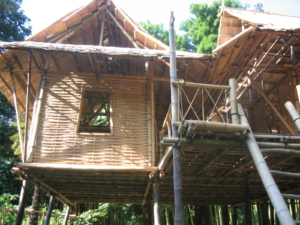
One famous architect in Bangladesh has developed a two-story housing solution built on bamboo stilts. While cyclones are short-lived, many floods in Bangladesh can last for months, making it essential to design homes that can endure prolonged flooding.

Known as “Khudi Bari” or “tiny house,” these low-cost flood-resistant homes in Bangladesh save communities through cheap yet effective construction, ranging up to $450 per build. Each home is also mobile, meaning it can be moved from one location to another, aiding these families when time matters the most.

A Short Yet Great Solution

Addressing climate-related disasters is a monumental and challenging task. Yet, low-cost flood-resistant homes in Bangladesh are playing a vital role in helping communities remain resilient amid the ongoing crisis. Thanks to these homes, families can now focus on rebuilding their lives. Parents can work to support their children and children can continue their education in a safe, stable environment. It may not be ideal, but it offers the best possible outcome in the face of adversity.

In addition to securing a future for vulnerable communities, these low-cost flood-resistant homes in Bangladesh also create jobs for local workers and artisans. The initiative is strengthening local economies and benefiting the region by sustaining livelihoods and generating new employment opportunities. Tackling the climate crisis is undeniably complex and filled with challenges. Yet, these homes make a tangible difference, strengthen communities, create jobs and set an example for other climate-vulnerable regions.

– Kallen Zhou

Kallen is based in Hattiesburg, MS, USA and focuses on Technology and Global Health for The Borgen Project.

Photo: Wikimedia Commons

August 8, 2025
https://borgenproject.org/wp-content/uploads/borgen-project-logo.svg 0 0 Lynsey 2 https://borgenproject.org/wp-content/uploads/borgen-project-logo.svg Lynsey 22025-08-08 07:30:132025-08-08 06:06:52Flood-Resistant Homes in Bangladesh Are Saving Communities
Development, Global Poverty, Technology

bKash: Digital Financial Inclusion in Rural Bangladesh

bKashThe inclusion of rural and low-income groups in financial services has been a contentious area of long-term struggle for South Asian economies. However, Bangladesh’s utilization of homegrown fintech company “bKash” is fighting this stigma, revolutionizing digital financial inclusion where typical infrastructure is sparse to lift millions out of poverty.

Changing the System

Launched in 2011, bKash entered a market where most of Bangladesh’s population was unbanked and infrastructure was limited. At the time, cash transactions and informal loans were often the only options available. bKash set out with a clear mission: to expand financial access for the country’s low-income majority. The platform allows users to send and receive money, pay bills and top up mobile credit using their phones. It also provides access to microloans — all without needing a bank account, cash, or informal lenders.

The basic financial tools this system offered millions have impacted the reduction of poverty in the nation. The Bangladesh Bank states that services like bKash have helped boost the country’s financial inclusion rate from less than 50% in 2017 to more than 65% by 2022. The app has increased financial connections between economic centers and the rural majority, leading to a growing trend of urban-to-rural remittance and greater involvement of middle-income investors in agriculture businesses.

Reducing Poverty and Increasing Development

By 2021, the app’s rapid growth had transformed digital finance in Bangladesh. Nearly 45% of people aged 15 and above were making or receiving digital payments. bKash alone had reached 67 million verified users, more than 40% of the country’s population, marking a sharp increase from just 29 million users in 2017. This dramatic growth reflects the platform’s expanding role in national development, particularly providing digital financial inclusion to disconnected rural areas.

The World Bank has especially highlighted bKash’s instrumental role in helping Bangladesh achieve Lower Middle Income Country status in 2015. It also credits bKash with driving progress toward the nation’s 2030 Sustainable Development Goals.

A 2020 report by the Bangladesh Institute of Development Studies (BIDS) further underscores the app’s wide-ranging impact. It highlights that digital financial services like bKash have directly contributed to increased household incomes, improved financial transparency and enhanced access to credit. By creating reliable financial records, bKash has enabled many users to become credit-worthy in the eyes of formal lenders, unlocking pathways to business growth, education and health care and setting the stage for sustainable, long-term poverty alleviation.

During the COVID-19 pandemic, the Bangladeshi government expanded the importance of bKash national infrastructure and relief, leveraging the platform to distribute emergency funds directly to vulnerable and isolated groups. This further highlights the ability of digital financial services to transcend low economic activity and restricted mobility, ensuring that income reaches recipients efficiently and securely.

Looking Ahead

Despite its transformative impact, mobile banking in Bangladesh still faces challenges, chief among them a digital gender gap of women significantly less likely to own phones or access mobile internet. This disparity prevents many women from accessing the full benefits of the growing mobile banking infrastructure. Bridging the gap through targeted education, digital literacy and affordable mobile access is essential to achieving financial inclusion.

As Bangladesh advances, platforms like bKash will remain powerful tools for empowering the impoverished, building financial resilience and driving inclusive, sustainable growth, even in the most remote areas. With the growing use of smartphones nationwide, bKash will remain especially necessary for providing digital financial inclusion to those unable to access traditional services.

– Thomas Finighan

Thomas is based in London, UK and focuses on Business and Technology for The Borgen Project.

Photo: Flickr

July 15, 2025
https://borgenproject.org/wp-content/uploads/borgen-project-logo.svg 0 0 Lynsey 2 https://borgenproject.org/wp-content/uploads/borgen-project-logo.svg Lynsey 22025-07-15 01:30:402025-07-15 02:14:42bKash: Digital Financial Inclusion in Rural Bangladesh
Development, Economy, Global Poverty

Improving Economic Stability in Bangladesh

Economic Stability in BangladeshSince gaining independence in 1971, Bangladesh has seen impressive economic growth, with an average gross domestic product (GDP) growth of 6.4% between 2010 and 2023. Poverty has even declined to 5% since 2022. However, there is still work to be done to improve the economic stability of Bangladesh so that the country can thrive.

Challenges

Bangladesh faces several obstacles on the path to upper-middle-income status. The financial sector faces numerous issues, including rising inflation and a balance of payment deficit. Private sector credit growth has decreased due to “tighter liquidity conditions, reduced demand for trade finance, and rising uncertainty.” In 2023, Bangladesh Bank’s reports showed an increase in loans written off, unpaid, or rescheduled, a detriment to economic stability in Bangladesh.

The industrial sector has taken a hit in tandem with Bangladesh’s financial woes. Due to disruptions in imports, high energy prices, and power shortages, production has slowed to a crawl. Furthermore, because of rising inflation, demand for products has decreased. GDP growth declined from 7.1% in 2022 to 6% in 2023.

Despite these challenges, Bangladesh’s young population, expanding digital economy, and ongoing infrastructure projects offer a path forward. With strategic reforms targeting financial stability and industrial resilience, the country still has a real shot at breaking free from these constraints and reaching its development goals.

Solutions

Bangladesh needs to strengthen trade competitiveness through reform to improve the financial sector. Suppose Bangladesh expands its export markets, develops trade skills, and monitors performance. In that case, its economy may improve through a diverse collection of imports made by a skilled workforce.

Another way to improve economic stability in Bangladesh would be to enhance domestic resource mobilization by deepening local capital markets. This would promote alternative solutions without a reliance on foreign capital. In addition to reforms necessary to improve stability, a group also aids low-income regions locally where poverty persists.

The Pathways to Prosperity for Extremely Poor People

The Pathways to Prosperity for Extremely Poor People (PPEPP) is a project focusing on poverty reduction within villages in Bangladesh. From October 2022 to September 2025, the project’s mission is to provide low-income districts with three important tools:

  • Sustained livelihoods and income 
  • Improved nutritional habits, primarily among women and children
  • Improved access to agricultural services to promote labor and receive wages

In addition to these objectives, the PPEPP project focuses on clean resources for impoverished districts, working to improve water salinization.

Between the broader solutions for banks and businesses and the narrower solutions taking place in their homes, Bangladesh has the potential to achieve upper-middle income status. Due to the change in government in 2024, Bangladesh has taken strides to improve economic stability. However, the risks to stability are still prominent. Therefore, if Bangladesh hopes to achieve upper-middle income status, its government has to be careful how it conducts itself in the future in these uncertain times.

– Matthew Perduk

Matthew is based in Chantilly, VA, USA and focuses on Good News for The Borgen Project.

Photo: Wikimedia Commons

July 10, 2025
https://borgenproject.org/wp-content/uploads/borgen-project-logo.svg 0 0 Lynsey 2 https://borgenproject.org/wp-content/uploads/borgen-project-logo.svg Lynsey 22025-07-10 01:30:032025-07-10 01:33:22Improving Economic Stability in Bangladesh
Employment, Global Poverty

How Employment in Bangladesh Is Empowering the Poor

Employment in BangladeshAn older woman, Sheela, lived in poverty in Dhaka, Bangladesh, when the nonprofit Payra offered her a chance to start a business selling saris (clothes). “She was really scared. But we got her a place so she was safe, we got her the products and after two months, we got her a new supply of products. After that, she was able to roll her money and get the products to run the business herself,” says Risalat Karim, who, as a student, helped found Payra.

Unemployment and Poverty in Bangladesh

Employment opportunities remain scarce in Bangladesh, even for university graduates preparing to enter the workforce. According to the World Bank, Bangladesh’s unemployment rate stood at approximately 4.7% in 2024. Each year, more than two million young people join the workforce. However, formal job creation lags, pushing many into low-paying, informal sectors. This persistent shortage underscores the critical role of job creation in tackling the country’s widespread poverty.

In 2016, nearly 90% of Bangladesh’s population survived on just $6.85 per day or less. This figure reflects the country’s deep-rooted income inequality and underscores the urgent need for sustainable economic development.

Barriers to Employment in Bangladesh

Many people living in poverty in Bangladesh are willing to work but face a severe shortage of employment opportunities or are systematically excluded from the labor force. With few options available, some beg on the streets to survive. “They’re hurt, they’re homeless. Some are blind, some are missing limbs,” said Karim. “We spoke with one man who didn’t have legs. He was interested [in working], but he was afraid he wouldn’t be able to do certain things.”

Beyond the natural challenges of finding work, some individuals in Bangladesh are trapped in street begging by dangerous criminal syndicates. These groups often prey on those already vulnerable, such as the homeless and unemployed, coercing them into continued begging through threats and, in some cases, physical violence. Disturbingly, there have been reports of syndicates mutilating individuals, including the deliberate removal of limbs, to increase sympathy from passersby.

According to Karim, this made security a major concern when approaching beggars and those who considered leaving the streets feared for their safety.

Employment as a Tool of Empowerment

Despite significant barriers to employment, conditions in Bangladesh have gradually improved alongside the country’s development. Data indicates a positive correlation between rising employment rates and GDP growth, with poverty levels steadily declining in recent years. As more people gain access to stable work, many have been able to break free from the cycle of poverty—and, in some cases, escape the control of exploitative street syndicates.

While Payra lacked the resources to drive large-scale societal change, the organization demonstrated that meaningful impact at the individual level is still possible. With just 20,000 BDT—roughly $164 per person—it helped several individuals escape poverty by supporting them in launching small businesses, including tea stalls, clothing shops and food vendors.

Women in the Workforce

There is a clear correlation between increased female workforce participation and the declining poverty rate in Bangladesh. “Before, there was a very low percentage of women working. Now, there are more working in industries like garments and food and that’s a leading reason why poverty data has decreased. Women being able to enter the market has helped families,” says Karim.

This trend aligns with broader economic logic: as more of the population gains access to employment, living conditions improve over time. Historically excluded from the workforce, women have played a critical role in this shift. Between 1974, shortly after Bangladesh’s founding and 2019, female labor force participation rose from just 4% to more than 36% and the upward trend continues. At the same time, the national poverty rate has steadily declined, highlighting the transformative impact of inclusive employment.

– Jesse Correll

Jesse is based in Boston, MA, USA and focuses on Business and New Markets for The Borgen Project.

Photo: Flickr

June 16, 2025
https://borgenproject.org/wp-content/uploads/borgen-project-logo.svg 0 0 Lynsey 2 https://borgenproject.org/wp-content/uploads/borgen-project-logo.svg Lynsey 22025-06-16 01:30:082025-06-16 00:46:53How Employment in Bangladesh Is Empowering the Poor
Global Poverty, Health, Nonprofit Organizations and NGOs

Friendship: Support To Remote Communities in Bangladesh

Remote Communities in BangladeshBangladesh is situated in South Asia on the Bay of Bengal. It is the eighth most densely populated country in the world, with a population of more than 175 million in an area of 148,460 sq km. It is a country of striking contrasts: rich in culture and resilience, yet acutely vulnerable to the impacts of changing climatic conditions. Most of the country is situated only nine meters above sea level.

An estimated 3.5 million people in the low-lying delta region face increasing threats from rising sea levels and more intense monsoon seasons. Indeed, in 2022 alone, historic floods devastated northern regions like Sylhet and Sunamganj, displacing millions and severely disrupting transportation, electricity, health care and access to education.

Despite the risks, many of Bangladesh’s neediest communities live in low-lying coastal and riverine areas, lacking sufficient income to live in lower-risk regions. These zones are fertile and agriculturally productive. However, when floods occur, it is children and low-income families who suffer most, facing destroyed homes, lost livelihoods and health crises with little support.

From One Floating Hospital to a National Lifeline

In 2002, Runa Khan founded Friendship, a nongovernmental organization (NGO) with a radical yet simple mission: delivering support to remote communities in Bangladesh with reduced access. The initiative launched a floating hospital on the Jamuna River in northern Bangladesh. This aims to provide essential health services to isolated communities living on “chars”― sandbar islands that vanish and reappear with the tides.

Since then, Friendship has evolved into a wide-reaching, holistic organization. Today, its 5,000 employees ― more than 70% of whom come from local communities ― work to break cycles of poverty and increase resilience to the regional climate crisis. Its integrated approach includes health care, education, disaster preparedness, economic development and clean energy and water access.

Health Care and Remote Communities in Bangladesh

Friendship operates a unique three-tier health care system:

  • Tier 1: Two floating hospitals and two land hospitals bring lifesaving services to remote areas. The Shyamnagar hospital alone provided emergency services to 317 patients in recent years.
  • Tier 2: Two cervical cancer screening centers tackle Bangladesh’s second-most prevalent form of cancer, offering prevention and treatment in areas where such services are rarely available.
  • Tier 3: About 680 Friendship Community Medic-Aides, local women trained in basic medical care, offer antenatal, postnatal and child health services.

Powering Livelihoods and Clean Futures

Friendship’s Sustainable Economic Development program supports long-term resilience. In its innovative solar villages, 291 households, 62 shops, four schools and two mosques are now powered by 24-hour solar energy. This has enabled families to extend working hours, refrigerate food and medicines and improve safety and security at night. Clean water access is another priority. Friendship has also supplied more than 700,000 liters of clean drinking water to hundreds of families, drastically reducing disease.

Meanwhile, the organization’s farmers’ club provides sustainable farming training. It empowers more than 1,400 farmers to grow climate-resilient crops like sweet potatoes and mustard. Romesa Khatun, a club member, began using earthworms to make fertilizer in 2022, selling the product and using it in her vegetable garden. She says that the support of the club and Sherazul Islam, project officer at Friendship’s Sustainable Economic Development Sector, empowered her to embrace innovative farming techniques to support her family, especially when her husband is away for work.

These programs boost food security and provide more adaptive livelihoods to environmental challenges.

Hope from Within

In Bangladesh’s flood-prone coastal and riverine communities, poverty and climate vulnerability often go hand in hand. But through Friendship’s work with remote communities in Bangladesh, hope is taking root. What began as a floating hospital has become a nationwide lifeline. It delivers support to remote communities and uplifts them with health care, education, economic opportunity and climate resilience.

Rather than relying on top-down aid, Friendship invests in people ― training local women as community health workers, equipping youth with education and leadership skills and helping farmers adapt to a changing climate. Indeed, Friendship’s impact shows that locally led, community-focused development can help vulnerable populations chart a path toward safety, dignity and lasting change even in the face of rising waters.

– Holly McArthur

Holly is based in Somerset, UK and focuses on Good News and Global Health for The Borgen Project.

Photo: Pexels

May 26, 2025
https://borgenproject.org/wp-content/uploads/borgen-project-logo.svg 0 0 Lynsey 2 https://borgenproject.org/wp-content/uploads/borgen-project-logo.svg Lynsey 22025-05-26 07:30:022025-05-25 23:04:25Friendship: Support To Remote Communities in Bangladesh
Development, Global Poverty

Social Safety Net Programs Are Fighting Poverty in Bangladesh

Fighting Poverty in BangladeshMillions of Bangladeshi citizens live in abject poverty. As of 2022, the overall poverty rate was approximately 19%. However, the country has made significant improvements in decreasing poverty over the past few decades, mainly due to the country’s Social Safety Net Programs (SSNPs).

The nation has implemented these initiatives to help low-income Bangladeshis and give vulnerable communities long-term economic stability. With programs that provide food assistance, cash transfers and skills development, Bangladesh’s SSNPs aim to create a pathway for success for many struggling citizens.

The Vulnerable Group Development Program

One of the most impactful initiatives, the Vulnerable Group Development (VGD) program, primarily helps women suffering extreme food insecurity. Due to gender disparities in the country, women often suffer the most when it comes to poverty and hunger. Originally started as the Vulnerable Group Feeding (VGF) program in 1975, it changed to the VGD in 1982, shifting priorities from emergency relief to long-term development. The program distributes nutritious food over a specific period.

However, the program goes beyond that. Through a partnership with BRAC, Bangladesh’s largest nongovernmental organization (NGO), it educates individuals in basic reading, writing and nutrition skills, giving people the tools to lead a healthier and more successful life. By providing both food and education, the program helps vulnerable women break the vicious cycle of poverty as opposed to short-term help.

The Old Age Allowance Program

As the country is experiencing an aging population, the government has acted on the need to protect older citizens, with many lacking retirement savings. Before the program started in 1998, only retired government workers had pensions. The Old Age Allowance provides essential monthly cash transfers of BDT 500 (about $4) to older people.

The program helps nearly four million elderly citizens afford basic human necessities such as food, medicine and shelter, improving their quality of life and fighting poverty in Bangladesh. The program’s financial assistance also eases the burden on young family members who might be struggling financially to support them.

Income Generating for Vulnerable Group Development

The Income Generating for Vulnerable Group Development (IGVGD) program is another initiative that builds on the VGD program. The government designed IGVGD as a two-step poverty-reduction model. It helps low-income women develop from needing food aid through the VGD program to becoming self-sufficient workers earning a stable income.

Women in the program learn essential job skills, such as poultry farming and tailoring, which are crucial for future success. They may also receive small loans or grants to help them start their own businesses. Encouraging self-reliance and assisting women to secure employment empowers them to impact society and contribute to a growing economy. Over time, these efforts give women more control over their lives and strengthen the economy of local communities.

The Impact of the Social Safety Initiatives

These social safety initiatives have proven successful in fighting poverty in Bangladesh. There has been a major national decline in poverty rates in the past two decades. Poverty fell significantly between 2010 and 2016; in urban areas, it declined from 21.3% to 18.9%, while in rural areas it declined from 35.2% to 26.4%. Additionally, helping women develop vocational skills shows the program’s commitment to women’s empowerment in a country that historically offered them limited opportunities.

Recently, the government has decided to expand its social safety initiatives. It is working toward using technology to improve targeting mechanisms. Many international development organizations, such as the World Bank and the United Nations (U.N.), have also supported Bangladesh’s effort to improve the country’s SSNPs.

Final Remarks

Overall, Bangladesh’s Social Safety Net Programs show how time and investment in often overlooked groups of people can have a tremendous impact in reducing long-term poverty. It shows the effectiveness of targeted intervention in reducing poverty and creating long-term economic stability. By supporting at-risk groups, such as women and older people, with food assistance, cash transfers and vocational training skills development, the programs address major societal problems while creating a path for long-term success.

– Rafe Photopoulos

Rafe is based in Gainesville, FL, USA and focuses on Good News for The Borgen Project.

Photo: Pixabay

May 16, 2025
https://borgenproject.org/wp-content/uploads/borgen-project-logo.svg 0 0 Lynsey 2 https://borgenproject.org/wp-content/uploads/borgen-project-logo.svg Lynsey 22025-05-16 07:30:292025-05-16 04:56:39Social Safety Net Programs Are Fighting Poverty in Bangladesh
Agriculture, Aid, Development

The Sustainable Agriculture Foundation: Improving Farmer’s Lives

Sustainable Agriculture FoundationThe Sustainable Agriculture Foundation provides agricultural support to smallholder farmers in developing nations to mitigate food insecurity, boost rural economies and make sustainable markets accessible. The foundation has worked with more than 1 million farmers to improve yield and advance economic prospects, with more than 700 farmer hubs in Bangladesh alone that have helped to improve approximately 595,000 smallholders’ yields and income levels.

Farming in Bangladesh

The majority of agriculture workers in Bangladesh are smallholder farmers. Limited opportunities to obtain training and use contemporary technology curbs farmers from working at a sustainable and attainable level. Bangladeshi farmers face the ramifications of extreme weather patterns which hamper the quality and quantity of crops. Deficient yields reduce the income made by smallholder farmers, significantly impacting their livelihoods and worsening their quality of life, according to the Sustainable Agriculture Foundation.

Agriculture and Poverty Reduction

Research indicates that approximately 70% of the Bangladeshi population live in rural areas, the majority of which have or are from a low-income background. Poverty in rural areas is often extreme and ensues at a higher rate than in urban areas. In rural Bangladesh, primary agriculture is the main employer of residents, with this type of agriculture remaining the least-productive.  A key driver of agricultural growth is technology that promotes high crop yields.

Agricultural technology has positive implications for the community. Due to the high proportion of people who live in extreme poverty and work in agricultural sectors, the development that new technology offers significantly helps to aid poverty reduction. Improvements in agricultural technology focus on productivity growth rather than resource growth. Instead of working to boost the availability of resources, such as accessing more water to grow more crops, new technology utilizes resources already in existence to improve and increase the productivity and quality of yields.

Growth Reducing Poverty

Growth in the agricultural sector is approximately two to three times more beneficial to poverty reduction than growth in other sectors. This is proportional to the rate at which poverty coincides with those in agricultural work; for example, those in developing countries may have a low level of literacy and therefore rely on agriculture for their livelihood.

Crucially, the advantages that agricultural development and technology present can be used in both coastal and inland regions. The stretch of these technologies is not geographically limited, making poverty reduction via agriculture technology an initiative that can be implemented across developing countries.

Enhancing Food Security

One way in which agricultural technology contributes to the alleviation of extreme poverty is by enhancing food security. Genetic modification bolsters food supply, which makes the availability of crops with desirable characteristics more prevalent. In turn, this increases the food supply and crops have high quality. Similarly, biofortification – the process of filling produce with nutrients – aids in the reduction of malnutrition and deficiency. Post-harvest losses are also tackled through agro-processing technologies that improve the quality, availability and accessibility of produce.

Agricultural technology also enables the use of territory surveillance, such as drones, to monitor and map the health of crops, allowing for early prevention if various issues in early stages. The technology also helps with weather forecasts, using sensors that make decisions on irrigation and crop control. The use of sustainable resources also augments soil health, pest control and water management by increasing effectiveness and decreasing dependency on chemicals and pesticides.

The Sustainable Agriculture Foundation in Bangladesh

The Sustainable Agriculture Foundation aims to improve the lives of smallholder farmers in Bangladesh by boosting economic growth and the livelihoods of locals via an emphasis on risk mitigation related to extreme weather patterns.

In Surokkha, Bangladesh, the Sustainable Agriculture Foundation carried out an initiative that promoted risk mitigation measures for natural disaster adaptability. From September 2018 to September 2022, the Sustainable Agriculture Foundation targeted 233,000 farmers to improve the resilience of agriculture and create stable livelihoods for smallholder farmers. Alongside providing farmers insurance, the program also emphasized the projection of the crop insurance market.

The key measures included the building of insurers and stakeholders, improving farmers’ literacy and awareness, market development studies, weather index crop insurance product expansion and risk management studies.

The outcome of the initiative meant that 421,767 farmers held insurance for potato, rice and maize – a quarter of which were women. Additionally, the initiative developed 21 weather index insurance products and on average, 6.60 decimals per farmer land gained insurance. Significantly, a further 149,343 farmers received payouts of BDT 84,016,858.

The work of the Sustainable Agriculture Foundation has provided stability and insurance to thousands of smallholder farmers in Bangladesh, strengthening the community’s ability to handle extreme weather patterns and mitigate associated risks. In turn, the lives of those experiencing extreme poverty improved through the stability of the resources that agricultural technology offers.

– Ella Dorman

Ella is based in Worcestershire, UK and focuses on Technology and Solutions for The Borgen Project.

Photo: Flickr

March 31, 2025
https://borgenproject.org/wp-content/uploads/borgen-project-logo.svg 0 0 Naida Jahic https://borgenproject.org/wp-content/uploads/borgen-project-logo.svg Naida Jahic2025-03-31 07:30:002025-03-30 06:57:56The Sustainable Agriculture Foundation: Improving Farmer’s Lives
Education, Gender Equality, Global Poverty

Women’s Education and the Work of JAAGO in Bangladesh

JAAGO in BangladeshAccelerating Action is this year’s International Women’s Day theme, calling for urgent efforts to advance gender equality matters. The 2024 Global Gender Gap report shows that although significant progress has been made and several economies reached higher gender parity scores this year, others are far from ideal results.

Southern Asia ranks last in Economic Participation and Opportunity and shows low rates of women employed in the workforce, with Bangladesh declining by -3.3 points in the global ranking. Bangladesh (31.1%), Sudan (33.7%), Iran (34.3%), Pakistan (36%), India (39.8%) and Morocco (40.6%) are the economies with the lowest economic parity.

Gender parity in projected earned income is less than 30% in these economies. Furthermore, all the economies on the list have labor force participation rates below 50%.

Education as a Pathway to Economic Freedom

Global studies have long shown that education is one of the most effective ways to combat poverty and reach gender equality. According to the World Bank gender data, women with secondary education earn nearly 20% more than those without and those with tertiary education earn up to 323.4% more. Educated women are also less likely to marry before 18, reducing risks associated with early pregnancy and improving overall family health.

Bangladesh excels in educational attainment, with a 94% achievement rate that reflects gender parity in secondary enrolment, 93% in literacy and 84.1% in university enrolment. Generally, Southern Asia has also made the most remarkable progress since 2006, improving educational gender parity by +13.4 percentage points – more than twice the leap made by the Middle East, Northern Africa and sub-Saharan Africa regions during the same period.

The World Economic Forum’s 2024 Global Gender Gap Report also notes that 91.3% of girls and 74.8% of boys have completed lower secondary school in Bangladesh as of 2022. Hence, the female literacy rate rose to 84% in 2023.

The Work of JAAGO in Bangladesh

JAAGO is a leading foundation in Bangladesh dedicated to promoting gender equality and ensuring women have continued access to education. Its journey began in 2007 in a single room with only 17 children in the Rayer Bazar Slum of Dhaka. It aims to break the poverty cycle and ensure a bright future for children from underprivileged communities. JAAGO currently has 11 schools in 10 districts in Bangladesh, educating 5,000 children.

Through various programs, JAAGO has successfully implemented solutions to keep girls in school while fostering skill development. In many rural areas, schools are either too expensive or poor quality. To address this, JAAGO schools offer free education with highly qualified teachers. It provides online programs through the digital school initiative, ensuring access to quality education for all.

The Digital School Program of JAAGO in Bangladesh

JAAGO Foundation’s Digital School Program provides quality education to underprivileged children in remote areas of Bangladesh using online learning. It bridges educational gaps by offering interactive lessons, trained teachers and digital resources. The program focuses on accessibility, inclusivity and skill development, ensuring children receive a standardized education regardless of location. This initiative empowers students with knowledge and opportunities for a brighter future.

The program also focuses on delivering quality education and opportunities at every step, including counseling parents to encourage them to keep their daughters in school. Additionally, the programs provide medical and mental health sessions to ensure girls can continue their education without barriers.

ODOMMO

The ODOMMO project, launched by the JAAGO Foundation with the Malala Fund, promotes girls’ education in Bangladesh by tackling poverty, gender discrimination and societal barriers. It focuses on improving school enrollment, retention and learning environments. The initiative further includes teacher training, life-skills programs and school expansions, empowering girls to become future leaders and advocates for change.

The ODOMMO project has positively impacted 1,584 girls in Bangladesh’s flood-prone areas by reducing school dropout rates, increasing awareness about child marriage and encouraging greater participation in STEM. Additionally, the project conducted community-driven awareness initiatives, including courtyard meetings and discussions with school authorities, government officials and local leaders to advocate for girls’ education in the region.

Bandarban School Bus

Many impoverished families in Bangladesh struggle to afford schooling and recurrent flooding worsens job losses, making education even less accessible. In many cases, girls are sent to work or married off instead of continuing their studies, as families believe marriage offers them a more secure future.

Geographical challenges further limit access to education, especially in rural areas, where long and unsafe commutes discourage attendance. Without secure transportation or infrastructure, many girls cannot reach school safely.

The JAAGO Foundation launched the School Bus Initiative to tackle this issue, providing students with reliable transportation. This simple yet impactful solution has significantly increased attendance, ensuring more children, especially girls, stay in school. By removing safety concerns and commuting barriers, the initiative has helped reduce dropout rates, allowing students to focus on their education.

Volunteering and a Call to Action

Ensuring access to education requires a collective effort; governments, parents, corporations and communities all drive meaningful change. Raising awareness through social media campaigns, expert advocacy and corporate engagement can further mobilize resources and support.

Individuals and businesses can contribute by sponsoring a child’s education, covering school fees, meals, supplies, health check-ups and mentorship. Sponsors also receive monthly reports and can connect with the school or child via online calls or in-person visits.

Beyond financial support, volunteers play a key role in driving local change. During recent floods in Bangladesh, volunteers stepped up by raising funds, rescuing people, setting up medical camps and rebuilding homes, demonstrating how collective action can make a lasting impact.

– Arianna Distefano

Arianna Distefano is based in London and focuses on Good News, Politics for The Borgen Project.

Photo: Flickr

March 26, 2025
https://borgenproject.org/wp-content/uploads/borgen-project-logo.svg 0 0 Lynsey 2 https://borgenproject.org/wp-content/uploads/borgen-project-logo.svg Lynsey 22025-03-26 07:30:472025-03-25 05:20:32Women’s Education and the Work of JAAGO in Bangladesh
Development, Economy, Employment, Global Poverty

endPoverty Creating Job Opportunities in Bangladesh

Job Opportunities in Bangladesh endPoverty is a charity that strives to alleviate poverty through resources and support related to entrepreneurship, enabling sustainable growth and creating job opportunities around the world and in Bangladesh. This foundation focuses on economic development rather than relief programs as they believe that the power of business opportunity can become a means of alleviating poverty, via the creation of stable income streams and job opportunities in Bangladesh.

Lack of Employment for Women in Bangladesh

Despite steady economic growth in recent years, a stark contrast between rates of male and female employment remains prevalent in Bangladesh. Women are significantly more likely to experience unemployment than men, with rates of labour participation at around 80% for men, and 37% for women.

Prejudice permeates much of Bangladeshi culture, which in turn influences how many women enter work. UNDP estimates that approximately 90% of the population hold a distorted view of women, according to the Light Castle Partners. This bias includes beliefs that suggest women should marry young and therefore rely financially on their husbands and become primary caregivers, rather than completing education and pursuing a career. For women who are employed, misogyny is common as male colleagues may hold a bias against their female peers, which can result in exclusion and a lack of progression opportunities.

Women may also not receive the same access to opportunities as men due to a lack of networks and available information. Many jobs are posted through informal networks that women do not often have access to, again because of prejudice and lack of social mobility which also means many women do not have phones or the internet. Similarly, as women are often stuck in the home they receive less information about potential jobs than their male counterparts, making finding work more difficult which impedes their ability to attain employment, further increasing the gender employment gap.

The 3C Model

endPoverty utilizes the 3C Model to assist small businesses in creating both viable and maintainable growth opportunities, spearheading positive economic progress.

The first C – capital – ensures that small businesses can access low-cost, malleable capital that allows for innovation and economic advancements.

The second C – coaching – offers small businesses support in the form of personalised coaching sessions that tackle the individual needs and skills of the business, intending to spark further economic development.

The third C – community – situates like-mindedness and people at the forefront of business development by prioritising a faith-based community where people can meet other local entrepreneurs.

The Harvest Project: Job Opportunities in Bangladesh

The Harvest Project is one of endPoverty’s campaigns, aimed at tackling poverty through business and job opportunities. Based in Bangladesh, the Harvest Project works with local female entrepreneurs and offers them the support and guidance needed to be leaders in their communities.

This project follows a holistic approach, meaning that it works with micro-entrepreneurs who are seeking help to kickstart a business and provide for their families. Through this initiative, endPoverty aims to create a community for vulnerable women who are seeking financial relief to improve their family’s quality of life, as well as to safeguard one another in cases of domestic abuse.

endPoverty has provided support to many women in Bangladesh, for example, Romesa, who is from Ramnagar in Bangladesh. Before she discovered endPoverty, Romesa had been experiencing financial worries for three years due to her husband’s poor health and inability to work. She then came across a microentrepreneur in her community, named Minara, who taught Romesa administrative and technical skills that allowed her to create an income for herself. Romesa now continues to share her knowledge and the work of endPoverty, as the skills learned from Minara allowed her to create a better life for herself and her family.

Alleviating Poverty

endPoverty’s Harvest Project contributes to the alleviation of poverty by offering sequential training and a support network that, when combined, comprise a web of microenterprises that enable vulnerable women to support themselves and their families and ultimately improve their quality of life.

– Ella Dorman

Ella is based in Worcestershire, UK and focuses on Business and New Markets for The Borgen Project.

Photo: Flickr

February 23, 2025
https://borgenproject.org/wp-content/uploads/borgen-project-logo.svg 0 0 Naida Jahic https://borgenproject.org/wp-content/uploads/borgen-project-logo.svg Naida Jahic2025-02-23 01:30:522025-02-22 23:51:08endPoverty Creating Job Opportunities in Bangladesh
Development, Education, Global Poverty

Generational Poverty in Bangladesh: The Role of Education

generational poverty in bangladeshGenerational poverty persists within families across the world. This cycle of generational poverty is perpetuated by many factors, including inadequate health care, economic challenges and, most importantly, access to education and the quality of education. Moreover, the National Center for Children in Poverty (NCCP) states that individuals who grow up in low-income families are more likely to experience poverty in early adulthood, suggesting the grave impact of generational poverty.

However, research shows that education can and does break poverty cycles. UNESCO-led research has proven that 171 million people worldwide could escape extreme poverty by completing secondary education. Education is pivotal in transforming the cycle of generational poverty and hunger. Education is a crucial lever for economic improvement and social change. It provides individuals with skills and knowledge to secure a better livelihood for families combating poverty. Early childhood education is among the best options for tackling long-term and generational poverty. The impact of foundational learning has long-term success and breaks poverty from an early age. Bangladesh has made significant growth in terms of early childhood education and development.

Generational Poverty in Bangladesh

Although Bangladesh has made great strides in combating poverty, half of the population is “vulnerable to poverty.” Economic growth has contributed to poverty reduction but has slowed down; between 2010 and 2016, GDP growth rapidly increased while poverty reduction decreased. The change in economic sectoral composition further explains the progress in poverty reduction across Bangladesh.

In addition, urban areas saw minimal progress in reducing poverty, while other areas in Bangladesh were making significant progress. In urban areas across Western Bangladesh, there has been significantly faster progress in reducing family size and access to education. Rural and remote areas face school shortages, infrastructure and trained teachers. Children in these areas often lack access to quality education.

Many impoverished families cannot afford education costs, such as tuition, books and transportation. Therefore, child labor, especially amongst young boys, has remained a common practice. Families rely on income from their children’s labor to survive. According to a UNICEF report, 51% of women in Bangladesh were married before turning 18, and around 18% are under the age of 15. With young women in Bangladesh, there is a clear link between schooling and early marriage. The encouragement of girls to pursue motherhood rather than education is high; many cannot attend school because of pressure and financial incapability.

Government and NGO Initiatives

The government of Bangladesh provides free and compulsory primary education for all. This initiative has increased enrollment rates significantly from 80% in 2000 to 98% in 2015. The government also financially supports families who are in extreme poverty. UNICEF states that “more girls are going to school and staying in school than ever before.”

BRAC offers free non-formal education for students. This initiative focuses on providing children with schooling, those specifically not in government education or private schools. The organization supports “about 23,000 schools across all 64 districts and has 700,000 students enrolled in Bangladesh.”

Moreover, the Employment Generation Program for the Poorest, a government-led initiative supported by the World Bank, significantly reduced poverty and improved household resilience in Bangladesh. It also provided vital short-term employment for people during critical periods, particularly focusing on helping vulnerable rural populations.

Conclusion

Education is a powerful tool for breaking the cycle of generational poverty in Bangladesh. Through government’s and NGOs’ efforts to improve socio-economic conditions, education can transform individuals and entire communities. However, to fully solve the issue of generational poverty, challenges must be addressed on a deeper scale, through sustained investments and policies.

– Gufran Elhrari

Gufran is based in London, UK and focuses on Politics for The Borgen Project.

Photo: Unsplash

January 2, 2025
https://borgenproject.org/wp-content/uploads/borgen-project-logo.svg 0 0 Naida Jahic https://borgenproject.org/wp-content/uploads/borgen-project-logo.svg Naida Jahic2025-01-02 01:30:012025-01-01 12:16:58Generational Poverty in Bangladesh: The Role of Education
Page 3 of 7‹12345›»

Get Smarter

  • Global Poverty 101
  • Global Poverty… The Good News
  • Global Poverty & U.S. Jobs
  • Global Poverty and National Security
  • Innovative Solutions to Poverty
  • Global Poverty & Aid FAQ’s
Search Search

Take Action

  • Call Congress
  • Email Congress
  • Donate
  • 30 Ways to Help
  • Volunteer Ops
  • Internships
  • Courses & Certificates
  • The Podcast
Borgen Project

“The Borgen Project is an incredible nonprofit organization that is addressing poverty and hunger and working towards ending them.”

-The Huffington Post

Inside The Borgen Project

  • Contact
  • About
  • Financials
  • President
  • Board of Directors
  • Board of Advisors

International Links

  • UK Email Parliament
  • UK Donate
  • Canada Email Parliament

Get Smarter

  • Global Poverty 101
  • Global Poverty… The Good News
  • Global Poverty & U.S. Jobs
  • Global Poverty and National Security
  • Innovative Solutions to Poverty
  • Global Poverty & Aid FAQ’s

Ways to Help

  • Call Congress
  • Email Congress
  • Donate
  • 30 Ways to Help
  • Volunteer Ops
  • Internships
  • Courses & Certificates
  • The Podcast
Scroll to top Scroll to top Scroll to top