
• Link to X
  • Link to Facebook
  • Link to Instagram
  • Link to TikTok
  • Link to Youtube
  • About
    • About Us
      • President
      • Board of Directors
      • Board of Advisors
      • Financials
      • Our Methodology
      • Success Tracker
      • Contact
  • Act Now
    • 30 Ways to Help
      • Email Congress
      • Call Congress
      • Volunteer
      • Courses & Certificates
      • Be a Donor
    • Internships
      • In-Office Internships
      • Remote Internships
    • Legislation
      • Politics 101
  • The Blog
  • The Podcast
  • Magazine
  • Donate
  • Click to open the search input field Click to open the search input field Search
  • Menu Menu

Tag Archive for: Legislation

Posts

Global Poverty

5 Habits of a Highly Successful Advocate

a Highly Successful AdvocateA successful advocate stirs up support for policies, legislation and public causes through civil education, awareness campaigns and lobbying with key decision-makers. Here are five things that can make any advocacy campaign more effective.

5 Habits of a Highly Successful Advocate

  1. Understanding Your Cause: A highly successful advocate understands the ins and outs of their cause. In order to speak passionately and authoritatively on an issue for which you are advocating, you must ensure that you read up on it, interact with people who understand and have experienced it and keep abreast of current affairs related to it. Advocacy is a full-time job and whenever you are interacting with other people or legislators, you have an opportunity to tell them about your campaign, so it really helps if you can converse comfortably about it.
  2. Creating Public Awareness: A cause that people know nothing about is doomed to fail. A highly successful advocate must, therefore, mount vigorous awareness campaigns around their cause. In this day and age of information proliferation through the Internet, social media has become one of the best ways to reach out to more people instantaneously. Creating online petitions and being very active on social media sites is a great way for an advocate to engage followers. Writing letters to editors of different newspapers is another means of putting your cause in the limelight. It is also important to blog and consistently publish articles around issues or legislation you are supporting. A successful advocate will also ensure that they network with people who are supporters of the cause.
  3. Consistently Calling and Emailing Congressional Leaders: Did you know that every time you call or email your congressional leaders in support of a piece of legislation, it is recorded and viewed by your elected official every week? Most legislators want to know as many of their constituents’ issues as possible; therefore, to be a successful advocate, you must set aside time each week to consistently call and email legislators to tell them about the cause you support.
  4. Meeting Elected Officials: According to the American Planning Association, meeting in person with elected leaders or their legislative staff is one of the most effective means of political advocacy. When going for lobbying meetings, it is important that you are well prepared in advance by knowing the specific problem you want to tackle and requesting a specific action or solution from the representative that you are meeting. You should also demonstrate that the issue you are presenting has an organized group of supporters. After the visit, ensure that you follow up by sending a thank-you note and tracking how the legislator responds to the issue.
  5. Fundraising: A highly successful advocate ensures that they are not strapped for cash when running their campaigns. It is important, therefore, to raise the capital that will allow you to regularly meet elected officials and key decision-makers, make phone calls and generally support overhead costs required to run your advocacy campaign.

– June Samo

Sources: American Planning Association, Government and Community Relations, Salsa, TASCO, The Advocacy Project, WFP
Photo: Flickr

March 20, 2016
https://borgenproject.org/wp-content/uploads/borgen-project-logo.svg 0 0 Borgen Project https://borgenproject.org/wp-content/uploads/borgen-project-logo.svg Borgen Project2016-03-20 01:30:032024-05-27 09:33:255 Habits of a Highly Successful Advocate
Foreign Policy, Global Poverty

Legislation to Watch

Legislation
Legislation is one major factor that keeps the United States strong. Without rules and regulations, we simply wouldn’t be the United States. That being said, the year 2015 has been chock full of legislation plans.

In order to be a well-informed citizen, it is important to keep an eye on the current legislation that is in review by the government. The following list will showcase just a few of the many important happenings within Congress.

1. Affordable Care Act

For the nation’s endlessly controversial health care law, 2015 initially looks a little bit like 2012, with lots of uncertainty hinging on a decision by the U.S. Supreme Court. States that want to get a head start against the possibility of disruption will have to act quickly.

2. Global Food Security Act

In the last 24 years, we have seen the number of undernourished people in the world go down by 209 million people. Out of that 209 million, 203 million came from “developing regions.” This act would enable our government to craft a comprehensive strategy to enable food security, utilizing the funds, personnel and brainpower of at least 11 different departments and agencies. These organizations would then collaborate with others around the world to advance innovative, cost-effective plans with strong accountability mechanisms.

3. Food for Peace Reform Act

The bill eliminates monetization of the international food market, which GAO has previously criticized as “inefficient” and unsustainable for the recipient’s market. Removing monetization would allow U.S. aid to reach an additional 800,000 people while freeing up to $30 million per year. Under the current process, 25 cents is lost on every taxpayer dollar spent.

4. International Affairs Budget

The International Affairs Budget makes up only a mere one percent of the U.S. federal budget, but impacts all aspects of life in America. These funds are imperative for helping the world’s poor, and as global citizens, we must back initiatives that can save millions of lives both domestically and abroad.

5. School Testing

When governors and state school officials released the Common Core curriculum standards four and a half years ago, the new program was touted as a fair and accurate way to measure student achievement across state lines and cultivate the analytical skills that many argue American children will need in order to compete on a global scale.

This legislation is in no order of importance, as they are all equal in importance to help the United States facilitate positive growth both domestically and internationally.

– Alysha Biemolt

Sources: Governing, Borgen Project
Photo: The Whitehouse

August 23, 2015
https://borgenproject.org/wp-content/uploads/borgen-project-logo.svg 0 0 Borgen Project https://borgenproject.org/wp-content/uploads/borgen-project-logo.svg Borgen Project2015-08-23 01:30:282024-05-27 09:27:29Legislation to Watch
Global Poverty, Politics and Political Attention, United Nations

US Congressman Calls for Cuts to United Nations Funding

United Nations Funding
Earlier this month, U.S. Representative Matt Salmon of Arizona introduced a bill to prohibit any government agency from contributing to the United Nations Population Fund (UNFPA) on the grounds that the organization isn’t in line with America’s policy agenda.

The bill, H.R. 2678, is the fourth bill introduced by Salmon as a part of his “Shrink Our Spending Initiative,” a budget plan to cut what Salmon has deemed “wasteful taxpayer-funded programs.” It is also the second bill of its kind to go before Congress in the last 5 years.

“Taxpayers shouldn’t be forced to fund activities that aren’t in line with our national priorities,” said Salmon, calling the UNFPA a “pro-abortion organization,” according to a SonoranNews.com report.

But according to the United Nations Population Fund FAQ page, the UNFPA does not promote abortion as a method of family planning. Rather, it works to promote family planning measures such as the use of condoms and female birth control. However, the organization does work to address the impact of abortions on women’s health, and to assure that in nations where abortions are legal, it is safe and accessible.


Learn why the military is requesting that Congress better fund efforts to combat extreme poverty.


The UNFPA operates as a subsidiary of the United Nations General Assembly to address population and development issues. Started in 1969, the United Nations Population Fund now operates in 150 countries, and has been instrumental in reducing the complications of pregnancy and childbirth in developing nations.

Sexual and reproductive health problems are the leading cause of death and disability for women in developing nations, and according to the UNFPA, some 225 million women lack access to family planning measures.

The goal of the United Nations Population Fund is to assure that all women have access to safe and effective family planning measures and safe deliveries and to make sure that every pregnancy is wanted.

In 2013, the United States was among the top 10 core donors to the United Nations Population Fund, contributing nearly three percent of the UNFPA’s total contributions for the year. If H.R. 2678 passes, it will eliminate all government contributions to that total.

The bill regarding United Nations funding was first introduced on June 4, 2015, and has been referred to the House Committee on Foreign affairs. According to a Huffington Post report, the Committee has already approved a $150 million cut to family planning and reproductive health programs. Such program cuts may jeopardize the health of an estimated 225 million women in developing countries who lack access to safe family planning, according to the Huffington Post.

– Gina Lecher

Sources: UNFPA, Congress.gov, Sonoran News, Huffington Post
Photo: Hill Heat

June 29, 2015
https://borgenproject.org/wp-content/uploads/borgen-project-logo.svg 0 0 Borgen Project https://borgenproject.org/wp-content/uploads/borgen-project-logo.svg Borgen Project2015-06-29 08:32:532020-07-14 18:27:40US Congressman Calls for Cuts to United Nations Funding
Aid Effectiveness & Reform

AGOA’s Ticking Clock

ticking clockAs the expiration date for the African Growth and Opportunity Act (AGOA) of 2000 approaches in September, members of Congress are calling for a rapid-fire renewal process to protect the work that AGOA has accomplished so far.

Senate Finance Committee Chairman Orrin Hatch (R-Utah) and Ranking Member Senator Ron Wyden (D-Ore.), and House Ways and Means Committee Chairman Paul Ryan (R-Wisc.) and Sander Levin (D-Mich.) have introduced The AGOA Extension and Enhancement Act of 2015 that will renew the act for ten years.

Originally signed into law in May of 2000, the AGOA was a bipartisan initiative intended to strengthen economic relations between the United States and Africa. By creating trade preferences for African products that allowed for duty-free entry into the United States, the AGOA sought to provide an exclusive economic partnership with budding African industries and American consumers. The Brookings Institution, a Washington, DC-based think tank, estimates that the AGOA has created several hundred thousand direct s in Africa—particularly in textiles.

Under the agreement, eligible African nations would receive “unlimited duty free and quota free access to the U.S. market for apparel made in Africa from U.S. fabric and U.S. thread.” Several African nations saw unprecedented growth in exports to the United States. For example,  Kenya saw a 1,375% increase in exports to the U.S. between 2000 and 2001.

“The legislation [AGOA] has helped transform the economic landscape for Sub-Saharan Africa by stimulating new trade opportunities for African and Americans businesses, creating new jobs, and investments worth hundreds of millions of dollars,” wrote a U.S. Administration 2002 report.

The AGOA was initially set to expire in 2008 until a new round of legislation pushed the expiration date back to September 2015.

In addition to the African jobs created by the AGOA, there are many American jobs dependent on the trade network that this legislation has formed. The United States Trade Representative has estimated that exports to Africa are responsible for more than 120,000 American jobs. The AGOA has provided a level of security that have lead to a four-fold increase in exports to Africa—something that helped to pay thousands of salaries stateside.

“This legislation will promote American trade and strengthen our economic ties with important countries,” said Sen. Paul Ryan in April. “It will encourage our friends in Africa and Haiti to pursue free enterprise and solidify the rule of law. This legislation demonstrates that more trade can create opportunity at home and promote our economic values abroad.”

Brookings has argued that uncertainty over the act’s renewal could halt the progress made so far by the AGOA. Without the stability of the legislation, textile factories are less likely to receive orders in enough time to produce clothing for a new season of shopping. In the void left by the AGOA, competing manufacturers like China will be eager to step in and soak up the businesses that were once protected by the AGOA.

– Emma Betuel

Sources: WPI, IB Times, Brookings
Photo: Global Vison

June 1, 2015
https://borgenproject.org/wp-content/uploads/borgen-project-logo.svg 0 0 Borgen Project https://borgenproject.org/wp-content/uploads/borgen-project-logo.svg Borgen Project2015-06-01 01:55:552024-12-13 18:05:10AGOA’s Ticking Clock
Development, Global Poverty, Human Rights

Same-Sex Marriage Laws Around the World

same_sex_couples_marriage
Although recent gains have been made in advancing equality for same-sex couples, the majority of the world’s countries do not have any legislation permitting same-sex marriage. As of 2014, only 16 countries have laws allowing same-sex marriage.  The majority of those countries are in Europe and South America, while the rest of the world struggles to gain ground for this meaningful right.

It is important to note, however, that legal recognition of gay couples varies from country to country and even within countries. Some countries provide full recognition of gay marriage, while other provide for limited civil union status, to even countries that criminalize same-sex marriage such as Uganda.

France legalized gay marriage after much effort and debate in May 2013, becoming the 14th country to do so. Despite more than 60% of France approving of same-sex marriage, the approval of same-sex marriage provoked acts of violence and protests that drew in hundreds of thousands of people from all over the country.

A prior law, the Pacte civile de Soldarité, allowed for civil unions between couples but did not provide the full benefits that marriage brings. Namely, the law did not confer similar treatment under the law for same-sex couples over inheritance issues and parenting rights.

The Netherlands was the first country to grant full legal recognition of same-sex marriage under the law when it passed a bill in 2001. One major difference between the treatment of same-sex couples and heterosexual couples lies in the birth of children. In the Netherlands, the biological father of the child is considered the father while their partner needs to adopt the child in order to obtain a co-parenting status.

In May 2013, a legal body in Brazil, the National Council of Justice, handed down a ruling effectively legalizing gay marriage. The ruling explicitly prohibited government officials from discriminating against same-sex couples by denying them the right to marry. Before this ruling, Brazil allowed for same-sex civil unions through its constitution, which permits “stable unions.” Stable unions gave many same-sex couples the same rights as married heterosexual couples, from the right to joint declaration of income tax, pension, property sharing, and inheritance.

In 2006, South Africa became the only country on the African continent to legalize same-sex marriage when it passed the Civil Union Act. This approval had its roots in the 1997 constitution that was the first to recognize sexual orientation as a basic human right. Despite this progressive legislation, some say homophobia in South Africa continues to be rampant, with famous South African soccer star Eudy Simelane killed in a hate-crime due to her sexual orientation.

– Jeff Meyer

Sources: Council on Foreign Relations, The New York Times
Photo: Illinois Observer

March 12, 2014
https://borgenproject.org/wp-content/uploads/borgen-project-logo.svg 0 0 Borgen Project https://borgenproject.org/wp-content/uploads/borgen-project-logo.svg Borgen Project2014-03-12 04:00:372024-05-26 23:16:30Same-Sex Marriage Laws Around the World
Advocacy, Children, Human Rights, Nonprofit Organizations and NGOs

Child Marriage: A Promise of Poverty

Child Marriage: A Promise of Poverty

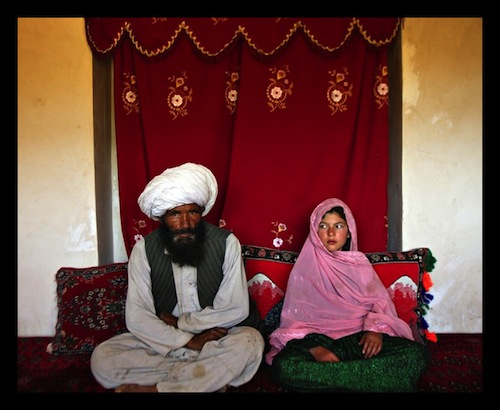
The average teenager worries about hanging out with friends, getting good grades, and fitting in with a group of people—not marrying a stranger and creating a home.

However, child marriage is a reality in the world’s 51 least-developed countries.  Half of all girls living in these countries are married before the age of 18, according to the United Nations. Parents arrange the marriage, and the groom can be more than twice the bride’s age.  Girls are ripped from their communities and forced into social isolation. These abrupt marriages sever a girl from her support network—a group of people necessary for helping the girl face the physical and emotional challenges of marriage.

Many cultures view girls as economic burdens, subservient individuals, or family mistakes. Marrying girls off as soon as possible alleviates the household expenses and restores the family’s reputation.

The UN Convention on the Rights of the Child (UNCRC) established that the minimum age of marriage is 18 years old. This is considered the upper limit of childhood, and the individual is fit to decide whether to be married.  Many countries continue to practice child marriage despite proven physical and psychological effects.

World Vision reported that child marriages are increasing due to the increase in global poverty crises. 14 million girls under the age of 18 are married each year.  Child marriages are most prevalent in rural, poor areas and are associated with areas of low education and healthcare.  Polygamy is common, and these marriages are bargaining chips between two parties.

South Asia (46%) and Central Africa (41%) are the top areas for child marriages.  These regions do not monitor the age of spouses carefully.  Girls who live in countries with humanitarian crises are most likely to be subjected to child marriages. Fear of rape, unwanted pre-marital pregnancies, family shame, and hunger are the main motivators for child marriage. Poverty, weak legislation, gender discrimination, and lack of alternative opportunities reinforce these motivations.

Anti-poverty organizations, such as CARE, are working in various countries to combat child marriage.  According to CARE, “As levels of education and economic opportunities increase, so does the average age of marriage.”  CARE mobilizes community organizers, parents, and tribal and religious leaders to lobby against the child marriage law in Ethiopia. Leaders are constructing savings and loans groups to empower families financially. Though child marriage still exists, this will eliminate one major cause of child marriage. Community forums now focus on the elimination of bride price, bride abduction, and child marriage.

– Whitney M. Wyszynski

Source: NBC News

April 10, 2013
https://borgenproject.org/wp-content/uploads/borgen-project-logo.svg 0 0 Borgen Project https://borgenproject.org/wp-content/uploads/borgen-project-logo.svg Borgen Project2013-04-10 10:00:092024-12-13 17:49:16Child Marriage: A Promise of Poverty
Page 3 of 3123

Pages

Nothing Found

Sorry, no posts matched your criteria

Get Smarter

  • Global Poverty 101
  • Global Poverty… The Good News
  • Global Poverty & U.S. Jobs
  • Global Poverty and National Security
  • Innovative Solutions to Poverty
  • Global Poverty & Aid FAQ’s
Search Search

Take Action

  • Call Congress
  • Email Congress
  • Donate
  • 30 Ways to Help
  • Volunteer Ops
  • Internships
  • Courses & Certificates
  • The Podcast
Borgen Project

“The Borgen Project is an incredible nonprofit organization that is addressing poverty and hunger and working towards ending them.”

-The Huffington Post

Inside The Borgen Project

  • Contact
  • About
  • Financials
  • President
  • Board of Directors
  • Board of Advisors

International Links

  • UK Email Parliament
  • UK Donate
  • Canada Email Parliament

Get Smarter

  • Global Poverty 101
  • Global Poverty… The Good News
  • Global Poverty & U.S. Jobs
  • Global Poverty and National Security
  • Innovative Solutions to Poverty
  • Global Poverty & Aid FAQ’s

Ways to Help

  • Call Congress
  • Email Congress
  • Donate
  • 30 Ways to Help
  • Volunteer Ops
  • Internships
  • Courses & Certificates
  • The Podcast
Scroll to top Scroll to top Scroll to top