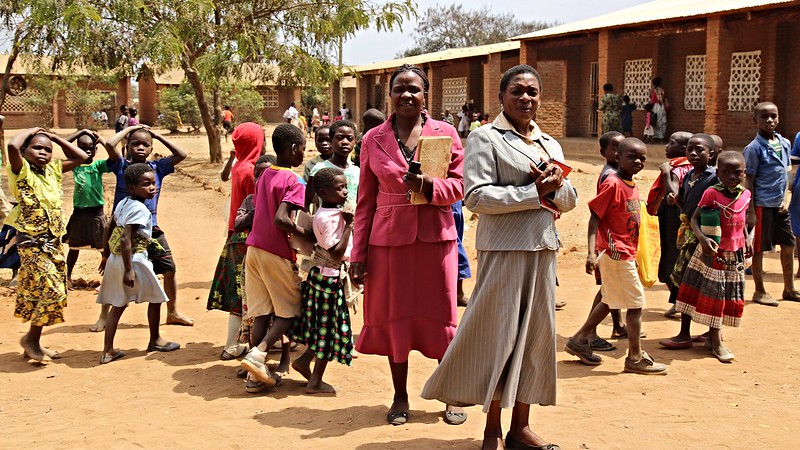
 According to the World Bank, Malawi is ranked as the fourth poorest country globally. Approximately 70% of the population lives on less than $3 a day and this income level has remained unchanged since 2010, despite a steadily increasing population. Moreover, at least 50% of households in Malawi lack adults with completed education. Education plays a crucial role in helping a country combat poverty in the long term. Malawi only implemented free public schooling in 1994, significantly improving children’s attendance rates. However, as of 2021, the country still faces one of the highest dropout rates in the world, estimated at 84% and the KIND fund has been fighting for children’s education in Malawi.
The KIND Fund
In a developing country like Malawi, children attend classes on the ground, similar to a pre-school. As the children grow older, this arrangement becomes less practical for an advanced learning environment. The children have to balance paper on their knees to write. Since soap is expensive in Malawi, kids skip school if they dislike being seen in dirty clothes after a week of sitting on the ground. This is particularly true for girls who prefer to miss several school days rather than spend all day on the dirty ground during their periods and having to jump up and down to answer questions.
The KIND Fund, short for Kids in Need of Desks, was created by MSNBC reporter Lawrence O’Donnell and the United Nations Children’s Fund (UNICEF) in 2010 to provide desks to all ages of schoolchildren in Malawi. Since 2010, the program has raised $38 million to help kids get desks and school supplies. The provision of desks not only yields tangible benefits such as improved penmanship but also enhances the overall attitude of children towards school.
Scholarships for Girls
Desks are not the only focus of the KIND Fund. KIND also provides secondary scholarships for girls to move forward in their education. A scholarship package from them will fund a girl’s tuition, boarding, transport and school supplies fees and include everything from socks to mentorship at school. The program has provided scholarships to more than 27000 girls across Malawi.
Keeping girls in school, even until age 18, is a small win against child marriage, a serious problem in developing countries. About 47% of women are married before age 18 in Malawi. The KIND fund conducted interviews with girls, posing the question of what they would do without the scholarship. Fifteen-year-old Happiness Ndawu responded, “Here in Malawi, girls marry at early ages. So, at 15, maybe I would have been married by now.” Happiness aspires to become a journalist. Being in school has protected her from potential domestic violence, risky pregnancies and other challenges that child brides often encounter. It has also opened her eyes to the potential she possesses.
Conclusion
Education plays a crucial role in lifting a country out of poverty, serving as one of the most essential pathways for socioeconomic advancement. When people think about education, they often take things like furniture and supplies for granted, items that other countries lack. A well-made desk can last decades and serve dozens of children over generations.
– Varsha Pai
Photo: Flickr
 Uzbekistan is a ‘young’ nation. Of its
  Nestled between stunning landscapes and steeped in history, Portugal’s charm is undeniable. As a popular tourist destination, visitors enjoy beautiful mountains in the north and lush terrain in the south. However, behind the charm of this attractive country lies a heartbreaking reality: over 20% of Portuguese children
 El Salvador is a small nation in Central America sharing borders with Honduras and Guatemala. A poor education system, high crime rate (namely because of gang warfare), homelessness and high migration, all represent the social issues in El Salvador. These social problems have been a catalyst for poverty in El Salvador,
 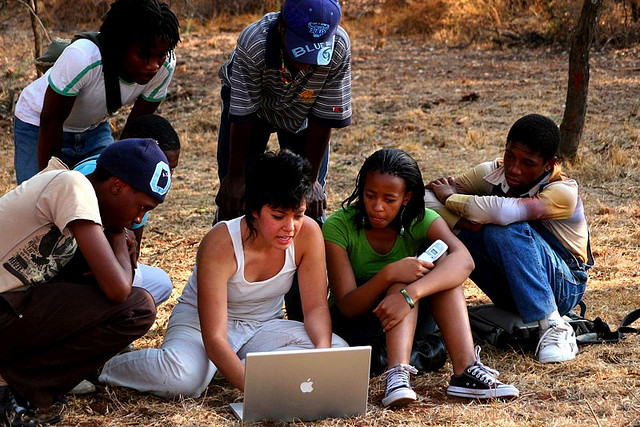 Artificial intelligence (AI) is grabbing headlines across world news. What isn’t getting much attention is how AI in Africa can and already is helping to alleviate poverty. These progressive trends, however, are not without potential risks. The following is a look into some of the pros and cons of AI reliance in Africa.
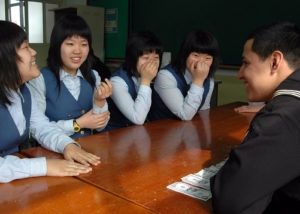 Due to its rigorous entrance processes and societal emphasis on university prestige, South Korea spends a large portion of its annual GDP on higher education and the costs associated with college admissions preparation. Acceptance into one of the nation’s high-ranking “SKY” institutions can help differentiate applicants in an already competitive job market, as 70% of South Koreans have a college education. Here are five facts about the higher education system in South Korea:
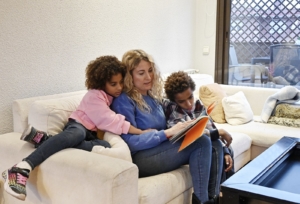 Book banning has become a dominant form of censorship around the world, as governments try to control the internet and technology available for their citizens. Associations similar to Amnesty International are fighting against book banning and censorship to protect democracy, access to education and information and progressive and forward-thinking in the 21st century. Countries across the globe such as China, Bangladesh and Egypt commonly practice book banning to restrict education and allow censorship. Book banning has many implications in terms of access to education and further restricting vulnerable populations from thriving. Fortunately, international organizations are actively working against book banning and censorship to ensure that vulnerable populations have access to a well-rounded education.
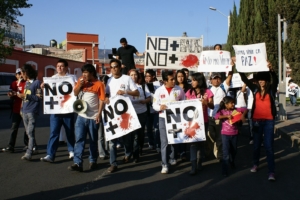 Since the Mexican government declared war against drug cartels in 2006, nationwide violence between cartels, police and the military has been taking a steep toll. The
  Since the early 2000s, Afghanistan’s disease prevention and