• Link to X
  • Link to Facebook
  • Link to Instagram
  • Link to TikTok
  • Link to Youtube
  • About
    • About Us
      • President
      • Board of Directors
      • Board of Advisors
      • Financials
      • Our Methodology
      • Success Tracker
      • Contact
  • Act Now
    • 30 Ways to Help
      • Email Congress
      • Call Congress
      • Volunteer
      • Courses & Certificates
      • Be a Donor
    • Internships
      • In-Office Internships
      • Remote Internships
    • Legislation
      • Politics 101
  • The Blog
  • The Podcast
  • Magazine
  • Donate
  • Click to open the search input field Click to open the search input field Search
  • Menu Menu

Tag Archive for: Economic Growth

Information and news about economic growth

Posts

Development, Global Poverty

The Labor Market in Developing Countries – A Case Study

The Labor Market in Developing Countries – A Case Study
Any poverty reduction strategy must include measures that ensure people are employed. Spending on public goods and focusing on rendering basic life-sustaining services such as healthcare and sufficient nutrition are absolutely essential. Beyond the basics, however, long-term development strategies must target employment to drive economic growth and contribute to a prosperous environment.

South Africa represents an interesting case study of the labor market in the developing world. It has the potential for a large amount of growth, yet is plagued by persistent unemployment. It is neither among the poorest developing nations, nor has it experienced robust growth. Across the spectrum of development, it is somewhere in the middle, and therefore the challenges it faces are broadly representative of much of the developing world’s challenges.

A 2015 World Bank report on the state of the labor market in developing countries provides an enlightening description of South Africa’s predicament. The report describes a “youth bulge,” where a young population saturates the labor market, dampening wage growth. The antidote to this economic affliction is investment in skills development and policy reforms which enhance market entry and private sector expansion.

South Africa, after the end of apartheid in 1994, managed to reduce absolute poverty via a social grant system. However, the grant system simply doesn’t measure up to the average salaries of even low-skill labor. Unemployment and inequality are still quite high in the country, so innovative economic solutions are necessary to create the kind of long-term growth which will help those remaining at the bottom of the economic ladder.

In South Africa, and sub-Saharan Africa in general, as many as 11 million young people will join the labor force every year, and will continue to do so for at least the next decade. With sufficient opportunities, this increase in labor supply could translate to a lot of economic growth. However, unemployment is rampant in South Africa, and long-term strategies for growth and poverty reduction must focus on harnessing the burgeoning young workforce to be effective.

One way of doing so is by investing in worker education and training. Presently, the availability of skilled labor is quite low. Unemployment remains high even among a growing college-educated workforce. A combination of private-sector worker training and public-sector skills development and educational subsidies could drive the expansion of a diverse, skilled workforce. This would encourage multinational firms to hire locally, as well as promote home-grown business growth.

Some private firms already recognize the need for greater investment in a skilled workforce. The Rockefeller Foundation’s Digital Jobs Africa initiative aims to create tech-based employment opportunities for African labor markets. The MasterCard Foundation also has an education and skills training program for disadvantaged African youth.

One South African company that provides a sustainable growth model that suits South Africa’s labor market conditions is Sibanye Gold. Sibanye Gold is a mining company which provides significant worker training and educational resources to its employees. The company also engages in profit sharing. The mining industry is naturally supportive of a localized labor force, for much of their workers come from areas surrounding mines. Unfortunately, socially sustainable companies like Sibanye are hamstrung by a hostile policy environment that does not support them, or worse, buries them in bureaucracy. Sibanye CEO Neal Froneman said, “[Industries such as mining] should be nurtured by the government. But it is not. It is despised.”

Clearly, private interventions alone will never create the kind of opportunities for which a growing, skilled labor force can take advantage. Real change needs to happen at a governmental level, specifically by creating public policies that diversify economic opportunity and create the kind of conditions where companies like Sibanye Gold can thrive. Doing so will harness the economic energies of a massive young workforce, providing a pathway to grow out of poverty.

– Derek Marion

Sources: World Bank, Devex, The Conversation, Daily Maverick
Photo: Brookings

August 15, 2015
https://borgenproject.org/wp-content/uploads/borgen-project-logo.svg 0 0 Borgen Project https://borgenproject.org/wp-content/uploads/borgen-project-logo.svg Borgen Project2015-08-15 01:30:362024-12-13 17:51:52The Labor Market in Developing Countries – A Case Study
Global Poverty

Investment Project to Benefit 350,000 in Rural Bolivia

rural_bolivia
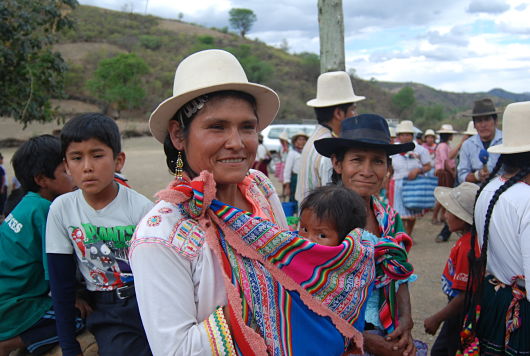
Six out of every 10 people in rural Bolivia live below the poverty line. In 2011, the World Bank Group launched its Community Investment in Rural Areas (PICAR) initiative in Bolivia, seeking to broaden impoverished rural access “to basic and productive infrastructure.”

Thus far, the project has maintained an effective track record, financing 612 sub-projects as of April 2015, including water and sanitation, irrigation, infrastructure and livestock protection initiatives. These sub-projects have a 75 percent completion rate, impacting 132,219 rural Bolivian inhabitants. The World Bank estimates that the project will surpass all target numbers, impacting more than 35,000 rural households in the country’s poorest communities.

After a successful start, the World Bank Group has extended an additional $60 million credit on top of the original $40 million loan for PICAR’s implementation. The funding increase is anticipated to facilitate the implementation of poverty reduction and rural development initiatives in 750 new communities, also providing 120 communities with a second round of grants.

By increasing funding, the World Bank Group expects PICAR to positively impact an additional 200,000 rural, primarily indigenous Bolivians, bringing PICAR’s number of beneficiaries to an estimated 350,000.

Along with indigenous groups, rural women are most strongly affected by poverty. Impoverished people face greater levels of food insecurity, limited access to basic services and depressed economic opportunities.

PICAR has been designed to take into account the importance of providing economic opportunities and necessary services to rural women, with 40 percent of sub-projects prioritized and implemented under female directive. The World Bank also reports that at the community level, PICAR has helped to develop 660 female leaders.

“We expect that at least 45 percent of PICAR beneficiaries will be women,” World Bank Resident Representative in Bolivia Nicola Pontara said, “with at least 20 percent being female heads of household, the most vulnerable group among the poor.”

Handing over the reins of agency to those most impacted by poverty is a common theme. PICAR functions by providing communities with financial resources to meet the issues the community members identify with solutions they define based on small projects, completed with local labor and materials.

Through direct transfers of resources to the communities in which the funds will be invested, PICAR seeks to give Bolivia’s most impoverished regions the capital and support to not only participate in, but actually manage their own advancement.

Alberto Rodriguez, World Bank Country Director for Bolivia, Chile, Ecuador, Peru and Venezuela, spoke on this aspect of empowerment: “[Bolivia’s most vulnerable communities] are able to search for collective solutions to their basic and productive needs, lead projects and manage their own resources, enabling them to control their own development.”

Although Bolivia still faces significant challenges — 30 percent of the population lives in poverty — the country has taken strides toward economic growth. With assistance and initiatives like PICAR, substantial poverty reduction promises to continue.

– Emma-Claire LaSaine

Sources: World Bank, UNICEF
Photo: World Bank

August 9, 2015
https://borgenproject.org/wp-content/uploads/borgen-project-logo.svg 0 0 Borgen Project https://borgenproject.org/wp-content/uploads/borgen-project-logo.svg Borgen Project2015-08-09 01:30:432024-05-27 09:27:21Investment Project to Benefit 350,000 in Rural Bolivia
Global Poverty

The/Nudge Foundation and Job Training in India

The_Nudge_Foundation
Atul Satija, formerly an executive at Google and mobile advertising firm InMobi, recently left his lucrative corporate position to start a nonprofit organization called The/Nudge Foundation out of his native Bangalore. The goal of The/Nudge Foundation is to alleviate poverty by offering job training in India targeted at the economically disadvantaged.

The/Nudge Foundation announced on July 27, has already attracted a diverse group of notable supporters, including Naveen Tewari, Founder and CEO of InMobi, and Hugo Barra, Vice President of Chinese tech giant Xiaomi. The/Nudge Foundation will operate local training facilities called Gurukuls, aimed at people living below the poverty line. These schools will teach so-called “grey-collar” job skills like housekeeping and delivery skills as well as life skills such as financial management and literacy.

Satija, still fresh out of a corporate environment, seems to be utilizing some business tactics with his foundation, perhaps explaining his ability to draw support from powerful corporate executives in such a short amount of time. “It is about building the same level of impatience, goal setting that you have in the corporate sector. If you don’t carry that pressure in a nonprofit, you will never get to your goals,” he said.

The first Gurukul is scheduled to open on November 1, 2015, and will be exclusively targeting women. To ensure sufficient enrollment and motivation, The/Nudge Foundation will be issuing nominal loans to students who will presumably pay them back shortly after graduating from the schools and getting a job.

While Satija’s The/Nudge Foundation is a welcome addition to poverty reduction measures, it is not unique. The Indian government, NGOs, economists and development experts have long known that India suffers from a skills gap. Of the 400 million people living in poverty in India, many are young people seeking jobs who lack access to technical training.

That’s why in 2009, Indian Finance Minister Pranab Mukherjee established the National Skill Development Corporation (NSDC), a public entity that connects the private sector, job training facilities and people looking for work. The government ambitiously hopes to provide training to millions of people by 2022, with the overall goal of creating many industrial jobs to accelerate the Indian economy, whose growth has been more sluggish than expected.

However, the NSDC faces a daunting task. A report by the Federation of Indian Chambers of Commerce and Industry and consulting firm Ernst and Young revealed that India’s vocational training institutes only have the capacity to reach about 1.3 million people. Thus, India’s ability to provide vocational training to the hundreds of millions that need it is a formidable challenge.

That’s where organizations like The/Nudge Foundation come in. By focusing on the poorest demographic, they can help bridge the gap between available job training services and hard-to-reach portions of the population. When so many people are in need of technical training and life skills, every available measure is needed.

– Derek Marion

Sources: BBC, Economic Times 1, Economic Times 2, The Guardian
Photo: Cloud Front

August 8, 2015
https://borgenproject.org/wp-content/uploads/borgen-project-logo.svg 0 0 Borgen Project https://borgenproject.org/wp-content/uploads/borgen-project-logo.svg Borgen Project2015-08-08 01:30:372020-07-02 17:33:42The/Nudge Foundation and Job Training in India
Global Poverty

Power Grids, Africa and Poverty

africa
Often the recipient of international aid, Africa and poverty go hand in hand—the continent is home to 19 of the 23 poorest countries on earth. International agencies and many countries assert that developing Africa will lift millions out of poverty by slowing population growth and bringing the continent up to par economically with the rest of the world.

What is often overlooked is the infrastructure needed to make international aid effective. The American economy is strong because there is a reliable source of power. Businesses can be open eight hours a day without hesitation. The dependability is almost second nature.

But for the countries of Sub-Saharan Africa, the power grid is undependable.

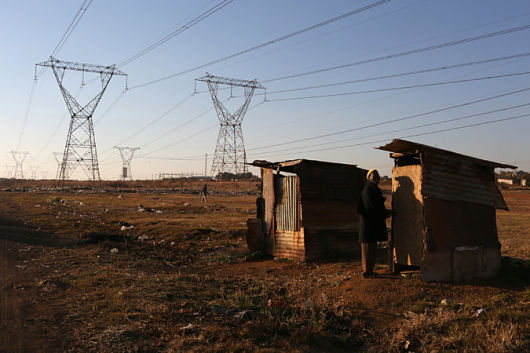
South Africa, which has the biggest power infrastructure in the region at 44 gigawatts, imposes blackouts, or “load shedding,” to cope with the power demand. The continent’s biggest economy, Nigeria, has only six gigawatts for 170 million people. In comparison, the United States has over 1,000 gigawatts for its 320 million citizens.

Most of the businesses only get power four hours a day from the national grid. Many run on private generators. In a recent interview with The New York Times, Nigerian president Muhammadu Buhari lamented that the lack of energy security is “the biggest drag on the economy.”

Other areas of Sub-Saharan Africa are in worse shape. Encompassing 630 million people, 85 percent of Africa does not have access to any type of power infrastructure. The World Bank estimates the region loses 2.1 percent of annual GDP due to the unreliable power.

Yet there is opportunity here. As climate change becomes more evident, and carbon dependent infrastructures of the developed world give way to renewable ones, Africa can become a testing ground to prove that economies that run on renewables are not only sustainable but prosperous.

Since 2000, there have been efforts to bring reliable power to Africa. Two years ago, President Obama launched “Power Africa,” a $7 billion initiative aimed at bringing power infrastructure to the continent. China and some European countries, as well as private companies, have financed solar, wind and hydropower projects in numerous countries.

Kenya is in the process of building a massive wind farm. When completed in 2017, the Lake Turkana 310-megawatt project will supply 17 percent of Kenya’s power. The European Investment Bank and the African Development Bank financed the project. Kenya is already laying the groundwork for a 400-megawatt wind farm.

Last year, hip-hop artist Akon launched the Akon Lighting Africa initiative. The initiative focuses on bringing solar power to those who do not have it. But rather than simply installing solar technology, Akon implemented Solar Academy. The school teaches individuals how to install and maintain solar panels.

In an interview with Think Progress, Akon said this empowers people through education while building Africa into an economy that can compete on a global level. He would like the initiative to expand to all of Africa by 2020.

The International Energy Agency wants renewable energy to account for half of Sub-Saharan Africa’s power supply by 2040—an ambitious goal but achievable. With international investment, Africa can build a sustainable power grid while expanding economically, benefiting the millions still living in poverty today.

– Kevin Meyers

Sources: Business Insider, Clean Technica, New York Times, Think Progress
Photo: New York Times

July 27, 2015
https://borgenproject.org/wp-content/uploads/borgen-project-logo.svg 0 0 Borgen Project https://borgenproject.org/wp-content/uploads/borgen-project-logo.svg Borgen Project2015-07-27 14:37:012024-12-13 17:52:06Power Grids, Africa and Poverty
Foreign Aid, Global Poverty, USAID

Can Aid Abroad Aid Detroit?

Detroit
In 2013, Detroit filed for bankruptcy. The city is full of empty factories and dirty streets. Two years ago, when crossing the border from Canada back into Detroit, my family and I commented on the dramatic change in scenery that occurs when crossing this small border. On one side of the border, the streets are immaculate and bright with blues and greens, there are ongoing construction projects, and polite signs telling drivers to, “pull over and take a nap.” On the other side in Detroit, it seemed to me that almost everything was grey and brown. Many of the people crossing the street appeared to be living in poverty.

An article by economyincrisis.org comments that the city looks, “war-torn,” partially thanks to the fact that, “American automakers shipped their jobs to Canada and Mexico.” While Detroit could use economic assistance in its transportation, educational and architectural sectors, what the city really needs is jobs. Perhaps one place that these jobs could come from could be foreign aid.

USAID has lost funding since 2009. While a loss in funding is always an issue, USAID was already understaffed in 2009.

Foreign aid is shown to boost the United States’ economy and create jobs, so why is the countries aid organization losing funding?

USAID is one source of potential in the U.S. job market. If USAID were better funded, it would have the ability to create more jobs and expand in order to have locations to manage and contain those jobs. One city that could perhaps become a place of USAID expansion could be Detroit. In addition, USAID works with many partner organizations in order to help people abroad. If USAID had the economic ability to utilize these partners more often, then the partner organizations would expand as well. This leaves yet another avenue open for expansion into Detroit, or at the very least providing some of the unemployed people there with jobs.

Detroit had an unemployment rate of 24.8 percent in 2010, according to the Bureau of Labor Statistics.

While USAID expansion could in itself be at least a partial solution to the Detroit job crisis, sending more aid abroad will also be a great solution. AIPAC.org says that “by law, nearly all of U.S. assistance must be spent on American-produced items.” If the U.S. sends more aid, then it will have to open up factories in order to create projects to keep up with the increase in aid. As the aid brings greater numbers of people out of poverty, these aid products will become purchased products.

If more people abroad can afford these products from the United States, then more people will buy them. While these factories may begin as “aid” factories, they will in the end boost the American economy. The United States was once an industrial giant and Detroit was in some ways at the center of the industry.

Perhaps the solution is to return Detroit back to its roots and get the empty “war-torn” factories running again.

– Clare Holtzman

Sources: AIPA, Bureau of Labor Statistics, The Detroit News 1, The Detroit News 2, Economy In Crisis, Foreign Policy, Jalopnik
Photo: Urban Ghosts

July 27, 2015
https://borgenproject.org/wp-content/uploads/borgen-project-logo.svg 0 0 Borgen Project https://borgenproject.org/wp-content/uploads/borgen-project-logo.svg Borgen Project2015-07-27 14:12:152024-05-27 09:26:10Can Aid Abroad Aid Detroit?
Global Poverty

How Ethiopia Reduced Poverty

EthiopiaEthiopia is the second most populous country in Africa, with 94.1 million people. Poverty has long been an issue for Ethiopia, and while many remain under Ethiopia’s poverty line of earning $1.25 a day or less, the nation has made great strides in the past 10 years to reduce poverty and improve health.

Ethiopia’s economy has been thriving in the recent past. Between 2004 and 2011, the economy grew at a rate of 10.6 percent per year. Ethiopia increased exports in order to help it account for this economic growth, and that has led to more prosperity throughout the country.

This decrease in poverty can also be attributed to strides in agriculture. In 2005, Ethiopia introduced new agricultural practices which resulted in increased production. As The World Bank states, this agricultural growth has allowed for a 4 percent reduction in poverty each year. The use of fertilizer, along with high food prices and good weather, has given poor farmers with access to markets a higher income.

Ethiopia also instituted the Productive Safety Net Program (PSNP). The World Food Program writes that there are 7.4 million people participating in the PSNP. The program works to end chronic food insecurity through transfers of food or cash (or a combination of both).The PNSP asks that those who are able-bodied in the households who receive their help participate in activities which will help them have more resilient livelihoods and less chance of food insecurity. These activities include building community infrastructure, such as building schools, roads, and hospitals, and rehabilitating land and water resources. The PSNP has helped 1.5 million people who were in poverty to be lifted out of poverty.

Economic growth, an increase in agricultural production, and programs such as the Productive Safety Net Program have paid off. From 2000 to 2011, poverty in Ethiopia declined from 44 percent to 30 percent. As the World Bank says, this “translates to a 33 percent reduction in the share of people living in poverty”.

This decrease in poverty has helped the health of Ethiopians as well. From 2010 to 2015, the level of child mortality has been lowered by two-thirds. The average lifespan has also increased by about an year annually from 2005 to 2011, making an Ethiopian’s lifespan 63. Malnutrition rates have come down as well. 75 percent of the population was malnourished in Ethiopia in 1990, while today it has fallen to 35 percent.

Since 2004, four million Ethiopians have been able to rise above the poverty line. However, there is still work to be done. 25 million people in Ethiopia are still suffering from poverty. The World Bank suggests that in order for the trend of a decrease in poverty to remain, ongoing efforts to promote self-employment have to continue. Firms have to enter Ethiopia, and urban migration has to be encouraged.

– Ashrita Rau

Sources: The WFP, World Bank 1, World Bank 2, The Sudan Tribune, Voice of America, BBC
Photo: Needpix.com

July 26, 2015
https://borgenproject.org/wp-content/uploads/borgen-project-logo.svg 0 0 Borgen Project https://borgenproject.org/wp-content/uploads/borgen-project-logo.svg Borgen Project2015-07-26 14:47:012024-12-13 17:52:06How Ethiopia Reduced Poverty
Development, Global Poverty

Ho Chi Minh City Creates Innovative Development Projects

Ho_Chi_Minh_City
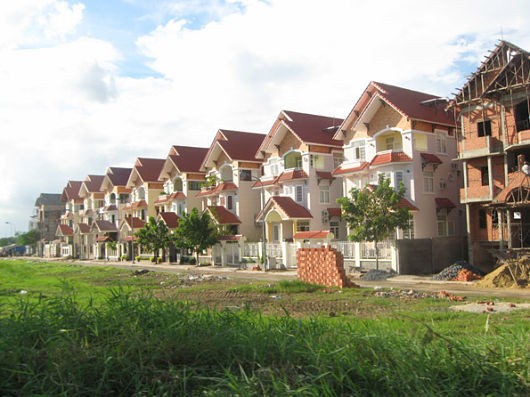
Outside of the United States, Ho Chi Minh City is one of the largest urban cities in the world. For the last 10 to 15 years, the city has been growing rapidly. The gross domestic product is now USD $3000. Thanks to the vast development of its infrastructure and improved access to community devices, the city’s resiliency is slowly bringing civilians out of poverty.

Urban poverty had been on the rise since the start of the 21st century. The city has dealt with flooding and lack of sanitation, leading to serious problems for many residents. In some cases, alleyways had no drainage. They flooded, accumulated garbage and gave mosquitoes a place to thrive.

Back in 2010, 54 percent of residents in Ho Chi Minh City did not have access to social security systems or educational, health-related and social services. Basic needs such as tap water and the instillation of drainage systems were not available; neither was proper housing.

A 2012 report showed improvement. With a population of 9 million, Ho Chi Minh City’s GDP of USD $3000 is one fifth of Vietnam’s total GDP. Its market has expanded and so has its resiliency. Though the center’s population growth is stable, urban and suburban areas are expected to increase steadily.

There has been economic growth. However, inequality and access to services have kept people in poverty; income had little to nothing to do with their status. Those who were unregistered had it worse. Struggles with population compression was congesting traffic and minimizing expansion efforts.

In 2014, Nguyen Xe of the Steering Committee for Poverty Reduction designed a plan to use data collected from multidimensional poverty (MDP) research to alleviate the problem. Because urban poverty is caused by the incompatibility of public services, the MDP report gathered from 2013 helped the city focus its development on certain targets.

A program known as The Vietnam Urban Upgrading Project has been implementing changes in Hai Phong, Nam Dinh, Ho Chi Minh City and Can Tho. It has benefited 7.5 million people total in Vietnam. This project also handed out 95,000 loans to the bottom 40 percent in poverty. Nearly 100 percent of these loans are paid back.

Supported by the World Bank, this project has helped 200 low-income regions and changed the lives of 2.5 million people in the city. It paved wider and cleaner streets; now, vehicles like ambulances and firetrucks can pass through quickly. According to statistics, 360 miles of roads have been upgraded.

Canals, lakes, sewers and bridges were reconstructed and have managed to benefit five million residents. Canals up to 18 miles long have been redone. Seventeen acres of lakes are now in contact with drainage. Three hundred and ten miles of these drain systems have been improved.

This has taken away the possibility of flooding hazards, increased environmental safety and made it more secure for children to run and play. Kindergartens, schools, health clinics and community centers have been improved in poor regions with the project’s help.

The World Bank is actively involved in financing changes for the city, having sent $382 million to improve the economy. An amount of $140 million was provided by the Vietnamese government to help change the lives of many.

Keiko Sato, the World Bank County Director from Vietnam, hopes to alleviate poverty by 2030 as part of the Sustainable Development Goals. The World Bank is committed to improving the infrastructure of Ho Chi Minh City; it provided the city with $124 million in May 2015.

The goal is to upgrade public transportation and turn it into a sustainable system. The places affected by the change include the Bus Rapid Transit between An Lac and Rach Chiec. This will benefit 14 miles of urban transportation and 28 stations. At least 28,300 people will be given improved transportation in metro, rail and bus lines.

Busses will be running on natural gas that is cleaner than what is currently being used, and pollution is expected to decrease as a result. Additions will also help those who are disabled and women with strollers to access the system. This new foundation will let Ho Chi Minh City develop institutions that manage public transportation more efficiently.

The city has a long way to go. Increasing infrastructure is one way to benefit the economy and reach out to all livelihoods. Many are still out of touch and pollution is a problem. But with these development projects and funding from communities, governments and the World Bank, Ho Chi Minh City and the rest of Vietnam are on their way to solving some of their toughest problems with poverty.

– Katie Groe

Sources: World Bank 1, World Bank 2, New Geography, UNDP 1, UNDP 2
Photo: New Geography

July 26, 2015
https://borgenproject.org/wp-content/uploads/borgen-project-logo.svg 0 0 Borgen Project https://borgenproject.org/wp-content/uploads/borgen-project-logo.svg Borgen Project2015-07-26 10:01:212020-07-03 15:26:46Ho Chi Minh City Creates Innovative Development Projects
Advocacy, Global Poverty

How the World Bank is Changing the Way We Measure Poverty

World_Bank
Currently, poverty is considered apparent when someone lives on less than $1.25 a day, but some question the reliability of this simplistic measurement. Therefore, the World Bank has announced that a new commission will propose revisions to the International Poverty Line to account for the many components of poverty in every country.

It turns out that the way we have been thinking about poverty is in over-generalized terms. When the United Nations announced its post-2015 Sustainable Development Goals, first on the list was the eradication of poverty “in all forms.” The notion that global poverty is multi-faceted is becoming universally accepted, and is acknowledged by the Bank’s chief economist, Kaushik Basu, who said, “The Global Commission will advise us on other dimensions of poverty that the Bank should collect data on, track, analyze and make available to policymakers for evidence-based decisions.”

A more data-driven reason for revising the way we measure poverty comes from a 2011 price survey from the International Comparison Program, which analyzes economic activity and poverty in almost every country. But evaluating the data gets complicated; depending on how the data is used, the results vary greatly, showing either a dramatic decrease in poverty or little decrease. Prices and exchange rates are changing, so the $1.25 a day standard must account for this.

Another problem with the current International Poverty Line occurs when a country’s poverty level decreases; it can be dropped from the list of countries averaged to set the IPL, resulting in a skewed measurement of progress. In addition, economic comparisons among countries include the exchange of all goods, while assessing only some goods is significant for impoverished communities.

The commission advising the Bank will consist of 24 leading international economists, and the report will be finished by April 2016. The World Bank hopes that a revised IPL will increase the possibility of attaining its two goals; the first goal is to bring the number of impoverished people to less than 3 percent of the global population by 2030, and the second is to increase per capita income of the poorest 40 percent of each country’s population.

Alterations in the International Poverty Line will change the way we define poverty in the first place, impacting philanthropy everywhere. Basu said, “We expect the Commission report to be influential not only for our own work on poverty but also in shaping global research and policymaking on this most important challenge of our times.”

– Jordan Reabold

Sources: Devpolicy, World Bank 1, World Bank 2
Photo: Give A Billion

July 21, 2015
https://borgenproject.org/wp-content/uploads/borgen-project-logo.svg 0 0 Borgen Project https://borgenproject.org/wp-content/uploads/borgen-project-logo.svg Borgen Project2015-07-21 13:08:452020-07-08 16:09:45How the World Bank is Changing the Way We Measure Poverty
Education

How an Education Boom is Causing an Economic Boom in Africa

education_in_africa

Though millions of African children still attend school in run-down, shack-like buildings, rising income across the continent of Africa has created a new consumer class— one that is willing to pay for a better education.

Sub-Saharan African countries consistently rank among the lowest in the world for the overall quality of their education system, according to the World Economic Forum. Though increasing numbers of children are attending school, the lackluster curriculums leave many prepared for little more than manual labor.

But as incomes rise, more and more African families are willing to pay, sometimes thousands of dollars, for their children to receive a high quality education at a private school.

According to Reuters, the private education sector in Africa has advanced at breakneck speeds over the last two decades, with some investors more than tripling their initial investments. Private schools can range in cost anywhere from $2,000 to $16,000 annually, says Reuters.

A report by South Africa’s Centre for Development and Enterprise released last month found that over the last 15 years, private or independent school attendance in South Africa has doubled. Though the price tag is high, the dramatic increase shows a demand for better education in Africa.

The booming private sector has drawn the attention of foreign investors from around the globe, including Britain-based Pearson and Dubai-based Gems Education. With so many of the schools already in place and pulling in large profits, Gems Education said they plan to open additional low-cost schools in an interview with The Guardian.

Private schools help meet the educational demands when the governments of impoverished regions cannot afford the investment. Though the overall school attendance in Sub-Saharan Africa is among the lowest in the world, in the last two decades, even the most impoverished regions have seen school attendance nearly triple, according to The World Bank’s “world development indicators.”

However, the boom isn’t restricted to the education sector. As more and more young Africans are receiving higher education, the demand for better paying jobs is on the rise and the growing availability of skilled laborers leaves the door open for investors interested in expanding into new regions. For example, Facebook recently announced it will be opening an office in South Africa this year. In this way, the education boom is sparking an economic boom in Africa.

– Gina Lehner

Sources: Reuters, The Guardian, The World Bank
Photo: The Guardian

July 19, 2015
https://borgenproject.org/wp-content/uploads/borgen-project-logo.svg 0 0 Borgen Project https://borgenproject.org/wp-content/uploads/borgen-project-logo.svg Borgen Project2015-07-19 11:38:552020-07-09 20:25:24How an Education Boom is Causing an Economic Boom in Africa
Aid Effectiveness & Reform, Children, Development, Education, Global Health, Global Poverty, United Nations

What Have the Millennium Development Goals Achieved?

What Have the Millennium Development Goals Achieved?

What Have the Millennium Development Goals Achieved? In 2000, the United Nations set out on a clearly defined mission to end global poverty by means of tackling eight core areas of need. Now we are looking back, 15 years later, and seeing how successful the UN was in meeting their goals-and where the new Sustainability Goals will need to take up the slack.

The Millennium Development Goals were designed as a framework for developing impoverished nations by addressing the most critical needs of the society, like reliable food sources, access to education, and adequate health care.
Each goal had specific targets which the United Nations hoped they would meet by 2015. Some goals had more success than others.

The UN’s goal of halving global poverty was met with resounding success, as the number of people living on less than one dollar and 25 cents a day dropped from one point nine billion in 1990, to 836 million in 2015. An estimated 14 percent of the global population are living in extreme poverty today, down from nearly half in 1990.

The reduction in the proportion of undernourished people globally narrowly missed its target, coming within two percent of the 50 percent reduction goal. Though narrowly missing their target, given the exponential human population growth over the last three two decades, it is still a considerable success.

The goals suffered two more near misses in their attempts to increase educational opportunities for all, including establishing gender equality in schools. An estimated 10 percent of children are not receiving any formal education, and only about two -thirds of developing countries have achieved gender equality in the classroom.

Goals four and five of the Millennium Goals, which addressed child and maternal mortality, respectively, both failed to meet their targets. While both the mortality rate of children under five and maternal deaths were reduced by over half, both failed to reach the two-thirds reduction target.

Goal six, stop and reverse the spread of HIV/AIDs, malaria, and other diseases was similarly not met in the given 15 year time frame. Although the rate of new HIV/AIDS infections has fallen by around 40 percent, an estimated two point one million people are still being infected annually. The fight against malaria and other diseases prevalent in developing areas has seen more success however, with an estimated six point two million malaria deaths averted between 2000 and 2015.

The final two goals of the 2000 Millennium Development Goals tackled strengthening infrastructure, sustainable development, and international partnership. While both goals are still on-going endeavors, over the last decade, two point six billion people have gained access to improved drinking water and official development assistance to developing nations has risen by nearly seven percent.

Overall, the United Nations has experienced great success in their struggle to address the needs of the poor around the world, but they are the first to admit that more work is needed. In the official Millennium Development Goals report, released earlier this month, Wu Hongbo Under-Secretary-General for Economic and Social Affairs admitted that success has been uneven across developing nations. “Millions of people are being left behind, especially the poorest and those disadvantaged because of their sex, age, disability, ethnicity or geographic location. Targeted efforts will be needed to reach the most vulnerable people,” said Hongbo.

The Quick and Dirty of Hits and Misses:
Goal #1: Target goal met and exceeded
Goal #2: Target goal nearly achieved
Goal #3: Not met
Goal #4: Not met
Goal #5: Not met
Goal #6: Not met
Goal #7: Target achieved ahead of schedule
Goal #8: No target specified, on-going action

The Sustainable Development Goals of 2015 will pick up where the Millennium Goals left off and continue to guide the United Nations as they work to eradicate global poverty.

– Gina Lehner

Sources: The Guardian, UN
Photo: Global Classrooms

July 9, 2015
https://borgenproject.org/wp-content/uploads/borgen-project-logo.svg 0 0 Borgen Project https://borgenproject.org/wp-content/uploads/borgen-project-logo.svg Borgen Project2015-07-09 15:02:462020-07-10 12:53:34What Have the Millennium Development Goals Achieved?
Page 38 of 44«‹3637383940›»

Get Smarter

  • Global Poverty 101
  • Global Poverty… The Good News
  • Global Poverty & U.S. Jobs
  • Global Poverty and National Security
  • Innovative Solutions to Poverty
  • Global Poverty & Aid FAQ’s
Search Search

Take Action

  • Call Congress
  • Email Congress
  • Donate
  • 30 Ways to Help
  • Volunteer Ops
  • Internships
  • Courses & Certificates
  • The Podcast
Borgen Project

“The Borgen Project is an incredible nonprofit organization that is addressing poverty and hunger and working towards ending them.”

-The Huffington Post

Inside The Borgen Project

  • Contact
  • About
  • Financials
  • President
  • Board of Directors
  • Board of Advisors

International Links

  • UK Email Parliament
  • UK Donate
  • Canada Email Parliament

Get Smarter

  • Global Poverty 101
  • Global Poverty… The Good News
  • Global Poverty & U.S. Jobs
  • Global Poverty and National Security
  • Innovative Solutions to Poverty
  • Global Poverty & Aid FAQ’s

Ways to Help

  • Call Congress
  • Email Congress
  • Donate
  • 30 Ways to Help
  • Volunteer Ops
  • Internships
  • Courses & Certificates
  • The Podcast
Scroll to top Scroll to top Scroll to top