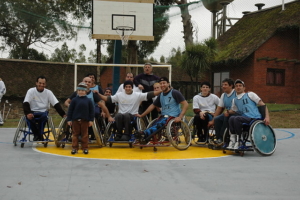
 In Uruguay, people with disabilities face social and economic barriers that limit their opportunities and quality of life. Despite the country’s relatively strong social safety net, poverty, unemployment and exclusion disproportionately affect individuals with disabilities. The intersection of disability and poverty in Uruguay reveals structural challenges, policy gaps and limited access to opportunities. A deeper understanding of these overlapping issues in Uruguay can help identify both the barriers and possibilities for advancing inclusion and equity.
Correlation Between Disability and Poverty in Uruguay
As of 2023, only 6.7% of Uruguay’s population lives below the international poverty line of $6.85 per person per day (2017 PPP), making it one of the countries with the lowest poverty rate in Latin America– a level that has remained relatively stable since 2014.
Uruguay’s economy experienced a 3.1% growth in 2024, fueled by strong export performance and increased private consumption, alongside strengthening the labor market and controlling inflation within the Central Bank of Uruguay’s target range. While the country enjoys its overall economic and social stability, persistent structural challenges limit progress in addressing key development divides.
Notably, poverty remains disproportionately high among children, adolescents, individuals with disabilities and individuals of the Afro-descendant background. Approximately 16% of Uruguay’s population reports living with some form of disability, totaling to 542,080 people. Along with the greater risk of poverty, these groups face heightened vulnerability in forms of discrimination and broader socioeconomic challenges.
On the other hand, Uruguay stands out as one of the first countries in the Americas to incorporate personal assistance for individuals with disabilities into its national care system.
Personal Assistance
In 2024, the Inter-American Development Bank (IDB) committed to a $10 million loan and an additional $2.5 million in non-reimbursable funds to make quality care services for those with disabilities or dependency, more easily accessible. However, the Personal Assistant Program remains limited in scope and does not yet reach all those who need support to live independently.
Significant gaps persist in the availability and accessibility of services. Assistance is restricted by age, provided only to individuals aged 29 and under or 80 and over, all while being limited to a set number of hours. As a result, many people with disabilities cannot access the support necessary for daily living.
Participants in Uruguay’s Personal Assistant Program receive government aid to hire a personal assistant for no more than 80 hours per month. The amount is determined based on the severity of the individual’s disability, their level of dependency and the income of the user and immediate family.
Inadequacies
Human Rights Watch found that the 80-hour monthly limit is inadequate to meet the demands of essential daily activities. For example, if an individual was employed at a job that started at 9:00 am, but their personal assistant cannot arrive to help them prepare, they may be unable to maintain employment– an everyday consequence of the systemic challenges linking disability and poverty in Uruguay.
While the government covers the wages and social benefits for personal assistants, users are responsible for severance payments if they terminate the service after three months of use which can pose a financial burden.
Individuals who rely on personal assistants have limited options for addressing labor disputes, as labor courts are the sole mechanism for resolving such conflicts. Despite often facing financial hardship, individuals must cover their own legal expenses, while the government provides legal representation for the personal assistants. This imbalance not only places an added strain on those in need of care but also increases the potential for service issues and mistreatment without proper accountability.
Multidimensional Poverty Index in Uruguay
Nevertheless, Uruguay’s efforts to gain more knowledge about poverty and its effects does not go unnoticed. The Uruguay Multidimensional Poverty Index (MPI) provides a comprehensive understanding of poverty within the country. This tool distinguishes the specific regions and demographic groups most impacted by poverty, while also analyzing how multiple variables contribute to people’s overall experience of poverty. The MPI’s primary purpose is to offer strategic insights that ensure inclusive progress, aiming to reduce poverty and inequality without leaving anyone behind.
According to the multidimensional poverty headcount – which considers deprivations across education, employment, health and living standards – disability and poverty in Uruguay are closely tied. Poverty rates vary significantly based on the levels of functional difficulty. Among people with severe functional difficulties, 41% experience multidimensional poverty. This rate drops to 25% for those with moderate difficulties and just 8% for individuals without any functional limitations.
It is important to note that the MPI does not replace the traditional measurement of monetary poverty; instead, it supports them by enhancing the precision of public policies designed to combat poverty. By measuring multidimensional poverty the government can better shape strategies, policies and programs that address the diverse facets of poverty and improve support for the groups most in need.
Alongside Uruguay’s government initiatives, there are dynamic networks of organizations passionately working to combat poverty and empower people with disabilities in Uruguay. Here are some organizations addressing disability and poverty in Uruguay.
Disability Support International
The organization started in 2016, focuses on development by partnering with communities to build resilience and promote inclusion. It works to strengthen local capacity, especially for people with disabilities, aiming to create more equitable and sustainable outcomes in vulnerable areas. It now works all over the world including Africa, Asia, the Caribbean, Europe, the Middle East, Oceania and the Americas. Through Disability Support International (DSI), Asociación Down Del Uruguay is a program that works with children and adults with down syndrome. It provides family support, vocational training, recreation and workplace opportunities in addition to promoting inclusion of people with down syndrome, advocacy and inclusive education.
Through the Labor Inclusion Program by Asociación Down Del Uruguay, about 30 people with down syndrome have permanent employment. Many people believe that individuals with Down syndrome are incapable of working or living independently. The Asociación Down Del Uruguay believes that “working and receiving fair compensation is a right and a necessity for all people, with or without disabilities.” Workforce inclusion empowers individuals with down syndrome by fostering confidence and creating spaces where their unique strengths and contributions are recognized and valued.
UNICEF
Since 1956, UNICEF has provided humanitarian and developmental aid to children worldwide. It works to support Uruguay in making sure all children and adolescents can access quality education. A big part of its focus is on students with disabilities and teenagers in general, helping them stay in school, do better academically and eventually graduate so they can fully participate in society and enter the workforce.
UNICEF supported the National Public Administration to expand the Return to Education Programme. This initiative partners with local communities to offer tailored support to adolescents who are at high risk of leaving school early. The success led to its integration into Uruguay’s national policy on “education trajectories,” co-funded by the government and UNICEF. As part of its efforts, it trained 500 teachers in literacy instruction, developed a Socio-Educational Support Guide and prepared 150 mentors to assist students as they navigate their educational paths.
Looking Ahead
Organizations such as the Personal Assistant Program, Asociación Down Del Uruguay and Return to Education Programme are helping to drive meaningful change by promoting inclusion, independence and equal opportunity for people with disabilities in poverty. Through the work of the Uruguayan government and organizations like these, they challenge the social and economic barriers that often trap individuals in cycles of poverty and exclusion. These initiatives demonstrate that with targeted support, inclusive policies, and community engagement, it is possible to improve the quality of life and expand opportunities for people with disabilities living in poverty in Uruguay.
– Gabriella Luneau
Gabriella is based in Raleigh, NC, USA and focuses on Good News and Global Health for The Borgen Project.
Photo: Flickr
 Mauritius, often commended as one of Africa’s economic success stories, hides a sobering truth behind its polished surface: disability and poverty intertwine, leaving people with disabilities especially vulnerable to systemic marginalization. According to the 2011 Housing and Population Census, 59,869 people in Mauritius live with a disability, which is roughly 5.4% of the population.