• Link to X
  • Link to Facebook
  • Link to Instagram
  • Link to TikTok
  • Link to Youtube
  • About
    • About Us
      • President
      • Board of Directors
      • Board of Advisors
      • Financials
      • Our Methodology
      • Success Tracker
      • Contact
  • Act Now
    • 30 Ways to Help
      • Email Congress
      • Call Congress
      • Volunteer
      • Courses & Certificates
      • Be a Donor
    • Internships
      • In-Office Internships
      • Remote Internships
    • Legislation
      • Politics 101
  • The Blog
  • The Podcast
  • Magazine
  • Donate
  • Click to open the search input field Click to open the search input field Search
  • Menu Menu

Tag Archive for: Denmark

Posts

Disease, Global Poverty

Cardiovascular Among Top Diseases in Denmark

Denmark's Top Diseases
Denmark, officially known as the Kingdom of Denmark, is a Scandinavian country in Europe. It is the southernmost and smallest of the Nordic Countries. About five million people inhabit Denmark. In 2015, Denmark’s life expectancy was at 80.6 percent. It ranked number 27 in world life expectancy. The top diseases in Denmark are primarily cardiovascular diseases.

The Danes suffer mainly from heart problems. In 2015, ischemic heart disease was at 19.2 percent. According to the WHO, cardiovascular disease is the cause of more than half of deaths across the European region. The contributing factor is poor health choices, for example, eating fatty foods and high consumption of alcohol and cigarettes.

However, in 2015, other diseases like cerebrovascular disease and various cancers were also prevalent.

Health problems that cause the most disabilities

In 2015, the health problems that cause the most disabilities were non-communicable diseases. Sense organ diseases, skin diseases, musculoskeletal conditions and diabetes are all significant contributors to disability in Denmark.

What risk factors drive the most death and disability combined?

In 2015, cigarettes, dietary risks and high systolic blood pressure were the leading causes of death. Cigarettes caused the most cardiovascular diseases as well as chronic respiratory diseases. Dietary risk causes mainly cardiovascular diseases and musculoskeletal disorders. High systolic blood pressure caused mainly cardiovascular diseases.

The small country has its own unique health problems. The top diseases in Denmark are primarily cardiovascular in nature. The main cause of these diseases include smoking tobacco and poor diet. On a positive note, deaths caused by cardiovascular disease have decreased by 70 percent since 1985. It is hopeful that through healthier lifestyle choices, the number of cardiovascular-related deaths will continue to drop.

– Solansh Moya

Photo: Flickr

April 27, 2017
https://borgenproject.org/wp-content/uploads/borgen-project-logo.svg 0 0 Borgen Project https://borgenproject.org/wp-content/uploads/borgen-project-logo.svg Borgen Project2017-04-27 01:30:352024-12-13 17:57:55Cardiovascular Among Top Diseases in Denmark
Global Poverty

US and Denmark Team Up to Fund African Renewable Energy Projects


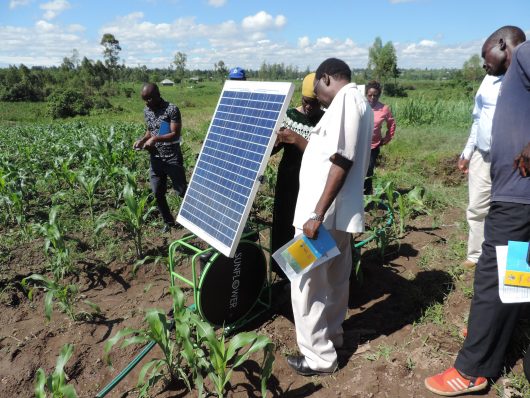
The African Renewable Energy Fund (AREF) was created in March 2014. The US and Denmark committed $100 million dollars to the fund, which was created to diversify Africa’s energy portfolio through funding and providing technical support for renewable energy projects.

The fund invests in hydro, wind, geothermal, solar, biomass and waste gas projects that connect to the greater African energy grid or local energy grids. Berkeley Energy manages AREF and has successfully doubled the initial investment, reaching an operational budget of $200 million. This was made possible through multi-lateral partnerships and investments from the African Development Bank (AfDB), African Biofuel and Renewable Energy Company (ABREC), Nederlandse Financierings-Maatschappij voor Ontwikkelingslanden N.V. (FMO), the Calvert Foundation and many others.

In the past few years, the Sustainable Energy Fund for Africa, (SEFA) has committed one million dollars to Green Mini-Grids in Gambia, one million dollars to a community-owned hydropower project in Kenya and $870,000 to Tanzania’s Renewable Energy Investment Facility. In addition, they funded the first-ever Biomass Gasification Project in Uganda.

Access to energy is arguably the only true equalizing catalyst for development. According to the Food and Agriculture Organization of the United Nations (FAO), there is a direct correlation between the amount of energy used per capita and the average life expectancy in a country. As energy consumption increases, life expectancy rates increase in turn.

There is currently a race to implement clean energy in Africa among development contractors and development banks. This is in order to raise the quality of life without adding greenhouse gases into the atmosphere. Every year, 5.5 million people die prematurely from air pollution-related illnesses. If Africa diversifies its energy portfolio at this early stage of energy infrastructure development by installing renewable energy technologies instead of traditional coal-fired power plants, it could save millions of lives on the continent from pollution-related deaths, and continue to benefit economically from its carbon credit cap and trade practices.

– Josh Ward

Photo: Flickr

March 16, 2017
https://borgenproject.org/wp-content/uploads/borgen-project-logo.svg 0 0 Borgen Project https://borgenproject.org/wp-content/uploads/borgen-project-logo.svg Borgen Project2017-03-16 01:30:102024-12-13 17:57:37US and Denmark Team Up to Fund African Renewable Energy Projects
Global Poverty

Is Eskimology Frozen in Time?

Eskimology
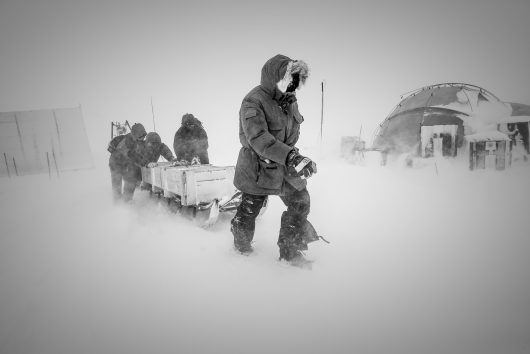
The world’s only college degree in Eskimology may no longer be available this fall. The University of Copenhagen has suspended Eskimology courses for the 2016 school year due to recent budget cuts.

The classes are set to resume next fall, however, the future looks bleak for Eskimology since more budget cuts are expected in the future. A few other subjects have been cut as well, with many focused on regional studies, such as South East Asian studies.

What exactly is Eskimology? The field covers the history, languages, and culture of arctic peoples. The origins can be traced back to the 18th century and the writings of Hans Egede. The University of Copenhagen began to offer courses in the department in the 1920s. The university’s official Department of Eskimology was founded in 1967.

Although the current Eskimology department is small, it is not going down without a fight. Ecologists argue the field is even growing in importance as global warming and mining concerns (two major issues for the Eskimo/Inuit community) take center stage.

How does the decline in Eskimology education impact its subjects? Because of its colonial ties to Denmark, much of the coursework at the University of Copenhagen focuses on the people of Greenland. Recently, Greenland — which has a majority Eskimo/Inuit population — has been grappling with issues of independence, environmental concerns, and an international battle over their coal and oil reserves.

In the face of chaos, Greenland’s government often sought the advice of Copenhagen’s top Eskimologists. Additionally, the University of Copenhagen was, until this year, the only university in the world (outside of Greenland) to offer Greenlandic language courses.

Maintaining the friendly connection between Greenland’s Eskimo/Inuit population and the University of Copenhagen is also vital during this time as debates rage over the status of Greenland’s independence. Tine Pars from the University of Greenland advised, “We have had a lot of collaboration with Eskimology and Arctic Studies at Copenhagen University over the years… these academic collaborations have been good for research and teaching, and good for both countries.”

The decision to cut Eskimology has been a controversial one, especially since many Danes believe they have a responsibility to protect the Greenlandic culture. One Danish newspaper states, “If Greenland’s economy and business shall develop in the coming years and the massive social problems are addressed, this requires knowledge and reciprocal engagement.” As Greenland faces an uncertain future, many Danish and Greenlandic citizens push for the resurgence of Eskimology.

– Carrie Robinson

Photo: Flickr

September 13, 2016
https://borgenproject.org/wp-content/uploads/borgen-project-logo.svg 0 0 Borgen Project https://borgenproject.org/wp-content/uploads/borgen-project-logo.svg Borgen Project2016-09-13 01:30:152020-06-06 09:38:40Is Eskimology Frozen in Time?
Aid, Children, Education, Global Poverty

Focusing on Education for Syrian Refugees

Education_for_Syrian_Refugees
The Syrian Refugee conflict has been a hot topic globally for months now. Many countries have been accepting Syrian refugees since the climax of the crisis, but once a temporary home has been found, what next?

On average, a refugee will stay in a camp for 17 years. In these crowded and busy communities, individuals and families try to create a semi-normal life.

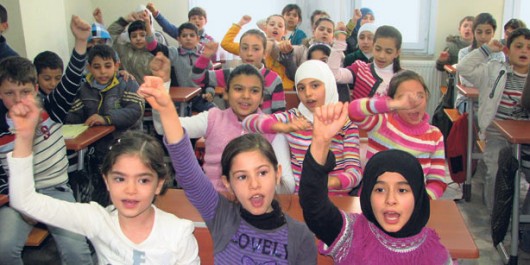
For smaller children though, living in these refugee camps means growing up without a fair chance to attend school. Therefore, greater focus needs to be placed on education for Syrian refugees.

According to The UN Refugee Agency, UNHCR, the Syrian refugee crisis could be a large contributor to another global crisis. Poverty rates, already at a high, could be negatively impacted if proper action is not taken.

In a study done by the UNHCR entitled “Living in the Shadows,” the organization stated, “Two in every three Syrian refugee households are below the absolute poverty line in Jordan, and one out of six is below the Jordanian abject poverty line…households’ economic vulnerability appears to increase over time.”

While humanitarian aid is a huge part of alleviating this problem, more needs to be done. Refugee education and training in vocational skills are a necessity to combat the struggle of poverty within and outside of these refugee camps.

According to The Guardian, “Globally, over 50% of refugees are children. Yet only one in every two refugee children attend primary school. Only one in four refugee adolescents receive secondary school education.”

It has been proven several times over that educational opportunities are one of the key solutions to eradicating poverty. With education comes new skills, a more secure future, and a more stable country.

Recently, more countries have started to pick up on this trend and are working to make necessary changes.

In Turkey, the refugee educational opportunities for children has risen from 199,000 in 2014 to 299,000 this school year.

Lebanon, the country with the highest amount of hosted Syrian refugees, is providing education opportunities for 200,000 of those children.

According to the University World News, “The University of Copenhagen has asked the Danish government for permission to create extra student spaces for refugees and migrants arriving in the country.”

For refugees, education is everything. It is the key to getting out of poverty and a source of hope amidst hardship. Continuance of improved and increased educational opportunities is one of the top essentials of getting Syrian refugees out of poverty and helping them contribute to society wherever they currently reside.

– Katherine Martin

Sources: UNHCR, The Guardian, Today’s Zaman, Huffington Post, University World News
Photo: Todays Zaman

October 13, 2015
https://borgenproject.org/wp-content/uploads/borgen-project-logo.svg 0 0 Borgen Project https://borgenproject.org/wp-content/uploads/borgen-project-logo.svg Borgen Project2015-10-13 01:30:412024-12-13 18:05:12Focusing on Education for Syrian Refugees
Global Poverty

The Aarhus Model: How Denmark Prevents Jihad Fighters

Aarhus_Model

Since the Islamic State in Iraq and Syria (ISIS) took root in 2012, Europe has experienced a strange phenomenon: European-raised citizens leaving to become Jihad fighters in the Middle East. According to the International Centre for the Study of Radicalisation and Political Violence (ICSR), 3,000 European citizens have joined ISIS since 2012, with Belgium, Denmark, and Sweden producing the highest number of citizens per capita to join the Jihadist cause. In response to this, a variety of methods have sprung up in Europe in order to prevent European citizens from leaving to join ISIS, and to deal with fighters once they have returned home.

In many European countries, such as the United Kingdom and Belgium, suspected ISIS recruits and returned Jihad fighters are treated with scorn and sent to court (in February, 46 suspected jihadists went on trial in Belgium). In stark contrast to these approaches, Denmark has pioneered an approach known as the “Aarhus Model,” which works to reintegrate returned fighters into Danish society using a soft-handed approach which treats returned jihadists “more like rebellious teenagers […] than hostile soldiers beyond redemption.”

The Aarhus Model was pioneered in 2007 after the 7/7 London metro bombings produced alarm in Denmark about the threat of the “home-grown terrorist.” The need for a better approach to dealing with poor, immigrant communities also became evident following the backlash produced by the controversial Muhammad cartoons in 2006, which produced unprecedented tension in Danish society between native Danes and Muslims. The Copenhagen shootings this year on February 14 by a 22-year-old Palestinian-born Danish citizen also solidified concerns about the threat of homegrown terrorism in Denmark, and the need for effective methods to counter this threat.

Indeed, Denmark, a country which provides generous welfare entitlements for all of its citizens and residents (including immigrants), has produced the second highest number of Jihadist fighters in Europe, after Belgium. According to ICSR 2015’s Report, 27 per 1 million Danish citizen have gone to fight in Iraq and Syria, while 40 per 1 million Belgium citizen have also joined ISIS.

Many Danish citizens, according to Preben Bertelsen, a professor of psychology at the University of Aarhus, have expressed confusion over why Denmark has produced such a high percentage of Jihadist fighters, expressing sentiments like “Why do they hate Denmark so much when we have given them so many opportunities?” But, according to Jacob Bundsgaard, the mayor of Aarhus, “it is obviously in part because we have failed […] in making sure that these people are well integrated into Danish society.”

Recognizing that the need to join ISIS stems from feelings of exclusion in Danish society, the Aarhus model aims first and foremost at helping radicalized youth to feel included. This includes making sure that immigrant youths—many of whom live in the poorest neighborhoods in Denmark and may feel socially excluded from their other Danish peers—have a vast network of help that they can depend upon. Individual counseling is provided for people who intend to travel to Syria or Iraq, with mentors (many of whom are returned, deradicalized fighters themselves) assigned to specific cases. Parents of at-risk children are also required to take part in self-help groups, in order to produce a network of elders that can disillusion radical youth with the ISIS dream. For returned fighters, (so long as they are found innocent of any war crimes) individuals are also offered counseling and the chance to become mentors for radicalized Danish citizens intending to leave the country to fight.

According to one young man’s testimony of his experience with the Aarhus model, after he had become increasingly radicalized following a family vacation to Mecca, the police contacted his family and had him brought into the station. Instead of punishing him, however, he exclaimed that the police “offered him a cup of coffee” and told him they would be assigning him a mentor who better understood his frustrations than they did. The young man, whose name was Ahmed, was successfully dissuaded from joining ISIS, and has since graduated from a Danish University and gotten married.

In addition to Aarhus, Copenhagen, other Scandinavian countries, and the Netherlands have since either adopted the Aarhus Model, or have adopted models that are largely based on the Aarhus example. Just days after the Copenhagen shootings on February 20, President Barack Obama also held a conference entitled “The White House Summit on Countering Violent Extremism,” in which Bundsgaard, the mayor of Aarhus, was invited to share insight into his city’s innovative approach to fighting terrorism.

While the months since the Copenhagen shootings have produced concern over the supposed success of the model, police commissioner Jørgen Illum, based in Aarhus, has claimed that now, more than ever, it is important to make efforts to include radicalized youths and returned fighters into Danish society. Doing so, according to proponents of the Aarhus Model, is the best way to help prevent immigrant teenagers, who live in the poorest and most marginalized segments of Danish society, from turning to ISIS to give themselves a sense of inclusion, and purpose.

Indeed, by many accounts, the Aarhus Model is not only an innovative approach to tackling jihadism, but a successful one that has produced encouraging downward trends in the number of Danish citizens leaving the country to fight.

While thirty Danish citizens traveled to Syria in 2013, only two have traveled to Syria in the past year, while only one traveled in 2015.

– Ana Powell

Sources: BBC, The Guardian, Newsweek, The Washington Institute
Photo: Newsweek
July 20, 2015
https://borgenproject.org/wp-content/uploads/borgen-project-logo.svg 0 0 Borgen Project https://borgenproject.org/wp-content/uploads/borgen-project-logo.svg Borgen Project2015-07-20 09:37:152020-07-09 20:19:19The Aarhus Model: How Denmark Prevents Jihad Fighters
Activism, Foreign Aid, Politics and Political Attention

The Effect of Conservative Danish Politics on Foreign Aid

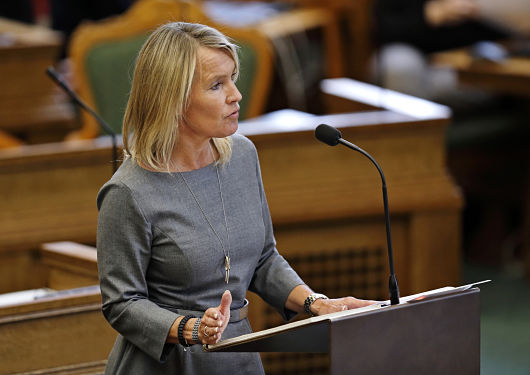
danish_politicsOn June 18, Denmark’s center-left government, the Social Democrats, were ousted out of the political limelight as the country moved dramatically to the far right in favor of the ring-wing, populist and anti-immigrant Danish People’s Party (D.P.P). The Danish People’s Party is often regarded with stigma both at home and abroad and is on the outskirts of Danish politics since its founding in 1996.
However, in the most recent elections, the D.P.P. came in second place with 21.1% of the votes, only 5.2% less than the number of votes received by the leading Social Democrats. According to preliminary results published by the DR.DK, Denmark’s national broadcaster, the center-right bloc that includes the D.P.P now holds a majority of 90 seats in Parliament, which, for the first time, has elevated the D.P.P. into the centerfold of Danish politics. The results of this election come on the heels of growing unrest within Denmark over issues related to immigration and the security of the Danish welfare state. Denmark, a socialist and uber-liberal country which was voted “happiest country in the world” last year, is one of the highest-functioning welfare state programs in the world. The thanks is owed to the Danish citizens paying the highest income taxes in the world, at 60.2%.

The Danish welfare state was created in 1933 following the Social Reform Act, which sought to redirect Denmark’s attention inwards following the loss of the last remnants of the former Danish Empire, which once included Southern Sweden, Northern Germany, Iceland and Norway (and continues to include Greenland and the Faroe Islands). A “Denmark for the people” mentality was adopted, which subsequently iterated outwards into a Scandinavian-socialist ethos which has traditionally regarded foreign aid as an obvious centerpiece of Danish foreign policy. Providing welfare services “from the cradle to the grave” for citizens at home, such as free childcare, education through university and healthcare, and providing international aid to citizens abroad was regarded as two sides of the Danish-socialist-mentality coin.

The recent elections reflect the ways in which some Danes have begun to adjust their thinking about the welfare state and its relationship to those outside the “Danish family.” Similar to the recent wave of anti-immigrant parties which have popped up throughout Europe, such as the Finns Party in Finland, the Progress Party in Norway, the Sweden Democrats in Sweden and UKIP in the United Kingdom, the D.P.P. frames itself as the voice of “Old Danes” who regard the growing influx of immigrants within Denmark as a threat to the Danish welfare state and the Danish way of life.

The presence of immigrants in Denmark, who make up around nine percent of the population country-wide, in conjunction with the recent surge of 14,000 mostly Muslim asylum seekers and the Copenhagen shootings of February 14 by the 22-year-old son of Palestinian immigrants, has produced a backlash of growing nationalist sentiment in Denmark. As a result, supporters of the D.P.P. have begun to implicitly redefine how “Denmark for the people” is understood. A motto that traditionally went unchallenged, given the historically monocultural and monoethnic nature of the Danish population, is now being reformulated by the D.P.P. to function more as “Denmark for the Danes;” as the D.P.P. has proposed slashing welfare entitlements for newly arrived immigrants and refugees into the country.

Increasing exclusivity regarding Danish welfare state benefits is being matched in Parliament by talk among the D.P.P and the Liberal Party that Denmark should cut back on foreign aid in order to channel more money into welfare entitlements for native Danish citizens, especially the elderly. In 1970, the world’s richest developed countries agreed to give point seven percent of their Gross National Income (GNI) annually to international development aid.

Historically, Denmark, along with Norway, Sweden, Luxembourg and the Netherlands, has been one of the few developed countries to actually commit to reaching this target. Proposals or talks of cutting foreign aid thus represent a dramatic break from Denmark’s historically extraordinary commitment to reaching the point seven percent goal. A survey conducted for the Ministry of Foreign Affairs has also found that right-wing political opinion about foreign aid is being matched in public opinion, as support among Danes for foreign aid has fallen by 15% in the last five years. The recent shift to the right in Denmark now leaves Sweden as the only country in Scandinavia in which the center-left continues to hold the majority of political power. The Swedish equivalent to the D.P.P. – the Swedish Democrats – also continue to be regarded as political pariahs in mainstream Swedish society.

Despite Denmark’s sudden swing to the conservative anti-immigrant right, the country currently continues not only to meet but to exceed the annual point seven percent foreign development aid target.

– Ana Powell

Sources: BBC, CNN Money DR, The Guardian New York Times 1, New York Times 2 OECD
Photo: Dagens

July 2, 2015
https://borgenproject.org/wp-content/uploads/borgen-project-logo.svg 0 0 Borgen Project https://borgenproject.org/wp-content/uploads/borgen-project-logo.svg Borgen Project2015-07-02 13:10:552024-12-13 17:53:59The Effect of Conservative Danish Politics on Foreign Aid
Activism, Health

Denmark: The Happiest Country in the World

Denmark
Denmark has been ranked as the happiest country in the world. This ranking is based on a multitude of factors ranging from healthcare to riding a bike. According to a Huffington Post article, Denmark ranks as the leader of the happiest countries for six key reasons. Here is a list:

  1. Denmark supports parents: Parents are given a combined total of 52 weeks of leave after a child is born. Comparatively, the U.S. offers only 10 weeks on average to American parents. Child care is also much cheaper and more easily accessed by all parents in Denmark.
  2. Health care is a right: Another difference between Denmark and Americans is their attention to healthcare. Danish citizens will see their primary physician on average seven times a year. Danish citizens see only one doctor. Healthcare is not only a right in Denmark, but it is a continuous, dependable right.
  3. Biking: More than half of commutes are via biking in Denmark. This statistic contributes to a more fit country, a country with a longer life expectancy and also a wealthier country.
  4. Gender equality: Women contribute six to 10 percent more to household incomes in Denmark than in the U.S. In fact they have had female prime ministers and were one of the first countries to allow women to vote.
  5. Culture: Hygge is utilized in this chilly environment. It is a tactic to fight the cold weather of Denmark and to create a cozy, united environment.
  6. Volunteerism: Social responsibility is valued in Danish culture. Over 40 percent of citizens volunteer.

According to DailyFinance, Denmark ranks as the happiest country in the world for more black and white reasons as well. For example, the country has one of the lowest percentages of long workdays and a life expectancy of almost 80 years old.

Denmark’s happiness sheds light on the positive effects a stable economy can have on the overall wellbeing of a country’s citizens.

– Kathleen Lee

Sources: Huffington Post, Daily Finance
Photo: Flickr

November 4, 2014
https://borgenproject.org/wp-content/uploads/borgen-project-logo.svg 0 0 Borgen Project https://borgenproject.org/wp-content/uploads/borgen-project-logo.svg Borgen Project2014-11-04 04:00:572020-08-21 20:48:32Denmark: The Happiest Country in the World
Page 2 of 212

Get Smarter

  • Global Poverty 101
  • Global Poverty… The Good News
  • Global Poverty & U.S. Jobs
  • Global Poverty and National Security
  • Innovative Solutions to Poverty
  • Global Poverty & Aid FAQ’s
Search Search

Take Action

  • Call Congress
  • Email Congress
  • Donate
  • 30 Ways to Help
  • Volunteer Ops
  • Internships
  • Courses & Certificates
  • The Podcast
Borgen Project

“The Borgen Project is an incredible nonprofit organization that is addressing poverty and hunger and working towards ending them.”

-The Huffington Post

Inside The Borgen Project

  • Contact
  • About
  • Financials
  • President
  • Board of Directors
  • Board of Advisors

International Links

  • UK Email Parliament
  • UK Donate
  • Canada Email Parliament

Get Smarter

  • Global Poverty 101
  • Global Poverty… The Good News
  • Global Poverty & U.S. Jobs
  • Global Poverty and National Security
  • Innovative Solutions to Poverty
  • Global Poverty & Aid FAQ’s

Ways to Help

  • Call Congress
  • Email Congress
  • Donate
  • 30 Ways to Help
  • Volunteer Ops
  • Internships
  • Courses & Certificates
  • The Podcast
Scroll to top Scroll to top Scroll to top