• Link to X
  • Link to Facebook
  • Link to Instagram
  • Link to TikTok
  • Link to Youtube
  • About
    • About Us
      • President
      • Board of Directors
      • Board of Advisors
      • Financials
      • Our Methodology
      • Success Tracker
      • Contact
  • Act Now
    • 30 Ways to Help
      • Email Congress
      • Call Congress
      • Volunteer
      • Courses & Certificates
      • Be a Donor
    • Internships
      • In-Office Internships
      • Remote Internships
    • Legislation
      • Politics 101
  • The Blog
  • The Podcast
  • Magazine
  • Donate
  • Click to open the search input field Click to open the search input field Search
  • Menu Menu

Tag Archive for: Deforestation

Posts

Economy, Global Poverty

Trees for the Future: Fighting Global Poverty

Fighting Global Poverty and Deforestation: Trees for the FutureTrees for the Future is an organization that is focused on restoring the environment as well as fighting global poverty. It recognizes the large effect trees have in economic, environmental and social improvement. The slogan of the organization is, “Planting Trees, Changing Lives.”

Dave and Grace Deppner founded the organization in 1989 after an eye-opening experience in the Philippines. It was there that they discovered they could restore communities while saving degraded land.

Roughly 80% of the developing world has health and nutritional needs met by non-wood forest products and there are approximately 100,000 acres of forest lost each day in the world. The Deppners were determined to help reverse to statistics.

One country Trees for the Future works in is Senegal. Senegal’s increased deforestation has led to the loss of more than half of the forests. They have helped farmers plant more than half a million trees and develop forest gardens.

Trees for the Future has also partnered with the Peace Corps and the Senegalese Ministries of Agriculture and Forestry throughout their time there.

Brazil is another country where Trees for the Future’s impact can be seen. The organization has helped rebuild communities through the development of education programs on effective agroforestry. The main purposes of reforesting in Brazil are to bring back the nutrition in soil as well as to provide a source of food for the livestock.

One tree in particular, has proved invaluable to the Brazilian communities that the organization works with. The moringa oleifera tree produces edible pods, leaves and flowers. These are high in calcium and Vitamin A. The powder that comes from ground seeds has also helped improve the quality of water due to its purifying qualities.

The trees planted in these countries are unifying communities as well as creating sustainable agriculture. Trees for the Future has planted more than 50 million trees in various parts of Africa, Asia and Latin America. Their influence has reached 58 different countries and 12,000 villages.

– Iona Brannon

Sources: Food and Agriculture Organization, Trees for the Future, Trees for the Future: Senegal, Trees for the Future: Brazil,
Photo: Google Images

October 11, 2015
https://borgenproject.org/wp-content/uploads/borgen-project-logo.svg 0 0 Borgen Project https://borgenproject.org/wp-content/uploads/borgen-project-logo.svg Borgen Project2015-10-11 01:30:592020-06-26 05:52:46Trees for the Future: Fighting Global Poverty
Development, Global Poverty

Illegal Logging in Guinea-Bissau

A new illegal market has begun to flourish in the impoverished nation of Guinea-Bissau. This tiny West African nation boasts a population of around 1.6 million people, and almost 50 percent of the population lives below the international poverty line of $1.25 per day. Some data puts the number at almost 70 percent.

It is not surprising to see a potentially profitable–albeit illegal–market emerge in a society with such high levels of poverty. This new market is the logging of the native Bissau-Guinean rosewood trees. Data shows that “timber exports to China from Guinea-Bissau jumped from 80 cubic meters in 2008 to more than 15,000 cubic meters last year.”

There are a few key reasons this illegal logging has emerged. First, there is the demand for the resource from China. In China, redwood is used to make “hongmu furniture, red luxury Chinese pieces replicating the styles of the Qing period.”

Logging also began because of a decrease in the price of cashews, Guinea-Bissau’s main export. With around 80 percent of the population relying on cashew production for financial stability, this decrease caused a large amount of the population to suffer a huge loss in income.

With few options for steady work outside of cashew production, many people have turned to rosewood logging to survive. A local can be paid between $2 and $6 to cut down a tree, as opposed to between 2¢ and 50¢ for a kilogram of cashews. This causes the locals to ignore the long term effects of deforestation.

The local populations use wood from the forests as their primary source of energy. They also use the animals as a source of protein in their diets, but “at this pace, deforestation is going to destroy the animals’ natural habitats and cause their disappearance.” This continued logging of the rosewood tree will lead to destabilization of the local habitat and essential aspects of the local population’s livelihood.

This issue is exacerbated by the political turmoil in the country. Local populations are turning to logging for survival, but the government has responded by either ignoring the situation or profiting from it.

In April 2012, Guinea-Bissau experienced a military coup. This has led to increased corruption, with the collapse of the rule of law. Fodé Mané, the president of Human Rights Network in Guinea-Bissau, has said that prior to the coup there had “always been illegal cutting of trees,” but now the practice is far more rampant.

Military and police officers as well as government officials accept bribes to allow the flow of rosewood to China. In fact, a “Guinean forestry official said his department could not prevent illegal logging because of the involvement of senior government officials and high-ranking military officers.”

Aside from the poverty and ineffective government, many Chinese import companies have increased the price they will pay for rosewood to keep the market intact. And it’s hard to say no to higher prices.

It would seem that the factors working to expand the illegal market of logging African rosewood are stacked against the activists trying to save the environment. There are many locals, government officials and environmentalists who want to see this practice stopped.

Yet for them, there is some hope. This April, after two years of military rule, Guinea-Bissau held elections. The elections were accepted by the local populace as well as international observers. There was worry that the military wouldn’t give up power, but they peacefully stepped down to the newly elected José Mário Vaz, who beat the military-supported candidate.

This peaceful election is a good sign that the country will move toward stability and lawful proceedings. Those trying to stem the influx of rosewood logging believe the law will work in their favor and the enforcement of the laws deeming logging illegal will become commonplace. For example, just this month, the government “suspended exports of wood in order to give priority to exports of cashew nuts.”

The recent return to the rule of law in Guinea-Bissau is a step in the right direction. However, the market can be difficult to alter. If Chinese importers are willing to pay, there will always be someone willing to sell. This issue needs some serious enforcement from the government. For the sake of the local population and its dependence on the forest, hopefully the government will continue to take action.

– Eleni Marino 

Sources: UNICEF, The Guardian, IRIN, Macauhub, Reuters
Photo: Tree Service Finder

July 31, 2014
https://borgenproject.org/wp-content/uploads/borgen-project-logo.svg 0 0 Borgen Project https://borgenproject.org/wp-content/uploads/borgen-project-logo.svg Borgen Project2014-07-31 13:19:342024-06-05 01:57:53Illegal Logging in Guinea-Bissau
Development, Nonprofit Organizations and NGOs

Six Successes of Plant With Purpose Around the World

Plant With Purpose is a San Diego-based Christian development organization. It assists the impoverished living in rural areas “where poverty and environmental degradation intersect” globally.

Through agricultural training, restoring the land and providing financial education, Plant With Purpose helps poor farming families become self-sufficient. To date, they have helped plant 11.9 million trees since their founding in 1984.

Plant With Purpose is currently present in more than 325 communities, providing aid and support to over 17,132 individuals within Burundi, the Dominican Republic, Haiti, Mexico, Tanzania and Thailand.

Location: Davi, Haiti

The Need: In Haiti, only 2 percent of its original forestry remains. Eighty-four percent of the population lives in poverty, and the country imports 60 percent of its food needs. Half of Haitian children under 5 are undernourished. With the help of Plant With Purpose, smallholder farming families are planting trees, implementing soil conservation methods and preventing soil erosion. Locals are educated on sustainable agriculture methods that restore the land and increase their food production and incomes. Village Savings and Loan Associations are also implemented.

Instead of providing food aid, Plant With Purpose is educating for self-sufficiency.

The communities in Davi are facing particular hardships. Floods and landslides cause destruction every rainy season, washing away the fertile topsoil and preventing farmers from growing crops. Families are forced to migrate to cities to find work. Plant With Purpose is working to reverse deforestation through its various methodologies.

Progress: Assisted families showed a 46 percent decrease in cholera and a 50 percent decrease in typhoid, compared with others. They also now actively save cash four times more frequently. They cultivate about 20 percent more land, own 30 percent more land and protect 20 percent more land through reforestation or erosion control.

These families also plant about three times as many trees as non-assisted local families.

Location: Panasawan & Pang Dang Nok, Thailand

The Need: The government of Thailand refuses to recognize many hill tribe members as citizens. Thus, they have few legal rights. They also have limited access to healthy fields, leaving them to grow crops on devastated hillsides. Plant With Purpose has been working with these communities to help them learn sustainable farming techniques and advocate for legal status in Thailand.

The village of Panasawan suffers from extreme poverty and a destroyed environment. Soil erosion, poor water quality and sanitation, difficult access to land rights and lacking availability of credit has ensnared the community in the cycle of poverty and environmental degradation. Plant With Purpose is providing farmers with environmental and financial training and economic opportunities necessary to break the cycle.

Progress: Hill tribe farming families are gaining access to land and basic rights. Village Savings and Loan Associations are providing a means to save and gain credit. Plant With Purpose is also helping congregations better meet the needs of their communities by training leaders.

Families aided now have twice as many children enrolled in high school, are 31 percent more likely to actively save cash, are 41 percent more likely to own land that is protected, have planted 2.5 times more trees, have shown a 19 percent decrease in admitted gambling and are 20 percent more likely to eat meat, eggs or fish on a daily or weekly basis.

Location: Lyasongoro, Tanzania

The Need: In Tanzania, Plant With Purpose mainly works with women, many of whom are widows or single mothers, because women and children there represent the poorest segment of the communities. Roughly 98 percent of these women who work earn through agriculture, but because they don’t have access to the same training their male counterparts receive, their yields suffer.

Plant With Purpose  provides agricultural training, which doubles crop output, and plants over a million trees each year around Mt. Kilimanjaro. They are also establishing Village Savings and Loan Associations.

Progress: Assisted families showed a 65 percent decrease in diarrheal disease and a 70 percent decrease in typhoid incidence. It’s also true that 99 percent of these families actively save cash, compared with 48 percent previously, and 50 percent have enough savings to cover household expenses for six months, compared with 6 percent previously.

Of participant families, 80 percent own cattle, which is 42 percent higher than those not assisted, and 66 percent of participants earn some household income through microenterprise endeavors, a significant 43 percent higher than those who were not trained.

Location: El Café, Dominican Republic

The Need: While the Dominican Republic is gaining wealth, there is a growing gap between the rich and poor. The most impoverished, deforested regions exist near the border of the Dominican Republic and Haiti.

The Dominican government relies on Plant With Purpose to help with their reforestation programs.

El Café mainly profits off of its oregano crop, but recent deforestation threatens this trade. Plant With Purpose is helping to replenish the soil and diversify their economy. The organization has started a nursery, growing seedlings, fruit trees and other plants to replenish the forests and provide an additional source of income. Plant With Purpose has also provided a solar drier to villagers to convert their oregano into a marketable good. They are also offering workshops teaching sustainable farming and land conservation methods.

Progress: Families who work with the organization own twice as much land and protect 75 percent more land than non-participant families. These households are 60 percent more likely to own cattle as well.

Cacao, a valuable cash crop, is harvested 30 percent more often by Plant With Purpose farmers than other locals. Assisted families have planted almost three times as many trees than before.

Location: Kiremba, Burundi

The Need: In the world’s hungriest country, 80 percent of Burundi’s 8.5 million people live below the poverty line. At least 90 percent of Burundians depend on agriculture, but their farmland has been devastated by deforestation, drought, war and over-farming. Plant With Purpose is helping these farmers access land and maximize their productivity. They are also working with agriculture research institutions to provide disease-resistant crops. Through the introduced Village Savings and Loan Associations, villagers are saving their money and providing loans to others.

Progress: Plant With Purpose reports that 95 percent of farmers in associations have shared their knowledge with other farmers; each farmer shares with an average of 23.5 people. Participants are 24 percent more likely to save cash than non-participants, have planted three times as many trees as non-participants and have harvested 31 different crops, compared with 20 crops harvested by non-participant farmers.

Location: Tamazola, Mexico

The Need: In Oaxaca and Chiapas, two of the poorest states in Mexico, more than 75 percent of indigenous people live in extreme poverty. As men migrate to find work elsewhere, women are frequently left to care for their children and households.

Plant With Purpose is teaching families in rural communities to plant vegetable gardens that will increase their food production and incomes. Village Savings and Loan Associations have also been established to provide financial security and opportunity.

Progress: Plant With Purpose reports that participant households actively save cash 68 percent of the time, while non-participants save cash only 45 percent of the time, with participants being 43 percent more likely to have enough savings to cover six months of needs. Seventy-seven percent of participants own cattle, compared with 51 percent of non-participants, with the number of cattle owned by participants being twice that of the number owned by non-participants. Only seven percent of participant households have dirt floors in their homes compared with 29 percent of non-participant households. Participant farmers harvested 22 different crops, compared with eight by non-participants.

Plant With Purpose has seen measurable success from its efforts, objectively putting donations to good use. If seeking an effective, Christian-based charity that assists the poor on the ground, look no further. Personal contributions can be guaranteed to yield maximal benefit in the hands of this organization.

– Elias Goodman

Sources: Charity Navigator, Plan with Purpose, Scribd
Photo: New Identity Magazine
July 22, 2014
https://borgenproject.org/wp-content/uploads/borgen-project-logo.svg 0 0 Borgen Project https://borgenproject.org/wp-content/uploads/borgen-project-logo.svg Borgen Project2014-07-22 10:26:312024-05-27 09:18:44Six Successes of Plant With Purpose Around the World
Activism, Economy, Global Poverty

Deforestation and Economic Injustice in Haiti


Spring is upon us but in many places April showers don’t necessarily bring the hope of May flowers, instead they promise environmental disaster and damage to surrounding communities.


Every year, floods ravage Haiti’s countryside, injuring, displacing, and economically crippling many of its rural villages and townships. Rainfall, though necessary for agriculture in the hot Caribbean nation is more feared than it is welcomed these days. Due to widespread deforestation, the soil around riverbanks has eroded, the land has become arid, and there is nothing to anchor the foothills and prevent devastating mudslides.

Between 1954 and 1984 alone, nearly 90% of Haiti’s once abundant rainforests were depleted. An estimated 2% of what was once there remains today, and even that is at risk. Without tree cover or a natural means to replenish the soil with nutrients, the mountain region is now agriculturally useless, only perpetuating a cycle of poverty and harmful environmental practices.

Deforestation has been made significantly more prevalent by corrupt business practices and irresponsible regulations. Under the abusive dictatorships of Francois and Jean-Claude Duvalier, many Haitians was forced to rely on the production of charcoal for subsistence, turning to the harvesting and burning of trees to supplement widespread unemployment. Charcoal is now, unfortunately, one of Haiti’s most thriving markets.

Additionally, like other developing nations, economic instability and unaffordable trade options have forced millions of Haiti’s inhabitants to rely on this “woody biomass” for fuel.  More viable options of electricity, petroleum, and even kerosene, though also not earth friendly, are less encroaching on the communities themselves. However they are nearly unattainable in many areas.

In more recent years, illegal logging, price negotiations, structural trade agreements, and the seizure of property rights from outside actors has also contributed to an economic environment that leaves many Haitians without much choice but to contribute to cutting down the forests.

For example, Swine Flu paranoia in the 80’s essentially wiped out Haiti’s once successful pork market. This forced pork farmers to annihilate their own acclimatized pigs and replace them with the more delicate North American variety which was too expensive to keep. This paved the way for Reagan’s “American Plan” for the country, which implemented a weak export economy of cheaply and inhumanely manufactured goods. With such bleak options, charcoal and deforestation are increasingly chosen out of necessity.

Journalist and political analyst Amy Wilentz states, “You can read about deforestation and its affects in the books and pamphlets written by these experts, and then you can read about it in the faces and bodies of Haitian peasants…. The summation of a story of dry earth, of the need for sustenance and comfort, of crops that are impossible to raise, even with the hardest and most grueling work, of rain that never falls, of food that just isn’t there.”

People continue to fight back, such as Chavannes Jean-Baptiste, who is a renowned in the world of environmental activism for his work in Haiti. After receiving a formal education in agronomy, he went on to found the Peasant Movement of Papay (MPP) in 1973 with the expressed goal of establishing principles of sustainable agriculture. The Movement has been effective in the fight against deforestation and other contributions to soil erosion.

His life of activism has not been without contention though. Before winning the Goldman Environmental Prize in 2005, he suffered multiple assassination attempts, death threats, and periods of forced exile. His outspokenness regarding forest protection and his role in sparking political dissent made him highly targeted. Still, he leaves an unwavering legacy of land protection in a previously colonized nation, and the MPP continues to be a strong political force.

Deforestation’s effect has been horrible, for the people, the infrastructure, and the very landscape of Haiti, which has seen its fair share of economic and political storms over the past half century. However, scientific awareness, increased environmental consciousness, and a climate of political activism provide hope that Haiti’s rainy season will come to an end.

— Stefanie Doucette

Sources: The Energy Journal 1, The Energy Journal 2, The Ecological Society of America, The World Today, The Journal of Developing Areas, Nathan C. McClintock, The Rainy Season
Photo: 

May 15, 2014
https://borgenproject.org/wp-content/uploads/borgen-project-logo.svg 0 0 Borgen Project https://borgenproject.org/wp-content/uploads/borgen-project-logo.svg Borgen Project2014-05-15 04:00:532024-06-05 01:57:25Deforestation and Economic Injustice in Haiti
Development, Global Poverty

Communities Reverse Deforestation in Ethiopia

deforestation_ethiopia
Less than 5% of Ethiopia’s original forest remains today. Ethiopia experiences 0.8% deforestation per year, and is down to 4.6% forest cover. The rapidly growing population of 85 million and the 70 million livestock put pressure on land forests.

With 80% of the population living in rural areas, deforestation in Ethiopia affects their livelihood. Before 2007, the forest in Ethiopia was government-owned. Michelle Winthrop, Country Director of Farm Africa Ethiopia, helped pioneer an initiative in 2007 to place responsibility for the forest on the local communities.

“You can stick up a big fence around the forest,” Winthrop says, “but people climb fences. If you embed the ownership for the protection of the forest in the hands of communities, it is much more powerful.”

The majority of the rural population are members of the cooperatives that protect the forest; therefore, forest dwellers no longer cut down trees for fuel or livestock grazing. The forest condition has improved a great amount, allowing an opportunity for impoverished forest dwellers to find more sustainable ways of earning income.

In the Bale region, Farm Africa is implementing a participatory forest management scheme. Of the 23,000 households covered by the project in the Bale region, about 3,500 have taken up growing coffee and bamboo, as well as learning how to become bee-keepers.

Farm Africa provided agricultural expertise and equipment to start harvesting coffee and honey, rich natural resources of the Bale region of southern Ethiopia. Along with the transfer of power to local communities, those people are now also able to produce high-value crops and have connections to lucrative market opportunities.

“We built people’s relationship with that coffee and helped them understand that a small amount of it, carefully harvested, is important both for their own pockets and also the condition of the forest,” says Winthrop.

An unexpected outcome of the participatory forest management project has been a sense of civic responsibility, leading to more stable communities and building democracy at the grassroots level.

– Haley Sklut

Sources: Dowser, Herald Tribune, The Guardian
Photo: First Climate

March 31, 2014
https://borgenproject.org/wp-content/uploads/borgen-project-logo.svg 0 0 Borgen Project https://borgenproject.org/wp-content/uploads/borgen-project-logo.svg Borgen Project2014-03-31 04:00:022024-05-26 23:22:59Communities Reverse Deforestation in Ethiopia
Activism, Advocacy, Developing Countries, Development, Global Poverty, Government, Human Rights, Inequality

Human Rights Abuses in West Papua

west_papua_human_rights
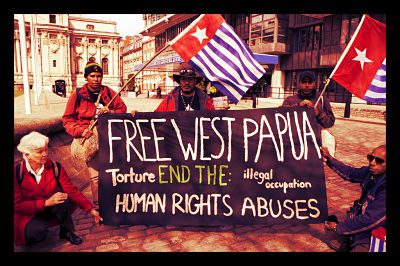
The region of West Papua does not make the news often; in fact, it rarely merits a news blurb in most Western headlines. However, West Papua is arguably one of the most under-reported cases of exploitation an indigenous groups in the 21st century.

Since 1969, the people of West Papua have been in conflict with the government of Indonesia in one way or another. The University of Sydney’s Center for Peace and Conflict Studies put out a report stating that for the better part of 40 years, the people of West Papua have been under the boot heel of the Indonesian Security forces.

The report goes on to state that due to wide scale incursions by Indonesia’s armed forces, West Papua has seen over 100,000 of its citizens die and much of its national resources depleted.

A report by The Guardian also notes the devastating effect that Indonesian resource extraction is having on the people of West Papua. It notes the case of the Mooi people, who are one of the 250 indigenous tribes that are having their way of life destroyed due to the deforestation of their lands by timber and palm oil companies.

The oceans off the coasts of West Papua are also being devastated due to nickel mining in the area, which is flooding the bountiful coral reefs with polluted sediment.

It is not only the eco-system of West Papua that is being destroyed. Even though it has been close to 45 years, the Indonesian military is still cracking down severely on people who are part of the Free Western Papua Movement.

Last year, the Free Western Papua Movement’s Facebook published the photo of a dead Papuan named Edward Apaseray, who was reportedly tortured and killed by the Indonesian Special Police Forces for being a “separatist.” The Diplomat, a current affairs magazine for the Asian-Pacific region, published a report in which a recent study noted that in West Papua, an incident of torture occurred every six weeks for the past half-century.

The human rights organization Tapol that monitors human rights abuses in West Papua published the story of Yawan Wayeni. He was a tribal leader and formal political prisoner who was tortured and killed by Indonesian security forces in brutal fashion.

The media have long overlooked the plight of the people of West Papua. It has only recently begun to receive real traction in Western media. The International Parliamentarians for West Papua (IPWP) is a group of politicians around the world who support the right self-determination for the people of West Papua.

One of its members, Benny Wenda, an exile from West Papua, recently had an article published in which he decried the recent statement of Australian Prime Minister Tony Abbot, who stated that things in West Papua are “better and not worse.”

West Papua is one of the forgotten atrocities of the 21st century; the responsibility making sure that it does not continue to be rests with us and our elected officials. The Arab Spring occurred with the help of Facebook and a determined populace. The plight of West Papua needs the same type of support from those who have the ability to stand up to the Indonesian government.

– Arthur Fuller

Sources: Amnesty International, The Guardian, Tapol,  The Diplomat, The University Of Sydney, Tapol,  CNN, The Guardian, Tempo, Australia News Network
Photo: London Mining Network

February 13, 2014
https://borgenproject.org/wp-content/uploads/borgen-project-logo.svg 0 0 Borgen Project https://borgenproject.org/wp-content/uploads/borgen-project-logo.svg Borgen Project2014-02-13 16:33:352024-06-11 02:29:34Human Rights Abuses in West Papua
Global Poverty

Deforestation Caused by Poverty

Poverty Causes Deforestation Amazon Slash and Burn
In the world today, forests make up 31 percent of the area of land. Forests are extremely important to the environment, animal life, and human health. In addition to providing a vital source of oxygen, forests offer many endangered animals shelter and help supply medicine, food, and water to people. The significance of forests to humans and the ecosystem overall has caused the act of deforestation to become a highly contested and widely opposed operation.

The 31 percent of forests alive today are being chopped and sliced away to an even lower number as deforestation continues to consume the world’s forests. Each year, nearly 46-58 square miles of forests are destroyed. In order to enact change and stop the deforestation crisis it is necessary to look at the cause.

Though poverty may not be the sole cause of deforestation it most definitely plays a role in it. Much of the world’s rainforests are located in some of the poorest areas on the earth. That said, underdeveloped and poverty-stricken communities are naturally going to go where there is some means of subsistence. Thus, forests become one of the main sources of survival for many poor individuals but at the forest’s expense. Forests are being forcefully scoured and cut through by those who simply have no other means of survival. When a forest no longer has anything to offer, people move on to the next area and the cycle continues.

Despite the significant impact that poverty has on the world’s rainforests, it is only one part of the bigger picture. Much of the deforestation is caused by the need to create cropland and expand agricultural systems. The building of roads is also another factor that fits into the deforestation equation. In fact, a variety of causes have come to have a hand in deforestation. Nevertheless, providing poor communities with the resources they need would keep them from foraging the world’s rainforests and affecting the entire ecosystem.

Education is one approach that many are taking to help save the world’s rainforests. Scores of people remain ignorant to the growing issue of deforestation. Even worse, many citizens of the U.S. have no idea the impact that their consumer lifestyle has on tropical rainforests and, ultimately, the environment. Educating in areas close to forests will prove highly effective, because there are people who don’t understand how significant forests are to personal and global health.

Deforestation provides another example of how the effects of poverty have gone beyond itself and beyond the individual. Poverty is literally affecting the entire world, and that should be enough to get the entire world not only caring but racing to put an end to it.

– Chante Owens

Sources: Mongabay, NASA, World Wildlife
Photo: The Guardian

October 4, 2013
https://borgenproject.org/wp-content/uploads/borgen-project-logo.svg 0 0 Borgen Project https://borgenproject.org/wp-content/uploads/borgen-project-logo.svg Borgen Project2013-10-04 03:56:382016-04-07 18:41:13Deforestation Caused by Poverty
Nonprofit Organizations and NGOs

Spotlight on Plant With Purpose

Plant_with_a_purpose

Who would have known that planting a single tree could pull individuals and entire communities out of poverty? Plant With Purpose has utilized this simple and effective method since the Christian environmental non-profit organization was founded in 1984 by Tom Woolard. After volunteering with a relief agency in the Dominican Republic, Woolard realized that despite their efforts, the crisis of poverty was worsening. He saw that there was a clear connection between poverty and the environment that was not being addressed. Woolard further recognized that much of the world’s poor are rural poor. Many are farmers and therefore rely on the environment for survival. Deforestation across these poor regions has created land that does not provide for production like it used to, creating new hardships for the farmers.

Plant With Purpose focuses on planting trees because they believe it is one of the most effective components of sustainable rural development. Trees provide a means by which farmers can grow crops and in turn support themselves and their families. Trees also play a vital role in protecting our water supply because without trees, water sources vanish. In addition to planting trees, they create economic opportunities through micro-credit loans, micro-enterprise and the implementation of agriculture programs.

Plant with Purpose uses a three-part environmental, economic, and spiritual approach to sustainable development. Their mission for each community is to: 1) improve quality of life, 2) restore relationships between communities, the environment and God, and 3) make self-sufficiency possible.

Since its founding, Plant With Purpose has succeeded in planting 10,092,380 trees. They work in a total of 250 communities throughout Haiti, Mexico, the Dominican Republican, Tanzania, Burundi, and Thailand, and are exploring working in additional countries such as Ethiopia, Kenya, and Guatemala. To determine where Plant with Purpose is most needed, a variety of measures are used including the rate and extent of deforestation, governmental corruption, and the percentage of people living on less than one dollar per day.

“As our focus shifts from the sustainable development of families to the sustainable development of entire villages, the community takes over and Plant With Purpose takes on more of an advisory role,” says Wollard. The greatest reward for Plant With Purpose is a community that doesn’t need them anymore.

– Alexandra Warlich

Source: Interaction
Photo: Stay Classy

July 13, 2013
https://borgenproject.org/wp-content/uploads/borgen-project-logo.svg 0 0 Borgen Project https://borgenproject.org/wp-content/uploads/borgen-project-logo.svg Borgen Project2013-07-13 04:00:132017-02-28 11:55:14Spotlight on Plant With Purpose
Page 3 of 3123

Get Smarter

  • Global Poverty 101
  • Global Poverty… The Good News
  • Global Poverty & U.S. Jobs
  • Global Poverty and National Security
  • Innovative Solutions to Poverty
  • Global Poverty & Aid FAQ’s
Search Search

Take Action

  • Call Congress
  • Email Congress
  • Donate
  • 30 Ways to Help
  • Volunteer Ops
  • Internships
  • Courses & Certificates
  • The Podcast
Borgen Project

“The Borgen Project is an incredible nonprofit organization that is addressing poverty and hunger and working towards ending them.”

-The Huffington Post

Inside The Borgen Project

  • Contact
  • About
  • Financials
  • President
  • Board of Directors
  • Board of Advisors

International Links

  • UK Email Parliament
  • UK Donate
  • Canada Email Parliament

Get Smarter

  • Global Poverty 101
  • Global Poverty… The Good News
  • Global Poverty & U.S. Jobs
  • Global Poverty and National Security
  • Innovative Solutions to Poverty
  • Global Poverty & Aid FAQ’s

Ways to Help

  • Call Congress
  • Email Congress
  • Donate
  • 30 Ways to Help
  • Volunteer Ops
  • Internships
  • Courses & Certificates
  • The Podcast
Scroll to top Scroll to top Scroll to top