• Link to X
  • Link to Facebook
  • Link to Instagram
  • Link to TikTok
  • Link to Youtube
  • About
    • About Us
      • President
      • Board of Directors
      • Board of Advisors
      • Financials
      • Our Methodology
      • Success Tracker
      • Contact
  • Act Now
    • 30 Ways to Help
      • Email Congress
      • Call Congress
      • Volunteer
      • Courses & Certificates
      • Be a Donor
    • Internships
      • In-Office Internships
      • Remote Internships
    • Legislation
      • Politics 101
  • The Blog
  • The Podcast
  • Magazine
  • Donate
  • Click to open the search input field Click to open the search input field Search
  • Menu Menu

Archive for category: Women’s Empowerment

Global Poverty, Women's Empowerment

Energy for All: Empowering Women in Senegal

Women in Senegal
One of the most crucial needs for countries around the world is widespread renewable energy access. In Senegal, limited energy access in rural areas has impeded economic development for years, with only 44% of households in rural Senegal having access to electricity in 2018. With such a lack of access, rural communities are limited to rudimentary energy sources such as wood-burning fires for cooking, lighting, warmth and other needs. For rural Senegalese businesses, renewable energy could dramatically improve food production and work efficiency. For example, instead of drawing water from a well one bucket at a time, farmers in Senegal could simply use a solar-powered water pump, saving a lot of time and expending far less physical energy.

Rural agricultural businesses, like market gardens, are in dire need of these technology upgrades as well as equal energy access between rural men and women. Market gardening is a popular agricultural technique utilized by smaller-scale farmers in Senegal, and most of the market gardening businesses are run by women. In fact, women in Senegal comprise 70% of the total rural employment workforce, making them the cornerstone of the country’s agricultural and livestock farming sectors. The empowerment campaign Energy 4 Impact is supporting rural women not only in their pursuit of widespread access to clean and renewable energy but also in the promotion of women’s autonomy and equality.

Energy 4 Impact’s “Energy Opportunities for Women in Senegal” Project

Energy 4 Impact is a non-profit organization partnering with local businesses to extend access to energy in Africa. It is working alongside Siggil Jigeen, a non-governmental organization that promotes and protects women’s rights in Senegal through the Energy Opportunities for Women in Senegal Project. The project aims not only to supply rural communities in Senegal with sustainable, efficient energy, but also to increase women’s contribution across the entirety of Senegal’s energy value chain. The project is active within the Tambacounda and Kedougou regions in Senegal, marked by characteristically high poverty and unemployment rates, low access to electricity, the dependence on solid fuel, the high level of working poor and the untapped potential for agricultural development.

So far, the program has empowered over “250 women-led Micro and Small Enterprises (MSEs)” in rural areas. It hopes that by increasing the presence of sustainable energy sources, more economic opportunities will manifest themselves for women-run agricultural operations. The project has provided Senegalese women and women-run MSEs with reusable energy technologies (solar-powered pumps, solar lamps and freezers) and improved equipment for crop treatment. Besides supplying equipment, the project has held seminars providing women in Senegal with key entrepreneurial information that further empowers them as businesswomen. The project teaches business skills like record keeping, using financial services, networking and business autonomy, among others. Women are at the heart of Senegal’s agricultural scene, and this empowerment campaign has further secured their position as the country’s main actors along the energy value chain.

Project Impact

The project’s impact on women in Senegal is significant. A study found that married women entrepreneurs who participated in the project were more directly involved in decision-making, household investments/spending and health than other married women. Moreover, it was noted that most of the women who attended the informational seminars were more cognizant of “women’s energy needs,” their part in the energy sector and the numerous benefits yielded by actively participating in the country’s energy sector.

The Energy Opportunities for Women in Senegal Project has made tremendous progress by disseminating useful information and energy technologies throughout rural Senegal, but the country’s fight for energy is far from over. Energy access gender gaps and low female employment rates still plague Senegal’s urbanized areas. However, Energy 4 Impact has given hundreds of businesswomen in Tambacounda and Kedougou the tools needed to reach out to other women throughout Senegal, and hopefully empower them in the same way that they have been.

– Maxwell Karibian
Photo: Flickr

August 18, 2020
https://borgenproject.org/wp-content/uploads/borgen-project-logo.svg 0 0 Kim Thelwell https://borgenproject.org/wp-content/uploads/borgen-project-logo.svg Kim Thelwell2020-08-18 13:57:072024-05-29 23:22:11Energy for All: Empowering Women in Senegal
Gender Equality, Global Poverty, Women's Empowerment

Poverty in Ghana From Wealth Disparity

Ghana, a small country located in West Africa, has dealt with tremendous economic struggles since the 1990s. The good news is that the United Nations Development Programme (UNDP) recently shared new data that confirms that positive strides have been made to improve multiple dimensions of poverty in health, education and living standards.  The report confirms that between 2011 and 2017, poverty in Ghana decreased by nine percent.  In addition, its GDP almost doubled from 2011 to 2019.
Ghana made significant changes to facilitate this progress. First, the nation diversified its economy to create more products and services in different sectors. This led to increased greater consumerism and higher employment, which allowed Ghana’s economy to flourish.  However, with increased consumerism also came disparity.  Because that disparity increased, poverty in Ghana continues to be a challenge.

Ghana’s Disparities in Consumption, Health and Regions

Wealth disparity in Ghana is extreme.  The top 10% of Ghanaians consume more than the bottom 60%, and the lowest 10% only consume only 2%.  Health disparities include the fact that only 2% of those in poverty are covered by the National Health Insurance Scheme and that wealthy children are three times more likely to live past age five than poor children.  Further, there is a disparity in poverty rates between regions and also between urban and rural Ghanaians.  The Northern Region has the highest multidimensional poverty with eight out of 10 people being multidimensionally poor.  The Upper East Region is close behind with seven out of 10 people multidimensionally poor. People in rural Ghana are twice as likely to be poor than people in urban areas.

Change to Eliminate Disparity and Continue to Improve the Economy

The UNDP is championing specific tactics to eliminate disparity and to continue to improve the Ghanaian economy.  First, it suggests investment in better healthcare in all regions and an emphasis on getting all Ghanaians national health insurance.  Second, it advocates for a focus on enhanced school enrollment and completion in some regions and better nutrition for children in others.  Third, it calls for a poverty reduction strategy for those regions where poverty is extremely high.

Other organizations are joining the UNDP to improve conditions in Ghana.  These include The Hunger Project, in working toward alleviating poverty in Ghana. Since 1995, The Hunger Project has aided over 300,000 people by focusing on improving infrastructure, education reform and sanitation. The project focuses on building community centers, or “epicenters”, in order to collectively unify communities within Ghana and provide resources, such as electricity and clean water. As of now, over 40 epicenters receive clean water and sanitation, and almost all of them have health committees and clinics.

Finally, many families in both the Upper West and Upper East Regions have found creative means of accumulating extra income, such as the production of Shea butter. Some businesses, like Star Shea, provide loans for women as a means of starting production and accommodating transportation costs.

Many women believe these loans were advantageous in pursuing more educational opportunities. For example, Mrs. Atorneygene, a local resident in Ghana, utilized the proceeds from her Shea butter production to provide educational tools for her granddaughter. Changes being made on a local level, such as the production of Shea butter,  have proved to be beneficial in providing opportunities to marginalized regions.

Outlook for Ghana

Even with the problems that Ghana has faced in the past, the nation has reached tremendous milestones and has made effective improvements within the last decade. With the help of the government, the UNDP, The Hunger Project and people in the community, Ghana has been able to make positive changes relating to its economy and wealth disparities. Now, Ghana has set a precedent regarding the instrumental changes needed to alleviate poverty.

– Aishwarya Thiyagarajan
Photo: Flickr

August 14, 2020
https://borgenproject.org/wp-content/uploads/borgen-project-logo.svg 0 0 Kim Thelwell https://borgenproject.org/wp-content/uploads/borgen-project-logo.svg Kim Thelwell2020-08-14 13:30:442022-03-31 13:55:35Poverty in Ghana From Wealth Disparity
Global Poverty, Women's Empowerment

5 Female Entrepreneurs to Watch Out For

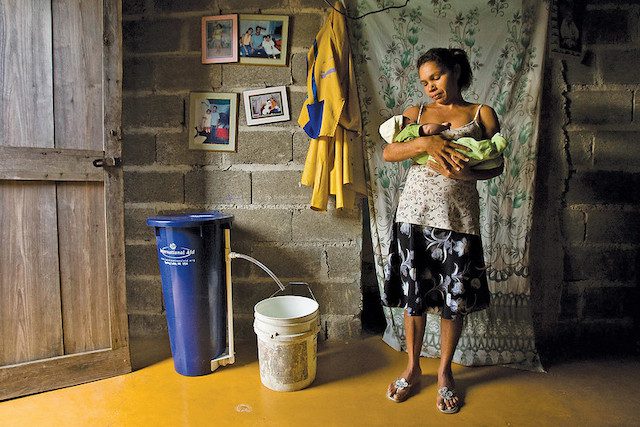
Female entrepreneursThroughout the world, women encounter obstacles to entrepreneurship as a result of gender-based violence, pay disparity and early pregnancy. However, in recent years, female entrepreneurs are the fastest growing demographic of entrepreneurs, regardless of ethnicity.
5 Female Entrepreneurs to Watch Out For

  1. Victoria Awine
    Victoria Awine has worked at a cocoa plantation in Sefwi Asawinso, Ghana since she was little before owning and operating her own three-hectare land in 1980. After enrolling in the Cargill Cocoa Promise, a program which promotes female cocoa farmers to become business owners, in 2014 Awine became a leading entrepreneur in her community. She has broken barriers to female business leadership, rejecting cultural norms by showing how she can succeed as a business leader, a mother of four, and an involved community decision-maker. Since joining the Cargill program, Awine has seen her cocoa farm’s revenue increase threefold.

  2. Njeri Rionge
    Njeri Rionge, a serial entrepreneur from Kenya, has started several multi-million dollar companies in quick succession. She started her first business at 19, selling yogurt in Nairobi, Kenya. Afterwards, she went on to sell clothes while maintaining other small businesses. Rionge also founded Wananchi Online, making her one of Africa’s leading female investors in the IT sector. Rionge later went on to be the founder of digital marketing company Insite, consulting agency Ignite, healthcare consulting agency Ignite Lifestyle and start-up incubator Business Lounge. “I believe Africa is the next economic frontier,” said Rionge in an interview with Forbes.

  3. Bethlehem Tilahun Alemu
    Bethlehem Tilahun Alemu, an Ethiopian entrepreneur, started a sustainable footwear company, SoleRebels, when she realized the great artisan potential of the members of her community. SoleRebels has not only had great success in Africa, but has flagship stores worldwide. The shoe itself is modelled after a style commonly worn in Ethiopia. Materials are also locally sourced in a combination of recycled and organic material, like the Ethipian Koba plant, to make an eco-friendly shoe. Additionally, the production process of the shoes makes SoleRebels the first footwear company certified by Fair Trade.

  4. Nilda Callanuapa
    Nilda Callanupa, a female entrepreneur from Chinchero, Peru, is the founder of the Centro de Textiles Tradicionales de Cusco. Additionally, she is an author, speaker and expert in textiles. As a child, Callanuapa was responsible for tending her family’s sheep and weaving. Spending time in the field and learning about weaving designs, Callanuapa became interested in the history of Peruvian textile. So when she met an ethnographer as a teenager, and with the support of her community, Callanuapa attended college and determined to preserve and honor the tradition of textile in Peru. She is one of the world’s foremost experts on the subject of Peruvian textile weaving and has greatly contributed to the effort to preserve these textiles and its history.

  5. Oum Ali
    Oum Ali, a Syrian refugee and mother of six, started a small restaurant in Lebanon, employing other refugees like herself to feed many other community members. Ali started running her own business after inflation in Lebanon caused prices to rise higher than they had been in Syria. Looking to feed her children and having confidence in her home country’s cuisine, Ali rounded up a group of fellow Syrian women and set out to work. “My dream is to see a lot of Syrian women working and making their own money,” she said in an interview with BBC.

    These five female entrepreneurs demonstrate courage, perseverance and innovation in their approaches to business. Moreover, each of these five female entrepreneurs share a focus in community building and cultural conservation efforts. Surmounting gender-based obstacles among others, these entrepreneurs rise to the occasion for themselves and their communities, serving as excellent examples of leadership and strength.

– Elise Ghitman
Photo: Wikimedia

August 11, 2020
https://borgenproject.org/wp-content/uploads/borgen-project-logo.svg 0 0 Kim Thelwell https://borgenproject.org/wp-content/uploads/borgen-project-logo.svg Kim Thelwell2020-08-11 15:05:412024-05-29 23:23:075 Female Entrepreneurs to Watch Out For
Education, Global Poverty, Sanitation, Women's Empowerment

5 Influences on Poverty in the Dominican Republic

Poverty in the Dominican Republic
When one thinks about the Dominican Republic, one may typically picture the beaches of Punta Cana or other tropical vacation destinations. Although the Dominican Republic has a strong and fast economic growth rate within the Latin American and Caribbean regions, the largest income group is a vulnerable set of individuals who have a high probability of falling back into poverty. In 2008, the national poverty rate was roughly 34% in the Dominican Republic. The national poverty rate fell to 21% in 2019. However, much more progress must occur in order for the people of the Dominican Republic to escape poverty. Here are five main influences on poverty in the Dominican Republic.

5 Influences on Poverty in the Dominican Republic

  1. Lack of Quality Education: Young children and women do not have equal access to education in the Dominican Republic. About 36% of students do not finish their basic education. Many children who drop out are from the poorest areas of the country. They have to stop their education in order to help their families by working to earn money. In 2018, a total of 65,825 students were not in school. This pivotal setback will limit equal opportunities and their development. In order for the Dominican Republic to attain a positive economic turnaround, there must be an improvement in quality education. Since 2013, the government has increased its GDP spending on education and joined the World Bank’s Human Capital Project in order to get input about the improvement of human capital.
  2. Socioeconomic Inequality: One cause of poverty in the Dominican Republic is unemployment. The employment rate of women is 33% in comparison to 61% of males in the workforce. Women are at a disadvantage due to the absence of education. Oftentimes women leave education in order to take care of the family and household. Even if women are in the work field, they are underpaid in comparison to men. The average pay for women was 79% of what men make.
  3. Lack of Sanitation: About one-fifth of citizens live in shacks without access to running water, electricity and proper sanitation. Although the country made an effort to increase access to sanitation services, this does not correlate with improved living conditions and quality. Many do not have equal access to quality infrastructure, which shows an increase in poverty. According to the Pan American Health Organization (PAHO), the consumption of contaminated water led to severe diarrhea, which caused 50% of deaths in children under the age of 1. The World Bank Group helped restore water treatment facilities in Santo Domingo and Santiago. This led to more than 1 million gallons of drinking water for around 750,000 people. It also launched a project for wastewater treatment plants to help facilitate sanitation. The improvement of irrigation systems and clean water led to the improvement of local farms.
  4. Natural Hazards: The Dominican Republic suffers from natural disasters, which include earthquakes, flooding, hurricanes and droughts. Natural disasters have negatively affected a quarter of the country’s population. Many buildings and homes are vulnerable to natural disasters due to a lack of enforcing proper building and zoning codes. Increased flooding due to climate change will lead to economic loss within the country. It is difficult for the government to produce aid for families and businesses burdened by natural disasters. In 2017, Hurricanes Maria and Irma brought high winds, flooding and landslides that devastated the country. These hurricanes caused major property damage due to the creation of strong storm surges along the coastline. Luckily, the death toll was not high from these hurricanes. However, the storms caused major damage to physical communities and left many without power, water and sanitation. The Dominican Red Cross responds to disasters where it has relief protocols in order to support the country. It distributed relief packages to more than 2,000 families that Hurricane Irma affected.
  5. Crime: Violence and criminal activity led to a downfall in the country’s wealth equality. Although the Dominican Republic’s gross domestic product continues to rise, different communities do not have equal funding. Higher crime rates lead to disproportionality of wealth. These poverty-stricken communities lack protection. This can lead to individuals living in extreme poverty in the Dominican Republic.

Looking Ahead

The Dominican Republic is capable of reducing poverty in the next 10 years, but it must make major improvements. In order to end poverty in the Dominican Republic, representatives must improve the quality of education, health care services and employment through the implementation of policies that help the most vulnerable individuals. The country needs to make positive economic changes by increasing human capital and the business environment, improving the management of natural disasters and climate change and maintaining natural resources. These five influences on poverty in the Dominican Republic show that there needs to be policy changes in order to reshape the inequalities within the country.

– Ann Ciancia
Photo: Flickr

July 13, 2020
https://borgenproject.org/wp-content/uploads/borgen-project-logo.svg 0 0 Kim Thelwell https://borgenproject.org/wp-content/uploads/borgen-project-logo.svg Kim Thelwell2020-07-13 01:30:002024-05-29 23:14:365 Influences on Poverty in the Dominican Republic
Global Poverty, Violence Against Women, Women's Empowerment

2 Organizations Fighting for Gender Equality in El Salvador

gender equality in el salvadorIn a report by the Inter-American Commission on Human Rights, El Salvador is cited as having one of the top rates of violence in the region, with a disproportionate amount of violence aimed at women and girls. Since many girls begin working at a young age, they are vulnerable to abuse and are often forced to leave school to provide for their families. However, in recent years, organizations such as the Concertación de Mujeres Suchitotos and the Salvadoran Institute for the Advancement of Women have established a presence in fighting for gender equality in El Salvador, particularly the freedom from violence and economic equality.
Concertación de Mujeres Suchitotos

Established in 2008 in relation to the nonprofit organization Mary’s Pence, the Concertación de Mujeres Suchitotos works within the Salvadoran community to fight for gender equality, support women in pursuing financial independence and teach about sexual and reproductive rights. Now with over 300 members and 576 loans given to women in the community to begin their own small businesses, the organization boasts many successful women-owned businesses in agriculture, food service and the clothing industry.

In 2016, the Concertación de Mujeres Suchitotos held an assembly to share their growing knowledge of economic solidarity with other women. Along with members in El Salvador, women from Nicaragua and Honduras attended the event, creating a total of about 120 women. The event allowed attendees to discuss their business strategies with other women in similar business ventures and brainstorm ways to improve. By giving the women a space for discourse, the Concertación de Mujeres Suchitotos further empowered El Salvadoran women to connect with each other.

However, the women in El Salvador are still struggling with violence and freedom. Gangs threatened women who owned businesses, demanding money in exchange for leaving the women and their businesses alone. Teen pregnancy continues to run high, something this organization hopes to combat through open discussions about sexual and reproductive health. Through economic independence and transparent education, the Concertación de Mujeres Suchitotos is fighting for the rights of Salvadoran women.

Salvadoran Institute for the Advancement of Women

This agency was created to uphold the measures in the Domestic Violence Act and National Plan to Prevent and Deal with Domestic Violence, passed by the Salvadoran Secretariat of Social Inclusion in response to the high levels of domestic violence in the country. By recognizing domestic violence as a government issue, women suffering from violence in El Salvador were more likely to speak up and fight for their rights.

Like the Concertación de Mujeres Suchitotos, the agency implements programs to encourage women’s education in business along with protecting those suffering from domestic violence. Although the government recognizes the gender disparity in business and economics, inherent sexism in communities challenges the progress of women in El Salvador. For example, the government can implement a program encouraging women into intellectual work, but the men working there have a preexisting bias of prioritizing and hiring men for such positions.

However, progress is being made. The Salvadoran Institute for the Advancement of Women recently provided over 100 hygiene kits of feminine products and clothes to women who were struggling due to the COVID-19 pandemic. The mission of the agency is to support women in exercising their rights as citizens and bring the country closer to true gender equality; giving women the tools to be hygienic and safe is a start.

Seven in ten women in El Salvador are affected by some form of violence throughout their lives. The Concertación de Mujeres Suchitotos and the Salvadoran Institute for the Advancement of Women are taking a stand against domestic violence, arguing Salvadoran women have a right to live a violence-free life. Although slow, these organizations are seeing progress through their programs and fight tirelessly for gender equality in El Salvador.

– Kiyomi Kishaba
Photo: Wikimedia

July 10, 2020
https://borgenproject.org/wp-content/uploads/borgen-project-logo.svg 0 0 Lynsey Alexander https://borgenproject.org/wp-content/uploads/borgen-project-logo.svg Lynsey Alexander2020-07-10 07:30:192020-07-10 15:19:002 Organizations Fighting for Gender Equality in El Salvador
Global Poverty, Women's Empowerment

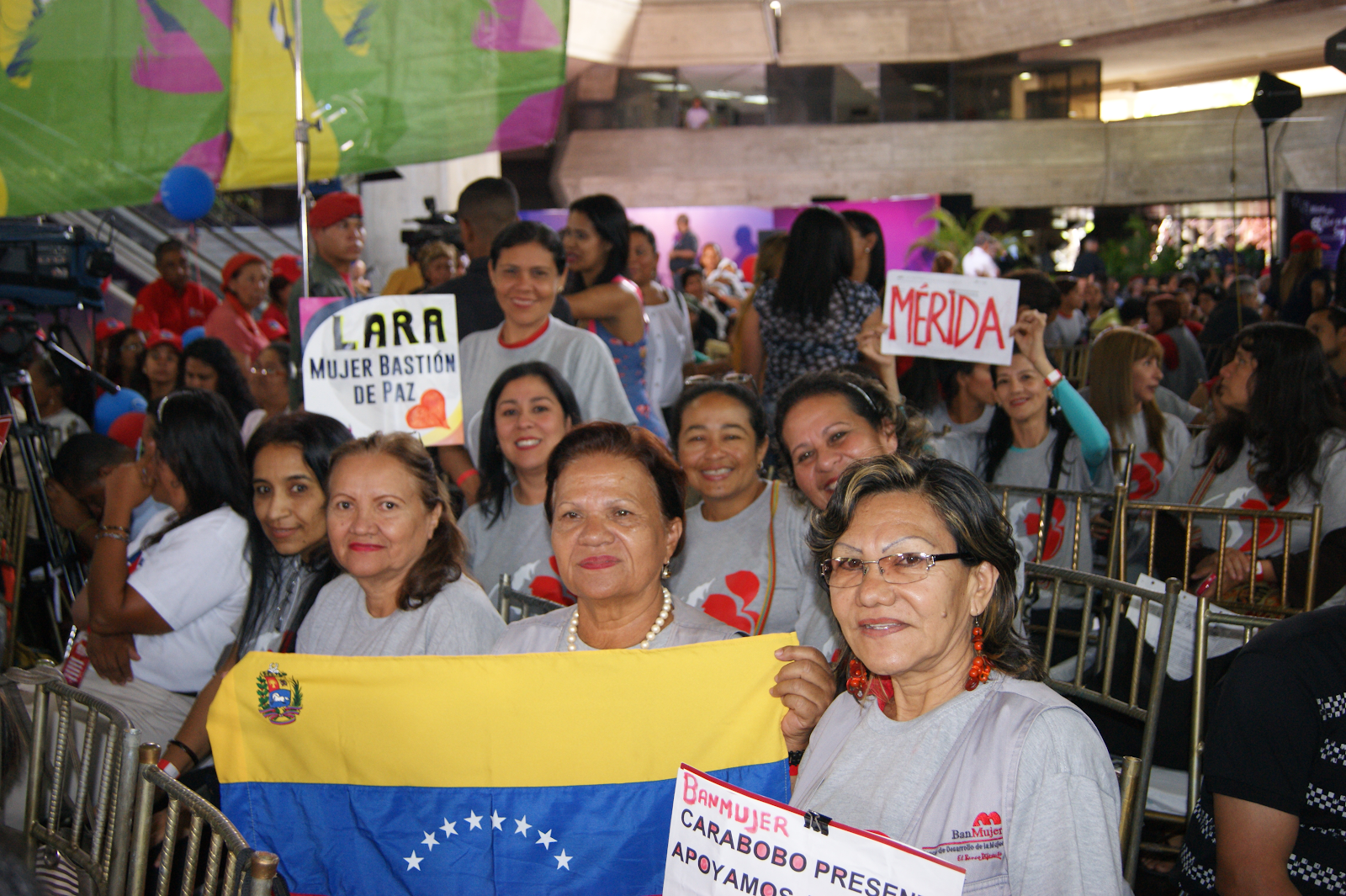
6 Ways Banmujer Fights Gender Inequality in Venezuela

Gender Inequality in VenezuelaIn Venezuela, like other conservative countries, women have often been viewed as the weaker sex, creating vast gender inequalities. In the past few decades, the country has faced severe political turmoil. Women have shouldered the brunt of the force. The coronavirus pandemic has exposed the extent of gender inequality in Venezuela, as women must rely on their partners for financial support – those same partners from whom many women face domestic violence. Thankfully, there are many resources for Venezuelan women to turn to, including the Women’s Development Bank, abbreviated Banmujer. It is the only state-owned women’s bank in the world. Here are six ways that Banmujer is addressing gender inequality in Venezuela.
Six Ways Banmujer is Aiding Women

  1. For women, by women – The Venezuelan Women’s Development Bank was created in 2001 to help empower women by ensuring financial stability independent from their partners. Banmujer supports female entrepreneurs by only providing loans to women, promoting financial independence, creativity and innovation. In addition, the organization employs women who travel to rural communities to develop female-led business proposals. This would be instead of having regional offices. This makes it extremely easy for women all over the country to apply for a loan.
  2. More than just a bank – Not only does the bank provide loans, but it also provides training and education to women. The organization teaches women how to develop an entrepreneurial idea, efficiently use the loan and manage a business. Extending their efforts even further, the bank hosts workshops on women’s health, prevention of domestic violence, community leadership, legal advice and more.
  3. Real and long-lasting change – The bank is fighting gender inequality in Venezuela by offering small loans to groups of women with business ideas. Banmujer has also trained over 100,000 women. Many women have benefited from these small loans and each story is unique. The Guardian highlights one such success story. Matild Calixte used to work at a hair salon earning well below the price of a haircut. She even had to take on a second job to provide for her family. With the help of the Women’s Development Bank, Calixte was able to open her own hair salon and equally split the income with the other hairstylists. Because of this, she has achieved financial stability and can now afford to send her daughter to college.
  4. Making it easy – Most of the world’s property owners are men. It is easier for men to be approved for loans – they have collateral to secure them. When the idea of a women’s bank was proposed by Nora Castañeda, Banmujer’s original president, she made it a priority to allow women with no financial assets to be included in the loans. This alone is absolutely revolutionary in the gender equality movement. In addition, when women successfully pay back their loans, they can take out another loan worth one and a half times their previous one. Monthly interest rates are also fixed at a low rate of 1% which makes getting a loan even more attainable.
  5. Creating a caring economy – The Women’s Development Bank doesn’t solely measure success by financial profits, but societal ones. While there has been criticism of high default rates in the bank’s earlier years, it should not be defined in purely economic terms. Banmujer focuses on the progress being made to address gender inequality in Venezuela. Castañeda explains that “we are creating…an economy at the service of human beings, not human beings at the service of the economy.” The bank cares more about helping Venezuelan women than it does about making a profit.
  6. Helpful for the whole economy – Banmujer recognizes that fighting gender inequality in Venezuela by empowering women means reducing poverty. Close to 45% of Venezuelans live in poverty, and 70% of those are women. However, the loans have created over 70,000 jobs. By empowering women to reach financial independence, it stimulates the economy.
Banmujer has had an incredible influence on more than 100,000 women, effectively addressing gender inequality in Venezuela. By giving small loans, the program encourages entrepreneurial ideas and financial independence. The aim for the loans is to spur collaboration between women, not competition. The president of the bank made sure to focus program efforts on lifting women out of poverty and empowering them to start their own businesses.

– Karin Filipova
Photo: Banmujer CA

July 8, 2020
https://borgenproject.org/wp-content/uploads/borgen-project-logo.svg 0 0 Jennifer Philipp https://borgenproject.org/wp-content/uploads/borgen-project-logo.svg Jennifer Philipp2020-07-08 01:30:162020-07-10 18:53:206 Ways Banmujer Fights Gender Inequality in Venezuela
Global Poverty, Women's Empowerment

Empowering Women in India

Women in IndiaSocial constructionism has played a significant role in transforming the way most people look at the world. One specific identifier that has gained a lot of attention throughout the past century is gender roles. Some countries have embraced gender equality, whereas others are still navigating its implications. To explore this ongoing movement, here is an overview of gender norms for women in India.

The Situation

In rural and impoverished areas, women in India are still expected to conform to traditional roles. Girls are expected to marry by their early 20s and give birth to many children until they have birthed sons. They also serve the household needs. Slowly, more developed areas of India have begun to follow the more progressive ideology. However, remnants of this expectation for women are littered throughout Indian culture.

There is a significant difference in the treatment of men and women in India. In the traditional Indian family structure, families prioritize a son’s education because he has the most potential to earn money for the family. Families raise girls with the idea that they must marry off to another family. Often times, a girl’s schoolwork is not a priority when compared to learning to cook, clean and do other household chores.

The Burden of Being a Woman

In impoverished areas, having a daughter is seen as a burden because of the role that women are expected to play. The father must marry the daughter off to a stable family. However, the financial burden is huge. A Dowry is a reward that the groom’s family seeks from the bride’s family before getting married. Though technically illegal in India now, it is an old tradition that turns the institution of marriage into a bargain. For poor families, a dowry is a huge burden on the family. If not paid, the groom’s side of the family can back out of the arrangement.

After the marriage ceremony, Indian women are expected to stay home to cook, clean and give birth to children. According to a study done by the Indian Journal of Community Medicine, domestic violence is more likely to occur with younger females, women who have a lower income, women who are less educated and unemployed and women who are part of a lower caste.

Further, the average female literacy rate in India is 65.5%, which is just under two-thirds of the population of women in India. Only 31.2% of women participate in the labor force, leaving more than 50 million women without work or education. This is an alarming number of people for a country as densely populated as India.

The Azad Foundation

Organizations are seeking to lower the gap by helping empower women to overcome difficult situations. Various organizations provide women in India with resources to defend themselves in harmful situations and aid in the fight for equal rights. The Azad Foundation is one of them. With headquarters in Delhi and many offices around the country, this foundation reaches women living in rural areas who face domestic violence at home. The Azad Foundation’s purpose is to equip these women with resources and knowledge to “earn livelihoods with dignity.” The organization does this with various programs.

  1. Women on Wheels is one program that aims to teach marginalized women to drive so they can earn a living. According to the Azad Foundation, teaching women to become professional drivers is key to integrate them into the mainstream economy. This program works with women who are mostly from the slums. Most of these women in India have not finished grade school and aren’t able to get high-skill jobs. The program uses module-based teaching. The education includes technical modules that teach women in India to drive, self-development modules that teach English and first aid training and empowerment modules that teach self-defense and gender rights. After training the women, Sakha Consulting Wings, Azad’s partner, provides placement within the private chauffeur industry.
  2. Community Engagement Programs focus on a variety of initiatives. These initiatives include Men for Gender Justice, which increases men’s awareness and support of gender equality. Additionally, the Parvaz Feminist Leadership Program teaches women to become leaders within the community and encourages them to become catalysts for change. Azad Kishori 9 to 12 holds workshops around the country to educate girls on patriarchy, sexual health and women’s legal rights. The foundation also participates in annually One Billion Rising and 16 Days of Activism against Gender-Based Violence. All of these initiatives support engagement and social justice for women in India.
  3. The final branch of the Azad Foundation is the research and advocacy portion. To reach the goal of creating a national impact, the organization conducted research on a variety of gender-based issues and used these reports to launch social change. Azad Foundation also works closely with the government to create and change policies that empower women in India.

Future Change

While many social and cultural changes need to take place to improve gender equality, organizations like Azad Foundation have made a great impact on women in India. Empowering more women will transform the patriarchy that has been such a large part of Indian culture.

– Shreya Chari

Photo: Flickr

June 7, 2020
https://borgenproject.org/wp-content/uploads/borgen-project-logo.svg 0 0 Lynsey Alexander https://borgenproject.org/wp-content/uploads/borgen-project-logo.svg Lynsey Alexander2020-06-07 01:30:312024-05-29 23:15:53Empowering Women in India
Global Poverty, Women and Female Empowerment, Women's Empowerment

AFRIpads in Uganda Empowers and Employs Women

AFRIpads in Uganda
Sophia and Paul Grinvalds created AFRIpads in Uganda while they were living in a remote village there in 2010 and saw the lack of accessible menstrual products firsthand. To combat the scarcity of menstrual products and the stigma periods carried in the country, the Grinvalds invented an affordable and reusable menstrual pad. AFRIpads in Uganda promote hygienic and accessible menstrual health in order to educate and empower young girls in the nation and across the world to feel comfortable and safe during their periods.

AFRIpads in Uganda

Today, AFRIpads employs over 200 Ugandans in the country’s full-time, formal employment sector. In addition, it has impacted millions of girls all over the world with its sustainable and affordable products. The company has helped the environment by eliminating the use of approximately 190 million disposable pads, as women can use each AFRIpad for up to a year.

In addition to helping the environment and giving back to the country’s economy, AFRIpads is helping empower the women of Uganda by focusing on educating schoolgirls about healthy and natural period habits. Menstrual health education is a taboo topic in Ugandan culture, and schools have never formally taught it. However, AFRIpads is helping to turn this around by providing use and care guides, as well as an educational comic in all of the brand’s menstrual kits. The company also offers online training for adults to learn how to teach young girls about the menstrual cycle.

Co-founder Sophia Grinvalds told the Irish Times that “There’s misconceptions about losing your fertility if you do certain things when you have your period…In one part of the country there’s a belief that if a girl on her period, or a woman on her period, walks through your garden when you’re growing vegetables, that everything in your garden will die.”

Employment

Grinvalds and her team decided to base AFRIpads in the Ugandan village Kitengeesa in order to deliberately boost the rural economy. Women make up 90% of the company’s employees, giving these women an opportunity for greater independence with their own incomes. “They have bank accounts at Barclay’s, have savings accounts, are saving for the government pension plan, [and are paying taxes],” Grinvalds told NPR in an interview.

The Kitengeesa manufacturing base for AFRIpads in Uganda provides a sense of community for the workers who feel proud to involve themselves in the organization’s impactful mission. In addition, it empowers women by allowing them to economically support their goals. A testimony by AFRIpads’ production supervisor Judith Nassaka stated that “The best thing about AFRIpads is that there is strong teamwork among the employers and employees…They also pay me the best salary. My future plan is to buy a plot of land and build my own home.”

Future Plans for Outreach

AFRIpads also collaborates with several other international nonprofit organizations such as Girls Not Brides, an organization that advocates to end child marriages and seeks to empower young girls. Through partnerships like these, women are able to access educational resources, affordable products and advocate for themselves.

AFRIpads stated on its website that it has reached more than 3.5 million girls and women across the globe with reusable and affordable products. AFRIpads continues to educate girls and women about the menstrual cycle and safe hygiene practices, in addition to providing employment in developing areas of Uganda. This, in turn, can help combat environmental waste across the world.

– Myranda Campanella
Photo: Flickr
June 4, 2020
https://borgenproject.org/wp-content/uploads/borgen-project-logo.svg 0 0 Jennifer Philipp https://borgenproject.org/wp-content/uploads/borgen-project-logo.svg Jennifer Philipp2020-06-04 01:30:302024-05-29 23:17:41AFRIpads in Uganda Empowers and Employs Women
Global Poverty, Women's Empowerment, Women's Rights

5 Facts About the Afghan Women’s Writing Project

Afghan Women's Writing Project
Writing in Afghanistan has typically been a taboo craft for women. Especially under the influence of the Taliban, women and girls were not able to go to school or learn to read and write safely. The Afghan Women’s Writing Project is an innovative writing program for empowering female voices in Afghanistan.

Founded in May 2009, the project gives Afghan women a way to publish their writing directly onto the internet. Although the Writing Project’s existence can only spread by word-of-mouth for security reasons, it has empowered more than 100 women in Afghanistan. Here are five facts about the project.

5 Facts About the Afghan Women’s Writing Project

  1. Marsha Hamilton is the founder of the Afghan Women’s Writing Project. Hamilton started the program after viewing the execution of a woman named Zarmina by the Taliban. Zarmina allegedly killed her husband, but Marsha Hamilton felt that Zarmina did not have the chance to tell her side of the story before her brutal execution. Hamilton also witnessed how women publish their writings. In Afghanistan, women usually publish their work through the men in their family or the media. This prevents some women’s voices from being heard due to the possible censorship that may occur through these channels. Zarmina’s execution and the less-than-ideal way of publishing led Hamilton to decide to create an online platform that allows women to publish their writings.
  2. The Afghan Women’s Writing Project uses Dari and English writing workshops to help educate women. The project collaborates with Afghan-based agencies to provide Dari and English writing workshops. These workshops teach women different techniques and skills to further their writing. Additionally, the program conducts “Reading Salons” every month. These meetings take place in secret locations in Kabul and Heart to avoid retribution from various groups in Afghanistan or writers’ own families. During the reading salons, women are able to read their work and talk about their writing experiences in an encouraging space.

  3. In 2018, Afghanistan reported that only 10% of the population had access to the internet. Due to the lack of reliable internet and computer access, the Afghan Women’s Writing Project provides many members with laptops and internet access. This enables every woman in Afghanistan, regardless of status, to participate in the program. According to the website, it costs about $2,500 to provide each woman with a laptop, internet, workshops and books. This amazing opportunity is funded by small contributions as well as fundraising initiatives by volunteers and readers.

  4. Writing has long been a form of expression and empowerment. Through the work of the Afghan Women’s Writing Project, Afghan women are changing themselves and the world around them. The project website claims, “In telling their own stories, we’ve seen these women gather strength, courage, and self-confidence. They become empowered to make change within their homes, their communities, and eventually their country. They also gain computer literacy and skills of language and critical thinking, which increases their job-related skills.” The skills and empowerment that women gain from this program help them empower themselves and others, as well as change the way people around the world see Afghanistan.

  5.  The Afghan Women’s Writing Project is currently working on an “oral stories component.” This project will allow disabled or illiterate women to share their stories as well. Human Rights Watch reports there are about 3.5 million children out of school and 85% of them are girls. Additionally, with about 2.7% of the population disabled, there are not many programs in place to help them succeed. Disabilities are often stigmatized in Afghanistan as “punishments from God” and it is difficult to find work. These women are often marginalized by their community. The Writing Project hopes to empower them to share their experiences and triumphs despite the obstacles they may face.

Women across Afghanistan continue to step up and speak their mind through the few means available to them. The Afghan Women’s Writing Project is working hard to give women’s voices a platform in Afghanistan.

– Ashleigh Litcofsky
Photo: Wikimedia

May 19, 2020
https://borgenproject.org/wp-content/uploads/borgen-project-logo.svg 0 0 Jennifer Philipp https://borgenproject.org/wp-content/uploads/borgen-project-logo.svg Jennifer Philipp2020-05-19 10:30:062020-05-19 10:22:525 Facts About the Afghan Women’s Writing Project
Global Poverty, Technology, Women's Empowerment, Women's Rights

3 Tech Companies Fighting for Women’s Rights

Companies Fighting for Women's Rights
Women around the globe are still fighting for a world in which they can receive equal treatment. In many developing countries, women are more vulnerable to human rights abuses and others often deny them opportunities to reach their full potential. Here are three technology companies fighting for women’s rights.

3 Tech Companies Fighting for Women’s Rights

  1. IBM: The multi-national technology company has celebrated the success of women throughout its history. IBM has had a female CEO since 2012 and has been strategic in empowering women throughout the company and around the globe. For International Women’s Day, IBM Systems Lab Services created a #BalanceforBetter campaign. The campaign engages employees around the world to advocate for women’s rights. IBM employees held up signs challenging stereotypes and biases, celebrating IBM women and supporting gender equality. IBM’s Corporate Service Corps (CSC) gives women and girls across the globe the opportunity to thrive. Additionally, the organization supports organizations that serve women in 40 countries. These organizations support economic growth, health care and violence prevention among others. In Ghana, an IBM team paved the way for educating girls in rural communities. In Kenya, India and Mexico, IBM has supported organizations preventing violence against women. Additionally, in Peru, IBM supports initiatives increasing cervical cancer screenings. Through these efforts, IBM hopes to empower and protect women, while continuing to bridge the gap between women and STEM.
  2. Microsoft: For years, Microsoft has used its research technology for good to protect vulnerable populations. For example, the organization has partnered with WorldPop to count every person on Earth. By using Microsoft Azure, organizations can track the location and distribution of vulnerable populations. Microsoft hopes to aid in the creation of programs and policy changes that protect vulnerable populations and empower women. Microsoft researchers recognize that women are more vulnerable to poverty. However, they also recognize that pulling them out of poverty has exponential effects on their families and communities. In January 2020, Microsoft partnered with Care Egypt Foundation (CEF) and the Ministry of Communications and Information Technology (MCIT) to launch a women empowerment campaign. Through this initiative, all organizations hope to empower women through the development of practical skills necessary for the workforce. Since 2014, Microsoft has also had an ongoing partnership with the Central Department for Community Development, aiming to tackle unemployment and economic issues through the empowerment of women in Egypt.
  3. Google: Another prominent tech titan among companies fighting for women’s rights is Google. The company equips young women with skills they need to thrive in the tech world and advocates for gender equality around the world. For example, Google’s partnership with Technovation Girls empowers young women around the globe to learn and develop technology that will impact their community. Technovation is a tech education nonprofit that empowers individuals to problem-solve, create and lead. Each year through its Technovation Girls program, the organization invites young women from all over the world and equips them to solve real-world problems through technology. Google is a platinum sponsor and has hosted these young innovators to pitch their apps at the company’s main campus in California for the chance to win scholarships. Additionally, in Google’s Arts and Culture section, the company has created a “Women in Culture” page, celebrating women in a variety of different fields. The page highlights women like Dolores Huerta, creator of the United Farm Workers, who advocated for the rights of impoverished farmers in Central America. It also features the unheard stories of women in India who have impacted Indian culture. Above all, the page champions women’s equality around the world, highlighting many unsung female heroes who have fought against injustice.

Why It Matters

An increase in women’s rights around the globe can have drastic effects on the global economy. According to U.N. Women, there is a very strong connection between empowered women and thriving economies. Providing women with job opportunities increases productivity and growth within economies. Supporting women through health care and education can also protect them from potential violence and discrimination. Large companies fighting for women’s rights have the potential to use their prominent platforms to advocate for women and to reflect these values within their own companies.

– Megan McKeough
Photo: Wikipedia Commons

May 17, 2020
https://borgenproject.org/wp-content/uploads/borgen-project-logo.svg 0 0 Jennifer Philipp https://borgenproject.org/wp-content/uploads/borgen-project-logo.svg Jennifer Philipp2020-05-17 01:30:122024-06-06 00:32:543 Tech Companies Fighting for Women’s Rights
Page 32 of 54«‹3031323334›»

Get Smarter

  • Global Poverty 101
  • Global Poverty… The Good News
  • Global Poverty & U.S. Jobs
  • Global Poverty and National Security
  • Innovative Solutions to Poverty
  • Global Poverty & Aid FAQ’s
Search Search

Take Action

  • Call Congress
  • Email Congress
  • Donate
  • 30 Ways to Help
  • Volunteer Ops
  • Internships
  • Courses & Certificates
  • The Podcast
Borgen Project

“The Borgen Project is an incredible nonprofit organization that is addressing poverty and hunger and working towards ending them.”

-The Huffington Post

Inside The Borgen Project

  • Contact
  • About
  • Financials
  • President
  • Board of Directors
  • Board of Advisors

International Links

  • UK Email Parliament
  • UK Donate
  • Canada Email Parliament

Get Smarter

  • Global Poverty 101
  • Global Poverty… The Good News
  • Global Poverty & U.S. Jobs
  • Global Poverty and National Security
  • Innovative Solutions to Poverty
  • Global Poverty & Aid FAQ’s

Ways to Help

  • Call Congress
  • Email Congress
  • Donate
  • 30 Ways to Help
  • Volunteer Ops
  • Internships
  • Courses & Certificates
  • The Podcast
Scroll to top Scroll to top Scroll to top