
Discrepancies in pay for women are nothing new. However, the ongoing inequality has led to overwhelming financial losses across the globe. In 2018, the World Bank estimated that a lack of equal pay and opportunity for women globally accounts for a striking $160 trillion global deficit. Countries like Egypt, Turkey, Pakistan and Vietnam–which are responsible for large exports of apparel globally–are seeking to correct outdated practices by supporting women’s education and careers in hopes of building a greater future.
Egypt
U.N. Women’s gender-focused education project aims to promote economic growth within the country. By focusing on young women and girls, the initiatives encourage formal education and business communities. Educational policymakers are in connection as well to formally improve the connection of education of women to employment. As a result, there have been 205 completed infrastructure improvements, the building and funding of four new community schools and interactive learning techniques and methods with 3,990 students. Additionally, the project has helped mothers to better understand financial literacy and the importance of their daughters’ education.
Turkey
Turkey has the second-highest rate of young unemployed people. While only 34.5% of women have entered the workforce in Turkey, the country is working hard to initiate a movement toward women’s career and education growth. The Young Women Building Their Future program focuses on the nearly 3.5 million women in Turkey who have not had access to formal schooling or vocational training.
Governmental developmental goals focused on supporting women’s education and careers seek to “leave no one behind” and provide opportunities specifically to young women designed to help them enter, navigate and succeed in the workforce.
Pakistan
Pakistan has set inclusive gender growth participation targets to rise from 26% to 45%. In the last 22 years, the participation rate has almost doubled but the World Bank and other programs, are seeking to increase educational and career rates at an even faster pace.
Because work for pay increases with formal education, the country seeks to move beyond the only 10% of college-educated women in the coming years. With pay increasing three-fold for women with formal secondary education, this goal could contribute to decreasing poverty rates as well as inequality.
Vietnam
Vietnam has developed the National Strategy on Gender Equality with female-focused entrepreneurship goals set for the 2021-2030 period. Among those goals, promoting gender equality and employment opportunities for women–who make up approximately 50% of the overall population–is at the forefront of goals.
With goals such as focusing on reducing unpaid work by women, promoting women to director and ownership positions of business, as well as reducing domestic and gender-based violence also at the forefront, the country hopes to combat poverty rates with opportunities for women.
As these countries come together with goals of reducing poverty through supporting women’s education and careers, the future is bright for the current and future generations.
– Michelle Collingridge
Photo: Flickr

The COVID-19 pandemic has catalyzed significant growth in global e-commerce sales. As a result of pandemic regulations, such as lockdown, social distancing and the enclosure of in-person workspaces, people are becoming increasingly reliant on digital technologies and businesses. In fact, retail e-commerce sales surged to approximately $4.9 trillion in 2021 worldwide. Projections have stated that this figure could increase to $7.4 trillion by 2025. The boom in e-commerce has been particularly salient in South Asia, where the e-commerce sector saw nearly 600% growth. Such conditions gave many entrepreneurs unprecedented opportunities. Most notably, women entrepreneurs in South Asia have used these opportunities to not only realize their own visions but also to educate and inspire others to create tangible change. The following are three women entrepreneurs in South Asia proactively giving back to their communities:
Maheen Adamjee
Maheen Adamjee is the founder of Dot & Line, an education startup originally set to provide at-home tutoring to Pakistani students. As the pandemic hit, however, Adamjee saw the opportunity in e-learning and rewrote the startup’s business plan to offer online tutoring sessions. Dot & Line is now a successful international online learning platform that matches students with certified tutors.
Adamjee exemplifies entrepreneurial creativity and resilience, turning the COVID-19 pandemic from a risk factor into a business opportunity. She has since participated in #OneSouthAsia Conversation, a series of online events that offer a platform for discussing ideas for regional cooperation in business, and reached more than 5,000 women through this medium. During these conferences, Adamjee shared many practical tips she extrapolated from her own experience, including specificities on transitioning from in-person services to online services.
She further noted the cultural and financial barriers that prevent Pakistani women from starting a business. In addition to telling her story as a source of empowerment for other women entrepreneurs, Adamjee pointed out that the digital economy allows women to overcome tariffs and trade barriers to exploit new consumer groups across national boundaries.
Ayanthi Gurusinghe
Ayanthi Gurusinghe is the founder of Cord360.com, a B2B platform enabling small buyers and sellers of a variety of products to connect with each other, according to the World Bank. Gurusinghe, like Adamjee, identified the rapid growth of e-commerce as an unparalleled opportunity for trading across borders.
Hoping to help other women take advantage of this opportunity, Gurusinghe launched training courses on Cord360.com to educate enterprising women business owners about international markets. This way, she is encouraging more women to trade products across Sri Lanka, India and Pakistan.
Sairee Chahal
Sairee Chahal is the founder of SHEROES, an online community for women that offers career advice, job leads, training, legal advice and a free counseling hotline based in Bangladesh and India. The community operates in Bangladesh and India, among other countries. The site experienced enormous success during the pandemic, with its membership increasing from 16 million to 22 million.
Chahal also participated in the #OneSouthAsia Conversation series. During the conference, she noted the policy changes that needed to occur to support and empower women entrepreneurs. Not only would this be beneficial for the women business owners, but this would also offer enormous economic growth for the countries in question. In particular, Chahal noted that the government ought to reform discriminatory laws and policies, provide funding targeted toward women-owned businesses and create school textbooks that show women in a variety of careers.
In addition to using these women’s stories as inspiration for more women to tap into the world of e-commerce, the above-mentioned women entrepreneurs in South Asia are acting to create tangible change in their communities, whether by advocating for policy change in regional conferences or providing free guidance through their business platforms. Through their efforts, as well as the efforts of many other similar-minded businesswomen, the pandemic-induced boom in the digital economy could significantly increase women’s access to the business sector in South Asia.
– Emily Xin
Photo: Flickr

Many women in India experience violence at home, at work and even in public areas. With the helping hands of U.N. Women, men and women in the rural areas of Assam State in India are working together to address and prevent cases of “violence against women, youth and children.” In January 2017, U.N. Women supported the formation of women’s empowerment groups, called Jugnu Clubs, across tea estates in Assam with the aim of preventing violence against women in Assam. The Jugnu Clubs form part of a broader U.N. Women prevention of violence initiative in rural Assam.
Violence on Assam’s Tea Estates
About 6 million people in Assam State work in Assam’s “65 tea estates and 100,000 small gardens.” Their work contributes to more than 50% of India’s tea and about 13% of the world’s tea. Women stand as 50% of the labor force at Assam’s tea estate and often work as tea pluckers. These women face violence in all areas of their lives — in the workplace, in the home environment and in public spaces. In fact, in 2015, Assam noted 11,225 cases of abuse against women by their spouses or family members. Alcohol abuse by males played a role in many of these cases of violence.
Creating Safe Work Environments
The Jugnu Clubs “help make agricultural work safe and equal for all women and girls” working as tea pluckers or factory workers on the tea estates. The Jugnu Clubs are especially important during the COVID-19 pandemic as cases of gender-based violence rose across the world due to lockdowns and stay-at-home orders.
In the broader U.N. Women prevention of violence initiative, “tea estate managers, welfare officers, workers and Jugnu Club members received training [on] India’s Sexual Harassment of Women at Workplace Act, women’s rights and the legal obligations around domestic violence and child labor.”
The training sessions utilized user-friendly and relatable education methods. U.N. Women found that 95% of participants did not have knowledge of the existing legislation that protects against gender-based violence and other violations against women. After the training sessions, about 80% of participants said the training gave them a better understanding of the legislation.
The members of the Jugnu Clubs who participated in this training are now aware of all their rights and are more vocal about their needs. As a result of this empowerment, “women have demanded streetlights be placed in dark public areas and safe transport to work, including two buses to ferry women from nearby villages to the tea gardens.” Now, Jugnu Club members even develop recommendations for safeguarding women who work on Assam’s tea plantations.
Educating Communities
Under the broader U.N. Women prevention of violence initiative, “raising awareness about how to prevent and respond to violence against women, youth, and children extended beyond the tea estate setting to the wider rural community,” including education facilities. Through mass gender equality campaigns “using community-led performing arts and crafts, such as interactive theatre shows, dance and music,” U.N. Women reached more than 6,000 people living in the community. Furthermore, 371 children took part in anti-violence early intervention initiatives.
Looking Ahead
In conclusion, the broader U.N. Women prevention of violence initiative and the Jugnu Clubs serve as beacons of hope for women in Assam. As of June 3, 2022, U.N. Women’s prevention of violence initiative in Assam has touched 15,000 lives. The ongoing work of U.N. Women brings hope that violence against women in Assam will reduce.
– Alexis King
Photo: Flickr

The health of higher education in Afghanistan is a product of invasion and civil war. The tumultuous nature of Afghanistan’s history has left obstacles in the path of educational institutions. This takes the form of many hindrances, such as the country’s current political stability or the ruling leader’s tendency for tradition. In the absence of education, economic instability and a lower standard of living may follow.
Turbulent Establishment
The establishment of formal modern education in Afghanistan didn’t exist until 1875. However, it was not until 1919 that the number of established institutions exceeded four. In 1929, during his nine-month rule, Habibullah Kalakany closed girls’ schools and stopped female students who went abroad from continuing their studies. Shortly after, Zahir Shah allowed girls once more the freedom of education. He also established the first small sign of higher education in Afghanistan, the Kabul Medical Faculty in 1932.
In the 1960s and ‘70s, Afghanistan’s educated class grew the strongest. However, the Soviet invasion in 1979 devastated the infrastructure of higher education in Afghanistan. An entire generation of the educated class disappeared, either killed or escaped. The Taliban occupation of Afghanistan further hindered the integrity of higher education. These disastrous conflicts rendered Afghanistan one of the most impoverished in the world.
Brain Drain
“Brain Drain” is a dire issue for the infrastructure and further human development of Afghanistan. This occurs when young Afghans receive degrees from institutes of higher learning and prefer job opportunities or the standard of living outside of their home country. Generally, when facing a crisis, the number of educated emigrants produced by a country will be higher than the number of educated citizens in that country.
The effects of brain drain directly impede further infrastructure development in Afghanistan, continually reducing the country to a state of stagnant reconstruction. The country’s condition of low development poses a threat to the advancement of higher education. According to a study by David J. Roof, in 2014, the higher education enrollment ratio in Afghanistan was around 5%, among the lowest in the world.
The World Bank suggests that Afghanistan could follow the strategies of other developing countries such as Pakistan and Sri Lanka in order to reduce the brain drain. This includes offering tenure tracks to young academics or encouraging studying abroad.
The Taliban’s Effects on Women’s Education
Many commonly think that in repressive regimes, the educated will bring the most opposition. The Taliban’s recapture of Kabul in 2021 initiated one of the world’s most critical humanitarian crises, leaving millions of Afghans starving and unable to collect salaries. However, young academics, specifically women, are being further barred from receiving higher education due to new Taliban decrees, which also restrict women’s freedom to work or leave the house.
In September 2021, the Taliban regime allowed women to continue studying in gender-segregated universities under strict dress codes. However, in March 2022, it banned the opening of schools for girls and women past the sixth grade.
This decision could divert international donations and deepen the humanitarian crisis in Afghanistan.
Foreign Aid
According to the U.N. Human Development Report, in 2020 Afghanistan ranked 169th of 189 countries based on the Human Development Index. An increase in foreign aid or grants focused on bolstering higher education would greatly benefit the country economically and politically by creating and filling jobs as well as providing a future for a more stable government.
In June 2021, the World Bank approved an $18 million grant to Afghanistan through the Higher Education Acceleration Transformation Project to bolster the infrastructure, quality and accessibility of higher education. A majority of this grant will help develop educational facilities, support teachers and improve curriculum and textbooks.
An additional goal of this grant is to empower women in higher education to pursue leadership positions, as only 30% of students of higher education in Afghanistan are women.
Due to gender disparities in higher education within Afghanistan, advocacy has mostly focused on increasing the accessibility of education to female students. The World Bank grant is a large step forward in opening up opportunities for Afghan women.
USAID has also drastically aided in the development of higher education in Afghanistan, focusing on matching universities and the labor market to cultivate 31 new degree programs for undergraduate and graduate students. In addition, the USAID PROMOTE scholarship will award up to 900 Afghan women the opportunity to seek both Bachelor’s and Master’s degrees to diversify academia in Afghanistan.
Higher education in Afghanistan is unfortunately a framework of feeble institutions that heavily rely on foreign aid. Foreign aid has become the most important factor in the development of education infrastructure in Afghanistan, and actions by the World Bank and USAID have alleviated some of the negative effects of brain drain and gender inequality.
– Caroline Zientek
Photo: Flickr

The Society of Women Engineers details a GenderInSITE (Gender in Science, Innovation, Technology and Engineering) study in collaboration with the InterAcademy Partnership (IAP) and the International Science Council (ISC), which was published in September 2021. The study explains that “women comprise the majority of the governing body of the Royal Society of Canada. However, women still represent less than half of the governing in most other countries, including Australia, Brazil, Malaysia, Mexico and the United Kingdom.” While improvements are visible in terms of efforts to ensure equal access to education and careers in STEM, women still struggle to represent themselves in the STEM field. A World Economic Forum article, which published in 2020, even states that women in STEM publish less and are paid less. This article will discuss the reason for the international gender divide in STEM and how organizations are empowering women in STEM.
Global Statistics for Women in STEM
According to UNESCO data from 2015, women made up almost 50% of the global population but only 30% of female researchers in science, technology and innovation. Furthermore, in the region of Asia, just three out of 18 nations “had an equal or above proportion” of female STEM researchers. The Philippines noted 52% while Thailand recorded 51% and Kazakhstan noted 50%.
The latest estimates of world poverty by U.N. Women, UNDP and the Pardee Center for International Futures project that, “globally, 388 million women and girls will be living in extreme poverty in 2022 (compared to 372 million men and boys).” For this reason, empowering women in STEM is crucial as global poverty disproportionately impacts females.
Bias and Gender Stereotypes in STEM
Deeply rooted bias and gender stereotypes run rampant in the STEM field, causing many women to shy away from their careers. Empowering women in STEM by giving girls an opportunity to participate in STEM-related fields allows the gender gap and gender pay gap to decrease, leveling the playing field for all people. Empowering women in STEM to participate in STEM-related activities also increases women’s economic stability, ensuring a diverse STEM workplace and preventing future biases from forming based on the new prevalence of female role models in STEM. Some factors that affect the gender STEM gaps are gender stereotypes, a male-dominated STEM culture, few female role models in STEM and academic pressure on girls.
Self Confidence Begins in Early Childhood
If one presumes that female disengagement in STEM begins in their early years, encouragement of the eradication of bias and gender stereotypes in STEM needs to occur as early as possible. In fact, “a study by Archer et al. (2010) suggested that although young children do not have profound knowledge about science subjects, they attribute masculine traits to science early.” Research has consistently proven that students mostly perceive science subjects (math, physics and chemistry) as a male domain. Later in life, as confidence develops in these young women, this self-assurance will play a crucial role in entering the STEM field as a woman. Yet again, research suggests that empowering women in STEM plays a vital role in early childhood confidence.
AAUW: Closing the STEM Gap and Empowering Women
The American Association of University Women (AAUW) has put forth active solutions to empowering women in STEM since 1888. The AAUW funds graduate education and invests in women who will save the world through STEM. AAUW offers fellowships and grants to fit one’s academic and professional goals. For the year 2021-2022, the AAUW awarded more than 260 fellowships and grants to women and community projects, equating to more than $5 million.
A Look at AAUW International Opportunities
The AAUW offers International Fellowships and International Project Grants. Women who are not U.S. citizens or permanent residents can apply for an International Fellowship, which awards full-time study or research in the United States. U.S. institutions support graduate and postgraduate studies. AAUW’s dedication to empowering females in their native countries goes beyond an International Fellowship. In order to generate enduring support globally, AAUW awards alumnae who return to their home countries after their AAUW-funded studies an opportunity to apply for a grant allowing alumnae to further their academic achievements and execute community-based plans, enhancing the lives of all females.
Organizations like AAUW do life-changing work in terms of helping to advance gender equality. By empowering women in STEM through opportunities and funding, the AAUW helps to improve women’s economic and career prospects, which contributes to reducing global poverty overall.
– Kaley Anderson
Photo: Flickr

In Costa Rica, there is hard evidence to support the “feminization of poverty” in which more women and women-led households are experiencing higher rates of poverty. Between 2010 and 2016, gender inequality increased mainly through the increasing rates of income inequality. In addition, the inaccessibility of health rights for low-income women contributes to lower levels of education, delayed or restricted incorporation into the workforce and increased health risks resulting in economic repercussions that perpetuate a cycle of poverty. Therefore, reducing the gender inequality index and providing more resources to empower and fight for women’s rights in Costa Rica is paramount.
The Statistics
The gender divide continues to persist in Costa Rica and maintains a large influence in many areas, including the workforce. Only 50% of women participate in the workforce as opposed to 72% of men. Women also receive about 12% less in salary, increasing this gap more since 2013. Gender roles and stereotypes translate to career development with men making up 70% of science and engineering programs in Costa Rican universities and women entering more traditionally female positions with less economic and social standing. U.N. Women has reported that the unemployment rate for women in the nation is 15%, compared to 9.1% for men. This report also provides the nation’s overarching legal frameworks that “promote, enforce and monitor gender equality” with the level of achievement ratings, with public life and employment and economic benefits receiving low scores of 70 and 60 respectively.
Recent Progress
However, the government made significant progress in the past couple of weeks by passing legislation that will work to close the gender divide and protect women’s rights in Costa Rica. The Comprehensive reparation bill for survivors of femicide, which received approval on April 28, 2022, will provide support to the families of femicide victims. Since 2007, 400 women have died of femicide with 51 cases still pending investigation. This bill will provide a comprehensive reparation fund for the families of victims, supporting them through the psychological, social and economic effects of this crime.
In addition, the government enacted the Law to Prevent, Address, Punish and Eradicate Violence against Women in Politics on May 3, 2022. This law protects the political rights of women and considers such actions as the prevention of a woman exercising the responsibilities of their position, restriction of workplace reincorporation following pregnancy, undermining their public image and disclosing their private information. As the National Women’s Institute of Costa Rica (INAMU) stated, the law also “considers discriminatory actions that affect the right to life, personal integrity and property rights to prevent the free exercise of political rights, as well as harassment, physical, psychological or sexual violence.” Consequences for members of politics that engage in this behavior range from ethical reprimands to the withdrawal of credentials.
Organizations in Costa Rica
Both the National Women’s Institute of Costa Rica (INAMU) and the Vital Voices nonprofit organization make up a large presence fighting for women’s rights in Costa Rica. INAMU is a governing institution that supports the expansion of women’s rights in coordination with the Costa Rican government by reinforcing the national effort toward the cause and providing comprehensive information training and resource access.
Vital Voices advocates for women’s rights in Costa Rica through its investment in women leaders that support the fight for change. Through its multifaceted approach, it addresses multiple issues in the nation including climate justice and political and policy advocacy. One of its many tenets includes the economic empowerment of women leaders by financially supporting their businesses, social enterprises and nonprofit organizations which in turn can boost the progression of their platform. Vital Voices is also fighting against gender-based violence by investing in leaders that strengthen the legislation around this issue, providing life-saving services immediately following an incident of violence and increasing the capacity of survivor-focused organizations to deliver locally-based solutions.
Although Costa Rica has seen some progress, there are more steps that the country can take. Income inequality is the most prevalent obstacle that many women in the nation are facing. Resolving inequality in the workplace can expand opportunities and give women more agency which in turn could lead to the disruption of the poverty cycle. The new legislation that passed will also allow women more freedom to be active participants in society through femicide prevention efforts and the protection of their workplace rights.
– Kimberly Calugaru
Photo: Flickr

There are many costs associated with inaction regarding the issue of domestic violence. One must highlight the intersection of domestic violence and poverty to begin successfully addressing these issues. Furthermore, one must note that poverty does not cause domestic violence. However, domestic violence can contribute to higher rates of poverty among survivors due to the fact that it exacerbates the economic instability of those experiencing abuse by reducing rates of employment and personal and national economic prosperity.
In addition, poverty can restrict the individual’s ability to leave their abuser due to a lack of available resources and financial independence. This intersection thus perpetuates a cycle of poverty for those experiencing violence. In Ghana, domestic violence led to a 4.5% reduction in the female workforce in 2019. Similarly, the gross domestic product (GDP) of Vietnam saw a 3% drop attributed to the “costs of accessing services, missed work and lowered productivity” of those experiencing abuse.
Economic Impact
Globally, about 27% of women aged 15-49, or more than one in four, experience domestic violence. Because of this, the impacts of domestic abuse on national economies are significant. These include:
- Decreased size and stability of the female workforce.
- Less investment in public services as more public resources go to health and judicial institutions.
- About a 9% reduced “level of economic activity” with each 1% rise in violence against women.
Therefore, intervention methods that attempt to reduce the rates of global poverty must account for domestic violence as a significant contributor to the issue. As the United Nations stated, “This evidence enables an understanding of how domestic violence undermines households’ economic security and quality of life while limiting the effectiveness of programs to improve the well-being and capabilities of communities across low and middle-income countries.”
Solutions
It is important to consider the nuances of poverty when addressing domestic violence. Legislation or policies that support survivors in their transition from abusive situations can aid in reducing the economic instability of these individuals, and thus, reduce levels of poverty among survivors. This includes housing and employment assistance.
The root causes of the issue must stand at the forefront of policies in order to provide more resources for individuals to leave their abusers.
Passing legislation that “holds assailants accountable” through policies and services that empower survivors to report abuse, along with improved “criminal justice and law enforcement training,” can decrease rates of global domestic violence, and thus, poverty.
Organizations Addressing Domestic Violence and Poverty
There are many organizations that are working to reduce the rates of global domestic violence and poverty. Alliance for HOPE International provides resources, training and trauma support to survivors of “domestic violence, sexual assault, child abuse, elder abuse and human trafficking” to dismantle the cycle of abuse across the world.
The organization is active in 25 countries, establishing family justice and multi-agency centers that aggregate survivor resources in one place for easy access. The organization does advocacy work and provides mental health resources as well as medical and legal services.
The Global Network of Women’s Shelters (GNWS) is also working to reduce global domestic violence by acting as a voice for women and children of abuse on the international stage. This organization supports the establishment and accessibility of women’s shelters across the world while also promoting social change and policies that aim to reduce violence.
A significant aspect of its mission is networking. GNWS connects various shelters with one another to strengthen and improve their response to survivors, sharing new techniques and anticipating behaviors of abuse. The organization’s purpose is “to unite the women’s shelter movement globally to end violence against women and their children.”
Looking Ahead
Reducing rates of global domestic violence can help to reduce global poverty by empowering survivors in their ability to transition out of abusive situations. The intersection of domestic violence and poverty works as a barrier that entraps individuals in abuse and contributes to less positive outcomes for survivors when leaving their abusers. Therefore, by supporting policies and legislation that provides resources and direct support to survivors and holds assailants accountable, the world can address the cycle of poverty that survivors often experience.
– Kimberly Calugaru
Photo: Flickr

Displaced women in Somalia have been using an age-old money lending system to help each other. The system is known as Ayuuto, which is Somali for “help.” The informal program allows small communities of women experiencing poverty in Somalia to access money for needs and emergencies.
How Ayuuto Works
The concept of Ayuuto exists in different countries across the globe. It is a type of informal money lending system that can help provide people in impoverished communities with money in emergencies. Ayuuto primarily functions in small groups; in this case, small groups of Somali women who live in camping settlements across Somalia. The women meet once a month in their respective camps and add a fixed amount of money to a pot. The manager of the group selects one person to lend money to each month, which is usually whoever is experiencing the direst need for funds. As Al Jazeera sums it up, Ayuuto is “an interest-free rotating savings scheme based on mutual trust.”
Since Ayuuto is an informal system, it is completely separate from any official banking system. This can make it riskier, but also faster and less complex to provide monetary help in an emergency. Aid from formal agencies has decreased and there are very few opportunities for formal work within the cities. Ayuuto allows the women to purchase day-to-day necessities and provides funds for the women to start their own small businesses.
Utilizing the Ayuuto system has also allowed women in these camps to support each other in other ways. The women come together and bond through conversation, listen to each other’s needs and support each other emotionally. Overall, the system helps foster a community of trust and security.
Poverty in Somalia
A 2019 World Bank Group report indicates that about 70% of people in Somalia live in poverty, making the country one of the most impoverished in sub-Saharan Africa. A notable number of people in Somalia are living just above the poverty line. About nine in 10 households in Somalia suffer deprivation in a minimum of one dimension, either “monetary, electricity, education or water and sanitation.” Urban areas experience less extreme poverty than rural communities and displaced people experience the most extreme poverty.
Since 1991, Somalia has experienced extreme levels of famine, political instability and droughts that have caused almost three million people to become displaced. Surveys show that the consequences of drought and the COVID-19 pandemic stand as the most significant difficulties for impoverished communities in Somalia. These conditions have forced families, most of them from rural areas, to abandon their homes and livelihoods and flee to camps that are inside and around cities in the hopes of finding a way to survive. In fact, three-quarters of displaced people live in cities. The camps that displaced Somali people settle in are often overcrowded and do not have sufficient resources of food and water for everyone.
How Poverty Disproportionately Affects Women
Most displaced women in Somalia do not meet the requirements to apply for a formal bank account, such as existing credit history or financial identity. Data also shows that almost twice as many women as men have no source of income.
Since the pandemic began, an increasing number of girls have dropped out of school. Data also shows that only about a quarter of female heads of households has had any type of formal education compared to more than 40% of male heads of households.
Reports show that more than a third of girls living in camps have said that their greatest worry is experiencing sexual violence, followed by difficulty accessing resources and violence in the household. Females head about four in 10 Somali households and only 37% of women are active in the labor market in contrast to 58% of men.
All of these challenges contribute to the fact that poverty in Somalia disproportionately affects women. Ayuuto serves as a safety net for women who are experiencing many barriers to establishing a stable income and livelihood.
– Melissa Hood
Photo: Flickr
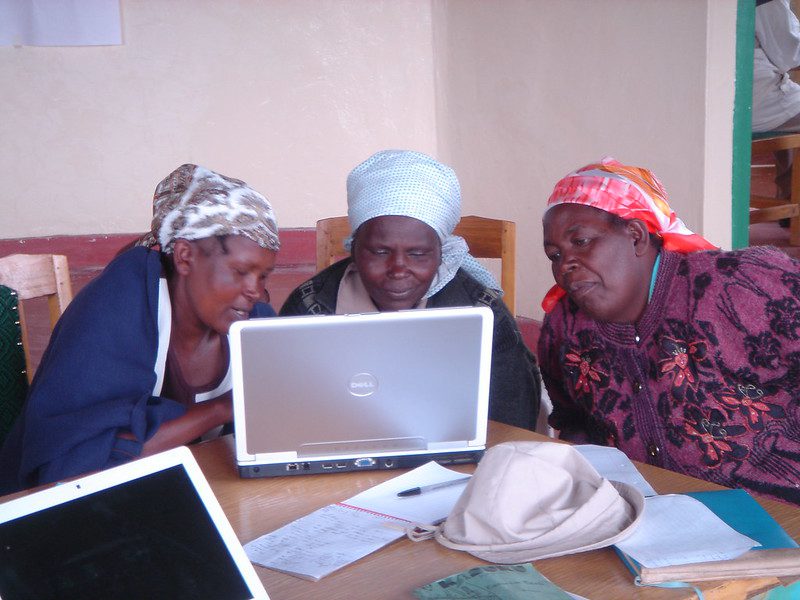
In March 2022, LakeHub, a “Kenyan tech innovation hub,” partnered with the United Nations Development Programme (UNDP) to equip 300 Kenyan girls with “digital literacy and technical skills.” As the Kenyan government has been making strong efforts to improve digital literacy, this partnership will be useful in bridging the gender digital divide in Kenya.
Digital Literacy in Kenya
In recent years, Kenya has made efforts to grow its digital economy and empower Kenyans with digital literacy skills. For example, in 2016, Kenya launched its Digital Literacy Programme, an initiative dedicated to providing digital devices to primary school children and training educators to give lessons through “digital learning content.”
These devices are “pre-loaded with interactive digital content in Math, English, Science and Kiswahili” in order to facilitate learning. Within the first phase of the initiative, the program distributed more than one million devices to more than “23,000 public primary schools” across Kenya.
Additionally, approximately 81,000 Kenyan educators received through the program. With such progress, the Digital Literacy Programme began its second phase in July 2019.
The Gender Digital Divide in Kenya
Despite the commendable strides of the Kenyan government in promoting digital literacy, there are concerns about equal access to digital devices and knowledge, particularly in the area of gender inclusivity. As the GSMA Mobile Gender Gap Report of 2019 reports, “women in Kenya are 39% less likely than men to have access to mobile internet” and “are also 23% less likely to own a smartphone.”
Moreover, this gender digital divide appears to be growing with the gender gap in mobile internet use increasing from 34% in 2019 to 42% in 2020.
A 2021 study titled “Kenya’s Digital Economy: A People’s Perspective,” also found that only “35% of women use advanced digital services compared to 54% of men.” The factors that contribute to this gender digital divide in Kenya include “discrimination, harmful social norms, the education divide, geography and lack of motivation.”
LakeHub’s Partnership with the United Nations
LakeHub is one organization that is striving to close the gender digital divide in Kenya. In June 2020, LakeHub launched its FemiDev program which aims to “bridge the gender gap within the digital sphere.” The program provides incentives such as full scholarships to females to learn skills in “back-end web development, design thinking, entrepreneurship[and] graphic design,” among many other skills.
LakeHub’s partnership with the United Nations forms part of its FemiDev program. During the 12-month training program, participants receive “laptops and internet access in order to attend in-person training across three counties in Kenya — Kisumu, Busia and Migori.”
The program recruits participants through an online application that is released every three months “on all social media platforms.” So far, the program has “sponsored 200 girls between the ages of 18 to 35” with 80% of them achieving “relevant job placement and paid internships, both in the private and public sectors.”
The Importance of Gender Inclusivity in Digital Transformation
With the onset of the COVID-19 pandemic, the importance of digital technology and connectivity has become even greater. Technology use has become the new normal with digital platforms becoming particularly handy in “facilitating remote learning, work-from-home, business and service provisions such as health, banking, market access and entertainment.”
Thus, for many female workers, the lack of digital literacy skills, to understand and gain access to new markets has led to a loss of income and livelihood. With the majority of Kenyan women working in manual jobs, characterized by “low pay and poor working conditions,” the restrictions and shutdowns from the pandemic hit female-dominated sectors hardest, meaning that women began losing their jobs first.
In addition, the 2021 Finance Corporation report indicates that 230 million employment opportunities in the African region “will require digital skills by 2030.” Therefore, equipping Kenyan women with digital literacy skills will grant them access to new employment opportunities and increase overall gender equality in Kenya.
While there is still work to do to fully close the digital gender divide in Kenya, initiatives like the FemiDev program lead the way to achieving gender equality in the digital arena.
– Divine Adeniyi
Photo: Flickr

The COVID-19 pandemic has thrust about 124 million global citizens into the grips of extreme poverty, “the first increase in extreme poverty” in two decades. This pandemic-induced economic distress disproportionately affects women by essentially forcing them into unemployment or informal labor. Informal work is marked by insecurity and inadequate job protection. Before the pandemic, about 95% of working women in Asia and 89% in sub-Saharan Africa participated in informal work. The World Bank Group said that targeted cash transfers for women in poverty are essential to building a more stable economy after the pandemic.
D3 Framework for Women’s Economic Empowerment
As a response to the growing levels of financial distress globally, governments around the world have launched various social protection programs. Cash transfers made up about 33% of these protection responses. However, in low-income countries, cash-based assistance reached less than 5% of the population, “six times lower” than figures in high-income nations, according to Brookings.
The Bill and Melinda Gates Foundation, World Bank Group, Consultative Group to Assist the Poor and Women’s World Banking have curated guidelines for systems that will provide cash transfers for women in poverty. Developed in 2019 by a group of experts, the D3 framework aims to allow room for adaptation by countries according to their own specific situations.
D3 stands for Digitize, Direct and Design. The “digitize” aspect pertains to the systems of technology that would be most suitable for providing cash transfers directly to the women who need them. Digitizing the system involves using mobile phones or cards that belong to the women receiving the funds. Directing the payments into an account registered to the recipient would ensure that she has direct access and power over the funds.
The design of each cash transfer program will appear different in every country, depending on the current economic status and structure of systems, if existent. In every step of the process, it will be important to listen to the voices of the women affected and to appoint women to positions that will have an influence on decision-making.
Cash Transfer Systems in Multiple Countries
- Brazil. Brazil’s Programa Bolsa Familia has registered more than 46.9 million people, making it “the largest conditional cash transfer [program] in the world.” Women account for 93% of registered participants.
- Togo. The West African nation of Togo launched NOVISSI, a digital payment system that provided citizens with almost immediate payments at the beginning of the COVID-19 pandemic. During the two phases of the program, NOVISSI gave $34 million worth of cash transfers to “a quarter of [Togo’s] adult population” in 200 of the most impoverished districts, according to the World Bank Group.
- India. The South Asian nation of India has a cash transfer plan targeting impoverished women by transferring funds directly to a PMJDY account, which are accounts for unbanked citizens. In just the span of a week, India was able to “distribute three months of cash transfers to approximately 200 million low-income women,” according to the World Bank Group.
- Pakistan. The country increased payment amounts during the pandemic for existing female beneficiaries in the country’s already established cash transfer program.
- Turkey. The Middle Eastern nation also has a cash transfer program in place that directs money to women. However, “new mothers and recent widows” would receive higher amounts, World Bank Group reports.
Evidence for Effectiveness of Cash Transfers
Data shows that disasters disproportionately affect women. Therefore, there should be disaster relief programs, such as government-regulated cash transfers, that prioritize helping women.
Currently, there is not a lot of sex-disaggregated data related to the benefits of cash transfer programs. However, there is existing data that supports the theory that direct cash transfers for women in poverty are beneficial.
Studies have recently proven that cash transfer programs help girls stay in school and help delay young marriage and early pregnancy. There is growing data that shows digital cash transfer programs lead to fewer reported cases of domestic violence against women and improve women’s independence and social status.
Researchers must still collect more sex-disaggregated data; more data will allow governments to plan more effective economic relief systems. By using the D3 network and the existing data, the World Bank Group is encouraging all governments, especially low-income countries, to establish effective cash transfer programs for women in poverty. The goal of these women-focused cash transfer systems is to reach every woman in need, regardless of where they live or their technological capabilities.
– Melissa Hood
Photo: Wikipedia Commons
