• Link to X
  • Link to Facebook
  • Link to Instagram
  • Link to TikTok
  • Link to Youtube
  • About
    • About Us
      • President
      • Board of Directors
      • Board of Advisors
      • Financials
      • Our Methodology
      • Success Tracker
      • Contact
  • Act Now
    • 30 Ways to Help
      • Email Congress
      • Call Congress
      • Volunteer
      • Courses & Certificates
      • Be a Donor
    • Internships
      • In-Office Internships
      • Remote Internships
    • Legislation
      • Politics 101
  • The Blog
  • The Podcast
  • Magazine
  • Donate
  • Click to open the search input field Click to open the search input field Search
  • Menu Menu

Archive for category: Technology

Information and stories about technology news.

Technology

Crop Failure Predicted By New Computer Program

crops_south_africa
Drought and famine are serious problems that countries with an agricultural based economy face. One bad crop or no crop can bring down the economy and leave many people hungry. With global warming showing its unfortunate consequences of extreme weather patterns on agricultural yield, more people are left hungry. Moreover, extreme weather patterns are not expected to stop anytime soon. That is why Nature Climate Change’s recently published study based on international research about predicting crop yields will be very helpful, especially for those who depend on a fruitful yield and seek to avoid major crop failure.

The study focused on devising a computer program that would successfully predict the crop yield. The study did this by examining 23 years of weather patterns and crop yields. Researchers then tested their program on four different kinds of crops: rice, wheat, maize, and soybean. The program was successful in predicting whether certain crops would fail about 3 months ahead of time, wheat and rice more accurately than the others. This will be a great help to farmers all over the world, as they will be able to  prepare for a crop failure. Precious resources won’t be wasted, and food can be collected and stored to anticipate the months of famine, and alternate work can be sought in order to ensure an income.

Studies like these can help not only the individual farmers but also national and global economies. According to the article, this will help observe worldwide food production. It will also help citizens and professionals alike see what crops/geographical areas are being most devastated by extreme weather patterns. Finally, understanding crop failure and adjusting work at an individual and national level based off the potential crop yield will help the economy stay stable during a difficult period.

– Aalekhya Malladi

Sources: All Africa, Nature Climate Change
Photo: esri

October 4, 2013
https://borgenproject.org/wp-content/uploads/borgen-project-logo.svg 0 0 Borgen Project https://borgenproject.org/wp-content/uploads/borgen-project-logo.svg Borgen Project2013-10-04 20:24:392016-02-16 11:57:05Crop Failure Predicted By New Computer Program
Extreme Poverty, Food & Hunger, Food Aid, Global Poverty, Technology

Why Technology Won’t Solve World Hunger

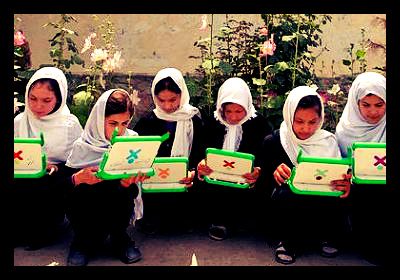
Technology Won't Solve World Hunger Kids Using Laptop
Ideas for ending world hunger are the subject of deep contention and intrigue. Conversations about how best to go about ending hunger are held among regular people far removed from the international, sociopolitical arena or non-profit sector, as well as among leaders in national governments and conferring minds within the United Nations.

Duncan Green in The Guardian recently reminded the world of the stark contrasts between those who can afford to eat and the nearly 900 million who sleep on empty stomachs. Progressive efforts underway in Ghana and Brazil have seen initiatives such as cash transfers to the impoverished and an increase in minimum wage. These programs have made strides, but in nations like India that are growing exponentially, the government must address the issue.

Of the myriad of ways to eradicate hunger, is technology perhaps a truly viable option at this point? If so, are the contributions made by technology being overlooked as a way to finally solve world hunger, or is technology simply a tool in this case?

Josette Sheeran, blogging for The Huffington Post, seems to think that technology is something of a cure-all for world hunger. She talks of the electronic vouchers used in Palestinian territories that give people greater access to food. The World Food Programme (WFP) is responsible for that, and other projects, such as the one in the Philippines that uses texting to feed workers. People participate in work projects and can collect their payment at participating food shops.

The WFP also uses social media with their WeFeedBack initiative that lets the user online select a favorite food and using a special calculator, can see based on its cost how many children would be fed with it. The calculated amount is what WFP encourages the user to donate.

Not long ago, a lab-grown burger patty was cooked and eaten in view of the public, touted as a way to help save both planet and people. A report from The Atlantic posits that the world already produces enough food to feed a growing global population and that new technology won’t necessarily solve the hunger crisis. Three-dimensional food printers are also a new tech tool being developed, but the report makes the case that in-house food printers won’t be an appliance in every kitchen because regular people cannot figure out the technology.

Why, then, would these technologies work in the emergent world? And, even if labs in emergent nations were capable of mass producing meat, consumption would be limited to the middle class and upper classes.

Sarah Sloat for Pacific Standard cites a 2012 paper by CUNY law student Rebecca Bratspies that says food production has grown inversely proportional to the hungry. Better food distribution will help solve hunger more than technological developments. The feeling, then, is that even with the massive amount of resources available to solve the world hunger crisis, the solutions are not dependent upon increased production.

Technology in food production has proven to increase production, but access is still contingent upon how food is distributed and how easily available it is to those who need it. Getting there may not be an issue of widespread production, but rather individual nations doing what they can to feed citizens.

– David Smith

Sources: The Guardian, The Atlantic
Photo: Huffington Post

October 2, 2013
https://borgenproject.org/wp-content/uploads/borgen-project-logo.svg 0 0 Borgen Project https://borgenproject.org/wp-content/uploads/borgen-project-logo.svg Borgen Project2013-10-02 20:43:142017-02-21 12:51:45Why Technology Won’t Solve World Hunger
Developing Countries, Technology

China Funds Five Research Centers in the Global South

China_funds_research_centers_in_the_Africa
For a variety of reasons, China has become known for its “interactiveness” with the global south. This “interactiveness” has included construction projects, student scholarships, and sending  doctors.

Recently, China began to fund five research centers in Africa and the global south in order to increase collaboration between Chinese and African scientists. The topics of focus for the scientists will include the climate, water, environmentally friendly technology, biotechnology, and space technology.

Using the Chinese Academy of Sciences (CAS), $6.5 million will be distributed to the research centers over the course of the next three years. These funds will work to improve China’s soft power in the global south by conducting joint research projects between the CAS and the research centers.

Currently, there is a CAS network known as The World Academy of Sciences (TWAS) that will also benefit from this Chinese outreach to the global south. Along with the research projects, the funding will also provide for an increase in workshops, training, and PhD programs.

According to Salim Abdool Karim, director of the Centre for the AIDS Programme of Research in South Africa and a TWAS member, “The five centers will play an important role in global scientific collaboration by increasing South-South training opportunities.”

This collaboration is expected to increase climate change research. Yongqiang Liu, a research meteorologist at the USDA Forest Service’s Center for Forest Disturbance Science sees it as a good way to “prepare future leaders to lead climate change research for developing countries.”

Action through research investment should improve China’s image in the world. Currently, China stands at 50% favorable and 36% unfavorable among populaces from around the world. Comparably, the US was seen as favorable by 63%, and unfavorable by 30%. More specifically, when people were asked if they thought China considered their country’s interests, 27% thought a great deal with 63% saying either not too much or not at all.

There is still a great deal of room for China to improve its international appeal. By working with developing nations to improve research in sustainable technology and other important sciences, China can build off the work of TWAS and foster support from citizens in these countries.

Once the three years comes to an end, the education and collaboration should improve the environmental technology sector, as well as build the capacity for a future scientific community with various projects and goals. If successful, this move may be beneficial in regards to China’s popularity as well.

– Michael Carney
Sources: SciDev.Net, Pew Global

August 28, 2013
https://borgenproject.org/wp-content/uploads/borgen-project-logo.svg 0 0 Borgen Project https://borgenproject.org/wp-content/uploads/borgen-project-logo.svg Borgen Project2013-08-28 10:47:052020-07-09 21:11:20China Funds Five Research Centers in the Global South
Developing Countries, Health, Technology

Motorcycle Ambulance Saves Lives Through Effective Patient Transport

Motorcycle_ambulance

Motorcycles are often the vehicle of choice in the developing world because of their ability to zip over harsh terrain and their low maintenance costs. A motorcycle manufacturing company, eRanger, has taken this versatile vehicle and given it a new purpose as an ambulance. The eRanger company builds motorcycles with a sidecar that serves as a stretcher to transport patients from remote areas to the nearest health center or hospital.

Called the eRanger ambulance, this motorcycle offers the high-power capacity needed to cover diverse and often difficult terrain in rural and remote areas. The sidecar stretcher acts as a bed for the patient, allowing for quick and effective transport. The stretcher is designed to be simple but safe, rugged but reliable, with a cushioned pad for patient comfort and a roll cage for safety.

Loading a patient is made easy by simply pushing back the roll cage and strapping the patient into the stretcher. A rain cover can be attached to the roll cage, providing comfort and privacy in different weather conditions, and this innovative ambulance also offers room for emergency medical supplies underneath the stretcher.

The eRanger ambulance also provides additional comfort through its rugged suspension system, which absorbs shock so patients bounce less during transport. This vehicle provides the perfect alternative to the popular 4 by 4 all-terrain vehicles because of its enhanced suspension system, low cost, and simple maintenance. Motorcycle ambulances are also preferable to car ambulances, especially during the rainy season, because they are better able to navigate over developing nations’ diverse terrain.

These motorcycle ambulances are already stationed at health centers through Africa where health workers and community members can utilize them as needed. The eRanger method goes beyond just providing the vehicles, though. They provide training, maintenance instruction, and tools to keep the motorcycles in good condition.

Sustainability is key, says the eRanger company, so they provide a maintenance unit with all the necessary tools and equipment for the eRanger ambulance. This affordable, reliable, and sustainable ambulance also helps communities become more self-reliant by taking health care into their own hands.

For example, the eRanger ambulance makes it possible for a mother in labor to reach a health care clinic quickly, reducing maternal mortality rates in many African nations.

The eRanger model also allows its motorcycle to adapt to the needs of problems in the developing world, from emergency ambulance to mobile medical clinic. The company also manufactures an eRanger immunization clinic, which recreates the sidecar into a stainless steel mini clinic with refrigeration storage, weight scales, and clean water unit.

This versatile motorcycle promises dramatic impact to healthcare in developing nations. Backing that promise is an eRanger patron, Nelson Mandela, who helped eRanger South Africa launch in the Eastern Cape. Since the launch, eRanger has built a college for riders and operators in Eastern Cape, which includes basic control of the vehicle, road riding, off-road riding, and essential maintenance.

In just five hours, operators can reach a basic competency to operate and care for the motorcycle, but advanced training is always available, says eRanger. With just the right mix of affordability, sustainability, and reliability, eRanger is helping save lives in developing nations by providing safe, quick access to critical health care.

– Georganne Hassell
Sources: eRanger, UNICEF, Changemakers, The Guardian
Photo: Motorcycle

August 26, 2013
https://borgenproject.org/wp-content/uploads/borgen-project-logo.svg 0 0 Borgen Project https://borgenproject.org/wp-content/uploads/borgen-project-logo.svg Borgen Project2013-08-26 21:51:482024-05-25 00:19:59Motorcycle Ambulance Saves Lives Through Effective Patient Transport
Global Poverty, Poverty Reduction, Technology

What is Poverty Alleviation?

Poverty Alleviation
Poverty alleviation aims to improve the quality of life for those people currently living in poverty. Another term that is often used is poverty reduction.


Innovation Leads Poverty Alleviation


Rudy De Waele, CEO of Nyota Media, a growth agency for entrepreneurs and start-ups in Africa, recently gave a speech at the Mobile Innovations at the OCE Discovery event in Toronto, Canada. His speech, “How Mobile Technology is Transforming Africa” discussed the WOW Generation, mobile energy solutions and 3D printing, among other successful innovations happening on the continent of Africa. He spoke of how the WOW Generation is a new generation of young, talented and driven social entrepreneurs who are not only in it for the money, but who are taking into account a positive return to society as well. WOWers have already helped thousands by working with local entrepreneurs to solve local problems with low-tech solutions.

De Waele also covered a number of mobile energy solutions currently in effect. Angaza Design is a company based in Palo Alto that is currently working in Tanzania, Kenya and Zambia. Using solar panels, Angaza Design has developed pay-as-you-go technology to provide energy that will charge mobile phones in rural areas.

Another project De Waele mentioned does not necessarily alleviate poverty, but does improve the daily lives of people living with a particularly harsh disease in Kenya. The Happy Feet project uses 3D printing to create customizable shoes in an attempt to solve the jigger problem. A jigger, also known as a sand flea, is a small insect that bites and feeds on humans, cats, dogs and domesticated livestock. Though a single bite is not likely to cause damage, complications can arise when a female jigger burrows into the foot of a person. Due to the pain, victims of the sand flea are unable to walk, which means they are also unable to work. In cases of serious infestation, it is possible to lose a nail, in the best case, or whole digits from the hands and feet in the worst case. The worst cases appear in places of poverty.

By creating and using new and inexpensive mobile technologies, there is potential for increased economic growth in developing countries. Not only is there growth, but the positive changes are impacting those living in the worst conditions. While 3D printed, customized shoes will certainly help with jiggers and their detrimental impact on those living in Kenya, projects like Angaza Design?s mobile phone charger will give independence to those living in poverty.

However, like most things, poverty alleviation is not a simple act. The United Nations Development Programme states that simple economic growth will not reduce or alleviate poverty, improve equality or produce jobs, unless said growth is inclusive of all individuals in the economy.

For example, a recent study by the African Economic Outlook showed that economic growth in Nigeria has not resulted in poverty alleviation or the creation of jobs. Despite policies for inclusive growth and employment generation, the report showed a 3 percent increase in unemployment between 2010 and 2011. The report explained that this was because the oil and gas sectors, the areas increasing economic growth, do not have much potential to create jobs.

Though Nigeria projects a 6.7 percent growth in 2013 and a 7.3 percent growth in 2014, there are potential problems. Security problems arising from religious conflicts in certain states, as well as the continued cost of flooding, all constitute potential drags on projected economic growth. The report also said that current reforms that have resulted in price and exchange rate stability should be increased by the Nigerian government to see continued progress in economic growth, a key component of poverty alleviation.

– Jordan Bradley

Sources: The Next Web, UNDP, Camps International
Photo: OxFam

August 15, 2013
https://borgenproject.org/wp-content/uploads/borgen-project-logo.svg 0 0 Borgen Project https://borgenproject.org/wp-content/uploads/borgen-project-logo.svg Borgen Project2013-08-15 04:15:462024-06-05 01:53:36What is Poverty Alleviation?
Technology

Radical Islamism, Jihad, Anti-Terrorism and the Internet

islam_extreme-jihad
More than a year ago, Mohamed Merah, a French citizen of Algerian origins, shot seven people in three different assaults. Among the victims, three were military personnel shot during two different attacks in a two day span in the French city of Montauban, one was a teacher, and three were children, killed after Merah’s attack on a Jewish school in Toulouse.

Merah claimed to have an affiliation with Al-Qaeda, and was known by the French secret services for his extreme views and was considered a potential threat. Even though he had been under surveillance for some time, police forces were still unable to prevent Mohamed Merah’s attacks.

Since 9/11, radical Islam has become a major security concern for the U.S. and other countries. The World Wide Web and the ease of access to Islam extremists’ thoughts have played a major role in the spread of radical ideologies.

Recent discoveries at Merah’s older brother’s in-law’s house have shown that access to radical Islam propaganda is almost as easy as a simple click. In a hard disk belonging to Merah’s brother, a digital library composed of several thousands of texts was found. These texts are both a guide for newbie jihadist as well as a guide to salafi indoctrination.

The websites visited by the murderer show the role of the Web in the spread of the radicalization of Islam. The websites appear in the headlines of searches of key words such as “Sharia” and “Jihad.” They espouse a more radical Islam centered around a rigorous defense of the Jihad. Translated in many languages, these websites are capable of reaching a larger public and thereby pose a greater threat.

Internet surveillance has become a national security priority in countries all over the world. And even when sites are censored because they are deemed dangerous, they often reappear with a different name.

The Internet, by facilitating access to ideas worldwide, has been greatly beneficial to the public, who can now hope for more transparency and easier access to knowledge. Nevertheless, this facilitated access to ideas has also become the unfortunate tool of many terrorist groups, who use it for both recruitment, financial purposes and as a source for their propaganda.

To this day, no international standard has been established to regulate the content of the internet available to the public. Each country makes its own rules, and there is little to no regulation at an international level. The challenge now is to create an international standard in order to avoid abusive censorship and promote freedom of speech and the spread of ideas in a context of mutual respect.

– Lauren Yeh

Sources: Washington Institute, Islam Et Verite, The Independent, Huffington Post
Photo: AIM

August 6, 2013
https://borgenproject.org/wp-content/uploads/borgen-project-logo.svg 0 0 Borgen Project https://borgenproject.org/wp-content/uploads/borgen-project-logo.svg Borgen Project2013-08-06 04:35:352024-05-25 00:14:48Radical Islamism, Jihad, Anti-Terrorism and the Internet
Health, Technology

WoundCure Chip Assesses Chronic Wounds

Wound_Cure_Chip
Dr. Manuela Martins-Green and PhD candidate Sandeep Dhall have started a project to develop a diagnostic tool called a “gene chip.” The chip would provide accurate diagnostic tests for chronic “non-healing” wounds. The gene chip can predict how a patient’s chronic wound should be treated in order to increase the chance of healing. If the WoundCure chip project is successful, it could potentially treat millions of people who are affected with bed sores, skin ulcers, diabetic foot ulcers and other related chronic wounds.

Martins-Green and Dhall say that chronic wounds affect an average of 6.5M people and cost roughly $25 billion a year in the U.S. The WoundCure chip data could steer doctors toward effective treatment plans so that wounds can heal properly. Many times, the solution to chronic wounds is to amputate the affected limbs. Open sores are also more prone to infection, which can potentially spread throughout the body.

The WoundCure chip data will be an excellent tool that will allow doctors to quickly determine which wounds require aggressive treatment. The chip will identify which genes have been altered, thus providing quick diagnosis and proper treatment. In an interview with Dr. Martins-Green, she goes more in detail about how the chip works. She explains that, “If the expression of the gene is elevated, it will show red. If it’s not regulated, it will show green. If you use the chip with a wound, the prediction is that the more red the more serious the wound will be.”

The researchers behind this innovative tool are hopeful that it will be a positive impact on tens of millions of people affected by chronic wounds. For the WoundCure chip to actually happen, Martins-Green and Dhall will need to reach their funding target for this project. Those interested in learning more and supporting their research can visit their crowd funding page.

– Daphne Jeon

Sources: Microryza, Motherboard
Photo: Motherboard

August 5, 2013
https://borgenproject.org/wp-content/uploads/borgen-project-logo.svg 0 0 Borgen Project https://borgenproject.org/wp-content/uploads/borgen-project-logo.svg Borgen Project2013-08-05 09:20:562024-06-11 01:49:27WoundCure Chip Assesses Chronic Wounds
Technology

Phones Increasing Contraceptive Care in India

India_Women_Cellphone_Access_Contraceptives
In India, a country with a constantly growing population currently at 1.3 billion, the use of contraceptives is rare and often considered socially unacceptable. While the contraceptive prevalence rate is at 56 percent, 38 percent use female sterilization, leaving a very small amount of women who are using reversible birth control methods. It’s no wonder, when the Ministry of Health and Family Welfare in India has been using the same family welfare program since 1952, that they are showing no signs of modern innovation.

Even with the use of sterilization, too many women in India are left completely unprotected. Childbirth kills approximately 67,000 women in India every year, and 1 in 13 children dies before the age of five. 42.5 percent of children under the age of five are underweight, and 20 percent of the total population is undernourished. India is unable to support so many unplanned births, making contraception more important than ever.

That’s where Project Vikalp comes in. One of the nine winners of the Millennium Alliance Awards (co-funded by USAID), the project, which is run by the U-Respect Foundation, is a family planning-health care model that will educate the public and help women obtain contraceptives throughout India.

The secret is in the use of cell phones, which are becoming more and more attainable in India, even for the nation’s poorest. If a couple wants contraceptive counseling in India, it is hard to find. Most health workers claim that they are too busy to discuss family planning, and if they do, they usually suggest sterilization. India’s government has been trying to push the norm toward reversible contraceptives, but sterilization is still by far the most used method.

If the couple is unmarried it is nearly impossible to receive counseling. Most couples don’t even try to find counseling because of the barriers, and because they are intimidated by the social norms.

Project Vikalp is using cell phones to reach couples using a three tiered approach. First couples can reach the project through a toll-free helpline. Then, they can receive contraceptives and support from local health care providers and consultants associated with the project. Couples can use their phones to record when they have started using, switched, or stopped using contraceptives to help planners know when they should tweak the program’s methods.

Through this project, couples don’t have to feel intimidated when searching out contraceptives, and they are affordable for everyone. The project hopes to fill the gaps of knowledge in rural communities and change attitudes about contraceptives so that they are more widely accepted in the region.

– Emma McKay

Sources: Devex, Millennium Alliance

August 1, 2013
https://borgenproject.org/wp-content/uploads/borgen-project-logo.svg 0 0 Borgen Project https://borgenproject.org/wp-content/uploads/borgen-project-logo.svg Borgen Project2013-08-01 10:49:122017-03-20 13:05:52Phones Increasing Contraceptive Care in India
Technology, USAID

How is NASA Related to Development?

How is NASA Related to Development?
A recent event held by the Society for International Development in Washington, DC highlighted the SEVIR program, a joint venture of NASA and USAID. Started in 2004 the program provides essential geospatial and earth-based observations to developing countries in Central America, Africa and the Himalayas. This information is used to monitor environmental impacts and natural disaster damages.

Science experts help convert the raw data into a usable form that governments and non-governmental organizations can use. USAID provides the developmental expertise to assist in directing this information to useful topics and applicable to issues confronting developing nations. SERVIR provides information in the following areas of interest for developing nations: water, weather, biodiversity, climate, disasters, ecosystems, and air and health quality.

USAID also assists the host governments to build technological capacity. The program’s goal is for host governments to assume responsibility for the scientific data and application. In order to support this self-sustaining aspect, the program implementers work closely with the host nations.

NASA and USAID signed a Memorandum of Understanding (MOU) in 2011 that expanded SERVIR’s programs to include food security, climate change, and environmental and energy management.

NASA and USAID also partner with the State Department and Nike on LAUNCH, a program encouraging technology innovation in the private and public sectors to help create a better world. In April the LAUNCH partners held a conference focusing on sustainable material development. Under this call for technological innovation, individuals or teams may submit project ideas. Those selected will participate in a creative immersion project with funding opportunities.

Previous recipients of LAUNCH support include projects for clean water, renewable energy, and biodegradable vaccination needles, and future projects supported by NASA and USAID feature the promotion of education in the sciences.

The SID Washington event focused on SERVIR’s projects in the Hindu-Kush Himalayan region. The Himalayan regional node, launched in 2010, provides satellite imagery of rural, mountain areas previously unavailable. Countries served by the Himalayan regional node include Afghanistan, Bangladesh, Bhutan, China, India, Nepal, and Pakistan.

– Callie D. Coleman
Sources: NASA, SIDW, Nike Inc.
Photo: Engadget

July 24, 2013
https://borgenproject.org/wp-content/uploads/borgen-project-logo.svg 0 0 Borgen Project https://borgenproject.org/wp-content/uploads/borgen-project-logo.svg Borgen Project2013-07-24 07:15:472020-07-19 22:16:20How is NASA Related to Development?
Technology, USAID

Peanuts and Feed the Future Empower Women in Zambia

Peanuts and Feed the Future Empower Women in ZambiaMany think of them as a fun salty snack for baseball games or a key ingredient in the classic PB&J, but for a large group of women in the eastern province of Zambia where nearly 85 percent of the labor force works in agriculture, peanuts are a way of survival and the means to a better life. Peanuts are the number one crop grown in this area by women. To improve the efficiency of the production and sale of this crop would mean a huge increase in their quality of life.

One project by President Obama’s Feed the Future initiative is working to teach female peanut farmers how to double their yield of peanuts, and increase their product market by producing a variety of different peanut products, like peanut oil and peanut butter. The initiative is partnering with the Zambian Government Agricultural Research Institute to train the women to become certified to grow higher quality hybrid seed varieties. Selling these seeds will bring in a much higher profit than the seeds the women were originally producing.

In order to help the women create different peanut products, Feed the Future provided a grant to the Katete Women’s Development Association, an organization that empowers women to grow crops like peanuts, for peanut oil expeller, which will help the women enter into the market of peanut processing. The new presser will help the women’s work to remain sustainable even after their donors have left. As long as they have the expeller, they can work themselves to turn their peanuts into profitable peanut products.

Not only will the higher quality peanut crop and new processing technologies help the women increase their quality of life, but they will be working in a business usually reserved for men. In most other countries, men are primarily in charge of producing and marketing the product, giving them all of the opportunities for further success. Feed the Future’s work is giving women the same opportunities and breaking the social boundaries of agricultural work in Africa.

– Emma McKay

Sources: USAID, CIA World Factbook
Photo: Flickr

July 22, 2013
https://borgenproject.org/wp-content/uploads/borgen-project-logo.svg 0 0 Borgen Project https://borgenproject.org/wp-content/uploads/borgen-project-logo.svg Borgen Project2013-07-22 06:00:462024-05-25 00:03:23Peanuts and Feed the Future Empower Women in Zambia
Page 84 of 88«‹8283848586›»

Get Smarter

  • Global Poverty 101
  • Global Poverty… The Good News
  • Global Poverty & U.S. Jobs
  • Global Poverty and National Security
  • Innovative Solutions to Poverty
  • Global Poverty & Aid FAQ’s
Search Search

Take Action

  • Call Congress
  • Email Congress
  • Donate
  • 30 Ways to Help
  • Volunteer Ops
  • Internships
  • Courses & Certificates
  • The Podcast
Borgen Project

“The Borgen Project is an incredible nonprofit organization that is addressing poverty and hunger and working towards ending them.”

-The Huffington Post

Inside The Borgen Project

  • Contact
  • About
  • Financials
  • President
  • Board of Directors
  • Board of Advisors

International Links

  • UK Email Parliament
  • UK Donate
  • Canada Email Parliament

Get Smarter

  • Global Poverty 101
  • Global Poverty… The Good News
  • Global Poverty & U.S. Jobs
  • Global Poverty and National Security
  • Innovative Solutions to Poverty
  • Global Poverty & Aid FAQ’s

Ways to Help

  • Call Congress
  • Email Congress
  • Donate
  • 30 Ways to Help
  • Volunteer Ops
  • Internships
  • Courses & Certificates
  • The Podcast
Scroll to top Scroll to top Scroll to top