• Link to X
  • Link to Facebook
  • Link to Instagram
  • Link to TikTok
  • Link to Youtube
  • About
    • About Us
      • President
      • Board of Directors
      • Board of Advisors
      • Financials
      • Our Methodology
      • Success Tracker
      • Contact
  • Act Now
    • 30 Ways to Help
      • Email Congress
      • Call Congress
      • Volunteer
      • Courses & Certificates
      • Be a Donor
    • Internships
      • In-Office Internships
      • Remote Internships
    • Legislation
      • Politics 101
  • The Blog
  • The Podcast
  • Magazine
  • Donate
  • Click to open the search input field Click to open the search input field Search
  • Menu Menu

Archive for category: Technology

Information and stories about technology news.

Global Poverty, Technology

Zidisha Direct Loans Boosts Entrepreneurship

direct_loans
Big business ideas and economic enterprises are no longer limited to the corporate boardroom. The digitally connected world has provided entrepreneurs from all corners of the globe ways in which to make their concepts known; social media and increased mobile access have given tomorrow’s innovators a voice they lacked in the past. The main issue, however, is that those in developing countries still lack access to funding and capital, no matter how strong their idea.

That’s where Zidisha comes in. Zidisha is a nonprofit micro-lending service that allows potential borrowers to receive direct loans from an online community. The organization’s main goal is to promote economic development by cutting out lending middlemen and local banks that often charge supremely high-interest rates on loans.

The process is quite simple. Potential borrowers need only reliable online access, something that is only becoming more and more available. The borrowers then submit a profile describing themselves and their intended use of the loan. A one-time processing fee of around $12 is charged.

Zidisha is a very small company and merely provides a platform for users to interact directly. “We’ve built a decentralized marketplace that has no offices, no employees or loan officers in borrower countries,” says company founder Julia Kurnia. Zidisha lets borrowers receive funds via SMS straight from lenders at a zero percent interest rate.

Loans are typically small. Zidisha states that the average loan is $200 to $300. Loans have enabled entrepreneurs to buy computers for an Internet café and sewing machines for a village shop. Both have relatively low costs, but a significant impact. According to Wired Magazine, the computers that were funded by Zidisha loans have empowered many, as they have been used to teach office programs like Microsoft Word and Excel.

Zidisha’s purpose is clear in its name. The word means “grow” in Swahili. By charging no interest and only asking for the principal returned, Zidisha enables borrowers’ ideas, which would normally be denied by the typical financial institutions, to flourish.

– Joe Kitaj

Sources: Wired, Zidisha, Venture Beat
Photo: Zidisha

August 27, 2015
https://borgenproject.org/wp-content/uploads/borgen-project-logo.svg 0 0 Borgen Project https://borgenproject.org/wp-content/uploads/borgen-project-logo.svg Borgen Project2015-08-27 01:30:432024-12-13 18:04:40Zidisha Direct Loans Boosts Entrepreneurship
Global Poverty, Technology

African Skills Initiative Receives $60 Million

African Skills Initiative Receives US $60 Million Investment
International Business Machines Corps (IBM) has announced its investment of $60 million in the African Skills Initiative. This investment will fund the development of the next generation of technical experts for the next three years.

With this investment, IBM plans to expand its Africa University Program and the Africa Technical Academy to more than 20 countries.

Dr. Naguib Attia, IBM Chief Technology Officer and VP Technical Leadership MEA says, “With a research laboratory, innovation centers, offices and other advanced facilities in more than 24 African countries, IBM has the highest concentration of technical talent on the African continent. As the leader in science and technology in Africa, we see it as IBM’s responsibility to make a strategic investment in skills development helping to lay the foundations of the Africa of tomorrow.”

IBM is teaming up with the Kenya Education Network to deliver certification courses to students and faculty studying and teaching in the 50 universities already in the Africa University Program network. In such a fast-paced and growing market such as Kenya, the African Skills Initiative will benefit the population greatly.

These courses will develop and enhance the students’ readiness to enter the job market. With a focus on what happens in the work world, students will be prepared and feel more qualified for the technical workspace.

The expansion of the program will benefit IT professionals in Africa. The program focuses on teaching skills in cloud, analytics and huge data technologies. This kind of training is an important step for the next phase of social and economic development in Africa.

It is very likely that IBM may offer employment to students who graduate from these courses with impressive scores. This would give incentive to people in Africa not only to receive an education but to also start their careers as IT professionals.

IBM’s latest project is focused on the next generation of technology and experts than its current business. With its current services such as software development, assistance and software products, IBM foresees that more IT professionals will be beneficial in the future.

With the expansion of the Africa University Program and the Africa Technical Academy, IBM is encouraging individuals to receive an education. With this education, they gain a greater chance of being employed by IBM.

The movement toward technology can already be seen today. As IBM predicts, the world will only become more dependent on technology. With this surge in technology, more IT professionals will be needed.

IBM’s investment of $60 million in the African Skills Initiative will fund the education of the IT professionals of tomorrow. But it will also educate people that are in need of the many jobs to come in the IT world. This initiative will further not only the world of technology but the lives of people.

– Kerri Szulak

Sources: Bidness, KTen
Photo: IT News Africa

August 27, 2015
https://borgenproject.org/wp-content/uploads/borgen-project-logo.svg 0 0 Borgen Project https://borgenproject.org/wp-content/uploads/borgen-project-logo.svg Borgen Project2015-08-27 01:30:092020-04-24 12:13:46African Skills Initiative Receives $60 Million
Developing Countries, Global Poverty, Technology

Silicon Valley and Global Energy Poverty

Silicon Valley & Global Energy Poverty
Over one billion people around the world do not have reliable access to electricity. Furthermore, 2.6 billion people are reliant upon biomass to cook, which causes harmful indoor pollution. The World Health Organization estimates that approximately four million people die each year due to habitual inhalation from these toxins.

The Silicon Valley is at the apex of technological achievement and is inhabited by some of the brightest and most creative minds on the planet. There has been a mounting international appeal to Silicon Valley to use their intellectual tech brilliance for philanthropic efforts.

There has been criticism for focusing on solutions to micro problems that intend to only service the individual, as opposed to global humanitarian issues. Responsibility, however, cannot rest solely with the entrepreneurs themselves. Widespread global issues do not always necessarily lend themselves to the venture capitalist system.

Tech entrepreneur Vivek Wadhwa notes this struggle: “Investors believe that the quickest hits come from building apps or games that go viral, or from creating websites that automate business processes. This was surely the case in the social-media era, when even children who had not completed their college education could write apps. But we’ve built enough messaging and photo-sharing apps, and have bigger opportunities now. It is possible for the young and the old to solve real problems, to great effect.”

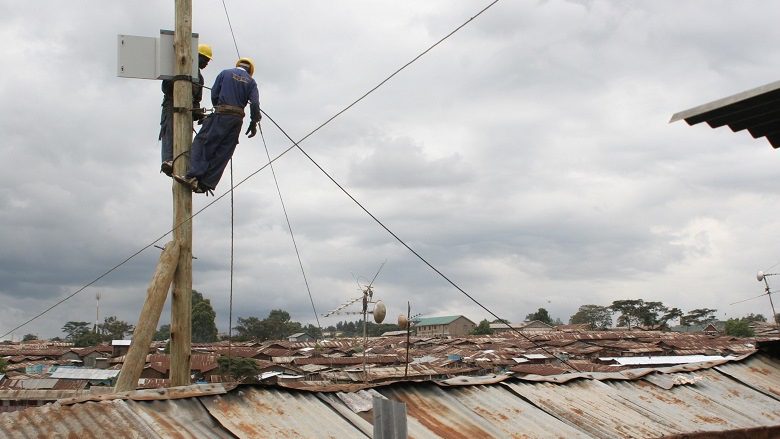
Continents like Africa, particularly Sub-Saharan Africa, have limited access to electricity and are being viewed as a possible new frontier for tech consumption. In some parts of the continent, Africans walk miles to the nearest power grid just for a cell phone charger. Even then, because of the demand, it can take hours and it is expensive. For this reason, solar energy has recently seen a boom in usage particularly by telecom companies being funded by tech investors. The rationale is that broadening electrical access across the continent will hopefully cause a surge in mobile phone usage.

Tesla has created a Powerwall home storage 10kwh battery that is capable of powering 1,000 watts of current for 10 hours. In comparison, the U.S. Department of Energy estimates the average American household uses 1,200 watts, 24 hours per day. The battery is capable of recharging via solar or wind energy. The only downside is that the battery unit costs $4,000, which does not include installation. The average per capita income in Sub-Saharan Africa is well below $3,000, making the unit well out of most price ranges.

Nonetheless, the Powerwall home storage stands as a promising, albeit a rudimentary example of Silicon Valley creativity and ingenuity being applied for a global purpose.

– The Borgen Project

Sources: National Geographic, Huffington Post, Wadhwa, Forbes
Photo: Silicon Beat

August 26, 2015
https://borgenproject.org/wp-content/uploads/borgen-project-logo.svg 0 0 Borgen Project https://borgenproject.org/wp-content/uploads/borgen-project-logo.svg Borgen Project2015-08-26 01:30:352022-01-19 00:38:46Silicon Valley and Global Energy Poverty
Global Poverty, Technology, Women, Women and Female Empowerment

Wonder Women Initiative Takes Off in Indonesia

Wonder Women Initiative Takes Off in Indonesia
For decades, the iconic comic book superheroine Wonder Woman has been a representation of justice, strength and all that is right in the universe. Today, the spirit of Wonder Woman is as present as it has ever been, but it has been breathed into the organization titled, appropriately, Wonder Women. In 2015, it is this plural variation of the legendary superhero’s name that resonates the most with global change.

The Wonder Women Initiative is a movement to revitalize poverty-stricken areas by teaching the women of these communities to sell new pieces of technology and equipment to their neighbors and members of their towns or villages. The effort has been especially successful in Indonesia over the last few years. Some of the items sold include solar lanterns, clean cookstoves and water filters.

An article by CNBC detailing the Wonder Women program recently said, “Since the program started in 2011, more than 300 women have become ‘micro-social-entrepreneurs,’ selling around 10,000 clean technology products to their communities.” The Wonder Women initiative has been extremely successful because of its grassroots approach to eradicating poverty. This project operates under the umbrella of the large non-government organization Kopernik.

Kopernik was founded on the belief that only a simple piece of technology can drastically turn around poverty situations all over the world. The NGO’s website provides certain statistics such as “780 million people live with dirty water, when a simple filter can provide safe, clean, convenient drinking water” and “1.3 billion people rely on dim, dirty, dangerous kerosene for lighting, when simple solar lanterns can provide clean, bright light at night.” Kopernik receives money directly from donors all over the world and in turn, uses these funds to produce cost-effective technology products that can be sent to third world countries and commercialized by an initiative like Wonder Women.

Wonder Women is impacting thousands of lives every year and revitalizing the way nonprofits work. By teaching women how to sell technology at cost-effective prices within their communities, Wonder Women is positively affecting the global economy. Kopernik has a quote on its site that reads, “Our namesake, Nicolaus Copernicus, changed the way people see the world. Like Copernicus, we want Kopernik to be a catalyst for change.” Much like its namesake, Wonder Women is promoting justice and all that is right with the world.

– Diego Catala

Sources: CNBC, Kopernik
Photo: Dorkly

August 25, 2015
https://borgenproject.org/wp-content/uploads/borgen-project-logo.svg 0 0 Borgen Project https://borgenproject.org/wp-content/uploads/borgen-project-logo.svg Borgen Project2015-08-25 01:30:392024-06-05 02:12:10Wonder Women Initiative Takes Off in Indonesia
Technology

Five Countries on the Rise

countries
As our world becomes increasingly globalized, formerly developing nations are gaining access to new technology and experiences that have allowed them to jump leaps and bounds in the matter of a few years. This rapid evolution of a country’s standing has led to massive changes in the global community as a whole, but several countries stand out above the rest as strong contenders in the globalized market. Five countries on the rise can be found below:

1. Turkey

Over the past year, Turkey experienced a growth rate of over 11 percent, one that surpasses even that of China. This nation has been able to foster its manufacturing and democratic systems gently even as the nations around it fell to the pressure of the global community’s demands. Turkey’s focus on exports has increased job availability overall and has drastically reduced poverty in the nation. Turkey has realized that the key to success is to focus on the happiness of its people, and with increased employment opportunity and decreased poverty, Turkey has set itself up to become a major world power.

2. Mexico

According to a recent Brookings Metropolitan Policy release, Mexico City is one of the most economically vibrant cities in the world. The 12th largest economy in the world has become a hub for business, and through promotion of entrepreneurial spirit, it has experienced income and employment growth. All of this growth is steady because much of Mexico’s export profits come from the United States, which provides a steady dollar currency. Once a hub for crime and poverty, Mexico is quickly becoming a contender for one of the world’s strongest and happiest nations.

3. Democratic Republic of the Congo

For several decades, people have associated the Congo with horrible war, poverty, disease and death, but with the promise of a more stable government, things are beginning to look up for the Congolese people. Much of the war that takes place in the Congo is over its bountiful mineral fields, which provide vital minerals that are used in almost every electronic device today. Major companies buy their products from war-torn regions without realizing what their needs are doing to the people within, but with the recent increase in more conscientious shopping, companies are beginning to watch what they use. The promise of a stable government means a decrease in war, an increase in legislation, an increase in local miners getting mineral profits and an overall decrease in poverty throughout the DRC.

4. India

While India has been on the rise for quite a few years now, it continues to grow and develop, and with the second highest population in the world, it has set itself up to become one of the world’s new superpowers. India’s main asset is its tech abilities and manufacturing. Several companies have plants in India that create their products for export, and with the massive amount of manpower that India can provide, they find no issues arising. India’s poverty rates continue to decline and their education rates continue to increase and will continue to do so with the use of the U.N. Standard Development Goals, essentially creating a brighter future today.

5. Nigeria

Nigeria has long been thought of as the most developed country in Africa and has been cited in several speeches and talks by citizens and politicians as such. With the strong technology boom coming in from the West as well as the investment in Africa by foreign NGOs, Nigeria has set itself up to become the strongest nation in Africa. With a more stable government and a more united public it will become a force to be reckoned with in the global community.

While several nations, such as China and the United States, have long enjoyed the relaxation and innovation that comes with life on the top, it appears as though they need to slide over and make some room because these five countries are ready to join them.

– Sumita Tellakat

Sources: The Atlantic, CS Monitor
Photo: CS Monitor

August 22, 2015
https://borgenproject.org/wp-content/uploads/borgen-project-logo.svg 0 0 Borgen Project https://borgenproject.org/wp-content/uploads/borgen-project-logo.svg Borgen Project2015-08-22 01:30:122020-07-02 10:24:13Five Countries on the Rise
Development, Global Poverty, Health, Technology

CNNMoney’s Upstart 30 Project

upstart
CNNMoney launched its Upstart 30 Project in late June. It profiles 30 young innovative startups and their respective founding entrepreneurs and investors.

The list is broken down into five categories: the idealists, the funders, the simplifiers, the playmakers and the futurists. All of which comprise individuals from a variety of fields.

To take part, startups must be established in the United States, be no younger than five-years-old, and harness technology in hopes of making the world a better place. After a series of tests, the Upstart 30 Project was formed. The list is diverse in geography, gender, race, and industries.

Whether it is a solution to the current archaic U.S. school system, an agricultural phenomenon in a box, or an ingenious medical tool, Upstart 30 spotlights visionaries that are making serious headway, all before the age of 40.

While many of the startups tackle commonplace inefficiencies, several address national and global issues, and have the potential of reducing global poverty in unlikely ways.

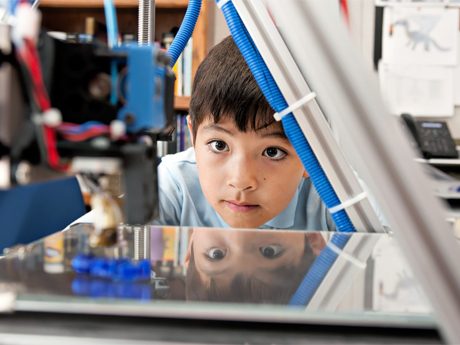
BioBots brings personalized medicine tools. According to its profile on CNNMoney, the startup’s first product was a 3D printer for building cells, tissues and organs. BioBots’ printer is uniquely small and inexpensive. It can fit on a desktop and is priced at around $5,000. For now, the bio printer is for research. CEO Danny Cabrera, 22, said that his two co-founders and him are hoping to broaden their client base to include pharmaceutical companies who could use their products for testing cancer drugs. BioBots has a bright future in the United States, but could do wonders internationally.

Freight Farms is a farm in a box. Founders, Brad McNamara and Jonathan Freidman, created the boxes out of old shipping containers. The insulated, camera-equipped devices use LED lights and advanced monitors to regulate weather conditions, nutrient intake and carbon dioxide levels, all without soil. The startup launched in 2011, and already made $5 million. At $76,000 apiece, restaurants, schools, and hotels have mainly bought the boxes. While this is very expensive, the payoffs are incredible: each container produces 4,000 to 6,000 plants a week according to Shawn Cooney, a small business owner testing the Freight Farm. This is nearly 80 times more than Cooney would have gotten from a conventional farm space. The high cost keeps Freight Farms away from the developing world but, if ever brought down, Freight Farms could increase food security around the world.

uBiome scans a person’s body and micro biome. uBiome kits locate where diseases take root, and how they escalate. According to CNNMoney, uBiome completely changes the ways we examine anxiety, diabetes and heart disease. The $79 kits test bacteria, analyze results, and compare data to other profiles. This quick and cutting-edge device could easily help millions of people in developing nations.

Plangrid is a paper-saving blueprint alternative for construction engineers. By using a tablet to alter and share blueprints, Tracy
Young, Ryan Sutton-Gee, Ralph Gootee and Kenny Stone are making sure buildings are drawn from reliable sources. So far, Plangrid has been a success since it began only three years ago. The app helped build over 90,000 projects worldwide. Plangrid, however, has a long way to go until it can reach rural populations most in need of new buildings.

– Lin Sabones

Sources: PlanGrid, CNN
Photo: CNNMoney

August 21, 2015
https://borgenproject.org/wp-content/uploads/borgen-project-logo.svg 0 0 Borgen Project https://borgenproject.org/wp-content/uploads/borgen-project-logo.svg Borgen Project2015-08-21 10:23:502024-12-13 17:54:01CNNMoney’s Upstart 30 Project
Global Poverty, Technology, Water

Clean Drinking Water in Kenya

Clean_Drinking_Water
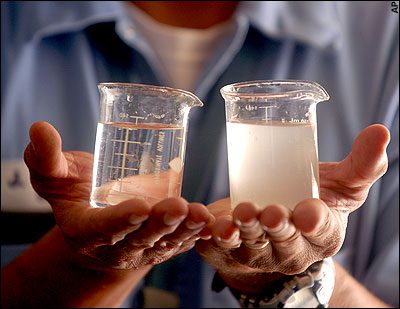
Water and sanitation. Proper access to both is an issue that bedevils developing countries all over the world, and Kenya is no different. A new water-dispensing service is trying to change that.

Water has always been a huge issue in development work. Its importance is paramount to life itself – without water, humans cannot survive. While millions of people in the developing world do have access to water, oftentimes it is not safe for drinking. This causes diseases to spread and death to follow.

The Millennium Development Goals (MDGs) set out targets for clean drinking water. Goal 7, Target 7.C’s aim was to “halve, by 2015, the proportion of the population without sustainable access to safe drinking water and basic sanitation.” This goal was met five years ahead of schedule – between 1990 and 2012, 2.3 billion more people gained access to safe drinking water. However, some have claimed that Target 7.C set the bar too low in terms of achievement.

A major issue connected to clean drinking water is access to proper sanitation for all. While the clean drinking water MDG has been met, sanitation has not done as well. One billion people still openly defecate all around the world, for lack of a better option. This then affects drinking water – it is a vicious cycle.

Part of the problem with supplying clean drinking water to the world’s population is that it is growing, making the task even harder. The population of Nairobi in 1963 was 300,000. Now, it is home to 4.2 million, and this figure is expected to grow to 14 million by 2050. If the world cannot supply its current population with clean drinking water, then how will it possibly keep up with the globe’s rapidly expanding populace?

The answer might begin with four new water dispensers that have been installed in Nairobi’s slums, which might help to change Kenya’s water infrastructure. They operate like vending machines – put money in, and water is dispensed out. This has reduced both the cost of water for slum residents as well as the distance needed to travel to acquire it. The water is purer and cleaner than other options – before the machines were installed, many residents got their water from sellers that dragged jerry cans on carts through the streets. Without water pipes in the slums, this was the only option.

The water-dispensing machines present a cheaper and cleaner option than the street vendors. It is a win-win situation for all involved – the government, who has put the machines in place, makes money on the water, and the citizens pay cheaper prices. Before, people would venture to neighborhoods with water pipes and break them to siphon off water, essentially stealing water from the government.

Now, prices are six times cheaper than they were before. Pre-dispensing machine, water prices hovered around three shillings, the equivalent of around three pennies in the U.S. Now, prices have been reduced to half a shilling. This might not seem like much, but to some that are unemployed or only make US$2 a day, the reduction is huge.

The payment system is done through mobile payments or water smart cards that residents can load money on. The machines are also operated by local residents who earn up to 40 percent of the profits from the machines as an incentive to keep them running and prevent vandalism. If Nairobi can continue to set an example for what these machines can do, they might go much further than a few slums in Kenya’s capitol.

– Gregory Baker

Sources: The Guardian, All Africa, UN
Photo: Stratfor

August 16, 2015
https://borgenproject.org/wp-content/uploads/borgen-project-logo.svg 0 0 Borgen Project https://borgenproject.org/wp-content/uploads/borgen-project-logo.svg Borgen Project2015-08-16 01:30:432020-07-02 10:46:05Clean Drinking Water in Kenya
Disease, Technology

Medical Microchips and Their Life-Saving Potential

medical_microchips
The ongoing Ebola epidemic in Western Africa has shown the dangers of late, or improper, diagnosis of disease. A late diagnosis can lead to a patient further spreading a pathogen and the wrong treatment usually does more harm than good. In developing countries and rural parts of the world, medical care is grossly underdeveloped, and as a consequence, diagnoses of illness are often inadequate. Millions die each year due to the fact that doctors cannot identify their ailment or treat it properly. However, with recent advances in microchip technology, diagnoses are becoming more accurate and timely for a cheaper price than ever before with medical microchips.

There are many different kinds of chips and devices being developed in both the public and private sectors. One such device is the “paper microchip” currently being tested at Florida Atlantic University. The chip is made of a polyester film that can detect pathogens in a blood sample.

An author of the university study, Waseem Asghar, said, “[t]here is a dire need for robust, portable, disposable and inexpensive bio-sensing platforms for clinical care, especially in developing countries with limited resources,” A large problem that doctors face in developing regions is the lack of laboratories and skilled testing personnel. With microchip technology, samples do not need to be sent to a lab, rather results can be generated instantly on the spot.

Microchips prove to be a major innovation in the medical world as they have the potential to take human error out of the equation. Computers do not need to go to medical school or study the exact signs and symptoms of any given disease. Researchers have tested the “paper microchip” for HIV and E. Coli diagnosis, but also state that the device could be used for many other infectious diseases. As the name suggests, microchips are small and thus portable. With increasing App and interconnected technology, they would require less training and knowledge to operate. Microchips have the potential to diagnose millions who were, in the past, untreatable due to their economic or geographical situations.

– Joe Kitaj

Sources: Wired, The New York Times, Wsnewspublishers
Photo: Wired

August 15, 2015
https://borgenproject.org/wp-content/uploads/borgen-project-logo.svg 0 0 Borgen Project https://borgenproject.org/wp-content/uploads/borgen-project-logo.svg Borgen Project2015-08-15 01:30:012020-03-25 16:14:48Medical Microchips and Their Life-Saving Potential
Global Poverty, Technology

Mobile App Keeps Fishermen Safe

fishermen_safe
More than 60 percent of India’s fishing communities, which comprise nearly four million people, earn less than a dollar a day. For each meager catch, they risk their lives sailing in flimsy boats through extreme weather conditions, only to return home to poor shelter, poverty, illiteracy and a lack of access to information.

Mobile technology organization Qualcomm is out to improve conditions with the Fisher Friend Mobile Application, which provides fishermen with real-time information about wind speed and wave height, weather conditions and disaster alerts up to 100 kilometers from shore. The Fisher Friend app also provides up-to-date market prices for fish, allowing fishermen to maximize their earning potential.

As of Feb. 2015, 1,000 people had been trained to use the app. Immediate benefits were seen; in one case, the Fisher Friend app’s GPS feature was used to locate and rescue 40 fishermen caught in rough weather conditions.

In addition, fishermen report that the Fisher Friend app helps to increase their haul. Subscribers receive a voice message bulletin in native regional languages five times a day, detailing, along with the other information, potential fishing zones where fishermen will bring in a larger catch.

Sanatan Behera, a fisherman at Chilika Lake in Odisha, India, said, “Two years ago, I used to catch only 50 kg of fish daily. Now, after I know the exact fish location through the voice message, I am able to catch almost double.”

The Fisher Friend app also warns fishermen when they approach Sri Lankan waters, allowing them to avoid being apprehended and potentially harmed for accidentally crossing the maritime border. The right of Indian fishermen to operate in Sri Lankan waters is still a highly contested issue between the two governments.

Fishing bans are another area the messages cover, informing fishermen of temporarily imposed bans placed by the government. Taking into account the impoverished nature of fishing communities, the app also covers information about government welfare programs.

All things considered, fishing communities face many challenges, ranging from cyclones and floods to illiteracy. These can place them in dangerous territory concerning governmental bans and allow fishermen to be taken advantage of with regards to fair market prices. However, Fisher Friend’s mobile app and the information it provides will help keep fishermen safe in India and empower them to draw a higher income from their hard work.

– Emma-Claire LaSaine

Sources: Huffington Post Impact, Economic Times, The New Indian Express, Qualcomm
Photo: The Telegraph

August 13, 2015
https://borgenproject.org/wp-content/uploads/borgen-project-logo.svg 0 0 Borgen Project https://borgenproject.org/wp-content/uploads/borgen-project-logo.svg Borgen Project2015-08-13 01:30:392024-12-13 18:04:45Mobile App Keeps Fishermen Safe
Global Poverty, Technology

LED and Solar Technology Reduces Poverty

LED
People living in poverty in developing countries without traditional power sources spend 100 to 1,000 times more per unit of light than the rest of the world using a variety of fuels such as kerosene and diesel. In return, the fuel-powered light sources put off more greenhouse-gas emissions than 30 million American cars.

Solar-LED lights carry low wattages and are downsized so that the product is affordable and easy to use. With more than 100 solar-LED options, at a cost between $10 and $75, people living in poverty can reduce their energy spending in one year by purchasing these products.

SolarAid, an international nonprofit, provides solar lights to rural areas around the world to help eradicate the growing costs of using kerosene lamps. There are 598 million people in Africa who do not have access to electricity. SolarAid has provided one million solar lights for those people.

In Africa, seven million households have purchased or obtained a solar-LED light since they went on the market with over 40 companies selling the products.

Coal is often a suggested answer to problems dealing with electricity in the developing world, but the World Bank suggests that coal is not a cure for global poverty. Coal prices burden the poorest countries in the world. Also, the health impacts of coal and climate change impose consequences on people living in developing countries.

The impact of solar-LED lights on families is substantial. The lights create clean and safe lighting, which reduces the risk of fires that fuel-powered lighting has.

On average, $70 is saved every year from reducing the amount of money spent on kerosene or candles. To most households, $70 is about 10 percent of their yearly income.

Families are noticing the health benefits of switching from fuel to solar-LED lights. About half of the families that switched to solar noticed their health is improving due to the reduced indoor pollution. Coughing, chest pains and eye irritations were more frequent and common before eliminating their fuel-powered lighting.

Annually, $230 million are being saved by families, 6 million people notice their health increasing, 890,000 tons of CO2 has been averted, and children have 2 billion extra hours to study and read.

Lighting is one of the most basic human rights and solar technology is one way to reduce poverty due to lighting. In return, the investment for Solar-LED lights increases health and children’s chances to learn and study.

– Donald Gering

Sources: Energy Matters, The Guardian 1, The Guardian 2, SolarAid
Photo: The Guardian

August 9, 2015
https://borgenproject.org/wp-content/uploads/borgen-project-logo.svg 0 0 Borgen Project https://borgenproject.org/wp-content/uploads/borgen-project-logo.svg Borgen Project2015-08-09 01:30:332020-07-02 16:16:52LED and Solar Technology Reduces Poverty
Page 72 of 89«‹7071727374›»

Get Smarter

  • Global Poverty 101
  • Global Poverty… The Good News
  • Global Poverty & U.S. Jobs
  • Global Poverty and National Security
  • Innovative Solutions to Poverty
  • Global Poverty & Aid FAQ’s
Search Search

Take Action

  • Call Congress
  • Email Congress
  • Donate
  • 30 Ways to Help
  • Volunteer Ops
  • Internships
  • Courses & Certificates
  • The Podcast
Borgen Project

“The Borgen Project is an incredible nonprofit organization that is addressing poverty and hunger and working towards ending them.”

-The Huffington Post

Inside The Borgen Project

  • Contact
  • About
  • Financials
  • President
  • Board of Directors
  • Board of Advisors

International Links

  • UK Email Parliament
  • UK Donate
  • Canada Email Parliament

Get Smarter

  • Global Poverty 101
  • Global Poverty… The Good News
  • Global Poverty & U.S. Jobs
  • Global Poverty and National Security
  • Innovative Solutions to Poverty
  • Global Poverty & Aid FAQ’s

Ways to Help

  • Call Congress
  • Email Congress
  • Donate
  • 30 Ways to Help
  • Volunteer Ops
  • Internships
  • Courses & Certificates
  • The Podcast
Scroll to top Scroll to top Scroll to top