• Link to X
  • Link to Facebook
  • Link to Instagram
  • Link to TikTok
  • Link to Youtube
  • About
    • About Us
      • President
      • Board of Directors
      • Board of Advisors
      • Financials
      • Our Methodology
      • Success Tracker
      • Contact
  • Act Now
    • 30 Ways to Help
      • Email Congress
      • Call Congress
      • Volunteer
      • Courses & Certificates
      • Be a Donor
    • Internships
      • In-Office Internships
      • Remote Internships
    • Legislation
      • Politics 101
  • The Blog
  • The Podcast
  • Magazine
  • Donate
  • Click to open the search input field Click to open the search input field Search
  • Menu Menu

Archive for category: Technology

Information and stories about technology news.

Global Poverty, Technology

Three Ways Blockchain Can Help the Poor

Blockchain
Many people have heard about bitcoin, the cryptocurrency that has more than doubled in value over the past year. However, few are familiar with blockchain, the technology behind bitcoin. Blockchain creates a tamperproof public ledger of transactions, thus removing the need for a trusted third party between strangers. Because it is public and contains multiple nodes, the blockchain is practically impossible to corrupt. The potential applications for blockchain are promising and diverse. Blockchain could revolutionize the financial industry, as well as the healthcare sector. There are at least three ways blockchain can help the poor.

  1. Blockchain can be used to establish identity. According to UNICEF, there are more than 200 million children under the age of 5 that are unregistered. More than 80 million of these belong to the least developed countries. Lack of identification can perpetuate the cycle of poverty and increase the risk of exploitation. Children without birth certificates can be denied access to education and healthcare. Later in life, lack of identity can hinder employment or access to assistance programs. In some countries, failure to register is due to governmental red tape. Thankfully, groups like ID2020, BitNation and OneName are already working to use blockchain to help the unidentified poor.
  2. Blockchain can improve healthcare for the poor. Paper-based medical records are onerous, but especially so in developing countries where people frequently relocate due to economic or political instability. Also, it can be difficult to keep track of vaccination history, particularly during the early years of life. Pediatric vaccines often require multiple administrations along a specified timeline. Blockchain technology would help maintain a more accurate record of which vaccines have been administered and are still due to be administered to a child.
  3. One of the ways blockchain can help the poor is by altering the flow of money. Most of the money pouring into developing nations is not from foreign aid, but rather from remittances. On average, more than eight percent of the more than $400 billion of remittances sent to developing countries each year is lost to fees. Because blockchain removes the middle man, the cost of sending remittances would drop significantly. Since more funds would be reaching their target recipient, senders would be motivated to send even more, thus further increasing the cash flow into developing nations. Just as blockchain would help to ensure that remittances make it to their intended recipient, it would also help to ensure foreign aid is used appropriately. Since donations would be part of a public ledger, they would not be susceptible to diversion by corrupt individuals.

These are just a few of the many ways blockchain can help the poor. The technology also holds promise for improving access to credit and establishing land ownership, among a myriad of other applications. It’s no wonder that more and more people are expressing interest in the blockchain.

– Rebecca Yu

Photo: Flickr

March 12, 2017
https://borgenproject.org/wp-content/uploads/borgen-project-logo.svg 0 0 Borgen Project https://borgenproject.org/wp-content/uploads/borgen-project-logo.svg Borgen Project2017-03-12 01:30:342024-05-27 23:59:25Three Ways Blockchain Can Help the Poor
Global Poverty, Technology

IBM Investment to Train African Youth in Technology

IBM is investing $70 million in building digital, cloud, and cognitive IT skills among youth in Africa in order to support a 21st-century workforce. The initiative, “IBM Digital – Nation Africa,” will provide a cloud-based learning platform offering free skills development programs for up to 25 million African youth over the next five years. The IBM investment is part of their global push to equip the next generation with the skills needed for “New Collar” careers, a term used by IBM to describe non-traditional careers that require sought-after skills in cybersecurity, artificial intelligence, data science, cloud and more, rather than a traditional four-year college degree.

The IBM investment will offer programs ranging from basic IT literacy to advanced IT skills development to enable digital competence and sprout innovation in Africa. The platform is geared to raise overall digital literacy, increase the number of developers able to tap into cognitive engines and enable entrepreneurs to grow businesses around new digital solutions.

The program will run through a free, cloud-based online learning environment delivered on IBM Bluemix and will allow users to learn a wide range of skills, from basic IT literacy to highly sought-after advanced IT skills. Users will even have access to career-oriented topics including programming, cybersecurity and data science. The initiative aims to empower African citizens by giving them the educational tools to design, develop and launch their own digital solutions. The program will run in English and is completely free of charge.

In Africa, just 25% of people have a bank account, but 75% have access to a mobile phone. There is no doubt that technology plays a huge part in Africa’s future development, and that with this much-needed technological revolution will come an influx of job opportunities. Programs such as that from the IBM investment will ensure that the youth of Africa are equipped for such opportunities that are quickly arising.

– Mayan Derhy

Photo: Flickr

March 8, 2017
https://borgenproject.org/wp-content/uploads/borgen-project-logo.svg 0 0 Borgen Project https://borgenproject.org/wp-content/uploads/borgen-project-logo.svg Borgen Project2017-03-08 01:30:382024-12-13 17:56:41IBM Investment to Train African Youth in Technology
Global Poverty, Technology

Zipline Uses Drones to Ship Health in Rwanda


On October 14, 2016, an 18-second video of what looks to be a model airplane buzzes overhead against a sky slowly turning to dusk. A small red box ejects out of the back and begins a descent by paper parachute before landing at the front steps of a building in Rwanda’s Muhanga District. California-based company Zipline had just made its first delivery of blood by drone to improve health in Rwanda.

That day marked the beginning of Rwanda’s national drone delivery program which, over the next three years, is anticipated to save thousands of lives and drastically improve health in Rwanda.

The endeavor is a partnership between Zipline, the Rwandan government, the United Parcel Service (UPS) and Gavi, The Vaccine Alliance. The ultimate goal is to improve the quality of health in Rwanda by delivering important medical supplies to remote locations quickly. This partnership currently maintains a fleet of 15 drones, referred to as “Zips,” that are all designed, manufactured, operated and launched by the company itself. Zips have the capability to fly round trips of up to 150 km while carrying 1.5 kg of blood — despite windy and rainy weather conditions. Orders are placed by text messages. They are then received by the distribution center and sent out to be delivered via Zips launched from slingshot-style catapults. When the delivery is complete, the Zips simply return to their original locations without having to land at the drop site.

Chief Executive Officer Keller Rinaudo touts the company as a solution to the last-mile problem, which is when supplies are unable to be delivered from the city to more remote and rural locations. The reasons for the last-mile problem vary, but they usually involve a lack of adequate transportation for the rural poor. In addition, washed-out roads or difficult terrain like hills and valleys make it difficult to construct reliable roadways. Improving health in Rwanda has been slow due to these factors. In the medical field, the failure to connect a supplier to the end-users can be fatal.

In a November 2016 interview with Code Mobile, Rinaudo said, “When you need blood, you really need it. Your life is on the line and minutes are the difference between life and death. The challenge with blood is that it expires quickly. You have all different types, you don’t know what you’re going to need before you actually have a patient dying. What was happening was that…they have a patient that is dying, the doctor gets into a car, drives to a blood bank and drives four hours back. Obviously at that point usually the patient is either stable or dead.”

Approximately half of the blood that is currently delivered by road ends up being used for transfusions to women giving birth. When blood can be delivered quickly, doctors have access to more life-saving options for their emergency patients. In one case, a Zip only took five minutes to deliver a package of blood over a span of 33 miles.

For the beginning of the 2017 year, the plan is to expand Zipline into the Eastern half of Rwanda. This will keep their staff of skilled engineers, who have previously worked at organizations like Space X, NASA, Lockheed Martin and Google, incredibly busy. Justin Hamilton, the official spokesman for the company, described the future ambitions of the company: “There is a palpable sense of the promise this technology holds to save lives in the communities we serve. We look forward to expanding our efforts to serve the eastern half of Rwanda this year before expanding across Africa and the world.”

For Zipline, health in Rwanda is something that can be addressed with a talented staff and just a few catapults.

– Tammy Hineline

Photo: Flickr

March 5, 2017
https://borgenproject.org/wp-content/uploads/borgen-project-logo.svg 0 0 Borgen Project https://borgenproject.org/wp-content/uploads/borgen-project-logo.svg Borgen Project2017-03-05 01:30:552024-12-13 17:56:47Zipline Uses Drones to Ship Health in Rwanda
Global Poverty, Technology

Digital Humanitarianism: Using Big Data

Humanitarianism

Humanity is currently producing more data annually than in the rest of human history combined. This data is created all throughout our daily lives, from using mobile phones and social media to just shopping. If analyzed correctly, this information can be used to answer many questions and provide new insights. This massive volume of information is known as Big Data. Big Data is increasingly being used in the humanitarian sector, in a growing movement known as digital humanitarianism.

There are several benefits to using Big Data in humanitarian responses. The most prominent benefit is having access to real-time information, which means that organizations can make more informed decisions by adjusting and adapting plans as the environment changes. Additionally, access to multiple sources increases the reliability of the information.

Big Data can likewise be used to anticipate humanitarian crises. By monitoring sources, patterns and trends, potential crises can be detected and averted. These systems can also be used to improve future preparedness by warning people and seeking their direct feedback.

Several prominent humanitarian organizations like Doctors Without Borders, the Red Cross, the United Nations Children’s Fund, the U.N. Refugee Agency and the Office for the Coordination of Humanitarian Affairs (OCHA) have units working on new technologies in their specific fields.

OCHA, for instance, runs several programs that digitize humanitarian data to make it more readily available. This includes ReliefWeb, a website that provides 24-hour coverage of disasters, conflicts and crises for the international aid community, and the Digital Humanitarian Network, which uses digital networks to support humanitarian response.

This year, OCHA will also open the Centre for Humanitarian Data, the goal of which is to increase the use and impact of data in the humanitarian sector.

However, most humanitarian organizations do not have the staff and resources to cope with the amount of data generated in crisis situations. They thus rely on online activists using crowdsourcing and open source software like Ushahidi and Open Street Maps to map crises. These activists are also part of digital humanitarianism.

Crisis mapping by means of digital humanitarianism is becoming a standard tool in crisis response and has proven useful in several recent events including the 2010 earthquakes in Haiti and Chile, the 2011 uprisings in Libya, the 2014 Ebola outbreak and the 2015 Nepal earthquake.

One of the suggested ways to use Big Data in the humanitarian sector is to improve the sharing of information between communities in need and those who aim to help them. Big Data and increased connectivity allow humanitarian organizations to better understand where to target humanitarian assistance.

– Helena Kamper

Photo: Flickr


February 24, 2017
https://borgenproject.org/wp-content/uploads/borgen-project-logo.svg 0 0 Borgen Project https://borgenproject.org/wp-content/uploads/borgen-project-logo.svg Borgen Project2017-02-24 01:30:182024-12-13 17:56:40Digital Humanitarianism: Using Big Data
Children, Global Poverty, Technology

Twelve-Year-Old Creates My Locator App to Help Lost Children

LocationTwelve-year-old Nigerian girl Tomisin Ogunnubi recently created the My Locator app for Android to help lost children find their way home.

The free app comes with a ‘current location’ setting that shows users their location and nearby streets. Users can also use the app to save a location, such as their house or school, and get directions to the saved location.

The My Locator app also comes with an ‘alert’ button that calls state emergency services in Lagos and shows emergency responders the child’s location. Ogunnubi created the My Locator app under the guidance of her school, Vivian Fowler Memorial College for Girls.

More than 30,000 children in Nigeria are separated from their parents or lost due to unrest caused by Boko Haram. More than two million people across the country have been internally displaced by the conflict.

Boko Haram began militant operations in Nigeria in 2009 in an attempt to create an Islamic state. The group has created unrest in Nigeria and neighboring countries with bombings, abductions and assassinations.

Boko Haram caught international attention in April of 2014 when the group kidnapped 276 schoolgirls from a secondary school in the town of Chibok. Two thousand more children may remain in Boko Haram’s custody, according to Amnesty International.

Children who are separated from their parents or orphaned must resort to any method they can to survive, such as begging or prostitution. They face many dangers, including being abducted by Boko Haram, forced into labor or being sexually abused.

Girls are especially at risk for sexual abuse and forced marriage. Even if they find care with a relative or foster parent, their caretaker may marry them off in exchange for money. While aid workers may try to reunite lost children with their families, this could take months. Children’s relatives may be dispersed across different states in Nigeria or be one among thousands in crowded refugee camps.

Although the situation caused by Boko Haram may make it unsafe for children to return to their homes, the My Locator app has the potential to help children find their way to a space that is safer than their present location, such as a refugee camp or nearby town. When crises are so dire that humanitarian aid becomes scared, technology can serve to help those in need.

– Cassie Lipp

Photo: Flickr

February 23, 2017
https://borgenproject.org/wp-content/uploads/borgen-project-logo.svg 0 0 Borgen Project https://borgenproject.org/wp-content/uploads/borgen-project-logo.svg Borgen Project2017-02-23 01:30:552024-05-27 23:59:17Twelve-Year-Old Creates My Locator App to Help Lost Children
Technology

AMGO App Brings Movies to Africa

Movies to Africa
Mobile network provider MTN Ghana has partnered with African Movies on the GO (AMGO), a content provider, to provide over one billion movie lovers access to any of their favorite movies online using their smartphone devices.

The AMGO app will put unlimited African entertainment in the hands of movie lovers on the continent and abroad at a moderate cost. Users can easily watch downloaded videos offline anywhere and anytime on their smart mobile device, and movies can be paid for using MTN Mobile Money or any other electronic payment service of choice.

Apps like AMGO are especially important in the drive to connect more smartphone users in Africa. The continent is already seeing substantial positive change, with the number of smartphone connections almost doubling over the last two years, reaching 226 million. This means that today more than half a billion people across Africa subscribe to mobile services, with the number expected to grow to 725 million by 2020.

The mobile ecosystem indirectly and directly contributed to 3.7 million jobs in 2015. This could potentially help the continent grow its job sector; and if mobile device prices continue to drop as they have, Africa could potentially move over the affordability barrier.

The AMGO app will help the continent do just that by promoting digital access to media and entertainment. The app, specifically, could present a great opportunity for African movie producers according to the CEO of AMGO Group LLC, Nana Osei Aboagye. Equally important, it will also sell African content to the outside world in an effort to change the narrative of the continent.

The ultimate hope is to enhance the lives of the users by enabling them access to these benefits. Currently, the app is available on Google Play for Android devices, but the company plans to get other operating systems on board.

With the release of the AMGO app, Africa will take a big step forward in its digital revolution and enhance its people’s lives.

– Mayan Derhy

Photo: Flickr

February 20, 2017
https://borgenproject.org/wp-content/uploads/borgen-project-logo.svg 0 0 Borgen Project https://borgenproject.org/wp-content/uploads/borgen-project-logo.svg Borgen Project2017-02-20 01:30:252024-05-27 23:59:12AMGO App Brings Movies to Africa
Global Poverty, Technology

2KUZE Mobile Marketplace

 Mobile Marketplace
Let’s grow together. This is what MasterCard enabled with the launch of the 2KUZE mobile marketplace in January, which connects smallholder farmers, agents, buyers and banks in Kenya, Uganda and Tanzania.

Users can buy, sell and receive electronic payments for their crops through a mobile app. 2KUZE mobile marketplace makes the selling of crops more efficient for farmers, eliminating the need for them to travel long distances to markets. The platform also gives them access to a wider marketplace, allowing them to seek out the best price for their crops. Women will benefit from selling their crops through the platform, as their duties often prevent them from leaving home.

Through the app, buyers can post orders with the help of an agent. Farmers can see the orders and accept them. Agents then collect the produce from farmers and deliver it to buyers. The agents also pay farmers through a bank transfer or cash.

Eighty percent of African farmers are classified as smallholder farmers, who own small plots of land and rely mostly on family labor and grow only a few cash crops. Smallholder farmers often work with limited resources and incomes, which makes it difficult for them to improve the profitability and sustainability of their crops.

Named after the Swahili words for “let’s grow together,” the 2KUZE mobile marketplace was developed through MasterCard Labs for Financial Inclusion. There are currently 2,000 smallholder farmers in Nandi Hills, Kenya using the marketplace to sell their produce and work with agents to reach the best buyers at the best price.

MasterCard Labs for Financial Inclusion, in partnership with the Bill and Melinda Gates Foundation, collaborates with local expertise to improve access to financial services. The initiative works to empower the 500 million people previously excluded from financial services and promote more inclusive growth.

MasterCard also collaborated with Cafédirect Producers Foundation to introduce the 2KUZE mobile marketplace. This British nonprofit works with 280,000 smallholder farmers across Africa, Asia and Latin America. The smallholder farmer-led organization allows farmers to share knowledge and develop their own projects.

Cell phones are now as popular in Nigeria and South Africa as they are in the U.S. While smartphones are not as widely used in Africa as basic cell phones, the availability of low-cost smartphones has caused smartphone ownership in Africa to increase rapidly.

In 2016, the Pew Research Center reported that 40% of adults in Kenya own a smartphone or use the internet. Twenty-one percent of adults in Tanzania and 11% of adults in Uganda reported in the same study that they use the internet or own a smartphone.

– Cassie Lipp

Photo: Flickr

February 17, 2017
https://borgenproject.org/wp-content/uploads/borgen-project-logo.svg 0 0 Borgen Project https://borgenproject.org/wp-content/uploads/borgen-project-logo.svg Borgen Project2017-02-17 01:30:522024-05-27 23:59:112KUZE Mobile Marketplace
Global Poverty, Technology

Water Conservation in Kenya – There’s an App for That!

Kenya_Water
The unpredictable weather conditions in central Kenya create challenges for many small farmers. The country is categorized as a water-scarce nation, as most of its landmass is considered arid or semi-arid. To compensate, growers traditionally water their crops with cans or buckets, creating inefficient and uneven irrigation. This system resulted in irregular and costly harvests — until scientists from Kenya’s Meru University of Science and Technology (MUST) stepped in to advance water conservation in Kenya.

Daniel Maitethia and a team of scientists from MUST discovered a solution: a “sensor-based automatic irrigation system” app. Launched last year at MUST’s own test farm, the system uses sensors strategically placed throughout fields. Drip lines are installed into subdivided portions and water is automatically channeled. When the soil is dry, the system then uses solar panels to open a water tank. The sensors then alert the system when enough water has been supplied, and then the irrigation shuts off — saving valuable water.

Water Conservation via an App

The secret to the system’s success lies in the user interface of the app. Farmers can operate the system remotely through text messages to the app. Some of the controls available at the push of a button consist of turning on water pumps, opening specified water valves, closing open valves and re-channeling irrigation.

There’s little doubt about the wide-reaching benefits of MUST’s system, especially regarding water conservation in Kenya. Additionally, labor costs can also be reduced. On-site farm attendants are no longer needed to oversee and implement irrigation daily. Any alerts in the system are sent to the farmer via text.

Cost Savings and Maintenance

Farmers like John Njeru are already realizing the benefits. He used to hire other farmers to help water his land, but with the system in place, he no longer needs the extra hands. He reports that his labor costs are reduced by 20,000 Kenyan shillings or $192 per month. Further, Njeru is seeing less food loss: “I used to lose up to 70% of my produce as a result of dry weather and inefficient irrigation, compared to only 10% now.”

Maitethia understands the need for potential troubleshooting and technical support. He advised that if there is a “glitch” in the system, the farmer will receive a text explaining the problem. He promised support, saying “a technician employed by the university will then help the farmer remotely with instructions, or physically come to the farm if needed.”

Maitethia remains hopeful for future expansion. He advised that the system received one million Kenyan shillings ($9,600) by the Water Services Trust Fund in November 2016 as the best innovation in the country in water resource management. He hopes that the award, coupled with other potential partnerships, will increase the availability of this system to benefit water conservation in Kenya.

– Gisele Dunn

Photo: Flickr

February 15, 2017
https://borgenproject.org/wp-content/uploads/borgen-project-logo.svg 0 0 Borgen Project https://borgenproject.org/wp-content/uploads/borgen-project-logo.svg Borgen Project2017-02-15 01:30:102020-06-02 11:14:18Water Conservation in Kenya – There’s an App for That!
Global Poverty, Refugees, Technology

Students Turn Coffee Grounds into Fuel for Refugees

Coffee Grounds into Fuel for RefugeesDozens of student teams at the University of Toronto (UoT) recently participated in the Clinton Global Initiative’s 2017 Hult Prize competition. Given today’s global context, the theme of this year’s competition was “Refugees – Reawakening Human Potential and Restoring the Dignity of 10 Million People by 2022.” Several students from UoT impressed the judges with their initiative to turn coffee grounds into fuel that can be easily implemented in refugee camps across the world.

The Hult Prize is one of the largest and most competitive student contests in the world. The competition focuses on improving social good, specifically reinstating the rights and dignity of communities affected by social injustice, politics, economic, climate change and war. The winners of the contest receive $1 million in start-up funds and mentorship from international business and humanitarian leaders.

The competition is run by the Hult Prize Foundation. The foundation has stated that it believes the number of refugees worldwide far exceeds the number estimated by the United Nations, which is partially what inspired this year’s theme. “Rather than focus on aid and charitable approaches to refugee migration, we focus this challenge on the reawakening of human aid,” says the foundation’s website.

In Canada, the government resettled more than 25,000 Syrian refugees between November 2015 and February 2016, so the theme of the competition is relevant for UoT students. Canada’s private sponsorship program continues to facilitate the relocation of even more refugee families from Syria.

Five students from UoT, Lucy Yang, Matthew Frehlich, Gotham Rakmachandran, Sam Bennett and Lucas Siow, have advanced to the regional semi-finals of the competition. They have designed a substitute for firewood, called Moto, made from coffee grounds, sugar and paraffin wax. The mixture is put into a loaf pan and baked. The product is easily produced and gets rid of waste from used coffee grounds.

A 2014 survey from the United Nations High Commissioner for Refugees found that 90 percent of refugees in Chad, Ethiopia, Kenya and Uganda rely on firewood to cook and keep themselves warm. Moto will prevent the dangers that come along with searching for firewood outside of the camps.

The creators of Moto have used the log substitute to boil water and cook lentils, successfully turning the coffee grounds into fuel. The log can burn for up to 90 minutes.

The goal for Moto is to connect the idea with businesses in Africa and refugees living in Toronto in order to tweak the design to best meet the needs of refugees living in camps across the world.

The design is simple so that people living in developing countries can eventually learn to utilize the technique themselves. The idea of turning coffee grounds into fuel is a revolutionary one that has the potential to make lives easier for refugees all over the world.

– Peyton Jacobsen

Photo: Flickr

February 13, 2017
https://borgenproject.org/wp-content/uploads/borgen-project-logo.svg 0 0 Borgen Project https://borgenproject.org/wp-content/uploads/borgen-project-logo.svg Borgen Project2017-02-13 01:30:072024-12-13 17:56:38Students Turn Coffee Grounds into Fuel for Refugees
Developing Countries, Global Poverty, Nonprofit Organizations and NGOs, Technology

Kopernik: Using Technology to Improve the Developing World

Kopernik: Using Technology to Improve the Developing World

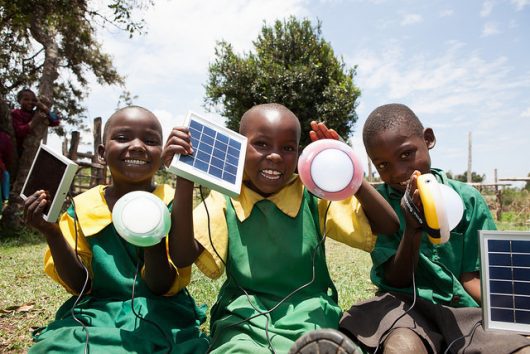
Billions of people all over the world lack the technology allowing them access to light, fuel-friendly cooking and clean drinking water. This is why Kopernik, a nonprofit technology company, is working to distribute simple, life-improving technologies to the world’s poorest communities.

The company provides these communities with items such as water filters, solar power lights and cooking stoves. Nicolaus Copernicus is the organization’s namesake since Kopernik is meant to be a catalyst for change and new ways of seeing the world. Kopernik distributes the best technology for the developing world through sourcing, connecting and reinvesting.

Sourcing

Kopernik uses its website to spread awareness about its technology. In response, countries submit proposals for the items they need the most. Then Kopernik publishes projects on the website in order to raise funds.

Connecting

Once the projects are fully funded — usually by donors — Kopernik ships the technology to its local partners. People then buy that technology at an affordable price through those local partners.

Reinvesting

Next, the local partners repay the money from technology sales to Kopernik. This money is then reinvested into new technology. Kopernik also works with local partners to assess the technology’s impact and share feedback with technology producers.

Funding

Kopernik is a nonprofit organization with a for-profit arm. The for-profit part of the organization is a consulting firm that works with technology companies in product development. The profits from the consulting business are then channeled toward the nonprofit operations.

Kopernik receives funding from companies, government development programs and individuals. Its partners also provide in-kind support such as free or discounted services. This keeps the organization’s operating costs low.

Technology

Kopernik is helping women access clean birth supplies and information about safe birthing practices. For example, in the Chittagong district of Bangladesh as well as Laos, the nonprofit provides JANMA clean birth kits to women. These birth kits contain sterile tools to reduce the risk of infection during childbirth.

In Vietnam, the organization has also connected 90 families with hearing-impaired children with affordable hearing aid technology. This makes it possible for children to learn to speak and form a better bond with their families and communities.

Impact

So far, Kopernik has served 396,325 people and distributed 90,359 technologies. It has funded 170 projects and reached 26 countries, among them Japan, Vietnam, Indonesia, Ghana and Nigeria.

According to Patrick Vinck of the Harvard Humanitarian Initiative, “New applications of technologies to humanitarian action may be the most important factor influencing humanitarian effectiveness over the next decade.” In this regard, Kopernik’s emphasis on technology distribution represents great gains for the world’s anti-poverty organizations with only more progress to come.

– Liliana Rehorn

Photo: Flickr

January 31, 2017
https://borgenproject.org/wp-content/uploads/borgen-project-logo.svg 0 0 Borgen Project https://borgenproject.org/wp-content/uploads/borgen-project-logo.svg Borgen Project2017-01-31 01:30:052024-12-13 17:56:34Kopernik: Using Technology to Improve the Developing World
Page 62 of 89«‹6061626364›»

Get Smarter

  • Global Poverty 101
  • Global Poverty… The Good News
  • Global Poverty & U.S. Jobs
  • Global Poverty and National Security
  • Innovative Solutions to Poverty
  • Global Poverty & Aid FAQ’s
Search Search

Take Action

  • Call Congress
  • Email Congress
  • Donate
  • 30 Ways to Help
  • Volunteer Ops
  • Internships
  • Courses & Certificates
  • The Podcast
Borgen Project

“The Borgen Project is an incredible nonprofit organization that is addressing poverty and hunger and working towards ending them.”

-The Huffington Post

Inside The Borgen Project

  • Contact
  • About
  • Financials
  • President
  • Board of Directors
  • Board of Advisors

International Links

  • UK Email Parliament
  • UK Donate
  • Canada Email Parliament

Get Smarter

  • Global Poverty 101
  • Global Poverty… The Good News
  • Global Poverty & U.S. Jobs
  • Global Poverty and National Security
  • Innovative Solutions to Poverty
  • Global Poverty & Aid FAQ’s

Ways to Help

  • Call Congress
  • Email Congress
  • Donate
  • 30 Ways to Help
  • Volunteer Ops
  • Internships
  • Courses & Certificates
  • The Podcast
Scroll to top Scroll to top Scroll to top