• Link to X
  • Link to Facebook
  • Link to Instagram
  • Link to TikTok
  • Link to Youtube
  • About
    • About Us
      • President
      • Board of Directors
      • Board of Advisors
      • Financials
      • Our Methodology
      • Success Tracker
      • Contact
  • Act Now
    • 30 Ways to Help
      • Email Congress
      • Call Congress
      • Volunteer
      • Courses & Certificates
      • Be a Donor
    • Internships
      • In-Office Internships
      • Remote Internships
    • Legislation
      • Politics 101
  • The Blog
  • The Podcast
  • Magazine
  • Donate
  • Click to open the search input field Click to open the search input field Search
  • Menu Menu

Archive for category: Technology

Information and stories about technology news.

Development, Global Poverty, Technology

The Global Poverty Reduction Online Knowledge-Sharing Database


During the China Poverty Reduction International Forum on May 26, 2017, the first case-sharing database for poverty reduction was launched by the Chinese government. The Global Poverty Reduction Online Knowledge-Sharing Database gathers replicable cases of poverty reduction from users in the hopes of collecting “innovative and successful approaches” toward reducing global poverty.

As part of the Global Poverty Reduction and Inclusive Growth Portal, which is an online platform with expert’s opinions, trends, and further opportunities regarding poverty reduction, the database is meant to bring worldwide users to the platform. The Global Poverty Reduction Online Knowledge-Sharing Database is available to anyone with internet access, either to read about individual cases or contribute their own experiences. To encourage participation, it has been designed to be user-friendly and provides a guide to assist users with the template for uploading cases.

The Global Poverty Reduction Online Knowledge-Sharing Database organizes cases into three different categories for easy access: market-oriented, government-led, and community-driven. Each poverty reduction case is classified into further sub-categories that relate to how poverty was reduced in that developing nation. For further ease-of-use, the database uses tree diagrams and standard templates that make the information easier to comprehend and utilize.

More than 40 global experts and research institutions contribute to the database. For instance, the project was initiated by the World Bank and the Asian Development Bank and is co-managed by the China International Poverty Reduction Center and the China Internet Information Center. With this strong network of contributors, the database has the potential to connect past and current developing nations in the effort to alleviate global poverty, especially by having China as its main contributor. Once categorized as a developing country, China now has one of the most successful economies in the world and is reported as having the fastest rate of poverty reduction in history.

With worldwide contribution and utilization, the Global Poverty Reduction Online Knowledge-Sharing Database may be the key to ending global poverty.

– Haley Hurtt

Photo: Flickr

July 4, 2017
https://borgenproject.org/wp-content/uploads/borgen-project-logo.svg 0 0 Borgen Project https://borgenproject.org/wp-content/uploads/borgen-project-logo.svg Borgen Project2017-07-04 07:30:172024-12-13 17:58:17The Global Poverty Reduction Online Knowledge-Sharing Database
Human Rights, Politics and Political Attention, Refugees and Displaced Persons, Technology, War and Violence

Albert Einstein: The Refugee

Albert_Einstein_refugee
As the author of the theory of special and general relativity, his name stands synonymous with the word “genius.” Changing fundamental ideas about the physical relationship between space, time, and gravitation, Albert Einstein radicalized how humans think about the building blocks of the physical world we live in. His theory of relativity was confirmed in 1919 from further research into solar eclipses. His popularization by the press gained him a quick rise to fame and in 1921, Einstein would receive the Nobel Prize for his related work.

Being himself a German Jew, Einstein cultivated an outspoken political personality and was well known for his pacifist ideals. His work, paired with his political persona triggered negative attention from extreme right-wing groups.

Anti-Semites were determined to publicize his discoveries as “un-German”. The rise of the Nazi party made it more and more difficult for Einstein to work in Germany, so in 1932 when offered a position at Princeton University, he accepted, retaining dual U.S. and Swiss citizenship.

While his theories were still widely taught, he was ultimately accused of treason in 1933 by the Nazi Third Reich; winning the party a partial victory when Einstein’s name could no longer be mentioned in academic circles. Although Einstein was not in Germany at the time, Nazi fanatics still had his property seized and his books were among those burned on the famous May 10, 1933, as a symbol of purging an “un-German” spirit.

He fled to the United States on October 17th of that year, using his fame and financial resources to work vigorously with his wife to obtain U.S. visas for other German Jew refugees. Einstein had haunting mixed feelings about his life in Princeton:


“I am privileged by fate to live here in Princeton…In this small university town the chaotic voices of human strife barely penetrate. I am almost ashamed to be living in such peace while all the rest struggle and suffer.”


Among many notable others, the legacy of Albert Einstein’s refugee status resulted in the founding of the German Academic Refugee Initiative Fund (DAFI), an organization whose primary objective is to promote self-reliance of refugees through providing professional qualifications for future employment. In addition, DAFI contributes to the development of critical human resources that may be needed in the potential restoration of refugees’ home countries. DAFI also offers a scholarship project; an effective instrument used to attain and maintain self-reliance of refugees when used in the right context. The funds given from the scholarship must be used to aid in the academic studies of eligible refugee recipients.

Thus, Albert Einstein left us not only with mind-blowing new theories in physics, but a key organization telling us that education paves the road out of socioeconomic poverty.

– Kali Faulwetter

Sources: Azer, UNHCR, Jewish Virtual Library, PPU, OFADEC
Photo: Native Pakistan


Donate to fight global poverty.


June 18, 2017
https://borgenproject.org/wp-content/uploads/borgen-project-logo.svg 0 0 Borgen Project https://borgenproject.org/wp-content/uploads/borgen-project-logo.svg Borgen Project2017-06-18 03:00:462024-06-10 03:24:05Albert Einstein: The Refugee
Development, Education, Global Poverty, Technology

10 Noteworthy Ways Technology Changes Education


The biggest change in technological development happened in the 21st century with the invention of the internet, and, ever since, mobile technologies and computer hardware have become more widely available for leisure and to improve lives. Here are ten examples of ways technology changes education.

10 Noteworthy Ways Technology Changes Education

  1. Accessibility: The most notable use of technology is that it no longer limits lesson time to the traditional four walls of the classroom. Technology creates a true learning continuum between home and school. Schools are encouraging teachers and students to take more control over their learning and to harness the potential of new learning experiences. Technology also encourages learning in other venues such as libraries and museums. Students can use technology to meet, collaborate and create content virtually.
  2. Communication and collaboration: Technology serves as a key building block in facilitating collaborative learning. Laptops and mobile devices are pivotal for remote collaboration and online learning outside of the classroom. Supported by technology, students are generating new approaches to problem-solving and learning how to work alongside their peers, a great attribute for their future careers.
  3. Expanded audience: Internet technology helps more people than ever before to access libraries, research subjects, share ideas and learn specific skills through sources such as Coursera, YouTube, and Lynda.com.
  4. eBooks and online textbooks: With all kinds of devices in the classroom, eBooks and online texts are becoming more popular. Online texts are less costly, adjustable, more up-to-date, quickly accessed and more interactive. They also save time, space and the environment. This technology doesn’t only change education, but many other industries as well.
  5. Web-based research: This is one of the most-needed skills in modern society, and learning such opens many possibilities to students. Having a broad understanding of the types of web-based data collection applications available allows for the selection of the best product for the project. This skill is highly appreciated on the employment market.
  6. Classrooms: Tech classrooms aren’t big news in many countries. Technologically equipped classrooms don’t undermine the role of a teacher, but rather enhance their role as a source of knowledge.
  7. Communication: Platforms such as Glogster help in three-way communication between teachers, students and parents. It also allows the generation of students’ own individualized courses.
  8. Simplifying class preparation: Lesson preparation is an area which technology can provide a substantial level of support. Software, such as Promethean’s ClassFlow, allows teachers to plan interactive, multimedia-rich lessons, as well as create assessments and assignments that can be delivered across a range of technologies.
  9. Changes in student and teacher roles: With technology in the classroom, the traditional student and teacher roles have shifted. The student has become more active and engaged. The teacher has become more of a facilitator than just a dispenser of information.
  10. Personalized learning: Lessons can be customized according to the student’s progress and learning style. Through technological learning tools, educators can provide opportunities for students to be able to work and excel at their own level and pace.

These are just a few examples of how technology changes education–the list goes on and continues to grow. Technology allows learning resources to be accessed from anywhere in the world, making the entire globe a classroom. The nature of classrooms changes and improves every day, preparing students for a future deeply rooted in technology.

– Yana Emets

Photo: Flickr

June 11, 2017
https://borgenproject.org/wp-content/uploads/borgen-project-logo.svg 0 0 Borgen Project https://borgenproject.org/wp-content/uploads/borgen-project-logo.svg Borgen Project2017-06-11 07:30:332024-05-28 00:02:0510 Noteworthy Ways Technology Changes Education
Global Poverty, Technology

9 Technological Innovations from Africa

Africa Technology: 10 Technological Innovations from AfricaIn recent years, the African Union has concentrated on better ways that to solve local problems. Facing a lot of challenges, the continent is raising a generation of innovators who are making a big investment in Africa technology development taking a creative approach and non-standard thinking. Here are 10 examples of technological innovations coming out of African countries.

9 Technological Innovations from Africa

  1. Mellowcabs: Mellowcab is a fully electric vehicle that provides public transportation in urban areas. Developed in South Africa, Mellowcabs are eco-friendly and carbon-neutral. The cabs use kinetic energy to power the vehicle, on-board tablet computers, use hydrogen fuel cell technology, and are made out of recycled materials. The rides are free; the company relies on an advertisement placed in the cab. Mellowcabs developers helped to reduce traffic in urban areas and successfully tied into the transport infrastructure.
  2. Jumia: Jumia launched in Nigeria in 2012. The largest e-commerce retailer in the country works with 16 African countries and sells anything from electronics to clothes and home goods. Initially starting with three employees, Jumia presently has a staff of 1,000 young and entrepreneurial Nigerians. Jumia set-up the first e-commerce academy in Nigeria, the Jumia Academy, building young entrepreneurs pioneering various aspects of business in Nigeria.
  3. Sterio.me: Sterio.me is a critical education startup in Africa, utilising the recent development of mobile industry, SMS-based programs are a good way to engages learners outside the classroom, to reinforce in-classroom learning. The process is easy: teachers record a lecture or quiz, upload it to the site where pupils can access the information with a code. First launched in Zimbabwe, Sterio.me opens up an opportunity for everyone who wants to learn.
  4. Obami: Obami is a South Africa-based social learning platform, where students can get news from schools and groups and submit school work. Launched in 2007, the technology is currently used by about 400 organizations across Africa. The cloud-hosted platform is easily accessible from the web or, importantly, from mobile. The mobile app, Obami Tutor, focuses on private tutoring. Barbara Mallinson, Obami’s founder, is one of the leading female entrepreneurs in South Africa.
  5. M-PESA: M-PESA is a mobile-based money transfer application, which allows users to store money on mobile accounts and make simple transfers via SMS messaging. Customers can deposit and withdraw money from a large network of agents, charging its users a small fee for sending and withdrawing transactions. Since its creation in 2007, M-PESA expanded as far as Afghanistan, India and Albania. This app moves an entire third of the Kenyan GDP among its 15 million mostly rural users.
  6. Charging Shoes: One extraordinary method to charge a mobile phone while walking is to use ultra-thin chips of crystal inserted into the sole of a shoe. Invented by Anthony Mutua from Kenya, technology generates electricity through the pressure exerted when it is stepped on.
  7. Sleep Out: Sleep Out is a website for adventurers and travelers who are looking for accommodation in Africa. Launched in 2011 in Kenya, the online portal became popular very quick. Today it covers hotels, hostels, B&Bs and private hosts from all over the continent. It allows users to pay directly to the host via mobile, cash, card or transfer.
  8. The Kenya Open Data Initiative: A portal to fuel new enterprises and apps. Most important, it makes government data freely available to the Kenyan public. The technological initiative was claimed to improve governance and constitutional groundwork on information access.
  9. Ushahidi: This app was developed after 2008 post-election violence outbreak to create a map reflecting data of violent acts in the country. Ushahidi offers products that enable local observers to submit reports using their mobile phones or the internet, while simultaneously creating a temporary geospatial archive of events.

Right now the continent’s technological development is going through a creative phase. This evolution will continue to empower Africa’s technology markets, people and potential in meaningful ways, taking the continent into the digitized era.

– Yana Emets

Photo: Flickr

June 7, 2017
https://borgenproject.org/wp-content/uploads/borgen-project-logo.svg 0 0 Borgen Project https://borgenproject.org/wp-content/uploads/borgen-project-logo.svg Borgen Project2017-06-07 01:30:592024-05-28 00:00:209 Technological Innovations from Africa
Developing Countries, Food & Hunger, Global Poverty, Technology

5 Ways Technology Reduces Food Waste in Developing Countries


A third of all food produced globally is wasted. Up to 40 percent of that food waste is produced by developing countries. Great quantities of food are lost for various reasons such as inadequate harvest techniques, poor post-harvest management and lack of suitable infrastructure and marketing. However, the waste is mainly due to inadequate cooling facilities as well as lack of efficient transportation equipment. Modern technology has allowed solutions to fix these problems and decrease the amount of food being wasted. Listed below are five ways technology reduces food waste in developing countries.

5 Ways Technology Reduces Food Waste in Developing Countries

  1. The lack of access to cold chain technology is one of the reasons food waste is abundant in tropical areas. For example, even though India is the top leading producer of bananas, it only holds 0.3 percent of the world’s market. Some of this gap can be attributed to lack of refrigeration and reliable energy sources. By providing a better system of refrigeration, the food loss would be cut by 25 percent.
  2. Improving packaging to maintain freshness of products during transportation and decreasing the number of insects found would also greatly reduce food waste. An example of such technology is the Modified Atmosphere Packaging. This technology increases freshness by substituting the atmosphere within the packaging system with a protective gas mix, usually consisting of oxygen, carbon dioxide and nitrogen.
  3. Technologies have been created to convert food waste into renewable sources of energy. This is done through the use of anaerobic digesters that break down the waste into large amounts of carbon which can then be converted into biogases or organic fertilizers. This process preserves the nutrients from the food and recycles the nutrients back into the farming system as a clean energy source.
  4. Increasing communication during the transport chain increases overall product awareness. For example, Israel has developed the Xsense system, which uses wireless sensors to monitor storage conditions second by second. The technology is able to identify problems in the transportation process and allows for supply-chain management to improve any problems sensed.
  5. Microfinancing initiatives that invest in small-scale farmers can greatly alleviate the waste load. Through education of how food waste occurs and what is being done to prevent it, small farmers can gain a better grasp on the solutions being implemented. Educated farmers can greatly benefit from increased access to waste-reducing technology and equipment.

There are many ways technology reduces food waste in developing countries. Implementing such technologies can not only reduce waste but give developing countries an opportunity to flourish and thrive.

– Taylor Elgarten

Photo: Flickr

June 5, 2017
https://borgenproject.org/wp-content/uploads/borgen-project-logo.svg 0 0 Borgen Project https://borgenproject.org/wp-content/uploads/borgen-project-logo.svg Borgen Project2017-06-05 01:30:102024-12-13 17:57:465 Ways Technology Reduces Food Waste in Developing Countries
Development, Global Poverty, Technology

Internet in Africa: More Than One-Quarter Now Connected

Africa computer
More than one-quarter of Africa’s population, in excess of 341 million people, had access to the internet in 2016. This amazing advancement highlights and outlines the support for Africa’s industrialization, including improving its economy, education and attempt to decrease poverty.

A report released by the Internet Society (ISOC) during the Africa Regional Internet and Development Dialogue stated that African nations have been given the privilege to connect their people to incredibly useful resources, such as educational opportunities and healthcare.

ISOC is dedicated to ensuring development, evolution and use of the internet. It collaborates with other global community chapters and members to help promote technologies and keep the internet safe and secure.

The report entitled “The Internet for Education in Africa — Helping Policymakers to Meet the Global Education Goals” explains the significance of this improvement and how policymakers should consider the advancement in their educational systems.

“This represents a significant opportunity to use the Internet to provide education and learning opportunities,” the report said. The internet in Africa has begun to grow, and this report shows no signs of it slowing down.

On average, 49.6 percent of the world is connected to the internet. Now, 27.7 percent of Africa is on the internet, showing that the continent is taking the right steps to help connect with the rest of the world.

What helped this increase? Besides the international interest in Africa, mobile broadband and developments of submarine cables have allowed connectivity to expand and provide educational opportunities for thousands of children living in impoverished nations.

This advancement would not only advance education in Africa but also allow for a more competitive edge in Africa’s global economy.

“A skilled workforce that can use Information and Communications Technologies (ICT) effectively to solve Africa’s problems will also determine Africa’s competitiveness in the global economy,” explains Dawit Bekele, Africa Regional Bureau Director for the Internet Society. “And policymakers have a critical role to play in creating the necessary ecosystem for integrating ICT in education.”

The report gives a framework of the advantages of the internet in Africa, such as getting rid of certain economic and social barriers to education (geography, race, gender and disabilities) and reaching a broader audience to educate students. This report highlights the possibilities that the internet in Africa can have on the continent and the world.

– Mary Waller

Photo: Flickr

May 27, 2017
https://borgenproject.org/wp-content/uploads/borgen-project-logo.svg 0 0 Borgen Project https://borgenproject.org/wp-content/uploads/borgen-project-logo.svg Borgen Project2017-05-27 01:30:592024-12-13 17:58:01Internet in Africa: More Than One-Quarter Now Connected
Global Poverty, Technology

Pollution in India: The Switch to Electric Cars

Pollution in India: The Switch to Electric Cars
Ranked last out of 132 countries in an air pollution survey, the Indian government is scrambling to find a solution to combat the pollution in India. Their answer may lie within the electric car industry.

The energy minister of India announced in May that by 2030 every car sold in India will be electrically powered. The government is assisting the renewable automobile industry for the next two to three years until the market stabilizes.

This solution comes at the right time as India’s air toxicity levels surpass China, making India one of the most toxic nations in the world.

One major factor contributing to the country’s horrible air quality is high levels of fine particulate matter, especially those particles smaller than 2.5 micrometers in diameter (PM2.5). The level of PM2.5 is five times the threshold of what is safe for human beings, 13 times greater than the World Health Organizations’ annual recommendation, and 3.5 times greater than India’s air quality standard.

High levels of PM2.5 is particularly concerning as it is the leading cause of Acute Lower Respiratory Infections (ALRI) and cancer, and children under five in India contribute to 13 percent of inpatient deaths from ALRI.

In New Delhi, the air pollution has been 45 percent worse than Beijing in the last two years. Additionally, the city’s pollution has increased citizens risk of lung cancer by 70 percent, chronic respiratory by 50 percent and ischemic heart disease by a little more than that. Also in India, the number of deaths caused by air pollution is only “a fraction less” than deaths from tobacco use.

With such high risks due to contaminated air, the overall promise is to lower pollution in India. This goal can be accomplished through introducing electric cars and requiring that every car sold in India be electrically powered.

Studies show that electric cars are drastically safer to the environment and public health. In fact, hybrid/electric cars will drastically reduce nitrogen oxide released by up to 99 percent and carbon dioxide by up to 71 percent.

Although the electric car industry will need between two to three years of government assistance until the public starts buying the vehicles, the pros of switching to electric cars have a positive effect that can help reduce pollution in India and help save lives.

– Amira Wynn

Photo: Flickr

May 25, 2017
https://borgenproject.org/wp-content/uploads/borgen-project-logo.svg 0 0 Borgen Project https://borgenproject.org/wp-content/uploads/borgen-project-logo.svg Borgen Project2017-05-25 01:30:142024-12-13 17:58:01Pollution in India: The Switch to Electric Cars
Global Poverty, Technology

5 Calls App Makes Congressional Communication Easy

5 Calls App Makes Congressional Communication EasySince the results of the 2016 election, many people have been looking for ways to productively communicate their political positions. 5 Calls, a new nonprofit app and website created by a group of volunteers, provides an efficient pathway for contacting senators and representatives. Contacting Congress can be extremely influential in encouraging or preventing specific policy and legislation. The 5 Calls app makes congressional communication easy and provides a step-by-step guide to getting the most out of a call.

Activists of all stripes encourage the act of calling legislators, rather than emailing or ranting on social media. Congressional offices across the country tally the issues that are brought to them by the people in their district. These numbers are reported directly to representatives, making them aware of the issues that their constituents are passionate about. As stated on The Borgen Project website, “It’s not uncommon for a leader to support a poverty-reduction bill after as few as seven to 10 people call in support of it.”

The app’s website draws users in with, “Turn your passive participation into active resistance. Facebook likes and Twitter retweets don’t create the change you want to see.” Not only is the site’s strategy effective, but the 5 Calls app makes congressional communication easy.

Users enter their zip codes and receive their representatives’ names and phone numbers. Users can pick certain issues that they are passionate about, and are provided with a short and effective script specific to the issue that they selected. For example, some issues currently listed on the website include: “Keep Funding for ‘The Wall’ Out of the Budget,” “Demand Congress Support Healthcare for All,” “Urge Congress to Grant Asylum to Syrian Refugees,” “Keep the National Institute of Health Funded,” and “Ban the Use of a Brain-Damaging Pesticide.” The website also provides a summary of the issue’s context, explaining why it is relevant and why constituent calls are necessary.

The 5 Calls app makes congressional communication easy by providing phone numbers for representatives and senators based on a user’s zip code. The site is simple, aesthetically pleasing and effective. The 5 Calls app reports that users have made more than a million calls through the app. The site is run fully by volunteers, and all donations go to data updates and hosting the site. The app also offers an email alert option, which reminds users to stay involved and keeps them updated on current issues.

The 5 Calls app makes congressional communications easy, so there are no excuses for not advocating for personal political preferences. Calling Congress can make a difference, and apps like 5 Calls are paving a way for involvement and advocacy.

– Peyton Jacobsen

Photo: Flickr

Photo: Flickr

May 15, 2017
https://borgenproject.org/wp-content/uploads/borgen-project-logo.svg 0 0 Borgen Project https://borgenproject.org/wp-content/uploads/borgen-project-logo.svg Borgen Project2017-05-15 01:30:302024-12-13 17:57:555 Calls App Makes Congressional Communication Easy
Developing Countries, Global Poverty, Technology

New Tech Improves Crop Yields for Farmers in Developing Countries


In the last century, worldwide water utilization, most of which is used in agriculture, has surpassed population growth, and many developing countries are facing severe water scarcity. While water usage goes up, climate change brings more droughts and extreme weather, reducing the water available for agriculture. That’s why the Food and Agriculture Organization of the United Nations (FAO) has turned to water accounting, a process that measures the efficiency of water use in agriculture and helps farmers in developing countries improve their crop yields.

FAO recently launched WaPOR, which stands for Water Productivity Open-access portal. WaPOR, as its name suggests, is an open-access database that uses satellite data to track water usage. Part of a $10 million project funded by the government of the Netherlands, WaPOR will evaluate water usage in Africa and the Near East, focusing on countries facing water scarcity.

WaPOR measures evapotranspiration, a phase in the water cycle which consists partly of water that evaporates into the atmosphere via plants and foliage. Evapotranspiration provides a measure of the water that plants and crops consume during a growing season and helps farmers understand the efficiency of their water use based on their crop yields. In brief, WaPOR monitors how effective current irrigation schemes are and offers cost-effective solutions for farmers in developing countries.

The program uses satellite data show how many crops farmers produce per cubic meter of water used. Using WaPOR’s data, agricultural extension agents help farmers in developing countries create sustainable ways to grow more reliable crop yields. FAO updates WaPOR’s water maps every one to 10 days.

The International Water Management Institute, a nonprofit that focuses on sustainable uses of water in agriculture, and the IHE Deft Institute for water Education, the largest international school for water education in the world, will help developing countries use WaPOR by boosting capacity in those areas.

WaPOR allows smallholder farmers to have access to critical information that they didn’t have before. This new technology will help farmers improve water availability and protect them from climate change.

– Rachel Cooper

Photo: Flickr

May 12, 2017
https://borgenproject.org/wp-content/uploads/borgen-project-logo.svg 0 0 Borgen Project https://borgenproject.org/wp-content/uploads/borgen-project-logo.svg Borgen Project2017-05-12 01:30:562024-05-28 00:00:13New Tech Improves Crop Yields for Farmers in Developing Countries
Global Poverty, Technology

Solar Energy Offers Solution to Poverty in Sub-Saharan Africa


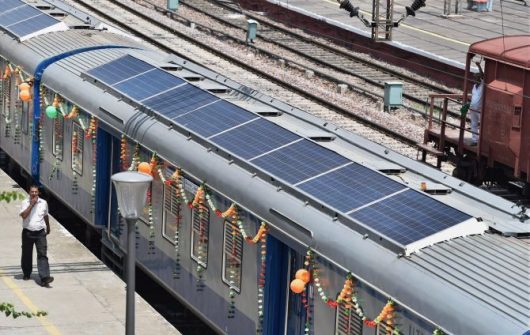
Approximately 600 million people in sub-Saharan Africa, or two-thirds of the population, are living without access to proper electricity. However, there is a possible solution. Solar energy has the power to reach rural areas and costs less than fuels like diesel or kerosene. African families could potentially cut their spending on electricity from nine percent of household income to two percent by replacing kerosene with solar energy. Zambia is taking the first steps in making the switch to solar power and eradicating poverty in sub-Saharan Africa.

Nkandu Luo, the higher education minister of Zambia, wants to provide clean and renewable power to rural communities to lift people out of poverty. Off-grid solar power helps improve and enhance education through access to computers and the internet.

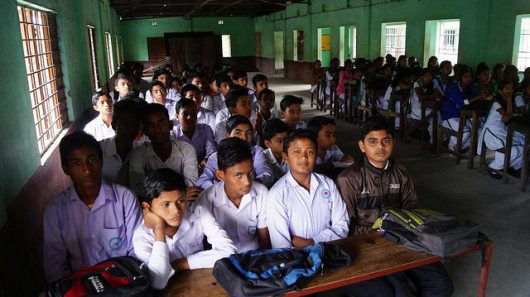
The clean energy movement is called the Lundazi Green Village project, after the first village that will benefit from the new energy source. Egichikeni primary school in the Lundazi Green Village is the intended site for phase one of the program.

In addition to improving education, the project will improve safety, healthcare and agriculture in rural communities. This will facilitate people in escaping poverty in sub-Saharan Africa. Parts of the Lundazi Green Village project include new security technology, street lighting, medical equipment and irrigation methods.

Luo’s long-term goal is sustainability. The use of solar energy addresses the specific needs of rural communities and grants them financial independence. About 300 households plus public buildings like schools and hospitals will benefit from the project. New access to electricity makes job creation and higher incomes inevitable.

Another plus? Access to solar power in sub-Saharan Africa tackles climate change. It also connects people to the global network, allowing them to increase their economic prospects.

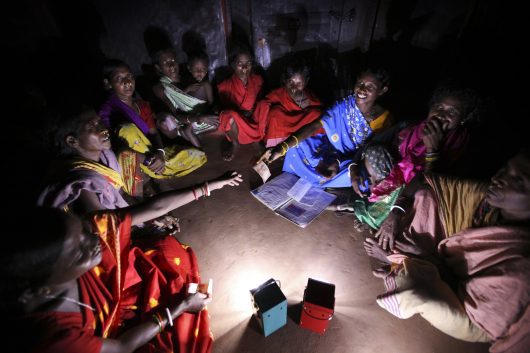
Zambians are not the only ones attempting to solve poverty in sub-Saharan Africa. Azuri Technologies, a global organization, has introduced ‘entry-level solar systems’ that give people eight hours of electricity each day. Customers pay an initial installation fee and then pay weekly or monthly through pay cards or with their phones.

Access to power encourages people to buy and use more technology, especially resources that connect them to the rest of the world via the internet. The pay-as-you-go format is successful because it allows people without bank accounts to use their phones to operate their finances.

Upfront costs of solar energy are high compared to fuels like kerosene or diesel, so some are hesitant to make the switch. However, the cost of installing off-grid power is expected to decrease by 60 percent in the next 20 years and has already fallen in cost by about 80 percent since 2010. Renewable energy could be the solution to ending poverty in sub-Saharan Africa and millions of communities around the world.

– Rachel Cooper

Photo: Flickr

April 25, 2017
https://borgenproject.org/wp-content/uploads/borgen-project-logo.svg 0 0 Borgen Project https://borgenproject.org/wp-content/uploads/borgen-project-logo.svg Borgen Project2017-04-25 01:30:242020-05-07 17:13:43Solar Energy Offers Solution to Poverty in Sub-Saharan Africa
Page 60 of 89«‹5859606162›»

Get Smarter

  • Global Poverty 101
  • Global Poverty… The Good News
  • Global Poverty & U.S. Jobs
  • Global Poverty and National Security
  • Innovative Solutions to Poverty
  • Global Poverty & Aid FAQ’s
Search Search

Take Action

  • Call Congress
  • Email Congress
  • Donate
  • 30 Ways to Help
  • Volunteer Ops
  • Internships
  • Courses & Certificates
  • The Podcast
Borgen Project

“The Borgen Project is an incredible nonprofit organization that is addressing poverty and hunger and working towards ending them.”

-The Huffington Post

Inside The Borgen Project

  • Contact
  • About
  • Financials
  • President
  • Board of Directors
  • Board of Advisors

International Links

  • UK Email Parliament
  • UK Donate
  • Canada Email Parliament

Get Smarter

  • Global Poverty 101
  • Global Poverty… The Good News
  • Global Poverty & U.S. Jobs
  • Global Poverty and National Security
  • Innovative Solutions to Poverty
  • Global Poverty & Aid FAQ’s

Ways to Help

  • Call Congress
  • Email Congress
  • Donate
  • 30 Ways to Help
  • Volunteer Ops
  • Internships
  • Courses & Certificates
  • The Podcast
Scroll to top Scroll to top Scroll to top