• Link to X
  • Link to Facebook
  • Link to Instagram
  • Link to TikTok
  • Link to Youtube
  • About
    • About Us
      • President
      • Board of Directors
      • Board of Advisors
      • Financials
      • Our Methodology
      • Success Tracker
      • Contact
  • Act Now
    • 30 Ways to Help
      • Email Congress
      • Call Congress
      • Volunteer
      • Courses & Certificates
      • Be a Donor
    • Internships
      • In-Office Internships
      • Remote Internships
    • Legislation
      • Politics 101
  • The Blog
  • The Podcast
  • Magazine
  • Donate
  • Click to open the search input field Click to open the search input field Search
  • Menu Menu

Archive for category: Sustainable Development Goals

Global Poverty, Sustainable Development Goals

Three Challenges of the Sustainable Development Goals

Three Challenges of the Sustainable Development GoalsProposed in 2012 and officially adopted in January 2016, the United Nations’ Sustainable Development Goals (SDGs) replaced the Millennium Development Goals to set the priorities of the United Nations Development Programme (UNDP) and to lead concrete actions on the ground. The goals call for the elimination of poverty and hunger by 2030, along with fifteen other targets concerning health, education, gender equality, sanitation, economic equality and climate change.


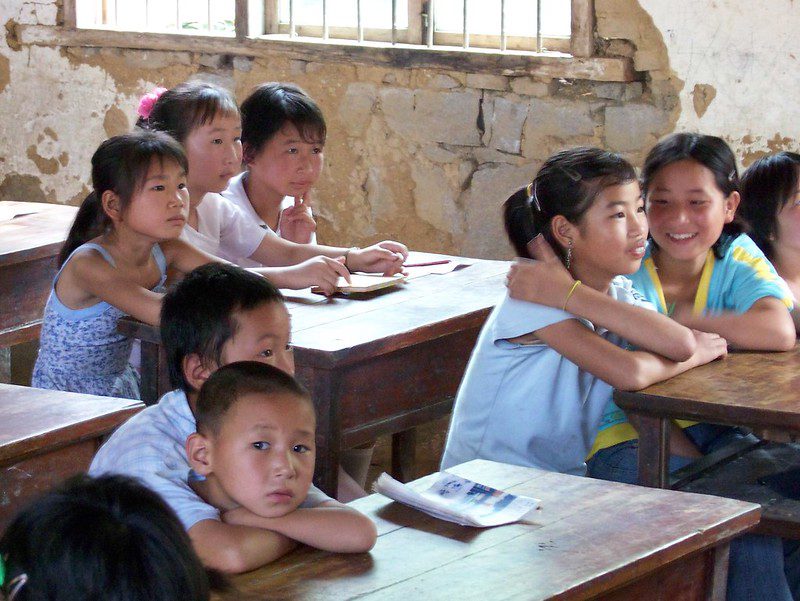
Some of the challenges encountered while trying to implement the 17 goals by 2030 include slower economic growth, long-lasting corruption and inequality, unfavorable demographics in various forms and widespread epidemics, but there are three surprising challenges of the Sustainable Development Goals that could be easily overlooked, yet require immediate attention.

Data Deprivation

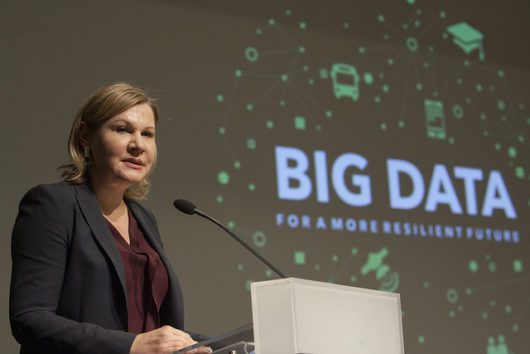
Big data could only be of use if they are collected intelligently and interpreted meaningfully. If it is not known how many people are impoverished or which groups are the most vulnerable to economic adversity, it is not possible to act effectively against poverty. Furthermore, it would not be possible to know how much progress is made over time and, more importantly, which policies worked. This is not the most obvious challenge of the Sustainable Development Goals, yet a surprisingly large one. Proof for this is the statement of the director of the World Bank’s Innovation Labs, Aleem Walji, wrote in 2015 that out of the 155 countries that the World Bank observed and monitored, half of the countries lacked recent poverty estimates.

According to the IMF’s General Data Dissemination System, at least two data points are required within a decade-long interval to give poverty estimates every 3 to 5 years. A World Bank study conducted in 2015 noted that 57 countries out of 155 had less than two data points from 2002 to 2011, another 20 had two data points within one decade that are separated by more than five years, rendering the data inadequate for poverty estimates.

The lack of reliable poverty data makes it impossible for countries to design and implement appropriate policies. Nigeria, among other African countries severely deprived of timely data, represents the dramatic case, since this country was pronounced as the largest economy of the continent only by calculating its Gross Domestic Product (GDP) with inadequate information, revealing that decades of policy-making was based on outdated data.

What to prioritize?

The SDGs contain as many as 17 main issues to be addressed, and which ones should governments respectively prioritize could be a tough question. While prioritizing certain SDGs help with other SDGs as well- for example, decreasing poverty could have a positive impact on the good health and well-being of citizens- certain SDGs could be conflicted by their nature. The most notable potential trade-off exists between the second goal, which is ending world hunger, and the 15th goal, which calls for sustainable management of forest land and other terrestrial resources.

As Africa’s population continues to grow, the continent will be in need of safe food sources, wood, and other natural resources more than ever. Agricultural expansion, however, with its high demand for water and land, could potentially invade forest areas and lead to soil degradation, posing significant challenges to the SDGs.

Fortunately, there are strategies that governments could adapt to at least curb the potentially harmful aspects of agriculture: looking for and employing advanced agricultural technology that increases sustainability, ensuring funding as well as sound legal frames to protect small-scale farmers and to ward off harmful agricultural practices, utilizing agricultural growth by ensuring that it not only produces food but also job opportunities as well.

Who is held accountable?

This is perhaps the most significant among the three challenges of the SDGs. All UN member states agreed in August of 2015 to endorse the SDGs, but many may have left the negotiations unsure of where accountability lies. The issues of accountability also have a complicated history, with many developing countries feeling the burden of meeting the given goals, unlike richer countries who are not obliged to support developing countries by providing needed resources or aid.

The “follow-up and review” section of the SDGs agenda is vague since the document itself does not actually contain indicators necessary for measuring progress, nor is there a systematic mechanism for tracking accountability.

Not only should governments be responsible for building the vision of development. The private sector should be accountable as well, especially since Public-Private Partnerships (PPP) are becoming an increasingly popular way of managing public resources via private means in developing countries. The private sector should aware of the impacts of their actions and policies on the planet and on global poverty.

The 17 Sustainable Development Goals should not be mere talking points summoned at will. Instead, they need to lead concrete and intelligent actions that are actually impactful. Challenges of the Sustainable Development Goals are numerous, but acquiring reliable data, choosing reasonable and enforceable goals to prioritize and holding the most relevant parties accountable are challenges that the global community needs to address in the most urgent manner.

– Feng Ye
Photo: Flickr

September 11, 2018
https://borgenproject.org/wp-content/uploads/borgen-project-logo.svg 0 0 Borgen Project https://borgenproject.org/wp-content/uploads/borgen-project-logo.svg Borgen Project2018-09-11 08:43:332024-05-29 22:53:30Three Challenges of the Sustainable Development Goals
Global Poverty, Sustainable Development Goals

Leaves of Green? Environmental Degradation and Poverty

environmental degradation and poverty
At a historic United Nations Summit in New York in September 2015, countries from all over the world adopted the 2030 Agenda for Sustainable Development. This agenda aims to end poverty and inequality while protecting the environment and ensuring sustainable development. To do this, the agenda established 17 Sustainable Development Goals (SDGs) to be accomplished by 2030. These SDGs emphasize the relationship between environmental degradation and poverty and how sustainable development is critical to achieving these goals.

Sustainable Solutions

Sustainable development is defined by the U.N. as “development that meets the needs of the present without compromising the ability of future generations to meet their own needs.” Such a practice involves using natural resources in a way that will leave future generations with a healthy planet and enough resources for survival.

Earth has only a limited amount of natural resources, and how people and countries currently use these are unsustainable. Current consumption patterns and national policies of developed and developing nations alike are severely damaging the environment and jeopardizing the future of the planet.

Inefficient use of resources, wasteful consumption, pollution and waste are all key factors in environmental degradation. These practices also contribute to global poverty; poverty, in turn, then damages the environment. This vicious cycle will not end unless countries and individuals change their practices.

How Countries and People Harm the Environment

Natural resources are currently allocated to meet the wants of the few instead of the needs of the many. Developed countries account for 24 percent of Earth’s population but consume 70 percent of the world’s energy and 60 percent of its food.

Though developed nations are more energy-efficient than developing nations, consumption is so high that they still contribute a great amount to pollution. The extremely high demand of these countries leads to extensive deforestation so more land can be used for agriculture.

Developing nations further contribute to environmental degradation through inefficient energy use and environmentally-harmful practices like resource stripping. Countries resort to these harmful practices for a variety of reasons. Natural resources account for a majority of many developing countries’ exports. In an attempt to grow their economies, countries overexploit these natural resources.

In addition, a large part of many developing countries’ budgets is used to repay their debt, leaving little money to fund sustainable development programs. Many nations “believe they cannot afford the luxury of environmental protection” and feel forced to accept long-term environmental damage to meet their immediate needs.

Many poorer individuals in developing countries feel the same. They depend on natural resources for their livelihoods, which leads many to deplete these resources in order to survive.

How Harming the Environment Harms People

This environmental degradation disproportionately affects the poor, particularly those in developing nations. Overconsumption in wealthy countries means many people in poor countries don’t have enough food. One billion people worldwide are hungry, yet 1.2 billion are obese.

Air and water pollution are health hazards. Lack of clean water and air and poor sanitation and nutrition leaves people vulnerable to diseases and causes extremely high rates of death among children.

Poor people are also more susceptible to natural disasters, as they are more likely than wealthier individuals to live in areas where earthquakes, hurricanes, floods, fires and other disasters are common. These disasters destroy people’s livelihoods and homes, often forcing people to move to other areas. These environmental refugees can cause overcrowding and environmental stress in the areas they move to, which worsens both environmental degradation and poverty.

Unless people and countries change their practices, both environmental degradation and poverty will worsen. Natural disasters are becoming both more extreme and more common because of industrialization and human actions. As the world population continues to grow, more and more people will be hungry, live in overcrowded conditions and ultimately, live in poverty. Promoting sustainable development is crucial to a better future.

How to Change

Governments, businesses, organizations and individuals: all have a role to play in the effort to protect the environment and end poverty.

Wealthy nations must change their policies that are detrimental to the environment. Expressing support for the U.N.’s Sustainable Development Goals and implementing policies that align with these goals provides an example for other nations and encourages them to behave the same.

Foreign aid to developing countries can stabilize their economies, make them more financially and technically capable of focusing on environmentally-friendly development and help them establish practices that are consistent with the SDGs.

Accountability and Responsibility

Governments should also encourage individuals to take more responsibility for living sustainably and educate people on how to do so: eat less meat, shop locally, reduce food waste, use less plastic, recycle, switch to alternative forms of energy — the list goes on and on. (See here for more ways you can live sustainably). Businesses can do many of these actions as well as change their practices to be more environmentally-friendly.

“Saving our planet, lifting people out of poverty, advancing economic growth… these are one and the same fight” said Ban Ki-moon, the previous U.N. Secretary-General. “Solutions to one problem must be solutions for all.” Environmental degradation and poverty are directly related; to end one, the world must address both.

– Laura Turner
Photo: Flickr

September 7, 2018
https://borgenproject.org/wp-content/uploads/borgen-project-logo.svg 0 0 Borgen Project https://borgenproject.org/wp-content/uploads/borgen-project-logo.svg Borgen Project2018-09-07 01:30:002019-08-04 15:34:29Leaves of Green? Environmental Degradation and Poverty
Foreign Policy, Global Poverty, Sustainable Development Goals

How Japan’s Foreign Policy Solves Global Poverty Problems

Japan’s foreign policy
Japan has an advanced transportation system, outstanding outcomes in the field of technology research and a matured business development model. As the world’s third-largest economy, Japan has been expanding its foreign policies to aid developing countries and boosts the global economy.

From Japan’s international cooperation on Pandemic Influenza to NERICA (New Rice For Africa), Japan plays an essential role in solving urgent and consistent poverty issues. Its foreign policies promote the progress of eliminating poverty worldwide. There are three cases of how Japan’s foreign policy solves global poverty problems.

Examples of Japan’s Foreign Policy

  1. NERICA: Food shortage is a continuous problem in Africa. The main reason is low production field. NERICA stands for New Rice for Africa. The Japanese government cooperated with the Africa Rice Center to introduce this program in 1992. This program is applied extensively in sub-Saharan Africa (SSA).The Africa Rice Center cooperated with its partners to produce interspecific hybridization, which can combine advantages of two species to increase the yield of rice. In the meantime, the interspecific grains have better ability to tolerate drought, pest and disease. These grains have higher nutrition as well. Japan has adopted various plans to apply different irrigated rice production technology in Tanzania since the 1970s, which has boosted the yield of rice to three times larger than the national average.In 2014, the total production of milled rice in Uganda was 154,050 metric tonnes, but the consumption rate was 215,707 metric tonnes. NERICA plays a vital role to ameliorate the Ugandan food shortage problem by increasing rice varieties. Most farmers are planting NERICA rice because its mature time is shorter, the yield is higher and it is more tolerant to drought and viruses. For example, NERICA 6 is immune to Yellow Mortal Virus and NERICA 1 only takes 100 days to mature.NERICA is a typical example of how Japan’s foreign policy solves global poverty problems. It ameliorates African food shortage problems efficiently and provides an alternative way for people in SSA to access higher-nutrition and larger-yielding grains.
  2. STI: In September 2015, the U.N. Sustainable Development Summit adopted the 2030 Agenda for Sustainable Development. The 2030 Agenda lists 17 goals to eliminate global poverty issues in sustainable ways. Japan continuously contributes itself to achieve the 2030 Agenda.Japan has abundant human resources and advanced technology. It can help reach the agenda through STI, which stands for science, technology and innovation. STI can contribute to boosting development by using limited sources.Japan will contribute its extensive database, which covers from the ocean up to space, to facilitate the efficiency of international cooperation. In addition, Japan will facilitate people-centered development by offering consistent assistance in areas of information and communications technology, research and development, industrial human resources development and vocational training.In 2015, the Council for Science, Technology and Innovation was established to solve social issues and boost economic growth. The Japanese government will spend $1.8 billion on STI in the next three years mainly on high technology development which has international benefits.For example, outbreak alert innovation can reinforce surveillance of infectious diseases, and mobile innovation can facilitate the urban transportation system by using wireless communication for extension of green light. STI acts as a “bridging force” to connect Japan with the globe by assisting technology training processes and sharing developing STI experiences.
  3. Infrastructure Aid: Japan has consistently been sharing its sources on infrastructure building with other countries. For example, in September 2017, Mumbai-Ahmedabad High-Speed Rail was launched when Japanese Prime Minister Shinzo Abe visited India. This high-speed railway corridor stretches from Ahmedabad to Mumbai, which is a total of 508.17 km.This project is the symbol of cooperation between Japan and India. Japanese Prime Minister Shinzo Abe offered $12 billion in loans to build India’s first bullet train. In the meantime, the Japanese government agreed to bear 80 percent of the total project cost when Prime Minister Abe visited India in September of 2017. Assisting in building infrastructure is another way Japan’s foreign policy solves global poverty problems.

Overall, Japan’s foreign policy helps solve global poverty by sharing resources and advanced technology. For Latin America, Japan will promote its development by improving trade and investment to create a more comprehensive environment for economic growth. For the Middle East, Japan works on overcoming peace-building and human resources development, as well as a sustainable and stable energy supply. Japan’s foreign policy solves global poverty problems through science, technology and innovation.

– Judy Lu
Photo: Flickr

May 29, 2018
https://borgenproject.org/wp-content/uploads/borgen-project-logo.svg 0 0 Borgen Project https://borgenproject.org/wp-content/uploads/borgen-project-logo.svg Borgen Project2018-05-29 07:30:472024-05-29 22:42:21How Japan’s Foreign Policy Solves Global Poverty Problems
Development, Global Poverty, Sustainable Development Goals

How Infrastructure Investments Alleviate Poverty

Infrastructure Investments Alleviate PovertyOn Friday, Sept. 25, 2015 the U.N. General Assembly embarked on a milestone in development history. Its new Sustainable Development Goals (SDGs) set an ambitious agenda to work toward ending extreme poverty and boosting prosperity by 2030. The SDGs’ platform consists of a collection of 17 global goals each aimed at addressing economic and social issues in developing countries. One such goal was infrastructure, as it has been proven in many different countries that infrastructure investments alleviate poverty.
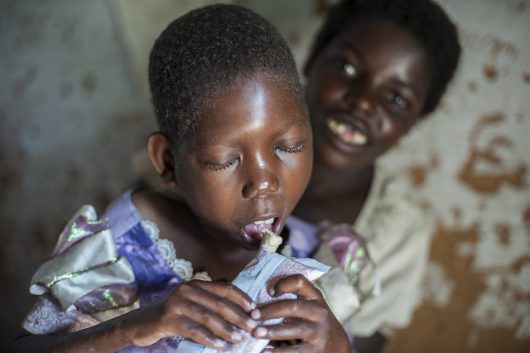
How Infrastructure Investments Alleviate Poverty

The Industry, Innovation and Infrastructure goal aims to “build resilient infrastructure, promote inclusive and sustainable industrialization and foster innovation.” Infrastructure is the backbone of any country as it generates jobs, boost economic growth and improves the quality of life for the poor.

Take, for example, a hospital in the Democratic Republic of Congo that needs electricity to ensure the safe and healthy delivery of a newborn. A young, rural Cambodian girl needs to have a safe road to walk to school and Bangladesh needs clean water for the essential livelihoods of its citizens. These are just a few of the myriad of ways that infrastructure investments alleviate poverty.

The Costs of Infrastructure Resistance

However, when governments push back on certain infrastructure plans, it comes at an enormous social and economic cost. Roughly 663 million people lack access to clean water, 2.4 billion people do not have adequate sanitation, one-third of the world’s population is not served by an all-weather road and over 1.1 billion people, or almost 16 percent of the world’s population, still have no access to electricity.

The Industry, Innovation and Infrastructure goal has seen a tremendous impact in diminishing these issues and others in emerging countries. Mobile services have spread rapidly and have allowed people to join the global information age. In 2016, 85 percent of people in the least developed countries were covered by a cellular signal. Transportation services also drive economic development and generate wealth and employment. In 2015, the global economic impact of air transport was an estimated $2.7 trillion, or about 3.5 percent of the global gross domestic product.

Infrastructure to Overcome Debt Cycles

One recessive point in global infrastructure came in the wake of the 2008 Great Recession. The West began exporting debt to emerging markets while also purchasing debt from emerging markets. Western fund managers sold forms of credit to developing markets and the total debt rose to $49 trillion in 2014.

Unfortunately, many fail to realize that selling endless cycles of debt will make it incredibly difficult for emerging countries to service their own dollar-dominated debt at home. They will be unable to pay back these loans and growth ultimately stagnates. Fortunately, multilateral development banks are uniquely placed to assist countries in closing these long-term financing gaps. They can help identify failing market areas and create incentives in for the private sector.

Infrastructure investments alleviate poverty in developing countries through the application of projects such as bridges, roads, communication, sewage and electricity. These projects enable both public and private investors to gain on capital appreciation. While servicing the vital infrastructure needs of billions of people, these countries will, along with their booming populations, generate significant prospects for long-term growth and profit for generations to come.

– Aaron Stein
Photo: Flickr

May 23, 2018
https://borgenproject.org/wp-content/uploads/borgen-project-logo.svg 0 0 Borgen Project https://borgenproject.org/wp-content/uploads/borgen-project-logo.svg Borgen Project2018-05-23 01:30:072024-12-13 17:58:46How Infrastructure Investments Alleviate Poverty
Aid Effectiveness & Reform, Global Poverty, Sustainable Development Goals

Top Problems in the World That Can Be Solved

problems in the world that can be solvedWith all the multifaceted problems in the world today, it is difficult to say which are more important than others. However, it is imperative to prioritize certain issues in order to dedicate enough resources to combat the top problems in the world that can be solved.

Top Problems that can be Solved

The Copenhagen Consensus Center, a think tank that researches the smartest solutions to global issues, organized a panel of five distinguished economists in 2012 to set priorities for fighting the 10 top problems in the world that can be solved:

  1. Armed Conflict
  2. Chronic Disease
  3. Education
  4. Infectious Disease
  5. Population Growth
  6. Biodiversity
  7. Climate Change
  8. Hunger and Malnutrition
  9. Natural Disasters
  10. Water and Sanitation

The panel was asked to describe the best ways to advance global welfare, specifically that of developing countries. The experts then assembled a prioritized list of thirty solutions.

Solutions to the World’s Issues

The number one solution was “bundled interventions to reduce undernutrition in pre-schoolers” and addressed the challenge of hunger and education. Some other proposals high on the list were subsidies for malaria combination treatment and expanding childhood immunization coverage.

The group of experts covered topics besides health, with solutions ranging from investing in early warning systems for natural disasters to increased funding for green energy.

With this list in mind, world leaders at the U.N. Sustainable Development Summit adopted the 2030 Agenda for Sustainable Development in Sept. 2015. On Jan. 1, 2016, the 17 Sustainable Development Goals (SDGs) replaced the eight Millennium Development Goals of 2015.

The new 17 SDGs were to:

  1. End poverty
  2. End hunger and improve nutrition and sustainable agriculture
  3. Promote well being for all ages
  4. Ensure equitable and quality education
  5. Achieve gender equality
  6. Ensure water and sanitation for all
  7. Ensure access to modern energy for all
  8. Promote sustainable economic growth and productive employment
  9. Build resilient and innovative infrastructure
  10. Reduce inequality
  11. Make settlements safe, resilient and sustainable
  12. Ensure sustainable consumption and production patterns
  13. Take urgent action to combat climate change
  14. Conserve and sustainably use Earth’s water
  15. Promote sustainable use of terrestrial ecosystems and forests, and halt and reverse land degradation and biodiversity loss
  16. Promote peaceful societies, provide access to justice and build effective, accountable institutions
  17. Implement and revitalize the Global Partnership for Sustainable Development

A New Set of Problems

80,000 Hours, an independent nonprofit organization that researches how graduates can make the biggest difference possible with their careers, came up with another list defining problems in the world that can be solved. Drawing from research from groups such as the University of Oxford’s Future of Humanity Institute and the Copenhagen Consensus Center, 80,000 Hours created a framework to rate global issues.

The organization based its scoring on how solving the problem would reduce the risk of extinction, raise the global economic output, increase the income among the world’s poorest 2 billion people and save years of healthy life. It also used factors like the amount of good done compared to the percent of the problem solved and the number of resources required.

Risks from artificial intelligence topped 80,000 Hours’ list out of 11. Also on the list were biosecurity, developing world health and climate change. Other issues 80,000 Hours has yet to rate include science policy and infrastructure, cheap green energy and promoting human rights. The group indicates that improving health would be more beneficial than topics like empowering the poor and education.

Due to how differently each solution overlaps with others there are various ways to rank a list of top problems in the world that can be solved. Thankfully, experts are doing their best to target issues to focus on and world leaders are taking calculated steps to implement solutions to such issues.

– Connie Loo

Photo: Flickr

May 21, 2018
https://borgenproject.org/wp-content/uploads/borgen-project-logo.svg 0 0 Borgen Project https://borgenproject.org/wp-content/uploads/borgen-project-logo.svg Borgen Project2018-05-21 07:30:542024-12-13 17:58:46Top Problems in the World That Can Be Solved
Food & Hunger, Food Security, Global Poverty, Sustainable Development Goals

How Social Gastronomy is Helping Reduce Global Poverty

social gastronomy “Food should not only taste good but also do good for society.” With this motto, Gastromotiva has been helping people in conditions of vulnerability and social exclusion through something as simple as food. Since its foundation in 2006 by chef David Hertz, the Brazilian organization has impacted more than 100,000 people globally through education and social gastronomy initiatives.

How Gastromotiva is Helping Those in Need

According to an April 2018 report published by the World Bank, 50 percent of the Brazilian population between ages 19 and 25 is vulnerable to poverty. In this scenario, Gastromotiva uses the power of education, food and gastronomy as a social change agent. The organization acts on three main areas: education, social gastronomy and food waste reduction.

The first project created by Gastromotiva was vocational kitchen training, culinary classes offered for young low-income people at no charge. During the four-month intensive program, students learn not only technical skills but also concepts such as eco-gastronomy, food waste cooking and personal development. After graduating, they are presented with a variety of employment options at Gastromotiva partner restaurants. This way, students become multipliers and empower others by disseminating their knowledge about social gastronomy in their own communities. So far, 4,000 people have graduated.

In addition to the culinary classes, Gastromotiva also offers food entrepreneur classes and acts on the social gastronomy movement, a human-centered solution to generate opportunity, dignity and inclusion through food. The movement involves establishing partnerships with other organizations, gastronomic businesses, chefs and companies all over the world.

“Social gastronomy goes beyond one chef, one meal, one Michelin star,” explains David Hertz in a TED Talk. “When we are all connected we can feel love and respect and with food, we can transform millions of lives.”

Current Endeavors in Social Gastronomy

Most recently, Gastromotiva launched Reffetorio Gastromotiva, a restaurant school in Rio de Janeiro created by chefs Massimo Bottura, David Hertz and the journalist Ale Forbes, to fight food waste, malnutrition and social exclusion. At Reffetorio, chefs host workshops and gastronomy classes and also prepare 450 three-course meals for homeless people every night with food that would otherwise be wasted.

“We give these people not only quality food but also a moment of peace and dignity when they feel like human beings,” said Gastromotiva’s CEO Nicola Gryczka in an interview with The Borgen Project. Gastromotiva collaborates to achieve, until 2030, various Sustainable Development Goals defined by the United Nations, including no poverty, zero hunger, good health and well-being, quality education, decent work and economic growth, reduced inequalities and partnerships for the goals.

Looking Toward the Future

Besides Brazil, Gastromotiva is currently present in three other countries: Mexico (Mexico City), South Africa (Cape Town) and El Salvador (San Salvador). This year, the management team plans to expand the project to Colombia, Argentina and Turkey, where it will implement a program focused on refugees in partnership with World Food Programme.

Gryczka says that the organization is constantly looking for partners in different countries that can help spread the message of social gastronomy and minimize different global problems.

“Because it’s something that impacts all our lives, food is the easiest way to help people find solutions for social issues, such as hunger, poverty, malnutrition and unemployment,” she points out. This is what Gastromotiva means by “food should do good for society.”

– Júlia Ledur

Photo: Flickr

April 30, 2018
https://borgenproject.org/wp-content/uploads/borgen-project-logo.svg 0 0 Borgen Project https://borgenproject.org/wp-content/uploads/borgen-project-logo.svg Borgen Project2018-04-30 01:30:392024-12-13 17:58:44How Social Gastronomy is Helping Reduce Global Poverty
Global Poverty, Sanitation, Sustainable Development Goals, Water, Water Quality, Water Sanitation

Clean Water and Sanitation: Evaluating Sustainable Development Goals

Clean Water and Sanitation
The Sustainable Development Goals, better known as the SDGs, are the United Nations’ pride and joy. The SDGs are a continuation of the previous Millennium Development Goals (the MDGs), but are more inclusive in scope and size.

In 2015, the United Nations came up with “17 goals to transform our world.” The goals cover a lot of ground and aim to reduce poverty and hunger, address inequality, protect the environment and encourage peace among a variety of other things. The United Nations hopes to achieve its goals and this sustainable development agenda by the year 2030.

There is one goal in particular that proves essential to the success of nations with impoverished citizens — SDG #6, ensuring access to water and sanitation for all.

Clean Water and Sanitation

Ensuring access to clean water and sanitation for all is a lofty goal, but a great deal is being done to achieve it. Since the 1990s, strides have been made to improve the quality of drinking water around the world, but 663 million people are still without access.

Additionally, at least 1.8 billion people around the world use a source for drinking water that is in some way fecally contaminated, and 2.4 billion people do not have access to basic sanitation facilities. These numbers are extremely high and represent a larger portion of the population than those living in extreme poverty.

In the first set of U.N. goals — the MDGs — this goal was not included, thus making it difficult to target aid and progress made in ensuring clean water and sanitation. By including this goal in the SDGs, much more progress has been made since 2015, and creative ways to solve the problem are being developed and implemented around the world.

Very recently, on March 22nd, the United Nations launched the International Decade for Action: Water for Sustainable Development 2018-2028. This initiative calls for increased cooperation, partnership and capacity development to achieve all water-related SDGs by the set target year, 2030. This agenda focuses on the importance of water-related goals and will further their progress and solution implementation.

WASH

WASH United is an organization dedicated to solving issues of water and sanitation. The acronym WASH stands for Water, Sanitation and Good Hygiene. The organization and its partners works with primarily children in Sub-Saharan Africa and South Asia to promote proper WASH behaviors.

The organization also focuses heavily on educating girls about proper menstrual hygiene. The organization initiated menstrual hygiene day, which now takes place every 28th of May.

WASH focuses on changing personal attitudes and behaviors related to sanitation for the people it serves. The organization puts an emphasis on working with people and their passions so as to best connect with its advisees emotionally and pass on their message. WASH also does a lot of advocacy work and has helped facilitate national policy changes related to sanitation.

WASH works in tandem with SDG #6, and hopes to achieve clean water and sanitation for all by the year 2030. With WASH and other organizations dedicated to achieving the goal, success seems to be imminent.

– Sonja Flancher

Photo: Flickr

April 10, 2018
https://borgenproject.org/wp-content/uploads/borgen-project-logo.svg 0 0 Borgen Project https://borgenproject.org/wp-content/uploads/borgen-project-logo.svg Borgen Project2018-04-10 01:30:172019-11-10 10:44:01Clean Water and Sanitation: Evaluating Sustainable Development Goals
Global Poverty, Sustainable Development Goals, United Nations

The UN Sustainable Development Agenda’s Relationship with Soft Power

The UN Sustainable Development Agenda and Its Relationship with Soft Power
Soft power, a phrase coined by Joseph Nye, is at the center of debates surrounding foreign aid and assistance. In Nye’s 1990 journal article titled “Soft Power,” Nye describes the strong shift in global powers.

The Shift to Soft Power

As the world grows more interdependent, there is a decline in the practicality of hard power — military might as a form of international governance and conquest. In our technologically advanced era, the strength of power no longer solely lies with resources, land and power of military, but rather in a nation’s soft power. Soft power can refer to a multitude of actions, and can be defined by multiple factors:

  • Technology
  • Education
  • Economic Growth
  • Cultural Ideology

The extent to which a nation can control the global political environment, the cultural standing and domestic relations with other nations, and identify common goals and standards, all work to strengthen soft power.

Soft power must be developed over years, and in many instances, may be like walking a tight rope as nations compromise and work to maintain positive diplomatic relations along the way.

In a technologically advanced time where we move toward a global economy, hard power is becoming more expensive as it works to decrease the legitimacy of a nation’s leadership and can undermine its control over other nations in the global sphere. If other countries admire the values, culture and prosperity of a powerful nation, that nation can use soft power to co-opt rather than coerce compliance.

The U.N.’s Response: 2030 Sustainable Development Agenda

The United Nations (U.N.) was formed in 1945 when 50 countries met in San Francisco to create the United Nations’ Charter. Since their first meeting, nearly 200 countries are now member states of this esteemed organization.

In late 2015, the U.N. convened at the General Assembly for the 70th session; here the 2030 Sustainable Development Agenda was introduced. The “Preamble to the Agenda” outlines the resolve to promote prosperity and peace across the planet, ending the “tyranny of poverty” with a desire to “heal” the planet.

Sustainable development is the idea of developing and progressing forward, without damaging the future potential for progress, prosperity and growth. With this agenda, the U.N. and its 193 member countries agreed to the three core elements of sustainable development:

  1. Economic growth
  2. Social Inclusion/Equality
  3. Environmental Protection

All three of these goals are interconnected with one another and cannot succeed without the other. These core elements contribute to the development of soft power as it works to strengthen the U.N.’s standing in the global sphere and promote global peace.

The Relationship to Soft Power

Furthermore, the eradication of poverty is stated as necessary for the growth and prosperity of nations and is ranked number one out of the 17 Sustainable Development Goals (SDGs).

Within the 17 Sustainable Development Goals, there are five areas of critical importance on the U.N. Sustainable Development Agenda:

  1. People: desire to end world hunger and poverty with an emphasis on equality.
  2. Planet: sustainable management of resources supporting the needs of present and future generations.
  3. Prosperity: desire for all people to enjoy prosperous lives where progress can occur in harmony with the environment.
  4. Peace: hard power loses its place as the U.N. fosters peaceful societies. They make it clear: no peace, no sustainable development. No sustainable development, no peace.
  5. Partnership: highlights the importance of the interlinkages and solidarity between nations. Through common goals for peace and prosperity these goals can be reached.

The Fight for SDGs

The focus of the U.N. and its 193-member states to co-opt other nations into common goals is the epitome of soft power. This peaceful but necessary force will work in the U.N.’s favor to ensure the U.N. achieves its 2030 Agenda, pushing for a more prosperous and peaceful world where all of humanity is seen and treated as equals.

– Kelilani Johnson

Photo: Flickr

March 14, 2018
https://borgenproject.org/wp-content/uploads/borgen-project-logo.svg 0 0 Borgen Project https://borgenproject.org/wp-content/uploads/borgen-project-logo.svg Borgen Project2018-03-14 01:30:402024-05-29 22:39:49The UN Sustainable Development Agenda’s Relationship with Soft Power
Foreign Aid, Global Health, Global Poverty, Sustainable Development Goals, United Nations

Three Global Healthcare Initiatives of the Global Health Council

18. Three Global Healthcare Initiatives of the Global Health Council
The Global Health Council fights for U.S. and international policies and resources that advance global health programs and goals through several global healthcare initiatives. 
Three major global healthcare initiatives of the Global Health Council are Global Financing Facility (GFF), the Sustainable Development Goals (SDGs) and Global Health Security.


1. Global Financing Facility

The development of the Global Financing Facility was announced at the 69th U.N. General Assembly in 2014 by the World Bank and the Governments of Canada, Norway and the United States.

The GFF developments was for supporting reproductive, maternal, newborn, child and adolescent health (RMNCAH) through Every Women Every Child, to reduce preventable maternal, newborn, child and adolescent deaths, as well as improving health overall.

Part of GFF’s strategy to channel international and domestic resources towards RMNCAH includes continuing the work with the Millennium Development Goals (MDGs) and focusing on sustainable development and business plans.

Through domestic and international, private and public funding, $12 billion has already been aligned to country-led, five-year investment plans in four initial countries: the Democratic Republic of the Congo, Ethiopia, Kenya and Tanzania.

New commitments were made by the Bill and Melinda Gates Foundation and the governments of Canada, Japan and the United States; in addition, eight additional countries were announced to benefit from the GFF: Bangladesh, Cameroon, India, Liberia, Mozambique, Nigeria, Senegal and Uganda.


2. The Sustainable Development Goals

The Sustainable Development Goals (SDGs) are 17 global goals that aim to end poverty, protect the planet and ensure prosperity with each goal having specific targets to be reached by 2030.

The 17 goals are:

  1. No Poverty
  2. Zero Hunger
  3. Good health and well-being
  4. Quality Education
  5. Gender Equality
  6. Clean Water and Sanitation
  7. Affordable and Clean Energy
  8. Decent Work and Economic Growth
  9. Industry, Innovation and Infrastructure
  10. Reduced Inequalities
  11. Sustainable Cities and Communities
  12. Responsible Consumption and Production
  13. Climate Action
  14. Life Below Water
  15. Life on Land
  16. Peace, Justice and Strong Institutions
  17. Partnerships for the Goals

The globe reached an agreement to strive to implement these goals, and the entity of the Global Health Council is no exception.


3. The Global Health Security

The Global Health Security serves to prepare for and respond to public health threats and reduce or prevent its spread across borders. The effort accomplishes this by implementing strong health systems with resources and personnel that identify threats and prevent the spread of infectious diseases.

The IHR, International Health Regulations purpose is to enable the international community to prevent and respond to public health risks that will potentially cross borders and threaten populations worldwide.

To ensure countries are able to meet the IHR, the U.S. is committed to the Global Health Security Agenda (GHSA) — a partnership with other governments, international agencies and other stakeholders that seeks to prevent, detect and respond to global health threats.

These three global healthcare initiatives, as well as others, are making significant and meaningful impacts in countries all over the world.

– Julia Lee

Photo: Flickr

February 17, 2018
https://borgenproject.org/wp-content/uploads/borgen-project-logo.svg 0 0 Borgen Project https://borgenproject.org/wp-content/uploads/borgen-project-logo.svg Borgen Project2018-02-17 01:30:332024-05-29 22:39:22Three Global Healthcare Initiatives of the Global Health Council
Sustainable Development Goals

How Satellite Technology is Helping Developing Countries

Not many people would think of satellite technology as something that is helpful for developing countries, but it is an investment that can help countries achieve more sustainable development. Satellites’ ability to connect and communicate is essential for developing countries, especially in rural areas. These advancements are a boon to the Sustainable Development Goals (SDGs) that were adopted by the United Nations in 2015.

Some specific ways that satellite technology can be used by developing countries are for communication in disaster areas, obtaining information about weather for use in agriculture and fishing and sharing medical information. By improving these areas, satellite technology can be used as one solution for many SDGs. For example, by using information gathered about agriculture and fisheries, satellites are assisting in the development of economies. In some countries, illegal fishing is a problem that satellite technology can help reduce, which improves the livelihoods and security of people in the fishing industry. Communication about healthcare (for general care or in disaster areas) and education improves people’s safety and gives them access to education.

Satellite technology is helping developing countries such as Indonesia and Nigeria. In Indonesia, the U.K. space agency Inmarsat has a program aimed at improving the management of the fishing industry, which is important to the economy in Indonesia. The program uses satellite-based tools on fishing boats in order for the government to collect data that can reduce illegal fishing practices, while also being a tool to relay information about the weather to fishermen that are out at sea.

In Nigeria, Inmarsat has launched another project that is benefiting healthcare systems. Satellite technology is being used in research institutions as well as the federal and state health centers. The research institutions are using satellite technology for data collection to see what needs to be improved. The health centers use satellite technology for communication, disease surveillance and video-based training for their staff.

By helping improve communication and data collection, satellites are a beneficial investment for the sustainable development of countries. The improvements that can be made to their economies as well as their healthcare systems can improve people’s security and save lives.

– Deanna Wetmore

Photo: Flickr

November 2, 2017
https://borgenproject.org/wp-content/uploads/borgen-project-logo.svg 0 0 Borgen Project https://borgenproject.org/wp-content/uploads/borgen-project-logo.svg Borgen Project2017-11-02 07:30:202019-12-29 18:14:36How Satellite Technology is Helping Developing Countries
Page 12 of 16«‹1011121314›»

Get Smarter

  • Global Poverty 101
  • Global Poverty… The Good News
  • Global Poverty & U.S. Jobs
  • Global Poverty and National Security
  • Innovative Solutions to Poverty
  • Global Poverty & Aid FAQ’s
Search Search

Take Action

  • Call Congress
  • Email Congress
  • Donate
  • 30 Ways to Help
  • Volunteer Ops
  • Internships
  • Courses & Certificates
  • The Podcast
Borgen Project

“The Borgen Project is an incredible nonprofit organization that is addressing poverty and hunger and working towards ending them.”

-The Huffington Post

Inside The Borgen Project

  • Contact
  • About
  • Financials
  • President
  • Board of Directors
  • Board of Advisors

International Links

  • UK Email Parliament
  • UK Donate
  • Canada Email Parliament

Get Smarter

  • Global Poverty 101
  • Global Poverty… The Good News
  • Global Poverty & U.S. Jobs
  • Global Poverty and National Security
  • Innovative Solutions to Poverty
  • Global Poverty & Aid FAQ’s

Ways to Help

  • Call Congress
  • Email Congress
  • Donate
  • 30 Ways to Help
  • Volunteer Ops
  • Internships
  • Courses & Certificates
  • The Podcast
Scroll to top Scroll to top Scroll to top