• Link to X
  • Link to Facebook
  • Link to Instagram
  • Link to TikTok
  • Link to Youtube
  • About
    • About Us
      • President
      • Board of Directors
      • Board of Advisors
      • Financials
      • Our Methodology
      • Success Tracker
      • Contact
  • Act Now
    • 30 Ways to Help
      • Email Congress
      • Call Congress
      • Volunteer
      • Courses & Certificates
      • Be a Donor
    • Internships
      • In-Office Internships
      • Remote Internships
    • Legislation
      • Politics 101
  • The Blog
  • The Podcast
  • Magazine
  • Donate
  • Click to open the search input field Click to open the search input field Search
  • Menu Menu

Archive for category: Activism

Information and stories on social activism.

Activism, Advocacy, Developing Countries, Global Poverty, Health

4 Activists Fighting Global Poverty

Activists Fighting World Poverty
Hunger is a prevalent issue that impacts children, families and individuals in countries across the globe. Despite the major scale of this issue, determined individuals can play major roles in providing food security to thousands. Sharing their ideas and resources on how to reduce hunger around the world, here are four activists fighting global poverty.

Malala Yousafzai

Malala Yousafzai is a Pakistani education activist. The Taliban shot her in the head in 2012 for publicly advocating an end to gender discrimination in education. Since then, she has become a U.N. Messenger of Peace, a Nobel Peace Prize winner and the co-founder of the Malala Fund. Oftentimes, those in poverty cannot receive quality education which also limits social mobility. The Malala Fund is addressing world poverty by providing education to millions of girls. This organization created the Education Champion Network, which helps provide education to girls in Afghanistan, Brazil, India, Lebanon, Nigeria, Pakistan and Turkey. The Malala Fund has partnered with Apple Inc. and the Bill and Melinda Gates Foundation, as well as individuals such as Angelina Jolie, to help support the 130 million girls being denied an education around the world.

Ernesto Sirolli

Ernesto Sirolli is a leading activist on economic development for those in poverty. Born in Italy, Sirolli worked for an Italian NGO in Zambia. This NGO taught Zambian communities how to grow Italian vegetables. There was resistance to the NGO’s efforts and, as a result, the organization paid wages to the Zambian communities working with them. Before the communities could harvest the vegetables, Sirolli witnessed a group of hippos rise out of the river and devour their new agriculture. Only then did he understand the true threat of local resistance.

From this experience, Sirolli discovered the issues that arise from what he calls “dead aid” from many Western countries. He questioned whether the more than $2 trillion from Western countries dedicated to developing communities was being used in a non-patronizing way. He noticed that NGOs rarely worked with local entrepreneurs on an individual level.

Sirolli developed a philosophy of economic aid for those in poverty in which the primary principle is respect. He created the Sirolli Institute International Enterprise Facilitation Inc., a network that gives local entrepreneurs an opportunity to develop their own ideas and benefit their own communities. Sirolli offers local people privacy, confidentiality, dedicated service and other essential components of entrepreneurship.

Louise Fresco

Louise Fresco is a Dutch researcher and activist who advocates for smart agriculture as the key to fighting world hunger. In 2000, she became the assistant-director general of the United Nations Food and Agriculture Organization (FAO) in Rome and brought her ideas to an international scale. Fresco uses the evolution of bread as a metaphor to explain food’s role in the development of modern society.

Over time, bread has evolved from a staple to a cheap contributor to obesity. Additionally, Fresco discusses the large-scale production that has resulted in the mass destruction of landscapes. This negative association, combined with the negative environmental impacts of mass production, has created a counter-culture where people prefer to buy bread made from small-scale sellers. However, Fresco argues, buying from small-scale producers is a luxury solution for those who can afford it. People in poverty simply benefit from diverse, low-cost and safe bread.

Cheap bread symbolizes that food has become increasingly affordable. The human race currently has more available food than ever before, which allows people to focus on other activities. Humans have not had the luxury of ample food production until now when it has become so cheap compared to previous years. Fresco believes that to solve world hunger, countries must increase food production with subtle mechanization to avoid large-scale environmental destruction.

Melinda Gates

Along with her husband Bill, Melinda Gates is the co-founder of the world’s largest private charitable organization. The Bill and Melinda Gates Foundation has a $40 billion trust endowment that helps solve issues including global health, global development, global policy and global growth or opportunity.

Melinda Gates has used her position to focus on empowering women around the world. Specifically, Gates concentrates on family planning, maternal well-being and child health. She has spread awareness about “time poverty,” which is the idea that many women perform hours of unpaid work that can deprive them of their potential.

The Gates Foundation has donated to Mama Cash and Prospera, two prominent international women’s funds. Since 2012, the Bill and Melinda Gates Foundation has put upwards of $560 million toward women’s health.

Each of these activists fighting world poverty is taking a different approach to eradicating global hunger. However, the culmination of these efforts is making a major impact around the world, one person at a time.

– Camryn Anthony
Photo: Pixabay

October 5, 2020
https://borgenproject.org/wp-content/uploads/borgen-project-logo.svg 0 0 Jennifer Philipp https://borgenproject.org/wp-content/uploads/borgen-project-logo.svg Jennifer Philipp2020-10-05 01:31:562024-05-30 07:52:154 Activists Fighting Global Poverty
Activism, Developing Countries, Gender Equality, Women's Empowerment

Saudi Women Empowerment: Gender Progression

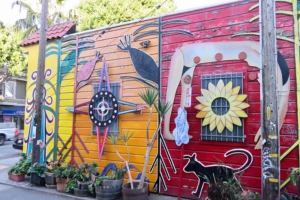
Saudi women empowermentThe Kingdom of Saudi Arabia has struggled with issues regarding women’s rights for a long time. Saudi Arabia ranked 146 out of 153 in the 2020 Global Gender Gap Index. The country also did not allow women to drive until the government lifted the driving ban in 2018. In 2017, the country allowed women to apply for passports and allowed women above the age of 21 to travel independently without permission from male guardians. Saudi women even gained the right to vote and run for public office in 2015. Saudi Arabian women celebrate women’s empowerment due to the country’s recent progress toward gender equality.
Challenges Women Still Face

While Saudi Arabia is making progress, the country is not without its issues. The country still requires male guardians, usually fathers or brothers, to make decisions for Saudi women. To this day, the government also limits women when it comes to choosing whom to marry or initiating a divorce. This caused some Saudi women, such as Rahaf Alqunun, to flee because of the strict male guardianship system.

Additionally, several women’s rights activists, such as Loujain al-Hathloul, have been arrested by Saudi officials for encouraging Saudi women empowerment. Al-Hathloul posted videos of herself driving during the driving ban with her hair uncovered. She also ran for office but her name was never added to the official ballot.  Al-Hathloul was arrested in 2018 with 11 other activists on charges of promoting women’s rights and collaborating with foreign organizations and media. However, her trial was indefinitely postponed due to the COVID-19 pandemic.

Loosening Restrictions: Women Moving Forward

Saudi Arabia made the largest improvement globally in women’s rights at work, according to The World Bank. The strides are credited to greater freedom of movement for women and reforms for women at work. The country criminalized sexual harassment and established work protection to prohibit employers from firing pregnant women. Saudi Arabia also equalized the retirement age for both men and women at 60, which allows for more financial freedom. Finally, the country outlawed gender-based discrimination in financial services to increase female entrepreneurship.

These reforms were a part of the Saudi government’s Vision 2030 plan, which aims to diversify the economy by promoting the private sector. The plan also includes increasing women’s labor force participation from 22% to 30%.

Street Style and Women’s Empowerment

Marriam Mossali, a Saudi entrepreneur, launched her second edition of “Under the Abaya: Street Style from Saudi Arabia” celebrating Saudi women empowerment on June 24. The book, a partnership with LUX Arabia and Niche Arabia, exposes the kingdom’s unknown fashion scene. The first edition introduced progressive Saudi women while this second edition exposed the challenges these women face.

All of the book’s proceeds go toward scholarships for women to pursue higher education. To Mossali, the book is a celebration of Saudi women empowerment because it allows women to share their own stories. The book has a forward by Princess Reema bint Bandar Al-Saud, the country’s first female ambassador to the U.S. Al-Saud told Arab News that the book tells stories and embodies the principle of women supporting women.

“Our participation in the #WomenSupportingWomen movement is much more than just a hashtag,” the book’s website says. “We believe in giving voice to these talented women in Saudi and the opportunity to pursue their aspirations.”

The first edition of the book fundraised enough to award five aspiring photographers a yearlong scholarship to Future Academy in Jeddah. The second edition aims to award women aspiring to pursue a Bachelor’s in fashion design.

Despite strides made in women’s empowerment, women in the kingdom still face many challenges. However, Saudi women continue to fight for change and equality. From filming videos to photographing street fashion, Saudi women are taking a stand for gender equality and celebrating women’s empowerment.

– Grethel Aguila
Photo: Flickr

October 5, 2020
https://borgenproject.org/wp-content/uploads/borgen-project-logo.svg 0 0 Kim Thelwell https://borgenproject.org/wp-content/uploads/borgen-project-logo.svg Kim Thelwell2020-10-05 01:30:592020-10-05 01:33:23Saudi Women Empowerment: Gender Progression
Activism, Global Poverty, Inequality

How Young Creatives Are Revolutionizing Activism

Young creatives
Without a doubt, the surge of the internet has created many waves in the way that people live their everyday lives. From ride-sharing apps to Instagram stories to trendy Tiktok dances, it seems like social media has overwhelmed every aspect of modern life, working particularly hard to keep people connected through an unprecedented time of social distancing. However, it is not just the mundane that has changed with the dawn of the online age; young creatives have used the internet to completely reimagine modern activism.

The Age of Digital Activism

Digital activism, defined as the use of digital tools (i.e. the internet, mobile phones, social media, etc.) for bringing about social and/or political change, is hardly a new phenomenon. As of 2018, the Pew Research Center found that around half of all Americans had engaged in some form of political or social activism via social media over the past year. They also found the majority of Americans believed that social media was a good tool for bringing important global issues to the attention of lawmakers. It is more than likely that these statistics have grown over the past several years, particularly in the culmination of movements such as the March for our Lives, #MeToo and Black Lives Matter. It does not take very long to come up with countless examples of online activism.

More recently, however, a new trend has grown popular among young creatives on Instagram: zines. Zines are self-published, non-commercial print works that are typically produced and distributed in small batches by artists looking to share their work. While they have been a part of youth pop culture for many years now, a group of young women have taken it into their own hands to shift that paradigm.

The Birth of More Color Media

In early June of 2020, Aissata Sall, a recent high school graduate, single-handedly launched her independent publication, More Color Media. From the very beginning, Sall wanted this project to be different from what had been done already; she wanted to tell the stories that were not already being told. Within just 10 short weeks, the small project gained nearly 5,000 followers across multiple platforms and exploded into a team of nearly 100 creatives, all using their talents from photography to poetry to bring global issues of poverty, education and inequality to light in a new, innovative way.

“We have team members from Estonia, France, North Africa — everywhere!” Sall said in an interview with The Borgen Project on August 14th of 2020. “It’s just been amazing to see how many people we’ve reached and how many people have reached out to us to tell us how happy they are with the space and the platform we’ve created. That’s the biggest accomplishment in our eyes.”

This new platform has created a unique way for young creatives to share information, with eye-catching graphics and stunning photography all utilized to draw attention to global issues from Venezuela to Lebanon to Serbia. Many of these posts include thorough factsheets and sources, allowing viewers to digest news from around the world and quickly find resources to help. By just sharing informational posts, fund pages and petitions to lawmakers regarding specific issues, More Color Media has reportedly reached over 30,000 individual audience members across all of their platforms.

“We want to provide more platforms for us to be able to support people in our communities and in the global community,” explained Diana Sinclair, the co-Editor-in-Chief of More Color Media. “We’ve already been using our platform to highlight individual funds to help reach people’s needs. We’ve also talked a lot about opening up other platforms like a podcast to help give a greater voice to the communities we want to support.”

A New Generation of Activists

While they continue to grow, More Color Media may very well represent the future of digital activism, serving to show that there is no limit on who can make a difference. According to RESET, an organization working to help advance the next generation into the digital age, one of the biggest benefits of digital activism is the ability to connect with a large community and globalize a campaign’s goals. More Color Media is doing just that. More Color Media’s first print issue is fast approaching, with a release date tentatively in late September, and both Sall and Sinclair are waiting eagerly with bated breath.

To learn more about More Color Media, visit their website, www.morecolormedia.com, or check them out on Instagram at @MoreColorMedia.

– Angie Bittar
Photo: Wikimedia Commons

September 27, 2020
https://borgenproject.org/wp-content/uploads/borgen-project-logo.svg 0 0 Kim Thelwell https://borgenproject.org/wp-content/uploads/borgen-project-logo.svg Kim Thelwell2020-09-27 13:24:122024-05-29 23:23:30How Young Creatives Are Revolutionizing Activism
Activism, Global Poverty

How to Fight Pandemic-Induced Inequality in Latin America

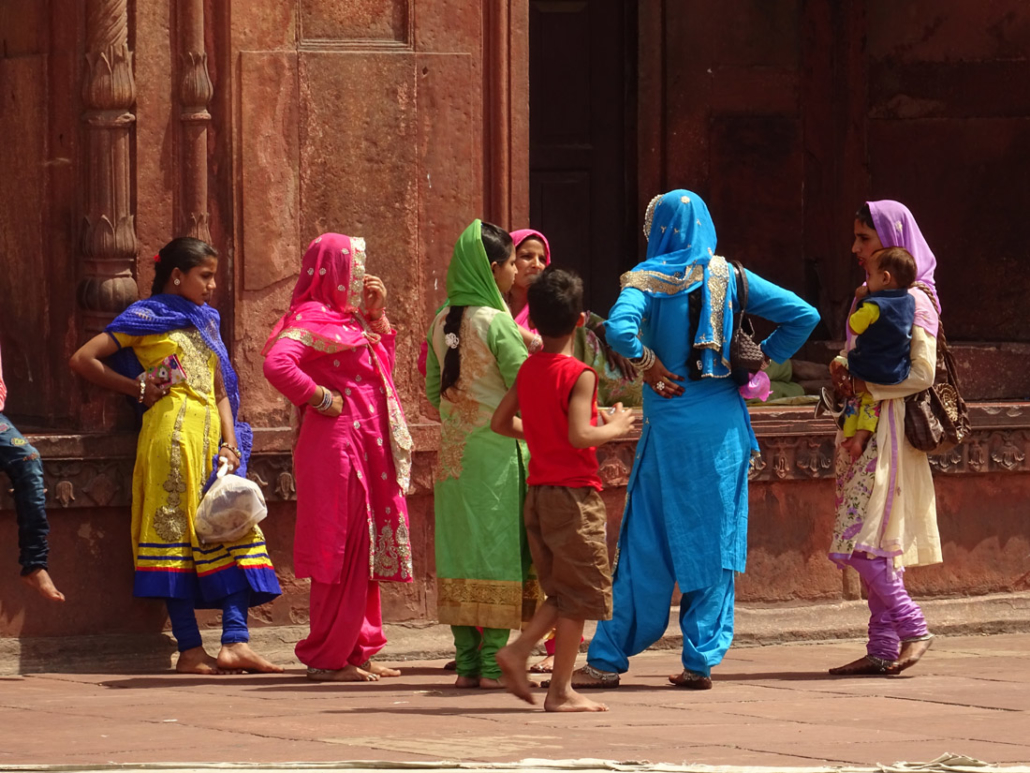
pandemic-induced inequality in latin americaFrom 2002 to 2018, Colombia, “one of the most unequal countries in an extremely inequitable region,” cut its poverty rate in half. This reduction of poverty accompanied massive economic uplift throughout Latin America that saw wealth inequalities diminish rapidly. Before the arrival of the coronavirus pandemic, economic and social inequality in Latin America had reached its “lowest point in recorded history.” Millions of families lifted themselves out of poverty, job opportunities soared and the quality of education increased. However, the COVID-19 pandemic threatens to destroy this new progress toward equality. Although the situation is dire, there are simple steps that anyone around the globe can take to help reverse the trend of pandemic-induced inequality in Latin America.
Economic Inequality

The World Bank predicts that due to the pandemic, the economies of Latin American countries will contract by 9.4%. This will cause 53 million Latin Americans to fall below the poverty line of less than $5.50 earned per day. With further reduction of jobs, COVID-19 will undoubtedly continue to destroy opportunities vital to the incomes of Latin America’s poor. This “setback of two decades” will further inequality between the rich and poor in Latin America, because it eliminates many jobs that poor daily wage workers depend on while hardly touching the incomes of the rich.

Francisco Ferreira, Professor of Inequality Studies at the London School of Economics, stated in an interview that “the inequality of COVID doesn’t just take place between the states of nations, but rather in neighborhoods of the same city.” Francisco commented further that “when this type of disaster arrives, poverty necessarily rises because the rich are better equipped financially to deal with it, and this causes inequality.”

Manual laborers in Latin America constitute 53% of the overall employment force. However, these individuals face especially high unemployment risks because of COVID-19. If they do manage to keep their jobs, these workers also face a higher risk of getting infected with the virus. Infection could lead to medical bills that can plunge people further into poverty and thus increase pandemic-induced inequality in Latin America.

Unequal wages also lead to worsened living conditions, like a lack of piped water and sanitation. In Brazil, as much as 50% of the population has no access to improved sanitation. For Bolivia, 30% of the population has no access to piped water. A lack of adequate sanitation facilities has the potential to start a vicious cycle of poverty and poor health conditions. This is especially concerning during a pandemic.

Gender Inequality

The pandemic also has the potential to severely reduce gender equality in Latin America. Women hold 55% of the most vulnerable informal jobs in Latin America. This means that when economies crash, women may be among the first to lose their financial independence. Unemployed women may be forced into care roles in communities, which may lead women to permanently leave the labor market. In the long term, this will greatly damage the economic capabilities of Latin American countries.

Overall, the pandemic stands to cause catastrophic long-term damage to the progress of equality in Latin America. By eliminating jobs and reducing the number of financially independent women in Latin America, the COVID-19 crisis has begun to retrench economic gains and further steepen earnings gaps between the rich and poor. However, those outside of the region can quickly and easily contribute to the reversal of pandemic-induced inequality in Latin America.

How to Help

Even though the pandemic stands to undermine decades of progress towards social and economic equality in Latin America, there are simple steps that every person reading this article can take to help reduce the impact of pandemic-induced inequality in Latin America.

  • Raise Awareness: By spreading awareness of pandemic-induced inequality in Latin America, anyone with a phone or social media account can draw attention to how decades of economic progress are being reversed. Taking this step towards combatting inequality is as simple as posting a link to this article. Making more people aware of how the coronavirus stands to eliminate jobs in Latin America makes policy and aid attention toward this problem becomes more likely.
  • Contact Congress: By contacting Congressional representatives and telling them to support foreign aid initiatives, anyone reading this article can help direct funding toward reducing pandemic-induced inequality in Latin America. Only by contacting senators and representatives can individuals demand increased foreign aid spending. This money would go toward creating economic stimulus, expanded shelters and better healthcare.
  • Donate to The Borgen Project: By donating to The Borgen Project, one can contribute to a cause working to increase foreign aid spending and by extension working to reduce pandemic-induced inequality. Donating to The Borgen Project means contributing to an organization that will continue to fight for U.S. legislation that will increase foreign aid spending and funding. This is vital to eliminating social and economic inequality in Latin America.

Overall, COVID-19 threatens to reverse decades of progress toward equality in Latin America by eliminating jobs that create social mobility. Nevertheless, anyone can quickly and easily help reverse the trend of pandemic-induced inequality emerging in Latin America. It’s as easy as spreading awareness, contacting their congressional representatives and donating to The Borgen Project.

– Nolan McMahon
Photo: Flickr

September 25, 2020
https://borgenproject.org/wp-content/uploads/borgen-project-logo.svg 0 0 Kim Thelwell https://borgenproject.org/wp-content/uploads/borgen-project-logo.svg Kim Thelwell2020-09-25 10:51:582020-09-25 10:51:58How to Fight Pandemic-Induced Inequality in Latin America
Activism, Education, Global Poverty

An NGO for Acid Attack Survivors in India

Acid Attack Survivors
Terrifying acid attacks in India are rising in number according to ABC News. Advocates for acid attack survivors estimate that around 1,000 attacks take place per year in the country. However, only 300 cases get reported due to fear of retribution. It can take up to 10 years for an abuser to face justice, and still, some get off scot-free.

Gender-Based Violence

India has more acid attacks than any other country in the world. With patriarchal arranged marriages common, unsatisfied husbands are often the perpetrators. In these attacks, a person throws acid on the woman’s face and body with the intent to disfigure her permanently. Men commit these gendered acts of violence out of jealousy, for retribution or for any “wrongdoing” that they believe has occurred.

Once a woman endures such an attack, she is expected to cover her face in public. Oftentimes, she must hide in the home of a family member since it is difficult to find employment under these circumstances. Society tends to reject disfigured acid attack survivors, who are then unable to find employment due to the prejudicial belief that they deserved the violence. As a result, it is nearly impossible for a woman to support herself or her children, which throws them into abject poverty.

An NGO for Survivors

In 2014, Make Love Not Scars (MLNS) launched in Delhi as the first nonprofit center for the rehabilitation of acid attack victims. Ria Sharma is the founder of the organization. After completing graduate work in the United Kingdom, Sharma came back to India to make a documentary film on acid attack survivors. Her work on the film inspired her to start an NGO to assist the survivors with recovery

Psychological and Physical Recovery

Sharma has stated that the main focus of the organization’s efforts is to enable acid attack survivors to recover both psychologically and socially. The survivors need to regain confidence, which is a difficult task after enduring an attack that often disfigures a person for life. The women suffer immense physical trauma as well as long-term psychological repercussions. MLNS addresses the impact of such an attack by encouraging the victims to enroll in courses that will enable them to earn a regular income. The organization also helps pay for these courses. In this way, MLNS works to alleviate global poverty by helping the victims make a living. Otherwise, the survivors would have difficulty in finding a job after such a devastating and disfiguring experience.

Funding for Medicine and Legal Aid

In addition to offering psychological aid, MLNS raises money to provide for women’s medicine, surgery and vital post-operative care. The charity also helps survivors of acid attacks connect with leading pro-bono lawyers who volunteer to help victims in India.

New Laws Help Prevent Acid Attacks

Some countries are enacting laws and restrictions that reduce the number of acid attacks. For example, in Bangladesh, these attacks have gone down in number after the death penalty was introduced for the crime. Additionally, the sale of common chemicals used in the attacks is now restricted in Bangladesh. Advocates for victims hope that similar laws will be instated in India.

MLNS Founder Honored

In 2016, Make Love Not Scars ran a campaign named #EndAcidSale, which called for a universal ban on acid sales. The campaign won a Gold Cannes Lion award in the category of film. Then in 2017, Sharma won the United Nations Bill and Melinda Gates GoalKeepers Global Goals Award, becoming the first Indian to receive the honor. Sharma has stated that MLNS would like to expand its work into other areas of gender-based violence and burn victims.

– Sarah Betuel
Photo: Flickr

September 24, 2020
https://borgenproject.org/wp-content/uploads/borgen-project-logo.svg 0 0 Kim Thelwell https://borgenproject.org/wp-content/uploads/borgen-project-logo.svg Kim Thelwell2020-09-24 07:30:412024-05-29 23:23:34An NGO for Acid Attack Survivors in India
Activism, Education, Global Poverty, Philanthropy

Fashion to Philanthropy: Improving Girls’ Education in the DRC

Girls' Education in the DRC
Congolese-Cypriot model Noëlla Coursaris Musunka is not just an international, fashion superstar. In addition to her successful modeling career, her charity Malaika is changing the lives of young girls and women in the Democratic Republic of Congo (DRC). Through her philanthropy, Coursaris Musunka aims to empower and thus, help improve girls’ education in the DRC, so they can have the most opportunities for future success.

Noëlla Coursaris Musunka

After Coursaris Musunka’s father died when she was young, her mother sent her to live with relatives in Belgium and Switzerland so that she could have a stable education. Though Coursaris Musunka succeeded academically and completed a degree in Business Management, she had little contact with her mother back home in the DRC. Their communication at that time consisted mainly of occasional letters or phone calls. As Coursaris Musunka herself said, “When you have nothing, you know that if you fall there’s no one to pick you up. So you have to stand. I resolved very early on that I would study and work and be independent.”

Realizing that many girls back home did not have access to education, she decided to start a charity to help girls’ education in the DRC. Coursaris Musunka, inspired by her own experiences and the lack of opportunity she witnessed at home, began this endeavor.

Malaika Foundation

Malaika Foundation (named after the Swahili word for “angel”) is a grassroots organization working to improve girls’ education in the DRC. Coursaris Musunka acts as the charity’s president and founder.

According to Coursaris Musunka’s personal website, Malaika “empowers Congolese girls and their communities through education and health programs.” The Malaika School currently educates more than three hundred young girls with a rigorous syllabus. Notably, 100% of students have passed their year six exams since 2017. Additionally, Malaika has created 20 wells in the DRC to supply residents with drinking water. Moreover, she founded a community center that “provides education, health and sports programmes to over 5,000 youths and adults per year.”

The Malaika School in Kalebuka

Currently in its ninth year of operation, the Malaika School (located in Kalebuka) advances girls’ education in the DRC at no cost to its hundreds of students. Also, the institution serves both primary and secondary school-aged children. The school educates students on a variety of topics, including multiple languages, STEM fields and the arts. Malaika particularly emphasizes the importance of leadership to teach girls to strive for success. The school also commits itself to sustainability — providing students with breakfast and lunch every day. Importantly, these meals include fruits and vegetables, grown in the school’s own garden. Additionally, the school is “100% powered by solar energy.” After graduation, Malaika matches students with internships while other students choose to continue their education at universities or specialized colleges.

A Model Beyond Fashion

Coursaris Musunka continues to invest her free time into the charity she founded. “My message to every child,” she says, “to every young girl, is this: take your opportunity, go to school. Educate yourself. Become pioneers of education and pioneers of Africa and the world.” Coursaris Musunka is a model in the world of fashion, female leadership and educational, charity initiatives. Inspirational and influential figures such as Coursaris Musunka are doing important work in the advancement of education, especially for young girls.

– Jackie McMahon
Photo: Flickr

September 16, 2020
https://borgenproject.org/wp-content/uploads/borgen-project-logo.svg 0 0 Kim Thelwell https://borgenproject.org/wp-content/uploads/borgen-project-logo.svg Kim Thelwell2020-09-16 04:35:522024-05-29 23:23:11Fashion to Philanthropy: Improving Girls’ Education in the DRC
Activism, Global Poverty

3 Celebrities Who Grew Up Poor

Celebrities Who Grew Up Poor
Celebrities lead lavish, luxurious lives, and are often subjects of envy for many common people. However, some of them came from less than affluent backgrounds and never imagined that they would achieve the status and wealth they possess today. Here are three celebrities who grew up poor and how their past affects their philanthropy today.

Jennifer Lopez

Considered the most influential Latin performer in America, actress and singer, Jennifer Lopez has released a plethora of hit songs and acted in many movies. She is currently engaged to famous baseball player Alex Rodriguez and lives on a property worth $28 million. This is a far cry from her childhood, where she grew up sharing a bedroom with her two sisters in the Bronx. Her parents worked tirelessly to provide just enough for Jennifer and her sisters. She inherited a strong work ethic from them. Despite her fame, Lopez has not abandoned her roots. Her popular song “Jenny from the Block” is about how she has not forgotten her roots.

Perhaps due to her own difficult upbringing, Lopez pays specific attention to supporting children’s charities. She works as an activist for the ALAS, a program promoting early childhood development in Latin America, and has performed many concerts to raise donations and awareness for the cause. Lopez also participates in the Noche de Los Niños Gala hosted by the Children’s Hospital Los Angeles, raising funds for their patients.

Ralph Lauren

Fashion icon Ralph Lauren had dreamed of being rich since his high school days. However, he was anything but at the time. Lauren grew up in the Bronx, the youngest son in a Jewish immigrant family. He often fantasized about living a better life and loved watching movies to help him escape the feeling of poverty.

From a young age, his entrepreneurial instinct was prominent. Since he was a child, Lauren had an extravagant taste in clothing and sold handmade ties to children at school to pay for them. This consequently became the root of his extremely successful fashion career. Now, with a net worth of billions, Lauren is giving back. His Polo Ralph Lauren Foundation has donated millions to causes like education and cancer care. Lauren, who has not forgotten his life as a Jewish immigrant child, is a supporter of groups like the American Jewish Committee.

Jay-Z

Jay-Z is an award-winning songwriter and rapper who seems to have it all—success, a famous partner and several successful business ventures. However, the artist came a long way from the conditions he grew up in. Jay-Z was the fourth child in his family. Born into an impoverished neighborhood where drugs and violence were rampant, Jay-Z turned to rap as a way to cope with the issues surrounding him.

Now, he is passionate about helping others escape those same problems. Jay-Z has spoken out repeatedly against racial injustice, drug use and other problems he grew up dealing with. Additionally, his charity, the Shawn Carter Foundation, has donated millions to programs and scholarships for children growing up in difficulty. Jay-Z’s past is deeply intertwined in his career and philanthropic efforts. Therefore, he is one of the most notable celebrities who grew up poor.

Despite their fame and success, these celebrities have not forgotten the poverty they grew up in. These three hard-working philanthropists are now helping to fight the same problems they dealt with growing up. With the determination and influence of celebrities, the movement against poverty should greatly advance.

– Alison Ding
Photo: Flickr

September 12, 2020
https://borgenproject.org/wp-content/uploads/borgen-project-logo.svg 0 0 Kim Thelwell https://borgenproject.org/wp-content/uploads/borgen-project-logo.svg Kim Thelwell2020-09-12 01:31:192024-06-06 00:43:133 Celebrities Who Grew Up Poor
Activism, Advocacy, Global Poverty

U2’s Charity Work: Global Relief

U2’s Charity Work
Throughout its career, the band U2 has played for tens of thousands of people and gained millions of fans worldwide. The band’s influence, however, has gone beyond its music, as it has impacted millions of people with its charity work. Various members have done both individual charity work as well as work through the band. The band members’ collaborative efforts include poverty relief, disaster relief and health and human rights work. This article will highlight a few important instances of U2’s charity work.

Bono’s Work With ONE & RED

ONE is a campaign that Bono, U2’s lead singer and other activists co-founded. The campaign’s aim is to fight extreme poverty and preventable diseases. In order to achieve this goal, Bono has personally met with heads of state and lobbied governments to pass legislation. Grassroots efforts and ONE’s lobbying for legislation have saved millions of lives over the last 10 years through newly funded government policies. Bono also co-founded RED, an organization that raises awareness and funds to help fight the AIDS crisis. RED has raised $600 million to date, which primarily goes toward AIDS treatment and prevention in Africa.

Disaster Relief Concerts

Throughout U2’s existence, it has played numerous concerts and events to raise money for various disaster relief benefits. In 1984, Bono and U2 bassist Adam Clayton performed at Band Aid, and in 1985, U2 performed at Live Aid. Both events raised money for famine relief in Ethiopia. The next year, in 1986, the band participated in A Conspiracy of Hope tour on behalf of Amnesty International, an organization that focuses on protecting human rights around the world. That same year, it also performed for Self Aid, which helped the homeless in Ireland. On the 20th anniversary of Live Aid, U2 played the Live 8 concert in London. This concert supported the Make Poverty History campaign.

Other Assorted Charity Work

Beyond Bono’s work with ONE and RED and the band’s charity concerts, U2 has participated in other charitable work. For instance, Bono teamed up with Muhammad Ali in 2000 for Jubilee 2000, which called for the cancelation of third world debt. Bono also founded the organization DATA, which aims to improve the political, financial and social state of those living in Africa. Bono has visited Africa on numerous occasions in an attempt to raise funds and awareness for AIDS relief. Additionally, the band donated all of the proceeds from the release of its song “Sweetest Thing” to Chernobyl Children International, which works to give those the 1986 Cherynobl accident affected medical and economic help. Most recently, U2 donated €10 million for personal protective equipment for healthcare workers on the frontline fighting COVID-19.

U2 has impacted millions of people around the world, not just with its music, but with its charity as well. U2’s charity work has helped millions of people around the world. In particular, Bono’s work with ONE and RED has helped fight against poverty and the AIDS epidemic. The band has also worked together, using its music directly by playing a variety of concerts to raise money for important causes. Even as the world grapples with the devastating effects of COVID-19, U2 has continued providing people in need with generous humanitarian aid.

– Zachary Laird
Photo: Wikimedia Commons

September 11, 2020
https://borgenproject.org/wp-content/uploads/borgen-project-logo.svg 0 0 Kim Thelwell https://borgenproject.org/wp-content/uploads/borgen-project-logo.svg Kim Thelwell2020-09-11 01:31:052020-09-10 09:14:59U2’s Charity Work: Global Relief
Activism, Advocacy, Global Health, Global Poverty

Top 5 Humanitarian Role Models for Children 


Parents always want the best for their children, but in an increasingly overwhelming world, it can be hard to stay positive. As a society, we need to actively work harder to inspire future generations to protect our planet and its people. Thankfully, there are many amazing role models out there that can motivate children to get involved in making the world a better place.

Top 5 Role Models for Children

  1. Malala Yousafzai — Malala is one of the most famous role models of our time. She was born in the small village of Mingora, Pakistan, where it was uncommon for girls to go to school. At just 11 years old, she was forced out of school when the Taliban, the Sunni Islamist military organization, took control of her village. After speaking out about gender equality and the right to learn, she was shot in the head at 15 years old. At this point, most people would have given up, but not Malala. She kept fighting and made her own organization called the Malala Fund—a charity dedicated to fighting for equal rights and providing girls worldwide the opportunity to attend school. That year, she became the youngest person to receive a Nobel Peace Prize and later went on to graduate from Oxford University.
  2. Alexandria Ocasio-Cortez — Alexandria Ocasio-Cortez, or AOC, has made headlines across the United States. One of the most progressive candidates, and backed by Senator Bernie Sanders, AOC recently got reelected and kept her spot as a representative for New York’s 14th congressional district at just 30 years old. AOC has been vocal about the wealth inequality gap, racial discrimination and climate change. In a time of uncertainty, Alexandria Ocasio-Cortez’s election has been seen as a progression toward an equal world.
  3. Pink — Alecia Beth Moore, known professionally as Pink, has not only achieved momentous achievements as a singer but has often used her fame to advocate for equality and children’s rights. As a UNICEF ambassador, Pink raises awareness about global poverty, malnutrition and access to education and medicine. Moreover, Pink has supported charities related to HIV/AIDS, animal rights and women’s rights, among others. The famous singer even gets her children involved in the work, making sure to instill a sense of charity in them. At one of her rehearsals, Pink’s daughter set up a backstage candy sale to raise money for the impoverished communities in Haiti. This is a great way to get the kids involved and inspire them to do more on their own.
  4. Selena Gomez — Seen as a triple threat in the entertainment industry, Selena Gomez is another fantastic role model for children. In addition to her successful career, Gomez has consistently shown support for various charities and philanthropic endeavors worldwide. She was also appointed a UNICEF ambassador in 2009 and has dedicated a lot of time to improve societal and economic equality in the world by participating in various UNICEF campaigns and continuing charitable work on her own. Recently, Gomez has used her social media platforms to spread awareness about the social and racial injustices in the United States. Selena Gomez has also shown support for the Elton John AIDS Foundation, the Malala Fund and Free the Children, among others.
  5. Matt Damon — Matt Damon is an incredible actor who is no stranger to charity work. He has pledged to provide clean water for impoverished communities worldwide by creating his nonprofit organization. In 2009, Matt Damon and Gary White co-founded Water.org that helps more than 17 countries receive clean water and sanitation supplies. Additionally, Water.org, through its WaterCredit program and microfinancing, supports households living in poverty with loans to obtain essential water systems, making clean water safe, cost-effective and accessible for more than 30 million people.

There are many fantastic role models worldwide that demonstrate how crucial nonprofit organizations are in improving people’s standards of living worldwide. Yet, perhaps the most important role models are the parents at home. Teach children about the real impact of charity work and get them involved in both local and global humanitarian organizations. As children grow older, they will start to venture off on their own charity projects, ensuring a brighter and equal future.

– Karin Filipova
Photo: Flickr

September 5, 2020
https://borgenproject.org/wp-content/uploads/borgen-project-logo.svg 0 0 Kim Thelwell https://borgenproject.org/wp-content/uploads/borgen-project-logo.svg Kim Thelwell2020-09-05 11:00:502024-05-30 07:52:24Top 5 Humanitarian Role Models for Children 
Activism, Global Poverty, Politics

3 Powerful Social Movements in Argentina

Social movements in Argentina
There is a vibrant culture of using social movements in Argentina to achieve political change. In recent years, Argentines have created community movements that push change related to hunger, sanitation, gender equality, same-sex rights, psychosocial and emotional treatment reform and much more. Notorious social movements throughout the country’s history of political and economic hardship have led to transformative policies around poverty, inequity and inequality. Here are three notable social movements in Argentina that have fostered attention to human rights and political reform.

Mothers of The Plaza de Mayo and Demilitarization

Between 1976 and 1983, Argentina experienced a period referred to as the “dirty war,” which resulted from a highly-militarized junta ruling under President Jorge Rafael Videla. This militarized dictatorship imposed extreme violence, regular kidnappings and killings of Argentinian citizens. On 30 April 1977, 14 mothers of disappeared children took to the Plaza de Mayo, located directly outside the presidential palace, to protest both the mystery behind their children’s disappearances and state violence. These 14 mothers inspired Argentines with their bravery, encouraging many to speak up about personal sufferings at the hands of the standing government. Eventually, oppositional parties, leading labor groups and other community leaders overthrew this militarized system. Democracy returned in 1983 under elected President Raúl Alfonsín — a long-term result of the heroism of The Mothers of Plaza de Mayo.

The Piquetero Movement

The 2001 Piquetero social movement in Argentina brought destructive neoliberal policies to an end. The neoliberal ideals of President De La Rúa threatened the rights of many Argentines suffering from systemic injustices. Many working-class Argentines lost jobs without governmental support, which rippled to affect local neighborhood living standards. Neoliberal policies perpetuated poor living conditions, unemployment and governmental neglect of basic human rights. Many Argentines had to demonstrate for their own lives.

Neoliberal policy oppressed the primary voices involved in this social movement in Argentina. These groups included the unemployed, labor unions and even middle-class workers. As the Piquetero protests broke out in December 2001, economic minister Domingo Cavallo and President De La Rúa both chose to resign. This allowed local communities to band together with newfound power. Solidarity, equality and equity of need-based opportunity were cultivated across classes, communities and neighborhoods, resulting in permanent, unionized local powers. In 2003, the president-elect of Argentina, Néstor Kirchner, rejected Argentina’s former neoliberal economic system. Still, he brought little reform to systematized social and economic issues within the country.

The Evita Movement

Named after former Argentine first lady Eva Perón, the Evita movement responded to vestigial aggressions of neoliberal economics. Eva Perón championed multiple labor and feminist movements during her husband’s 1946 presidency. Now, Perón is a popular culture idol within the country. Her values are the face of this social movement in Argentina, which fights for the redistribution of wealth and access to human rights.

The movement started in 2003 in support of President Kirchner’s plans for economic and social reform. Although President Kirchner did not reform systemic issues of oppression, the Evita movement is committed to addressing systemic poverty that resulted from Argentina’s debilitating period of neoliberalism. Inspired by Eva Perón’s ideals, the Evita movement works to redistribute wealth and power to people burdened by systemic violence.

Argentina is rich with a history of powerful unions, leaders and communities. With courage, the country has achieved full governmental renewal multiple times and worked to empower oppressed voices. The Argentinian population provides inspiration for social and political change across the globe.

– Lilia Wilson
Photo: Pixabay

September 4, 2020
https://borgenproject.org/wp-content/uploads/borgen-project-logo.svg 0 0 Kim Thelwell https://borgenproject.org/wp-content/uploads/borgen-project-logo.svg Kim Thelwell2020-09-04 10:00:522024-06-06 00:43:133 Powerful Social Movements in Argentina
Page 5 of 56«‹34567›»

Get Smarter

  • Global Poverty 101
  • Global Poverty… The Good News
  • Global Poverty & U.S. Jobs
  • Global Poverty and National Security
  • Innovative Solutions to Poverty
  • Global Poverty & Aid FAQ’s
Search Search

Take Action

  • Call Congress
  • Email Congress
  • Donate
  • 30 Ways to Help
  • Volunteer Ops
  • Internships
  • Courses & Certificates
  • The Podcast
Borgen Project

“The Borgen Project is an incredible nonprofit organization that is addressing poverty and hunger and working towards ending them.”

-The Huffington Post

Inside The Borgen Project

  • Contact
  • About
  • Financials
  • President
  • Board of Directors
  • Board of Advisors

International Links

  • UK Email Parliament
  • UK Donate
  • Canada Email Parliament

Get Smarter

  • Global Poverty 101
  • Global Poverty… The Good News
  • Global Poverty & U.S. Jobs
  • Global Poverty and National Security
  • Innovative Solutions to Poverty
  • Global Poverty & Aid FAQ’s

Ways to Help

  • Call Congress
  • Email Congress
  • Donate
  • 30 Ways to Help
  • Volunteer Ops
  • Internships
  • Courses & Certificates
  • The Podcast
Scroll to top Scroll to top Scroll to top