• Link to X
  • Link to Facebook
  • Link to Instagram
  • Link to TikTok
  • Link to Youtube
  • About
    • About Us
      • President
      • Board of Directors
      • Board of Advisors
      • Financials
      • Our Methodology
      • Success Tracker
      • Contact
  • Act Now
    • 30 Ways to Help
      • Email Congress
      • Call Congress
      • Volunteer
      • Courses & Certificates
      • Be a Donor
    • Internships
      • In-Office Internships
      • Remote Internships
    • Legislation
      • Politics 101
  • The Blog
  • The Podcast
  • Magazine
  • Donate
  • Click to open the search input field Click to open the search input field Search
  • Menu Menu

Archive for category: Poverty

Child Soldiers, Global Poverty, Poverty

10 Facts about Child Labor in Nigeria

Child Labor in Nigeria
Child labor is one of the most monumental issues in Nigeria, a country with a developing economy, affecting a large portion of the country’s children up to age 17. Forgoing a normal care-free childhood, many children living on the front lines of poverty must maintain a job and sustain a regular income. The unethical use of child labor is an issue that has been prevalent throughout human history impacting health, wellbeing and quality of life. Below are 10 facts about child labor in Nigeria.

10 Facts About Child Labor in Nigeria

  1. Several different industries employ children. The jobs available to children are limited to unskilled and physical, labor-intensive tasks. The most common industries that employ children in Nigeria are cocoa farming, gold mining, sediment sifting, street peddling and domestic servitude.
  2. Conditions are hazardous. Although there are labor laws in place, Nigeria does not actively enforce safety regulations or preventative measures in the workplace. This type of neglect leads to an extremely dangerous environment that often results in bodily harm, severe trauma and even death. Children who work on the streets often make easy targets for violence and kidnapping. If a child suffers harm on the job, help or compensation does not extend to the family, leaving them to face the repercussions alone.
  3. Children often support their families. Much of child labor is a direct result of Nigeria’s extreme poverty, which accounts for around 70% of the nation’s population living below the poverty line, according to the CIA World Factbook. Families struggling to make ends meet often enlist the help of their children to bring in additional income. Without an effective welfare system, many families have no other option for survival. In an even more dire situation, some laborers who are orphans shoulder the entire burden of providing for younger siblings. Recent findings by Nigeria’s Federal Ministry of Women Affairs and Social Development found that about 17.5 million children become orphans or enter similarly vulnerable situations throughout the country.
  4. Child labor is on the rise. Estimates determine that the current number of child workers in Nigeria is 15 million according to the International Labor Organization (ILO). At a staggering 43% of the total population of minors, it is the highest recorded rate of child labor in Western Africa. The poverty rates have risen almost 20% — up from 53% in 2003 — in the span of 7 years, according to the World Bank and CIA World Factbook. This environment of financial strife causes more and more families to expect their children to go out to work and contribute an income.
  5. Children often drop out of school. Due to the rigid demands of a long workday, school often becomes less of a priority. Education is not legally mandatory in Nigeria so there is no required attendance. The lack of a proper education ensures they will remain unskilled laborers into adulthood, making it nearly impossible to escape the cycle of poverty. The Bureau of International Labor Affairs reports only 76% of children in total go to school, and about 27% of child laborers attend school in addition to work. Some reports have stated that certain schools exploit their students and make them work or beg during school hours to earn money for teachers.
  6. Many children experience trafficking. Children who are especially vulnerable, such as orphans, are more at risk for human trafficking and forced labor than adults, with their rate being estimated at 58%. Enticed by fictitious stories of better jobs located in more economically rich areas, they agree to leave their homes in hopes of making money. However, the traffickers never deliver the promise and the victims find themselves in even worse situations and unable to go home. Upon arrival, traffickers often claim that the child has accrued debt from transport. To maintain control and prevent runaways, traffickers use coercion in the form of threats against the child or their families back home to motivate them to pay off their debt. Unfortunately, these children find themselves in a ruse, where ballooned charges that continuously compound prevent them from ever making their final payment.
  7. Slavery is common. Around 30% of child workers do not receive compensation and must work against their will. Child slavery is very common in cases of trafficking or when there is no one to advocate for the child. In trafficking cases, traffickers tell the child that their salaries are going towards paying off their “debt.” In some live-in situations, their room and board charges absorb their pay. Those who do receive actual payment usually only take home pennies on the dollar.
  8. Girls are at higher risk for sexual exploitation, resulting from trafficking within the sex industry. A former government official, Martin Uhomoibhi, revealed to the U.N. that there were 602,000 known victims who made the dangerous journey across the continent in 2016. However, the total number of victims is widely unknown, since traffickers covertly smuggle many of the girls and women smuggled across Nigeria’s border, but experts believe that these numbers are some of the highest in the world. Traffickers often bring girls to brothels and restrain and force them to service clients in deplorable conditions despite any physical health ailments, according to horrifying testimonies that the Human Rights Watch recorded. The outlook for these girls is grim, as many die in captivity or move back to the streets due to critical conditions that render them unable to work, and therefore no longer profitable to their captors.
  9. There are unofficial wartime drafts. Regional conflicts and war cause armies to form as a way of resistance and protection against outside threats. Many know Africa for this sort of violence, with brutal wars routinely escalating. People often pull boys as young as 10 years old from their homes, give them a deadly weapon and order them to kill an unknown enemy. UNICEF estimates that around 3,500 Nigerian child soldiers have enlisted between 2013-2017. Many children die in active combat or from a lack of supplies.
  10. The government response has been underwhelming. New hope for relief on the child labor front occurred when the government signed the Child Rights Act into effect in 2003. Unfortunately, the government has put little effort forth toward ending the practice since its ratification. Many experts believe there will be no true resolution until the government steps in with not only stricter regulations, but absolute enforcement.

Children are society’s most vulnerable people. With no voice to advocate for their rights, they are in a poor position to influence political policy. A child’s place is in school where they can receive a proper education and use it to build a promising future, not just for themselves but for the society in which they live as well. It is the task and moral responsibility of adults and officials in power to prioritize basic human rights over the gilded benefits of cheap labor and end this practice permanently.

– Samantha Decker
Photo: Flickr
June 1, 2020
https://borgenproject.org/wp-content/uploads/borgen-project-logo.svg 0 0 Jennifer Philipp https://borgenproject.org/wp-content/uploads/borgen-project-logo.svg Jennifer Philipp2020-06-01 01:30:152020-05-28 11:40:3710 Facts about Child Labor in Nigeria
Developing Countries, Global Poverty, Health, Poverty

5 Facts About Tuberculosis in Eastern Europe

tuberculosis in Eastern Europe
One of the oldest diseases, tuberculosis is still prevalent in hundreds of countries and nearly every continent. Although many countries have been able to reduce their number of cases through medical intervention and policies, Eastern Europe remains affected by the disease. Despite the rising cases of tuberculosis in Eastern Europe, European and other governments are coming up with new solutions to better treat individuals with TB and potentially eradicate the disease. Here are five facts about tuberculosis in Eastern Europe.

5 Facts About Tuberculosis in Eastern Europe

  1. Most of Europe’s tuberculosis cases are in Eastern Europe. According to the World Health Organization (WHO), Europe has the lowest incidence of tuberculosis in the world. However, the cases that do exist concentrate in Eastern Europe. The WHO found that 18 countries in Eastern Europe bear 85% of the tuberculosis burden for the continent. Over the past decade, cases of tuberculosis have halved throughout Europe. Despite this decrease, however, the number of cases in Eastern Europe is almost eight times higher than that of Central and Western Europe.
  2. Eastern Europe has the highest rates of drug-resistant tuberculosis. Multidrug-Resistant Tuberculosis (MDR tuberculosis) is currently the most prevalent form of TB in Eastern Europe. MDR tuberculosis occurs when the bacteria that causes tuberculosis becomes resistant to at least isoniazid and rifampin, the two most common drugs doctors use to treat tuberculosis patients. Typically, this resistance occurs when patients do not finish their antibiotics or when tuberculosis infects a person more than once. In all of Europe, 99% of MDR tuberculosis cases occur in Eastern Europe. As a result, scientists need to develop new antibiotics or treatments for patients in that region.
  3. Tuberculosis outbreaks are more common in poorer regions. In general, researchers tend to find tuberculosis in poorer and developing countries. Similarly, the levels of TB in Eastern Europe could connect to the overall poverty rates in the region. The poverty rates in Central and Western European countries such as the Czech Republic are as low as 10%. However, in Eastern European countries, such as Romania, the poverty rates are as high as 25%. In poorer countries, access to medical treatment and preventative care decreases. Thus, in Eastern Europe, a common struggle for individuals with tuberculosis is finding health care that is effective and affordable.
  4. Problems with tuberculosis are worsening due to COVID-19. The COVID-19 pandemic has led countries to implement social distancing and stay-at-home policies. As a result, the circumstances for individuals with tuberculosis in Eastern Europe may worsen. A recent modeling study looked at the rate of incidence of tuberculosis and the tuberculosis mortality rate during the lockdown. The study predicted that both the number of cases and the number of deaths will rise as people remain in close quarters. For example, imagine the lockdown in a high-risk country such as Ukraine lasting for 3 months with a 10 month recovery period. The rate of incidence would increase by 10.7% and the mortality rate would increase by 16%. One reason for this increase is the lack of medical care available during the pandemic. As more supplies and medical officials go towards fighting COVID-19, other diseases such as tuberculosis could go unchecked during the lockdown.
  5. Better diagnostic services are currently in progress. This year, in 2020, the European Lab Initiative (ELI) on tuberculosis, HIV and Viral Hepatitis, a regional center that has dedicated itself to the treatment of those three diseases, released its goals for 2020 and 2021. These goals, which include improved drug treatments and better tracking algorithms, hope to allow doctors in Eastern Europe to diagnose patients with tuberculosis faster. By diagnosing people earlier, the transmission of tuberculosis will slow, and those who test positive for tuberculosis will have a higher chance of recovery.

Although the rates of TB continue to drop in Western and Central Europe, wealth inequality and the COVID-19 pandemic are keeping the number of cases up in Eastern Europe. However, if progress on better diagnostic services continues, the occurrence of tuberculosis there will decrease.

– Sarah Licht 
Photo: Flickr

May 31, 2020
https://borgenproject.org/wp-content/uploads/borgen-project-logo.svg 0 0 Kim Thelwell https://borgenproject.org/wp-content/uploads/borgen-project-logo.svg Kim Thelwell2020-05-31 07:30:322024-05-29 23:17:355 Facts About Tuberculosis in Eastern Europe
Global Poverty, Poverty

The Plan to Eliminate Poverty in Germany

Eliminate Poverty in Germany
Germany’s economy is booming. Since reunification, the unemployment rate has steadily decreased and Germany has turned itself into one of the richest countries in Europe. Nonetheless, poverty in Germany remains a potent issue. In 2018, more than 15% of people in Germany were impoverished. Here is some information about the country’s poverty rates as well as its plan to eliminate poverty in Germany.

The Rise of Poverty in Germany

Despite the country’s economic success in manufacturing and trade with the European Union (EU), people at risk for falling into poverty rose over the past decade in all western German states and in Berlin. The Institute of German Economic and Social Research defines the poverty line as a 60% median net income. The poverty line also has risen from 736 euros a month in 2005 to 999 euros a month in 2017 and 1074 euros in 2019.  Similar increases occurred for families, also.  In fact, 20% of German children experience poverty. Further, two-thirds of German children who are poor experience long-term poverty.  The above percentages only represent households in Germany and do not include those living in refugee camps who may be experiencing poverty. As of 2019, Germany had more than 1 million refugees living within its borders.

Unequal Poverty Across Germany

Impoverishment does not affect all regions of Germany equally. Southern Germany, the least impoverished area of the country, still has a rate of about 12% for people at risk of poverty. The northern states have the highest percentage of people at risk with Bremen, a city in that region, having a shocking 24.9% rate.

This inequality is largely attributed to the Ruhr region, a highly industrial area in Northern Germany. The Ruhr is the most densely populated region in the country, with production focusing largely on coal, steel and chemical manufacturing. During World War I and World War II, the Allied bombing destroyed nearly 75% of the region. Since then, Northern Germany has experienced long-term impoverishment that continues to contribute to the growing poverty rate.

Solutions

Germany is aware of the economic inequality facing many of its citizens. It is continuously creating more jobs and working towards a stronger economy. Additionally, Germany also raised its minimum wage in 2015 to 8.50 euros an hour.  It also increased social welfare for refugees. The country has also strengthened support for vocational training in an attempt to increase the amount of employed low-skilled workers.

Poverty in Germany is a pertinent issue. Despite the country’s wealth and economic growth, the rate of poverty continues to rise. Although the issue of impoverishment may seem overwhelming, the German government continues to persist and develop programs designed to eliminate poverty in Germany.

– Paige Musgrave 
Photo: Flickr

May 31, 2020
https://borgenproject.org/wp-content/uploads/borgen-project-logo.svg 0 0 Kim Thelwell https://borgenproject.org/wp-content/uploads/borgen-project-logo.svg Kim Thelwell2020-05-31 01:30:442022-03-25 11:30:31The Plan to Eliminate Poverty in Germany
Food Security, Foreign Aid, Global Poverty, Poverty

7 Facts About Poverty in Puerto Rico

Poverty in Puerto Rico
Puerto Rico is a Caribbean island between the Caribbean Sea and the North Atlantic Ocean, east of the Dominican Republic. A population of 3.194 million resides in Puerto Rico and represents more than 0.04% of the world population, yet many are living in severe levels of poverty to this day. Puerto Rico has been dynamic and competitive when it comes to its local economies until recent years. Its economy now relies mostly on aid from the United States government. Here are seven facts about poverty in Puerto Rico.

7 Facts About Poverty in Puerto Rico

  1. More than 44% of the population of Puerto Rico lives in poverty, compared to the national U.S. average of approximately 12%. That is 1.4 million Puerto Rican citizens in comparison to 39.3 million U.S. citizens. Puerto Rico relies mainly on financial and federal aid from the U.S. government because it has ties to the U.S. as a U.S. colony. As a result, the country often struggles to independently support itself.
  2. Before the recent hurricanes, around 1.5 million of the Puerto Rican population suffered from food insecurity. The child food insecurity rate was 56%, which is 281,335 Puerto Rican children. The main reason for food insecurity is that hurricane season often hits Puerto Rico rather hard, and its access to imported goods only comes from the U.S. There are local countries and islands surrounding that are willing to help, but due to the ruling that Puerto Rico can only receive U.S. goods, these essential goods have higher tax rates. To improve this, the Puerto Rican governor organized committees to correspond with third party task forces in the U.S. to ship essential supplies over, especially after Hurricane Maria.
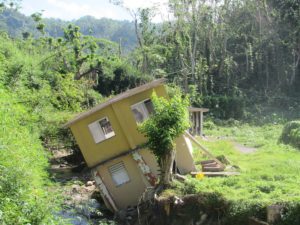
  3. Hurricane Maria, the strongest hurricane to hit Puerto Rico in nearly a century, made landfall on September 20, 2017. It compounded the destruction that Hurricane Irma caused just weeks before, affecting residential living, wildlife and everything in between. For example, areas that Hurricane Maria hit left homes without a proper roof, even over 600 days after the hurricane. Infrastructure damage can only receive so many repairs, as when hurricane season returns less than a year later, Puerto Rico often lacks proper recovery and preparation. An NGO aid project called All Hands Volunteers kickstarted to gut and remove debris, as well as demolish unsafe structures and repair cement roofing. It operates out of two cities, Barranquitas and Yabucoa.
  4. A year after Hurricane Maria, 10s of thousands in Puerto Rico are still living under blue tarps, designed as temporary roofs. This is the result of a lack of funds, resources and helping hands to Puerto Rico during its greatest and most desperate time of need. To improve this, task forces in U.S. states like Florida have been using small charter planes to import essential goods and supplies to bring relief and rebuild as best as possible. This is necessary even years after the initial storm.
  5. Families are struggling to find work to afford food, water, shelter and resources to rebuild their homes. Whether families have a solid income or not, it is apparent that most are food insecure to this day as a result of the storm. This is especially accurate when 80% of the island or 2.5 million people were without electricity for over a year after the hurricane. People also only have employment from establishments that are still standing or that people rebuilt.
  6. Due to the living conditions of the island, several thousand citizens have moved out of Puerto Rico and have yet to return. This could mean that they flew to stay with family in the U.S. or had to find work and shelter elsewhere with short notice. Some left temporarily, and others have yet to return to their homes due to a lack of funds for repairs. Puerto Rico wants to avoid further devastation and harm to its citizens during the season.
  7. While Puerto Rico is still recovering, the damage it experienced could have been much worse. The citizens still living on the island have shown compassion, resilience and teamwork toward one another. Without water or power, the people have shown great strength and support through waiting for recovery assistance, both financially and physically. This shows that against all odds, the citizens of Puerto Rico have managed to come back with all the strength they could muster to rebuild and recover.

Poverty in Puerto Rico is minimizing gradually and it is thanks to the help and assistance from the citizens of the United States standing alongside the island. These seven facts about poverty in Puerto Rico have shown that hurricane season will always have a destructive impact, but with continued assistance, poverty in Puerto Rico can reduce.

– Kimberly Elsey
Photo: Flickr

May 28, 2020
https://borgenproject.org/wp-content/uploads/borgen-project-logo.svg 0 0 Jennifer Philipp https://borgenproject.org/wp-content/uploads/borgen-project-logo.svg Jennifer Philipp2020-05-28 07:30:002024-05-29 23:16:007 Facts About Poverty in Puerto Rico
Global Poverty, Poverty, Poverty Reduction

The Plan to Reduce Poverty in Romania

Reduce Poverty in Romania
Romania, like much of the former Communist Bloc, experienced extreme poverty under communism. Although communist rule ended more than 30 years ago, the country still experiences the lingering effects of communism on its economy and quality of life. In 2017, approximately 4.6 million Romanians lived at or below the Romanian national poverty line, a standard assessed by the cost of living and certain social policies. Poverty in Romania concentrates in rural areas, where about 46% of the population lives, according to recent estimates. Here are the ways in which the government seeks to reduce poverty in Romania.

The National Strategy on Social Inclusion and Poverty Reduction

In 2015, the European Union (EU) and the Romanian government devised the National Strategy on Social Inclusion and Poverty Reduction to help reduce poverty in Romania. The strategy aimed to lift 580,000 people from poverty by 2020 and increase employment for the poor and other vulnerable groups. It also provided financial support for poor or at-risk citizens. Additionally, it promoted social inclusion of marginalized communities such as the Roma people and improved social services like health care and education. In addition to this plan, Romania also passed a 47-point plan to combat poverty in 2015.

Many have regarded this plan as overly ambitious. Unfortunately, much of the National Strategy on Social Inclusion and Poverty Reduction remains only on paper. This is not to say, however, that it has not made an impact on reducing poverty in Romania. Since the creation of this plan, the percentage of Romania’s population at risk of living in poverty has dropped from 40.2% in 2015 to 35.7% in 2017. Since the implementation of the National Strategy on Social Inclusion and Poverty, the Romanian government has been able to allocate more funding for active labor market policies, including financial bonuses and job training. Additionally, Romania has received funding from the European Social Fund for projects to increase the effectiveness of the Romanian National Employment Agency. Despite these improvements, Romania still ranks as the second most impoverished nation in the EU, after Bulgaria.

Looking Forward

In addition to continuing the work on current programs, the country is looking forward to more improvements in the coming years. By 2023, the Romanian government has set a goal of improving access to education. Increasing educational opportunities in Romania is especially important. The country has the highest child poverty rate in the EU at nearly 50%. Children living in poverty are more likely to have to leave school, further perpetuating the cycle of poverty in Romania. By making education more accessible, children at risk of poverty have more opportunities to break the cycle.

Despite drastic improvements in the levels of poverty and social inclusion in Romania, millions of Romanians are still at risk. The Romanian government and EU implemented the National Strategy on Social Inclusion and Poverty Reduction in 2015. Unfortunately, problems obtaining funding have made it difficult to implement this plan in its entirety. However, some changes have occurred, improving the situation for a small portion of the Romanian population. The government’s future plans to reduce poverty in Romania, including improving access to education for impoverished children, aim to continue to improve the country’s poverty crisis.

– Jessica Cohen
Photo: Flickr

May 28, 2020
https://borgenproject.org/wp-content/uploads/borgen-project-logo.svg 0 0 Jennifer Philipp https://borgenproject.org/wp-content/uploads/borgen-project-logo.svg Jennifer Philipp2020-05-28 01:30:222022-03-30 20:01:53The Plan to Reduce Poverty in Romania
Developing Countries, Global Poverty, Poverty, Sanitation, Water Sanitation

10 Facts About Sanitation in Ecuador

sanitation in Ecuador
Located at the western top of South America, Ecuador has improved water regulation and overall sanitation within the last couple of decades. Here are 10 facts about sanitation in Ecuador.

10 Facts About Sanitation in Ecuador

  1. Before 2007, organic loads, toxic substances and hydrocarbons contaminated large bodies of water. Ecuador’s government devised a plan to increase overall healthy water flow. The plan consisted of using financial support to create sustainable water management. The lack of healthy water flow led to the exploitation of aquifers on Ecuador’s coast, which melted approximately 33% of the country’s glaciers. Moreover, the lack of water flow led to a reduction of at least 25% of Paramos’ regular water flow, which is a historical area. The improvement of water sustainability allowed Ecuador’s people to access healthy water easily.
  2. In 2019, Ecuador received an $87 million loan from the U.S. to improve water regulation. The loan from the U.S. allowed Ecuador’s government to expand and improve drinking systems. Ecuador has directed the loan towards the achievement of universal access to piped sanitation services.
  3. The country created a National Development Plan in 2007 which prioritized the integration of water management. Many saw Ecuador’s lack of easy access to clean water and sanitation as a detrimental factor that slowed the development of the country’s sustainability. The National Development Plan encouraged a more developed culture for Ecuador’s sanitation. One main goal was to build 1.5 kilometers of sewage networks in Quitumbe and 26 kilometers of interceptors for wastewater management in Checa and la Merced.
  4. Ecuador’s national sectoral strategy established that the country should reach equitable access to potable Water and Sanitation Services by 2030. In the national sectoral strategy, the country strived to divide loans into different sections with regards to water management. As a result, vast improvement has occurred in the country’s economy. In July 2019, approximately 39,197 additional citizens in urban areas obtained new access to improved sanitation services.
  5. The government’s new project hopes to achieve country-wide access to piped sanitation services. The Guayaquil Wastewater Management Project for Ecuador aims to install wastewater catch basins of the urban cities such as Guayaquil. As a result, 2 million citizens will gain access to proper sanitation. Ecuador’s government hopes to ensure that 100% of the wastewater within these basins receive treatment in an environmentally sustainable way.
  6. Currently, 93% of Ecuador has access to basic drinking water. Ever since 2007, there has been more focus on safely managing sanitation services as well as water waste treatment. Due to the implementation of basic sanitation needs in Ecuador’s sustainability plan, improvement is evident within urban and rural areas throughout the country.
  7. Ecuador upgraded and amplified the sewage system and sanitation networks throughout municipalities in Quitumbe, Checa and La Merced. By building several drinking water treatment plants, the government and local workers introduced 39 kilometers of raw water transmission lines from natural reservoirs. Within agricultural systems, Ecuador also installed and put over 400 flow meters for larger consumers. Installing hundreds of flow meters allow farmers and other agricultural workers to maintain and limit the amount of water needed for efficient agriculture.
  8. Ecuador’s improvement within sanitation allowed basic water regulation within schools to improve immensely. Before, numerous schools lacked access to clean sanitation, flushing water and dry toilets. The government’s development plan focused on nationwide sanitation, which involved the implementation of basic water and clean sanitation to just under 7,000 students.
  9. The overall share of people living in poverty in Ecuador has dropped to roughly 4%. Compared to 1998, the poverty line has dropped significantly. Approximately 10% of Ecuador’s population lived in poverty in the late 1900s. Today, only 4% of the population lives in poverty.
  10. Awareness of female sanitation has increased in the last decade. In 2015, the government responded to a higher demand for easier access to female products. Female products such as towels (pads), tampons and pantyliners are more easily accessible in grocery stores within urban and rural areas.

Throughout the last decade, sanitation and easier access to water has increased immensely. While sanitation within the country has improved, with over 90% of the country having access to clean water, the government hopes to close the entire gap and provide accessible water for the country as a whole by 2030.

– Elisabeth Balicanta 
Photo: Wikimedia Commons

May 24, 2020
https://borgenproject.org/wp-content/uploads/borgen-project-logo.svg 0 0 Jennifer Philipp https://borgenproject.org/wp-content/uploads/borgen-project-logo.svg Jennifer Philipp2020-05-24 01:30:352024-05-29 23:17:2810 Facts About Sanitation in Ecuador
Developing Countries, Global Poverty, Poverty, Poverty Reduction

6 Facts About Poverty in Indonesia

Poverty in Indonesia
Since the devastating impact of the 1997 Asian Financial Crisis (AFC), Indonesia has shown profound economic growth. Since 1998, it has boasted a greater than 5% compound annual GDP growth rate, ahead of the global average of below 3%. Indonesia now ranks as the 16th largest economy in the world, up from 36th in 1998. Concomitant with this economic improvement has been a noticeable reduction in poverty in the country. Most recently, poverty in the country is below 5% of the population versus 67% 30 years ago. By comparison, approximately 10% of the global population lives below the international poverty line. Yet despite this promising data, poverty in Indonesia remains a major issue. Here are six facts about poverty in Indonesia.

6 Facts About Poverty in Indonesia

  1. The rate of poverty reduction is slowing, but poverty is low. Indonesia’s efforts to grow its economy showed great results in the years immediately following the AFC. Rapid industrialization, increased global integration and a focus on domestic infrastructure all helped in this regard. This resulted in relatively dramatic improvements in poverty. After an eight-year period of decline, however, the rate of reduction has slowed to 9% in recent years. Despite a slowing in the rate of reduction, the percentage of the Indonesian population living in poverty is at the lowest level since 1984 (4.6%).
  2. CARE, an international humanitarian agency, has been working to assist Indonesia’s poor particularly during emergencies. Indonesia is prone to natural disasters like earthquakes and floods, so CARE has worked to provide Indonesians with food, shelter, water and medical supplies. After the 2004 Indian Ocean tsunami, CARE aided 350,000 Indonesians and helped them rebuild their communities. Non-governmental organizations like CARE are key to assisting the government in protecting Indonesia’s poor after frequent disasters and emergencies.
  3. Income disparity is growing. Indonesia’s economic growth has flowed disproportionately to the wealthy. The country’s Gini coefficient, a measure of a country’s income disparity, has increased from 28.5 in 2000 to 38.1 in 2017 (lower is better). Oxfam reported that in 2014, the richest 1% of Indonesians owned 50% of the nation’s wealth. Not surprisingly, Indonesia’s rural inhabitants are worse off than their urban counterparts, with about 1.5 times more incidences of poverty on an absolute basis. One can also see this in the geographic distribution of poverty. Eastern Indonesia, the more rural part of the country, fares worse. President Joko Widodo has noted that improving income inequality is one of his top priorities. He has taken some steps to decrease income disparity, including providing direct cash transfers through its Program Keluarga Harapan, creating more social assistance programs, investing in infrastructure and creating health and education protections.
  4. The near-poor are a significant group in Indonesia. While Indonesia’s reduction in poverty is impressive when including those who are near-poor, the results are not as positive. Many in Indonesia live precariously close to the poverty line and are at risk of falling back into poverty. The Asian Development Bank highlights that over half of the poor in Indonesia were not poor the year before. Furthermore, a quarter of Indonesians will suffer from poverty at least once every three years. Even though only 5% of Indonesians live below the poverty line today, as many as 25% live just above it.
  5. Indonesia must watch inflation. Since 2016, inflation in Indonesia has been below 4%. The government and the Bank of Indonesia established the range of 3% to 4%. However, with so many living at or close to poverty, changes in prices can have deleterious impacts, disproportionately so on the poor. Statistics Indonesia notes that food represents a 43% weight in Indonesia’s CPI basket, putting a degree of focus on food prices, especially given their historical volatility. The Indonesian government has focused in this area, recognizing that stable rice prices are essential for steady economic prosperity. Nevertheless, food prices remain exposed to exogenous shocks.
  6. COVID-19 is having a huge impact. The Indonesian government did not impose restrictions relating to the COVID-19 pandemic until April 10, 2020, almost six weeks after the identification of the first case in West Java. Unfortunately, the economic fallout from COVID-19 will have material effects on Indonesia’s poor and near-poor, underlining the fragility of the last 30 years of Indonesia’s efforts. In mid-April 2020, Indonesia’s finance minister predicted that Q2 GDP growth could fall to about 1%, after the weakest rate of growth in nearly 20 years in Q1. COVID-19 cases surged rapidly after President Widodo hesitated to implement a nationwide lockdown. In response, he declared a national health emergency and worked to increase the number of test kits, personal protective equipment and ventilators available in the country. Additionally, he passed a stimulus package worth $8 billion to stimulate the economy, with $324 million going towards helping low-income households.

These six facts about poverty in Indonesia have shown that Indonesia’s government has put much effort into improving the conditions for its poor. Against a backdrop of economic growth, President Widodo increased spending on social assistance, health, education and infrastructure. Additionally, CARE’s continual aid has substantially reduced poverty in Indonesia since the AFC.  However, with so many near the poverty line, those results are fragile. With the unprecedented impact of COVID-19, much of that work could become obsolete.

– Harry Yeung
Photo: Flickr

May 21, 2020
https://borgenproject.org/wp-content/uploads/borgen-project-logo.svg 0 0 Jennifer Philipp https://borgenproject.org/wp-content/uploads/borgen-project-logo.svg Jennifer Philipp2020-05-21 09:45:202024-05-29 23:17:296 Facts About Poverty in Indonesia
Education, Global Poverty, Poverty

10 Facts About Education in Japan

Read more
May 20, 2020
https://borgenproject.org/wp-content/uploads/borgen-project-logo.svg 0 0 Lynsey Alexander https://borgenproject.org/wp-content/uploads/borgen-project-logo.svg Lynsey Alexander2020-05-20 07:00:532025-12-16 13:45:2710 Facts About Education in Japan
Developing Countries, Global Poverty, Health, Poverty, Refugees

COVID-19 in Colombia: 3 At-Risk Groups

COVID-19 in Colombia
Officials have reported 16,295 cases of COVID-19 in Colombia and 592 deaths as of May 19, 2020. In an effort to contain the virus, the government has closed all international travel. It has also recently extended its nationwide stay-at-home order through May 25. Testing is available at the Colombian National Institute of Health facilities.

Most public locations remain closed. Individuals over the age of 70 will need to self-isolate until at least the end of May 2020. Municipal authorities allow one hour per day of exercise, at prescribed times, for individuals ages 18 to 60. Though the virus poses a nationwide public health threat, here are three particularly at-risk groups in Colombia.

COVID-19 in Colombia: 3 At-Risk Groups

  1. Indigenous Peoples: With historically limited access to food, shelter and health care, indigenous communities on the outskirts of cities and towns remain unprepared for the pandemic. A scarcity of clean water and hygiene products has left many without the means to maintain personal cleanliness and prevent infection. In addition, some of these semi-nomadic groups are now at risk of starvation. Due to quarantine restrictions, indigenous communities cannot move around to access their means of subsistence. They may be unable to grow their own food or survive by working temporary jobs. Organizations such as Amnesty International (AI) are working to raise awareness about this urgent issue and garner support from Colombian authorities. Along with the organization Human Rights Watch (HRW) and the Colombian Ministry of the Interior, AI petitioned the government to deliver food and supplies to at-risk indigenous groups. In response to these efforts, Colombian officials initiated a campaign to provide indigenous communities with food and supplies. The first round of deliveries went out in April 2020 but still left many without aid. AI and partner organizations will continue working with leaders of the campaign to reach more people in future deliveries.
  2. Refugees: Venezuelan refugees are another group at high risk due to the outbreak of COVID-19 in Colombia. The virus has compounded instability from low wages and rampant homelessness. Many have lost temporary jobs as economic concerns heighten nationwide. With fear and social unrest on the rise, refugees also face increased stigmatization. Some states, for example, are forcibly returning refugees in response to the virus. The U.N. Refugee Agency (UNHCR) and the International Migrant Organization (IOM) have instigated a call to action. Eduardo Stein, joint UNHCR-IOM Special Representative for refugees and migrants from Venezuela, explained in an April 2020 statement that “COVID-19 has brought many aspects of life to a standstill – but the humanitarian implications of this crisis have not ceased and our concerted action remains more necessary than ever.” U.N. representatives are seeking out innovative ways to protect Colombia’s migrant population and provide refugees with information, clean water and sanitation. Some organizations have also set up isolation and observation spaces for those who have tested positive. Others, including the World Health Organization (WHO), are distributing food and supplies to refugees and their host communities.
  3. Coffee Farmers: As COVID-19 continues to spread throughout South America and the world, Colombian coffee farmers are grappling with new economic uncertainties. Since extreme terrain limits the use of mechanized equipment, these farmers tend to rely on manual labor. In a typical year, some farms hire between 40% and 50% of their workforce from migrant populations. Now, however, travel restrictions have left many with a shortage of manpower. Large-scale farms are seeking out unemployed retail and hospitality workers from local areas, offering pay rates at a 10% to 20% increase. On smaller farms, family members can manage the crops. However, medium-sized operations, in desperate need of labor and unable to match the wages of larger competitors, are feeling a significant strain. Even the largest farms could struggle to meet their expected harvest in 2020. Public health officials have ordered strict distancing measures in the fields, which reduces picking capacity. Though disruptive in the short term, these efforts should help contain the spread of the virus and allow farmers to resume full operation as soon as possible.

COVID-19 in Colombia has undergone rapid growth, bringing economic and social challenges in its train. Now more than ever, it is incumbent upon world leaders to support vulnerable populations in Colombia and help the nation emerge from this world crisis.

– Katie Painter
Photo: Flickr

May 19, 2020
https://borgenproject.org/wp-content/uploads/borgen-project-logo.svg 0 0 Jennifer Philipp https://borgenproject.org/wp-content/uploads/borgen-project-logo.svg Jennifer Philipp2020-05-19 11:19:202020-05-19 11:19:20COVID-19 in Colombia: 3 At-Risk Groups
Global Poverty, Health, Poverty

Healthcare in the United Kingdom

healthcare in the United Kingdom
The United Kingdom began its National Healthcare System (NHS) in 1948 with a mission to make healthcare available to all regardless of their ability to pay. Since its creation, the NHS has grown in its capacity to prevent illnesses and improve the mental and physical health of the population.

Numerous local and national organizations support the NHS such as clinical commissioning groups, charities and research institutes. These all compile to create the healthcare system. A general and payroll tax primarily fund the NHS, allowing patients in England to receive NHS services without charge. From emergency to non-urgent cases, healthcare in the U.K. seeks to put patients first by surveying the success of patients’ outcomes.

For those “ordinarily resident” in England or those with a European Health Insurance Card, coverage is universal. In fact, in most cases coverage is free. The NHS Constitution states that patients have rights to drugs and treatments when deemed necessary and approved by their physician. Through the NHS’s services, primary care, specialized care, longterm care, after-hours care and mental health care available.

What is the Role of the Government?

The Health Act (2006) requires that the Secretary of State has a legal duty to promote comprehensive healthcare services to the public free of charge. The NHS Constitution outlines the rights for those eligible for national healthcare, including access to care without discrimination and prompt hospital care. While the Department of Health supervises the overall health system, the day-to-day responsibilities rest with NHS England. In addition, the local government authorities hold the budgets for public health.

Ensuring Quality and Reducing Disparities

Research shows healthcare quality is worse for those living in poverty in England. The health gap between the rich and poor has widened over the past few years. The more economically deprived an area is, the more quality-deprived those same struggling areas are. Underfunded local services lead to poorer health of the most vulnerable.

Strategies to reduce inequality include monitoring statistics of access and outcomes, particularly for at-risk groups. The requirement to host “health and well-being boards” mitigates local government authorities’ relative autonomy in creating budgets for public health in their communities. These boards aim to improve the coordination of local services and reduce disparities.

What is the Impact of COVID-19?

The COVID-19 pandemic makes health inequalities in the United Kingdom more visible. Those who live in the most deprived areas have a higher risk of contracting the virus. Fortunately, citizens have largely obeyed the government’s social distancing pleas, limiting the spread of the virus. However, this comes with social and economic consequences for those who were already suffering from inequality.

The weight of the pandemic does not fall evenly on society. Adjusting for age, those who live in poorer areas have faced more than double the deaths compared to those in richer areas. Additionally, research has found that minority ethnic communities have a higher risk of death from the virus. The reasons for this are complicated and research on these issues is advancing. However, discrimination and the resulting lack of socio-economic opportunities for these groups in education and employment can lead to their overall health being disproportionately impaired.

Solutions

To help healthcare in the United Kingdom obtain equal accessibility and quality, acting against the systemic barriers facing minority groups and encouraging overall economic development that will enable healthier living for all is necessary. Increased government support for the NHS and its relating voluntary and community sectors could mitigate the pandemic’s devastating effects.

Well Communities is an example of a nonprofit organization in the United Kingdom that empowers local communities to reduce inequalities. By working on the neighborhood level, Well Communities addresses specific concerns in improving local coordination through training and engagement around a themed project. Past projects have promoted healthy eating, exercise, mental health, employment, green spaces, culture and arts.

More than 18,700 individuals participated in Well Communities’ Well London activities, representing 35 percent of the population in that neighborhood. The outcome exceeded the targeted goals. Strikingly, 82 percent reported increases in physical activity and 54 percent reported an increase in mental wellbeing. Additionally, 60 percent reported increased levels of volunteering.

These statistically significant changes in the community indicate the value of organizations like Well Communities’ work. With more organizations implementing programs like these, there is hope to reconcile the increasing inequalities of healthcare in the United Kingdom.

COVID-19 and its lockdown will deepen inequalities unless the U.K. mounts a great effort. Through much-needed increased government support for the NHS and its relating voluntary and community sectors, the U.K. is working to abolish inequality in healthcare.

– Mia McKnight 
Photo: Flickr

May 19, 2020
https://borgenproject.org/wp-content/uploads/borgen-project-logo.svg 0 0 Kim Thelwell https://borgenproject.org/wp-content/uploads/borgen-project-logo.svg Kim Thelwell2020-05-19 07:30:512024-05-29 23:17:26Healthcare in the United Kingdom
Page 16 of 27«‹1415161718›»

Get Smarter

  • Global Poverty 101
  • Global Poverty… The Good News
  • Global Poverty & U.S. Jobs
  • Global Poverty and National Security
  • Innovative Solutions to Poverty
  • Global Poverty & Aid FAQ’s
Search Search

Take Action

  • Call Congress
  • Email Congress
  • Donate
  • 30 Ways to Help
  • Volunteer Ops
  • Internships
  • Courses & Certificates
  • The Podcast
Borgen Project

“The Borgen Project is an incredible nonprofit organization that is addressing poverty and hunger and working towards ending them.”

-The Huffington Post

Inside The Borgen Project

  • Contact
  • About
  • Financials
  • President
  • Board of Directors
  • Board of Advisors

International Links

  • UK Email Parliament
  • UK Donate
  • Canada Email Parliament

Get Smarter

  • Global Poverty 101
  • Global Poverty… The Good News
  • Global Poverty & U.S. Jobs
  • Global Poverty and National Security
  • Innovative Solutions to Poverty
  • Global Poverty & Aid FAQ’s

Ways to Help

  • Call Congress
  • Email Congress
  • Donate
  • 30 Ways to Help
  • Volunteer Ops
  • Internships
  • Courses & Certificates
  • The Podcast
Scroll to top Scroll to top Scroll to top