• Link to X
  • Link to Facebook
  • Link to Instagram
  • Link to TikTok
  • Link to Youtube
  • About
    • About Us
      • President
      • Board of Directors
      • Board of Advisors
      • Financials
      • Our Methodology
      • Success Tracker
      • Contact
  • Act Now
    • 30 Ways to Help
      • Email Congress
      • Call Congress
      • Volunteer
      • Courses & Certificates
      • Be a Donor
    • Internships
      • In-Office Internships
      • Remote Internships
    • Legislation
      • Politics 101
  • The Blog
  • The Podcast
  • Magazine
  • Donate
  • Click to open the search input field Click to open the search input field Search
  • Menu Menu

Archive for category: Malaria

Information and stories about malaria.

Malaria

One Bite at a Time: A Look at the Top Malaria Nonprofits

Top Malaria Nonprofits
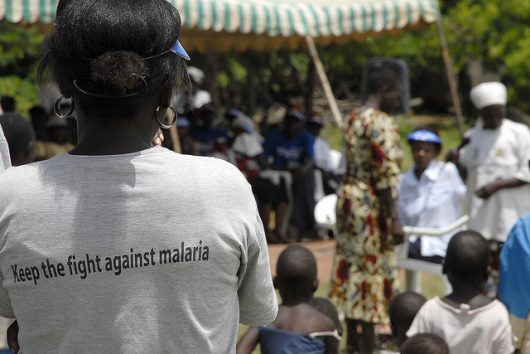
Malaria is the most deadly disease facing the world’s poor today. In 2016, roughly 445,000 people died due to malaria, and the illness still remains in 91 countries and threatens half of the world’s population. The fight against malaria is far from over, and many nonprofits are still working on achieving a world without malaria. Here are five of the top malaria nonprofits to be aware. 

Malaria No More  

Malaria No More (MNM) launched in 2006 alongside the President’s Malaria Initiative. The goal of the organization is to create “a world where no one dies from a mosquito bite.” MNM aims to end malaria by mobilizing advocates and securing funding to combat malaria. Their work focuses on three countries, including Kenya.

MNM started work in Kenya in 2014, and their work’s focus is to protect pregnant women and babies who are both at a higher risk for contracting malaria than any other populations. In Kenya, MNM partners with several other nonprofits to make malaria a top political priority. MNM also spreads awareness about malaria through meetings with politicians and events with celebrities.

As a result of MNM’s work, roughly 1,800 mothers and pregnant women received mosquito nets, two Kenyan counties increased funding for malaria elimination and millions of people received information on malaria treatment and prevention via radio.

The International Committee of the Red Cross

Another one of the many nonprofits combating malaria is the International Committee of the Red Cross (ICRC). Since its inception in 1863, the goal of ICRC is to assist victims of war and poverty. Since malaria threatens so many impoverished nations, the organization aids in combating malaria.

The ICRC also focuses on encouraging and assisting communities to band together and fight malaria. In 2008, the organization and its partners distributed 60,000 nets to Burkina Faso and helped educate its people on the importance of nets and how to hang them properly.

The President’s Malaria Initiative

The President’s Malaria Initiative (PMI) started in 2006 with the goal of reducing the malaria death rate by 50 percent. The PMI offers several services to the people of sub-Saharan Africa, including insecticide-treated nets, indoor residual spraying, intermittent preventative treatments for pregnant women, and seasonal chemoprevention treatments.

Since the formation of the PMI, more than 5 million houses received an indoor residual spraying, which protects more than 20 million people. The PMI also distributed 40 million treated nets. Overall, the malaria rate in sub-Saharan Africa dropped 54 percent in the past 17 years.

The World Health Organization

The World Health Organization (WHO) is one of the many nonprofits combating malaria. Founded in 1948, WHO oversees international health through the United Nations and aims to improve health systems and respond to health crises all over the world. Their oversight and work includex fighting to eradicate malaria.

In 2015, the E-2020 plan, which aims to eliminate malaria in 21 countries by 2020, began. WHO is one of several supporters of this initiative and works with 21 countries to reach the elimination of malaria.

Comoros is one of the countries that WHO works with. In 2014, the number of reported indigenous malaria cases reached 53,000; in 2016, that number fell to 1,066. This decrease was the result of a treatment campaign, indoor spraying and the delivery of insecticide-treated nets by WHO.

Nothing But Nets 

Nothing but Nets supplies nets to areas that are vulnerable to malaria. The organization also raises awareness about malaria and mobilizes citizens to take action by contacting their representative or starting a fundraising campaign.

Nothing but Nets raised $65 million for 12 million mosquito nets to be sent to families all over the world. Most of these nets go to sub-Saharan Africa, where malaria is most common and deadly. In 2000, only two percent of the population in sub-Saharan Africa owned mosquito nets; in 2017, 53 percent of people in sub-Saharan Africa possessed a net.

As you can see, these top malaria nonprofits have made it their mission to put a stop to this disease sooner rather than later.

–  Drew Garbe

Photo: Flickr
September 26, 2018
https://borgenproject.org/wp-content/uploads/borgen-project-logo.svg 0 0 Borgen Project https://borgenproject.org/wp-content/uploads/borgen-project-logo.svg Borgen Project2018-09-26 01:30:012019-07-25 15:37:50One Bite at a Time: A Look at the Top Malaria Nonprofits
Global Poverty, Malaria

Fighting Malaria with New Mosquito Nets

New Mosquito NetsTwo weeks ago, The Lancet published a promising study on the effectiveness of a new type of mosquito net. After a two-year trial period in Burkina Faso, the researchers found the new mosquito nets, treated with two insecticides, decreased cases of malaria by 12 percent. These findings promise strong potential for lowering the risk of malaria worldwide with the implementation of these new mosquito nets.

This research is a collaboration among several institutions including Durham University, Burkina Faso’s National Center for Malaria Research and Training, Liverpool’s School of Tropical Medicine and the Swiss Tropical and Public Health Institute.

Malaria Worldwide

According to The World Health Organization, almost 50 percent of the world’s population was at risk of contracting malaria in 2016. While risk areas exist around the world, sub-Saharan Africa suffers the most cases of malaria each year.

In 2016, sub-Saharan Africa had 90 percent of the world’s malaria cases and 91 percent of the world’s malaria-related deaths. Though malaria-related deaths have declined significantly, from 440,000 in 2010 to 285,000 in 2016, malaria is still a great threat to health worldwide. Traditional, chemically-treated mosquito nets have helped to reduce the cases of malaria, however, as mosquitoes grow more resistant, these traditional nets have become less effective, leaving users more vulnerable to malaria infection.

The World Health Organization estimated there were five million more cases of malaria in 2016 compared to the total number of malaria cases in 2015. The above-mentioned study’s mosquito nets address this problem, by targeting insecticide-resistant mosquitoes that are causing these problems.

New Mosquito Nets

The older mosquito nets generally have a pyrethroid insecticide treatment, intended to kill mosquitoes on contact. This treatment has become less effective with time since the mosquitoes have developed a resistance to the insecticide. The new nets, presented in the research, combat this issue, by using a different insecticide.

The new insecticide is effective because it combines traditional pyrethroid treatment with another agent, pyriproxyfen. Pyriproxyfen works as an insect growth regulator, shortening the lifespan of mosquitoes and thus their ability to transmit disease, as well as reproduce.

According to professor Steve Lindsay, who worked on the study, this combination of chemicals has three main benefits: it kills more mosquitos, reduces the number of mosquito bites and decreases the likelihood that mosquitoes will develop resistance to the chemical mixture.

Results in Burkina Faso

A two-year trial, conducted in Burkina Faso, demonstrated the effectiveness of these new mosquito nets, treated with pyrethroid and pyriproxyfen. Burkina Faso was ideal for the study, due to the high number of malaria cases. Located in sub-Saharan Africa, Burkina Faso has more than 10 million cases of malaria every year. Mosquitoes in Burkina Faso were also ideal test subjects since they exhibit high resistance to pyrethroid treatment. According to Professor Lindsay, 80 percent of mosquitoes in Burkina Faso are so resistant to pyrethroid, they are no longer killed by it.

Researchers conducted the study in 91 villages throughout rural areas of the country. By switching traditional mosquito nets with nets treated with the new chemical blend, researchers saw a 12 percent decrease in malaria cases. Furthermore, the overall exposure to mosquitoes dropped by over 50 percent during the test period.

With these results, the researchers concluded the trial mosquito nets offer increased protection against malaria as opposed to standard pyrethroid-treated nets. They also recommended that these new nets replace standard nets in areas with high malaria transmission rates and high instances of insecticide resistance among mosquitoes.

Future Potential

Although 12 percent reduction in malaria cases may seem marginal, on a global scale and in real numbers, this decrease in malaria infection would be monumental. As Professor Lindsay noted, if the nets were used across all of Burkina Faso during the two-year trial, researchers would expect 1.2 million fewer cases of malaria in the population overall.

Dr. Alfred B. Tiono, who headed the field study, has great hope for the impact these new mosquito nets could have globally. He believes, if used correctly, the nets could prevent millions of malaria cases worldwide. It is still unclear how costly large-scale manufacturing of the dual-chemical nets will be. However, Professor Lindsay remains hopeful the manufacturing costs will not exceed the costs of producing traditional nets. If only one life is saved by applying the new nets, no price is too high to pay.

– Morgan Harden
Photo: Google

September 14, 2018
https://borgenproject.org/wp-content/uploads/borgen-project-logo.svg 0 0 Borgen Project https://borgenproject.org/wp-content/uploads/borgen-project-logo.svg Borgen Project2018-09-14 07:30:182019-08-01 23:58:22Fighting Malaria with New Mosquito Nets
Global Poverty, Malaria

Bloodless Malaria Test Sets Bright Future for Sub-Saharan Africa

Bloodless Malaria Test Sets Bright Future for Sub-Saharan Africa
Brian Gitta is the first and youngest Ugandan inventor to win the African prize for releasing his highly innovative bloodless malaria test. A device called Matibabu tests for malaria by shining a beam of light onto the patient’s finger and can be downloaded on mobile devices.

Matibabu

This bloodless malaria test is low cost and reusable and doesn’t require a physician’s presence. Gitta, in an interview with United Press International, said: “We are incredibly honored to win the Africa Prize — it’s such a big achievement for us because it means that we can better manage production in order to scale clinical trials and prove ourselves to regulators.” These clinical trials will open up new partnership opportunities for Matibabu and vastly expand its entrepreneurial ability.

Many scholars say that Matibabu is “a game changer” for the thousands of people affected by malaria. Clinical trials show that Matibabu has an 80 percent effectiveness rate in identifying malaria, and with constant technology adjustments, Gitta hopes to bring that number up to 90 percent in the coming months.

Gitta’s team continues to perform research on the device as it awaits examination from global regulators. Until the app’s official approval, support from the academic community continues to surface, offering financial and supportive aid to Matibabu.

Malaria in Uganda

Malaria, as defined by the CDC, is a mosquito-borne disease caused by a parasite. People who become infected often experience flu-like symptoms, such as fever, chills, abdominal pain, vomiting or nausea.

In 2016, there were 216 million cases of malaria and over 400 thousand deaths linked to the disease. Uganda specifically bears a large burden by carrying the highest prevalence of malaria, with a rate of 478 cases per 1000 people on yearly basis.

Major challenges of malaria include high transmission intensity, inadequate healthcare resources and inadequate preparedness and response. Since 2014, the disease has decreased by almost 20 percent, but the prevalence is still striking. Inadequate resources include the inability to correctly diagnose the disease due to unqualified staff and inadequate training.

Several attempts have been made in the past to eliminate malaria. Some examples include insecticides and other chemically stronger indoor residual spraying of insecticides. Another example is the utilization of artemisinin-based therapy, which involves the prescription of two separate drugs used to eliminate the parasite located in the bloodstream.

However, these remedies have not proven to be one hundred percent effective. Data from the last decade shows no convincing evidence that malaria has decreased in Uganda in recent years. Gitta’s bloodless malaria test, however, is giving hope to many Ugandan residents who still face the struggle of diagnosis.

Benefits to the New Test

There are several long-term benefits of tests like Matibabu. The accessibility for the general public is arguably the most beneficial, as rural communities now have access to technology and can easily download the app.

Another benefit is that testing is more beneficial and cost-effective than presumption diagnosing. By affirming that a patient does, in fact, have malaria, available resources for malaria treatment can be distributed in the right way.

Furthermore, the World Health Organization states that: “Prompt parasitological confirmation by microscopy or alternatively by RDTs is recommended in all patients suspected of malaria before treatment is started. Treatment solely on the basis of clinical suspicion should only be considered when a parasitological diagnosis is not accessible.” By confirming a diagnosis, planning and treatments can be better financed through a more efficient allocation of money. For example, money being saved for testing could now be financed toward the research of other diseases in Uganda.

Matibabu plans to continue research in the upcoming months. By studying local transmission rates and local treatment costs, Matibabu is better suited to help the welfare of not only Uganda but many sub-Saharan African countries struggling to fight malaria.

– Logan Moore
Photo: Flickr

September 4, 2018
https://borgenproject.org/wp-content/uploads/borgen-project-logo.svg 0 0 Borgen Project https://borgenproject.org/wp-content/uploads/borgen-project-logo.svg Borgen Project2018-09-04 01:30:332024-12-13 17:58:53Bloodless Malaria Test Sets Bright Future for Sub-Saharan Africa
Global Poverty, Malaria

Time for Celebration: Paraguay Successfully Eliminates Malaria

Paraguay Successfully Eliminates Malaria
Paraguay has successfully eliminated malaria, making it the first country in the Americas to accomplish such a feat in nearly 50 years.

Victories Against Malaria

The country’s success has been attributed to its ability to detect malaria cases in a timely manner and discern whether or not the cases had been spread inter or intranationally. Between 1950 and 2011, Paraguay developed and implemented programs and policies meant to both control and eliminate the disease; the country registered its last case of P. Vivax Malaria, the most frequent cause of recurring malaria, in 2011.

After 2011, a five-year program focusing on case management, community engagement and public health education was launched in order to prevent transmission and prepare for official “elimination certification.”

Since the program’s completion in 2016, the Ministry of Health has launched a three-year initiative meant to further train Paraguay’s healthcare workers in regards to malaria. This prioritization will inevitably strengthen the country’s ability to promptly detect, diagnose and treat new malaria cases, as well as address the ongoing threat of “malaria importation.” The country has also prioritized controlling and minimizing mosquito populations within its borders.

New Directions and Prioritizations

The elimination of malaria provides economic leverage for Paraguay’s impoverished population. The significant financial burden of approximately $5 a day per malaria case, according to a study published by the U.S. National Library of Medicine, will no longer plague Paraguayan families. Such relief will help enable them to direct their money towards other essentials, such as food and education.

Poverty affects almost 40 percent of Paraguay’s rural population, as opposed to only 22 percent of its urban population. Peak malaria infection often coincides with harvesting season, severely impacting the amount of food rural families are able to produce.

Malaria cases are typically concentrated in said rural areas, where many lack the resources and public health education to adequately detect or treat the virus. The immediate situation of these rural communities is only impacted by instances of extreme flooding, which act as a breeding ground for mosquitos (potential carriers of the virus).

Points of Impact

Malaria primarily occurs in poor, tropical and sub-tropical regions of the world, most of which don’t have adequate access to primary care facilities – in many of the countries it’s present, malaria is the primary cause of death.

The virus is the result of a parasite carried by mosquitos. The most common symptoms of malaria include chills, fever and other flu-like symptoms. Left untreated, the disease can be fatal.

The groups most vulnerable to high levels of malaria transmission include young children and pregnant women. Malaria caused approximately 216 million clinical cases and over 440,000 deaths in 2016 alone.

Future Goals to Successfully Eliminate Malaria

The success of these programs provides a blueprint for other countries to successfully eliminate malaria themselves. Paraguay’s situation contrasts with those of other countries within the Americas, where the increase in malaria cases is greater than in any other region of the world. In fact, nine different countries reported malaria case increases of at least 20 percent between 2015 and 2016.

As a whole, however, Latin America witnessed over a 60 percent decrease in malaria cases between 2000 and 2015. As treatment and surveillance progress, many other countries will follow Paraguay in eliminating the virus. Argentina is expected to be certified later this year, and other malaria-free Latin American countries include Ecuador, El Salvador and Belize.

– Katie Anastas
Photo: Flickr

August 27, 2018
https://borgenproject.org/wp-content/uploads/borgen-project-logo.svg 0 0 Kim Thelwell https://borgenproject.org/wp-content/uploads/borgen-project-logo.svg Kim Thelwell2018-08-27 01:30:282024-05-29 22:40:01Time for Celebration: Paraguay Successfully Eliminates Malaria
Disease, Malaria, Technology

Fighting Malaria with Genetically Engineered Mosquitoes

Genetically Engineered Mosquitoes
This June, the Bill and Melinda Gates Foundation announced that it would be investing over $4 million in support of Oxitec — an Oxford-founded group that focuses on reducing insect-borne disease around the world. Specifically, the Gates Foundation and Oxitec are partnering to fight malaria with genetically engineered mosquitoes.

The Threat of Malaria

Mosquitoes kill more humans each year than any other creature — a total of 830,000 — and can carry a number of diseases including dengue fever and zika virus. The most deadly of these is malaria.

The World Health Organization (WHO) reports that there were 216 million cases of malaria in 2016, which resulted in nearly 450,000 deaths. Malaria hits the very young the hardest, and most fatalities are children under the age of 5; even the children who survive may develop intellectual disabilities.

Malaria occurs in nearly 100 nations. The world has made great progress fighting the disease, including eliminating it in much of Europe and North America, but progress has stalled. Support for fighting malaria has stagnated and the disease is starting to develop a resistance to the drugs which treat it.

A New Strategy

This is where Oxitec’s genetically modified mosquitoes come in. Oxitec introduces a self-limiting gene in male mosquitoes. When these lab mosquitoes mate with females in the wild, any male offspring are unharmed and continue carrying the gene. Female offspring, though, will die before they reach adulthood.

Only adult female mosquitoes can bite and spread diseases. The self-limiting gene effectively targets this portion of the mosquito population while also allowing new males to survive to carry and spread the gene after the original lab mosquitoes have died.

These genetically engineered mosquitoes would be one of several vector control methods (such as mosquito netting and repellant sprays) aiming to reduce the number of disease-carrying mosquitoes in affected areas.

The Oxitec mosquitoes have already proven effective in recent field tests in Brazil where they were released to combat the zika virus and dengue fever. Areas where modified mosquitoes were released showed an 82 percent reduction of larvae and a 91 percent reduction of dengue fever cases. This may have been a relatively small test, but the lab mosquitoes were incredibly effective and even outperformed tried and true traditional methods like insecticides.

Safety and Precision

Similar to many other genetically modified products, many have met the Oxitec mosquitoes with some suspicion. In 2016, residents of the Florida Keys voted against a planned field test in their communities, and environmentalist groups have also opposed Oxitec in the past.

Concerns with protecting the earth’s ecosystems are understandable and commendable. Still, genetically engineered mosquitoes have the potential to save hundreds of thousands of lives, protect children from the risk of lifelong disabilities and accomplish all of this with minimal and controllable impacts on the environment.

The modified mosquito strategy is not intended to cause the mass extinction of mosquito species. The self-limiting gene only lasts up to ten generations, which ideally will allow for long-term reduction in disease without leading to an unstoppable downward spiral in insect populations.

Long-Term Goals

The gene is also designed to only affect a single, specific species of insect at a time. This specificity allowed Oxitec field tests to target the Aedes aegypti mosquitoes that were instrumental in spreading zika and dengue fever in Brazil while leaving other insect populations unaffected.

Whatever the case, both the precision and effectiveness of the genetically engineered mosquitoes doubtless played a role in convincing the Gates Foundation to back Oxitec. Philip Welkhoff, the malaria program director at the Gates Foundation, has affirmed that new, innovative ways of fighting malaria are necessary to eradicate the deadly disease once and for all. The second generation of Oxitec’s mosquitoes are set to be field tested by 2020, and countless lives hope for a breakthrough.

– Josh Henreckson
Photo: Flickr

July 12, 2018
https://borgenproject.org/wp-content/uploads/borgen-project-logo.svg 0 0 Borgen Project https://borgenproject.org/wp-content/uploads/borgen-project-logo.svg Borgen Project2018-07-12 01:30:362019-09-14 20:17:31Fighting Malaria with Genetically Engineered Mosquitoes
Global Poverty, Human Rights, Malaria

10 Biggest World Issues

Biggest World Issues
World issues range from a variety of different factors; it could be anything from an environmental problem to a global health risk or an international conflict.

10 Biggest World Issues

  1. Malnutrition and Hunger: Malnutrition and hunger continue to be issues in developing countries, such as the Central African Republic, Chad and Yemen. According to the Food Aid Foundation, 795 million people in the world are not receiving the proper amount of nutrients. Additionally, hunger is the leading health problem among children and adults, causing approximately 45 percent of children’s deaths.
  2. AIDS: HIV/AIDS is an epidemic, in which more than 36.7 million people are living with the disease. About 2.1 million children currently have the disease, and in 2016 alone, one million people have died. The prevalence of AIDS is still alive; however, many international organizations have contributed to its decrease in recent years.
  3. Malaria: Malaria is a major health risk in tropical, developing countries, such as Kenya and the Congo. Approximately 3.2 billion individuals are vulnerable to Malaria — this is half of the world’s population. Young children are the most susceptible, and about 445,000 people died from Malaria in 2016.
  4. Air Pollution: Air Pollution is a global environmental problem that causes health issues and food shortages. Pollutants harm food supplies and crops, which further create problems for malnutrition and hunger. Pollutants also directly harm human life. According to Conserve Energy Future, 65 percent of deaths in Asia and 25 percent of deaths in India are due to air pollution.
  5. Lack of Human Rights: Political systems hinder human rights and liberties that are inherent to every individual regardless of his or her demographic, religion, culture, gender, race, etc. In 2014, Amnesty International recorded that more than a third of governments imprisoned its citizens who were exercising their rights. Abuse and conflict occur on every continent — from state-sponsored killings in Syria to repression of speech in Russia.
  6. Lack of Education: The right to education is not guaranteed within developing countries because of issues such as inequality among different ethnicities or classes, interstate or intrastate conflict, and poverty. 72 million children are unschooled, and about 759 million adults are illiterate. Additionally, girls are the least likely to receive an education.
  7. Gender Inequality:  Due to gender inequality, education and economic opportunity are inaccessible to many women of all backgrounds. About 150 countries have laws that discriminate against women’s rights. Underrepresented in governmental bodies, women only hold an average of 23 percent in parliamentary seats.
  8. Conflict and War: There are still many active conflicts in today’s world that have devastating effects for citizens living within war-stricken areas. The total number of casualties from the Syrian Civil War is about 465,000 individuals, and one in four children are the victims of war. In addition, international tension with North Korea has become the leading determinant of the United States’ international agenda and foreign policy. There is a multitude of other conflicts that have detrimental effects on civilian livelihoods and international peace/security.
  9. Displacement: The number of individuals who were forced to flee their homes has skyrocketed drastically in recent years. The Internal Displacement Monitoring Centre (iDMC) reported that 31.1 million individuals were displaced in 2016. Displacement could occur after natural disasters or throughout war. Unfortunately displaced individuals have increased to approximately 59.5 million due to continuing conflict in the Middle East. In Syria alone, there are about 11 million refugees, which include young children.
  10. Global Poverty: Poverty is an overarching world issue that affects infrastructure, health, education, human rights, etc. Roughly one billion children live in poverty, and 80 percent of people live on less than $10 a day. Additionally, every 10 seconds, citizens across the globe die due to poverty-related issues. Dismally, the gap between economic and income disparity among countries is widening.

Fortunately, world issues have solutions, and a multitude of organizations are fighting to alleviate pain that has been afflicted by these problems. The International Affairs Budget is one of many solutions that funds development and helps fight diseases, prevent hunger, and create new jobs, while solving many other issues around the world.

If you would like to get involved in helping prevent these world issues, join The Borgen Project in supporting the protection of The International Affairs Budget from proposed budget cuts by sending a letter of support.

– Diana Hallisey

Photo: Flickr


June 17, 2018
https://borgenproject.org/wp-content/uploads/borgen-project-logo.svg 0 0 Kim Thelwell https://borgenproject.org/wp-content/uploads/borgen-project-logo.svg Kim Thelwell2018-06-17 01:30:512024-05-29 22:40:0010 Biggest World Issues
Education, Global Poverty, Malaria

Top Effects of Poverty

effects of poverty
Poverty stretches across the globe affecting almost half of the world’s population. Its effects reach deeper. Uniquely connected to different causes, the effects of poverty are revolving—one result leads to another source leads to another consequence. To fully understand the effects of poverty, the causes have to be rooted out to develop strategies to end hunger and starvation for good. Let’s discuss some of the top effects of poverty.

Poor Health

Globally, millions suffer from poverty-related health conditions as infectious diseases ravage the lives of an estimated 14 million people a year and are of the top effects of poverty. These diseases are contracted through sources like contaminated water, the absence of water and sanitation, and lack of access to proper healthcare. The list is broad and long. Here are the top diseases commonly linked to poverty.

  • Malaria: Malaria is urbanely referred to as the poor man’s disease, as more than a million people living in poverty die from it each year. Caused by a parasite, malaria is contracted through mosquito bites. Most prevalent in sub-Saharan Africa, malaria affects the lives of many in 97 countries worldwide.
  • Tuberculosis: Often referred to as TB, tuberculosis is a bacteria-borne disease. The bacterium, Mycobacterium tuberculosis, targets the lungs. It also affects the kidneys, brain, and spine. When discussing the effects of TB worldwide, it must be broken down by burden—high burden TB and low burden TB—all of which has to do with the number of cases that impact a country. High burden TB affects more than 22 countries, as low burden TB accounts for 10 cases per 100,000 people in a geographical location.
  • HIV/AIDS: HIV stands for human immunodeficiency virus. This infection attacks the immune system and is contracted by contact with certain fluids in the body. If HIV is left untreated, certain infections and diseases can take over the body and cause a person to develop AIDS (Acquired Immune Deficiency syndrome). Thirty-six million people in the world have HIV/AIDS. In countries like Zambia and Zimbabwe, one in five adults live with HIV or AIDS.

Continuing the fight against poverty through economic expansion will help eliminate poverty-related illnesses and raise the value of health in poor communities.

Crime

There’s an old adage that says, “If a man don’t work, he don’t eat.” That’s not the case for a large number people living in poverty. Lack of economic opportunity leads to impoverishment which then leads to crime.

Global unemployment is at a high point. One hundred ninety-two million people around the world are jobless. In some parts of the world, mainly poor parts, unemployment standings will drive this number higher. In a study done on youth in the Caribbean, it was determined that joblessness fueled criminal activity in those aged 15 through 24.

Because of the struggles in the Caribbean job market, the murder rates are higher there than in any other region in the world. The crime rate affects 6.8 percent of the Caribbean population against the world average of 4.5 percent, calculating the global rate per 100,000 people.

People who live below the poverty line and don’t have access to sufficient economic opportunity, live by any dangerous means necessary.

Lack of Education

There is a direct correlation between low academic performance and poverty. Children who are exposed to extreme levels of poverty have difficulty with cognitive development, speech, and managing stress, which leads to adverse behavior.

In the country of Niger—the most illiterate nation in the world—only 15 percent of adults have the ability to read and write. Eritrea follows on the heels of Niger: with a population of 6 million, the average person only achieves four years of school.

In these poor locations, young adults and children have to leave school to work to help provide additional income for their families. Other children don’t have access to education due to decent schools being too far for them to travel to. On the other hand, schools nearby don’t have enough materials and resources to properly educate children. The conditions of the schools are just as poor as the children’s living conditions.

Where there’s poverty, there’s lack of education, joblessness, and poor health. The key to destroying the top effects of poverty is to attack the causes. More funding is needed for programs such as Child Fund International—a program that brings resources to children in poor communities. The International Economic Development Council supports economic developers by helping them create, retain, and expand jobs in their communities. And then there are the international efforts of the World Health Organization that fights to bring vaccinations and health-related resources to impoverished communities suffering from the infectious diseases of poverty. With these efforts along with other strategies, we can continue making strides to end the effects of poverty. 

– Naomi C. Kellogg 


May 28, 2018
https://borgenproject.org/wp-content/uploads/borgen-project-logo.svg 0 0 Borgen Project https://borgenproject.org/wp-content/uploads/borgen-project-logo.svg Borgen Project2018-05-28 01:30:362024-06-04 01:08:28Top Effects of Poverty
Disease, Global Health, Global Poverty, Malaria

Five Organizations Working Towards Eliminating Malaria

eliminating malaria
For 130 million years, malaria has plagued humans as one of the most dangerous diseases on earth. Malaria is transmitted to humans and mammals through mosquitos that carry the parasite. Many African, Middle Eastern and South American countries are afflicted with malaria; however, due to health and technological advances, there are many organizations now fighting against malaria.

Roll Back Malaria – Partnership to End Malaria

Roll Back Malaria (RBM) has worked for many years to combat the spread of malaria. In 2008, RBM put in action the Global Malaria Action Plan (GMAP) at the 2008 MDG Malaria Summit in New York, which was a movement endorsed by many world leaders. GMAP mapped out a strong advocacy plan in the fight towards eliminating malaria.

Eight years later, in 2016, RBM organized the Action and Investment to Defeat Malaria (AIM) 2016-2030 plan. AIM accompanies the WHO Global Technical Strategy for Malaria 2016-2030 plan, and both programs demonstrate how lowering and eliminating instances of malaria creates healthier and more successful societies.

The benefits of eradicating malaria was demonstrated in a statement made by U.N. Secretary General Ban Ki-moon: “Reaching our 2030 global malaria goals will not only save millions of lives, it will reduce poverty and create healthier, more equitable societies. Ensuring the continued reduction and elimination of malaria will generate benefits for entire economies, businesses, agriculture, education, health systems and households.”

USAID

Since 2000, USAID, who has partnered with the likes of RBM, the World Health Organization Global Malaria Programme and The Global Fund to Fight AIDS, Tuberculosis and Malaria, has carried out The President’s Malaria Initiative. By 2015, USAID had helped reduce malaria deaths by over 60 percent, saved nearly 7 million lives and guarded against more than 1 billion malaria cases. USAID takes many precautionary measures to help prevent the spread of malaria including:

  • Indoor Residual Spraying (IRS) — insecticide is sprayed on walls inside homes and other buildings and kills adult mosquitoes before malaria can be transmitted.
  • Insecticide Treated Mosquito Nets (ITNs) — nets placed over sleeping spaces to repel mosquitoes. The nets automatically kill the bugs that land on the nets, preventing them from biting a human host.
  • Intermittent Preventive Treatment for Pregnant Women (IPTp) — a method that administers the use of antimalarial drugs to pregnant women at their prenatal appointments. This administration protects against maternal anemia and reduces the likelihood of low birth weights and perinatal deaths.
  • Diagnostic Treatment with Lifesaving Drugs — a process that provides diagnostic treatment and testing to guarantee all infected patients receive treatments and therapy.

With USAIDs continuous efforts, the world is well on its way to eliminating malaria.

Together Against Malaria

Together Against Malaria (TAMTAM), a non-profit organization, fights to protect pregnant women and young children from the burden of malaria. TAMTAM works with researchers and policymakers at their offices to increase the usage of insecticide nets.

TAMTAM also distributes free bed nets to underprivileged districts via scientifically and cost-effective methods. The nets are given to health clinics to provide easy-access to everyone living in vulnerable situations, and helps protect pregnant women and children otherwise defenseless against malaria.

Against Malaria Foundation

The Against Malaria Foundation, another organization that helps to distribute insecticide nets, raises money through different organizations and events held each year to raise funds for net distribution. Their specific nets, called LLINs, are long-lasting, so as to ensure that people in these communities stay safe for longer periods of time without having to change out their nets.

The foundation’s charitable efforts include events such as the Speedo Swim Around the World, an event open to anyone, anywhere to help raise funds for the nets. There’s also the Speedo Elite Athletes 2010, which engaged the likes of celebrity swimmers such as Michael Phelps and Natalie Coughlin in addition to the group, Japan Swimming.

PATH

PATH is an organization working to eliminate malaria through scientific methods and advancements. The company’s preventive methods include vaccines, drugs, diagnostics, devices and system and service innovations. PATH is speeding up access to effective, affordable and more sensitive malaria diagnostic tools, while also ensuring a stable supply of antimalarial drugs.

PATH’s Center for Malaria Control and Elimination aids in vaccine distribution and diagnostics, and its main goal is to eradicate malaria altogether.

With technological and scientific advancements, eliminating malaria once and for all is a definite possibility for the future. By protecting health, these organizations are doing a world of good by fighting malaria and using the best measures possible to ensure that this debilitating disease does not spread any more.

– Rebecca Lee
Photo: Flickr

May 16, 2018
https://borgenproject.org/wp-content/uploads/borgen-project-logo.svg 0 0 Borgen Project https://borgenproject.org/wp-content/uploads/borgen-project-logo.svg Borgen Project2018-05-16 01:30:282024-05-29 22:42:24Five Organizations Working Towards Eliminating Malaria
Disease, Global Poverty, Malaria

The Elimination 8: Ways of Shrinking Malaria in Africa


The Elimination 8 was created in 2007 by eight African countries with an initiative of abolishing malaria in Africa by 2030. By 2020, the E8 hopes to terminate malaria in the four low transmission countries of Botswana, Namibia, South Africa and Swaziland. By 2030, the E8 aims to terminate malaria in the four middle to high transmission countries of Angola, Mozambique, Zambia and Zimbabwe.

The E8 created a strategic plan to focus on strengthening efforts at cross-border and regional levels. The five core objectives of the plan are:

E8’s Five Core Objectives

  1. Strengthen regional coordination in order to achieve elimination in each of the E8 member countries. While countries continue to pursue their own malaria elimination efforts, the E8 serves as a platform of communication and guidance between countries to advance regional-level efforts. The E8 coordinates a regional structure for all countries to follow in an attempt to stop malaria from spreading across borders. It also partners with the E8 scorecard, which actively monitors the malaria statistics and progress of the countries’ efforts on an annual basis.
  2. Elevate and maintain the regional elimination agenda at the highest political levels within the E8 countries. The E8 relies on partnering with several organizations in order to continue shrinking malaria in Africa. The Ministers of Health and their partners act as additional leadership for malaria elimination. Through ALMA and SARN, the E8 has the ability to publish the E8 scorecard, which is crucial in holding countries accountable for their malaria efforts. Senior political officials help raise awareness for the E8 and can help to secure financial partners.
  3. Promote knowledge management, quality control and policy harmonization to accelerate progress towards elimination. Africa experiences heavy population movement throughout its countries that contribute to the spread of malaria. The E8 created regional maps that outline statistics such as the risk of transmission across borders and human mobility patterns. The main goal is to uncover the “sources and sinks of malaria,” or the areas that export malaria to other countries and the areas that receive malaria from outside sources.
  4. Facilitate the reduction of cross-border malaria transmission. The E8 countries are expected to follow a minimum set of standards in their efforts of shrinking malaria in Africa including the use of insecticides, insecticide resistance and management planning and case classification. The E8 provides guidance through managing information and relaying it across countries.
  5. Secure resources to support the regional elimination plan, and ensure long term sustainable financing for the region’s elimination ambitions. In order for the initiative to succeed in shrinking malaria in Africa, the E8 requires substantial funding. The E8 has decided on a resource mobilization strategy that attempts to fund regional activities from long-term partners. Although this strategy does not fund individual country initiatives, the E8 provides intelligence to support each country.

The Back-and-Forth

The E8 countries experienced a 50 percent decrease in malaria cases over a five year period, from 14 million cases in 2007 to eight million cases in 2012. One particular country, Swaziland, experienced a drastic decline in malaria cases. In 2010-11, Swaziland reported 478 malaria cases during the transmission season with only three malaria-related deaths.

However, in the 2016-2017 malaria season, seven out of the eight countries reported an increase in malaria cases with outbreaks reported in Botswana and Namibia. Through the E8, health ministries held a meeting to determine the source of the alarming rates.

Two main factors were found in the cause of the increase. First, mosquitos were becoming resistant to insecticides and countries were not meeting their spraying targets; and second, insufficient use of surveillance systems caused late responses and a lack of epidemic identification.

Hope for the Future

In spite of the increase of malaria rates, the E8 is continuing to better their efforts to continue shrinking malaria in Africa. “I’m still optimistic and looking at 2025-2030,” says Richard Nchabi Kamwi, former Namibian Health Minister and now the E8 Ambassador for Malaria Elimination.

“Swaziland, for example, is far ahead– for the past five years it did not record a single malaria death. Botswana unfortunately during the last season experienced some local deaths, but I was impressed with the aggressive way in which they responded to the epidemic and how they persevered with their plan. Now it’s 2017, so maybe eradication by 2020 will not happen, but I am looking at 2025, with the final four countries following suit by 2030.”

The countries have modified their action plans for the next malaria season and have prepared epidemic response plans — hopeful omens for the future.

– Anne-Marie Maher

Photo: Flickr

April 14, 2018
https://borgenproject.org/wp-content/uploads/borgen-project-logo.svg 0 0 Borgen Project https://borgenproject.org/wp-content/uploads/borgen-project-logo.svg Borgen Project2018-04-14 01:30:512024-06-06 00:07:55The Elimination 8: Ways of Shrinking Malaria in Africa
Disease, Global Poverty, Malaria

Fighting Malaria Fights Poverty: Malaria Prevention in Ghana


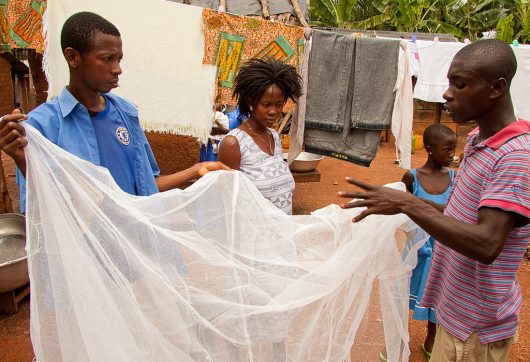
Volunteer Adofo Antwi (right) explains to mother-of-four Ama Konadu in Apenimadi, Bonsaaso Millennium Village, how to hang a bednet. Trained by Millennium Village Project staff, volunteers across the cluster work with communities to hang bednets at all sleeping sites and educate local people about the dangers of malaria. Since 2006, over 30,000 long-lasting insecticide-treated bednets have been distributed, covering all households in the cluster.

Malaria prevention in Ghana is a focus of the nation’s Health Service efforts and is seen as the largest epidemic tormenting the Ghana people. Malaria is a potentially deadly disease caused by a one-celled parasite known as Plasmodium. This parasite is carried and transmitted by the Anopheles mosquito that feeds of humans.

People who become infected with malaria often show flu-like symptoms such as: fever, chills, aches and more. The devastation of this disease on not just the people, but the social and economic structure of Ghana, cannot be understated.

Who is Most Vulnerable to Malaria?

Over three million people contract malaria every year in Ghana which accounts for 44.5 percent of all outpatient attendances. Nearly half of all malaria cases in Ghana are children under the age of five and the disease is responsible for 12 percent of under-five deaths. Of those who die from malaria, 85 percent of them are children.

With such devastating numbers, especially for the nation’s children, it is no wonder malaria prevention in Ghana is the top priority of health officials. Not only are the children of Ghana at a greater risk of contracting malaria, but it also disproportionately affects pregnant women whose immune systems are lowered and more vulnerable during pregnancy.

Pregnant women who contract malaria can see severe adverse health effects such as maternal anemia which leads to: miscarriages, low birth weight, and even maternal mortality.

How does Malaria Affect Ghana?

Malaria prevention in Ghana doesn’t just save the lives of children and their mothers, but it also is necessary for the economic and technological growth of Ghana. Malaria has historically been the number one cause of illness and morbidity in Ghana, but malaria is also a major cause of poverty and poor productivity.

With nearly half of the three million malaria cases every year attributed to children, staying in school falls to the wayside as families focus on the recovery of their children. Being taken out of school, greatly affects one’s future earning capacity for themselves, their family, and their future children.

Obtaining an education is often the biggest tool to improving living conditions of not just the individual and their family, but the community as well.

Not only are children at a risk of death after contracting malaria, but children who survive and fight the disease carry long-term consequences into adulthood such as seizures and brain dysfunction. These conditions can make it difficult once the disease is gone to go back to school and receive an education.

Treating and fighting the malaria endemic costs Ghana a significant amount that causes economic growth to be slowed by 1.3 percent a year in Africa; the annual economic burden of malaria is estimated to be 1-2 percent of the Gross Domestic Product in Ghana.

Roll Back Malaria Initiative: Goals and Successes

In 1999, Ghana signed onto the Roll Back Malaria initiative developing a strategic plan of action for implementation. The goal of malaria prevention in Ghana, as dictated by the initiative, is to reduce malaria specific morbidity and mortality by 50 percent by 2010 and 75 percent by 2015.

While Ghana did not meet those deadlines at the expected times, Ghana continues to strengthen health services to make malaria prevention techniques more available to the people of Ghana. Strategies for malaria prevention in Ghana as seen on Ghana’s Health Services page includes the:

  • Promotion of insecticide treated bed nets usage; chemoprophylaxis in pregnancy and environmental management to reduce rate of infection
  • Improve malaria case management at all levels (from household to health facility);
  • Encourage evidence-based research to come up with effective interventions and
  • Improve partnership with all partners at all levels.

The Roll Back Malaria Initiative in Ghana empowers the nation to pursue goals to better equip health facilities with malaria diagnostic tools (microscopes or RDTs) and effective antimalarial drugs. Furthermore, the implementation of indoor residual spraying and the spread of insecticide treated materials such as bug nets, have shown success.

The Need for Scale-Up

Nearly 750,000 lives have been saved across Africa due to the Roll Back Malaria Initiative, but the fight for malaria prevention in Ghana still has a long journey ahead. Ensuring children in rural areas have access to clinics and malaria treatment options can be tricky.

Ghana still calls for a scaling up of this community-based treatment in more secluded districts; in districts where treatment is available, the cost of treatment can be out of reach for many families. The inability to access such resources decreases community engagement in treatment, and demonstrates how great the need in Ghana is for affordable malaria prevention methods.

– Kelilani Johnson

Photo: Flickr

March 20, 2018
https://borgenproject.org/wp-content/uploads/borgen-project-logo.svg 0 0 Borgen Project https://borgenproject.org/wp-content/uploads/borgen-project-logo.svg Borgen Project2018-03-20 01:30:392024-06-05 02:36:42Fighting Malaria Fights Poverty: Malaria Prevention in Ghana
Page 9 of 16«‹7891011›»

Get Smarter

  • Global Poverty 101
  • Global Poverty… The Good News
  • Global Poverty & U.S. Jobs
  • Global Poverty and National Security
  • Innovative Solutions to Poverty
  • Global Poverty & Aid FAQ’s
Search Search

Take Action

  • Call Congress
  • Email Congress
  • Donate
  • 30 Ways to Help
  • Volunteer Ops
  • Internships
  • Courses & Certificates
  • The Podcast
Borgen Project

“The Borgen Project is an incredible nonprofit organization that is addressing poverty and hunger and working towards ending them.”

-The Huffington Post

Inside The Borgen Project

  • Contact
  • About
  • Financials
  • President
  • Board of Directors
  • Board of Advisors

International Links

  • UK Email Parliament
  • UK Donate
  • Canada Email Parliament

Get Smarter

  • Global Poverty 101
  • Global Poverty… The Good News
  • Global Poverty & U.S. Jobs
  • Global Poverty and National Security
  • Innovative Solutions to Poverty
  • Global Poverty & Aid FAQ’s

Ways to Help

  • Call Congress
  • Email Congress
  • Donate
  • 30 Ways to Help
  • Volunteer Ops
  • Internships
  • Courses & Certificates
  • The Podcast
Scroll to top Scroll to top Scroll to top