• Link to X
  • Link to Facebook
  • Link to Instagram
  • Link to TikTok
  • Link to Youtube
  • About
    • About Us
      • President
      • Board of Directors
      • Board of Advisors
      • Financials
      • Our Methodology
      • Success Tracker
      • Contact
  • Act Now
    • 30 Ways to Help
      • Email Congress
      • Call Congress
      • Volunteer
      • Courses & Certificates
      • Be a Donor
    • Internships
      • In-Office Internships
      • Remote Internships
    • Legislation
      • Politics 101
  • The Blog
  • The Podcast
  • Magazine
  • Donate
  • Click to open the search input field Click to open the search input field Search
  • Menu Menu

Archive for category: Health

Information and stories on health topics.

Developing Countries, Disease, Global Poverty, Health

Ascariasis: A Major Health Problem in the Developing World

Ascariasis

Throughout the developing world, one kind of disease remains more common than any other: worms. In fact, according to The Huffington Post, recent figures have suggested that nearly every person residing in a developing country has some form of worm infection, due to the abundance of worm larva in soil all over the world.

While there are a variety of these infections, one in particular called ascariasis, or ascaris, has become so widespread that, according to the Center for Disease Control, it “account[s] for a major burden of disease worldwide.” In total, 807 million to 1.2 billion people around the world are infected with this parasitic illness, which is also classified as a neglected tropical disease.

It is caused by the consumption of its eggs, which reside in contaminated soil. This happens when fingers that have touched contaminated soil are put in the mouth or if produce has not been properly washed, cooked and peeled.

After ingestion, the eggs make their way to the intestine, where they hatch into larva. The freshly spawned larvae then wait to develop into fully mature worms. An adult female worm can grow up to around 30 cm in length while in the intestine, all while producing eggs that will then return to the soil via the host’s feces.

Upon reaching maturity, these adult worms wiggle through the intestinal wall and make their way towards their host’s lungs through the blood stream. This is where things get even more disgusting. Once near the lungs, they reside by the back of the throat, where they once again lay their eggs and continue the cycle.

Sufferers often do not experience any symptoms, but some of the most common signs of the disease are abdominal pain, coughing, difficulty breathing and fever. In more severe cases, excessive worm growth can cause intestinal blockages. As the worms migrate to the lungs, they are also one of the most common causes of Asthma in the developing world.

Ascariasis can stunt the growth of young children and this age group is also its most common target. When children play in the soil they expose themselves to risk of infection when putting their fingers in their mouths afterward. While usually not lethal, ascaris takes the lives of 60,000 annually, most of which belong to children.

In order to combat this disease, the World Health Organization and many other international aid organizations have attempted mass de-worming efforts. Using the two drugs albendazole and mebendazole, these groups have made progress by treating whole communities.

Another effective way of preventing ascaris does not involve drugs at all and instead relies on health education. These campaigns teach those in afflicted areas how to keep a sanitary kitchen and how to consume food safely, without the risk of catching the disease.

While treatment efforts are ongoing, less than 40 percent of the world’s children in need of treatment have not actually received any. This accounts for more than 850 million children worldwide and stands as one of the largest public health issues in the world. In order to improve the lives of millions, deworming campaigns must carry on.

– Andrew Logan

Sources: The Center for Disease Control, The Deccan Herald, The Huffington Post, The New York Times, The World Health Organization
Photo: Flickr

July 24, 2015
https://borgenproject.org/wp-content/uploads/borgen-project-logo.svg 0 0 Borgen Project https://borgenproject.org/wp-content/uploads/borgen-project-logo.svg Borgen Project2015-07-24 19:02:342024-05-27 09:25:54Ascariasis: A Major Health Problem in the Developing World
Global Poverty, Health, Technology

Off-Grid Vaccine Refrigerators Improve Immunization

Immunization
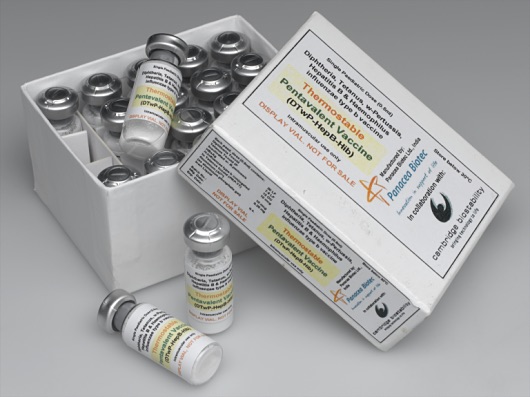
Most vaccines are heat-sensitive and must remain in a cool, controlled environment. However, this is easier said than done when the vaccines must be transported over a great distance, arriving at a remote location with frequent power outages or no electrical grid at all.

Introducing the direct-drive solar refrigerators: a solar-powered fridge that keeps vaccines cool for long periods of time without relying on gas or kerosene. Off-grid refrigerators were introduced in the 1980s in areas without electricity, but recent technological improvements have made them more efficient and accessible than ever before.

The new technology, sponsored by PATH and the World Health Organization, has “direct drive” technology that uses the sun’s energy to freeze water, creating an ice “bank” that the fridge can tap into during the nights and cloudy days.

A direct-drive solar refrigerator could prove to be invaluable to developing countries. Immunizations would be more stable and more accessible, meaning people would get treated faster.

But the fridges are not the simplest of innovations—any given country will need a long-term plan upon making the initial investment for semi-regular maintenance and repair. On top of that, an experienced professional would have to install the fridge to ensure it is done correctly, and then train local technicians to maintain and repair them.

Despite the drawbacks, the direct-drive solar refrigerator is already working. In the Philippines, a solar refrigerator called the Sure Chill is storing vaccines for longer than previously possible, helping rebuild the cold chain infrastructure after the typhoon in 2014. The Sure Chill fridges uses solar and water power and can run without electricity for up to 10 days. These fridges have a big price tag, about $2,600 each, but are already proving to be extremely worthwhile.

– Hannah Resnick

Sources: Alternative Energy, Science Dev, WHO
Photo: Flickr

July 24, 2015
https://borgenproject.org/wp-content/uploads/borgen-project-logo.svg 0 0 Borgen Project https://borgenproject.org/wp-content/uploads/borgen-project-logo.svg Borgen Project2015-07-24 18:52:182024-12-13 17:52:01Off-Grid Vaccine Refrigerators Improve Immunization
Health, Sanitation, Water

Ingredients for Clean Drinking Water: Saltwater and a Car Battery

clean_drinking_water
As of 2013, around 738 million people across the world do not have access to clean drinking water. Of these people, an approximate 8 million die as a consequence of this inaccessibility.

Water is the paramount need for all human being. Sanitation of this water is vital for preventing many water-borne diseases that can potentially be fatal. Despite the development of new methodologies to sanitize water, the process of chlorination remains unparalleled in its prevalence and efficiency.

The process of chlorination, as the name suggests, uses chlorine gas or bleach to purify water. Chlorine gas is highly toxic and an effective antimicrobial agent. Chlorine also remains in water through longer periods of time than its alternatives. This reduces the costs of repeated purifications.

Despite these advantages that put chlorination far ahead of its counterpart purification methods, it is still difficult to successfully utilize this technique in developing countries. Chlorine gas and its derivatives – such as bleach – are highly reactive and can be dangerous in excessive quantities. The chlorine gas is sold compressed in cylinders, and its pressure requirements change in accordance with the water source to be chlorinated. Hydraulic equipment necessary for safe chlorination is not always accessible in remote areas.

These safety considerations pose a dilemma for the safe sanitation of drinking water. Recently, Mountain Safety Research (MSR), an outdoor gear manufacturer, collaborated with an NGO to release an innovative solution to the problem.

Their device, Smart Electrochlorinator or SE200, uses saltwater and a car battery to produce a carefully-calculated amount of chlorine gas. It consists of a canister that attaches to a battery through jumper cables. The canister is filled with salt solution, and the dissolved salt is dissociated into ionic chloride ions.

The ions are then converted into bleach electrochemically. The hydrogen gas produced from the battery reacts with the chloride ions to form perchlorate, or bleach. The added advantage of the device is in its specificity – it is designed to calculate and produce specific amounts of chlorine per gallon of water. This maintains the concentration of chlorine in water at a constant level and within safe ranges.

The chlorinator is lightweight and portable, which is important in smaller remote areas. It can purify up to 20 liters in a meager 5 minute interval. The device is also notably energy efficient: a 12 volt battery can be used to generate enough chlorine to purify 400,000 liters of water.

The device has so far been tested successfully in field operations in Kenya, Mali, Tanzania, Zimbabwe and Thailand. It is especially noted for its feasibility in small population communities, where large-scale sanitation does not reach and household purification is a hassle. The chlorination is relatively inexpensive as well: at around US$200, it can provide a clean supply of water for 200 people for a period of five years.

As with any new technology, there are issues with this device as well. As it is designed for use in remote areas, it is questionable as to how technical issues might be dealt with. Any of the maintenance issues needing to be fixed can seriously jeopardize a steady supply of clean water. Moreover, in spite of pictorial instructions, there is always the danger for misuse. These are some of the issues that need to be fine-tuned for the chlorinator’s effective usage.

Despite the issues that need to be resolved, the chlorinator is undoubtedly an innovative initiative in the provision of clean drinking water to each and every human being in the world.

– Atifah Safi

Sources: CDC 1, NPR, Cascade Designs, CDC 2
Photo: Flickr

July 24, 2015
https://borgenproject.org/wp-content/uploads/borgen-project-logo.svg 0 0 Borgen Project https://borgenproject.org/wp-content/uploads/borgen-project-logo.svg Borgen Project2015-07-24 18:29:082024-12-13 17:51:52Ingredients for Clean Drinking Water: Saltwater and a Car Battery
Global Poverty, Health, Technology

Cancer Seeing Glasses Developed by Nigerian Scientist

cancer_seeing_glasses

Dr. Samuel Achilefu, a Nigerian born scientist, has developed glasses that can see cancer cells. For this new technology, Dr. Achilefu was awarded the 2014 St. Louis Award.

This award is given to a recipient who has made outstanding contributions to the profession of chemistry and has demonstrated potential to further the profession.

Dr. Achilefu, a professor of radiology and biomedical engineering, and his team developed glasses that contain imaging technology. The glasses are intended to help surgeons view cancer cells while operating, instead of operating “in the dark.”

The project began in 2012 when Dr. Achilefu and his team received a $2.8 million grant from the National Institutes of Health. Before the grant, the team received limited funding from the Department of Defense’s Breast Cancer Research Program.

The glasses were in the development stage for years, testing the technology on mice, rats and rabbits to confirm the effectiveness of the glasses.

In order to see the infected cells, two steps must be followed.

First, the surgeons must inject a small quantity of an infrared fluorescent marker into the patient’s bloodstream. The marker, also known as a tracer, contains peptides that are able to locate the cancer cells, and buries itself inside.

The tracer lasts about four hours. As it moves through the patient’s body, it will clear away from non-cancerous tissue.

By wearing the glasses, the surgeon can inspect the tumors under an infrared light that reacts with the dye. The combination of the tracer and infrared light causes the tumor to glow from within and allows the surgeon to see the infected cells.

This technology was first tested on humans at the Washington University School of Medicine in June 2015. Four patients with breast cancer and over two-dozen patients with melanoma or liver cancer have been operated on using the goggles.

Ryan Fields, a surgical oncologist who is collaborating with Dr. Achilefu says, “[the glasses] allow us to see the cells in real time, which is critical. Because the marker has not been FDA approved, doctors are currently using a different, somewhat inferior marker that also reacts with infrared light.”

Julie Margenthaler, a breast cancer surgeon, explains that many breast cancer patients must go back for second operations because the human eye cannot see the extent of the infected cells alone.

“Imagine what it would mean if these glasses eliminated the need for follow-up surgery and the associated pain, inconvenience, and anxiety”.

The Food and Drug Administration are still reviewing the cancer seeing glasses and the tracer developed by Dr. Achilefu and his co-researchers. But, if the glasses are approved, the removal of cancerous cells has been changed forever. And most importantly, patients will receive the care in order to treat their cancer.

– Kerri Szulak

Sources: IT News Africa, Premium Times, St. Louis Section of American Chemical Society
Photo: Pax Nigerian

July 24, 2015
https://borgenproject.org/wp-content/uploads/borgen-project-logo.svg 0 0 Borgen Project https://borgenproject.org/wp-content/uploads/borgen-project-logo.svg Borgen Project2015-07-24 08:46:412024-06-04 01:17:40Cancer Seeing Glasses Developed by Nigerian Scientist
Global Poverty, Health, Humanitarian Aid

The State of Healthcare in Yemen Today

Health_Care
The conflict in Yemen, which has been raging for the past three months, has led to a humanitarian catastrophe that has caused 2,800 deaths, displaced over a million people, and caused 21 million Yemenis to be in dire need of immediate assistance, according to UNICEF. The human rights organization has also projected that in the next 12 months, 2.5 million children will suffer from chronic diarrhea, 1.3 million from pneumonia, and 280,000 from severe malnutrition.

These projections are based off the massive destruction of the country produced by the recent crisis, which has caused immeasurable damage to Yemen’s infrastructure and has prompted the United Nations to declare that the country now stands on “the edge of civil war.”

Yemen, a country of 25 million which contains numerous religious and ethnic factions, has long been a breeding ground for violent extremism, producing some of the worst known-terrorists in recent history, such as Osama Bin-Laden. The recent conflict in Yemen represents one manifestation of the ethnic and religious tension which characterizes Yemenese society, which exploded into full-blown fighting when the Houthi’s (an Iran-backed Shi’a rebel group from the North) forced Sunni President Abdrabbuh Mansour Hadi out of the capital Sanaa in February. Mr. Hadi is now seeking refuge in Riyadh, Saudi Arabia, while his country bears the near-daily brunt of attacks on the part of Houthi rebel groups and an Arab-backed coalition, led by Saudi Arabia and including Egypt, Morocco, Jordan, Sudan, the United Arab Emirates, Kuwait, Qatar and Bahrain.

Yemen’s healthcare system, which was in poor condition prior to the recent fighting, has been especially hard-hit as a result of the crisis, which has resulted in dwindling medical supplies and the destruction of numerous hospitals throughout the country. A blockade by the Arab coalition, and restrictions that were placed on the commercial import of fuel, food, and medical supplies by the international community have helped to exacerbate the country’s healthcare problems, making it impossible for the approximate 90% of Yemenis who depend upon these supplies to gain access.

Aid workers also say that the crisis has contributed to a rising number of preventable deaths, with an increasing number of children dying from relatively minor illnesses, such as strep throat. According to the World Health Organization, an inability to access even basic medical care, like obstetrical support during childbirth, and the closing of national programs to fight diseases such as tuberculosis, has caused a surge in the number of people who require urgent medical care, which stood at 8.6 million in March. In addition to lack of supplies, the frequent droppings of bombs and raiding of hospitals carried out by Houthi groups have led to the closure of over 158 health facilities. According to officials, this has contributed to the deaths of 470,000 children under the age of five, as well as the outbreak of diseases such as polio and measles throughout the country.

As conflict continues to spiral out of control in Yemen, humanitarian organizations have begun to adjust their response to the country’s humanitarian and health crisis, which many officials believe to be getting worse. According to Dr. Ahmed Shadoul, WHO’s Representative to Yemen, “Yemen’s health system is on the verge of breakdown, and it is only thanks to the heroic efforts of the country’s health workers, the resilience of its brave people and the tireless efforts of national and international humanitarian organizations that any semblance of health care is being provided.”

In order to attempt to hold this fragile structure of Yemen’s healthcare service together, the WHO released a revised Yemen Humanitarian Response Plan on Friday, June 17. The Revised Plan calls for $152 million to enable the WHO and its partners to meet the health needs of 15 million Yemeni citizens, whose health and livelihoods continue to be devastated as their country devolves into violence.

– Ana Powell

Sources: The Guardian, UNICEF, Washington Post, World Health Organization
Photo: UN Multimedia

July 23, 2015
https://borgenproject.org/wp-content/uploads/borgen-project-logo.svg 0 0 Borgen Project https://borgenproject.org/wp-content/uploads/borgen-project-logo.svg Borgen Project2015-07-23 11:03:262024-12-13 17:51:59The State of Healthcare in Yemen Today
Children, Global Poverty, Health, Women & Children

Save Lives At Birth Challenge Encourages Innovation

Save_Lives_At_Birth

The Save Lives At Birth Challenge seeks to improve the chances of survival for mothers and newborns in developing nations. Their aim is to leapfrog existing products and conventional approaches to find the best possible solution to a difficult problem.

In Sub-Saharan Africa, women are 136 times more likely to die in childbirth than in developed countries. From the beginning of labor through the following 48 hours, the mother and newborn are at the highest risk of infection and complications, and the Save Lives At Birth Challenge seeks to change these unfavorable odds.

The Save Lives At Birth Challenge takes on the leapfrogging mentality: skip intermediary steps and get right to the fastest, smartest and cheapest solution. Each year, Save Lives At Birth offers grant money to innovators with big ideas that will help women and children.

One remarkable innovation that received this grant money was the Gene-Radar, created in Cambridge, Massachusetts. It’s an iPad-sized device that accurately tests for diseases such as HIV in less than an hour. In the developing world, it can take up to two weeks to get blood tests and cost up to $200. The Gene-Radar is still in production, however, by the time it is on the market it will be 10 to 100 times cheaper than the current option.

Using the Gene-Radar, health workers would simply have to take a prick of blood, place it on a nano chip, then place the chip in the device and have results within the hour. This would allow the health worker to easily identify the problem, and for the patient to quickly receive treatment.

Another innovation that received grant money was thought up by a car mechanic, Jorge Odón, who got the idea after watching a video on how to remove the lost cork from a wine bottle. He realized the same trick could be used to save a baby stuck in the birth canal. Odón’s invention is shockingly simple: an attendant would slip a lubricated plastic bag around the baby’s head, inflate to grip and then pull the bag until the baby emerges.

Doctors say this invention has enormous potential in the developing world. Odón has created a solution to a problem that has been around for years. It is innovation like this that the Save Lives At Birth Challenge seeks and promotes.

– Hannah Resnick

Sources: Save Lives At Birth 1, Save Lives At Birth 2, Saving Life at Birth 3, USAID
Photo: Save Lives At Birth

July 23, 2015
https://borgenproject.org/wp-content/uploads/borgen-project-logo.svg 0 0 Borgen Project https://borgenproject.org/wp-content/uploads/borgen-project-logo.svg Borgen Project2015-07-23 09:40:102020-07-07 14:37:13Save Lives At Birth Challenge Encourages Innovation
Global Poverty, Health, Women, Women & Children, Women and Female Empowerment

Ketamine Enables Life-Saving C-sections for Women in Developing Regions

ketamine

“Every minute of every day, a woman dies somewhere as a result of pregnancy or childbirth,” says Thomas Burke, chief of Massachusetts General Hospital’s Division of Global Health and Human Rights.

Ketamine, an inexpensive anesthetic, is a solution to the global crisis of maternal death due to pregnancy, enabling women to undergo C-sections rather than facing death or serious injury.

Each day, 1,400 women die from causes relating to pregnancy. Pregnancy is the second largest killer of women, behind only HIV/AIDS. And for each woman that dies from pregnancy, 50 to 100 are disabled or suffer from disease. Pregnancy related death affects around 15 to 20 million women every year.

A major cause of death and injury during pregnancy is obstructed labor and a lack of availability of a cesarean section. When labor is obstructed and no C-section is available, women frequently die, suffer from postpartum hemorrhage (which can also cause death), or suffer from fistula (where the bladder and rectum walls erode and are permanently connected to the vagina).

Many clinics and hospitals in developing countries lack the ability to perform C-sections because no anesthesia or anesthesiologists are present, which are necessary for this intensive surgery. This lack of anesthesia services presents a global problem, as anesthesia can potentially save countless lives of women.

Massachusetts General Hospital is addressing this crisis. They created an innovative way to provide anesthesia services to remote, extremely impoverished regions. Their initiative is called The Every Second Matters for Mothers and Babies—Ketamine for Painful Procedures and Emergency Cesarean Section (ESM-Ketamine). Ketamine is an extremely inexpensive anesthetic; it has been used without any formal procedure around the world for over 40 years, and has a near perfect safety record even with little equipment.

C-sections are the most common worldwide operation. One study of 49 countries estimates that if there was an increase in C-sections (by 2.8 million), 59,100 cases of obstetric fistula and 16,800 maternal deaths would be prevented.

The ESM-Ketamine initiative’s goal is to train clinicians that have no background in anesthesia. The Ketamine initiative offers four days of training for mid-level and above healthcare providers for C-sections and emergency surgeries, using Ketamine as an anesthetic, when no professional anesthetist is available.

Most anesthesia training programs require around four years of training, which is simply not feasible in these developing communities, nor an immediate solution to a crisis that is happening now.

The World Health Organization estimates that 10-15% of births require a C-section. Kenya Demographic Health Survey recently reported that C-section rates in many parts of Kenya are lower than one percent of births. A 2011 Kenya Ministry of Health study also found that only 18 anesthetists exist in the Nyanza region, which has a population of 5.8 million.

Since May 29, 2015, ESM-Ketamine initiative has trained healthcare providers in various hospitals across Kenya, resulting in 231 safe, life-improving surgeries. The program’s initial success demonstrates the powerful potential that Ketamine has for making previously impossible surgeries accessible to women in developing nations, women that provide deeply-rooted social and economic stability to their communities.

When a mother dies or is disabled, her entire community is impacted, and quality of life diminishe—child death rate increases, child education decreases, and both families and communities become more economically unstable.

The maternal mortality rate (MMR), or the ratio of the number of women that die per 10,000 births, was 11.7 in the United States in 2005. In 2014, there are still places on earth where one in six women die from pregnancy related causes; in South Sudan, Afghanistan, and Sierra Leone, the MMR is as high as 2,054.8.

The ESM-Ketamine program provides an inexpensive solution that allows women to undergo cesarean sections, rather than dying or becoming seriously disabled. Healthy women enable a healthy, stable community.

– Margaret Anderson

Sources: Massachusetts General Hospital, World Journal of Surgery, Harvard H Policy Review
Photo: Massachusetts General Hospital

July 23, 2015
https://borgenproject.org/wp-content/uploads/borgen-project-logo.svg 0 0 Borgen Project https://borgenproject.org/wp-content/uploads/borgen-project-logo.svg Borgen Project2015-07-23 08:42:042020-07-07 14:44:59Ketamine Enables Life-Saving C-sections for Women in Developing Regions
Global Poverty, Health

A Strange Look Into Turkey’s Mad Honey

Turkey's-poisonous-honey

It’s a substance that would raise an eyebrow or two for its potentially deathly effects, but for some natives in Turkey, poisonous honey is a treat worth “dying for.”

Dating back to 401 B.C., Greek philosopher Socrates’ pupil Xenophon detailed his fascination with and discovery of a honeycomb that had inflicted the jittering in soldiers’ legs and a “fit of madness” among those who had consumed a large amount of the substance.

The pain-causing honey would be known as “mad honey,” and upon further discoveries, in 67 B.C., it proved useful as a lethal weapon for the Persians’ fight against Roman treachery, when opposing forces mistakenly “gobbled it up” and fell into an extreme state of hysteria.

Centuries later, the Black Sea would serve as an abundant harvesting zone for the honey, initiating trade with European regions in the 1700s for infusing the toxin with alcoholic beverages for high risk-taking drinkers. Since the exportation, mad honey has found its way into outside countries like Japan, Germany and Switzerland.

It wouldn’t be brought into the public eye until two centuries later: the toxic-coated honey made its rounds at public health clinics throughout the mid- to late 1980s, when 11 patients were admitted for poisoning pertaining to the intake of mad honey.

Determined by health analysts, the poisonous substance is typically found in the eastern Black Sea region of Turkey, where nearby northern Turkey-bred bees roam rhododendron flower beds retaining grayanotoxin, the offsetting poison trigger thriving within the nectar of mad honey. Although in earlier studies it was always noted for its hazardous aftereffects, the alleged benefits of consuming mad honey include treating diabetes and improving sexual performance.

The benefits have since then ignited forms of debate by fellow travelers and “honey experts,” who proclaim that such allegations are only marketed as “belief” tools to contribute to further purchases of the substance.

Every now and then, the product will be requested by a large number of consumers, especially adventurous travelers visiting Turkey.

In 2011, British publication The Guardian warned readers that no more than one teaspoon of mad honey should be consumed at a time, as it will immediately trigger an irregular heartbeat (yet “rarely” cause fatal damage).

Although the news source reported that one would have to track down rare, hard-to-find carriers if one wished to try the toxic delight, mad honey has been serviced via online purchase at prices over USD$160.

Though it is remotely legal upon purchase in Turkey, and may be viewed to some degree as a “responsible” intake substance, some are wary of the potential consequences it could have on the misinformed.

In a 2012 public health study conducted by lead researcher Suze A. Jansen, if cattle are to ingest the mad honey, they will be prone to an assortment of neurological side effects; their response is more hazardous than that of humans.

Unearthed, Jansen found that cattle were more susceptible to lethal aftereffects if they consumed large quantities of mad honey. Among humans, it is rare for there to be a case where more than a drop is ingested.

As research continues to develop, analysts are currently placing the proposed claims of increased sexual performance into clear perspective. They are also determining whether or not mad honey should be pulled off the shelves of selected Turkish stores, and if doing so will lead to the end of underground purchases from online vendors.

– Jeff Varner

Sources: NCBI, The Guardian, NCBI, Modern Farmer, SFGate
Photo: Deep Roots At Home

July 23, 2015
https://borgenproject.org/wp-content/uploads/borgen-project-logo.svg 0 0 Borgen Project https://borgenproject.org/wp-content/uploads/borgen-project-logo.svg Borgen Project2015-07-23 08:09:502024-12-13 17:51:53A Strange Look Into Turkey’s Mad Honey
Global Poverty, Health

Why This Year’s Flu Epidemic May Be the Worst One Yet

Why this year's flu epidemic may be the worst one yet - TBP

Every winter, the elderly line up at their local drug store and people start walking around cities with face masks—all hoping to avoid getting this year’s strain of the flu. But much like many other diseases, the flu hits people in undeveloped countries, who have minimal access to quality healthcare, harder than it hits those in the United States. This summer, poultry farmers in West Africa are hit particularly bad as the flu epidemic spreads between their livestock.

“[Poultry farming] was our main activity for revenue,” said Naba Guigma, a poultry farmer from Burkina Faso’s Boulkiemde province, a region hit particularly hard by this strain, told IRIN. “Now I have no more poultry. The henhouse is empty.”

Millions of other farmers find themselves in the same situation as Guigma, as the sector has been steadily growing in West Africa since 2005. In Cote d’Ivoire alone, jobs in poultry farming have increased by 70% between 2006 and 2015, according to the U.N.’s Food and Agriculture Organization (FAO). This kind of job growth means that this epidemic does not only affect individual farmers but damages the entire regional economy.

The strain was confirmed to be H5N1, a particularly deadly strain of the bird flu or H1N1 that circled Africa, America and beyond in 2008 and 2009. First identified in January in Nigeria, this poultry flu has since shown up in Cote d’Ivoire, Burkina Faso, Ghana and Niger. Before January, what is commonly known as “bird flu” had not been seen in the region since the epidemic in 2008.

This strain of the disease is particularly dangerous because it can kill the chickens before it is recognized. Guigma initially thought his chickens and guinea fowl were sick with the Newcastle virus, a routine poultry disease. Just two weeks after Guigma first noticed the signs of disease, all of his 120 birds—worth up to $515—died, leaving Guigma without any source of income and with higher prices for poultry in his region.

“At this point, we don’t know very much about these viruses,” said CDC officer Alicia Fry at a press conference with the International Business Times in April. However, given that the virus kills animals in a radius of a contaminated copse and the main way of dealing with exposed animals is killing them on compensating their owners, the future does not look bright for these poultry farmers.

“Nothing about influenza is predictable—including where the next pandemic might emerge and which virus might be responsible,” the United Nations health agency told International Business Times in March. According to the World Health Organization, if this flu is not well-monitored, it could be worse than the 2009 swine flu outbreak that killed over 284,000.

– Eva Lilienfeld

Sources: IB Times 1, IB Times 2, Irin News
Photo: Newshunt

July 22, 2015
https://borgenproject.org/wp-content/uploads/borgen-project-logo.svg 0 0 Borgen Project https://borgenproject.org/wp-content/uploads/borgen-project-logo.svg Borgen Project2015-07-22 17:10:322024-05-24 23:42:48Why This Year’s Flu Epidemic May Be the Worst One Yet
Global Poverty, Health

Polio in Ethiopia Eradicated

Polio in Ethiopia
The World Health Organization confirmed that polio in Ethiopia has been eradicated after an assessment team concluded the evaluation process from June 8 to June 12, 2015. This last polio outbreak began almost two years ago in the Horn of Africa, specifically in Ethiopia, Kenya and Somalia.

The assessment team consisted of experts from the Centers for Disease Control, Rotary International, the United States Agency for International Development, the Bill & Melinda Gates Foundation, CORE Group, the United Nations Children Fund, the World Health Organization Headquarters and the World Health Organization Horn of Africa Polio Coordination Office.

The assessment team worked together throughout the outbreak in all three countries to determine that global standards had been met in response to the outbreak and that the transmission of polio had been interrupted. To do this, the team monitored updates from the Federal Ministry of Health on such matters as immunization progress and activities, funding aspects, communication and surveillance.


Polio in Ethiopia: Remaining Polio-Free


The assessment also provided a framework for the efforts still needed to maintain a polio-free status. In order to remain polio-free, Ethiopia needs to update its outbreak and preparedness response plan, strengthen routine immunization and fortify their implementation of acute flaccid paralysis (AFP) surveillance.

AFP is the symptom that indicates that polio could be present. It means that limbs are floppy and lifeless. However, its presence could also be due to other causes. As a result, AFP must be reported in every child less than 15 years of age and tested for poliovirus within 48 hours of onset.

It is expected that there are one to two cases of AFP in every 100,000 children under the age of 5. If there are no reports of AFP in such circumstances, then a region is considered to be “silent.” “Silence” indicates a weakness in the surveillance system, and a failure to end this “silence” could prevent the eradication of polio.

According to WHO, “As long as a single child remains infected […] as many as 200,000 new cases could result every year within 10 years, all over the world.”

Polio is caused by a highly infectious virus, poliovirus, which invades the nervous system. However, 90% of infected people have no symptoms or just very mild symptoms that go unnoticed. In other cases, symptoms could consist of fever, fatigue, headache, vomiting, stiffness in the neck and pain in the limbs. One in 200 infected people become irreversibly paralyzed, usually in the legs. Five to ten percent of those paralyzed die because their breathing muscles become paralyzed.

Across the Horn of Africa, 223 children became paralyzed during the last two years, due to the poliovirus.

Since there is no cure for polio, the polio vaccination is the only protection. In Ethiopia, social mobilizers were successful in their efforts to raise parents’ awareness of the risks of polio and upcoming campaigns to vaccinate children.

It is these connections among informed social mobilizers, healthcare workers and parents within a community that not only leads to vaccination but also builds understanding and commitment to recognizing and reporting AFP to authorities.

Although vaccination and AFP are critical in the eradication of polio, this is not accepted knowledge everywhere. Taliban militants strongly resist vaccination campaigns and are considered responsible for deadly attacks on polio vaccination workers. They “view the campaign as un-Islamic and the health workers are Western spies,” according to The New York Times. Pakistan accounted for 85% of the polio cases reported in 2014.

Ethiopia reported its last case of polio on January 5, 2014. Kenya has also halted the transmission of polio, having reported its last case of polio on July 14, 2013. Somalia has not yet been assessed for eradcation, even though it reported its last case on August 11, 2014. The Somalian government is unable to reach approximately 350,000 children under the age of 5 in order to administer vaccinations, and the assessment team has found gaps in their surveillance efforts.

In spite of these hurdles, the Global Polio Eradication Initiative, launched in 1988 by the World Health Assembly to eradicate polio worldwide, has made enormous progress. Since that time, the number of people infected with the poliovirus has dropped more than 99%. In 2014, only 3 countries remain polio-endemic: Afghanistan, Pakistan and Nigeria.

– Janet Quinn

Sources: Global Polio Eradication Initiative, The New York Times, Outbreak News Today 1, Outbreak News Today 2, WHO
Photo: Flickr

July 22, 2015
https://borgenproject.org/wp-content/uploads/borgen-project-logo.svg 0 0 Borgen Project https://borgenproject.org/wp-content/uploads/borgen-project-logo.svg Borgen Project2015-07-22 10:42:142020-07-08 13:55:41Polio in Ethiopia Eradicated
Page 175 of 212«‹173174175176177›»

Get Smarter

  • Global Poverty 101
  • Global Poverty… The Good News
  • Global Poverty & U.S. Jobs
  • Global Poverty and National Security
  • Innovative Solutions to Poverty
  • Global Poverty & Aid FAQ’s
Search Search

Take Action

  • Call Congress
  • Email Congress
  • Donate
  • 30 Ways to Help
  • Volunteer Ops
  • Internships
  • Courses & Certificates
  • The Podcast
Borgen Project

“The Borgen Project is an incredible nonprofit organization that is addressing poverty and hunger and working towards ending them.”

-The Huffington Post

Inside The Borgen Project

  • Contact
  • About
  • Financials
  • President
  • Board of Directors
  • Board of Advisors

International Links

  • UK Email Parliament
  • UK Donate
  • Canada Email Parliament

Get Smarter

  • Global Poverty 101
  • Global Poverty… The Good News
  • Global Poverty & U.S. Jobs
  • Global Poverty and National Security
  • Innovative Solutions to Poverty
  • Global Poverty & Aid FAQ’s

Ways to Help

  • Call Congress
  • Email Congress
  • Donate
  • 30 Ways to Help
  • Volunteer Ops
  • Internships
  • Courses & Certificates
  • The Podcast
Scroll to top Scroll to top Scroll to top