• Link to X
  • Link to Facebook
  • Link to Instagram
  • Link to TikTok
  • Link to Youtube
  • About
    • About Us
      • President
      • Board of Directors
      • Board of Advisors
      • Financials
      • Our Methodology
      • Success Tracker
      • Contact
  • Act Now
    • 30 Ways to Help
      • Email Congress
      • Call Congress
      • Volunteer
      • Courses & Certificates
      • Be a Donor
    • Internships
      • In-Office Internships
      • Remote Internships
    • Legislation
      • Politics 101
  • The Blog
  • The Podcast
  • Magazine
  • Donate
  • Click to open the search input field Click to open the search input field Search
  • Menu Menu

Archive for category: Global Poverty

Key articles and information on global poverty.

Global Poverty, Poverty Reduction

North-African Economies

algeria_poverty
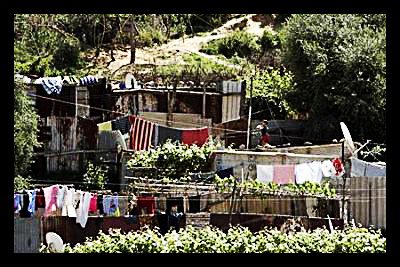
Rural poverty in North Africa is similar to rural poverty in South Africa, though the national poverty line varies dramatically. According to Rural Poverty Portal, this includes the differences between 6% in Tunisia and 90% in Somalia. North-African economies are in dire straits.

Poverty-ridden people, they said, “constitute about one third of Tunisia’s poor population, and about three fourths of Somalia’s poor.” However, poverty in Northern Africa is still concentrated in rural areas.

This has deep causes such as the limited availability of “good arable land and water,” and “the impact of droughts and floods.” Conflict has similarly disrupted agriculture and thus intensified poverty, especially in Somalia and Sudan.

Algeria is a country in Northern Africa whose economy is dominated by the state, according to the CIA World Factbook.

“Hydrocarbons have long been the backbone of the economy,” the Factbook explains, “Accounting for roughly 60 percent of budget revenues, 30 percent of GDP (gross domestic product) and over 95 percent of export earnings.”

This hydrocarbon exportation has brought relative “macroeconomic stability, with foreign currency reserves approaching $200 billion.”

Despite Algeria’s relative stability, things such as transportation and a stable social infrastructure remain obstacles for Northern Africa. High rates of illiteracy, especially among women, also negatively affect the economy.

Rural Poverty Portal furthermore illustrated that the northern region of the continent has “weak local institutions, poor integration with the national economy, and the migration of rural youth to urban areas.”

However, the urban areas in Northern Africa hold the most political influence. “Government policies and investments in the region tend to favor urban areas over rural areas,” they said.

Just south of Algeria lies Niger, a land-locked, Sub-Saharan nation. Though it shares a border with Algeria, a relatively stable African country, it has a very low income – less than $250 USD gross national income per capita, according to the World Bank Development Indicators as of 2005.

Moreover, CIA World Factbook states that Niger qualified for “enhanced debt relief under the International Monetary Fund program for Highly Indebted Poor Countries.” This significantly reduced Niger’s debt and annual obligations, and freed up funds for “basic healthcare, primary education, HIV/AIDS prevention, rural infrastructure and other programs geared at poverty reduction.”

The Factbook said that food security remains a problem in Niger, and is enhanced by refugees from Mali.

Sixty-three percent of the population lives below the poverty line, according to the most recent data which was gathered in 1993.

Northern Africa has a wide disparity between the very poor and the middle-class. Though some countries are more stable than others, education, food stability, access to clean water and social stability remain significant obstacles for the reduction of African poverty as a whole.

– Alycia Rock

Sources: Encyclopedia Britannica, BBC, Rural Poverty Portal, Central Intelligence Agency
Photo: Reuters


January 7, 2014
https://borgenproject.org/wp-content/uploads/borgen-project-logo.svg 0 0 Borgen Project https://borgenproject.org/wp-content/uploads/borgen-project-logo.svg Borgen Project2014-01-07 10:05:122024-05-25 00:38:39North-African Economies
Disease, Global Poverty, Health

Cancer Cases at All Time High

Cancer cases
According to the World Health Organization, Cancer cases are soaring each year. Data indicates an upward trend from 12.7 million cases in 2008 to 14 million in 2012. Cancer related deaths have also increased from 7.6 million to 8.3 million since 2008. With these growing rates, there is a desperate need for advances in diagnosis and detection of cancer.

An IARC report has shown a connection between increased smoking, obesity and cancer rates. This report also predicts a rise in cancer cases to 19.3 million by 2025. Several types of cancer kill every year but the most common cancer affecting thousands of women worldwide and is a leading cause of deaths in developing countries is attributed to breast cancer.

Developed countries do not have the clinical advances required to stop the disease at an early stage. Several people living below the poverty level don’t even know they have breast cancer since clinics are scarce. The Word Health Organization has also claimed this urgency for treatment of breast cancer in developing countries as thousands die from late detection. In 2012, around 522,000 women from around the globe died of this disease. Lung cancer is also among the top most common cancers worldwide, about 13% of total cancer cases. The large amount of lung cancer rates has been linked to both increased smoking from adults and young adults alike. Longer lifespans also contributes to these spiking rates according to the BBC.

Several health leaders from IARC believe that these growing cancer rates can be changed through preemptive action seen before with cervical cancer and access to the HPV vaccination. They hope that national programs for screening can produce similar excellent results and by giving easy access to treatment or detection centers, several will be able to beat other forms of cancer.

– Maybelline Martez

Sources: BBC, NY Daily News, Global Post
Photo: Giphy.com

January 5, 2014
https://borgenproject.org/wp-content/uploads/borgen-project-logo.svg 0 0 Borgen Project https://borgenproject.org/wp-content/uploads/borgen-project-logo.svg Borgen Project2014-01-05 16:04:092024-05-26 23:03:54Cancer Cases at All Time High
Foreign Aid, Foreign Policy, Global Poverty, Philanthropy, Poverty Reduction

American Sentiment Toward Global Poverty

American sentiment global poverty
Though the United States is one of the wealthiest nations in the world, the country ranks poorly when it comes to aid and contributions to global poverty. In a ranked global list of 27 developed countries, the United States tied for 19. This gap in aid can be explained by the belief that Americans care more about helping people geographically near them than helping people who live further away.

A study conducted by the Center for Global Development established a “Commitment to Development” Index which measures the contributions of developed countries to less-developed nations around the world. The study also splits aid into 6 different sectors in order to account for every kind of assistance given by countries.

The security sector of the study, for example, deducts points from countries that give weapons to unstable or tyrannical governments. The study concluded that the United States does less than the average developed country to help underdeveloped nations, resulting from the lack of attention given to people residing in further countries.

Furthermore, a study conducted by a PhD student at Stanford found a clear correlation between citizens’ support for foreign aid and the amount of aid given by their country. In the United States, many people are very generous and give public and private donations at high levels; however, these donations are directed to fellow Americans. As it stands, a majority of Americans support donating to their fellow citizens and cutting aid in the form of food and money to foreigners.

Both studies go far in explaining the low levels of aid given by the United States of America to foreign nations. In order to increase the amount of aid given to foreign nations, the United States will have to change its attitude, thus allowing for a positive affect on the amount of aid donated overseas.

– Lienna Feleke-Eshete

Sources: Think Progress, Center for Global Development

January 5, 2014
https://borgenproject.org/wp-content/uploads/borgen-project-logo.svg 0 0 Borgen Project https://borgenproject.org/wp-content/uploads/borgen-project-logo.svg Borgen Project2014-01-05 12:50:012024-12-13 17:49:51American Sentiment Toward Global Poverty
Global Poverty, Government

Federal Poverty Level: Its Affects on the Economy

Federal Poverty Level
The federal poverty level is a measure that is often cited yet seldom is it fully understood.  Currently, the federal poverty level is considered to be at about a $15,000 yearly income per two-person families and, of which, the extreme poverty threshold  is set to households that are living on less than $2 per day.  This definition is fairly controversial, and has been subject to change over the years based on a number of factors.  However, it is a key concept to understand, and not just for domestic policy but foreign affairs as well.

The federal poverty level, or threshold, has been in effect in its current state since the Kennedy Administration.  According to a paper by economist, Gordon M. Fisher, the level was initiated in order to understand the risks of living in poverty  and the affects of poverty on different groups of people.  During the Johnson Administration, the level was used as a target; particularly, during the administration’s War on Poverty.

The level was developed based on the cost of food for families at the time and what kind of nutritional diet a family would be able to have at different levels.  Under the first calculation of this threshold, done by an economist working for the Social Security Administration, the threshold was determined at $1,988 yearly income per two-person households.

Since its creation, while a number of revisions have occurred since the first set of calculations, the formula to determine the level has been an important factor in U.S. policy decisions.  When looking at global poverty, the extreme poverty measure is particularly important for the threshold has been used to set goals for anti-poverty measures.

The Millennium Project is one such measure that uses the federal poverty level calculations to influence foreign policy.  The project has a number of goals to keep the global economy move forward, but listed first on these goals is the effort to “eradicate extreme hunger and poverty.”  These goals were set in 1990 with initial targets set to hit these goals.

The initial target for the extreme poverty goal was to halve extreme poverty by 2015.  Reminiscent of Johnson’s War on Poverty, this goal looked to drive the force for a greater world society.  The goal actually was estimated to have been reached by 2008, an achievement that was praised as a major success for the Millennium Project.

Despite the fact that poverty levels are used by programs like the War on Poverty and the Millennium Project, the poverty threshold has a number of critics.  Popular criticisms are that the threshold is too low, as it still uses calculations from the 1960s, and are applied indiscriminately to very different regions.  Alternative poverty measures have been proposed by state governments and by groups such as the National Academy of Sciences.  Unfortunately, none have yet been adopted.

Federal poverty levels are important to understand considering they are most often used in discussions surrounding poverty.  The measures influence policy decisions and are used to track the path of the U.S. economy.  The indications are that extreme poverty is going down across the world, but what this says about actual poverty and what it says about the way it is measured could be debated in some corners.

– Eric Gustafsson

Sources: The New Yorker, Huffington Post, UN Millennium Project, Social Security Administration, Center for American Progress

January 5, 2014
https://borgenproject.org/wp-content/uploads/borgen-project-logo.svg 0 0 Borgen Project https://borgenproject.org/wp-content/uploads/borgen-project-logo.svg Borgen Project2014-01-05 12:30:202020-08-29 00:54:18Federal Poverty Level: Its Affects on the Economy
Global Poverty, Poverty Reduction

The Business Solution to Global Poverty

business solution
Almost three billion people live on less than $2 dollars per day. Paul Polak, one of the co-authors of the Business Solution to Poverty: Designing Products and Services for Three Billion New Customers (Berrett-Koehler Publishers 2013), believes that social entrepreneurship is the solution to ending global poverty.

From a marketing standpoint, those 2.8 billion people represent an enormous international market that is not being utilized in the economy. Innovation and technological advancements in the world of supply and demand could put products on the market that are affordable to those nearly three billion people. With a market of that size, anyone is bound to enjoy capital gain as well as improve the lives of countless people in need.

Author Paul Polak founded a business to sell cheap irrigation pumps to farmers in Bangladesh to increase their access to clean, healthy drinking water. The market for the water pumps raised the average income of the farmers by $150 million dollars a year. Contaminated water systems spread disease quickly to a massive amount of people, contributing to the ‘water crisis’ that plagues societies around the world.

What is the water crisis? Countries with no access to clean water are more heavily riddled with disease, rendering them unable to work and contribute to the economy. Medical treatment is expensive even for people who are working, so the inability to work combined with the need for disease treatment puts a heavy financial strain on a massive number of people- all because their drinking water is basically poisoning them. Unclean water spreads disease and consequently causes the economy to get stuck in a downward spiral deeper into poverty and distress. Of the 3.4 million water, sanitation, and hygiene-related deaths that occur annually, 99%  in the developing world.

Polak believes that selling affordable products that improve the lives of people in developing countries could benefit both the entrepreneurs marketing these products and the customers who are buying them. The Business Solution to Poverty outlines how companies focusing on the market in developing countries could bring an end to global poverty in approximately 30 years.

Another book called, “Thirty Years to Peace,” that more extensively details the business solution to global poverty timeline, is reported to be released in the next year. America has the wealth and manpower to launch these initiatives and the fact that it is a hugely profitable market should make it attractive to executives across the nation. There is no downside to ending global poverty through business ventures.

– Kaitlin Sutherby

Sources: Philstar, Project Humanity, Forbes
Photo: Giphy.com

January 5, 2014
https://borgenproject.org/wp-content/uploads/borgen-project-logo.svg 0 0 Borgen Project https://borgenproject.org/wp-content/uploads/borgen-project-logo.svg Borgen Project2014-01-05 04:00:362020-08-29 00:54:22The Business Solution to Global Poverty
Education, Global Poverty, Health, Hunger

Overpopulation and Public Health

overpopulation public health
There is much debate whether overpopulation poses public health risks. Some believe it is the cause of hunger and poverty throughout the world while others feel that it has never been a problem.  It is important to shed light on this fear of overpopulation as its consequences are said to be evident in all developing countries.

Several reports about Africa’s growing population has been connected to the starvation of millions of people. Every year 32.5 percent of children in developing countries suffer from malnutrition. Sustainable population advocates have pointed to the approximate 200 million hunger-related deaths in the past twenty years. Deterioration in global biodiversity has also been linked to overpopulation. Substantial data of species loss has been presented by countries such as China, Brazil and Mexico. Human settlements that are gradually increasing according to the rate of population is said to ruin the benefits of nature and destroy habitats. The consequences of overpopulation is also suggested in access to education, primarily in Africa. In African classrooms, children are unable to learn due to overcrowding.  Access to water, medical care and housing are all diminished when there are more people that require aid. Data from the United Nations further suggests that by 2050, 10 percent to 15 percent of land that is farmed today will not be available. This could potentially lead to a food crisis as the current population increases at a faster rate.

Those supporting a sustainable population see hope in public policies being employed in countries such as Bangladesh, Iran and Thailand. Results from securing social services to women and families indicate a large decrease in undernourished people in Asia, from 23.7 percent to 13.9 percent. This downward trend from simply giving access to birth control and adopting policies that give aid to small families suggests that overpopulation is an issue that can be solved.  Policies that provide family planning to those in remote, rural areas in Asia has led to stability in undernourishment over time. By merely shifting the focus on public policy these countries quickly witnessed better health standards, quality of education and housing availability, all of which offer hope to the remaining developing nations.

– Maybelline Martez

Sources: Scientific American, Huffington Post, World Hunger

January 4, 2014
https://borgenproject.org/wp-content/uploads/borgen-project-logo.svg 0 0 Borgen Project https://borgenproject.org/wp-content/uploads/borgen-project-logo.svg Borgen Project2014-01-04 12:46:592018-02-26 10:35:32Overpopulation and Public Health
Global Poverty, Government

10 Interesting Facts about Social Networking

kicking
With the advancement of technology, the Internet has become vastly popular for the masses. The Internet brings along a phenomenon, social networking. Networking has never been easier since applications are developed to foster this phenomenon, and people can access the social media through many channels: computer, laptops, even on their smart phones. Below are 10 interesting facts about social media.

  • 56 percent of Americans have a social networking site.
  • 91 percent of mobile access is used for social networking.
  • More than 4.2 billion people use their mobile phones to accesses social networking site.
  • 230,060 years is the total amount of time the United States spend on social media.
  • 6.9 hours is the amount of time an average American spends on his/her social networking site in a month.
  • 22 percent of online time is accounted by social networking.
  • 40 percent of people socialize through networking sites over face to face communication.
  • 23 percent of Facebook users check on their account at least five times a day.
  • 20 minutes per day is how much time people spend on Whisper application for smartphone devices.
  • 400 million tweets is the average number of tweet being sent every day.

All the numbers are saying that social networking is becoming popular in the modern day and social networking is the most profitable way to reach wider range of audience with a limited budget. In other words, one might say that social media is the most effect marketing strategy. However, people tend to forget a more important matter, global poverty. To make a difference, a person only needs to make a 30 second phone call to his/her local senator or representative in the area, and it only take less than two minutes to post a link and express concern about international affair issues. Only one of us might not be able to make a difference, but with the combined force of society on social media, global poverty can gain a tremendous amount of attention not only domestically but globally.

– Phong Pham

Sources: t2Social, Media Bistro, Mashable, Telegraph, Slate, CNBC
Hongkiat

January 4, 2014
https://borgenproject.org/wp-content/uploads/borgen-project-logo.svg 0 0 Borgen Project https://borgenproject.org/wp-content/uploads/borgen-project-logo.svg Borgen Project2014-01-04 12:41:062024-12-13 17:49:5210 Interesting Facts about Social Networking
Activism, Advocacy, Global Poverty, Health, Inequality, War and Violence

Ethnic Tension Within Inner Mongolia

mongolia
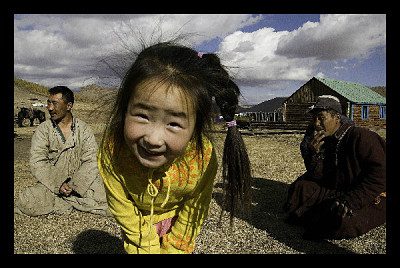
It is no secret that the concerns and rights of ethnic minorities in China fall to the wayside in favor of the Han, the ethnicity with the majority in the country. Inner Mongolia serves as an example of the cultural and economic strife caused by marginalizing one group over another. The result is what the Mongol minority believes is outright economic exclusion and the watering down of their culture.

One of the key issues within the region is the migration of the indigenous nomads from their native grasslands to the cities. The Chinese government waves off the migration as a move into modernity for the nomads. A removal from what Chinese authorities refer to as a “backward” culture, but as Nick Holdstock of the U.K. Independent points out, the natives have no say whatsoever when it comes to moving to the cities. This outflow of ethnic Mongolians to urban centers has raised fears among Mongolians that their culture, language and lifestyle are being threatened.

Another point of tension lies in the regional mining of rare-earth metals. Various mining companies have entered the region to take advantage of the lucrative prospects, especially since the value of these metals is demonstrated in their ubiquity among high-tech electronics. However, the mining has been accompanied by a degradation of the surrounding environment as well as the health of the nomads.

For example, the town of Baotou, a major mining hub, has seen its groundwater polluted to toxic levels, their crops ruined and much of their livestock destroyed. Moreover, the use of underground water sources, essential to the removal of impurities from the coal, has lessened the water available to crops and livestock. Many farmers, unable to deal with destruction of their livelihood, have moved away. The Guardian points out that the population within the surrounding villages of the Baotou plants has decreased dramatically. Those that have remained in the area are plagued by severe illness.

All of these factors have coalesced, creating serious economic problems for the ethnic minority. Environmental devastation of their grasslands has degraded some of the main forms of their economic livelihood; the mining industry in the region tends to hire workers from other provinces, excluding the nomads from many of the economic benefits the industry might bring.  Furthermore, those who have migrated to urban areas have discovered cultural barriers to finding gainful employment, namely an inability to speak passable Mandarin.

Tensions have, moreover, reached the point of violence in some instances. In 2011, a herder was killed by a passing coal truck when he attempted to prevent coal trucks from crossing into his land during his protest against the mining industry. Several days later another protester was killed by a forklift driver. Tensions finally boiled over and several thousand Mongolians went out to voice their opposition toward the mining activities.

Unfortunately, the case of Inner Mongolia is a harsh reminder among ethnic minorities in China of their second-class citizen status. Perhaps in time, the Chinese government will listen to the voices of protest among the disenfranchised minority groups that populate many rural areas throughout China. Until then, Mongolians and other ethnicities face major economic and cultural challenges.

– Zack Lindberg

Sources: The Independent, The Guardian
Fabio Ghioni

January 4, 2014
https://borgenproject.org/wp-content/uploads/borgen-project-logo.svg 0 0 Borgen Project https://borgenproject.org/wp-content/uploads/borgen-project-logo.svg Borgen Project2014-01-04 12:23:512016-02-06 08:44:53Ethnic Tension Within Inner Mongolia
Foreign Aid, Global Poverty

Mozambique & Foreign Aid

This past week, the United States Millennium Challenge Corporation (MCC) has refused to grant a second aid package to the government of Mozambique. These aid packages, also known as compacts, are given in the hope that the funds will allow the countries to build more infrastructure and combat national issues. The first compact of $506.9 million previously given to Mozambique was directed toward water supply, sanitation, road and agricultural improvements; however, many of these projects were delayed.

Because the conditions for a second aid package required that all projects funded by the first compact be completed, Mozambique was not eligible for more aid. The U.S. MCC did, however, contribute more funding to the current projects in Mozambique.

The first compact has supported Mozambique’s Farmer Income Support Project, Land Tenure Services Project, Rehabilitation of Roads Project, and Water and Sanitation project. The Farmer Income Support project aims to remove trees, provide support to increase crop yields and help farmers develop alternative sources of income. The Land Tenure project will address issues with land distribution laws and provide land-related services. The Rehabilitation of Roads project will attempt to improve markets by rehabilitating parts of the National Route 1, and the Water and Sanitation project will improve access to clean water supplies, especially in rural areas.

The government of Mozambique was taken aback by the rejection from the MCC; however, the country is also becoming less dependent upon foreign aid. In the past, foreign aid has been the center of the budget of the nation but in the future, Mozambique expects domestic resources to pay for 66.5 percent of the budget.

This increase in budget will allow an increase in education, health care, agriculture and rural development, the judicial system, security and more. The increase will also create new jobs, which will create a cycle of economic improvement.

– Lienna Feleke-Eshete

Sources: All Africa, All Africa
Photo: The OGM

January 2, 2014
https://borgenproject.org/wp-content/uploads/borgen-project-logo.svg 0 0 Borgen Project https://borgenproject.org/wp-content/uploads/borgen-project-logo.svg Borgen Project2014-01-02 04:00:422024-05-26 23:01:17Mozambique & Foreign Aid
Global Poverty

JFK Quotes

JFK Quotes
Being one of the most influential, charismatic, memorable American presidents of all time, John F. Kennedy didn’t get to serve even one full term in office before his tragic demise. He did, however, manage to leave quite the legacy behind: his philanthropic efforts, chiefly focused on prioritizing the revolution of human rights, first sparked the initiation of the Peace Corps. “Jack” had a lot to say about the subject; following are the most prominent, inspirational and thought-provoking of JFK’s quotes relating to poverty:

1. “The world is very different now. For man holds in his mortal hands the power to abolish all forms of human poverty, and all forms of human life.”

2. “If a free society cannot help the many who are poor, it cannot save the few who are rich.”

3. “To our sister republics south of our border, we offer a special pledge—to convert our good words into good deeds—in a new alliance for progress—to assist free men and free governments in casting off the chains of poverty.”

4. “Now the trumpet summons us again—not as a call to bear arms, though arms we need—not as a call to battle, though embattled we are—but a call to bear the burden of a long twilight struggle, year in and year out, ‘rejoicing in hope, patient in tribulation’—a struggle against the common enemies of man: tyranny, poverty, disease and war itself.”

5. “We can help make the world safe for diversity. For, in the final analysis, our most basic common link is that we all inhabit this small planet. We all breathe the same air. We all cherish our children’s future. And we are all mortal.”

JFK’s quotes, the man’s impact on the world before his disastrous death, and the very philosophy carefully hidden behind each word in his writing should not go unnoticed: although his physical body long gone, his good will and kind heart live on eternally through our memories and actions. Let yourself be inspired by JFK’s words to build a better tomorrow for all.

– Natalia Isaeva

Sources: The White House, The Quotations Page, JFK Experience

January 1, 2014
https://borgenproject.org/wp-content/uploads/borgen-project-logo.svg 0 0 Borgen Project https://borgenproject.org/wp-content/uploads/borgen-project-logo.svg Borgen Project2014-01-01 17:41:392018-01-30 13:14:09JFK Quotes
Page 2090 of 2176«‹20882089209020912092›»

Get Smarter

  • Global Poverty 101
  • Global Poverty… The Good News
  • Global Poverty & U.S. Jobs
  • Global Poverty and National Security
  • Innovative Solutions to Poverty
  • Global Poverty & Aid FAQ’s
Search Search

Take Action

  • Call Congress
  • Email Congress
  • Donate
  • 30 Ways to Help
  • Volunteer Ops
  • Internships
  • Courses & Certificates
  • The Podcast
Borgen Project

“The Borgen Project is an incredible nonprofit organization that is addressing poverty and hunger and working towards ending them.”

-The Huffington Post

Inside The Borgen Project

  • Contact
  • About
  • Financials
  • President
  • Board of Directors
  • Board of Advisors

International Links

  • UK Email Parliament
  • UK Donate
  • Canada Email Parliament

Get Smarter

  • Global Poverty 101
  • Global Poverty… The Good News
  • Global Poverty & U.S. Jobs
  • Global Poverty and National Security
  • Innovative Solutions to Poverty
  • Global Poverty & Aid FAQ’s

Ways to Help

  • Call Congress
  • Email Congress
  • Donate
  • 30 Ways to Help
  • Volunteer Ops
  • Internships
  • Courses & Certificates
  • The Podcast
Scroll to top Scroll to top Scroll to top