• Link to X
  • Link to Facebook
  • Link to Instagram
  • Link to TikTok
  • Link to Youtube
  • About
    • About Us
      • President
      • Board of Directors
      • Board of Advisors
      • Financials
      • Our Methodology
      • Success Tracker
      • Contact
  • Act Now
    • 30 Ways to Help
      • Email Congress
      • Call Congress
      • Volunteer
      • Courses & Certificates
      • Be a Donor
    • Internships
      • In-Office Internships
      • Remote Internships
    • Legislation
      • Politics 101
  • The Blog
  • The Podcast
  • Magazine
  • Donate
  • Click to open the search input field Click to open the search input field Search
  • Menu Menu

Archive for category: Global Poverty

Key articles and information on global poverty.

Global Poverty, Women and Female Empowerment

Why Anoyara Khatun is a Hero for Indian Children

Anoyara Khatun Anoyara Khatun was the victim of a very real threat to many Indian children. At age 12, Khatun became one of the millions of children who are trafficked every year. An organization called Save the Children rescued her from her life of domestic slavery, and since then she has been determined to be a part of the solution.

Upon returning to her village at age 13, Khatun realized that the situation was not much better for girls in her home in West Bengal than for girls in slavery. Girls from her home were forced into child marriages, and still more were being trafficked to cities.

According to the International Center for Research on Women, 47 percent of girls are married before age 18 in India. Meanwhile, a staggering 135,000 children are estimated to be trafficked in India annually.

When forced into marriage or work at a young age, children are robbed of their childhood; Khatun hopes to restore the gift of a childhood to young people in India.

Khatun joined the Save the Children’s Multi-Activity Centre almost immediately after escaping domestic slavery. However, she wasn’t able to reach as many Indian children as she thought was necessary to make a real impact.

Consequently, Khatun formed children groups throughout her village to discuss solutions to the rampant child marriage and trafficking in India, raise awareness about these issues and educate people about the dangers.

Over time, by working with Save the Children as well as a growing number of adults in the community, Khatun was able to accomplish amazing feats.

So far, she has been instrumental to reuniting 180 victims of trafficking with their families and rescuing 85 children from trafficking. She has also prevented 35 child marriages and registered 200 children into schools.

Recently, Khatun has expanded her horizons and joined many superstars in the charity world. She is working alongside Bill and Melinda Gates to push the Every Woman, Every Child initiative.

This initiative was launched during the UN Millennium Development Goals Summit in September 2010. It includes a goal to “address the major health challenges facing women, children and adolescents around the world.”

Clearly, Anoyara Khatun has a unique perspective and fervor for child rights. She is changing the lives of Indian children every day.

– Sabrina Yates


July 27, 2016
https://borgenproject.org/wp-content/uploads/borgen-project-logo.svg 0 0 Borgen Project https://borgenproject.org/wp-content/uploads/borgen-project-logo.svg Borgen Project2016-07-27 01:30:212024-12-13 17:55:30Why Anoyara Khatun is a Hero for Indian Children
Global Health, Global Poverty, Health

Lab At Your Fingertips: The Power of Low-Cost Diagnostic Tools

Low-Cost Diagnostic ToolsWhen health clinics are a two-day excursion away, diagnosis and early detection are crucial. While it is estimated that the practice of diagnostics comprises only three to five percent of healthcare spending, it impacts about 70 percent of healthcare decisions, according to the Royal Society of Chemistry. Therefore, investing in low-cost diagnostic tools has the potential to drastically impact the prevention and treatment of the leading causes of death in the developing world.
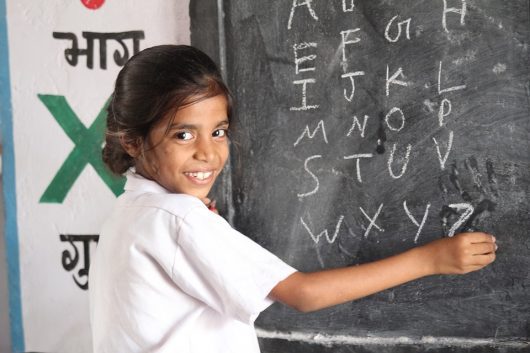
Diagnostics For All, a non-profit organization based in Cambridge, Massachusetts, strives to create innovative, point-of-care, low-cost diagnostic tools specifically designed for those that live in “resource-poor” communities. Among their research endeavors, Diagnostics For All has developed a paper-based diagnostic tool the size of a fingernail that can be used to diagnose a myriad of diseases including tuberculosis and diabetes.

Dr. George Whitesides, co-founder of Diagnostics For All, describes the paper microfluidic tool as a more advanced, quantitative version of a pregnancy test in a 2009 Boston TED Talk. The paper chip is used to wick away fluid such as urine and changes color depending on the micronutrients being tested.

Next, the idea is to have the user take a picture of the color-developed paper “microchip” and send it to a laboratory for analysis. This technology has the potential to eliminate the need to send doctors to these developing regions, lowers the risk of disease transmission that can occur when using “sharps” such as needles and can be inexpensively repeated various times for efficacy.

Why choose paper over other materials? “One reason for using paper is that it’s everywhere. We have made these kinds of devices using napkins and toilet paper and wraps, and all kinds of stuff,” says Whitesides. “So, the production capability is there. The second is, you can put lots and lots of tests in a very small place.”

Although paper is an economical resource, it would cost an estimated $800 to fund a single printer that is used to embed wax reading-strips into the chip to complete the device. Even then, the wax printer pays for itself when considering its ability to create 10 million tests per year if it ran 24 hours a day—each chip costing a mere five cents.

Cornell University’s Interaction Design Lab is currently developing a low cost diagnostic tool called Nutriphone. Nutriphone is a smartphone application and micronutrient testing device. Users add a dab of blood to a test strip that’s then inserted into a custom phone accessory which triggers the phone’s camera to take a photograph of the test strip. The Nutriphone app then analyzes the blood results to provide accurate health markers such as testing Vitamin B12—low levels of which may indicate anemia.

However, the main drawback of both Whitesides’ paper microfluidic chip and the Nutriphone app is cellular access in impoverished regions. While the spread of cellular technology is increasing in the developing world, 10 percent of the world population still lacks access to basic voice and text services, according to the Consumer Technology Association.

If increasing access to mobile phones in tandem with funding for the development and distribution of low-cost diagnostic tools were prioritized, the potential to bring DIY-medical testing to underprivileged communities could empower the world’s poor.

– Daniela N. Sarabia

Photo: Flickr

July 26, 2016
https://borgenproject.org/wp-content/uploads/borgen-project-logo.svg 0 0 Borgen Project https://borgenproject.org/wp-content/uploads/borgen-project-logo.svg Borgen Project2016-07-26 01:30:442024-12-13 17:54:40Lab At Your Fingertips: The Power of Low-Cost Diagnostic Tools
Education, Global Poverty, Volunteer

Five Opportunities to Teach Abroad

Opportunities to teach abroad
Teaching abroad may seem like a daunting task made only for the most experienced teachers, but this is not always the case. Here are some volunteer opportunities in multiple countries with either summer or year-long commitments. These opportunities to teach abroad offer an increase in cultural awareness, teaching experience, the opportunity to travel and unforgettable memories.

1. Sudan Volunteer Program (SVP)

SVP’s mission is to raise the standard of English amongst the Sudanese. SVP is working to accomplish their mission by sending native or native-level English speakers to Sudan to teach English at public higher education institutions. SVP has placed hundreds of volunteer teachers at schools that do not have qualified English teachers, in schools that are understaffed and in schools that are under-financed. SVP requires volunteers to commit to a minimum of six months and their only academic requirement is that volunteers must be a graduate or near graduate in any field.

2. WorldTeach

WorldTeach is an organization working around the world with volunteer opportunities in Morocco, Namibia, South Africa, Bangladesh, China, Nepal, Thailand, Poland, Samoa, the Marshall Islands, Micronesia, Chile, Colombia, Ecuador and Guyana. WorldTeach envisions a world where all children have access to a quality education and is working on that vision by teaching approximately 60,000 students yearly, according to their website. It has had over 7,000 volunteers who, together, have contributed over 12 million hours of service for WorldTeach. WorldTeach offers both summer and year-long teaching opportunities with potential TEFL certification.

3. CIEE

CIEE is an organization that offers a multitude of abroad experiences, one being volunteer teaching. CIEE has stations in Chile, China, Czech Republic, Dominican Republic, Morocco, Peru, Senegal, South Korea, Spain, Thailand and Vietnam that volunteers can choose from. CIEE encourages individuals to volunteer teach so they can see the world, gain real-world experience and make a difference in the lives of their students. They offer month-long, semester-long, and two-semester-long programs for individuals with the minimum of two years of a college education complete.

4. Projects Abroad

With 31 countries to choose from, Projects Abroad offers volunteer teaching opportunities to both professional teachers and individuals with little college education. Volunteers at Projects Abroad may teach full time, part time or simply be a teacher’s assistant. Program lengths differ between countries but typically can be anywhere from one month to two years. Projects Abroad gives its volunteers freedom to choose many aspects of their volunteer experience and make it unique to their aspirations.

5. United Planet

The mission of United Planet is to offer volunteers unique opportunities to live, learn and volunteer abroad while working alongside members of their destination’s local community. United Planet currently has volunteer teaching opportunities in Chile, China, Costa Rica, Ecuador, Ghana, Nepal, Peru, South Africa and Tanzania. Dependent upon the country, little to no teaching experience and college education is required. Volunteers have the option to choose programs anywhere from one week to three months, giving individuals with only a small window of time to volunteer a chance. United Planet’s programs strive to be immersive and authentic while providing their teaching volunteers with everything they may need to succeed.

– Bella Chaffey

Photo: Pixabay

July 26, 2016
https://borgenproject.org/wp-content/uploads/borgen-project-logo.svg 0 0 Borgen Project https://borgenproject.org/wp-content/uploads/borgen-project-logo.svg Borgen Project2016-07-26 01:30:192024-12-13 17:54:52Five Opportunities to Teach Abroad
Global Poverty, Refugees and Displaced Persons

World Refugee Day: Understanding the Plight of Refugees

Refugee
June 20, 2016 was recognized by organizations, communities and leaders alike as World Refugee Day. According to a report conducted by the United Nations, there is a record number of 65.3 million refugees who were displaced due to war by the end of 2015. This is more than the population of France, California, and Texas combined, with more than half of these refugees being children.

With such a high traffic of refugees being displaced globally, understanding the truth about this displaced population is more relevant than ever. Recent studies have shown an increase in anti-immigrant and anti-Muslim sentiments in classrooms and the workplace. One such study, conducted by the Southern Poverty Law Center revealed in a survey that included over a third of American teachers reported an increase of anti-immigrant sentiments in their classrooms.

However, these sentiments are often caused by general fear and media misrepresentation rather than the refugees themselves. In fact, refugees are very beneficial to the communities they move in to, offering an increase in both civic participation and great economic contributions. World Refugee Day sheds light on these facts and aids in the perception of refugees.

A recent study of refugees residing in Columbus Ohio showed that these displaced families and individuals made economic contributions of about $1.6 million. Moreover, these refugees also contributed to social diversity as well which is ultimately conducive to building a more globalized identity.

Refugee settlement and mentor programs, such as those conducted by The Catholic Charities Archdiocese of New Orleans (CCANO), which spur acceptance, tolerance and the chance at assimilation for many displaced individuals and families result in amazing rewards for the communities that establish them.

According to a study by The Refugee Integration Survey and Evaluation (RISE), which focused on the integration progress of refugees over a span of five years, most refugees offer valuable and productive roles in the communities they are displaced to. Programs such as those conducted by CCANO simply quicken the process. And events, such as those in Rochester, New York on June 18, 2016, held in honor of World Refugee Day, allow refugees to share their stories as well as their cultures, reminding us that these displaced people are first and foremost, people.

– Jenna Salisbury

Photo: Flickr

July 25, 2016
https://borgenproject.org/wp-content/uploads/borgen-project-logo.svg 0 0 Borgen Project https://borgenproject.org/wp-content/uploads/borgen-project-logo.svg Borgen Project2016-07-25 11:54:452024-12-13 17:54:46World Refugee Day: Understanding the Plight of Refugees
Economy, Global Poverty

Poverty in Iceland Drops as Tourism Rises

Poverty in Iceland
According to the Organisation for Economic Cooperation and Development’s (OECD) Better Life Index, Iceland‘s quality of life is very high. The country also has the highest employment rate of any OECD country. Simultaneously, however, poverty in Iceland affects 6,000 residents.
According to the Iceland Review, as of early 2015, around 9 percent of the population in the small country of Iceland fell into the low-income category. Recently, that number is steadily dropping thanks to a booming tourism industry. In 2011, upwards of 13 percent of the population fell below the poverty line.


Tourism Fights Poverty in Iceland


The 2008 financial crisis took a major toll on Iceland’s economy, leading to homelessness and unemployment. As a result, a Welfare Watch was created the following year in order to help alleviate these conditions.

In addition, the recent popularity of Iceland as a tourist destination has helped bounce the economy back towards its former financial success. The growing tourism industry has also created many new jobs for Icelandic residents. Unemployment rates have fallen and 45 percent of the jobs created within the past five years are related to the tourism industry.

There is no rest for the tourists — rental cars and lodgings are rapidly booked, even during the coldest months of the year, and Airbnb locations are second only to increasingly booked hotels. However, a host told Grapevine that he does not believe that even Airbnbs (in combination with traditional lodging vacancies) can meet the high demand.

The Icelandic bank, Islandsbanki’s projected future tourism rates estimate that in 2016 alone visitors will equal, or surpass, the number of people who live full-time in the island nation. Iceland’s growing fame has been attributed to volcanoes, inexpensive flights and layovers through Icelandair, as well as pop culture references like Game of Thrones.

Although many Icelanders are rejoicing at the tourism industry’s success, others are still wary of the future. The waterfalls and volcanoes of Iceland are major tourist honeypots, but increased crowding to these areas may be dangerous to both the environment and its visitors.

In the future, tourists may be discouraged to visit Iceland if the Icelandic Krona appreciates, causing prices to rise, or if the economy takes another hit.

There is also the fear that Iceland may lose part of its charm and culture as foreigners flock in. This is a trade-off for alleviating poverty in Iceland. Iceland is in need of money and, in the words of Bradley Turner of Grapevine, “The market doesn’t care much for memory, nostalgia, sentimentality, history.”

Poverty in Iceland continues to decline as a result of increasing visitors, but financial security comes at a price. Ironically, the Icelandic landscape and culture may be negatively affected by the country’s newfound popularity.

– Carrie Robinson

Photo: Flickr

July 25, 2016
https://borgenproject.org/wp-content/uploads/borgen-project-logo.svg 0 0 Borgen Project https://borgenproject.org/wp-content/uploads/borgen-project-logo.svg Borgen Project2016-07-25 01:30:502020-06-18 13:04:10Poverty in Iceland Drops as Tourism Rises
Global Poverty

Closing the Economic Gap to End Poverty in Hungary

Poverty in Hungary
As poverty in Hungary continues to increase, aid from several countries has been provided to the struggling European nation. As of 2015, Hungary suffers from the highest child poverty rate in the European Union.

One in three children lives in a home detrimental to their health with leaking roofs, mold, lack of an indoor toilet, and other sources of health risk. Data from the same year shows over 35 percent of Hungarian families now live below the poverty line.

For those living under these circumstances, day-to-day reality can be bleak. Increased rates of child starvation when not in school, overcrowded flats, and homes lacking insulation are just a few struggles of daily life which confront impoverished Hungarian families.

These devastating circumstances combined with economic pressures have motivated Hungarian youth to leave for work abroad — producing a rapidly aging population threatening to present welfare issues.

In efforts to make international relief funds as effective as possible, a new series of reports from the World Bank offers a promising method for ensuring their strategic use.

European Union funding and the commission of Hungary’s Ministry of Human Capacities have produced the Promoting Inclusive Growth in Hungary Advisory Service Activity, a project which has provided the framework for the World Bank reports.

These reports have identified a need for concrete initiatives, coordination between local and national level efforts, and targeted investments in order to more successfully combat poverty in Hungary.

Working with communities to address the needs specific to local areas, in addition to learning from positive and negative examples of past initiatives, is hoped to improve the efficacy of targeting poverty in the country.

In counteracting the departure of young workers, the reports have identified a particular need for emphasis on better skill development and increased job prospects. These measures will be instrumental in combating a simultaneously aging and declining population.

An additional factor addressed by the reports is the social exclusion faced by impoverished Hungarian families. This exclusion is often accompanied by a lack of access to the job skills training needed by young Hungarians for the transition from school to the workplace.

Efforts to close the economic gap between Hungary’s advantaged and disadvantaged populations must also include attention to this accompanying social gap. The World Bank reports identifying investment in implementing social inclusion activities as a mechanism for accomplishing this.

In addition, there lacks institutional coordination in implementing these programs, which could be improved by streamlining the efforts of mayors and civil society.

With European Structural and Investment Funds providing Hungary with a 2014-2020 opportunity to invest in the socioeconomic incorporation of its disadvantaged families, the series of World Bank reports comes at a crucial time.

Equipped with these reports and a long-term investment framework, the nation stands to maximize its potential progress.

– Charlotte Bellomy

Photo: Flickr

July 25, 2016
https://borgenproject.org/wp-content/uploads/borgen-project-logo.svg 0 0 Borgen Project https://borgenproject.org/wp-content/uploads/borgen-project-logo.svg Borgen Project2016-07-25 01:30:402024-05-27 09:33:58Closing the Economic Gap to End Poverty in Hungary
Global Poverty

The Impact of Drought in India

Drought in IndiaIndia is suffering from a heat wave that has caused temperatures to reach nearly 124 degrees Fahrenheit in some regions. This has caused a massive drought in India.

Although June marks the beginning of monsoon season, some experts believe the heavy rain will not alleviate India’s drought problem. The Central Water Commission recently reported that the country’s 91 water reservoirs are only at 17 percent of their total storage capacity.

The Indian government estimated over 300 million people to be effected by the drought. An estimated 370 people have died due to heat and water related issues within the country.

Drought is a major problem throughout the world with the worsening climate change conditions. Even developed countries like the U.S. suffer from water supply issues. However, in developing countries, drought can have a severe impact on an individual’s quality of life.

Small farmers are suffering major losses in their crops, leading to increased hunger and eventual starvation. Various areas in India rely on government shipments of water to survive. Consequently, some have uprooted their lives in rural regions to find more reliable water sources near cities. The drought in India has even led to increased suicide rates among crop growers.

Additionally, the heat wave and drought impact the ability of Indian children to attend school. Schools in some areas have been shut down due to excessive heat and lack of water.

The drought in India has also created political conflict within some states. In Punjab, there is a heated debate over the ownership of river water and the Satluj-Yamuna Link canal.

Nearly 1.3 billion people reside in India and require reliable and safe water to survive. Monsoon season may help the water crisis in the short run, but drought within the country is a common occurrence. Effective drought control efforts are a necessity to curb the issue.

So far, the government has placed restrictions on new sugar factories and sugarcane growth—both highly water-intensive. Additionally, water trains help provide water to drought-stricken areas.

Organizations like The Water Project and the Naam Foundation are attempting to raise awareness and assistance for drought-prone areas within the country. Responsible water usage and efforts to curb climate change are crucial to preventing severe drought in India and various other nations.

– Saroja Koneru

Photo: Youtube

July 25, 2016
https://borgenproject.org/wp-content/uploads/borgen-project-logo.svg 0 0 Borgen Project https://borgenproject.org/wp-content/uploads/borgen-project-logo.svg Borgen Project2016-07-25 01:30:112024-06-05 02:12:12The Impact of Drought in India
Foreign Policy, Global Poverty, Government

How Statelessness Affects Global Poverty

Statelessness

Statelessness is as much of an economic burden as it is a social and political one. According to a recent Foreign Policy article, statelessness results in “chronic economic instability” because it is often accompanied by joblessness and poverty.

According to the U.S. Department of State, a stateless person is someone who does not “enjoy” the rights of  “citizenship – the legal bond between a government and an individual – in any country.” In other words, these individuals do not have the same rights and opportunities as people who are recognized as citizens by the nations in which they live.

Although the U.N. High Commissioner for Refugees counted 3.5 million stateless people in 2011, they estimated that the number could be as high as 12 million people. Foreign Policy reports that as many as 15 million people might be stateless today.

The Department of State notes that the causes of statelessness are diverse. They include failure to register newborns properly, birth to stateless parents, discrimination against minorities and traditional attitudes towards registration, to name a few.

Not only are stateless people denied government-issued identification, preventing them from acquiring formal labor jobs, but they are also subjects of social discrimination. These realities exclude them from even more employment opportunities, leads to fewer chances of regular employment and leaves stateless persons even more destitute.

Foreign Policy also reports that very little research exists about the effects of statelessness on economies. Some existing studies suggest that stateless persons have a negative economic impact on smaller nations in which they may make up a more significant percentage of the population. In this case, granting citizenship to stateless persons might actually improve these nations’ gross domestic product output.

Although stateless individuals can obtain cards which signify their status, only a few thousand people have been able to take advantage of this opportunity. One of the Sustainable Development Goals of the United Nations aims to provide everyone with legal identity by 2030, which will give people access to formal job markets and increase economic opportunities for individuals and nations.

The U.S. State Department suggests that universal birth registration and increasing access to naturalization and citizenship will help solve statelessness. As Foreign Policy points out, nations must want to increase inclusiveness with stateless persons and cease the use of political reasoning for ostracizing them before changes can occur.

Policies and prejudices might take many years to change, but the economic, social and humanitarian advantages of granting citizenship to stateless people are worth the fight.

– Addie Pazzynski

Photo: UNHCR

July 24, 2016
https://borgenproject.org/wp-content/uploads/borgen-project-logo.svg 0 0 Borgen Project https://borgenproject.org/wp-content/uploads/borgen-project-logo.svg Borgen Project2016-07-24 01:30:372024-12-13 17:54:51How Statelessness Affects Global Poverty
Children, Education, Global Poverty

Children in Crisis Areas Struggling with Education

Children in Crisis AreasAccording to a recent UNICEF report, approximately one in four children of school age resides in countries affected by war and humanitarian crises. There are around 462 million children in crisis areas whose education suffers, particularly areas in Syria and Eastern Ukraine.

Of this number, 75 million children are out-of-school, and the situation worsens for school-aged girls. UNICEF reports that over 63 million girls do not attend school and the numbers continue to rise. School-aged girls are in desperate need of a support system to improve their access to education and their chances at a successful future.

An education system not only provides basic instruction but also incorporates a daily schedule, food access and safe shelter for children during times of conflict. Conflicts in Eastern Ukraine have destroyed one out of every five schools and conflicts in Syria have rendered 6,000 schools unusable for education. The sites that can no longer be used as schools are now used as shelters for families or bases for armed forces.

As a result of the humanitarian crises in these areas, many children often receive no chance at an education. However, a recent emergency education fund will help to provide better education for the students facing difficulty, improving their family life and reactions to local conflicts as a result.

The World Humanitarian Summit was held in Istanbul in late May, where an emergency education fund called ‘Education Cannot Wait’ was proposed. The fund will provide for the educational needs of children who are suffering as a result of living in conflict zones.

Education Cannot Wait will attempt to raise $4 billion in the next five years for children in crisis areas struggling with education access and quality. This will support the 2015 Sustainable Development Goals which include a proposal for all school-aged children to have access to free and quality primary and secondary education by 2030. Improving the education systems for children in conflict zones will minimize or mitigate the issues of poverty on a larger scale.

– Amanda Panella

Photo: Flickr

July 24, 2016
https://borgenproject.org/wp-content/uploads/borgen-project-logo.svg 0 0 Borgen Project https://borgenproject.org/wp-content/uploads/borgen-project-logo.svg Borgen Project2016-07-24 01:30:072024-12-13 17:54:31Children in Crisis Areas Struggling with Education
Education, Global Poverty, Refugees and Displaced Persons

Refugees in Lebanon Benefit from Double-Shift Schools

Refugees In Lebanon
In the past years, Lebanon has accrued approximately 1.5 million Syrian refugees, aside from the large population of Palestinian refugees already present. While the country has provided a hospitable environment for those restarting their lives, there are many issues with access to food, shelter and education for refugees in Lebanon.

Recently, Lebanon has created an education system called “double-shift” schools located primarily in Beirut. The double-shift model has two shifts of students attending class each day, allowing Lebanese schools to reach beyond the already-enrolled students. The new afternoon shift gives Syrian refugees, who are not yet at the same education level as their Lebanese peers, an opportunity to receive quality education.

Education has been made free for both Lebanese and Syrian students to eliminate any discrimination against refugee students. Lebanon is able to thank international aid for allowing them the ability to provide education to all students. These international donors have paid up to $600 for each student to attend a double-shift school.

Some schools are able to accommodate up to 700 refugee students in the afternoons. Among the 259 schools offering double-shift education, there are now 85,000 children enrolled.

The increase in provided education for refugees in Lebanon also increases the access to food that many children are often without. The U.N. World Food Program has begun providing food access in schools for up to 10,000 children. The refugee children are provided with a snack, fruit and a box of either milk or juice when attending class. With access to regular meals and education, refugee students are able to pursue many of the same opportunities as their peers.

Though Syrian refugees have been unable to pursue sufficient education after being displaced, efforts are being taken to improve these issues largely through international aid. Providing basics such as food and education for refugees improves the ability to live normal lives for many of the children.

– Amanda Panella

Photo: Flickr

July 23, 2016
https://borgenproject.org/wp-content/uploads/borgen-project-logo.svg 0 0 Borgen Project https://borgenproject.org/wp-content/uploads/borgen-project-logo.svg Borgen Project2016-07-23 13:52:172020-06-18 12:51:25Refugees in Lebanon Benefit from Double-Shift Schools
Page 1792 of 2179«‹17901791179217931794›»

Get Smarter

  • Global Poverty 101
  • Global Poverty… The Good News
  • Global Poverty & U.S. Jobs
  • Global Poverty and National Security
  • Innovative Solutions to Poverty
  • Global Poverty & Aid FAQ’s
Search Search

Take Action

  • Call Congress
  • Email Congress
  • Donate
  • 30 Ways to Help
  • Volunteer Ops
  • Internships
  • Courses & Certificates
  • The Podcast
Borgen Project

“The Borgen Project is an incredible nonprofit organization that is addressing poverty and hunger and working towards ending them.”

-The Huffington Post

Inside The Borgen Project

  • Contact
  • About
  • Financials
  • President
  • Board of Directors
  • Board of Advisors

International Links

  • UK Email Parliament
  • UK Donate
  • Canada Email Parliament

Get Smarter

  • Global Poverty 101
  • Global Poverty… The Good News
  • Global Poverty & U.S. Jobs
  • Global Poverty and National Security
  • Innovative Solutions to Poverty
  • Global Poverty & Aid FAQ’s

Ways to Help

  • Call Congress
  • Email Congress
  • Donate
  • 30 Ways to Help
  • Volunteer Ops
  • Internships
  • Courses & Certificates
  • The Podcast
Scroll to top Scroll to top Scroll to top
