
U.S. businesswoman and former administrator of the U.S. Agency for International Development (USAID) and director of U.S. Foreign Assistance, Henrietta Holsman Fore, became the seventh executive director of the U.N. International Children’s Emergency Fund (UNICEF) on January 1, 2018. Fore is replacing Anthony Lake as director, whose term began in 2010. The following are 10 facts about the new director of UNICEF.
- Fore was the first woman to hold the position of USAID administrator, which she served concurrently while being the director of U.S. Foreign Assistance from 2007 to 2009.
- Prior to her senior roles in the U.S. Department of State, Fore was the 37th director of the U.S. Mint. She initiated the 50 State Quarters Program and introduced laser engraving during her tenure.
- She was the chairman and CEO of her family’s investment and management company, Holsman International. She also was connected to at least 14 other companies, nonprofits and think tanks, according to her professional LinkedIn page, including the Aspen Institute, the Center for Global Development, General Mills and ExxonMobil.
- U.N. Secretary General António Guterres announced Fore’s appointment as executive director of UNICEF on December 22, 2017. The announcement received acclaim from multiple organizations, including the U.S. State Department and the Center for Strategic and International Studies.
- Fore was chosen by Guterres in consultation with the executive board of the U.N. The executive director position of UNICEF has gone to the U.S. candidate since the organization’s creation in 1947.
- Fore is committed to modernizing and revitalizing foreign assistance. In a 2008 keynote address to the Center for Global Development, she discussed reforming priorities to meet the most critical needs, promoting program coordination among agencies and increasing the number of U.S. foreign assistance personnel.
- To Chief Executives Organization, American diplomat John Negroponte said, “[Fore] likes to roll up her sleeves…she’s an incessant traveler.” In a speech at the 2014 International Financial Forum, Fore said she had traveled to countries such as Indonesia, Turkey, Nigeria, Egypt, Brazil and India.
- At the same forum, former Secretary of State Condoleezza Rice described Fore as, “one of the best appointments that I made,” and as, “one of the best public servants I’ve ever met.”
- Fore’s appointment aids Guterres’ mission for gender parity at U.N. senior leadership levels by 2021 and throughout the whole organization before 2030. Current findings suggest there is an inverse relationship between women’s representation and seniority at the U.N.
- As executive director of UNICEF, Fore will head one of the most important agencies within the U.N. The organization’s budget was $5 billion in 2017, the second largest of the U.N. agencies.
In his announcement, outgoing UNICEF director Anthony Lake said, “Henrietta Fore will bring a wealth of experience to UNICEF’s work for children.” Her appointment certainly excites individuals committed to ending global extreme poverty, and it will be compelling to witness what UNICEF accomplishes under Fore’s leadership.
– Sean Newhouse
Photo: Flickr


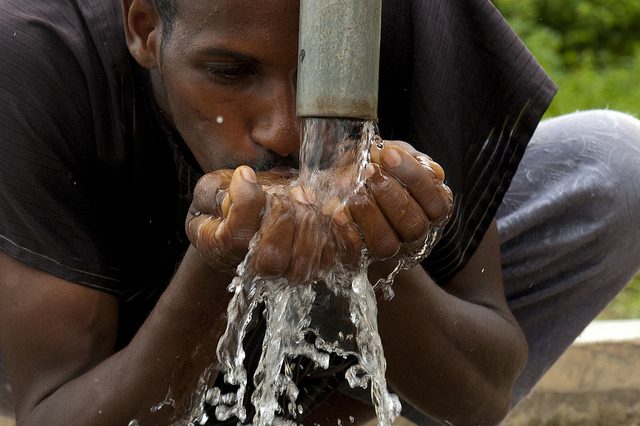 Niger is a landlocked country in Western Africa. Despite receiving aid from foreign entities, it remains one of the poorest countries in the world. These five development projects in Niger work to address several of the root problems contributing to poverty and instability in the country.
 The famous concept of permaculture, developed first in 1978 by Bill Mollison and David Holmgren, has recently been integrated into the Lebanese agricultural system, particularly in the rural areas of the country.
  From 2004-2012,
 The
The 
