• Link to X
  • Link to Facebook
  • Link to Instagram
  • Link to TikTok
  • Link to Youtube
  • About
    • About Us
      • President
      • Board of Directors
      • Board of Advisors
      • Financials
      • Our Methodology
      • Success Tracker
      • Contact
  • Act Now
    • 30 Ways to Help
      • Email Congress
      • Call Congress
      • Volunteer
      • Courses & Certificates
      • Be a Donor
    • Internships
      • In-Office Internships
      • Remote Internships
    • Legislation
      • Politics 101
  • The Blog
  • The Podcast
  • Magazine
  • Donate
  • Click to open the search input field Click to open the search input field Search
  • Menu Menu

Archive for category: Food Security

Information and stories about food security news.

Education, Food Security, Global Poverty, Health

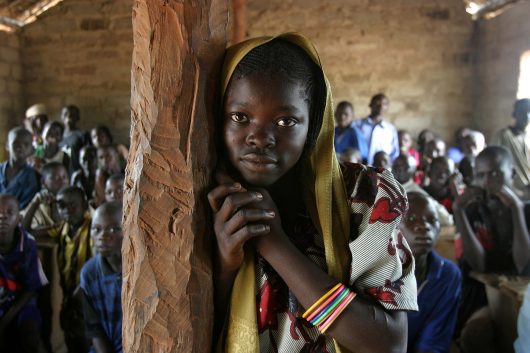
Greater Access to Education for Girls in African Countries

girls in african countries

The U.N. Millennium Development Goal of achieving universal education has played a vital role in advancing education for boys and girls in African countries, however, obstacles still remain.

In addition to increasing access to education, the U.N. Millennium Development Goals also included overcoming extreme poverty, promoting gender equality and women’s rights, reducing child mortality and improving maternal health, combating HIV and malaria, creating a sustainable environment and advocating for global partnership. These goals are not isolated in nature, but rather each builds upon the next.

“Children who don’t have access to clean water and who aren’t taught proper hygiene practices like hand-washing with soap are more likely to be ill and absent from school,” according to Canadian Feed the Children (CFTC). “Combined with lack of proper nutrition – and often, the schools are the one place they have a guaranteed daily meal – children’s susceptibility to preventable, waterborne disease increases dramatically. Disease also spreads much more rapidly in schools without proper hygiene and sanitation.”

Canadian Feed the Children is a registered Canadian charity that works with local partners to establish food security and education in developing countries. The organization believes that “education is the best investment in prosperous, healthy and equitable societies.”

With more children having access to an education, more resources are needed; such as books, maps, research and reference materials, blackboards and writing materials. Infrastructure becomes a challenge when the number of students outgrows the number of available classrooms.

Additionally, kitchens and latrines are essential components for health and hygiene and each must be outfitted with their own supplies and equipment. A productive learning environment requires the availability of meals and safe, clean facilities.

When schools are overpopulated, understaffed and lacking necessary supplies, it is difficult to recruit teachers. Many times underqualified and unpaid volunteers step in to teach in impoverished communities, which can do more harm than good.

Crop failure, parents’ illness and rising prices are some of the barriers families living below the poverty line are facing when they sacrifice the education for one or more of their children in order to feed the family. Most often, it is the girls who are chosen to miss out.

Schools lacking a latrine present another obstacle for girls, for whom modesty and safety are important.

“For many girls, the need to leave the classroom several times a day makes going to school anxious and unpleasant. For older girls, menstruation in an environment where there is no toilet and no water causes embarrassment and further complicates matters. And where toilet facilities are not available or located far away, there is a much higher risk of violence for girls. The risks and hassle just aren’t worth it – and they drop out. There are so many barriers to girls’ education, toilets shouldn’t be one of them,” said Amboka Wameyo, CFTC’s Regional Program Manager – Africa.

Girls in African countries like Ghana, Ethiopia and Uganda endure early or forced marriage, the burden of chores, pressure to care for siblings and long-distance walks to school leaving them vulnerable to rape or violence. The dropout rate for girls around age 12 increases dramatically, sometimes reaching 100 percent.

According to Canadian Feed the Children, every year a girl attends school translates into a 15 percent increase in their income as they become less vulnerable to the threat of domestic violence and poverty.

Girls in African countries must be given the opportunity to improve their lives and subsequently contribute to the alleviation of the poverty cycle in their communities.

– Emily Ednoff

Photo: Flickr
May 26, 2016
https://borgenproject.org/wp-content/uploads/borgen-project-logo.svg 0 0 Borgen Project https://borgenproject.org/wp-content/uploads/borgen-project-logo.svg Borgen Project2016-05-26 01:30:042020-06-19 16:52:42Greater Access to Education for Girls in African Countries
Food & Hunger, Food Security, Global Poverty

Technology: Linking Advanced & Developing Economies

Developing Economies

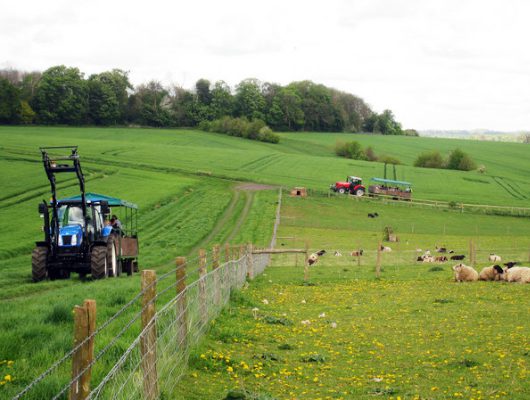
Social impact technology company, United Needs, works under the belief that the world is at its healthiest when interconnected. In order to disrupt cycles of poverty for rural farmers while simultaneously strengthening Earth’s food system, the organization is introducing new mobile technology to bring together advanced and developing economies.

In the next 34 years, the world will see an increase of 2.4 billion citizens. To feed this population the global food supply must increase by 69%, which means that finite agricultural resources must be used in the most effective way possible.

At the same time, the increase in population presents an exciting opportunity for smallholder farmers to play a large role in the expanding food economy. The United Needs website calls this “convergence of market forces” a chance for impoverished farmers to “grow their way out of poverty.”

In the current climate, small farmers in developing countries struggle with a variety of challenges. While small farms can be extremely productive, too few selling opportunities exist and farmers often lack access to traditional credit facilities. When market options are available, several levels of middlemen often consume most of the profit.

Research by the National Commission for Enterprises in the Unorganised Sector showed that improving the financial state of the rural poor is one of the most effective ways of reducing poverty at the bottom rung of the financial ladder.

United Needs works on projects that seek to empower rural farmers as a means of alleviating poverty and building a sustainable food economy. Their methods involve breaking down barriers to profit by connecting developing economies directly with advanced ones.

With the motto “high tech with a high purpose,” United Needs keeps technology at the heart of its strategy. In order to “cut out the middleman” preventing smallholders from accessing credit and capital, the company created a mobile app that allows farmers to directly contact microfinance institutions and buyers. Customers interested in buying in bulk can bundle crops from multiple small farmers together to build large orders.

This high tech process is creating a more connected global economy by offering opportunities for advanced and developing economies to support one another through food production and consumption.

– Jen Diamond

Photo: Flickr

May 4, 2016
https://borgenproject.org/wp-content/uploads/borgen-project-logo.svg 0 0 Borgen Project https://borgenproject.org/wp-content/uploads/borgen-project-logo.svg Borgen Project2016-05-04 01:30:152024-12-13 18:05:58Technology: Linking Advanced & Developing Economies
Food Security, Global Poverty

Addressing the Imminent Famine in Yemen

Famine in YemenOngoing conflict has created an imminent threat of famine in Yemen. According to the U.N. World Food Programme (WFP), ten of Yemen’s 22 provinces ranked at “emergency” level – one step below famine.
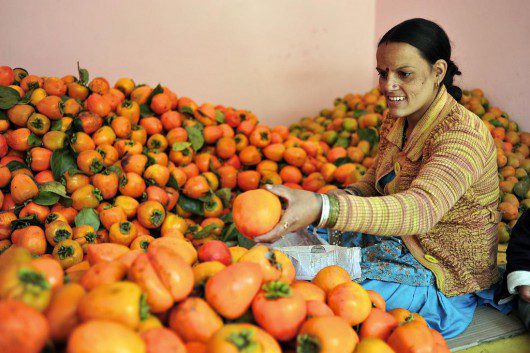
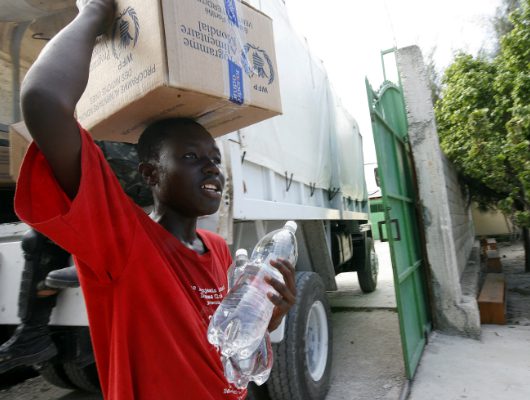
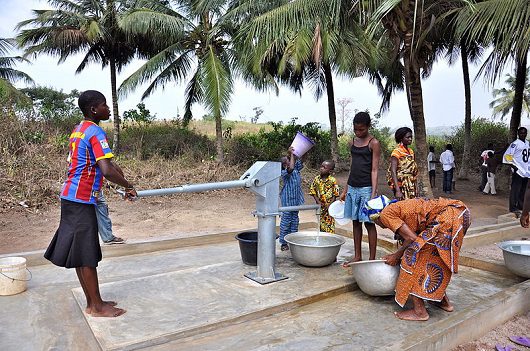
According to the BBC, in September 2014, years of civil and sectarian strife reached a climax in Yemen. Houthi rebel forces took control of Yemen’s capital, Sana’a.

Last year, a coalition of Arab states led by Saudi Arabia began a military campaign to force the Houthis from power and reinstate President Abd Rabbo Mansour Hadi.

The ensuing chaos has enabled extremist groups, including al-Qaeda and the Islamic State, to infiltrate the country and carry out terrorist attacks.

Long-Standing Food Insecurity
Even before the fighting began, the country was importing over 90 percent of its food. Now, conflict has strained trade and access to goods.

According to the Business Insider, aid groups blame the current food crisis on a lack of access to Houthi-controlled ports caused by obstacles imposed by the Saudi-led coalition. Houthi forces have also been accused of intentionally disrupting supplies from reaching some communities.

The U.N. estimates that 19 million people lack access to clean water and 7.6 million are considered to be food insecure. The looming development of famine in Yemen threatens to increase these numbers.

Fighting Malnutrition 

Malnutrition has made children in particular more vulnerable to illness. Before the conflict, about 40,000 children under age five died from preventable diseases each year, UNICEF reports. However, the organization estimates that 10,000 more have succumbed to disease in the past year because of a lack of access to clean water, health care and acute malnutrition.

In spite of these figures, the U.N. reports that it has been able to provide aid in most areas of the country. Food and millions of vaccinations have been administered but according to the U.N., this has only addressed the “most urgent needs.”

New Voucher Program

Earlier this month, the WFP began distributing vouchers to assist people living in Sana’a. The program is expected to reach 1 million people across the country by the end of 2016 by increasing the speed of delivery for assistance to families as well as by focusing on accountability.

WFP Representative Purnima Kashyap stated, “Vouchers also boost the local economy as we work with local suppliers to provide food.” Each voucher provides a family of six with a month’s supply of wheat grain, vegetable oil, salt and sugar, as well as protein-rich Wheat Soya Blend.

The WFP is partnered with 13 other organizations in Yemen, including CARE International and Save the Children. CARE International has not only focused on providing food security but also in establishing community self-help and women’s empowerment. Save the Children has additionally advocated for the care and protection of children, mainly through education efforts.

UNICEF’s representative in Yemen, Julien Harneis, says the organization has appealed for $180 million to finance its programs in Yemen in 2016. So far UNICEF has received just 18 percent of that amount. As the U.N. pushes for another round of peace negotiations, additional attention and aid are required to prevent famine in Yemen and assist the estimated 80 percent of people in need of humanitarian aid.

– Taylor Resteghini

Photo: Flickr

May 2, 2016
https://borgenproject.org/wp-content/uploads/borgen-project-logo.svg 0 0 Borgen Project https://borgenproject.org/wp-content/uploads/borgen-project-logo.svg Borgen Project2016-05-02 01:30:502024-12-13 17:54:21Addressing the Imminent Famine in Yemen
Food & Hunger, Food Security, Global Poverty

World Food Programme’s Proactive FoodSecure Initiative

FoodSecure_Initiative
The World Food Programme (WFP) is the world’s largest hunger-fighting agency, feeding more than 80 million people living in approximately 80 countries. A new fund aims to fight hunger while reducing disaster risk, particularly for disasters resulting from climate change. The FoodSecure Initiative serves as a proactive measure to fight hunger and reduce the impact of an increase in climate change.

With the Paris talks for climate change occurring this December and the recent passage of the Sustainable Development Goals (SDGs), there has been more attention focused on the impact of climate change on livelihood. People living in low-lying areas, such as the Mekong Delta region in Southeast Asia, areas of India and Bangladesh and the Nile Delta region are at the greatest risk for displacement as a result of rising sea levels.

As sea levels rise, individuals will be displaced, and so it is more imperative than ever that agencies, nations and international bodies prepare. Furthermore, climate change will also affect crop yields, water quality and rates of infectious disease. This will affect the progress development organizations have made in these areas and organizations will have to face a new set of circumstances.

The World Food Programme’s initiative is a collaboration between the WFP, the German Red Cross and the International Foundation of the Red Cross and Red Crescent Societies (IFRC). The fund hopes to implement programs that stop the chronic disaster-relief-disaster-relief cycle. WFP’s FoodSecure Initiative is a multi-year fund that is disaster-forecast based. Thus, funds will be released before disasters actually occur. Using a forecast-based system is cost-effective and reduces the negative impact disasters cause in vulnerable communities.

By utilizing a forecast-based system and addressing disaster relief before, during, and after the fact, the WFP hopes to instill long-term resilience in communities. It follows a three-window implementation plan in order to maximize its impact.

The FoodSecure Initiative has already completed several pilot projects in developing nations. These projects include the distribution of flood preparedness kits before flooding, training of farmers to grow drought-resistant crops and promotion of soil and water conservation in agriculture.

In order to give this fund its maximum impact, the WFP estimates that it will cost $400 million. Presently, the WFP uses 40 percent of its funds for building resiliency but this will not be enough as climate change worsens. As the FoodSecure Initiative works to obtain full funding, it has already begun projects in five countries: the Philippines, Niger, Sudan, Guatemala and Zimbabwe. Hopefully, the FoodSecure Initiative will get the funding it needs to make a difference for years to come.

– Priscilla McCelvey

Sources: EPA, World Food Programme 1, World Food Programme 2
Photo: Flickr

December 24, 2015
https://borgenproject.org/wp-content/uploads/borgen-project-logo.svg 0 0 Borgen Project https://borgenproject.org/wp-content/uploads/borgen-project-logo.svg Borgen Project2015-12-24 01:30:072024-05-27 09:28:39World Food Programme’s Proactive FoodSecure Initiative
Food & Hunger, Food Security, USAID

USAID Ramping up Fight Against Food Insecurity in Ethiopia

food_insecurity_in_Ethiopia
Over the next five months, the El Niño weather system is expected to continue dropping torrential rains in East Africa and causing severe droughts in Ethiopia, which is facing conditions not seen in three decades.

According to the USAID, the number of people facing food insecurity in Ethiopia will likely increase from 2.9 million to over 8 million by the beginning of 2016. But officials say they are ready and confident that systems are in place to mitigate the worst effects of this annual meteorological phenomenon.

“Improved early warning, the establishment of the Productive Safety Net Program (PSNP), as well as serious engagement from the government of Ethiopia means that we are not likely to see the kind of famine conditions witnessed in Ethiopia in earlier decades,” said USAID Director of Food for Peace, Dina Esposito.

Her remarks accompanied the announcement that USAID will commit an additional $97 million to bolster PSNP for at-risk communities in the region.

The Productive Safety Net Program was launched in 2005 by the government of Ethiopia with support from the World Food Programme (WFP) to provide immediate relief from low crop yield and create agricultural sustainability moving forward.

PSNP provides regular food and income transfers to food insecure households over six-month periods during dry seasons, and it obligates aid recipients to participate in training programs on sustainable farming, land rehabilitation and water management.Food_Insecurity_in_Ethiopia

Katana Kusiya, a participant of PSNP in 2009, said that the aid was enough to feed her family of 11 for one month. In exchange, she received training on building wells and capturing rainwater efficiently. This training will hopefully result in communities like Katana’s relying less on sustenance farming and moving toward productive farming.

By investing in the safety net, development partners are hopeful that rural communities will develop an ability to resist the shock of unfavorable weather patterns, like El Niño, and become less food insecure in the long term. In its first three years, the program reached 7.5 million people and delivered 78,000 tons of food.

This newest commitment by USAID will include 154,000 tons of direct food assistance and a $58 million donation to the Catholic Relief Services for the transfer of an additional 105,700 tons of food.

The organizations are acting quickly to provide these transfers in order to ensure that 3.5 million vulnerable households, including refugees from neighboring Somalia, Eritrea and South Sudan receive aid in a timely manner.

For UNICEF Executive Director Anthony Lake, El Niño also presents an opportunity to re-engage the conversation about linkages between climate change and food insecurity in countries like Ethiopia during the upcoming climate conference in France.

Severe weather patterns regularly devastate agricultural productivity in developing countries, leading to famine and loss of life. “[El Niño’s] intensity and potential destructiveness should be a wake-up call as world leaders gather in Paris,” he said.

In the meantime, USAID is working quickly to provide the government of Ethiopia with all the support it needs to prevent loss of life this season. $600 million in aid, they estimate, will be required to effectively deal with the emergency.

– Ron Minard

Sources: AllAfrica, BBC, IB Times, WFP
Photo: UN Multimedia, Wikipedia

December 2, 2015
https://borgenproject.org/wp-content/uploads/borgen-project-logo.svg 0 0 Borgen Project https://borgenproject.org/wp-content/uploads/borgen-project-logo.svg Borgen Project2015-12-02 01:30:152024-05-27 09:28:25USAID Ramping up Fight Against Food Insecurity in Ethiopia
Food & Hunger, Food Security, Global Poverty, Poverty Reduction

Ending World Hunger: Understanding Causes and Effects

World Hunger's Causes and Effects
The causes of world hunger are directly related to those of poverty. Close to 795 million, or one in nine, people living in the world today do not have enough food. Ending world hunger requires an understanding of the causes and effects.

  1. War causes communities which are dealing with crumbling infrastructure, violence and fleeing refugees to be largely unable to maintain stable food systems. Declining income levels during times of war significantly impacts the supply of food and food security.
  2. Agricultural practices such as deforestation, over-grazing and over cropping combined with drought and the effects of soil erosion can often destroy farm and grazing land.
  3. Climate change is a huge factor in causing world hunger as it has been increasing the number of droughts, floods and tropical storms. These often unexpected, rapid natural disasters destroy the small plots of land that farmers count on for their food and livelihood.
  4. As the global population continues to increase, especially in developing countries, the demand for food will invariably continue to rise as well. As food prices rise, it is becoming harder and harder for developing countries to match production rates with the population growth rates.

Poverty and hunger more often than not go hand in hand. Poor people just do not have the resources such as tools, money, land and even physical energy  to combat hunger.

World hunger itself causes roughly 146 million children to be underweight while one in three children in a developing country have their growth stunted. Approximately 66 million primary school age children go hungry every day and between 2 to 3.5 billion people have micronutrient deficiencies. Over nine million people die worldwide from hunger and malnutrition. Five million of those people are children.

In the world right now there is enough food to feed every human being on the planet. Yet according to globalissues.org, concernusa.org and many other organizations and sources, a shocking amount of food is wasted in first-world countries and even in third-world countries.

– Drusilla Gibbs

Sources: Concern USA, Freedom from Hunger, WFP, Global Issues
Photo: Flickr

November 29, 2015
https://borgenproject.org/wp-content/uploads/borgen-project-logo.svg 0 0 Borgen Project https://borgenproject.org/wp-content/uploads/borgen-project-logo.svg Borgen Project2015-11-29 01:30:452024-12-13 18:05:27Ending World Hunger: Understanding Causes and Effects
Food & Hunger, Food Security, Global Poverty

Social Supermarket Buys Out Hunger in Cornwall

Social Supermarket Buys Out Hunger in Cornwall

England is one of the wealthiest countries in the world, but it faces a major food crisis. Last year, close to 100,000 children went hungry. In London alone, 80,000 people earn less than the cost of living. They can’t afford daily, nutritious meals.

In recent years, England has been turning toward a new kind of store to fight hunger and poverty. Social supermarkets, “shop[s] selling discounted food to people on a low income,” have been multiplying since 2013.

Cornwall is the latest area to welcome the new market. Hunger in Cornwall is a serious matter. The Food Bank hands out 9,000 meals every month to poor families.

Charlotte Danks, 20, used her entrepreneurial skills to open a social supermarket in the town of Newquay. Bargain Brand Food Outlet receives its stock from supermarkets who discard the products because of manufacturing flaws, package damage and expired sell-by dates. Many items sell for 25 pence, or 39 cents in U.S. currency.

“If I come in here and buy a loaf for 20 pence, I’ve got money for gas,” Richard Benson, a regular social supermarket customer, told The Guardian.

Social supermarkets do more than save people money; they save food. According to the European Commission, the UK is responsible for the majority of food waste in the European Union—89 million tons per year.

Restocking products keeps them out of landfills and saves supermarkets from paying landfill tax. In turn, tax avoidance encourages markets to donate to their social counterparts.

Because the supplies come from larger stores and franchises, the stock varies from day to day. Some days, chocolate products outweigh meat and vegetables. Everything is first come first serve. Most stores require a card membership to prevent anyone but the needy from taking advantage of the low prices.

The emergence of social supermarkets opens several more job opportunities, lessening the number of struggling households. Danks plans to open two more stores in the next six months in the hope of eradicating poverty and hunger in Cornwall.

“I hope I can bring this to other struggling communities,” Danks told The Telegraph.

England isn’t alone in its efforts to resolve the food crisis through food redistribution. France, which already boasts 800 social supermarkets, unanimously banned stores from disposing of food earlier this May. Instead, stores are required to donate edible food to charities.

If the spread of social supermarkets and food waste elimination continue, hunger in Cornwall, England, Europe and the world could be bought out for good.

– Sarah Prellwitz

Sources: Coin Mill, Collins Dictionary, Food and Cornwall, Independent, London Food Bank, Telegraph, The Guardian 1, The Guardian 2
Photo: Pixabay

November 10, 2015
https://borgenproject.org/wp-content/uploads/borgen-project-logo.svg 0 0 Borgen Project https://borgenproject.org/wp-content/uploads/borgen-project-logo.svg Borgen Project2015-11-10 01:30:352024-12-13 18:05:21Social Supermarket Buys Out Hunger in Cornwall
Food & Hunger, Food Security, Global Poverty

FAO Social Protection Program to End Cycle of Rural Poverty

fao_social_protection_program
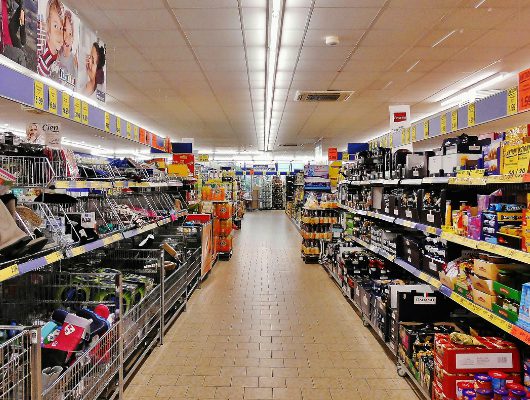
The Food and Agricultural Organization of the United Nations (FAO) updated its social protection plan by adding agricultural and rural development measures.

The Millennium Development Goals (MDGs) on reducing poverty have been met by many developing countries; however, there are still high levels of extreme poverty in Sub-Saharan Africa and South Asia.

Evidence has shown that the three elements of the FAO social protection program: social assistance, social insurance and labor market protection, are very effective in reducing poverty and hunger.

In 2013, the program helped relieve up to 150 million people out of extreme poverty.

The most common form of social protection in developing countries is social assistance, which provides conditional or unconditional cash transfers to households and individuals.

These incentives account for large income losses and lack of savings when farmers are unable to produce enough to survive.

“Most of the world’s poor and hungry continue to live in rural area. According to the World Bank, about 78 percent of the planet’s poor are found in rural areas”, stated FAO Assistant Director-General Jomo Kwame Sundaram.

Rural households depend on subsistence agriculture to survive; the cash incentives provided by the FAO have proven to encourage households to invest in the education and health of their children.

These acts help end the generational cycle of poverty and bring FAO closer to achieving the first “Zero-Hunger Generation” goal.

The FAO social protection program has also allowed impoverished rural farmers in developing countries to weather the effects of external shocks such as floods, pests, droughts and price volatility.

José Graziano da Silva, FAO Director-General, stated that “With climate change, the shocks happen year after year; it eats away at the capacity of rural poor to cope with it.

Social protection offers poor families a kind of buffer to protect them from external shocks.”

The most recent edition of The State of Food and Agriculture 2015 explains how the addition of agricultural and rural development measures to the social protection program will sustainably move people out of poverty and hunger.

The report illustrates that agricultural input subsidies, such as fertilizer, have been well received across Africa, Asia, Latin America and the Caribbean.

There was an increase in food and fertilizer costs in 2007-2008, so the FAO agricultural incentive was instrumental in providing food security for rural households.

The report also addresses the issue of credit and how little of it is allocated to agricultural needs.

It goes on to emphasize that “leveraging public expenditure on agriculture and social programs” is imperative in strengthening agricultural and rural development.

Agricultural incentives and credit fosters independence amongst rural farmers. They become more financially capable and are able to manage household risks.

Providing credit also allows poor rural farmers to make investments in livestock and machinery, therefore increasing their productivity and income.

– Marie Helene Ngom

Sources: BBC, FAO
Photo: Google Images

October 22, 2015
https://borgenproject.org/wp-content/uploads/borgen-project-logo.svg 0 0 Borgen Project https://borgenproject.org/wp-content/uploads/borgen-project-logo.svg Borgen Project2015-10-22 01:30:552020-06-25 19:51:48FAO Social Protection Program to End Cycle of Rural Poverty
Food & Hunger, Food Security, Global Poverty, Hunger

World Vision: Let’s Make the World Hunger Free

Hunger_Free

World Vision has launched a new initiative to raise funds for a hunger free world. Through the #hungerfree movement, people can “double up” the cost of their meal and donate the money to fight global hunger.

Presently, more than 795 million people are food insecure, usually as a product of poverty. Food insecurity can mean not knowing where one’s next meal is coming from, not having access to foods with necessary nutrients or not being able to intake enough calories to maintain health.

For individuals facing food insecurity, it affects all aspect of daily life. Food insecurity affects the ability to focus in a school or workplace environment, have healthy physical and neural development and functioning. For mothers, pregnant women and children, these effects are compounded.

Fighting food insecurity and world hunger is a critical component to fighting global poverty. By ensuring people have enough to eat, they can have more energy and ability to be healthy, productive individuals, citizens and communities.

The mid-September launch of #hungerfree by World Vision is timed well for World Food Day 2015 on October 16. The #hungerfree program targets people in Kenya and South Sudan, countries whose food production is dependent on subsistence farming.

Furthermore, the prevalence of hunger in Kenya and South Sudan is also exacerbated by the disproportionate amount of unemployed young people, who are often displaced by conflict and/or climatic shocks.

The #hungerfree initiative works to promote agricultural development in order to implement technologies and provide support to increase food production. By promoting sustainable, long-term development, World Vision hopes to reduce the amount of food aid sent to combat hunger in Kenya and South Sudan and create circumstances that empower communities.

To support #hungerfree, all individuals and groups have to do is “double up” the cost of their meal. The extra funds would be donated to #hungerfree. So, if a meal costs $10, an individual would match the cost of their meal as a donation to World Vision.

The program runs until World Food Day 2015 on October 16. #hungerfree is being run through a partnership between World Vision and the Misfit Foundation, which works to promote donor participation via social media and technology. Currently, World Vision sends aid to 8 million people in 35 different countries annually.

– Priscilla McCelvey

Sources: Hunger Free, World Vision
Photo:  World Vision


September 30, 2015
https://borgenproject.org/wp-content/uploads/borgen-project-logo.svg 0 0 Borgen Project https://borgenproject.org/wp-content/uploads/borgen-project-logo.svg Borgen Project2015-09-30 08:12:442020-06-29 11:54:51World Vision: Let’s Make the World Hunger Free
Food & Hunger, Food Security, Global Poverty

Partners in Food Solutions

Partners in Food Solutions
One of the most common topics that arise when discussing world hunger and food insecurity is that there are actually more than enough resources to feed all of the people of the world.

The problem isn’t that there is not enough food for everyone, but rather that there is not an efficient way of distributing it. Or, oftentimes, on-location farms do not have the resources to grow enough food for the people in the area who need it.

Partners in Food Solutions (PFS) is a nonprofit organization that works to connect big food companies (such as General Mills, Cargill, Royal DSM and Bühler) with smaller food processors in the developing world to reduce food insecurity.

These large, experienced companies are able to provide small and growing businesses (SGBs) with information on how to increase productivity, improve quality and create all-around safer and more nutrient-rich food for surrounding populations.

In addition, PFS and its partners also help African food companies to develop business and finance skills and make areas such as distribution and packaging as efficient as possible. By supplying technological resources and training, there can be a consistent and reliable sharing of knowledge to help companies keep growing.

Jeff Dykstra, the CEO of PFS, says that “food insecurity in Africa has been often addressed in a reactionary way, and the opportunity that’s there now is to address it in a proactive way.”

At its heart, the organization just wants to create a more efficient and valuable food chain. One of its strengths is that it recognizes the importance of partnerships.

PFS is funded by corporations and private donors and also supported by a devoted base of volunteers. USAID TechnoServe is a PFS partner involved with implementing programs and strategies on the ground in Africa. So, while PFS manages volunteers and designs programs, Technoserve implements the relationships with SGBs.

By working with TechnoServe, PFS is able to evaluate which food companies are the most in need of help and look to be the most successful. The partnership has grown to assist over 700 SGBs in Ethiopia, Kenya, Malawi, Tanzania and Zambia.

Almost 829,000 local farm holders were impacted through projects that are designed to bring expertise to small African food companies. Kykstra said that the money is generating a return into local economies at double the rate of taxpayer investment.

These partnerships are valuable and effective in the fight against global food insecurity. As President Obama himself said on a July 28 visit to the Faffa Food Share Company in Ethiopia, “Having strong corporate partners alongside local businesses can really make a big difference.”

Faffa Food Share is a client of PFS, and also the primary supplier of food for children over 6 months old in the country.

Although the chain of technologies, innovations and partnerships involved in the PFS organization is complicated, the core idea is simple.

The organization’s goal is to help small farms bring their crops to local marketplaces, making them sustainable contributors to their economies, cutting back on unnecessary food transportation expenses and helping entire countries to become self-sufficient when it comes to food.

All of this can be done by sharing knowledge and resources already available to the first world. Stephen Tanda, the managing board member of Royal DSM, calls PFS “the missing link in connecting the need to address malnutrition on the ground and working with companies in Africa to make these safe and high-quality nutritious foods that benefit the local population.”

Partners in Food Solutions is a great example of a lot of moving parts, of all different sizes and spheres of influence, working together to make a better world.

– Emily Dieckman

Sources: General Mills, Partners in Food Solutions, YouTube 1, YouTube 2
Photo: Flickr

September 28, 2015
https://borgenproject.org/wp-content/uploads/borgen-project-logo.svg 0 0 Borgen Project https://borgenproject.org/wp-content/uploads/borgen-project-logo.svg Borgen Project2015-09-28 01:30:212024-12-13 17:54:07Partners in Food Solutions
Page 18 of 31«‹1617181920›»

Get Smarter

  • Global Poverty 101
  • Global Poverty… The Good News
  • Global Poverty & U.S. Jobs
  • Global Poverty and National Security
  • Innovative Solutions to Poverty
  • Global Poverty & Aid FAQ’s
Search Search

Take Action

  • Call Congress
  • Email Congress
  • Donate
  • 30 Ways to Help
  • Volunteer Ops
  • Internships
  • Courses & Certificates
  • The Podcast
Borgen Project

“The Borgen Project is an incredible nonprofit organization that is addressing poverty and hunger and working towards ending them.”

-The Huffington Post

Inside The Borgen Project

  • Contact
  • About
  • Financials
  • President
  • Board of Directors
  • Board of Advisors

International Links

  • UK Email Parliament
  • UK Donate
  • Canada Email Parliament

Get Smarter

  • Global Poverty 101
  • Global Poverty… The Good News
  • Global Poverty & U.S. Jobs
  • Global Poverty and National Security
  • Innovative Solutions to Poverty
  • Global Poverty & Aid FAQ’s

Ways to Help

  • Call Congress
  • Email Congress
  • Donate
  • 30 Ways to Help
  • Volunteer Ops
  • Internships
  • Courses & Certificates
  • The Podcast
Scroll to top Scroll to top Scroll to top