• Link to X
  • Link to Facebook
  • Link to Instagram
  • Link to TikTok
  • Link to Youtube
  • About
    • About Us
      • President
      • Board of Directors
      • Board of Advisors
      • Financials
      • Our Methodology
      • Success Tracker
      • Contact
  • Act Now
    • 30 Ways to Help
      • Email Congress
      • Call Congress
      • Volunteer
      • Courses & Certificates
      • Be a Donor
    • Internships
      • In-Office Internships
      • Remote Internships
    • Legislation
      • Politics 101
  • The Blog
  • The Podcast
  • Magazine
  • Donate
  • Click to open the search input field Click to open the search input field Search
  • Menu Menu

Archive for category: Education

Information and stories on education.

Education, Global Poverty

How Poverty Affects Learning

How Poverty Affects Learning
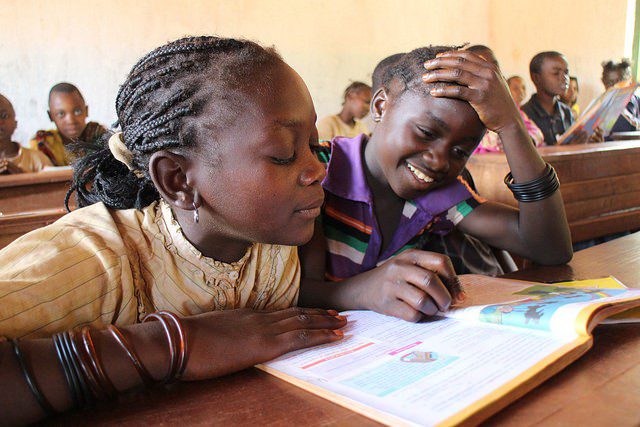
Education’s role in improving the lives of the global poor has been well documented. However, researchers have been exploring the reverse — how poverty affects learning and a child’s education.

The Ontario Child Health Study concluded in its research that there is a “direct link between lack of income and chronic health problems, psychiatric disorders and social and academic functions.”

Additional research provided evidence that poverty decreases a child’s school readiness through six factors: the incidence of poverty, the depth of poverty, the duration of poverty, the timing of poverty, the concentration of poverty and crime in a student’s community and the impact of poverty on social networks.

Children from families with lower incomes score significantly lower on vocabulary and communication skills assessments, as well as on their knowledge of numbers and ability to concentrate. Furthermore, their counterparts in higher-income households outperform them in copying and symbol use, and in cooperative play with other children. Students with lower income are more likely to leave school without graduating.

Experts refer to the relationship between socioeconomic status and academic performance as the “socioeconomic gradient.”

According to author Eric Jensen, although “children raised in poverty rarely choose to behave differently,” poverty affects learning because they face challenges their affluent counterparts never see. “Their brains have adapted to suboptimal conditions in ways that undermine good school performance,” Jensen writes.

A child’s formation of new brain cells will slow down and the neural circuitry will create emotional dysfunctions if a child’s primary needs are not met at an early age.

Typically, children from low-income families suffer from parental inconsistency, frequent childcare changes, lack of adult supervision and lack of role models. Thus, the child does not receive the stimulation or learns the social skills necessary to maximize their academic performance.

In order to reverse how poverty affects learning, researchers suggest that schools focus on support services that aid in a child’s cognitive and social skill development.

The High/Scope Educational Research Foundation concluded in a study, that children who received proper intervention services were more likely to graduate secondary school, have higher employment and income rates and have lower crime rates by the time they reached 40.

Schools with targeted efforts to aid in a child’s academic development, such as counseling and after-school programs, can both lessen the effect of poverty on a student’s learning and use education to fight poverty to improve lives.

– Ashley Leon

Photo: Flickr

November 5, 2016
https://borgenproject.org/wp-content/uploads/borgen-project-logo.svg 0 0 Borgen Project https://borgenproject.org/wp-content/uploads/borgen-project-logo.svg Borgen Project2016-11-05 01:30:222024-12-13 17:55:46How Poverty Affects Learning
Children, Education

Education in Mozambique: Serving Children with Disabilities

Education in Mozambique: Serving Children with Disabilities
Volunteers spent the day with disabled children and adults at the Matola Children’s Home. In Mozambique, disabled people may be abandoned by family members and are often seen as a financial burden.

Currently, the Matola Children’s Home houses 42 children from many local areas and has 67 young children in their daily preschool. The center relies solely on donations from the international community. The most difficult situation for disabled children is the limited assistance and opportunities they have to pursue an education in Mozambique.

According to the African Disability Rights Yearbook, 103,276 people with disabilities were children between the ages 0 to 15 years, which makes up approximately 21 percent of the total population of people with disabilities. One of the main problems within the confines of the country with such children is the issue of schooling.

Public schools aren’t developed with this demographic in mind making, which makes it difficult for these children to partake in education provided by the government. In 2013, UNICEF partnered with world-renowned photographers to create a collection of multimedia films that centers on the troubles surrounding the children of Mozambique.

In “The Rights Responsibility: Invisible Children” directed by Francisco Carlos Zevute and photographed by Patrick Zachmann, many children and families are interviewed in order to shed light on how grave the situation pertaining to disabled children and education is in Mozambique.

The film goes on to state “children with disabilities are almost twice as likely to fall victim to violence and are at heightened risk of abandonment and intimidation.”

One of the direst situations for special needs education in Mozambique is a lack of qualified teachers able to teach these children as well as the infrastructure of schools which is not conducive for a child with disabilities.

Mozambique is slowly but surely making an effort to improve education as a whole in the country. In 2015, 51 percent of the country’s primary schools taught all seven grades in one school, and in 2016 the proportion increased to 56 percent.

Although great strides are made toward improving the education in Mozambique, little is being done to help disabled children.

Poverty plays a pivotal role in the scarce resources and availability of appropriate education for the disabled community. Ending global poverty proves to be a catalyst towards the accessibility of inclusive education in the developing world.

– Mariana Camacho

Photo: Flickr

November 4, 2016
https://borgenproject.org/wp-content/uploads/borgen-project-logo.svg 0 0 Borgen Project https://borgenproject.org/wp-content/uploads/borgen-project-logo.svg Borgen Project2016-11-04 11:31:232024-12-13 17:55:47Education in Mozambique: Serving Children with Disabilities
Education, Global Poverty

Blue Rose Compass: Focusing on Refugee Education

Blue Rose Compass: Helping Refugee Education Take a Front Seat
Youth unemployment is one of the greatest challenges throughout the Middle East and North Africa (MENA). According to a report by the World Economic Forum, MENA has the highest regional youth unemployment rate in the world. Over 27 percent of the population under the age of 25 are unemployed in the Middle East and more than 29 percent in North Africa. That is more than double the global average.

Blue Rose Compass, or BRC, is a non-profit organization that aims to give gifted young refugees the opportunity to develop their talents and become agents of change in the world. The NGO identifies incredibly talented young refugees and moves them forward to get a top university education.

The identification process starts with BRC representatives traveling to U.N. High Commission for Refugees (UNHCR) camps. From there, they work with teachers and administrators to select qualified student candidates to go undergo a series of evaluations. These include local and national standardized testing or its equivalent, psychological, emotional and physical testing conducted by certified partners, and intensive interaction between BRC representatives and the families of student candidates.

The process behind it is simple, yet impactful to so many under-recognized young men and women. BRC visits countries that host refugees and identifies those that are considered gifted. From there, these young refugees are connected to educational opportunities in world-leading colleges and universities, such as Princeton University and University College of London (UCL) to name a few.

The various university programs offered help with language, testing, visas, travel, living expenses and finding a job on graduation. The only thing Blue Rose Compass asks in return is a commitment to finding future opportunities to help rebuild each refugee’s country of origin. BRC requires that a graduate works for five years minimum in a job that impacts their community or region.

Lorna Solis, founder and CEO of Blue Rose Compass, said in an article, “This will make 100 dreams come true each year and affect the lives of many others. When I visit refugee camps I am heartbroken by the waste of talent and human potential. Gifted students are being left to stagnate. Girls who have the potential to achieve academically, are often married off and become mothers in their teens. I see first hand how education in conflict zones can bring opportunities to youth who would otherwise have none.”

As far as the name goes, Solis feels that the young refugee scholars are like blue roses — rare and precious — and the organization itself symbolizes the compass, helping these gifted men and women find their way.

– Keaton McCalla

Photo: Flickr

November 4, 2016
https://borgenproject.org/wp-content/uploads/borgen-project-logo.svg 0 0 Borgen Project https://borgenproject.org/wp-content/uploads/borgen-project-logo.svg Borgen Project2016-11-04 01:30:432024-05-27 23:54:04Blue Rose Compass: Focusing on Refugee Education
Education

Xavier Project: Refugee Education in Kenya and Uganda

Refugee Education in Kenya and Uganda: Xavier Project Takes the Lead
Education is the most neglected sector when it comes to humanitarian response on a global level. It is the most underfunded, yet continues to be one of the most important. The Xavier Project works to provide safe, educational opportunities to refugee children living in urban areas of Kenya and Uganda.

Founded in 2008 by an ambitious young university student in the United Kingdom, the Xavier Project first took off after a 400-person shindig raised 1,500 pounds to help support refugee education in Kenya and Uganda. Since then, the project continues to offer a sustained and individually tailored education program through financial sponsorship, outside support and mentoring.

The project sets its focus on three crucial areas: education, livelihood and media. The education department of Xavier Project aims to increase access to a good formal education for refugee children in Kenya and Uganda. The “Tamuka department” aims to make vocational and life-long learning available to all refugees even in emergency situations.

The education department helps to increase access to education in Kenya and Uganda through sponsorship of refugee children. The sponsorship provides extra-curricular courses and camps, school visits with mobile libraries and teacher training programs, and runs activities to promote the education of refugee girls. Through access to libraries and mobile phone learning opportunities, the project provides refugees with ways of enhancing their learning from home and outside of school.

By paying school fees and through other support Xavier Project is giving 996 refugee children the opportunity to go to school. In Kenya, that is 65 in early childhood development, 592 primary school students and 159 secondary school students. In Uganda, that is 154 primary school students and 26 secondary school students.

Tamuka is the program designed to handle the media side of things within Xavier Project. It is the platform to give refugees an audible voice and let them speak out about the realities of their lives. Refugees are able to publish, learn from and interact with unbiased information anonymously and without necessarily having access to the internet.

The goal of Tamuka is that through an open media, refugees will be able to bring about social change in their host country or country of origin in a gradual and democratic way. Xavier Project wants refugees to be able to tell the rest of the world about their personal experiences. Voicing their stories could lead the international community to question processes and existing policies that they take for granted.

In 2015 Xavier Project’s consolidated income was 350,000 pounds of which 38 percent was unrestricted funding. Since 2008 Xavier Project’s income has increased by at least 50 percent every year. Their initiative to move the gauge forward when it comes to refugee education in Kenya and Uganda has been anything short of successful.

– Keaton McCalla

Photo: Flickr

November 4, 2016
https://borgenproject.org/wp-content/uploads/borgen-project-logo.svg 0 0 Borgen Project https://borgenproject.org/wp-content/uploads/borgen-project-logo.svg Borgen Project2016-11-04 01:30:222020-05-22 17:00:19Xavier Project: Refugee Education in Kenya and Uganda
Education, Global Poverty, Government

Four Facts About Higher Education in Russia

4 Facts about Higher Education in Russia You need to Know
Russia seems to constantly struggle with one political or economic issue after another. It is important not to forget education in the chaos. Here are a few salient facts about higher education in Russia and how it affects the growing number of people living in poverty.

  1. Entrance exams: As in many countries, students in Russia must take a unified state exam to enter university. This system has pros and cons. The exams are extremely competitive and force teachers in secondary school to “teach to the test” to ensure students can pass exams. However, doing so leads to problems later on when students must spend time in university relearning material they should have learned in high school.
  2. Changing demographics: Until the mid-1990s, universities were comprised mainly of well-to-do urban young adults. After reforms were made, enrollment expanded, and in the early 2000s, universities became more popular among the masses. Lately, however, Russia’s gap between the rich and poor has been growing. Nearly 20 million Russians currently live in poverty, and the poverty rate has increased by 20% since last year. Consequently, history is beginning to repeat itself, with a more socioeconomically homogeneous student body developing in universities.
  3. Right to free education: According to the Russian Federation Constitution, all Russian citizens have a right to free education. Russia’s 2013 Law of Education ensures that state governments enforce this right. The right to free education is granted on a competitive basis based on grades from the Unified State Exam.
  4. Government spending is low: Only about 4 percent of Russia’s GDP goes toward education, according to the latest U.N. Human Development Report. Compared to other countries with consistently high-ranking education systems, Russia’s spending on education is low. Finland, for example, spends 6.8 percent of its GDP on education.

Increased government spending on education, as well as more well-rounded secondary education, could greatly benefit higher education in Russia and the nation as a whole.

– Sabrina Yates

Photo: Flickr

November 4, 2016
https://borgenproject.org/wp-content/uploads/borgen-project-logo.svg 0 0 Borgen Project https://borgenproject.org/wp-content/uploads/borgen-project-logo.svg Borgen Project2016-11-04 01:30:032020-05-22 17:02:19Four Facts About Higher Education in Russia
Education, Global Poverty, Sanitation

The Link Between Sanitation and Education for Girls

The Link Between Sanitation and Education for Girls
More than 50 percent of all primary schools in developing countries lack access to adequate water and sanitation facilities. On top of that, nearly two-thirds of all primary schools lack gender-specific toilets. These two statistics alone highlight why education for girls is an issue; young women all over the world are dropping out of school and missing educational opportunities due to sanitation options.

According to Sameer Pathak, a senior manager of communications for Coca-Cola India and the head of Support My Schools, “Lack of functional sanitation leads to accelerated dropout of girls. When girls enter puberty, it becomes an affront to their dignity to defecate in public. And one in five will drop out.”

This problem should be easy to fix; however, very few consider access to water and proper sanitation integral when addressing the low levels of education in the poorest parts of the world. Access to water or a proper toilet in schools can be the game-changing factor for a girl looking to complete even the most basic educational levels.

Girls who attend schools without water and sanitation facilities can miss up to 40 days of class due to menstruation in a single academic year. Forty days of missed school leaves them at a total disadvantage and hinders their ability to achieve their full potential scholastically and beyond.

India’s Prime Minister Narendra Modi made it clear in his Aug. 14, 2014, Independence Day address that all schools must have separate facilities for girls within the year.

Clean water, private toilets and good hygiene in schools constitute the greatest opportunity to bring about change and transformation for young girls and their right to a proper education.

Education for girls should not be hindered by toilets. “The most important impact of this is to actually bring the community together, to educate the public and teach the communities,” said Pathak.

– Keaton McCalla

Photo: Flickr

October 31, 2016
https://borgenproject.org/wp-content/uploads/borgen-project-logo.svg 0 0 Borgen Project https://borgenproject.org/wp-content/uploads/borgen-project-logo.svg Borgen Project2016-10-31 01:30:082024-05-27 23:53:54The Link Between Sanitation and Education for Girls
Education, Global Poverty, War and Violence

How Conflict Affects Education in Cote D’Ivoire

Education in Cote D’Ivoire
Primary education in Cote D’Ivoire, from ages 6 to 11, has slowly improved over the past decade. In 2014, enrollment rates were at 96% for boys and 84% for girls, almost 20% higher than in 2006. This positive trend is good news, but secondary education enrollment is under 50% for both sexes. Schools suffer from a shortage of trained teachers, and, while primary education is free, students cannot always afford materials. Two civil conflicts in the twenty-first century introduced additional complications.

After measures to fragment and exclude northerners from politics, ethnic and religious tensions escalated. A civil war broke out from 2002 to 2004 between the government-controlled south and the north. In 2010, a second conflict exploded after the southern government blocked the northern winner from taking office. With international support, the winner Alassane Ouattara took office, but not before 3,000 deaths.

Ouattara was re-elected in 2015 without violence. While Cote D’Ivoire is more stabilized, tensions still lead to skirmishes. These conflicts caused the displacement of almost 400,000 people, a quarter of whom have left the country as refugees.

Educate a Child explains the vulnerable situation of these children, “They become increasingly at risk of forced labor, forced early marriage, domestic violence, sexual exploitation, and recruitment into armed groups.” Combined with areas unable to handle the influx of people, displaced children are often excluded from education. Non-displaced children can also fall victim to these factors. Education in Cote D’Ivoire has a significant gender gap: primary education enrollment is 10% lower and literacy rates are almost 20% lower for girls.

Thirty-five percent of girls marry before 18 and women having an average of five kids are factors blocking girls from continuing education. All children, especially from rural or poor families, can be recruited into labor or armed conflict. Lack of quality education and opportunities can make these appear to be the
only options.

Many of the education and periphery struggles are aggravated by a lack of compulsory education and quality schools. Literacy for 15 to 24-year-olds is shockingly low; last year, boys’ rates were at 60% while girls’ rates were only at 40%. Poor facilities and unqualified teachers do not provide adequate support for children, especially in extreme situations.

This problem has not gone unnoticed. UNICEF was extremely active during the conflicts to keep as many schools operational as possible. Educate a Child and their partners have created three projects to leap the hurdles. Bridging Tomorrow works to reintegrate out of school children, Building a Future targets areas most affected by conflict to rebuild infrastructure and Education First is training teachers and building schools in areas with high displacement and poverty.

There is much to be done for communities and education in Cote D’Ivoire. The recent stability is optimistic, but children must be protected and educated.

– Jeanette I. Burke

Photo: Flickr

October 26, 2016
https://borgenproject.org/wp-content/uploads/borgen-project-logo.svg 0 0 Borgen Project https://borgenproject.org/wp-content/uploads/borgen-project-logo.svg Borgen Project2016-10-26 01:30:252024-12-13 17:55:42How Conflict Affects Education in Cote D’Ivoire
Education, Global Poverty

Education in Morocco: Literacy Rates Continue to Make Strides

Education in Morocco
Education in Morocco has staggered slowly towards greater improvements in their learning infrastructure as illiteracy rates remain high. According to a 2015 statement by the National Agency for the Fight Against Illiteracy (ANLCA), approximately 10 million men and women are still illiterate.

Mounia Benchekroun, a Moroccan consultant in social and educational development stated in The Arab Weekly, “The figure of 10 million illiterate in Morocco should raise a national awareness that would require a much stronger national political engagement in order to fight this scourge.”

Morocco’s High Commissioner for Planning Ahmed Lahlimi also shared his analysis of illiteracy rates in 2014. Lahlimi stated it was more common for adults over 50-years-old to be illiterate, which is approximately 61.1%. In contrast, only 3.7% of children under 15-years-old face illiteracy. There is an evident gender gap as approximately 41.9% of women are illiterate compared to 22.1% of men.

Although the National Education and Training Charter (CNEF) lagged behind in its goal to reduce illiteracy to less than 20% by 2010 with complete eradication by 2015, this issue of high illiteracy rates is accompanied by good news. Literacy rates have made strides throughout the years for education in Morocco, increasing with the implementation of literacy programs by NGOs and with a new 2024 goal to eradicate illiteracy.

Lahlimi states that rates have dropped to 32% compared to 42% of the population 10 years prior. Moreover, Morocco has earned the Confucius Literacy Prize honorable mention for its improvements in literacy rates between 2004 and 2012. A continued emphasis on improving literacy rates for education in Morocco is significant in creating equality and advancing the health and development of the country as a whole.

The Global Education Monitoring Report states that educated mothers are less likely to die in childbirth by two-thirds and that child mortality would be reduced by a sixth. Literacy plays an important role in mortality rates through the ability to read. Literacy provides information to make well-informed decisions, such as utilizing a nurse at birth or understanding nutrition. In addition, according to Alfalit International, research has shown that illiteracy can limit an individual’s ability to understand and process information necessary to take care of oneself.

With the importance of literacy among Moroccan men and women, ANLCA calls on national and international powers “for a new impetus to-wards a literate Morocco.” New improvements for education in Morocco will come in addition to an eradication of illiteracy by 2024.

– Priscilla Son

Photo: Flickr

October 26, 2016
https://borgenproject.org/wp-content/uploads/borgen-project-logo.svg 0 0 Borgen Project https://borgenproject.org/wp-content/uploads/borgen-project-logo.svg Borgen Project2016-10-26 01:30:192020-05-29 11:40:01Education in Morocco: Literacy Rates Continue to Make Strides
Education, Global Poverty

Poverty Eradication Through Education in China

 Education in China
A white paper released on Oct. 17 reveals China’s progress in poverty eradication as well as governmental measures taken to improve prosperity. According to this document, the main priority of poverty relief measures was the improvement and expansion of quality education in China between 2011 and 2015.

Over the past three decades, China has lifted more than 700 million citizens from poverty, accounting for 70% of the world’s total across that time. Through this experience, China has gained a wealth of knowledge in crafting and implementing development-oriented poverty relief policies. The white paper confirms that from 2011-2015 such measures placed particular emphasis on education.

The government enacted policies to promote compulsory education in China, bridge the education gap between rural and urban areas, grant living subsidies to students and improve education infrastructure in poor and rural regions. These measures were supported by the government’s investment of 189.84 billion yuan ($28.17 billion), and an additional 14 million yuan earmarked for living quarters for teachers in rural areas. In less-developed central China, the efforts resulted in a 30% increase in children enrolled in kindergarten.

As a supplement to the education measures, the government enacted a nutrition improvement program for students receiving compulsory education. In order to promote sustainable nutrition improvement, the program helped popularize nutritional knowledge among parents and students. In 2015 alone, the government invested 500 million yuan toward nutrition improvement for students and families, benefiting 2.11 million children in 341 Chinese counties.

China’s commitment to and success with poverty reduction demonstrates a commitment to the United Nations Millennium Development Goal (U.N. MDG) of eradicating extreme poverty. The U.N. MDG report shows that the proportion of Chinese living in extreme poverty fell from 61% in 1990 to 30%, and again down to 4.2% in 2015.

The Chinese government has made it a top priority to complete poverty eradication by 2020. By addressing needed changes to the education system, the government presents a commitment towards sustainable poverty eradication. Funding education in China will help ensure the prosperity of future generations, and China’s efforts provide a promising model for global poverty reduction.

– McKenna Lux

Photo: Flickr

October 25, 2016
https://borgenproject.org/wp-content/uploads/borgen-project-logo.svg 0 0 Borgen Project https://borgenproject.org/wp-content/uploads/borgen-project-logo.svg Borgen Project2016-10-25 01:30:522020-05-29 11:42:45Poverty Eradication Through Education in China
Education, Global Poverty, Health

10 Facts About Poverty in Latin America

10 Facts about Poverty in Latin America
Within the past decade, 70 million people were able to escape poverty in Latin America due to economic growth and a lessened income gap. However, millions still remain in the cycle of poverty. Presented below is key data about poverty in Latin America.


10 Leading Facts on Poverty in Latin America


  1. One in five Latin Americans lives in chronic poverty conditions. Latin Americans account for 130 million of the nearly 500 million who live in chronic poverty worldwide.
  2. Poverty rates vary from country to country in the Latin American region. With estimated poverty rates floating around 10 percent, Uruguay, Argentina and Chile have the lowest chronic poverty rates. Meanwhile, Nicaragua with 37 percent and Guatemala with 50 percent have the highest chronic poverty rates in Latin America, which are well above the regional average of 21 percent.
  3. Poverty rates can also vary within a country. A single country can have both ends of the spectrum with the highest poverty rate that is eight times higher than the lowest. For example, Brazil has a chronic poverty rate of 5 percent in Santa Catarina, but 40 percent in Ceará.
  4. Poverty in Latin America encompasses both urban and rural areas. Most assume that rural areas have higher poverty rates than urban areas, like in Bolivia, where the amount of people living in rural poverty is 20 percentage points higher than those living in urban poverty. However, the number of the urban poor is higher than the number of rural poor in Chile, Brazil, Mexico, Colombia and the Dominican Republic.
  5. Poor Latin Americans lack access to basic health care services. Approximately 20 percent of the Latin American and Caribbean population lack access to health care due to their poverty conditions. The region also has high rates of non-communicable diseases (NCDs) such as hypertension, diabetes, obesity and cancer.
  6. Those living in poverty in Latin America lack access to safe water and sanitation. The World Water Council reported that 77 million people lack access to safe water or live without a water source in their homes. Of the 77 million, 51 million live in rural areas and 26 million live in urban areas. An estimated 256 million rely on latrines and septic tanks as an alternative to basic sanitation.
  7. The lack of education in Latin America lowers prospects of rising out of poverty. One in 12 young people ages 15 to 24 have not completed primary school, and therefore lack the skills necessary to find decent jobs. The same age group represents 40 percent of the total number of unemployed in many Latin American countries. When they are employed, six out of 10 jobs are informal, lacking decent wages, contract agreements and social security rights.
  8. Limited economic opportunities keep the poor in poverty. The biggest factor that led to poverty reduction from 2004-2012 was labor income. The Huffington Post reported that in poor households every Latin American country had an average of 20 percent “fewer human resources to generate income” than non-poor households and those households who managed to escape poverty.
  9. Chronic poverty levels are falling. Between 2000 and 2014, the number of Latin Americans living on under $4 a day decreased from 45 percent to 25 percent. The Latin American population living on $2.5 per day fell from 28 percent to 14 percent.
  10. The falling poverty levels in Latin America can be attributed to improved public policy. Latin American governments created conditional cash transfers (CCT), which substituted subsidies for money transfers for the poor who invested in human capital beginning in the late 1990s. As a result, child attendance in schools has risen and families have more food and more diversity in diets.

In 2010, the middle-class population exceeded the low-income population for the first time in the region. However, with one-fifth of the population still in poverty, there is much work to be done.

– Ashley Leon

Photo: Flickr

October 24, 2016
https://borgenproject.org/wp-content/uploads/borgen-project-logo.svg 0 0 Borgen Project https://borgenproject.org/wp-content/uploads/borgen-project-logo.svg Borgen Project2016-10-24 12:07:262024-12-13 17:55:4410 Facts About Poverty in Latin America
Page 183 of 241«‹181182183184185›»

Get Smarter

  • Global Poverty 101
  • Global Poverty… The Good News
  • Global Poverty & U.S. Jobs
  • Global Poverty and National Security
  • Innovative Solutions to Poverty
  • Global Poverty & Aid FAQ’s
Search Search

Take Action

  • Call Congress
  • Email Congress
  • Donate
  • 30 Ways to Help
  • Volunteer Ops
  • Internships
  • Courses & Certificates
  • The Podcast
Borgen Project

“The Borgen Project is an incredible nonprofit organization that is addressing poverty and hunger and working towards ending them.”

-The Huffington Post

Inside The Borgen Project

  • Contact
  • About
  • Financials
  • President
  • Board of Directors
  • Board of Advisors

International Links

  • UK Email Parliament
  • UK Donate
  • Canada Email Parliament

Get Smarter

  • Global Poverty 101
  • Global Poverty… The Good News
  • Global Poverty & U.S. Jobs
  • Global Poverty and National Security
  • Innovative Solutions to Poverty
  • Global Poverty & Aid FAQ’s

Ways to Help

  • Call Congress
  • Email Congress
  • Donate
  • 30 Ways to Help
  • Volunteer Ops
  • Internships
  • Courses & Certificates
  • The Podcast
Scroll to top Scroll to top Scroll to top