• Link to X
  • Link to Facebook
  • Link to Instagram
  • Link to TikTok
  • Link to Youtube
  • About
    • About Us
      • President
      • Board of Directors
      • Board of Advisors
      • Financials
      • Our Methodology
      • Success Tracker
      • Contact
  • Act Now
    • 30 Ways to Help
      • Email Congress
      • Call Congress
      • Volunteer
      • Courses & Certificates
      • Be a Donor
    • Internships
      • In-Office Internships
      • Remote Internships
    • Legislation
      • Politics 101
  • The Blog
  • The Podcast
  • Magazine
  • Donate
  • Click to open the search input field Click to open the search input field Search
  • Menu Menu

Archive for category: Economy

Information and stories about economy.

Aid Effectiveness & Reform, Developing Countries, Development, Economy, Global Poverty

TOMS Shoe Company: Buy a Pair, Give a Pair

Toms_Shoe_Charity
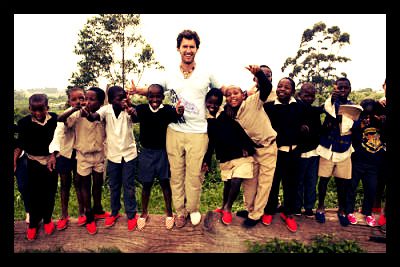
Most people have heard of TOMS shoe company, or even own a pair of TOMS themselves. The shoes are comfortable and casual as well as fashionably cute for everyday wear. In addition, for every pair of shoes purchased from TOMS, another pair is given away to someone in need.

The company has recently been criticized for hurting economies struggling against poverty by taking away business with their shoe give-aways.

A for-profit company, TOMS’s mission is to help societies that are lacking in basic supplies such as shoes. They have announced their plan to produce one third of shoes in the countries in which they donate the extra pair.

Blake Mycoskie, the founder of TOMS shoe company, has stated that the company is looking forward to helping solve more global issues such as clean water, nutrition and education. The company is examining ways to expand their product lines and business model to help further improving the quality of lives of those suffering from poverty around the world.

TOMS website shares how providing shoes to children helps give them the ability to go to school, to work and to participate in their communities without fear of injury and illness that can easily happen with bare feet.

Shoes are a basic need for everyone, and having kids in school, working and being healthy is a huge factor in breaking societies out of poverty.

The TOMS team calculates how many pairs of shoes they sell and match that number in pairs that they will give away.

Partners that operate community health programs in foreign countries work with TOMS to figure out sizes, quantities, and delivery costs. TOMS covers all of the shipping and distribution, and corrects their methods based on feedback from their ‘giving partners’ that are actually working in the societies TOMS donates to.

More and more companies are beginning to realize that making a positive difference in the lives of others is actually a very profitable venture. More than a billion people are living on less than two dollars per day, and that is a huge customer base for a company to cater to.

Viewing the world’s poor as a market share is an innovative and successful way to start a business and simultaneously free people from the cycle of poverty.

The cycle is often perpetuated by illness, malnutrition, unemployment and lack of medical care; these are problems that businesses can solve with new products and services. TOMS is only one of the companies that is thriving in the business world and helping people who really need it every step of the way. Additionally, TOMS personalizes their shoe donations for the different countries they assist. In January 2014, members of the company visited Tanzania and learned that almost half of the residents are under the age of fourteen years old.

This helps them decide types and quantities of shoes to distribute to Tanzania versus another country with alternative statistics. The more successful TOMS becomes, the more people across the globe are receiving shoes and the ability to walk to a better future on their own.

– Kaitlin Sutherby

Sources: The Huffington Post, Toms, Toms Stories
Photo: Forbes

February 23, 2014
https://borgenproject.org/wp-content/uploads/borgen-project-logo.svg 0 0 Borgen Project https://borgenproject.org/wp-content/uploads/borgen-project-logo.svg Borgen Project2014-02-23 04:00:312024-12-13 17:50:04TOMS Shoe Company: Buy a Pair, Give a Pair
Economy, Global Poverty, Inequality

Obama Addresses Decline of Opportunity in America

Opportunity-In-america
President Barack Obama’s 2014 State of the Union Address highlighted the growing imbalances throughout the world.  In recent decades, the U.S. has depended on its military strength as a substitute for diplomacy, but the President specified the need to shift the focus to fighting extreme poverty within Africa, the Americas and the Asia-Pacific.

The President’s agenda is taking on the issue of poverty head-on.

He recognizes that to address the large inequalities we must reverse the decline of social and economic mobility.  Currently, 65 percent of Americans born in the bottom fifth of incomes stay in the bottom two-fifths income class while 65 percent of top fifth stay in the top two-fifths.

A major factor that maintains this mobility gap is poverty.

Families from poor backgrounds and low economic status are at a disadvantage right from the start.  Just 36 percent of kids born in the poorest households get a strong start in life compared to 70 percent for middle-income kids and 87 percent for the upper class.

With federal programs like Head Start and Race to the Top are putting an emphasis on early child development, it is critical that we create social policy that supports individuals throughout all stages of life.  The Brookings Institute has identified five major life stages that we can consciously cultivate in order to increase mobility and opportunity in America.

  • Strong Start in life: Being born to a mother with at least a high school degree increases the likelihood of leading a successful life. Only 48 percent of children in the bottom fifth are born to mothers with a high school level education.  Increased cognitive ability starts in the home and these same children will hear fewer words, read fewer books and are overall less stimulated than their counterparts.
  • Strong Start in School: Starting school with a disadvantage is a factor that only compounds as a child grows.  By the age of five, less than half of low-income children are deemed school-ready.  To get a head start, children must develop social and academic skills before they enter school.  This is the rationale behind the President’s early learning initiative.
  • A Strong Start in Postsecondary Education:  Postsecondary education must begin with a high school diploma.  The dropout rate among low-income students is six times higher than the rate of high-income students.  Students must not only graduate but graduate with sufficient skills to succeed in higher education.
  • A Strong Start in Labor Market: In today’s economy, the value of a postsecondary degree is tremendous.  On average, each additional year of school accounts for an extra 10 percent return in annual income.  This makes four-year degrees more desirable than one from a community college.  Over 50 percent of low-income students enrolled in community college fail to graduate or transfer to a four-year college.  A support system to encourage students to remain focused and finish their degrees will transform their chances in a sluggish labor market.
  • A Strong Start for a Family: This brings the cycle full circle.  Before getting married and having children, individuals need to consider their personal financial security as a prerequisite.  Marriage plays a critical role in determining the fate of a child. Proper parenting skills are often developed through the shared experience of marriage.  Crafting social policy that encourages marriage can offer more incentives for couples to stay together and create a strong family.

– Sunny Bhatt

Sources: Brookings Institute, New York Times
Photo: Prague Post

February 14, 2014
https://borgenproject.org/wp-content/uploads/borgen-project-logo.svg 0 0 Borgen Project https://borgenproject.org/wp-content/uploads/borgen-project-logo.svg Borgen Project2014-02-14 12:02:132017-03-20 13:19:49Obama Addresses Decline of Opportunity in America
Children, Developing Countries, Development, Economy, Education, Global Poverty, Government, Human Rights, Inequality

Education in India Suffers from Income Inequality

education_india
India is known for having one of the fastest growing economies in the world. Currently, the growth for GDP within India rests at 4.9 percent, but this is far below its potential.

Similarly to the United States, India is another one of the world’s largest democracies. However, they both also have some of the worst cases of income inequality. In the past 15 years, the net worth of India’s top billionaires have increased 12 times, enough to eliminate poverty in India twice.

The public infrastructure of India is developing at a decent pace, but there are problems that are often left unaccounted for by the Indian government. For example, education in India is a system in dire need of improvement.

According to UNESCO’s Education For All global monitoring report, “At 287 million, India has 37 percent of the total population of illiterate adults across the world.” The report also asserts that the poorest of India will not expect to receive universal education until around the year 2080.

In regards to the specific problems that India faces with education, access and quality are two of the greatest concerns. Much of it is tied to the proper functioning and funding of Indian government, which may not be reliable in certain instances.

90% of people do not continue to college in India, 58% do not finish primary school and 4% never even have the opportunity to start.

The extensive lack of universal education in India also goes on to provide problems for India’s human capital in general. Out of 122 total countries released by the World Economic Forum’s Human Capital Index, India is ranked a measly 78.th The problems India faces may require the nation to make steps toward realizing more inclusive growth and development.

Income inequality ought to be addressed in India for their human capital to rise.

This means core public services including basic healthcare, education and power or water supply must be established by Indian government at multiple levels. Investment in people has proven a successful method to national development. In other words, India still has a ways to go in realizing its full potential.

– Jugal Patel

Sources: World Bank, India Times, Teach For India, Live Mint, Outlook India
Photo: The New York Times

February 13, 2014
https://borgenproject.org/wp-content/uploads/borgen-project-logo.svg 0 0 Borgen Project https://borgenproject.org/wp-content/uploads/borgen-project-logo.svg Borgen Project2014-02-13 16:33:072019-08-13 13:15:12Education in India Suffers from Income Inequality
Economy, Global Poverty

Afghanistan’s Mineral Wealth Remains Untapped

Afghanistan_Mineral_Mine_Gold_Natural Resources
Afghanistan is a country trying desperately to recover from decades of conflict. From the Soviet invasion in 1979 to the United State’s invasion in 2001, Afghanistan has suffered a multitude of setbacks and developing world devastation to its people, culture and way of life. However, Afghanistan’s way forward is sitting right under its feet.

Afghanistan’s mineral wealth of gold, copper, iron and other rare metals is valued up to 3 trillion, according to NPR. This type of money could truly turn Afghanistan from an impoverished and suffering country whose largest export is currently heroin to a country that is the envy of its neighbors.

On top of this wealth comes a recent discovery by a small group of Pentagon officials and an American geologist, that there is an estimated 1 trillion dollars worth of the rare metal lithium in massive quantities as well. An internal Pentagon memo noted that Afghanistan could become the “Saudi Arabia of lithium” a New York Times article recently stated.

The un-mined potential of the mineral wealth is so great that many believe it will attract investors before any type of mining becomes profitable.

The issue of attracting companies to begin investing in the country is another matter entirely.  Afghanistan’s current instability is of major concern, the NATO pullout of the majority of its troops at the end of 2014 has most major companies in a holding matter waiting to see what changes will occur once Afghanistan is virtually in charge of all facets of running itself.

Afghan officials have recently opened up a nearly 1 billion dollar cement tender which is in part due to the fact that as of right now, Afghanistan imports virtually all of its cement (which is a 1 billion dollar drain on the economy).

Another noted fear by many potential investors is the issue of corruption in any official dealings that outside investors may have with the Afghani government. Afghanistan is routinely noted for being one of the most corrupt countries in the world. In 2012, its corruption rank according to the Transparency International Corruption Perception Index placed Afghanistan at the bottom with North Korea and Somalia.

All three countries scored an 8 out of 100, 176 countries were studied in order to compile the full table. Afghanistan has long been a country that has endured conflict after conflict, and a multitude of hardships and struggles.

However, with a lot of hard work by both international and local Afghan institutions; the nearly limitless mineral potential under its feet could truly make Afghanistan one of the most important mining countries in the world. There is not been a real chance for a country to do so much good for itself in a long time, but if both the world and Afghanistan work together, this could be the turning point that this war ravaged country so badly needs.

– Arthur Fuller

Sources: Huffington Post, New York Times, Reuters, NPR, Huffington Post- 2
Photo: Global Post

February 12, 2014
https://borgenproject.org/wp-content/uploads/borgen-project-logo.svg 0 0 Borgen Project https://borgenproject.org/wp-content/uploads/borgen-project-logo.svg Borgen Project2014-02-12 07:27:112017-11-30 10:53:15Afghanistan’s Mineral Wealth Remains Untapped
Economy, Global Poverty

Norway Quality of Life Far Exceeds America

Scandinavia_Norway_Europe
When it comes to quality of life, there are few countries that can supersede America in terms of luxury, comfort and overall well-being. Not even Canada or Britain exceeds the United States in quality of life. However, Norway, an oil-rich country situated in the Scandinavian Peninsula, undeniably outstrips the American standard of living.

The United States has a lower per capita GDP than Norway with a GDP of 51,749 compared to 99,558, respectively, and is also home to one of the most pressing income distribution gaps in any industrialized nation, surpassed in income inequality by only Russia and Mexico.

Due to America’s cavernous income inequality, the poorest 38% of Norwegians are better off than the poorest 38% of Americans despite an overall lower average per capita GDP. According to Syracuse University professor Timothy Smeeding, the United States relies heavily on the markets to an extent that social safety nets are neglected, unlike Norway, which focuses more resources on providing aid to the poor.

This is not to say that America completely disregards its poor. To clarify, the United States has initiated its portion of socially-oriented acts, such as its attempt to reform the welfare system during the past two decades.

However, while the number of individuals on welfare was reduced from 5 million to slightly over 2 million, the welfare poor were downgraded into the working poor. Although welfare reform was rooted in good intentions, the lack of government safety nets defeated the purpose of the entire act.

Although the discovery of oil on the land in 1969 had transformed Norway, more than just an abundance of the valued natural resource buttresses Norway’s economy. Norway’s success has been attributed to what many call the “Norwegian Model”– a model of running a welfare state in which resources are carefully monitored, preserved and kept up-to-date.

While the United States ranks among one of the wealthiest nations in the world, it has stayed remiss in establishing social safety nets, particularly for the less economically-advantaged subsection of the population. Due to the lack of social safety nets, America hosts one of the largest global income inequality gaps, and is ultimately surpassed by the tiny welfare state of Norway in terms of quality of life.

– Phoebe Pradhan

Sources: Infoplease, CS Monitor, World Bank, News in English
Photo: The Telegraph

February 12, 2014
https://borgenproject.org/wp-content/uploads/borgen-project-logo.svg 0 0 Borgen Project https://borgenproject.org/wp-content/uploads/borgen-project-logo.svg Borgen Project2014-02-12 07:04:212024-12-13 17:50:01Norway Quality of Life Far Exceeds America
Economy, Extreme Poverty, Global Poverty

Poverty in Nicaragua

poverty in nicaragua
Nicaragua is one of the poorest countries in Latin America, second only to Haiti. Most of the poverty in Nicaragua exists rurally (more than 80 percent,) but there are also very impoverished neighborhoods in the capital of Managua.  In fact, 43 percent of the Nicaraguan population lives in rural areas and 68 percent of them are trying to survive off just over $1 per day. Overall, 46.2 percent of the population lives below the poverty line.


Implications of Poverty in Nicaragua


The poverty in Nicaragua has caused extremely poor health conditions. HIV and AIDS have been a big issue; there have also been frequent reports of violence against women. Many organizations have been working to prevent the spread of HIV and AIDS and provide support for those with it, to empower women in their fight for freedom from violence and to empower the youth to encourage them to change their society.

Over the last 40 years, there has been extreme inequality and the country has had to overcome a cruel dictatorship, a gruesome civil war and multiple natural disasters. Another big problem is that the central government has historically marginalized the areas with large populations of indigenous people. The gross domestic product (GDP) per capita has decreased to only one-third of what it was in 1977 because of the combined impact of continued civil strife, trade embargos, unsuitable macroeconomic policies and institutional changes that are leading toward an even and more centrally-controlled economy.

Unemployment across the entire country is at 12 percent, but among the poor rural families, it is over 20 percent, so many rural families are migrating to other countries or urban areas within Nicaragua to find work. Remittances are vital sources of income for one in every five families and account for 20 percent of the country’s GDP.

Fortunately, the Nicaraguan economy has been growing substantially and has recently received lots of attention, having grown 30 percent since 2006, when the Sandinistas came back into power. Also, the GDP per capita has increased from $1,239 to $1,582 in the past year alone. Also, the Nicaraguan government has signed a lucrative memorandum of understanding with a telecommunications company from China to fund and build an inter-oceanic canal that is said to rival the Panama Canal.

Nicaragua is presently importing oil from Venezuela at solidarity rates, so Nicaragua pays extremely low prices up front for the first half of the oil and then pays low-interest loans over time for the rest. The Central Bank has said that macro-business development and social programs are funded by 62 percent of the Nicaraguan oil revenue.

Because of all of this news in the last five years,  extreme poverty (measured by a familial income of less than $1.25 per day) in Nicaragua has fallen from 11.2 percent to 5.5 percent. In 2011, Nicaragua was reported to have an economic growth of 5.1 percent, which was the highest in Central America.  Despite all of this good news, a considerable amount of work still needs to be done before it can fully eradicate poverty.

– Kenneth W. Kliesner

Sources: World Bank, Rural Poverty Portal, Health Poverty Action, The Tico Times
Photo: Pacific Lots

February 11, 2014
https://borgenproject.org/wp-content/uploads/borgen-project-logo.svg 0 0 Borgen Project https://borgenproject.org/wp-content/uploads/borgen-project-logo.svg Borgen Project2014-02-11 21:21:512019-10-24 09:31:59Poverty in Nicaragua
Economy, Global Poverty

Services Sector Slows China’s Economy

service_sector_china's_economy
China’s economy, the services sector in particular, appears to be slowing down, according to statistics.

According to the Hong Kong and Shanghai Banking Corporation (HSBC)/Markit Services, the Purchasing Managers’ Index (PMI) of China dropped to 50.7 in January. “The slower expansion of services activities in January reflected soft manufacturing growth and the impact of Beijing’s latest measures to curb official extravagance,” said Hongbin Qu, Co-Head of Asian Economic Research at HSBC.

Although Qu said services would rise again in the next few months, he also said “a meaningful improvement relies on stronger growth of manufacturing sectors and the implementation of reforms to boost service sectors.”

To provide an updated understanding of what is affecting the private sector economy, the PMI tracks variables such as sales, employment and prices. Moreover, Markit states in its website that businesses as well as governments rely on its data to make better monetary decisions and shape policy.

“The HSBC China Services PMI is based on data compiled from monthly replies to questionnaires sent to purchasing executives in over 400 private service sector companies,” noted Markit on a press release. “The panel has been carefully selected to accurately replicate the true structure of the services economy.”

For China, the PMI score of 50.7 indicates the output growths at manufacture companies and service providers are weakening. It also indicates that these entities are beginning to cut the prices of what they are trying to sell.

A Reuters article states that China’s economy is still above the 50-point level in which anything below it signifies contraction. In a nutshell, the current score means that the Chinese economy is slowly growing, but it is also on the verge of contraction.

In terms of GDP, the economy of China is the second-largest in the world, according to the World Bank. Based on the Chinese government’s official poverty line, poverty in the nation declined dramatically. However, despite past achievements, many people in the rural areas of China remain impoverished.

“Since the international standard is somewhat less severe than China’s official poverty line, it indicates greater numbers of poor in all years, and that by end-1998, a much larger share of the rural population – about 11.5 percent or some 106 million people – remained in poverty,” said the World Bank.

Once again, it is anticipated that China’s services sector will eventually pick up in the coming months. Only time will tell what direction it will take as the economy that once proved to be a miracle.

– Juan Campos

Sources: Market Economics, Reuters, World Bank
Photo: Business Week

February 11, 2014
https://borgenproject.org/wp-content/uploads/borgen-project-logo.svg 0 0 Borgen Project https://borgenproject.org/wp-content/uploads/borgen-project-logo.svg Borgen Project2014-02-11 19:38:562024-05-26 23:12:30Services Sector Slows China’s Economy
Developing Countries, Development, Economy, Global Poverty

The Myth of Countries Being Doomed to Poverty

Myth_of_poverty_gates_foundation
The Bill and Melinda Gates Foundation released its 2014 annual letter, which, rather than focusing on the foundation’s accomplishments over the past year or discussing its plans for the future, addressed three widely held beliefs regarding poverty.

The Foundation focused on eliminating these three myths: “Poor Countries are Doomed to Stay Poor,” “Foreign Aid is a Big Waste,” and “Saving Lives Leads to Overpopulation.” The letter deconstructs these myths, showing they are not only incorrect, but also highly detrimental to the progression of the fight against global poverty.

The idea that poor countries are trapped in a cycle of poverty is one held by people worldwide, especially those in the United States and other Western countries. While this belief that poor countries can never improve is deeply ingrained, it can be disproved through simple statistics.

In 1960, the majority of the global economy was focused in the West, with many of the countries across Asia, Africa, and Latin America counting as among the most impoverished in the world.

Today, many of the countries formerly considered irrevocably poor, such as Mexico, Turkey and Chile have rapidly growing and thriving economies and according to the Bill and Melinda Gates Foundation, “the percentage of very poor people has dropped by more than half since 1990.”

Many countries that were once viewed as “developing” such as China and India have come so far that it is difficult to continue viewing them as such, even for those who subscribe to the belief that poor countries are doomed to remain impoverished.

While people may find it easy to accept growth in countries in Asia as well as North and South America, they have a harder time believing that life in Africa will improve in the future.

The fallacy that the quality of life in African countries remains stagnant or decreases persists despite the fact that “7 of the 10 fastest-growing economies of the past half-decade are in Africa.”

In addition to growing economies, health care quality and availability both increasing throughout Africa. Since 1960, in spite of the AIDS epidemic, the life span of women in sub-Saharan Africa has increased by 39 percent from 41 years old to 57 years old. Education is improving as well, with over 75 percent of sub-Saharan children in school since 1970.

While not every impoverished country is experiencing drastic improvement, it is irrational to view all poor countries as the same. So long as there are not inherent geographical difficulties, such as those the landlocked countries in Africa face, or a government that impedes their growth, as is seen in North Korea, impoverished countries have the ability to improve exponentially.

Poverty will inevitably continue across the globe, but it will decrease significantly in scope and severity as it has done over the past several decades.

In addition to dissolving the misguided belief that poor countries will never improve, The Bill and Melinda Gates Foundation examines why this myth must be reevaluated. This misinformation harms the fight against global poverty because no one will support a cause they believe to be pointless.

– Cameron Barney

Sources: Gates Foundation, Forbes

February 10, 2014
https://borgenproject.org/wp-content/uploads/borgen-project-logo.svg 0 0 Borgen Project https://borgenproject.org/wp-content/uploads/borgen-project-logo.svg Borgen Project2014-02-10 04:00:302018-01-08 10:49:45The Myth of Countries Being Doomed to Poverty
Aid Effectiveness & Reform, Economy, Food & Hunger, Food Aid, Food Security, Global Poverty

Hunger in Zimbabwe

zimbabwe_food_hunger
Drought in Zimbabwe is reaching epic proportions as nearly one million people are at risk of food insecurity. According to the 2013 Zimbabwe Vulnerability Assessment Committee (ZimVAC,) food insecurity levels will affect roughly 2.2 million Zimbabweans at the peak of hunger season between January and March in the upcoming year. Zimbabwe already suffers from high poverty rates as approximately 72 percent of citizens currently below the poverty line and nearly 14.7 percent of the population is HIV prevalent.

Zimbabwe relies heavily on rain-fed agriculture, which has since plummeted since last season’s drought.  As the need for food increases, maize, a primary source of food in Zimbabwe, continues to rise in price making it more difficult on a population who already lives on less than a $1 a day. Making matters worse, the World Food Programme (WFP) recently announced that their initial plan of providing support for 1.8 million people will be drastically reduced.

“We’d been hoping to have scaled up our seasonal relief operations to reach 1.8 million people in the coming months with distributions of food aid, in some areas, cash transfers. Despite generous contributions from donors such as (United States,) (United Kingdom,) Japan, Australia, ECHO and the central Emergency Relief Fund (UN CERF), it’s now looking like all this will not be possible because of a shortage of funds. In fact, we’ve had to cut rations for one million of our beneficiaries in recent months and there are likely to be deeper cuts as from next month,” said WFP in a statement to the media.

Of the $86 million funding dispersed by the previous listed countries, only half of it has been implemented into relief intervention. “Rising food prices are making matters worse — in some areas, they are as much as double what they were last year,” says WFP communications manager Tomson Phiri.

These rising prices in the market are heavily affecting food security and although WFP is short on funding, they are hoping to raise another $60 million over the next 6 months in an effort to implement relief and recovery operations.

– Jeffrey Scott Haley
Feature Writer

Sources: World Food Programme, World Food Programme, Zimeye
Photo: The Telegraph

February 8, 2014
https://borgenproject.org/wp-content/uploads/borgen-project-logo.svg 0 0 Borgen Project https://borgenproject.org/wp-content/uploads/borgen-project-logo.svg Borgen Project2014-02-08 04:00:472024-12-13 17:49:57Hunger in Zimbabwe
Economy, Global Poverty

Poverty in Russia

Poverty_in_russia
As the adage goes, the poor stay poor while the rich get richer. For years, Russia has been regarded as a nation fraught with economic inequality- a land where the rich accrue more and more wealth each year while the poor descend further and further into squalor. Even in the advent of the burgeoning middle class, the growing disparity of wealth has contributed to a widening economic gap between Russia’s rich and poor residents.

Although an astounding 18 million Russians, or roughly 13 percent of the population, live below the official poverty line, having a collective income of $12.4 billion, the 97 wealthiest Russians jointly own $380 billion- nearly 31 times the collective income of the nation’s poorest individuals.

While $18 million residents grapple with the challenges of poverty, Vladimir Putin consistently vaunts the exclusive wealth of Russia. In a sense, Russia has exhibited economic growth. For instance, Moscow now houses more billionaires than New York City, the iconic American city that has long been esteemed as the metropolis of wealth and power of the Western World.

Although Putin boasts about the economic prosperity of the few wealthy elites, little effective action has been taken to curb the growing rates of poverty in Russia. For example, the estimated cost of living in Russia is approximately $210. However, the nation’s minimum wage is wholly insufficient at $155 per month.

Despite this harrowing fact, it appears that the 2014 Winter Olympic Games, set to be hosted in Sochi, has taken prominence over the rampant poverty in Russia. In 5a Akatsy Street, located in a neighborhood with deteriorating infrastructure, a brand-new multi-million dollar highway brazenly cuts through the surrounding poverty.

The glossy highway stands in salient contrast to the squalor of 5a Akatsy Street, a locale in which residents have barely sustained themselves without running water or a sewage system. While the Russian government sanctions the construction of stadiums and highways, the majority of Sochi residents live in dwindling, contaminated and neglected villages.

However, the juxtaposition of the ostentatious Olympic preparations in Sochi and the prevalence of squalor surrounding the slinky stadiums and magnificent mega-malls highlights a general trend that has been observed in Russian society, a dangerous trend in which in which the poor are vastly overlooked while the most wealthy are needlessly glamorized.

– Phoebe Pradhan

Sources: Telegraph, Forbes, TribLive
Photo:
AsiaOne

February 8, 2014
https://borgenproject.org/wp-content/uploads/borgen-project-logo.svg 0 0 Borgen Project https://borgenproject.org/wp-content/uploads/borgen-project-logo.svg Borgen Project2014-02-08 04:00:462024-12-13 17:49:28Poverty in Russia
Page 62 of 66«‹6061626364›»

Get Smarter

  • Global Poverty 101
  • Global Poverty… The Good News
  • Global Poverty & U.S. Jobs
  • Global Poverty and National Security
  • Innovative Solutions to Poverty
  • Global Poverty & Aid FAQ’s
Search Search

Take Action

  • Call Congress
  • Email Congress
  • Donate
  • 30 Ways to Help
  • Volunteer Ops
  • Internships
  • Courses & Certificates
  • The Podcast
Borgen Project

“The Borgen Project is an incredible nonprofit organization that is addressing poverty and hunger and working towards ending them.”

-The Huffington Post

Inside The Borgen Project

  • Contact
  • About
  • Financials
  • President
  • Board of Directors
  • Board of Advisors

International Links

  • UK Email Parliament
  • UK Donate
  • Canada Email Parliament

Get Smarter

  • Global Poverty 101
  • Global Poverty… The Good News
  • Global Poverty & U.S. Jobs
  • Global Poverty and National Security
  • Innovative Solutions to Poverty
  • Global Poverty & Aid FAQ’s

Ways to Help

  • Call Congress
  • Email Congress
  • Donate
  • 30 Ways to Help
  • Volunteer Ops
  • Internships
  • Courses & Certificates
  • The Podcast
Scroll to top Scroll to top Scroll to top