• Link to X
  • Link to Facebook
  • Link to Instagram
  • Link to TikTok
  • Link to Youtube
  • About
    • About Us
      • President
      • Board of Directors
      • Board of Advisors
      • Financials
      • Our Methodology
      • Success Tracker
      • Contact
  • Act Now
    • 30 Ways to Help
      • Email Congress
      • Call Congress
      • Volunteer
      • Courses & Certificates
      • Be a Donor
    • Internships
      • In-Office Internships
      • Remote Internships
    • Legislation
      • Politics 101
  • The Blog
  • The Podcast
  • Magazine
  • Donate
  • Click to open the search input field Click to open the search input field Search
  • Menu Menu

Archive for category: Economy

Information and stories about economy.

Economy, Global Poverty, Inequality

The Abahlali Movement’s Role in Eradicating South African Poverty

Abahlali
Apartheid in South Africa began in 1948 when the National Party was voted into power, favoring the white minority over the black majority. The African National Congress (ANC) then rose up to lead an opposition to apartheid and many ANC leaders, like Nelson Mandela, were imprisoned for years. Eventually the National Party became willing to negotiate a non-violent transition to a majority black rule after numerous protests. Apartheid came to an end after the first multi-racial elections in 1994, bringing the first black president into power: Nelson Mandela. Since then, the ANC has struggled to make the country equal for all races after all of the imbalances the apartheid created with things like healthcare, education and housing.

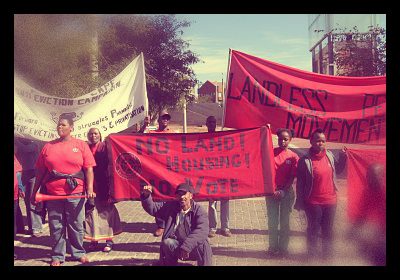
The Abahlali baseMjondolo Movement (also known as the Shack Dwellers Movement) was created to spread equality and help to fully end the long-lasting effects of apartheid. It started in early 2005 in Durban, South Africa and is still largely located in this port city, but it has become the largest organization of militant poor in South Africa in terms of mobilized peoples. The movement originated with a road blockade near the Kennedy Road settlement that was protesting a local industrialist buying the nearby land that these shack dwellers were promised by the new ANC government in order to create better housing.

This movement has grown rapidly to having over 30 settlements with tens of thousands of shack dwellers supporting them. The movement has suffered over a hundred arrests, ongoing death threats, regular police assault and intimidation from local parties in the last couple years alone. However, it has still been able to progress to the point that it has a persistent voice for inhabitants of informal housing settlements. Against the actions that have thrown thousands of people out to the streets, they have marched on and occupied police stations, offices of local councilors, newspaper offices, municipal offices and the City Hall.

Under the slogan “No Land, No House, No Vote,” the group has organized a very controversial, but extremely effective boycott of the local government elections. The Abahlali baseMjondolo Movement is distinctly against all forms of discrimination, corruption, repression and the concentration of land, wealth and power in any one party’s hands. They stand for a fair distribution of this land, wealth and power and for the right of the city’s inhabitation for every citizen.

Amongst other victories, the Abahlali baseMjondolo Movement has won access to schools, stopped the industrial development of the land promised to the Kennedy Road residents, democratized the governance of multiple other settlements, stopped countless evictions and forced multiple government officials and projects to actually focus on the poor. The movement’s main goal was originally to obtain land and housing in the city, but since it started it has successfully politicized and fought for an end to forced removals and for access to education, water, sanitation, health care and electricity. The movement has even set up gardening projects and sewing collectives for people living with AIDS and for orphans with AIDS.

For more information, address the Abahlali baseMjondolo Movement’s webpage at https://abahlali.org/ or watch the documentary about the movement entitled “Dear Mandela,” with the following webpage: https://www.dearmandela.com/.

– Kenneth W. Kliesner

Sources: Dear Mandela, Abahlali (1), Abahlali (2), CIA World Factbook
Photo: Western Cape

March 26, 2014
https://borgenproject.org/wp-content/uploads/borgen-project-logo.svg 0 0 Borgen Project https://borgenproject.org/wp-content/uploads/borgen-project-logo.svg Borgen Project2014-03-26 20:45:152024-12-13 17:50:11The Abahlali Movement’s Role in Eradicating South African Poverty
Developing Countries, Development, Economy, Food Security, Global Poverty

Desertification Heightens Poverty in Mongolia

Up until about 1990, Mongolia never faced any fears of living in poverty. Rural land specifically, and the large volume of land has been Mongolia’s source of food security and livelihood for centuries.

Mongolia owns approximately 838,853.13 square miles of land in which much of it is desert, but the arable land is quickly becoming depleted, polluted, or turned to desert.

Currently, 33% of people in Mongolia are poor, and over half of the country’s population is living in rural areas. This quickly happened after Mongolia’s large farms became private and hundreds of herders became unemployed and without government benefits.

Most of the rural poor live nomadic lifestyles, moving from area to area with their families in order to feed cattle and find food. Some families live in soums, or villages consisting of multiple families, and some rural families, particularly the nomads, live in tents known as ger. The benefit of living in soums is the ability to obtain some form of education, health services, and essential necessities.

Those living in rural areas rely on their animals for food and making money.

With much of the fertile land being utilized for feeding cattle, there has been a severe increase in land degradation. Mongolia has yet to find strengthening mechanisms for sustainable land management or a method to control desertification. Without these forms of protection, Mongolia is at an increasing risk of losing what little remains of one of their most needed natural resources: fertile land.

Desertification brings with it many struggles; drought and causing land to become irreparable are among the worst-case scenarios. With more and more of the land being overgrazed, little land will be left for agriculture, herding, and living. Mongolia is already naturally a very dry climate with little rainfall and plant growth, which is only worsened by the constant migration, over-cultivated land, and now competition for natural resources.

– Rebecca Felcon

Sources: Rural Poverty Portal, Scoop World
Photo: Stephane L

March 21, 2014
https://borgenproject.org/wp-content/uploads/borgen-project-logo.svg 0 0 Borgen Project https://borgenproject.org/wp-content/uploads/borgen-project-logo.svg Borgen Project2014-03-21 04:00:582024-05-26 23:20:44Desertification Heightens Poverty in Mongolia
Developing Countries, Economy, Food & Hunger, Global Poverty

Wasting Food Makes Ending Poverty Difficult

According to a report by the World Bank, 25% to 33% of the food produced for consumption around the globe is wasted every year.

The Food Price Watch report argues, “Between one-fourth and one-third of the nearly four billion metric tons of food produced annually for human consumption is lost or wasted.”

The World Bank claims that such waste mainly occurs during the production, transport, retail and consumption stages of food. This is bad news, considering millions of people around the world are dying of hunger, particularly in countries throughout Africa and South Asia.

Sadly, the report also argues that most of the food is wasted in developed countries.

“Overall, some 56% of total food loss and food waste occurs in the developed world; the remaining 44 percent across developing regions,” said the report.

The president of the World Bank, Jim Yong Kim, said that the large amount of food wasted around the world is shameful.

“Millions of people around the world go to bed hungry every night, and yet millions of tons of food end up in trash cans or spoiled on the way to market,” Kim said.

Apart from the food insecurity that such waste can create, the World Bank claims that wasting and losing food also harms the economy and environment, and makes fighting poverty even harder.

But, how guilty are Americans when it comes to wasting food?

According to NPR, people in the United States waste around $165 billion worth of food each year. On one of the agency’s radio programs, Jonathan Bloom, author of “American Wasteland: How America Throws Away Nearly Half of Its Food (and What we Can do About It,)” said, “We often don’t tend to realize that we’re throwing away perfectly edible food, especially when we’re paying attention to those expiration dates and when we’re thinking of those as the gospel truth.”

He believes that expiration labels are placed on food items for quality reasons, not safety.

But returning to the report by the World Bank, consumers often fall victim to the deals pushed by advertisements. Since consumers tend to buy more food than they need, many perishable items tend to expire by the time they are finally willing to eat them.

It is ultimately up to the consumer how much food to purchase and how long to wait before eating it. However, the consumers can make a big difference in the world if they stop wasting so much food.

This can be achieved by paying closer attention to their own eating patterns and simply buying less food.

– Juan Campos

Sources: NPR, The World Bank, Yahoo News
Photo: Enterra Solutions

March 18, 2014
https://borgenproject.org/wp-content/uploads/borgen-project-logo.svg 0 0 Borgen Project https://borgenproject.org/wp-content/uploads/borgen-project-logo.svg Borgen Project2014-03-18 04:00:162024-05-26 23:18:47Wasting Food Makes Ending Poverty Difficult
Activism, Development, Economy, Global Poverty

Famous, Rich and Hungry: BBC’s Latest Foray Into Poverty

The BBC is one of the more respected production companies in the world.

It produces such shows as Top Gear, which is an extremely popular show. It also produces a variety of news programs and also many sports programs as well. However, the BBC has, in the past few years, been straying from its normal programming and delving into the area of reality television and poverty. The BBC has aired Famous, Rich and Jobless, Famous, Rich and Homeless, and, most recently, Famous, Rich and Hungry.

The shows are designed to expose the lives of those who live on the fringes of England’s society and air them to the entire nation. In the latest show, Famous, Rich and Hungry, various celebrities in England are sent to live with poor families for a week in order to experience what food poverty really feels like. The show will have such celebrities as Rachel Johnson, the sister of the Mayor of London Boris Johnson.

It will also have Teo Paphitis an extremely successful businessman who is estimated to be worth over 200 million British pounds (roughly $332.26 million.)

The show is produced by Love Productions, who was also behind the production of the other Famous and Rich series. The show’s executive producer, Richard McKerrow, spoke in an interview recently and said, “I am sure there will be the same media storm, because my God, there is a political bun fight about whether people in Britain are currently going hungry.”

There is a plethora of evidence from both scientific and scholarly sources that there is indeed a crises occurring in Europe. The situation in Europe right now calls for a united effort to pass laws and bills that aid in both the economic recovery and aid of getting Europe citizens out from the ever present shadow of poverty.

The austerity measure that are being used by many European counties at the moment in order to lift their economies out from the rubble. The BBC has an opportunity as one of the world’s largest television producers and acclaimed sources of information really to aid those in need.

The BBC should focus on producing quality television that can educate, enrich, and inform its viewers rather than sensationalizing someone’s misfortune by showcasing it as a spectacle to the world. The poor need informed and educated people fighting for them, rather than having their lives made a mockery of.

– Arthur Fuller

Sources: The Guardian TV-Radio Blog, The Guardian Media, The Guardian, Daily Mail
Photo: Daily Mail

March 11, 2014
https://borgenproject.org/wp-content/uploads/borgen-project-logo.svg 0 0 Borgen Project https://borgenproject.org/wp-content/uploads/borgen-project-logo.svg Borgen Project2014-03-11 16:40:362024-05-26 23:19:18Famous, Rich and Hungry: BBC’s Latest Foray Into Poverty
Developing Countries, Development, Economy

More Than Safaris: Kenya’s Rise to Power

Thus far, Kenya’s economy depends largely on tourism, specifically safari tours. Travelers often spend the night in Nairobi, the region’s gateway to business, before their safari adventure. Kenya also benefits from pineapple production–a top five producer worldwide–through exporting both canned pineapple and juice concentrates. But there is much more to the booming country than tourism and agriculture. So what else is special about this east African nation?

Kenya is Young and Friendly

Youths serve as optimists for the future and in Nairobi, they keep the economy going. More than 60% of the population is less than 25 years old. Kenyans tend to be warm-hearted and welcoming to foreigners. While the national language in Swahili, many Kenyans speak English at a high level and are willing to converse with tourists about Kenyan culture.

While Kenya is sophisticated compared to its East African neighbors, the country still suffers from unemployment and poor infrastructure. Many of Kenya’s young cannot get jobs due to a lack of skills and opportunities.

The Diaspora Returns

Waiting an hour and a half for a pizza in Nairobi? Rotesh Doshi would rather not. After studying at the London School of Economics, he pursued work opportunities abroad. When he had the chance to bring United States-based franchise, Naked Pizza, to Nairobi, he took it and ran with it.

Although it is his hometown, Doshi found many challenges to setting up a business in Nairobi, including poor infrastructure, government bureaucracy and a short supply of skilled human labor. “You often ask yourself ‘is it worth it’ when a lot more things go wrong than right,” Doshi said. “But there is nothing else that I would rather be doing right now, especially being part of that growth story in my own country.”

Promising Entertainment Industry

Lupita Nyong’o’s Oscar win for her supporting performance in 12 Years a Slave gives Kenya’s entertainment industry a ray of hope. With 40% of Kenya’s workforce unemployed, and 70% of those being less than 35 years old, successes like Nyong’o’s show young people that they can, in fact, make it in the entertainment sector, which can then boost the economy.

The government hopes to do this through establishing a film school and promoting the entertainment industry as a legitimate avenue for job creation. Kenya looks to Nigeria for inspiration. Nigeria’s film industry, referred to as “Nollywood,” produces about 50 films per week–many more than Hollywood and second only to India’s Bollywood.

Attracting New Businesses

Food processing giant Del Monte set up a Kenyan branch called Cirio Del Monte Kenya to take advantage of the region’s high-yielding pineapple production. In the technology sector, Korean electronics manufacturer Samsung announced plans for a new assembly plant in Nairobi, positioning the city as the East African center of operation.

With businesses like Proctor & Gamble, Pfizer Pharmaceuticals and IBM opening regional hubs in Nairobi comes the opportunity for more employment for the country’s youth. Foreign businesses that are setting up their African headquarters in centrally located Nairobi also benefit local businesses, like Kenya Airways.

– Haley Sklut 

Sources: BBC, How We Made It In Africa, All Africa, US Embassy, Career Nation
Photo: Sida

March 7, 2014
https://borgenproject.org/wp-content/uploads/borgen-project-logo.svg 0 0 Borgen Project https://borgenproject.org/wp-content/uploads/borgen-project-logo.svg Borgen Project2014-03-07 18:57:362024-06-04 03:01:16More Than Safaris: Kenya’s Rise to Power
Economy, Global Poverty

Akon Lighting Africa Project

akon_lighting_africa_project
Every day, 600 million Africans live in the dark with no access to electricity, which is making it difficult for students to read, clinics to properly store vaccines and businesses to operate outside of natural light hours.

The energy crisis in Africa, particularly in the Sub-Saharan countries, leaves many people in poverty. In a place where work stops when the sun goes down, it is hard to advance in the workplace, which is making employment opportunities scarce. And, when power is available, it is often unreliable and can cause power outages.

Senegalese pop-star Akon, in partnership with Give1 Project and Africa Development Solutions Global Corporation, aims to give electricity to one million households in nine West and Central African countries by the end of 2014.

The Akon Lighting Africa project involves installing solar equipment in rural households in Senegal, Mali, Guinea Conakry, Gambia, Burkina Faso, Equatorial Guinea, Gabon, Congo and the Ivory Coast.

Originally from Senegal, Akon, whose real name is Aliaune Badera Thiam, is on tour of the beneficiary countries to meet with presidents and leaders.

“We wanted to focus the project on rural areas because we often forget that our parents in these remote areas need electricity,” Akon was quoted saying after meeting Burkinabe President Blaise Campore.

The project also aims to improve education quality and sustainable infrastructure. Improved electricity would lengthen hours of education, allowing students the opportunity to succeed.

Akon was born in St. Louis to two musician parents; he spent much of his childhood in Senegal. Despite living in the United States, Akon keeps his homeland in the forefront of his business ventures.

He started a charity in Africa that aims to empower youth by promoting health and education. The Konfidence Foundation concentrates its efforts in Senegal and West Africa, but Akon hopes the foundation will serve as an international platform to empower individuals, communities and nations.

Akon Lighting Africa is the pop star’s most recent project that aims to help Sub-Saharan African countries become self-sufficient. The sustainable energy project has a mission to help the infrastructure, education and economy of the beneficiary countries.

– Haley Sklut

Sources:  Africa Review, World Bank, Konfidence
Photo: Trace

February 26, 2014
https://borgenproject.org/wp-content/uploads/borgen-project-logo.svg 0 0 Borgen Project https://borgenproject.org/wp-content/uploads/borgen-project-logo.svg Borgen Project2014-02-26 22:18:292024-06-05 01:57:12Akon Lighting Africa Project
Economy, Global Health, Government, Politics and Political Attention

Is Global Governance Undermining Global Health?

Global governance
On February 11, The Lancet and the University of Oslo issued a joint commission calling for a political commitment to reform the current system of global governance in favor of one that prioritizes human health over wealth. The Commission of Global Governance for Health brought together 18 leaders of research and policy-making, drawn from a number of different backgrounds, to draft the report.

Data was gathered for two years on how socioeconomic inequality between nations is exacerbated by a system of global governance run by a handful of the wealthiest nations. This imbalance of political power between nations is exactly what the commission is trying to fight.

The main agenda it promotes is that health equity should be a top priority of all political, economic and social sectors.

Richard Horton, editor-in-chief of The Lancet, notes, “Economic growth alone will not deliver good health to the most vulnerable sectors of society without addressing the intertwined global factors that challenge or destroy health lives.”

The commission identifies seven areas where political and economic injustice affects population health:

  • The global financial crisis and ensuing austerity policies
  • Knowledge and intellectual property
  • Investment treaties
  • Food security
  • Transnational corporations
  • Migration
  • Armed violence

Within these areas, there are five key “dysfunctions” that are preventing improvements in health outcomes. They are:

  • Democratic deficits (“the exclusion of civil society and marginalized populations from national and global decision making”)
  • Weak accountability (“inadequate means to constrain power”)
  • Institutional “stickiness” (“decision-making processes that fail to adapt to the changing needs of people”)
  • Inadequate policy space for health (“health concerns are too often subordinated to other objectives, such as economic growth and national security”)
  • Absence of international institutions to protect and promote human health

So where does this leave people?

The Commission makes it quite clear that all of these challenges can only be addressed by moving beyond the health sector. In order to promote human health and address global inequities, they argue that people need to reform their current system of global governance in a number of ways:

1. Create a multi-stakeholder platform on governance for health (“a place for deliberation and debate to strengthen accountability for health”)
2. Form an independent scientific monitoring panel (“to measure and track progress in overcoming the political, economic, and social determinants of adverse health outcomes”)
3. Organize health equity impact assessments of all policies and practices
4. Strengthen existing mechanisms to protect health and build commitment to global solidarity and shared responsibility

It is the hope of the Commission of Global Governance for Health that this report will bring health inequities between nations to the forefront of global policy.

– Mollie O’Brien

Sources: Medical News Today, The Hindu
Photo: Masafumi Matsumoto

February 25, 2014
https://borgenproject.org/wp-content/uploads/borgen-project-logo.svg 0 0 Borgen Project https://borgenproject.org/wp-content/uploads/borgen-project-logo.svg Borgen Project2014-02-25 18:04:212014-02-25 18:04:21Is Global Governance Undermining Global Health?
Economy, Education, Global Poverty

Poverty and Violence in Honduras

Violence_Poverty_Exacerbate_Homelessness_Honduras
Birthplace of the term “banana republic” and victim of the brutal fruit companies-led coup, Honduras is among the countries with the lowest incomes in Latin America, poverty is very pronounced problem in this Central American nation. Despite an economic growth of around 3 percent per annum, the gross domestic product (GDP) per capita of the country remains stagnant.

This discrepancy could indicate that there is a widening disparity gap.

In fact, since the coup d’état in 2009, Honduras witnesses the most rapid rise in inequality in Latin America, a factor that contributes to prevailing climate of violence. Equally frustrating, the top 10 percent of the population also earns virtually all of the republic’s real income gains.

Furthermore, the 2009 coup d’état had increased the overall rates of poverty and extreme poverty. This climate of political crisis had reverted the economic advances that took place in the country. In addition, the government of President Porfirio Lobo, who came into power after the post-coup elections of 2010, had reduced social spending despite the boost in public spending.

It is estimated that 71 percent of the 8.3 million Hondurans live in poverty, a major problem that contributes to the frequent instances of violence that plague the nation. Because of this astronomic number of people living in poverty, a large sector of Honduras’ population is also deprived of education.

Only a lucky few can afford any education beyond sixth grade.

What’s more, Honduras has the highest rate of homicide in the world, with the average of 20 people murdered daily, 90 percent of whom are male victims. This frightening data stem from the burgeoning narcotic business, which has given rise to many organized crimes. This epidemic problem of homicides also takes away from the country’s meager income by necessitating the Honduran government to spend 10.5 percent of the national GDP in the combat of violence.

Due to Honduras’ constant history of political instability, there has always been very little opportunity for Honduras to develop democratic institutions to impose the rule of law. Instead, centuries of colonialism and decades of dictatorship have marginalized the poor, leaving them with minimal choices to make a living.

This scarcity of upward economic mobility and grinding poverty have driven many towards illicit ways of earning money.

In its attempt to encourage Honduras to alleviate poverty, the World Bank has suggested the country to support the stability and the growth of its macro-economy as well as to improve the quality of its education. But, these key options to improve the situation of the country are easier said (or suggested) than done. Development and democracy are not phenomena whose advent can be brought about at an instant.

Instead, they require years of institutional and systematic reforms for a society to have a functional democracy and a sustainable development.

 – Peewara Sapsuwan

Sources: El Pais Internacional, El Heraldo, El Heraldo, Los Angeles Times, World Bank, World Bank
Photo: Zimbio

February 24, 2014
https://borgenproject.org/wp-content/uploads/borgen-project-logo.svg 0 0 Borgen Project https://borgenproject.org/wp-content/uploads/borgen-project-logo.svg Borgen Project2014-02-24 12:53:402024-06-05 01:57:10Poverty and Violence in Honduras
Aid Effectiveness & Reform, Economy, Global Poverty

Fortress Europe: Ceuta and Melilla

Ceuta_Melilla_Border
The term Fortress Europe refers to the European Union’s obstructive policies towards immigrants. It is a term that critics employ to highlight many member states’ reluctance and outright unwillingness to welcome migrants seeking a better life within the European Union.

Nowhere is this Euro-jargon more literal in than the Spanish enclaves of Ceuta and Melilla in North Africa. These two cities are where the E.U. borders the African; the cities are located only a few yards apart, they are also where modern day fortresses have been erected.

Heavily patrolled and surrounded with three rows of 20-foot-high barbed wire fences and infrared cameras, the borders of Ceuta and Melilla bare resemblances to the Berlin Wall. In 2005, 11,000 Africans forced their way across the borders in hope of entering the E.U. via Spain since these two cities are politically European despite not being on the continent.

Since then, the Spanish government has invested heavily in fortifying the EU’s southern most land frontiers (more than 30 million Euros, or approximately $41,238,000.)

In 2010, these two enclaves, both relying on resources from their immediate neighbor, Morocco, caused a political ruffling when the Moroccan government accused Spain of racism and boycotted produces going into the two Spanish territories.

What is the most direct effect of these European fortresses in Africa? Since the revamp of the fences, immigrants—many being refugees—have to cross into Europe via the Mediterranean, often in makeshift and unseaworthy boats.

The Arab Spring that sprung across North Africa and into the Levant unleashed waves of asylum seekers and refugees dire to get into the E.U. However, due to the difficulties of crossing into these two enclaves people have been going via the sea to reach another nearby EU territory—the Italian island of Lampedusa. These journeys frequently prove to be perilous.

A Syrian refugee and his family who had traveled through five countries with six forged passport across the Levant and North Africa hoping entering Europe via Melilla claims this European fortress is nothing less than an open-air prison.

Not only is the condition inside the refugee camp less than optimal, in February, Spain took the decision to close the border of Melilla after a group of around 200 to 300 Syrian refugees tried to enter.

After the Moroccan authorities warned the Spanish authorities of the presence of “uncontrolled people,” the gates of Europe quickly flung closed before these desperate people who found themselves stranded in Moroccan territory. Earlier in February, at least 12 people died outside of Ceuta’s fences; 23 others were handed to the Moroccan authorities to be returned to Syria, a human right violation and a contradiction of the terms laid out in the Convention for Refugees of 1951.

If the E.U. would like to live up to the terms set out in the Europe Convention on Human Rights of the Council of Europe and other treaties and conventions to which it and its member states are party, the unofficial Fortress Europe policies of its frontier member states must not continue. These policies are unjustifiable disregard of ongoing ordeals that many refugees are facing in their homeland as well as the value of their lives.

– Peewara Sapsuwan

Sources: CEA(R), 20 Minutos, Spiegel Online International, Reuters
Photo: 20 Minutos

February 24, 2014
https://borgenproject.org/wp-content/uploads/borgen-project-logo.svg 0 0 Borgen Project https://borgenproject.org/wp-content/uploads/borgen-project-logo.svg Borgen Project2014-02-24 12:47:132024-12-13 17:50:06Fortress Europe: Ceuta and Melilla
Aid Effectiveness & Reform, Developing Countries, Development, Economy, Foreign Aid, Global Poverty

Facts About U.S. Aid to Israel

U.S._Aid_to_Israel
Since 1997, Israel has received $3.1 billion annually in foreign aid from the United States. The agreement began almost two decades ago, after Israeli Prime Minister Benjamin Netanyahu spoke before a join session of congress to establish a goal for economic independence.

“Israel’s gross domestic product is at about $250 billion a year, and its per capita income is about $33,000 a year.”

Considering the nation’s level of economic development, the aid could be much more beneficial in other areas. The United Nations Human Development Index currently ranks Israel at 16th in the world and life expectancy at birth is at 81 years—two years higher than the United States itself. Israel has also been the top recipient of United States foreign aid for over the past 30 years.

The question therefore arises, how does a developed nation with per capita gross domestic product on the same level as the European Union average, receive the most amount of aid from the United States?

The answer is riddled with politics and is primarily concerned with influence in the Middle East region. The vast majority of U.S. aid to Israel actually goes to supporting Israel’s military.

The U.S. presently funds about one quarter of Israel’s defense budget.

Much of this aid ends up going to the Israel’s weapons industries. Accordingly, it is not the people of Israel who receive the majority of the aid. In fact, “replacing all American aid would cost Israelis about 1 percent of their income per year,” which is a modest figure considering that the funds could be going to developing nations.

Recent polls show that when asked about the U.S. federal budget, U.S. citizens believe that 28 percent of the budget goes to foreign aid and that the percentage ought to be reduced to 10%. In actuality, less than 1 percent of the U.S. budget goes to foreign aid.Tweet this fact

Considering that much of that 1 percent goes to the economically stable nation of Israel, other programs or nations could use the money much more efficiently.

The U.S. and Israel have had a longstanding alliance, which has contributed to their agreement in military funding. However, considering the purpose of foreign aid, contemporary third world nations facing popular suffering and instability have a far greater need for the help.

– Jugal Patel

Sources: Economonitor, Le Monde
Photo: IMEMC

February 24, 2014
https://borgenproject.org/wp-content/uploads/borgen-project-logo.svg 0 0 Borgen Project https://borgenproject.org/wp-content/uploads/borgen-project-logo.svg Borgen Project2014-02-24 12:30:042020-07-31 11:47:26Facts About U.S. Aid to Israel
Page 61 of 66«‹5960616263›»

Get Smarter

  • Global Poverty 101
  • Global Poverty… The Good News
  • Global Poverty & U.S. Jobs
  • Global Poverty and National Security
  • Innovative Solutions to Poverty
  • Global Poverty & Aid FAQ’s
Search Search

Take Action

  • Call Congress
  • Email Congress
  • Donate
  • 30 Ways to Help
  • Volunteer Ops
  • Internships
  • Courses & Certificates
  • The Podcast
Borgen Project

“The Borgen Project is an incredible nonprofit organization that is addressing poverty and hunger and working towards ending them.”

-The Huffington Post

Inside The Borgen Project

  • Contact
  • About
  • Financials
  • President
  • Board of Directors
  • Board of Advisors

International Links

  • UK Email Parliament
  • UK Donate
  • Canada Email Parliament

Get Smarter

  • Global Poverty 101
  • Global Poverty… The Good News
  • Global Poverty & U.S. Jobs
  • Global Poverty and National Security
  • Innovative Solutions to Poverty
  • Global Poverty & Aid FAQ’s

Ways to Help

  • Call Congress
  • Email Congress
  • Donate
  • 30 Ways to Help
  • Volunteer Ops
  • Internships
  • Courses & Certificates
  • The Podcast
Scroll to top Scroll to top Scroll to top