China’s Central Bank: RRRs and Rural Villages
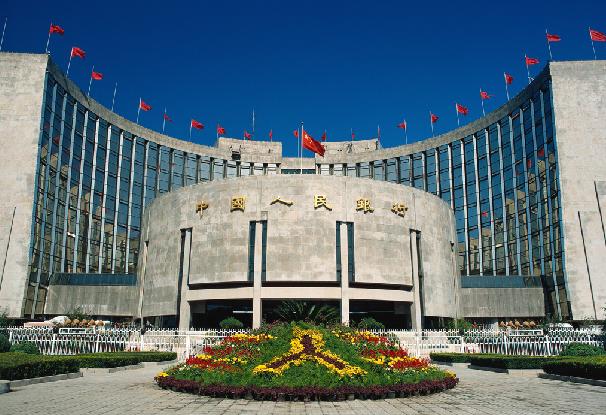
With official approval from the State Council, China’s central bank decided to cut reserve requirement ratios and benchmark interest rates for the third time in nearly five months in July. These cuts will specifically affect commercial banks that serve agricultural and rural areas, as well as provide loans to small businesses. The reserve requirement ratio (sometimes called the deposit-reserve ratio, or the RRR) is a regulation from the central bank which sets a minimum ratio (or fraction) of customer deposits that banks must hold in reserves (as currency, or note) within the bank. A decrease in RRR allows banks to more easily lend money to the institutions it supports, as a smaller amount of physical cash is required to finance loans.
Adjusting the RRR is common practice in China and is often used as a tool of domestic monetary policy. The deposit-reserve ratio has been altered several times in recent years and this is, in fact, the fourth round of interest cuts since 2014. While central banks in many nations refuse to make similar types of cuts in light of liquidity concerns, China has in the past shown leadership in this type of aggressive monetary policy. Such a policy is intended to allow for a positive credit flow towards rural and poverty-stricken areas.
Despite China’s rapid rise in recent years, growth has lately slowed—representing a transition from an economy characteristic of a rapidly-emerging nation, to a growth rate that is less fast-paced, but more sustainable. This new round of cuts reveals a strategy by China to restructure its borrowing mechanisms, as well as boost and stabilize its economy. Part of this strategy involves offering competitive advantages and lending options to small, independent businesses and agricultural enterprises.
This change, a lowering of the deposit-reserve ratio by 50 basis points (bps) for banks lending to rural, agricultural areas and to small businesses is intended to encourage financial institutions to invest in farmers, micro-businesses and rural development in many poverty-stricken areas of China. China explained its most recent round of cuts in the deposit-reserve ratios and benchmark interest rates by citing plans to “stabilize economic growth, upgrade structure and lower financing costs in society,” and describes the cuts as “conducive for financial institutions to support mass entrepreneurship and innovation.”
The new measure allows institutions to more easily lend money to small businesses in rural China and will provide more credit influx towards these small (but crucial) enterprises, which make up an important part of China’s economy. The cuts not only lower the costs of financing small enterprises but lower loan rates. This allows China’s financial institutions to encourage innovation and entrepreneurship amongst the least developed areas of society.
– Melissa Pavlik
Sources: CCTV, The New York Times, The People’s Republic of China
Photo: China.org.cn
