• Link to X
  • Link to Facebook
  • Link to Instagram
  • Link to TikTok
  • Link to Youtube
  • About
    • About Us
      • President
      • Board of Directors
      • Board of Advisors
      • Financials
      • Our Methodology
      • Success Tracker
      • Contact
  • Act Now
    • 30 Ways to Help
      • Email Congress
      • Call Congress
      • Volunteer
      • Courses & Certificates
      • Be a Donor
    • Internships
      • In-Office Internships
      • Remote Internships
    • Legislation
      • Politics 101
  • The Blog
  • The Podcast
  • Magazine
  • Donate
  • Click to open the search input field Click to open the search input field Search
  • Menu Menu

Archive for category: Development

Information and stories on development news.

Advocacy, Children, Development, Education, Global Poverty

Success in Educating Girls: 4 Organizations to Know

Success in Educating Girls
Currently, there are 31 million young girls, starting at age five that are not in a school setting. In fact, there is a whole host of startling statistics about the condition of girls across the globe:

  • One in 9 girls are married before the age of 15
  • Internationally, 65 million girls are not attending school
  • 774 million people are illiterate across the globe, with two-thirds of that number being females

These numbers are not pleasant to acknowledge but their content is a reality. Thankfully, there are many movements and organizations today who are trying to empower woman and having success in educating girls.

Developments in Literacy

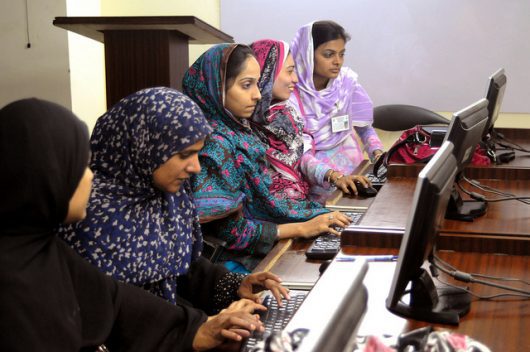
Developments in Literacy (DIL) is an organization managing 124 child-friendly schools across three Pakistani provinces. Currently, 24 percent of Pakistan’s population lives below the poverty line. With that sobering state of being in mind, DIL’s goal is simple: the organization strives to offer safe spaces for students to learn and teachers to train. DIL is providing education for students from nursery age all the way until grade 10.

Developments in Literacy is also steadfast in providing girl-friendly education. In DIL schools, the enrollment rate of girl students is at 67 percent and almost 90 percent of the staff is female. These centers offer a “child-centered approach with an emphasis on gender sensitivity and inclusiveness for all.” The main goal of this organization is to ensure that no child, male or female, be left behind or uneducated due to life circumstances in Pakistan.

Girl Effect

Girl Effect works in Asia and Africa and mostly focuses on a girl’s holistic journey into adulthood. Originally founded by the Nike Foundation in 2004, Girl Effect is now its own non-profit organization consisting of media, mobile and brand experts as well as developers. Girl Effect aims to create brands that can chart a course for a young girl from day one.

The organization also gives girls outlets to express themselves openly and research anything they may question. One of Girl Effect’s brands is Ni Nyampinga, the name meaning ‘beautiful girl inside and out who makes wise decisions’ in Rwanda’s native language. It is a multi-platform consisting of a magazine, radio show and a talk show all made by girls, for girls. Ni Nyampinga is a country-wide movement making an impact — 8 in 10 of the citizens of Rwanda have heard of it and half of the citizens over age 10 have listened to the program.

Wiser

Wiser imagines a world where young women and girls are healthy, educated and in control of their own decisions. In Kenya today, there are 3,000 secondary schools educating 620,000 students but only 40 percent of these students are girls. The basis of the Wiser organization is to work with girls who may be poverty-stricken, affected by HIV/AIDS or impacted by gender-based violence.

The Wiser Girls Secondary School in Kenya provides clothing, learning materials, housing and essential medicine to their borders. Kenya has a population of 43.5 million and 1.6 million are living with HIV. All the Wiser girls receive extensive sexual reproductive education, sanitary napkins and cleanliness training. The school has done so well that it has been ranked in the top 1 percent of secondary schools in Migori County.

Commit 2 Change

In India, Commit 2 Change (C2C) works with orphan girls who are 13-18 years old. The girls in these homes are more often than not abounded by their families. The reasons for desertion can range from having HIV, the family being too poor or simply being born a girl. Due to these reasons, many girls in India are now at risk for sex trafficking and early marriage. Commit 2 Change has seen that the best way to make an impact is by focusing on girls in secondary education.

Secondary education starts at the age of 14 and is where the highest drop-out rates occur; by catching the girls at this crucial point of development, C2C believes that they can help teach girls ways to tackle problems in the outside world. Commit 2 Change helps with tuition fees, school supplies and even training programs. Just by studying an extra year in secondary school, C2C has found that it boosts wages by 15 percent and 95 percent of the girls helped by Commit 2 Change believe their education is the pathway to success.

Success in Educating Girls

Successfully educating girls can increase their economic standing, decrease HIV risk and encourage later-in-life marriages. While there is still room for global improvement, these four organizations are going above and beyond in advocating for girls and serve as role models for organizations across the world.

– Jennifer O’Brien
Photo: Flickr

February 13, 2019
https://borgenproject.org/wp-content/uploads/borgen-project-logo.svg 0 0 Kim Thelwell https://borgenproject.org/wp-content/uploads/borgen-project-logo.svg Kim Thelwell2019-02-13 07:30:362024-05-29 22:58:03Success in Educating Girls: 4 Organizations to Know
Development, Gender Equality, Global Poverty

How Identification Closes The Gender Gap

Identification closes the gender gap
Empowering women has long been acknowledged as a key ingredient in reducing poverty and improving economic development. The United Nations (U.N.) has set 17 Sustainable Development Goals (SDGs) and gender equality underlies almost all of them. More specifically, the fifth SDG is set to achieve gender equality and empower all women and girls. As the World Health Organization (WHO) recognizes, these goals are interdependent, meaning gender equality is essential not only to the economic prosperity of the communities but for other important issues like health and sustainability as well.

Even today, gender inequality persists worldwide, depriving women of basic human rights and equal opportunities. In poverty-stricken communities around the world, an estimated 90 percent sustain long-standing social practices that devalue women.

Need for Identification

Breaking these modes will require great efforts. Both legal and cultural strides need to change in order to counter deeply ingrained discrimination throughout societies. Studies by the U.N. and UNHCR found that women in conflict and poverty affected regions do not have adequate identification documents. These documents are necessary for achieving the benefits of civic and public life.

Access to identification closes the gender gap in the developing world, but a lack of awareness around the documents prevents women from obtaining them in some cases. Many believe that identification cards are only necessary for exceptional circumstances when in reality they are needed to make the most of social programs and civil rights.

Having personal identification cards in the developing world acts as an important stepping stone. In having the ability to access decisive services and claim entitlements as citizens, women are able to increase their voice and agency through civic participation, access to finances and voting. In assisting women’s social engagement, identification closes the gender gap.

Example of Myanmar

All factors of the country development are intertwined. Women’s documentation is often essential to the peace process in some countries. Resolving the issue of land rights, for example, is crucial to the current conflict in Myanmar, and gender inclusion in the peace process is fundamental to reaching a genuine peace accord. The laws in this country allow women to register and co-register for the property even if they are not head of the household.

While progressive laws have been enacted, there lies a major gap between the law and the reality that women face. Cultural conventions exclude women from participating in land governing let alone a peace accord, making it essential that their names are registered to partake in community meetings. The decisions affect both women and men, making identification an important transition step in transforming cultural norms in poverty and conflict-stricken regions.

Problems with Women Identification

In 2012, four out of every 10 infants born worldwide were not registered with civil governments or authorities. Globally, 750 million children lack identification. A 2013 UNICEF survey found that there is no major disparity between the birth registration of boys and girls.

Evidence suggests that adult women, however, face gender-specific barriers to getting identification documents. Women must provide proof of marriage, additional family signatures and conduct many other steps in the process to obtain identification that men simply do not have to deal with. Unmarried women especially face discrimination as, without a male counterpart or marriage certificate, obtaining identification documents (IDs) is often impossible. IDs are also optional for women, although essential to accessing civic opportunities and required for men.

Increasing access to identification closes the gender gap by helping international organizations better plan and target gender inequality in poverty. The incompleteness of civil registration for women has generated holes in statistics and data for organizations like the World Bank to measure the progress of women in the developing world.

Changing Cultural Barriers

Equality is fundamental to building strong societies. Having active members at every level of a community makes the plight of poverty that much easier to conquer. Gender equality is no different. Ensuring that more than half of the population can do its part must remain at the foremost of poverty reduction endeavors.

While the legal framework with these notions in mind has changed for the better, an uphill battle in the mindset of the communities is much needed. Obtaining identification is the first step in employing available programs and in realizing the agency needed to transform the cultural barriers that devalue women.

– Joseph Ventura
Photo: Flickr

November 8, 2018
https://borgenproject.org/wp-content/uploads/borgen-project-logo.svg 0 0 Borgen Project https://borgenproject.org/wp-content/uploads/borgen-project-logo.svg Borgen Project2018-11-08 01:30:422019-08-21 12:38:50How Identification Closes The Gender Gap
Development, Global Poverty, Health, Technology

D-Rev Technology is Helping to Reduce Poverty 

6. D-Rev Technology Helping to Reduce Poverty 
In today’s world, technology is everywhere. Our cell phones are constantly glued to our hands, and our eyes are glued to the screens. Although many may say that our technologically advanced world has created many negatives, there are certain positives as well. Technology has more uses than just convenience, entertainment and connections. Modern technology companies can drastically change the lives of those in poverty by aiding them with technology that helps improve their lives, health and overall well-being.

D-Rev Technology is Helping to Reduce Poverty

One company that has stepped up and focused its technological equipment and research on helping the well-being of those in poverty is D-Rev Technology. D-Rev Technology, or Design Revolution, is a newly established company whose mission is to design and deliver affordable, innovative medical devices that protect and transform the lives of those in poverty.  

The company has partnered with organizations like The Bill and Melinda Gates Foundation, Stanford School of Medicine, Child Relief International, One Heart World-Wide, US Aid, UK Aid, Saving Lives at Birth and many others who are interested in helping those less fortunate. The team has worked hard to build this company to ensure that D-Rev technology has a positive impact on the health and well-being of its patients.

As for the products, its most recent product is the ReMotion Knee, a prosthetic device, and the Brilliance phototherapy machine, which is used to treat jaundice in newborns. D-Rev Technology uses its products to address global health inequalities by recognizing that treating health is one of the biggest steps in treating poverty.

D-Rev Technology’s Main Focus

Through its innovative products, D-rev is able to focus on the main problems and solutions. The biggest problem it has seen so far is the” lack of access to high-quality, affordable medical devices for hospitals and clinics serving the world’s poor”. The healthcare gap has created a cycle of poverty that is never-ending.

D-Rev Technology focuses on two specific problems for now: severe jaundice and prosthesis. Newborns in developing countries are often born with jaundice, which is a yellowing of the skin or whites of the eyes. This is usually easily treated with phototherapy. However, in developing countries, phototherapy machines are not easily accessible because they are very expensive. If the children are not treated, jaundice can lead to severe brain damage, which is why D-Rev wants to focus on developing affordable devices to help treat these children.

Secondly, in developing countries, millions of amputees don’t have access to affordable, high-quality prosthetics that would allow them to live longer and healthier. Cheap knees are unstable and can create problems for those who live in environments that are not paved or are very crowded. So, D-Rev Technology wants to help those in developing countries have access to these critical devices.

A lack of proper healthcare is one of the key reasons for poverty in many developing countries. The people in these countries can’t afford the equipment to treat their patients. However, companies like D-Rev Technology want to help create and deliver high quality, low-cost products that are easily accessible to doctors and patients. Quality medical treatment allows individuals in poverty to be more productive, happy and independent.

– Negin Nia

Photo: Flickr

October 31, 2018
https://borgenproject.org/wp-content/uploads/borgen-project-logo.svg 0 0 Borgen Project https://borgenproject.org/wp-content/uploads/borgen-project-logo.svg Borgen Project2018-10-31 01:30:212024-05-29 22:53:38D-Rev Technology is Helping to Reduce Poverty 
Development, Global Poverty

What Role Can the Private Sector Play in Poverty Alleviation?

What Role Can the Private Sector Play in Poverty Alleviation?
The private sector constitutes a large portion of wealth and job creation in most countries, rendering it a powerful social tool that can be used to alleviate poverty and promote the wellbeing of the general public. Unfortunately, historically, this tool has been used to promote the interests of private actors.

The interests of private actors and the interests of the public have often come in contradiction, particularly as the world has globalized. However, the alignment of public and private interests is possible when you consider that those living in extreme poverty represent a largely untapped and mismanaged resource for a lot of private actors. When determining what role the private sector can play in poverty alleviation, it must be understood that poor corporate labor practices have contributed greatly to global poverty and proper practices have the ability to reverse it.

Corporate Social Responsibility

Those living in poverty, particularly extreme poverty, are often surrounded by economic deprivation, including unemployment, low wages and a lack of investment from private actors. Corporate social responsibility is one of the many avenues that can be taken to bring the structures and goals of the private sector in line with the needs of the public.

Corporate social responsibility (CSR) is a business model of private accountability to the public, meaning that businesses and corporations incorporate practices that create positive social impacts domestically and throughout the world. CSR is a broad concept, allowing it to manifest itself in several different ways. There is certainly room for error in the implementation of CSR practices, but when carried out effectively, CSR can serve as a sharp tool for alleviating poverty while also increasing a corporation’s bottom line.

Patagonia: A Model for Effective Corporate Social Responsibility

The apparel industry is one of the most competitive in the private sector. With that competition, there has historically been a “race to the bottom.” Organizations have looked to manufacture in places with the most lenient regulations on worker rights, wages and environmental waste. These places, non-coincidentally, tend to be the most impoverished. However, this has not been the case within Patagonia.

Patagonia has been integrating CSR into its business model since its conception in 1973. The corporation operates in several nations around the world, with portions of its manufacturing happening in Sri Lanka, Mexico, Thailand and more. The company has prioritized its Fair Trade Certifications, paying a premium on top of the costs that they already incur. This money goes straight into the hands of factory workers who get to vote on its use. This not only ensures that Patagonia’s workers are well compensated but also that the most pressing needs of the community are met.

At the Hirdaramani Mihilia CKT Factory, workers decided to spend their premium on a daycare. For many women in the factory, employment would not be possible without it. The piece of mind workers get from knowing that their kids are not only safe but progressing in their development, allows for more diligent and quality work in the factory.

What Role Can the Private Sector Play in Poverty Alleviation?

Fair Trade USA CEO, Paul Rice, stated that the organization has to “prove that fair trade is good for business.” Patagonia is one of its partner companies that is doing just that for them. Patagonia has more Fair Trade Certified styles than any other apparel brand, and it is expanding every year. In 2017, 30 percent of its product was fair trade certified, indicating that there is plenty of room for further expansion, but also that expanding the scale of CSR practices can be sustainable for business as well—even when its competitors do not engage in the same practices.

Consumer awareness of the Fair Trade Certified seal has almost doubled to 63 percent since 2008. As the world has globalized and the reality of billions of people living on less than two dollars a day has become common knowledge, consumers have begun to pay greater attention to how their goods are made. Corporate responsibility is becoming the standard, and as consumers, governments and most importantly corporations themselves continue to promote and enforce that standard, the number of exploited and impoverished workers will fall.

Today, transparency and responsibility translate into dollars. More consumers are willing to pay for goods that they know were made ethically, employee turnover is lowest at corporations that integrate CSR and workers in developing countries perform better when their wages and standard of living are adequate. More than 1,250 corporations have recognized this to be true and that number is sure to increase in the coming years. So what role can the private sector play in poverty alleviation? The answer is, quite simply, a large one and one that can also benefit their business as well as the public.

– Julius Long
Photo: Flickr

October 30, 2018
https://borgenproject.org/wp-content/uploads/borgen-project-logo.svg 0 0 Borgen Project https://borgenproject.org/wp-content/uploads/borgen-project-logo.svg Borgen Project2018-10-30 06:30:082024-12-13 17:58:55What Role Can the Private Sector Play in Poverty Alleviation?
Development, Global Poverty

The Relationship Between the Military and Global Poverty

 India

It is shocking how much governments spend on the military, and how much more are weapons prioritized compared to human lives, In fact, only 10 percent of world military spending could eliminate global poverty. But why is it that countries allocate their resources in expanding their military, rather than fighting poverty, home or abroad? What is the relationship between the military and global poverty? This article will provide a few different aspects of militarization, and help understand the dilemma that countries face regarding this issue.

The Numbers

According to statistics provided by the Stockholm International Peace Research Institute (SIPRI), 2017 saw a total of $1.74 trillion spent on the military globally. This entails an approximately 3.1 percent increase compared to 2016.

Sources of military spending around the globe are concentrated on these top ten countries, order by the size of military expenditure: the U.S. ($609,758 million), China ($228,231 million), Saudi Arabia ($69,413 million), Russia ($66,335 million), followed by India, France, U.K., Japan, Germany, and South Korea. As seen, the U.S. spent more than the next seven countries on the list combined.

More than 2 percent of global GDP goes to military expenditure. The Middle East is the sole region around the globe that exceeds this number, having 5.2 percent of its GDP spent on the military. Oman, most notably, spent 12 percent of GDP on the military.

The Military and Global Poverty Efforts

Many point out that the relationship between the military and global poverty is not always a negative one: the military could often provide humanitarian assistance at times of crisis, technologies from the military could often help alleviate poverty, especially in dire, emergent situations. Furthermore, planes, other transport tools, food, construction materials and skills, medical assistance and communication could all be vital to civilians in regions suffering from conflicts or natural disaster.

The specific roles played by the military vary in different scenarios. The military could simply be a provider of resources such as food items and other needed commodities. It could also send soldiers to assist with humanitarian tasks on the ground. The military could also play the role of the police to maintain peace, though this is a much more controversial use.

There have been arguments, however, regarding the defects of such deployment of the military. It has been pointed out that aircraft is not usually the fastest and most reliable way to distribute food in adverse environments, since planes are also vulnerable to weather conditions, while other transportation means could be cheaper, more effective and more sustainable. Whether humanitarian assistance is offered from a neutral party could also influence the accessibility of poverty alleviating efforts.

The Military: A Cause of Poverty

The amount of humanitarian aid that the military could implement or help provide, sadly, is meager compared to the huge drain of resources needed to maintain a military, the destruction of existing social and economic institutions, or the elimination of potentials for development. Ultimately, conflicts and wars fought by the military are a leading cause of poverty, instead of a solution. Out of 10 poorest nations in the world, eight have recently been in or are still facing significant violent conflicts.

Compared to peaceful developing countries, countries suffering from wars and coups see have a twofold increase in the risk of malnutrition for their people and a threefold increase in the chance of infant death.

The military sometimes takes away what is essential for a nation’s future. An extreme example is that, instead of sending children to school, some nations send children to war to assist with operations, fight as soldiers, or even act as human bombs. The United Nations’ 2018 Children and Armed Conflict report listed seven countries and 56 armed groups that recruit and use children in war.

How Necessary is the Military for National Security?

Despite the unfavorable relationship between the military and global poverty, some still support large military expenditures due to concerns over national security.

However, according to researchers, an increased military presence does not decrease the potential of conflict in the case of civil war. Good policies and administrations are often much better at preventing rebellion.

War causes poverty, and in turn, poverty and inequality lead to conflict. According to surveys, some young people join militant groups because they face unemployment otherwise. Other researches find that, historically, inequality has been an important factor leading to civil war.

Poverty also significantly contributes to terrorism. It is unclear whether poverty drives individuals towards terrorist causes, but historical data shows that regions with high unemployment and poverty are more prone to the rise of radicalism.

The relationship between the military and global poverty is a complicated one, but it is obvious that funding economic development and durable physical and social infrastructure are more sustainable and reliable long-term solutions to reduce poverty and resolve security problems. It is time for nations to consider whether large militaries are really worth the cost.

– Feng Ye
Photo: Flickr

October 28, 2018
https://borgenproject.org/wp-content/uploads/borgen-project-logo.svg 0 0 Borgen Project https://borgenproject.org/wp-content/uploads/borgen-project-logo.svg Borgen Project2018-10-28 07:30:572019-07-08 18:09:35The Relationship Between the Military and Global Poverty
Development, Global Poverty, Technology

Developing Asia and Technological Progress

Developing Asia
Over the past 25 years, developing Asia has annually created 30 million jobs in industry and services. Job creation improves productivity, raises earnings for workers and largely reduces poverty.

The Impact of Technological Progress

Shifts in employment from sectors with low productivity and pay, typically subsistence agriculture, to sectors with higher productivity and pay in the modern industry are contributing to this process of raising wages. Productivity improvements come from technological progress within sectors, such as diverse high-yielding crops, innovative machine tools in manufacturing, information and communication technology in the service industries.

A common concern with technological progress affecting the economy is the predicted accompanying job displacement; However, recent studies invite a more optimistic prediction of productivity gains that will generate a positive feedback effect of creating more jobs than are being lost. Furthermore, industries that improve productivity with new technology will lower production costs in industries that depend on them, creating a ripple of higher demand and employment in other industries.

The Asian Development Bank (ADB) supports the power of rising demand with data from 90 percent of the region’s total employment spanning 12 developing Asian economies between 2005-2015. The analysis predicts an 88 percent increase in employment, which is equal to an annual addition of 134 million jobs with rising incomes.

The ADB has also reported that jobs that necessitate cognitive and social skills and use information and communications technology have increased 2.6 percent faster than the total employment rate annually over the last decade. The wages associated with these jobs also increase faster than those of manual jobs.

Reasons For an Optimistic Outlook for Technological Progress in Developing Asia

The ADB emphasizes that most new technologies are implemented in only some aspects of a job, usually routine tasks, so that they create more time for complex tasks for workers. For instance, ATMs allow bank tellers to prioritize customer relationship management. The more obvious benefit entails the job creation to manage these new technologies.

In the last decade, 43 percent to 57 percent of jobs in India, Malaysia and the Philippines were in informational and communication technologies. The category of India’s craft and related workers is expanding to include specialized technicians who manage machines. Moreover, job sectors that would incorporate technological progress have a large capacity for growth.

Healthcare and education jobs make up 15 percent of jobs in The U.S. In lower and middle-income economies in developing Asia, healthcare and education jobs make up 3.5 to 6 percent of jobs, and business services jobs make up 1.5 to 6 percent of jobs, indicating a high potential for expansion.

Technology in the farming industry can have a positive impact on agriculture. In developed countries, waiters tend to receive the poorest wages; whereas in developing Asia, the agricultural workers receive the poorest wages. Technological progress can help farmers the most directly.

Mobile applications such as phone apps or text messages can assist farmers with tracking agricultural inputs. The Food and Agricultural Organization (FAO) and The International Telecommunication Union (ITU) have been supporting farmers in Afghanistan, Bhutan, Fiji, Laos, Myanmar, Papua New Guinea, the Philippines and Sri Lanka to implement emerging technologies.

The Necessity of Job Creation

Pakistan’s Khyber Pakhtunkhwa province (KP) has suffered from instability and militancy for several decades with increasing out-migration and shrinking private industries. Since 2014, the government, in partnership with The World Bank, has recognized the demand for job creation, especially for the half its population of 30.5 million that are under the age of 30.

Turning to the opportunities of the digital revolution in 2018, the government created a program, Digital KP, that directly addressed this youth unemployment issue by preparing the younger generation for occupations in the technology sector. By supporting the youth with advancing technology, the region is on its way to stability and success.

Many educational programs are being implemented to provide foundations for learning necessary skills. Another strategy involves increasing local IT and digital businesses and attracting investment for them through tax relief programs, promoting co-working spaces and sponsoring annual tech events such as The Digital Youth Summit.

Addressing the Potential Issues

As developing Asia is expected to grow by 6 percent in 2018 and by another 5.9 percent in 2019, governments are aware of the potential challenges presented by increasing new technologies. Some businesses might not overcome the displacement of jobs.  

“ADB’s latest research shows that, on the whole, countries in Asia will fare well as new technology is introduced into the workplace, improving productivity, lowering production costs, and rising demand,” said Yasuyuki Sawada, ADB’s Chief Economist.

“To ensure that everyone can benefit from new technologies, policymakers will need to pursue education reforms that promote lifelong learning, maintain labor market flexibility, strengthen social protection systems, and reduce income inequality.”

Benefits of the ADB

The ADB offers different strategies, such as tax policies that will fight against income inequality. The same technological progress that may cause issues to workers could also foster skills, job-match and provide social protection. For the unemployed, the government can create programs that support them as they navigate the new labor market.

Developing Asia also benefits from the technological progress as it allows older workers to continue participating in the labor force past current retirement age. Artificial intelligence can either substitute or complement physically demanding tasks.

To maximize the benefits of technological progress while compensating for any losses, governments must adapt to the situation with policy changes. Technological progress can then become an optimistic gateway to reducing poverty in developing Asia.   

– Alice Lieu
Photo: Flickr

October 28, 2018
https://borgenproject.org/wp-content/uploads/borgen-project-logo.svg 0 0 Borgen Project https://borgenproject.org/wp-content/uploads/borgen-project-logo.svg Borgen Project2018-10-28 06:30:392019-07-08 18:31:57Developing Asia and Technological Progress
Development, Global Poverty, Poverty Reduction

Five Incredible Memoirs About Overcoming Poverty

memoirs
The problems in developing countries are often viewed as too big to find solutions. Because of this, many people are deterred from putting in seemingly futile efforts to alleviate a problem. But, they are more likely to join the fight when they learn the individual names and faces of those living under such conditions. These five memoirs about overcoming poverty highlight success stories and seek to mobilize people with a renewed sense of hope.

5 Memoirs About Overcoming Poverty

  1. Masaji Ishikawa recalls escaping from North Korea in “A River in Darkness.” With Japanese heritage from his mother and Korean from his father, he found himself caught between two worlds. When his father realized he could no longer tolerate the discrimination he faced in Japan, the family moved to North Korea. They arrived with the promise of paradise and found, simply put, quite the opposite. Ishikawa was only thirteen years old.In this memoir, he describes atrocious living conditions with graphic detail, unparalleled by any other nation in the world. The regime controls every aspect of its citizens’ lives, and Ishikawa tells readers that “the penalty for thinking was death.” More than any of the five memoirs about overcoming poverty, “A River in Darkness” highlights an ongoing crisis.Since North Korea remains untouched by the rest of the world, it’s difficult to extend support to those still living under the dictatorship. But Ishikawa’s story is one of many that prove North Koreans are waking up to the reality of their oppression. Gradually, more people are choosing to gain control over their destinies.
  2. When Jacqueline Novogratz donated a sweater to Goodwill, she never expected to encounter a young boy wearing it on the streets of Rwanda. It ended up being the namesake for her book entitled “The Blue Sweater.” She holds onto this memory as an important message of interconnectivity and the responsibility to help people in need.Her travels to various countries revealed economic injustice along with a lack of credit access for those with low incomes. This led her to help open the first bank in Rwanda available to women. Along with numerous other initiatives through The Acumen Fund, Novogratz learned that charity is fleeting compared to the sustainability of helping innovators launch businesses to benefit millions of people.
  3. Several reporters sought to overcome poverty by being a voice for untold stories in developing countries. Maya Ajmera, joined by co-authors Sarah Strunk and Olateju Omolodun, wrote “Extraordinary Girls” about what girlhood looks like across the world. Despite cultural differences, the authors work to prove that all girls can find common ground in the desire to make their dreams come true.Their book showcases girls such as Alexandra Nechita from Romania, an exceptional painter whose work was published in a collection by the age of eleven. Through this and many other success stories, the book’s purpose is to encourage girls to be active in their communities rather than feel as if their only option is to fulfill traditional gender roles.
  4. Katherine Boo sheds light on the ramshackle town of Annawadi in “Behind the Beautiful Forevers.”. This book illustrates how members of this community responded to India’s promise for renewed economic prosperity amid a global recession. A young man named Abdul discovered the value of reselling possessions thrown out by the wealthy. Others sought to change the course of politics by climbing the social ranks, like the Annawadi community member who became the first woman in that settlement to be a college graduate. These stories are about relying on pure grit to succeed in life when the economic system favors only the rich.
  5. The last of these five memoirs about overcoming poverty is “Teach a Woman to Fish” by Ritu Sharma. It’s a reinterpretation of the gendered language in this saying: “Give a man a fish and he eats for a day. Teach a man to fish and he eats for a lifetime.” She argues that if women are taught the same thing, everyone will be fed too.Sharma helped found a business run by women in Honduras, giving them a chance to break free from the household sphere and gain financial independence. Other countries she visited include Sri Lanka, Nicaragua and Burkina Faso. In the book, readers can also find tips for shopping in ways that support female entrepreneurs and email templates if they feel inspired to speak with their members of Congress about this important cause.

All the authors in these five memoirs about overcoming poverty have discovered important lessons about global issues through real-life experiences. They write about them in the hopes that people will no longer be complacent in the face of a problem that, contrary to what some might believe, can be solved.

– Sabrina Dubbert
Photo: Flickr

September 22, 2018
https://borgenproject.org/wp-content/uploads/borgen-project-logo.svg 0 0 Borgen Project https://borgenproject.org/wp-content/uploads/borgen-project-logo.svg Borgen Project2018-09-22 06:30:102024-12-13 17:58:53Five Incredible Memoirs About Overcoming Poverty
Development, Global Poverty

Benefits of Smart Cities in Africa

Smart Cities in Africa
Interestingly, the common perception of Africa doesn’t tend to include sprawling urban metropolises; rather, a person typically visualizes a past version that is an incomplete picture of Africa today. While the majority of Africans still live in rural areas, the continent is one of the most quickly urbanizing regions in the world. 

Urbanization

By 2050, 2.5 billion more people will live in cities and almost 90 percent of those people will be from either Africa or Asia. Three African cities have already grown beyond a population of 10 million and are formally considered megacities.

More cities will gain that title in the coming decades. This rapid urbanization provides opportunities for many African nations and their citizens, but it also poses serious long-term problems if not handled properly. With these concerns in mind, several countries have begun developing what has become known as smart cities in Africa.

The Problem with Cities

Many African cities have not been as able to cope as well with the massive increase in urbanization as other cities around the world. Perhaps the most obvious problem is housing. More than 60 percent of the continent’s urban population live in informal settlements where poverty and poor living conditions are rampant.

While the very poor are most affected, African cities’ weak infrastructure affects all of their residents. Some common difficulties that these cities face are:

  • Lack of water and electricity due to limited resources, high costs and poor utility management.
  • Poor access to sanitation facilities affects urban and rural Africans alike. Only a third of the population of sub-Saharan Africa has access to proper sanitation.
  • Heavy traffic congestion that leads to massive daily losses of productivity.
  • Difficulty fighting crime and disease, especially in underdeveloped urban areas with high poverty levels.

Developing smart cities in Africa has the potential to help address these problems.

Smart Cities in Africa

Broadly speaking, smart cities aim to use new data-collecting technology and modernized infrastructure to provide safer and more efficient services for their citizens. This can take a variety of forms, many of which have already begun to be used around the continent.

Cape Town is a good example of such a solution. The South African city has partnered with network providers to acquire data from sensors placed around the city. This data helps the city run more effectively in several ways ranging from traffic monitoring to waste management, crime detection and fire response.

Some countries are taking another route toward smart cities by proposing satellite cities — new urban areas built in areas near pre-existing cities. Kenya, Rwanda, Nigeria and other countries all have such projects in the works. Many of these satellite cities would provide thoroughly modern infrastructure and luxury amenities to attract tech-savvy entrepreneurs.

Smart, Safe and Sustainable

While satellite cities have faced some criticism for being created well out of reach of the millions of poor Africans already living in cities, they are only one facet of a movement toward better urban areas across the continent.

Smart cities in Africa are still in their infancy, but they have an advantage. While many cities in the developed world have to maintain outdated infrastructure, African cities can build updated services and facilities from the ground up.

As African economies continue to grow, these modernized cities will be able to make more sustainable use of resources, respond better to crises and adapt to a world racing forward in the field of technology.

While smart cities will not fix Africa’s urbanization problems overnight, they are certainly a step toward both providing better living conditions and being able to compete with other cities around the world in the global economy.

– Joshua Henreckson

September 19, 2018
https://borgenproject.org/wp-content/uploads/borgen-project-logo.svg 0 0 Borgen Project https://borgenproject.org/wp-content/uploads/borgen-project-logo.svg Borgen Project2018-09-19 01:30:092024-05-29 22:53:06Benefits of Smart Cities in Africa
Development, Global Poverty

Five Ways The World Bank is Helping Lebanon

World Bank Helps Lebanon

Lebanon is a country located in the Middle East, facing the Mediterranean Sea and bordering Syria, Jordan and Israel. Lebanon’s biggest obstacle is its proximity to the Syrian Conflict, which has economically hindered Lebanon. According to The World Bank, poverty is predicted to worsen; approximately 200,000 Lebanese were forced into poverty due to the Syrian Crisis. Fortunately, The World Bank is helping Lebanon progress as a sovereign state.

Five Ways the World Bank Helps Lebanon

1. The World Bank financially supports the implementation of the Greater Beirut Water Supply Project.

The World Bank is helping Lebanon by advancing its infrastructure. Due to the high volume of refugees in Beirut, there have been many problems with accessing clean water. Several areas surrounding Beirut do not have safe, drinkable water. This project provides clean water to low-income neighborhoods in Beirut, the capital of Lebanon. The initiative was approved on June 15, 2018, and the project will end on November 30, 2020.

2. The World Bank is leading a $400 million project to increase employment opportunities.

The World Bank is helping Lebanon with their economy, which came to a standstill after the displacement of Syrian refugees. About 1.1 million Syrian refugees are living in Lebanon currently, which is 25 percent of its population. This project is called “Creating Economic Opportunities in Support of the Lebanon National Jobs Program” and will create 52,000 permanent jobs and 12,000 temporary jobs. This will definitely increase career opportunities throughout the country as well as increase employment so that individuals can improve their livelihoods.

3. The World Bank is one of the main creators of the “Lebanon Youth Advisory Group”.

The World Bank is helping Lebanon by empowering and engaging its youth. The Youth Advisory Group (YAG) acts as a liaison between the younger population of Lebanon and The World Bank. Young adults between the ages of 20-25 join YAG and discuss how The World Bank’s influence affecting the youth. YAG participates in the decision-making process for new initiatives spearheaded by The World Bank, who actively converses with the organization to start new projects. YAG provides students and young adults a voice within the education and political systems.

4. The World Bank funds The Greater Beirut Public Transport Project.

The Greater Beirut Public Transport Project will “improve the speed, quality and accessibility of public transportation for passengers in the Greater Beirut Area”. The World Bank continues to support Lebanon’s infrastructure. Access to the city allows individuals to travel to work. It also permits individuals to move from place to place at an inexpensive cost; this will increase accessibility to the city, which could potentially have economic benefits. Safety is also a priority within this initiative, therefore, it will also fund pedestrian bridges and crossings. Overall, the project will offer a more secure and accessible urban environment for the people of Beirut.

5. The World Bank approved the Land Administration System Modernization Project in Lebanon.

The Land Administration System Modernization Project costs about $43 million and it will make the retrieval of property rights data and land use information much easier to attain. The objective of this project is to facilitate processes related to Property Valuation and State Land Management. Ultimately, this intelligence will provide insight for all “planning and value-adding services in the nation”. This project is a victory for institutional transparency and development.

The World Bank is helping Lebanon improve their infrastructure, employment rates, political systems and beyond. It continues to better Lebanon so that it can thrive economically. Lebanon is currently facing a multitude of issues, yet The World Bank has been an important ally in their struggles. They have been a crucial ally to Lebanon in this time, as the projects above reflect.

– Diana Hallisey
Photo: Flickr

September 11, 2018
https://borgenproject.org/wp-content/uploads/borgen-project-logo.svg 0 0 Borgen Project https://borgenproject.org/wp-content/uploads/borgen-project-logo.svg Borgen Project2018-09-11 06:30:032019-12-16 11:38:03Five Ways The World Bank is Helping Lebanon
Development, Global Poverty, Technology

How Cell Phones Lead to Poverty Decline

How Cell Phones Lead to Poverty Decline
In India, a fisherman’s business has been revolutionized by cell phone usage. Vijay Navle sells fish to be exported from India and before he was able to use a cell phone, he had to spend most of his days physically visiting all his suppliers to know what was available. But since he and the other fishermen gained mobile phones, they can call each other easily and communicate stock, pricing and shipment, demonstrating how cell phones lead to poverty decline.

A Hub For Connection

In fact, Navle states: “I can immediately inform my customers that there’s a big catch coming in fresh and we get a better price for it.” Enhanced communication has allowed the business to grow more efficient and profitable for the lower-income workers in this industry.

In fact, India is the fastest growing market for cell phone usage and other new technology. From 2000 to now, the number of wireless subscriptions has grown from a little under two million to over 1 billion.

Manufactures and telecommunication companies are looking to expand smartphone usage in India as well since Indians use a cell phone to access the internet over 80 percent of the time, rather than using a desktop computer. Comparatively, in the U.S. and U.K., the internet is accessed using cell phones only about 30 percent of the time.

Increased Internet Access Combats Poverty

The access to the internet via smartphones has revolutionized many aspects of life across India. In Orissa, one of India’s poorest states, the non-profit mPowering creates incentives via apps to get children to attend school and reward mothers for attending health care classes.

These efforts are part of their campaign to reduce infant mortality and illiteracy in the area. The points earned can be redeemed for clothes, food and medicine every month. In the first year of the program, the percentage of children attending school had already increased for 52 to 71 percent and disease rates had fallen.

Financial Stability On the Rise

The use of the internet has also allowed financial stability to become more accessible to Indians. Besides free, educational information that they can access, the government of India is working to change life for rural agriculture workers by providing them with banking.

Since only 27 percent of villages have banks within five kilometers, the government is focusing on growing the mobile banking industry and licensing new banks. Cell phones also allow the agriculture industry to become more efficient and profitable, as the cell phones lead to poverty decline in rural areas.

Demand for Progress

The increased accessibility to cell phones still promises some growth. As mobile phones allow Indian people to be more successful, there is an increased demand for new technology — cellular and otherwise.

Cell phones lead to poverty decline across the nation, and the market for providers is competitive. Low prices for internet access promise connectivity to families all over, as technology becomes their greatest asset in improving their lives.

– Grace Gay

Photo: Flickr

September 5, 2018
https://borgenproject.org/wp-content/uploads/borgen-project-logo.svg 0 0 Borgen Project https://borgenproject.org/wp-content/uploads/borgen-project-logo.svg Borgen Project2018-09-05 01:30:322019-08-04 15:40:45How Cell Phones Lead to Poverty Decline
Page 84 of 163«‹8283848586›»

Get Smarter

  • Global Poverty 101
  • Global Poverty… The Good News
  • Global Poverty & U.S. Jobs
  • Global Poverty and National Security
  • Innovative Solutions to Poverty
  • Global Poverty & Aid FAQ’s
Search Search

Take Action

  • Call Congress
  • Email Congress
  • Donate
  • 30 Ways to Help
  • Volunteer Ops
  • Internships
  • Courses & Certificates
  • The Podcast
Borgen Project

“The Borgen Project is an incredible nonprofit organization that is addressing poverty and hunger and working towards ending them.”

-The Huffington Post

Inside The Borgen Project

  • Contact
  • About
  • Financials
  • President
  • Board of Directors
  • Board of Advisors

International Links

  • UK Email Parliament
  • UK Donate
  • Canada Email Parliament

Get Smarter

  • Global Poverty 101
  • Global Poverty… The Good News
  • Global Poverty & U.S. Jobs
  • Global Poverty and National Security
  • Innovative Solutions to Poverty
  • Global Poverty & Aid FAQ’s

Ways to Help

  • Call Congress
  • Email Congress
  • Donate
  • 30 Ways to Help
  • Volunteer Ops
  • Internships
  • Courses & Certificates
  • The Podcast
Scroll to top Scroll to top Scroll to top