• Link to X
  • Link to Facebook
  • Link to Instagram
  • Link to TikTok
  • Link to Youtube
  • About
    • About Us
      • President
      • Board of Directors
      • Board of Advisors
      • Financials
      • Our Methodology
      • Success Tracker
      • Contact
  • Act Now
    • 30 Ways to Help
      • Email Congress
      • Call Congress
      • Volunteer
      • Courses & Certificates
      • Be a Donor
    • Internships
      • In-Office Internships
      • Remote Internships
    • Legislation
      • Politics 101
  • The Blog
  • The Podcast
  • Magazine
  • Donate
  • Click to open the search input field Click to open the search input field Search
  • Menu Menu

Archive for category: Development

Information and stories on development news.

Development

Mozambique Receives Funding to Improve Infrastructure

A steadily growing economy and an ample supply of natural resources make Mozambique a natural target for foreign investment. The southern African country is classified as low-income and remains one of the most under-developed nations in the world, but it manages to attract millions of dollars every year in foreign aid and is working to continue economic development and build its infrastructure.

In fact, improving infrastructure in Mozambique is the purpose for the more than $32 billion that the U.S. plans to invest in the country within the next several years. Increased and updated infrastructure in Mozambique’s natural resource industries — including the natural gas and coal industries — will help maintain the nation’s economic growth, which is expected to be eight percent or higher until at least 2019.

Infrastructure investments will also be made for transportation, as improvements are needed desperately for roads, railway systems and ports. These investments will come in addition to the more than $5 billion that the U.S. has invested in Mozambique over the past two years.

If used effectively, this aid could make Mozambique one of the biggest coal and natural gas producers in Africa and significantly grow its gross domestic product (GDP.) Recent discoveries of additional natural gas reserves in the country have already brought in over $1 billion for Mozambique.

Financial services company Deutsche Bank has praised Mozambique for its “ambitious policy agenda,” which has attracted investors. Massive infrastructure renovations and additions are by no means a small task, and proposing them was risky for the Mozambican government; if foreign aid did not present itself, the government would be making a promise it could not keep.

To put the $32 billion U.S. investment into perspective, Mozambique’s current GDP is estimated at $15 billion. Despite this massive cash influx, Mozambique has become less reliant on foreign aid over the past few years. The economic growth America’s investment is projected to incite should allow Mozambique to become less and less dependent on foreign aid in the years to come.

The U.S. is likely to see at least a partial return on investment, as Mozambican industries reinvigorated by improved infrastructure will produce more exports, allowing the country to trade with the U.S. in global markets. A healthy economy for Mozambique also puts capital in the hands of people who can use it to purchase American goods.

– Elise L. Riley ​
Sources: Macau Hub, World Bank, AllAfrica
Photo: Maca Hub

August 1, 2014
https://borgenproject.org/wp-content/uploads/borgen-project-logo.svg 0 0 Borgen Project https://borgenproject.org/wp-content/uploads/borgen-project-logo.svg Borgen Project2014-08-01 10:05:522024-06-05 01:57:54Mozambique Receives Funding to Improve Infrastructure
Activism, Development

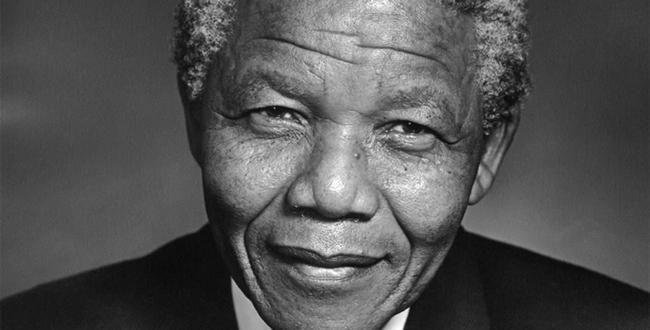
10 Quotes from Nelson Mandela

quotes from nelson mandela
This month the international community celebrated Nelson Mandela International Day, the first time the day has been celebrated since the former South African President’s death.

Nelson Mandela Day, celebrated on July 18, the day of the former South African President’s birthday, was approved in 2009 by the United Nations. The day was created to inspire others to carry on the Nobel Peace Prize recipient’s legacy and to honor the beloved leader himself. On July 18, people around the world are encouraged to offer 67 minutes of their day to those less fortunate. After dedicating 67 years of his own life to working for social justice, Mandela passed away in his home in 2013 at the age of 95.

This year, a foundation spokeswoman from the Nelson Mandela Foundation estimated that 126 countries participated in Mandela Day, as over 1,200 positive deeds were registered on the foundation’s website.

“We have been heartened by the number of sustainable projects still thriving. At the same time it has been inspiring to see the range of innovative new projects to emerge,” said spokeswomen Danielle Melville.

Below are a collection of 10 quotes from Nelson Mandela himself, ranging from his time as prisoner 4664 on Robben Island to the occasion of his many accomplishments and rewards:

1. “There will always be good men on earth, in all countries, and even here at home.” -From a letter to his former wife Winnie Mandela, written in Robben Island, 1970

2. “These countless human beings, both inside and outside our country, had the nobility of spirit to stand in the path of tyranny and injustice, without seeking selfish gain. They recognized that an injury to one is an injury to all and therefore acted together in defense of justice and a common human decency. Because of their courage and persistence for many years, we can, today, even set the dates when all humanity will join together to celebrate one of the outstanding human victories of our century.” -From his Acceptance Speech at the Nobel Peace Prize Ceremony, Norway, 1993

3. “We understand it still that there is no easy road to freedom. We know it well that none of us acting alone can achieve success. We must therefore act together as a united people, for national reconciliation, for nation building, for the birth of a new world. Let there be justice for all. Let there be peace for all. Let there be work, bread, water and salt for all. Never, never and never again shall it be that this beautiful land will again experience the oppression of one by another and suffer the indignity of being the skunk of the world. Let freedom reign.” -From his Inauguration as President of South Africa, South Africa, 1994

4. “I learned that courage was not the absence of fear, but the triumph over it. I felt fear myself more times than I can remember, but I hid it behind a mask of boldness. The brave man is not he who does not feel afraid, but he who conquers that fear.” -From his book, Long Walk to Freedom, 1994

5. “If I were to be granted one wish on this occasion, it would be that all South Africans should rededicate ourselves to truing this into the land of our dreams; a place that is free of hatred and discrimination; a place from which hunger and homelessness have been banished; a safe place for our children to grow into our future leaders.” -From his 80th Birthday Celebration, South Africa, 1998

6. “My inspiration are men and women who have emerged throughout the globe, and who have chosen the world as the theatre of their operations and who fight socio-economic conditions which do not help towards the advancement of humanity wherever that occurs. Men and women who fight the suppression of the human voice, who fight disease, illiteracy, ignorance, poverty and hunger. Some are known, others are not. Those are the people who have inspired me.” -From a speech at London School of Economics, England, 2000

7. “What counts in life is not the mere fact that we have lived. It is what difference we have made to the lives of others that will determine the significance of the life we lead.” -From Walter Sisulu’s 90 Birthday Celebration, South Africa, 2002

8. “One of the most important lessons I learned in my life of struggle for freedom and peace is that in any conflict there comes a point when neither side can claim to be right and the other wrong, no matter how much that might have been the case at the start of the conflict.” -From a Video Message for the Signing of the Geneva Accord, 2003

9. “As I am former prisoner number 46664, there is a special place in my heart for all those that are denied access to their basic human rights. We urge countries to make the policy changes that are necessary to protect the human rights of those who suffer from unfair discrimination.” -From the Closing Ceremony of the XV International AIDS Conference, Thailand, 2004

10. “We are in some ways reminded today of the excitement and enthusiasm I our own country at the time of our transition to democracy. People, not only in our country, but around the world, were inspired to believe the through common human effort, injustice can be overcome and that together a better life for all can be achieved.” -From a letter to President Barack Obama on the occasion of his Inauguration, 2009

– Blythe Riggan

Sources: Citizen, Mandeladay.com, All Africa, NelsonMandela.org, New York Times, USA Today, Nelson Mandela by Himself
Photo: Telegraph

August 1, 2014
https://borgenproject.org/wp-content/uploads/borgen-project-logo.svg 0 0 Borgen Project https://borgenproject.org/wp-content/uploads/borgen-project-logo.svg Borgen Project2014-08-01 09:35:142024-12-13 17:51:0310 Quotes from Nelson Mandela
Development, Global Poverty

Illegal Logging in Guinea-Bissau

A new illegal market has begun to flourish in the impoverished nation of Guinea-Bissau. This tiny West African nation boasts a population of around 1.6 million people, and almost 50 percent of the population lives below the international poverty line of $1.25 per day. Some data puts the number at almost 70 percent.

It is not surprising to see a potentially profitable–albeit illegal–market emerge in a society with such high levels of poverty. This new market is the logging of the native Bissau-Guinean rosewood trees. Data shows that “timber exports to China from Guinea-Bissau jumped from 80 cubic meters in 2008 to more than 15,000 cubic meters last year.”

There are a few key reasons this illegal logging has emerged. First, there is the demand for the resource from China. In China, redwood is used to make “hongmu furniture, red luxury Chinese pieces replicating the styles of the Qing period.”

Logging also began because of a decrease in the price of cashews, Guinea-Bissau’s main export. With around 80 percent of the population relying on cashew production for financial stability, this decrease caused a large amount of the population to suffer a huge loss in income.

With few options for steady work outside of cashew production, many people have turned to rosewood logging to survive. A local can be paid between $2 and $6 to cut down a tree, as opposed to between 2¢ and 50¢ for a kilogram of cashews. This causes the locals to ignore the long term effects of deforestation.

The local populations use wood from the forests as their primary source of energy. They also use the animals as a source of protein in their diets, but “at this pace, deforestation is going to destroy the animals’ natural habitats and cause their disappearance.” This continued logging of the rosewood tree will lead to destabilization of the local habitat and essential aspects of the local population’s livelihood.

This issue is exacerbated by the political turmoil in the country. Local populations are turning to logging for survival, but the government has responded by either ignoring the situation or profiting from it.

In April 2012, Guinea-Bissau experienced a military coup. This has led to increased corruption, with the collapse of the rule of law. Fodé Mané, the president of Human Rights Network in Guinea-Bissau, has said that prior to the coup there had “always been illegal cutting of trees,” but now the practice is far more rampant.

Military and police officers as well as government officials accept bribes to allow the flow of rosewood to China. In fact, a “Guinean forestry official said his department could not prevent illegal logging because of the involvement of senior government officials and high-ranking military officers.”

Aside from the poverty and ineffective government, many Chinese import companies have increased the price they will pay for rosewood to keep the market intact. And it’s hard to say no to higher prices.

It would seem that the factors working to expand the illegal market of logging African rosewood are stacked against the activists trying to save the environment. There are many locals, government officials and environmentalists who want to see this practice stopped.

Yet for them, there is some hope. This April, after two years of military rule, Guinea-Bissau held elections. The elections were accepted by the local populace as well as international observers. There was worry that the military wouldn’t give up power, but they peacefully stepped down to the newly elected José Mário Vaz, who beat the military-supported candidate.

This peaceful election is a good sign that the country will move toward stability and lawful proceedings. Those trying to stem the influx of rosewood logging believe the law will work in their favor and the enforcement of the laws deeming logging illegal will become commonplace. For example, just this month, the government “suspended exports of wood in order to give priority to exports of cashew nuts.”

The recent return to the rule of law in Guinea-Bissau is a step in the right direction. However, the market can be difficult to alter. If Chinese importers are willing to pay, there will always be someone willing to sell. This issue needs some serious enforcement from the government. For the sake of the local population and its dependence on the forest, hopefully the government will continue to take action.

– Eleni Marino 

Sources: UNICEF, The Guardian, IRIN, Macauhub, Reuters
Photo: Tree Service Finder

July 31, 2014
https://borgenproject.org/wp-content/uploads/borgen-project-logo.svg 0 0 Borgen Project https://borgenproject.org/wp-content/uploads/borgen-project-logo.svg Borgen Project2014-07-31 13:19:342024-06-05 01:57:53Illegal Logging in Guinea-Bissau
Activism, Development, Education

10,000 Women

10,000 women
Women and girls make up 70 percent of the 1 billion people worldwide who live on less than $1 per day, yet women produce half of the world’s food, work two-thirds of the world’s working hours and play a crucial role in their local communities’ economies and in the health and welfare of their families.

Empowering women through education — especially on the topic of business and entrepreneurship — is critical to the fight against world poverty. Goldman Sachs’ 10,000 Women program is one impressive initiative that is playing a significant role in this fight, working to provide women entrepreneurs around the world with a life-changing business and management education.

Launched in 2008, the Goldman Sachs Foundation set out with the goal to provide 10,000 under-served women across 43 countries — including Egypt, China, India and Brazil — with entrepreneurial and business skills, as well as with mentoring and networking opportunities.

10,000 Women was founded on research carried out by Sachs — Womenomics and Women Hold Up Half the Sky — that indicated that investing in women can have a significant impact on the gross domestic product (GDP) growth. The finding was an impressive forecast: the per capita income in 15 major developing countries would increase by 14 percent by 2020 and by 20 percent by 2030 if women’s wages would be equal to those of men’s.

The program 10,000 Women was built on the belief that partnerships between public, private and nonprofit sectors are essential to bringing about change through improved education opportunities for women. The program works at the ground level with more than 80 academic and non-governmental organizations, as well as more than 30 of the world’s top-tier business schools. Partners at all levels of the operation contribute their valuable time, mentorship and expertise necessary to implementing the locally designed certificate programs.

For each country in which the 10,000 Women program is launched, partnership is essential. Management and selection committees are formed in each country by bringing together people from the local business schools, business community and partner schools.

In some cases, a representative from Sachs will also join a selection committee. Together, committees in each country select the women who will participate in the program — women whose financial or practical situations would have prevented them from receiving such an education opportunity.

The programs, which are culturally appropriate, flexible and intensive, range from five weeks to six months and are designed to provide each female scholar with an individualized business education. Courses range from marketing and business plan writing to accounting e-commerce. Frequent guest lecturers and business plan competitions add to the exceptionality of the program, which continues to support its participants long after completion through networking, mentorship and support services.

To date, 10,000 Women has reached well beyond its titular goal, and its graduates have reported immediate and sustained business growth. Tracking its graduates’ success, the organization has reported that 30 months after completing the education program, 82 percent of graduates have increased their income and 71 percent have added new jobs. Perhaps more impressively, nine out of 10 participants of the program continue to utilize their newfound business skills by educating, mentoring and supporting other women.

10,000 Women will continue to invest not only in women, children, families and communities, but also, subsequently, in the entire future of our global economy.

– Elizabeth Nutt

Sources: UN Women, Global Citizen, Goldman Sachs, Women and Girls Fund
Photo:

July 31, 2014
https://borgenproject.org/wp-content/uploads/borgen-project-logo.svg 0 0 Borgen Project https://borgenproject.org/wp-content/uploads/borgen-project-logo.svg Borgen Project2014-07-31 04:00:452017-03-20 14:14:0410,000 Women
Developing Countries, Development

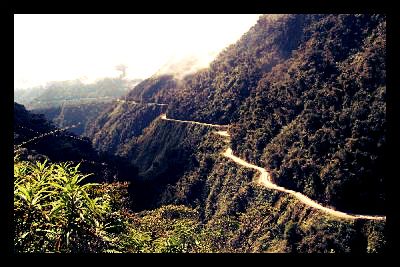
Dangerous Roads Create a Bumpy Ride to Development

Dangerous Roads
A recent study by the University of Michigan has found that Africa, Latin America and the Middle East host the world’s most dangerous roads, and that traffic accidents in developing nations claim more victims than in wealthier countries.

Similar conclusions have recently been drawn by the Federation Internationale de l’Automobile (FIA) which specifically examined this year’s mortality rates due to traffic accidents in Latin America. The FIA study reports that Brazil has the worst record, at 20 traffic-related deaths per 100,000 inhabitants.

FIA regional representative Leandro Perillo of Argentina observes that “the biggest problem we face [in Latin America] is the lack of enforcement of the rules.”

The Inter-American Development Bank (IDB) sees dangerous roads as a serious development issue in Latin America, reporting that “at 17 deaths per 100,000 inhabitants, this region’s roadway fatality rate is nearly double that of higher income countries.”

Leading reasons for this discrepancy besides lax law enforcement include roadways clogged with bicycles, motorcycles and all around bad driving. Anyone who has traveled throughout Latin America understands that traffic lights, lane markers and warning signs are more like suggestions than rules. Poor infrastructure, including the infamous baches (potholes that many times resemble sinkholes) and lomadas (mountainous, unmarked speed bumps,) can also play a part in driving accidents.

Automobile wrecks take more lives in Latin America each day than does HIV/AIDS, and road incidents kill 100,000 people every year in Latin America and the Caribbean. Additionally, car crashes have become the leading cause of death for individuals between the ages of 15 and 29.

Injuries due to poor roads and bad drivers also have a high social and economic cost. The Inter-American Development Bank estimates that Latin America loses two percent of its GDP to traffic accidents each year.

Speaking on the importance of road safety in Latin America, IDB Transport Division Chief Nestor Roa states that “when it comes to improving road safety, isolated efforts will only get us so far. Curbing our region’s high traffic death rates requires making this issue a priority for our national development agendas and committing everyone to achieve this goal.”

The IDB is becoming more involved in the region’s transportation situation, performing vehicle evaluations and overseeing the design of better roadways. The institution states that successful confrontation of this issue will require “the coordination and collaboration of virtually all sectors of society, from governments to schools, NGOs, motor vehicle manufacturers, drivers, passengers, cyclists and pedestrians.”

Although road safety is not typically seen as a central development concern, addressing this issue will help pave the way to a safer and healthier future for developing nations.

– Kayla Strickland

Sources: Global Post, University of Michigan, Inter-American Development Bank
Photo: GravityBolivia

July 29, 2014
https://borgenproject.org/wp-content/uploads/borgen-project-logo.svg 0 0 Borgen Project https://borgenproject.org/wp-content/uploads/borgen-project-logo.svg Borgen Project2014-07-29 14:56:412024-05-27 09:19:04Dangerous Roads Create a Bumpy Ride to Development
Development

Five Ways Haiti Has Improved

Haiti has recently been highlighted for making strides in the fight against cholera, with the number of new cases this year down 74 percent. Looking beyond this progress in the Haitian health sector, Haiti is experiencing successes in several other areas. According to a report published by the United Nations Development Program (UNDP) last month, the country reached many of the Millennium Development Goals (MDG) ahead of the 2015 deadline.

Based on statistics from this U.N. report, here are five ways Haiti has improved and is climbing the ladder of global development.

1. Education

The rate of primary education among Haiti’s youth has increased from 47 percent in 1993 to almost 90 percent today. There is equal participation in education between boys and girls, giving all children an opportunity to learn.

2. Earthquake Recovery

In 2010, a devastating 7.0 magnitude earthquake left Haiti in shambles, with 200,000 people killed and billions of dollars in damages. After four years of work, the UNDP reports that 97 percent of debris from the hard-hitting earthquake is gone from the streets of Haiti, 11,000 displaced families are back in their homes and more than 4,000 meters of river bank have been protected against flooding.

3. Clean Water

More households are using safe, clean water. The U.N. reports, “Nearly 65 percent of households now have improved access to water, compared to 36.5 percent in 1995.” The increased availability of hygienic water is key to fighting cholera, acute diarrhea and other waterborne diseases. This progress will continue, especially in rural areas, thanks to the country’s newly launched “Total Sanitation Campaign.”

4. Infant Mortality

The health of Haiti’s youth is improving, with infant mortality ranking lower than the global average, down 44 percent since 1990. Additionally, the number of underweight children under the age of 5 has been cut in half, meeting the MDG three years ahead of schedule.

5. Gross Domestic Product (GDP)

The Haiti MDG report boasts a rise in per capita GDP from $1,548 in 2009 to $1,602 today. Extreme poverty has stabilized at 24 percent since 2012.

Although Haiti is on the path to success according to MDG indicators, there are undoubtedly aspects of the country that still need attention. More children than ever are attending school, but there are still far too many kids dropping out and repeating grades. Clean water access has improved, but in order to eradicate cholera entirely there needs to be more widespread sanitation reform, especially in rural areas.

But without a doubt, the aforementioned successes are extremely commendable. With a sustained push, a Haiti without extreme poverty could be on the horizon.

– Grace Flaherty 

Sources: New York Times, UN, World Bank
Photo: UN

July 29, 2014
https://borgenproject.org/wp-content/uploads/borgen-project-logo.svg 0 0 Borgen Project https://borgenproject.org/wp-content/uploads/borgen-project-logo.svg Borgen Project2014-07-29 12:00:292024-06-05 01:57:51Five Ways Haiti Has Improved
Development, Global Poverty

Venezuela’s Black Market

In the last few years, the economic wellbeing of Venezuelans has become highly dependent on their ability to obtain dollars. In a crumbling economy, people’s socioeconomic standing depends not on the job they have or their level of education, but their ability to trade currency.

In no other place is this so evident as in the country’s ports. In the crumbling city of Puerto Cabello, women from all over the country anxiously await freighters carrying sailors who bring dollars into the country. Elena, a 32-year-old prostitute from the western state of Zulia, has taken the 280 miles journey from her hometown to the port city of Puerto Cabello after hearing about the arrival of a Liberian-flagged freighter manned with Ukrainian, Arab and Filipino soldiers.

For prostitutes and many others in Venezuela, the practice of trading dollars in the black market has translated into the doubling of their earnings.

Since President Maduro took office in 2013, after the late Hugo Chavez, the value of the bolivar in the black market has dropped to from 23 to 71 against the dollar. Until recently, the official exchange rate was 6.3 bolivares to the dollar. And as far as basic foods, medicine and other necessities it remains pegged at this rate.

While this practice keeps basic consumer goods at reasonable price, their scarcity makes for a whole different outcome in practice. For over a year now, Venezuelans have had to stand in line for hours to have a access to limited quantities of basic products such as rice, flour or even toilet paper.

However, this is only the case for those who do not have access to foreign currency. For those able to get paid in dollars, such as prostitutes, travel agents and taxi drivers, the dollar shortage holds the key to their ability to overcome shortages and inflation. This gives them the choice of skipping the lines and buying these regulated products at a cost several times (sometimes 9 times) over the regulated price.

This has made Venezuela one of the most expensive countries in the world or expensive; it all depends where do one gets your money. If a citizen is able to tap into the highly demanded illegal and secretive black-market system, his or her odds at succeeding are much higher. Ironically, this has turned Venezuela into a two-tiered society composed of those who can get dollar and sell them in the black market and those who cannot and have to manage with what little comes their way.

– Sahar Abi Hassan

Sources: Bloomberg, NPR
Photo: Quartz

July 28, 2014
https://borgenproject.org/wp-content/uploads/borgen-project-logo.svg 0 0 Borgen Project https://borgenproject.org/wp-content/uploads/borgen-project-logo.svg Borgen Project2014-07-28 13:52:082024-05-27 09:19:00Venezuela’s Black Market
Activism, Advocacy, Development

Success in the Fight Against Poverty

In the fight against something as daunting as extreme poverty, success often gets buried under all of the staggering statistics. Looking at how far the world has come in the fight against extreme poverty involves observing what has been done and what is possible in the coming years. This lens makes it clear that the humanitarian efforts of thousands of people have made a very clear difference in the lives of millions exposed to poverty.

In 1990, the global poverty rate was at 36 percent, which decreased to 18 percent in 2010. This fulfilled a Millennium Challenge Goal to cut the global poverty rate in half, and it did so five years ahead of schedule. The call to action outlined in the Millennium Challenge Goals has inspired many to rally around the cause and make improvements.

In addition to the poverty rate changing, the number of children who die from preventable diseases every year has decreased by 30 percent in the past 15 years, indicating an improvement in the standards of living for thousands of children.

Education in developing countries has seen improvement with higher annual enrollment rates, which will see more apparent return in the future when these children are more prepared and qualified to support their families and contribute to a more stable society.

The future of the fight against poverty smacks of success, given that the fight maintains momentum. Were progress to continue at the current rate, or better yet, speed up, the goal of lifting one billion people out of poverty could be met between 2025 and 2030. Bill Gates posited that there could be almost no impoverished countries by 2035.

There are various initiatives being developed by various humanitarian organizations that show promise of success. In December of 2013, 46 countries all over the world stepped up to accelerate the fight against extreme poverty by committing to a composite $52 billion donation over a period of three years that will go directly to the International Development Association, a fund established by the World Bank to support the world’s poorest.

The Bill & Melinda Gates Foundation, the Clinton Foundation, Warren Buffett, Feed the Future — the list of people and organizations willing to help is endless. And it couldn’t have come at a better time. In a world that is more technologically capable than ever with the resources necessary to feed the whole world and the money to establish stable communities around the world, the fight against extreme poverty is more manageable.

The fight is not over, nor will it be an easy fight to win. Worldwide, there are nearly 1 billion people who survive on $1.25 or less every day. Proportionally compared to the world population, we are facing a smaller fraction, but it is still an overwhelming number. Keeping in mind the progress of the past and the promise of the future, the world can continue to successfully fight against extreme poverty.

– Maggie Wagner

Sources: The World Bank, MSNBC, The World Bank, Mic.com
Photo: Konnect Africa

July 28, 2014
https://borgenproject.org/wp-content/uploads/borgen-project-logo.svg 0 0 Borgen Project https://borgenproject.org/wp-content/uploads/borgen-project-logo.svg Borgen Project2014-07-28 12:51:412024-12-13 17:51:02Success in the Fight Against Poverty
Development

BRCK: Kenya’s Power Outages

When it comes to developing products that are durable and useful in the developing world, many of the innovative ideas and products that appear in the media come from NGOs and students from the developed world. Recently however, many local companies and startups in the developing world have begun to take matters into their own hands by addressing the problems their countries face, from traffic congestion to securing a reliable data connection.

One such of these innovative products is BRCK, a power source and a reliable mobile data connection for people who experience frequent power outages in both urban and rural areas around the world. The idea for creating a durable power source emerged from Kenya’s power outages that a group of Nairobi-based engineers were experiencing on a daily basis. Realizing that both urban and rural people needed a more secure power source, as well as a reliable connection to data for mobile devices, the engineers came up with BRCK.

The BRCKs were launched this year on July 17, when the first 700 units were shipped out across Kenya and the world. The initial market for the device was for small and medium businesses, but the sales of the first 700 included people from 45 different countries as well as biotech companies and nonprofits operating in the developing world.

The device has eight hours of battery life in full power mode and five different low power states that help extend that time. It can be charged on anything from a computer to a car battery making it versatile for a wide range of people and conditions. It is marketed as a “rugged” power source that can withstand dust and any formidable weather.

Realizing that there were bound to be questions and concerns with the launch of their product, the team behind BRCK included a forum on their website that allows people from around the world to connect and discuss topics from troubleshooting to technical support to bandwidth quotas.

Devices like the BRCK are important because they not only address the energy needs of the bottom billion, but also foster innovation, development and production in the developing countries. However, one challenge that the team behind BRCK faced was the infrastructure to actually manufacture the device in Kenya, something that many African nations are still developing.

As a result, while the idea originated in Nairobi, Kenya, the manufacturing was done in China and the assembly in Austin, Texas. Working to decrease costs and bring assembly to Kenya will be a work in progress for this young company. Despite the challenges however, the need for the product is great, as anyone who has ever lived or visited a developing country can confirm.

In the mean time, BRCK is addressing a much needed energy supply for people in Kenya, by people in Kenya, a truly remarkable accomplishment.

– Andrea Blinkhorn

Sources: The Wall Street Journal, BRCK 1, BRCK 2, BRCK 3
Photo: Forbes

July 28, 2014
https://borgenproject.org/wp-content/uploads/borgen-project-logo.svg 0 0 Borgen Project https://borgenproject.org/wp-content/uploads/borgen-project-logo.svg Borgen Project2014-07-28 12:46:102024-06-04 03:01:23BRCK: Kenya’s Power Outages
Development, Inequality

Restricted Labor Force in India

While stories of India’s gender gap have been in the media spotlight in past years, a recent census shows the depth of the inequality. India is rated 101 out of a 136 country survey for gender disparity, with lower economic opportunities and a lower literacy rate. With a population of over a billion, nearly 160 million women are estimated to be restricted to domestic work, many of whom are of working age.

With a restricted labor force in India, the capacity for growth and development is hindered. Additionally, the options women do have are limited by unequal access to education and training. While this problem has been acknowledged, its scope was underestimated. Sociologists hope that governmental encouragement of women in the workforce can help reduce illiteracy and poverty among women.

However, even women who are employed are more likely to be “vulnerably employed” than their male counterparts. This term, used by an ILO study to describe nearly 84 percent of South Asian women, refers to the risk these workers face: seasonal employment and more easily terminated services leaves them with little job security. Additionally, these workers perform mostly domestic services, a trend which consistently reinforces the patriarchal hierarchy in India.

With job security being a problem for women, the government is hoping that opening up more opportunities in the public sector, now dominated by men, can have an equalizing effect for the women of India. With women and girls being among the most disadvantaged in the world, employing them and fostering growth in education and literacy is in the best interest for 21st century India.

For as large of a nation as it is, the hindrances on the labor force have not allowed India to realize its potential. For the generations of women now and those in the future, women must have the opportunity to come out of the domestic sphere and into the working world.

– Kristin Ronzi

Sources: Silicon India, ISP News
Photo: Worldbank

July 25, 2014
https://borgenproject.org/wp-content/uploads/borgen-project-logo.svg 0 0 Borgen Project https://borgenproject.org/wp-content/uploads/borgen-project-logo.svg Borgen Project2014-07-25 16:00:172024-12-13 17:51:00Restricted Labor Force in India
Page 140 of 163«‹138139140141142›»

Get Smarter

  • Global Poverty 101
  • Global Poverty… The Good News
  • Global Poverty & U.S. Jobs
  • Global Poverty and National Security
  • Innovative Solutions to Poverty
  • Global Poverty & Aid FAQ’s
Search Search

Take Action

  • Call Congress
  • Email Congress
  • Donate
  • 30 Ways to Help
  • Volunteer Ops
  • Internships
  • Courses & Certificates
  • The Podcast
Borgen Project

“The Borgen Project is an incredible nonprofit organization that is addressing poverty and hunger and working towards ending them.”

-The Huffington Post

Inside The Borgen Project

  • Contact
  • About
  • Financials
  • President
  • Board of Directors
  • Board of Advisors

International Links

  • UK Email Parliament
  • UK Donate
  • Canada Email Parliament

Get Smarter

  • Global Poverty 101
  • Global Poverty… The Good News
  • Global Poverty & U.S. Jobs
  • Global Poverty and National Security
  • Innovative Solutions to Poverty
  • Global Poverty & Aid FAQ’s

Ways to Help

  • Call Congress
  • Email Congress
  • Donate
  • 30 Ways to Help
  • Volunteer Ops
  • Internships
  • Courses & Certificates
  • The Podcast
Scroll to top Scroll to top Scroll to top