• Link to X
  • Link to Facebook
  • Link to Instagram
  • Link to TikTok
  • Link to Youtube
  • About
    • About Us
      • President
      • Board of Directors
      • Board of Advisors
      • Financials
      • Our Methodology
      • Success Tracker
      • Contact
  • Act Now
    • 30 Ways to Help
      • Email Congress
      • Call Congress
      • Volunteer
      • Courses & Certificates
      • Be a Donor
    • Internships
      • In-Office Internships
      • Remote Internships
    • Legislation
      • Politics 101
  • The Blog
  • The Podcast
  • Magazine
  • Donate
  • Click to open the search input field Click to open the search input field Search
  • Menu Menu

Archive for category: Development

Information and stories on development news.

Development, Global Poverty, Women and Female Empowerment

Underwear for Hope, by Naja

Underwear_columbiaNaja is a maker of fast fashion trend lingerie with the social responsibility ethos of a slow fashion company. Founded by Catalina Girald, a former lawyer who immigrated to the U.S. from Colombia at age four, Naja is working to empower women to create on-trend products using environmentally-friendly techniques. Its goal is to empower marginalized women by creating on-trend, eco-friendly lingerie.
Fast fashion products are meant to imitate trends from major fashion events, such as New York Fashion Week. Naja’s products are stylish and resemble these trends, but are unique in that, like slow fashion trends, those working to make the products are paid fairly and empowered to create sturdy, quality products.

Female empowerment starts with economic independence. Naja employs economically-marginalized single mothers and female head of households. Fair pay and health benefits are included in the package, but the real beauty of Naja’s model comes in that it offers flexible scheduling and full support for its workers’ children, including paying for school lunches and other necessities. In addition, the company has vertically integrated parts of its supply chain, enabling it to have greater control over conditions for the productive processes.

Naja also combines advocacy with businesses by raising consumer awareness of the difficult realities of living in war-torn and violent countries. The main program it does this through is the Underwear for Hope program. Half of the proceeds from this program are taken home by the women making the products, and the other half is donated to the Golondrinas Foundation, which teaches women micro-entrepreneurship. This is in addition to the two percent of total revenue from all sales Naja donates to Colombian education charities.

Underwear for Hope provides a stable, living income and a chance to work from home for impoverished women in Colombia. The program teaches women to sew, a skill useful both at home for supporting a family and as a primary source of income. The women in the program make the lingerie wash bags Naja includes when a customer orders a bra. This helps to spread the message about Naja’s goals and to humanize the products women wear by matching a face to the product, just as Naja does on its website when customers look at a specific product.

Fast fashion works by attracting a customer base looking for on-trend clothing while supporting a cause. Naja competes for this customer base by creating runway-worthy products with unique artistic designs, showing that fashion can be both slow and trendy. Naja also incorporates eco-friendly materials, such as recycled plastics, and eco-friendly production methods, such as digital printing, to attract and build their socially-conscious consumer base.

– Lucas Woodling

Photo: Flickr

January 1, 2017
https://borgenproject.org/wp-content/uploads/borgen-project-logo.svg 0 0 Borgen Project https://borgenproject.org/wp-content/uploads/borgen-project-logo.svg Borgen Project2017-01-01 01:30:232024-12-13 17:56:25Underwear for Hope, by Naja
Children, Development

Teaching Children About Global Education and Development

Teaching Children About Global Education and Development
Entering “pen pal in developing country” into a search engine will display results with at least five different organizations that offer this type of service. Parents and teachers may do this to find pen pals for their children and students, while at the same time trying to teach them about global education and development for those who are much less fortunate than they are. However, Virginia Fresne who is Director of programs for the nonprofit organization Flying Kites, says that this is not always mutually beneficial or educational for either writer.

Founded in 2007, Flying Kites believes that the way out of poverty is through education. They run a leadership academy in the foothills of Kenya’s mountains where they help some of the world’s most desperate children. Flying Kites believes that education is a human right; they believe in children, and they believe in children’s rights and dreams. They invite others to “believe with us.”

Fresne says that she often receives letters written by people who hope to become pen pals with her Kenyan students. However, she feels that “letter exchanging with ‘disadvantaged’ children in an effort to remind our own children to appreciate privilege doesn’t work for our students in Kenya.” Students may not know enough about the person who they are writing to, specifically about their vulnerabilities. This can lead to the use of phrases such as, “I’m sorry you are poor.” According to Fresne, wording such as this, “would be confusing, offensive or hurtful to our students in Kenya.”

Instead, she suggests other methods that she feels are more effective in teaching children about global education and development. One is having children write to their state representatives about issues that are affecting the world’s poor. To do this requires them to first learn about some of the challenges and difficulties faced by people who live in poverty. Another way is sponsoring a student, with the help of an adult, using an organization such as Flying Kites. This supports the education of a student in need and may initiate correspondence between the student and the sponsor, depending on the level of sponsorship.

Among Fresne’s other suggestions for teaching children about global education and development are helping them to coordinate a bake sale to use the proceeds as donations, or encouraging them to read about global poverty. They can then take what they learn and teach others, spreading awareness. Fresne notes how much braver this generation is, and says, “They will be a force in this world, but it won’t be because they sent letters to ‘poor children.’”

– Kristin Westad

Photo: Flickr

December 29, 2016
https://borgenproject.org/wp-content/uploads/borgen-project-logo.svg 0 0 Borgen Project https://borgenproject.org/wp-content/uploads/borgen-project-logo.svg Borgen Project2016-12-29 01:30:562024-12-13 17:56:25Teaching Children About Global Education and Development
Development, Global Poverty

Life After Genocide in Rwanda

Life After Genocide In Rwanda
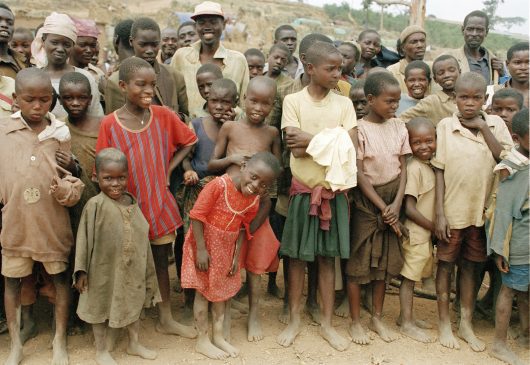
In spite of the 1994 genocide in Rwanda in which one million people were executed, the Rwandan community rallied to form an inclusive government, promote cultural acceptance and achieve economic prosperity.

As a product of colonial policy, the Rwandan government was constructed to advantage the minority (Tutsi) over the majority (Hutu) population. Disparities among the Rwandan population gave rise to the Rwandan Patriotic Front (RPF) that was a catalyst for the Rwandan Civil War in the early 1990s.

On April 6, 1994, the Rwandan civil war escalated when the Presidents of Rwanda and Burundi died in a plane crash that the Radio Television Livres Des Mille Collines (RTLM) attributed to the RPF. Following the crash, several weeks of incommensurate fighting ensued between the Hutu lead Gendarmerie (paramilitary) and military forces against the RPF and Tutsi citizens. Meanwhile, the international community withdrew and was absent during the peak of the genocide in Rwanda.

During the final weeks of summer, the RPF gained territory and Hutu soldiers fled to the DRC, bringing with it the fragile process of recovery.

Fortunately, the Rwandan people were exceptionally apt at a post-conflict building. The first step after the genocide in Rwanda, for the Rwandan people, was to ensure internal security, primarily executed through the criminal justice system, which was filled with nearly two million people.

The Rwandan national government, led by Paul Kugame, dealt with the prosecution of those who were alleged contributors to the genocide in Rwanda or perpetrators of rape. The remainder of suspects were subject to the newly created justice system, the Gacaca. The participatory system, run by citizens, was the crux of building a long-lasting trust among all segments of society.

Once internal security was reached, the Rwandan government focused on humanitarian relief. Five years afterward, Rwanda transformed its society into a beacon of hope and prosperity. Eliminating child mortality by 50 percent, near universal health care, increased freedom of expression and economic expansion of eight percent without the revenue from natural resources was primarily completed because of the direction of the Government and collect efforts of a Rwandan identity, rather than Hutu or Tutsi.

Although the rapid transformation was the product of national efforts, the role of international aid cannot be overstated. The United Kingdom’s Department for International Development (DFID), along with World Bank, and International Monetary Fund account for the bulk of international donations.

The international community has demonstrated it is observant and eager to grow as it has made earnest efforts to increase foreign aid to developing countries. Post-genocide in Rwanda is evidence of how international aid can be the missing component to eradicating barriers to development. In the words of former British Prime Minister Tony Blair “and at a time when many in western nations are questioning the use of aid budgets, we should look at Rwanda as an example of how to use aid well”.

– Adam George

Photo: Flickr

December 23, 2016
https://borgenproject.org/wp-content/uploads/borgen-project-logo.svg 0 0 Borgen Project https://borgenproject.org/wp-content/uploads/borgen-project-logo.svg Borgen Project2016-12-23 01:30:572024-12-13 17:56:23Life After Genocide in Rwanda
Development, Global Poverty

SAP Enterprise Resource Planning in Kenya

SAP Enterprise Resource Planning in KenyaKenya has seen enormous economic growth during the last few years and is now officially a middle-income country. In order to sustain this growth, however, digital innovation and efficient service delivery need to be a priority.

This is why the Kenya Revenue Authority (KRA) is partnering with SAP to implement a core technology software called SAP Enterprise Resource Planning (ERP).

SAP was created in Germany in 1972 with the goal of transforming information technology. The company is the world leader in enterprise software and software-related services. It now has locations in more than 130 countries.

SAP in Africa is implementing a business process management software called ERP, allowing organizations to use a system of integrated applications to manage its business. ERP integrates product planning, development, manufacturing, sales and marketing into a single database.

Benefits of ERP include scalability, improved reporting and data quality, lower cost of operations and better customer relations. This is crucial to maintaining an efficient, flexible and uncorrupted e-government whose decisions are backed up with verifiable data.

The KRA is now the first east African company to adopt SAP ERP’s technology. The programs SAP will implement are expected to scale, accelerate and revolutionize decision-making and business management. Each government process in Kenya will now depend on a program called SAP HANA.

The goal of SAP HANA is to simplify the IT environment through data integration into a single, in-memory platform. This simplifies the time-consuming data management tasks and makes it possible for IT departments to focus more on technology innovation.

SAP HANA integrates data from a wide variety of sources with up-to-date insights. These insights can be used to detect patterns and make educated predictive analyses, ultimately making the KRA more citizen-centric, fast and efficient.

SAP Enterprise Resource Planning in Kenya is not just another ICT solution. This is a “massive technology leap” according to Ashley Boag, Acting Managing Director of SAP East Africa, and it is made possible by the full adoption of an e-government system.

SAP ERP’s integration into the Kenyan e-government will maximize technological efficiency and prepare Kenya for growth into the increasingly competitive digital economy. This is a major step towards realizing the development goals stipulated in the Kenya Vision 2030, which aims to transform Kenya into an industrializing, clean, secure and middle-income country by 2030.

– Liliana Rehorn

Photo: Flickr

December 18, 2016
https://borgenproject.org/wp-content/uploads/borgen-project-logo.svg 0 0 Borgen Project https://borgenproject.org/wp-content/uploads/borgen-project-logo.svg Borgen Project2016-12-18 01:30:082024-12-13 17:56:21SAP Enterprise Resource Planning in Kenya
Development, Education

Education System in Sri Lanka

Education system in Sri Lanka
With a literacy rate of 92.3% and a continuing increase in primary school enrolment, the education system in Sri Lanka is constantly evolving and improving. Considering its history, a visible improvement is a high achievement, and will hopefully be maintained in the future.

Currently, there are 10,390 government schools in Sri Lanka. A curriculum set by the government is taught in Sinhalese, with English set as a second language. Education in Sri Lanka is free from primary through university level, but is only compulsory for those between the ages of 5 and 14. Facilities within the country are all state-funded and free materials are given to each child throughout their education.

Today, the education system of Sri Lanka faces many challenges as its weaknesses overpower its strengths. With a high literacy rate, it is easy to get a clouded judgment of the level of education. Overall, the quality of education is poor, with a mismatched curriculum of two different systems of private and public schools, and a substantial lack of training for teachers.

Added pressures of inefficient administration and limited government expenditure lead to difficulties in aiding children into education. Despite the compulsory requirement for 5 to 14-year-olds, only 92.2% are in full-time education, and attendance to lessons are very poor. The main reason is many children do not have a birth certificate, which means that they are technically not allowed an access to education within the country. Other reasons for poor attendance includes lack of interest or poor household backgrounds, where children are required to help their families as an alternative to education.

The Free Education Policy of 1947 enabled children to have an easier opportunity accessing education. The government spent four percent of its GDP on education, leading to mass improvements in facilities, and the level of education children receive. This was a major break-through in Sri Lanka but following weak economic conditions in the late 1960s, the government was unable to continue spending this amount of money. In 1970, the allocation for education dropped to three percent and then to less than two percent in 1977 following the introduction of Structural Adjustment policies. The quality of education deteriorated comparatively as a consequence.

Since these hard times, education reforms have been set in order to change the system and modernize it. The General Education Project-2, established in 1998, provided students with textbooks, changed the curriculum to make it more relevant and helped to develop school libraries.

While these projects and reforms have aided Sri Lanka in improving the level of education available to schoolchildren, it is still not as good as it could be. In order for education in Sri Lanka to improve, much higher levels of training need to be accessible to teachers, and schemes need to be put in place so that children who have difficulty accessing education can have equal opportunities.

– Georgia Boyle

Photo: Flickr

December 14, 2016
https://borgenproject.org/wp-content/uploads/borgen-project-logo.svg 0 0 Borgen Project https://borgenproject.org/wp-content/uploads/borgen-project-logo.svg Borgen Project2016-12-14 01:30:482024-12-13 17:56:20Education System in Sri Lanka
Development, Education, Global Poverty

VOD Education in Kenya

VOD Education in Kenya
Kenya has seen remarkable growth in education in the last few years. Between 2012 and 2013 student enrollment increased by 20 percent, and the number of college graduates in Kenya is expected to exceed those without any formal education by 2020.

However, university resources aren’t keeping up with the rapid increase in student enrollment. According to Finance Minister Njeru Githae’s 2012 policy budget statement, “The sector’s biggest challenges include inadequate infrastructure and staffing, a slow pace of ICT integration and dealing with accelerated admissions to universities.”

Video on Demand or VOD education in Kenya has yet to blossom, but it has the potential to ease the pressures that Githae mentioned. Africa’s market is perfect for the system’s development and integration into school systems due to the country’s high population and extensive internet penetration.

The system allows students to select and watch video content of their choice via either their televisions or computers. VOD allows teachers to customize and live to stream their own content to give students in remote areas access to the most effective lectures.

When used as a supplement to traditional teaching methods, it reinforces students’ understanding of content. Students have the option to stop or replay parts of lectures as many times as needed, while advanced learners can use the system to explore more material. Students can also use the system to catch up on missed lectures.

VOD education in Kenya could give the country an advantage with Information and Communications Technology (ICT) competitiveness and innovation. The system will familiarize students with technology and prepare them for entrance into a modern workforce that highly values technological literacy.

The system also contributes to student empowerment, active engagement, leadership and collaboration. Educators who use VOD encourage students to collaborate with each other — even peers from other universities — to create their own material.

VOD generates revenue through subscriptions, sponsorship, and advertising models, which could be used to fund education and reduce the cost of tuition. Students can access the system for free with university hotspots.

VOD education thus far has been shown to enhance student performance and academic development. Not only does it have the potential to become a useful enhancement to 21st century teaching methods, but it also is compatible with Kenya’s goal of becoming a globally competitive and prosperous nation.

– Liliana Rehorn

Photo: Flickr

December 12, 2016
https://borgenproject.org/wp-content/uploads/borgen-project-logo.svg 0 0 Borgen Project https://borgenproject.org/wp-content/uploads/borgen-project-logo.svg Borgen Project2016-12-12 01:30:502024-12-13 17:56:16VOD Education in Kenya
Development, Global Poverty

Economic Growth in Pakistan Projects Future Prosperity

Economic Growth in Pakistan Projects Future Prosperity
This year, economic growth in Pakistan reached its highest rate in eight years. With 4.7 percent growth in FY 2016, up from four percent the previous year, the country shows promise for further economic success and prosperity.

The World Bank praised the government’s prudent efforts in restoring economic stability. Growth has largely been driven by consumption, and indicators of economic improvement include low inflation, a low budget deficit and a low current account deficit. Additionally, foreign exchange reserves strengthened.  The country’s recently upgraded ratings by Standard and Poor is proof of economic success.

In addition to economic growth, Pakistan has succeeded in reducing the percentage of people living in poverty. The percentage of people living in poverty in Pakistan decreased from 64.3 percent in 2002 to 29.5 percent in 2014. The World Bank president claims the country is on track to increased economic growth and prosperity, but in order to maintain and expand growth, the government must take additional steps.

Low rates of investment and declining export competitiveness hinder further growth. In order to strengthen economic growth in Pakistan, public, private and international investments will need to increase.

Despite Pakistan’s success in poverty reduction and improving health, nutrition and education have been trailing behind. The World Bank’s Country Director in Pakistan recommends implementing structural reforms that will benefit the entire population to promote viable and widespread success.

Pakistan will benefit from investments in electricity, education, health and nutrition. The government can help achieve these goals by expanding the electricity supply, accelerating energy reforms, ensuring anti-poverty measures and encouraging private sector investments. By expanding services and prioritizing individual prosperity, economic growth in Pakistan will benefit the population at-large.

Pakistan’s Prime Minister has expressed dedication to widespread growth by investing in the development of mega-hydropower projects, rail and road infrastructure, education and health.

Economic growth in Pakistan is attracting international interest and providing opportunities for investment. The high performance of the Pakistan Stock Exchange and projects under the China-Pakistan Economic Corridor are leading the World Bank, the China Development Bank and other sovereign investment authorities to express interest in investing in Pakistan.

Although improvements are needed, economic growth in Pakistan is expected to continue. The World Bank projects further success for Pakistan, achieving a 4.8 percent growth rate in FY 2017 and 5.4 percent in FY 2018. Services in Pakistan are expected to grow by five percent. Large-scale manufacturing is expected to grow between four and 4.5 percent and investments are expected to increase from 14 to 14.6 percent of the GDP.

Economic growth in Pakistan is promising for the country’s future. Success in reducing poverty, stimulating economic growth and attracting international investments prove the country is committed to accelerating sustainable economic growth for years to come.

– McKenna Lux

Photo: Flickr

December 11, 2016
https://borgenproject.org/wp-content/uploads/borgen-project-logo.svg 0 0 Borgen Project https://borgenproject.org/wp-content/uploads/borgen-project-logo.svg Borgen Project2016-12-11 01:30:292024-12-13 17:56:18Economic Growth in Pakistan Projects Future Prosperity
Development, Global Poverty

Poverty in Lesotho

Poverty in Lesotho
Gaining independence from the U.K. in 1966, Lesotho has aspired to develop economically, socially and environmentally. Like many African nations, however, Lesotho has also faced a difficult struggle with poverty alleviation. In fact, according to the World Bank, approximately 57 percent of the population still lives in extreme poverty,  which provides an incentive to understand the factors at play. As such, here are five major aspects of persisting poverty in Lesotho today:

  1. Geography. Lesotho is a mountainous enclave of South Africa meaning that not only is the nation landlocked from trading ports, but it faces a difficult terrain as well. The country is also currently in the midst of a multiyear drought which has ravaged the productivity of agricultural sectors. Together, this implies poor infrastructure, rising food prices and an environment vulnerable to consequences of overgrazing and soil erosion — all of which contribute to enduring poverty in Lesotho. Related to its geography, approximately two-thirds of the workforce remains employed in agricultural sectors, which presents an additional challenge to development.
  2. High unemployment rates. The fact that so many laborers work in agriculture, other employment opportunities are extremely limited in Lesotho. The garment and mining industries support the highest percentages of the workforce, but profits are currently in decline for both sectors. Hence, unemployment rates are reported to be around one-third of the population with a particularly high concentration among young Basotho. The resulting disparity of prolonged unemployment also contributes to high levels of income inequality. Without adequate social transfer programs, it follows that the unemployed are inevitably trapped in extraordinarily high levels of poverty.
  3. Health concerns. The HIV and AIDS pandemics took root in Lesotho just the same as other states in Southern Africa. According to the U.N., in the 15 year period between 1990 and 2005, life expectancy in Lesotho plummeted by more than 15 years. Mortality rates for infants, children and mothers followed a similar trajectory. While the country is on the rebound today, figures have not yet restored to 1980 levels. Additionally, concerns are further exacerbated by a lack of quality healthcare facilities. Without a healthy population, the economy of Lesotho will be stunted by continuing poverty.
  4. Lesotho’s international partnership. To begin, make no mistake that Lesotho does reap major benefits from its location within South Africa. South African forces have provided stability during times of unrest, and South Africa has led international coalitions to assist Lesotho with development strategies.  Lesotho even taxed South Africa for water usage following the completion of the Metelong Dam project. However, it is equally concerning how heavy reliance on South Africa hinders Lesotho’s own growth. For example, approximately 90 percent of the goods consumed in Lesotho are imported from its neighbor. Many families in Lesotho also survive on incomes from migrants who left the country looking for work. Economically, the lack of resources in Lesotho has contributed to an international dependency making it more susceptible to crises such as the recent Eskom power interruptions or the rising levels of debt.
  5. Infrastructure. Existing transportation networks in Lesotho may be adequate, but they are severely lacking in size. According to the CIA World Factbook, the entire country only has three paved airports and about 660 miles of paved roadways. Access to utilities was similarly absent with only 17 percent of the population receiving electricity, and only 16 percent able to access the internet and the water supply outside the capital city of Maseru. Notably, rural areas, where the majority of the population resides, are disproportionately lacking these services. All of these factors contribute to the multi-dimensional nature of poverty in Lesotho.

Lesotho’s outlook is not entirely disconcerting. Women in Lesotho boast one of the highest literacy rates in all of Africa, reflecting Lesotho’s commitment to both education and gender equality. In fact, the percentage of GDP spent on education is the largest of any country in the world. Likewise, women in Lesotho report higher human development levels than their male counterparts in all areas except overall income. While there are admittedly several factors to consider for overcoming poverty in Lesotho, it is likely that solutions will continue to build on the nation’s current strengths.

– Zack Machuga

Photo: Flickr

December 11, 2016
https://borgenproject.org/wp-content/uploads/borgen-project-logo.svg 0 0 Borgen Project https://borgenproject.org/wp-content/uploads/borgen-project-logo.svg Borgen Project2016-12-11 01:30:202024-12-13 17:56:14Poverty in Lesotho
Development, Economy, Global Poverty

The Missing Middle of Economies in Development

Missing Middle of Economies
Cited in the 2015 award-winning documentary “Poverty, Inc.,” the “missing middle of economies” refers to the theory that a gap of “small and medium enterprises” in developing nations prevents economic prosperity.

The Harvard Kennedy School’s Center for International Development is studying this issue to develop solutions that could lead these countries out of foreign aid dependency and into an environment that encourages local entrepreneurship and development.

World Bank Group databases suggest that small and medium enterprises (SMEs) “are responsible for 50 percent of GDP and over 60 percent of employment” in higher-income nations. Rates are “less than half of that” in developing, low-income countries, a fact that indicates major hurdles to economic autonomy and prosperity.

While small and large businesses may profit in low-income countries, the missing middle of economies produces roadblocks to development that keep countries dependent on foreign aid.

In a 2006 study published in Elsevier’s Journal of Financial Economics, researchers highlighted the challenges local entrepreneurs face with “entry costs” or “entry regulation.” They concluded that “entry regulations hamper entry,” an effect that is heightened in developing countries.

Harvard Kennedy School’s Asim Kwaja is a professor of public policy and principle investor in the Entrepreneurial Finance Lab Research Initiative, a pilot program designed to open entrepreneurial opportunities in developing African markets. Kwaja mentioned a “frustration” he has experienced throughout his career.

“There is a perceived massive cost, a political cost,” Kwaja said, for developing nations’ governments to set policy for local entrepreneurship. Tax codes and permit requirements, among other regulations, ultimately stymie development.

The Entrepreneurial Finance Lab Research Initiative investors have tested their model in seven countries, trying its ability “to stimulate entrepreneurship, access to finance and economic growth across the developing world.” Kwaja looks to change the “little perception of any returns” by encouraging policy reforms to stimulate the growth of SMEs.

On top of regulatory obstacles, local entrepreneurs face competition from low-cost (or no-cost) foreign aid suppliers like NGOs and non-profits.

Michael Matheson Miller, director-producer of “Poverty, Inc.,” holds graduate degrees in international development, philosophy and international business. He is a fellow at the Action Institute, a non-profit organization that aims to promote “a free and virtuous society.”

“Poor people are not poor primary because they lack stuff,” Miller said in a radio interview in May 2016. He asserted that the world’s poor lack the political liberties and economic opportunities they need to prosper.

“Poverty, Inc.” highlights the way unpredictable influxes of foreign aid mire economic opportunism. While most charitable giving is motivated by altruistic intentions, Miller stated that non-profits, NGOs and even foreign governments treat the poor as “objects” rather than “subjects and the protagonists of their own story of development.”

The missing middle of economies engenders a need for more strategic coordination to help developing countries gain a chance at economic prosperity.

– Tim Devine

Photo: Flickr

December 1, 2016
https://borgenproject.org/wp-content/uploads/borgen-project-logo.svg 0 0 Borgen Project https://borgenproject.org/wp-content/uploads/borgen-project-logo.svg Borgen Project2016-12-01 01:30:402024-12-13 17:56:12The Missing Middle of Economies in Development
Development, Global Poverty

Jim Yong Kim Re-elected as World Bank Group President

World Bank Group President
On September 24, 2016, it was announced that World Bank Group’s President Jim Yong Kim had been selected for a second term. Starting July 2017, Kim will continue leading The World Bank’s ongoing efforts to alleviate global poverty.

Founded in 1944, The World Bank began as an institution facilitating post-war reconstruction and development. At that time, The World Bank took on infrastructure projects to physically rebuild communities. Today, however, the organization has expanded its work to include myriad social projects.

Now, the multifaceted institution is comprised of economists, experts in public policy, social scientists and sector experts and has a portfolio of projects in agriculture, health, education and other areas of the social sector. Although reconstruction is still a focus, the group’s overlying goal is to reduce global poverty through sustainable and inclusive global prosperity.

When Jim Yong Kim, a South Korean-American physician and anthropologist, was originally elected to the presidency in 2012, The World Bank had set two bold goals: to eradicate global poverty by 2030 and to promote shared prosperity by boosting the income growth of the bottom 40 percent of the population in every developing country.

During his first term, Kim brought more structure, accountability and focus to The World Bank with clearer policies and targets, and efforts to meet those targets have been successful. Some of his greatest accomplishments came from dispersing the bank’s power and reallocating large amounts of its resources to combating climate change, addressing the Syrian refugee crisis and undertaking other initiatives that have not traditionally been within The World Bank’s scope.

He also gained much praise for his leadership in the Ebola outbreak, during which he allocated $400 million to combat the deadly virus in West Africa. Additionally, he implored the rest of the international community to invest in containing Ebola, even criticizing the World Health Organization (WHO) for its lax response.

The World Bank Group president also made a number of allies during his term, according to Africa News. When he voiced his intention to run for a second term, he gained endorsements from many countries, including South Korea, the Netherlands, Kenya, Rwanda, Togo and others.

Recognized worldwide for his invaluable experience and accomplishments prior to his election in 2012, Kim worked as an advisor to the director-general of WHO. He later rose to the position of director in WHO’s renowned HIV/AIDS department.

As he finishes his first term and looks forward to his second, one of Kim’s main focuses is making more progress toward the goal of eradicating global poverty by 2030.

-Alex Fidler

Photo: Flickr

December 1, 2016
https://borgenproject.org/wp-content/uploads/borgen-project-logo.svg 0 0 Borgen Project https://borgenproject.org/wp-content/uploads/borgen-project-logo.svg Borgen Project2016-12-01 01:30:072024-12-13 17:55:55Jim Yong Kim Re-elected as World Bank Group President
Page 106 of 163«‹104105106107108›»

Get Smarter

  • Global Poverty 101
  • Global Poverty… The Good News
  • Global Poverty & U.S. Jobs
  • Global Poverty and National Security
  • Innovative Solutions to Poverty
  • Global Poverty & Aid FAQ’s
Search Search

Take Action

  • Call Congress
  • Email Congress
  • Donate
  • 30 Ways to Help
  • Volunteer Ops
  • Internships
  • Courses & Certificates
  • The Podcast
Borgen Project

“The Borgen Project is an incredible nonprofit organization that is addressing poverty and hunger and working towards ending them.”

-The Huffington Post

Inside The Borgen Project

  • Contact
  • About
  • Financials
  • President
  • Board of Directors
  • Board of Advisors

International Links

  • UK Email Parliament
  • UK Donate
  • Canada Email Parliament

Get Smarter

  • Global Poverty 101
  • Global Poverty… The Good News
  • Global Poverty & U.S. Jobs
  • Global Poverty and National Security
  • Innovative Solutions to Poverty
  • Global Poverty & Aid FAQ’s

Ways to Help

  • Call Congress
  • Email Congress
  • Donate
  • 30 Ways to Help
  • Volunteer Ops
  • Internships
  • Courses & Certificates
  • The Podcast
Scroll to top Scroll to top Scroll to top