• Link to X
  • Link to Facebook
  • Link to Instagram
  • Link to TikTok
  • Link to Youtube
  • About
    • About Us
      • President
      • Board of Directors
      • Board of Advisors
      • Financials
      • Our Methodology
      • Success Tracker
      • Contact
  • Act Now
    • 30 Ways to Help
      • Email Congress
      • Call Congress
      • Volunteer
      • Courses & Certificates
      • Be a Donor
    • Internships
      • In-Office Internships
      • Remote Internships
    • Legislation
      • Politics 101
  • The Blog
  • The Podcast
  • Magazine
  • Donate
  • Click to open the search input field Click to open the search input field Search
  • Menu Menu

Archive for category: Developing Countries

Information and stories about developing countries.

Aid, Developing Countries, Global Poverty

Build Change Helps Countries Survive Natural Disasters

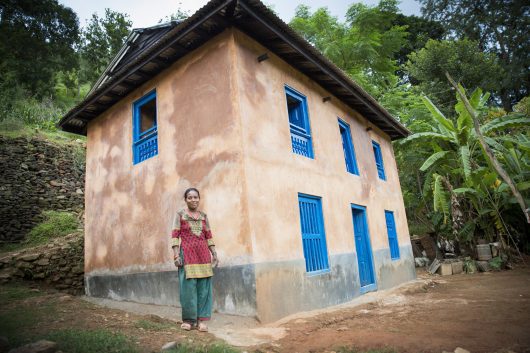
Build ChangeBuild Change, a nonprofit based in the United States, is helping people in developing nations build earthquake and typhoon resistant buildings.

The nonprofit was founded by earthquake engineer Elizabeth Hausler in 2004. The issue of resistant housing in developing nations had been on her mind ever since the 2001 earthquake in Gujarat, India. About 20,000 people were killed in this earthquake due to their unreinforced stone masonry housing collapsing.

This event made her realize the urgency of teaching safe construction methods to people living in developing nations that are at risk for natural disasters such as earthquakes. In an interview, Hausler said, “When earthquakes happen in the U.S. or Japan, very few people are killed. It costs a lot of money but there are very few deaths in earthquakes. But in developing countries thousands and thousands of people are still killed by earthquakes.”

In order to effectively introduce safer building alternatives to people in impoverished communities, Build Change takes a variety of approaches in the communities they hope to improve.

For example, it trains local builders, engineers, homeowners and government officials to build resistant houses and buildings. The organization makes sure the changes are simple and affordable for the community, yet effective. By introducing new construction methods that also involve new materials, Build Change creates more jobs in engineering, construction and materials production in the places they work.

Additionally, it works with governments to develop building code enforcement. It makes sure there are building inspectors within the society that ensure buildings are built according to the safety code.

The nonprofit also helps homeowners get access to the money they need to either strengthen their existing house or build it to be earthquake-resistant. They do this by by partnering with local governments to provide people access to microloans.

So far, Build Change has helped build 51,296 safer buildings, trained 27,857 people and created 12,303 jobs.

It currently works in Colombia, Guatemala, Haiti, Indonesia, Nepal and the Philippines, and has worked in Bhutan, China, India, Ecuador, Iran and Peru in the past.

Thanks to Build Change, thousands of people living in earthquake and typhoon-prone areas can now sleep peacefully at night, knowing they are protected if a natural disaster strikes.

– Anna Gargiulo

Photo: Flickr

September 17, 2017
https://borgenproject.org/wp-content/uploads/borgen-project-logo.svg 0 0 Borgen Project https://borgenproject.org/wp-content/uploads/borgen-project-logo.svg Borgen Project2017-09-17 01:30:172024-12-13 17:58:28Build Change Helps Countries Survive Natural Disasters
Developing Countries, Global Poverty, Human Rights

Human Rights in Fiji

Human Rights in Fiji
The island nation of Fiji is considered to be one of the most developed economies in the Pacific. The celestial archipelago is rich in resources such as minerals, fishes and forests that contribute to the flourishing economy. Fiji also is home to an array of cultures that add to the unique feel of the country. Despite its level of development, there are still human rights in Fiji that are being violated and that need to be addressed.

Some human rights in Fiji that are not up to par include violence against women and prison overcrowding. Although in comparison to other countries Fiji has higher standards, these issue are still a problem.

Prison overcrowding results in human rights violations due to a lack of sanitation and infrastructure. One prison in particular had 1,423 inmates when the capacity was set at 1,000. This causes problems because there are only so many cells and beds, which leads to prisoners being cramped in small spaces. Furthermore, it is not uncommon for officers to rape detainees, particularly the female ones.

One of the most prominent human rights violations is violence and discrimination against women. Despite stringent domestic violence and rape laws, perpetrators are often not brought to justice. For instance, there is a “no drop” policy for domestic violence cases that states that under no circumstance can the case be put away.

However, many women’s rights organizations have brought light to the fact that the police are not always consistent with this policy. Moreover, courts often either dismiss or give the minimum sentence in these cases even if they go to trial. Cases involving violence against women are often taken very lightly by the courts. Some even release the offender without a conviction on the basis that they do not repeat the crime.

Regardless of the situation, progress has been made to educate and support women, especially in rural areas. There are currently four women’s centers available that offer counseling. Also, 43 percent of women of reproductive age are employing modern contraceptives as of 2015. These contraceptives are offered for free at public hospitals and clinics, increasing their usage.

Although rural areas still have plenty of advancements to make in the upcoming years, Fiji is on the right path towards modernization and equality for women.

– Tanvi Wattal

Photo: Flickr

September 16, 2017
https://borgenproject.org/wp-content/uploads/borgen-project-logo.svg 0 0 Borgen Project https://borgenproject.org/wp-content/uploads/borgen-project-logo.svg Borgen Project2017-09-16 01:30:282020-06-29 17:12:40Human Rights in Fiji
Developing Countries, Development, Global Poverty

The Positive Perspective on Tourism in Developing Countries

Tourism in Developing CountriesOver the years, there has been a longstanding debate about whether or not the unintended consequences of tourism in developing countries could be detrimental to locals in a developing community. On the other side of the argument, some tourists argue that tourism contributes to a flourishing economy and increases diversity.

One important aspect that contributes to a more positive outlook on tourism is the attitude of both tourists and locals regarding foreign travel. Leaders of countries with successful tourism industries tend to emphasize certain ground rules to encourage the community to view the tourists as a source of wealth creation, not of charity. This attitude contributes to a more healthy relationship between tourists and locals and fosters more respectful interactions instead of a transactional relationship.

In Rwanda, the majority of the country’s revenue comes from wealthy safari tours and other tourism cooperatives. The natives have welcomed tourism as a large contributor to their economy and a necessary part of life.

The life of Mukasinadere, a member of a weaving cooperative in Rwanda, has been completely changed by the tours. Working as a weaver and selling baskets to tourists, she is now able to pay for her family’s basic needs. As a result of these cooperatives, the economy in Rwanda is flourishing, food is abundant and mortality rates have decreased substantially.

Aside from financial improvements, tourism also has positive effects on infrastructure development. Tourism encourages local customs, artwork and festivals which contribute to a better cultural understanding for both tourists and locals.

Facilities in areas with high tourist traffic are often much more high-quality, not to mention more sanitary, than local facilities which increases the quality of life and health for locals. Environmental tourism encourages wildlife and nature preservation in addition to providing funding for these causes that might not have received allocations otherwise.

While tourism in developing countries is a controversial and often stigmatized topic of discussion, it is important to remember the positives that tourism affords for the local community and aspects of cultural acceptance.

– Sarah Coiro

Photo: Pixabay

September 15, 2017
https://borgenproject.org/wp-content/uploads/borgen-project-logo.svg 0 0 Borgen Project https://borgenproject.org/wp-content/uploads/borgen-project-logo.svg Borgen Project2017-09-15 01:30:562024-05-28 00:16:22The Positive Perspective on Tourism in Developing Countries
Developing Countries, Development, Global Poverty

5 Ways Countries Are Helping the Environment

Ways Developing Countries Are Helping the EnvironmentThere was international outrage when President Trump withdrew the United States from the Paris Climate Agreement in June. But some of the countries most affected by climate change are still making commitments to protecting the planet. The Borgen Project highlights five ways developing countries are helping the environment.


1. Preventing Plastic in the Pacific
At the recent U.N. Oceans Summit, four developing Asian nations pledged to keep plastic out of the ocean. More than eight million tons of plastic are dumped in the ocean every year. But that number may drastically shrink now that China, Indonesia, Thailand and the Philippines have pledged to protect the Pacific from plastic. These nations are some of the biggest contributors to plastic pollution. The Helmholtz Center in Germany estimates that reducing plastic loads in ten Asian rivers could reduce global plastic pollution by 37 percent.

2. Beach Clean-Up
Over a period of two years, local volunteers performed the “world’s largest beach clean-up” on Versova Beach in Mumbai, India. Lawyer and environmentalist Afroz Shah led the effort. Over the course of twenty-one months, he and the volunteers collected 5.3 million kilograms of decomposing trash, cleaned 52 public toilets and planted 50 coconut trees. Thanks to this grassroots effort, Versova Beach has been completely transformed.

3. Environmental Education
The Cloud Forest School in Monteverde, Costa Rica serves local students from pre-school through eleventh grade. In addition to providing the students with a bilingual education and financial aid, the Cloud Forest School teaches a curriculum of environmental sustainability. By providing the tools and knowledge to address environmental issues, the Cloud Forest school prepares the local population to care for the environment at home and at the global level.

4. Community-Led Conservation
Somali conservationist Fatima Jibrell engages local African communities in conservation efforts and addresses the populations’ needs from within. For example, to protect acacia trees in Somalia, she provided solar cookers to use instead of charcoal from the trees. Her organization, African Development Solutions, has employed over 120,000 African people in environmental work through its cash-for-work program. Jibrell is one of the most prominent African conservationists and has received many international awards for her earth-saving efforts.

5. “Greening” Latin America
Latin America is the most biodiverse region in the world and one of the most vulnerable to climate change. Because of this unique position, many Latin American leaders and environmental activists have taken up efforts to reduce Latin America’s environmental damage. These initiatives include reducing urban emissions through public transportation in Brazil and bike sharing in Argentina. They also include protecting forests and designating national parks in Argentina and Costa Rica. Costa Rica has even set the impressive goal of becoming carbon neutral by 2021. These are a few of the ways the world’s most ecologically impressive area has committed to staying that way.

Developing countries are the most at-risk for the hazards brought on by climate change, and many are already feeling these effects through floods, droughts and natural disasters. There are many ways developing countries are helping the environment already, but environmental issues are international threats that require a global response.

– Bret Anne Serbin

Photo: Flickr

September 14, 2017
https://borgenproject.org/wp-content/uploads/borgen-project-logo.svg 0 0 Borgen Project https://borgenproject.org/wp-content/uploads/borgen-project-logo.svg Borgen Project2017-09-14 01:30:202020-07-09 07:55:435 Ways Countries Are Helping the Environment
Developing Countries, Global Poverty, Hunger

Is Hunger in Macau a Problem?

Hunger in MacauColonized by the Portuguese in the 16th century, Macau was the first European settlement in the Far East. Located in Eastern Asia, Macau borders the South China Sea and China. Although noted as a wealthy country, is hunger in Macau a problem?

Known as the “Las Vegas of the East” and with a GDP per capita more than double that of the United Kingdom, Macau is listed as the world’s third wealthiest city behind Luxembourg and Qatar, according to the International Monetary Fund.

With a population around 600,000 people, Macau’s life expectancy is at 84.5 years. For the male population, it is noted that 15.8 percent were overweight, while 18.8 percent were obese. Significantly more men than women aged 25-44 years were overweight and obese in Macau. Although Asia is noted as the continent with the most hunger issues, hunger in Macau is seen as a country with a small problem of malnutrition, but a bigger problem of overeating.

Local government statistics say that only 2.3 percent of Macau’s population lives in poverty, but the percentage is based on income and does not take into account the high cost of living. With the cost of living rising and wages staying the same, the rising costs have forced some to leave the country to seek a cheaper life in China.

While Macau’s poor are ignored and suffer, big businesses flourish. Instead of building houses and helping the poor, the government allocates more money to the gambling business. It is estimated that 10 percent of the population lives in poverty, with 7 percent struggling to fulfill basic needs such as food.

According to the Macau Daily Times, Macau Oxfam does not simply offer food and other resources to those in need, it also provides them with seeds and teaches them how to get out of the poverty cycle.

Although the country has yet to take action in recognizing hunger in Macau and helping their own, it has formed the organization Macau Famine. This includes a series of educational and fundraising activities based on the year’s theme. Generous donations are used to support World Vision’s work in Asian countries by providing health and nutrition assistance for children and families.

– Stefanie Podosek

September 14, 2017
https://borgenproject.org/wp-content/uploads/borgen-project-logo.svg 0 0 Borgen Project https://borgenproject.org/wp-content/uploads/borgen-project-logo.svg Borgen Project2017-09-14 01:30:002024-05-28 00:16:22Is Hunger in Macau a Problem?
Developing Countries, Global Poverty, Water Quality

Toilet to Tap: A Safe Way to Drink Water

Toilet to TapThere are over 750 million people in the world living without access to clean water. Because of this, many people are prone to fecal and bacterial-related diseases. While much of the world has limited access to clean, drinkable water, many countries have implemented a way to recycle and reuse wastewater into safe drinking water. The method is called the “Toilet to Tap” concept.

Countries like Singapore, Namibia, India, Mexico, Europe and the United States have implemented Indirect Potable Reuse and Direct Potable Reuse methods, both of which are used to effectively purify water via the process of reverse osmosis.

Reverse osmosis is a common water purification process. First, the water filters through a dual membrane at least three times. After this, the water goes through a UV light as well as a sub-micron filter to clean out any remaining unwanted particles.

Singapore began the initiative in 1998, known as the NEWater Study, in order to determine how safe recycled wastewater is to drink. According to the Public Utilities Board (PUB), Singapore specifically uses “secondary sewage water that has undergone stringent purification and treatment processes using advanced dual-membrane and ultra-violet technologies.” Through this process, Singapore supplies at least 80 million liters of clean water per day from each of its three facilities.

Some countries – such as India and Mexico – are new to the Toilet to Tap concept, but they are beginning to integrate it into their infrastructures more. India, through its 2021 Master Plan, has laid the groundwork to begin the recycling of wastewater to be able to supply more to areas that do not have consistent access to clean water.

Access to clean water is vital to ensure public health and economic, social and environmental stability. While there are not currently many countries who reuse wastewater, there are several countries now seeking to implement these Toilet to Tap systems as a way to solve water crises around the world.

– Rebekah Covey

Photo: Pixabay

September 13, 2017
https://borgenproject.org/wp-content/uploads/borgen-project-logo.svg 0 0 Borgen Project https://borgenproject.org/wp-content/uploads/borgen-project-logo.svg Borgen Project2017-09-13 01:30:012024-05-29 22:26:39Toilet to Tap: A Safe Way to Drink Water
Developing Countries, Education, Technology

How Social Entrepreneurship Can Benefit the Developing World

Social EntrepreneurshipAcross the developing world, a great number of social challenges are evident. Poverty, economic inequality and underdeveloped health services present a real threat to those who call these nations home. Previously, much of the relief provided to alleviate these issues has come through aid from more prosperous countries, however growing levels of alternatives, such as social entrepreneurship, are now being actively pursued.

Social entrepreneurs are those whose goal is the achievement of systemic and sustainable social change. Often this is through innovation, perhaps through the invention of a new product or technology, or through adaptation of existing methods, such as making aspects of healthcare more affordable to those who require it.

For social entrepreneurs, the end goal is poverty alleviation or societal development, whether in a non-profit or business setting.

The notion that social entrepreneurship could provide aspects of aid not covered through traditional means has become more popular in recent years. In 2011, the Global Entrepreneurs Council, a U.N initiative focused on the promotion of entrepreneurship around the world, was formed.

In 2013, USAID and DfID created the Global Development Innovation Ventures fund, targeting the alleviation of poverty by means of innovation. Resources such as these have enabled entrepreneurial minds across the developing world to begin affecting change in their towns and cities. Not only this, but it appears to endorse the belief that social entrepreneurship can benefit the developing world.

Geographical challenges to people in Southern Africa is a cause targeted by the Buffalo Bicycle Company, who build their bicycles specifically for the terrain and its difficulties. In Myanmar, the work of the Phandeeyar tech hub civil society groups connects those seeking to develop products in line with the country’s economic growth with technology professionals.

Education, not just in the traditional sense, but also in terms of leadership, social abilities and entrepreneurship, is the focus of Afroes, who provide their services to young people in South Africa through games and tools. The list of social enterprises successfully overcoming social issues in the developing world grows by the day.

The progress made by these types of enterprises has increased acceptance that social entrepreneurship can benefit the developing world. As social enterprises continue to multiply throughout developing nations, it has become increasingly apparent that, in order to create systemic change, focus should be placed on public services being used in tandem with social entrepreneurs.

As such, acknowledgment and understanding of the benefits provided through such partnerships should be prioritized by public leaders across the developing world so as to continue affecting the change that is so often drastically required.

– Gavin Callander

September 11, 2017
https://borgenproject.org/wp-content/uploads/borgen-project-logo.svg 0 0 Kim Thelwell https://borgenproject.org/wp-content/uploads/borgen-project-logo.svg Kim Thelwell2017-09-11 01:30:152024-12-13 18:05:20How Social Entrepreneurship Can Benefit the Developing World
Developing Countries, Global Poverty, Politics

What Do Most Developing Countries Have in Common?

What do most developing countries have in common that most developed countries do not? Global poverty is a complex issue that involves many historical, regional and social factors. One important factor that most developing countries have in common is a history of agricultural dependence.

Some regions, like Latin America, are in prime geographical positions for growing important foods such as produce, sugar and cacao. Countries in these farming-friendly areas have historically been colonized and exploited by industrialized nations who are unable to grow these crops in their own countries. As a result of this historical process, many agricultural countries have been devastated by foreign influences in their countries and overzealous farming practices on their lands.

Agricultural countries are also challenged by their dependence on many factors beyond their control. Uncontrollable issues such as the environment disproportionately affect those whose livelihoods come from the natural world. The emphasis on producing certain crops for the rest of the world also limits these countries’ agency in the global market. When the international demand for a product such as sugar decreases, countries that focus on sugar production are helpless to find other sources to bolster their economies.

A focus on farming can also limit these nations’ abilities to develop infrastructure and diversify their economies. Agricultural work requires a lot of manpower but little education. In agricultural countries, the educational levels and human capital are not always sufficient to advance beyond the production of a few crops.

Understanding the answer to the question of what do most developing countries have in common can help these countries escape global poverty. Industrialized nations can help their agricultural counterparts through strategy and technology. For example, researchers in the United States can help farmers in Bangladesh by equipping them with the best irrigation practices, most cost-effective tools and highest yield crops.

Climate change is another important area that those in developed countries should focus on in order to help their developing counterparts. Addressing the impact of climate change is a priority for all, but farmers in poor countries feel its effects most strongly.

Foreign aid from wealthy nations is also an important way for developing countries to diversify beyond agriculture. With start-up funding from rich countries, more agricultural nations can follow in the footsteps of rapidly developing countries such as India and China.

Agricultural countries feed the world, yet many of them cannot meet their own people’s needs. Understanding the link between agriculture and poverty is important for dispelling myths about why certain countries prosper while others struggle. Realizing what most developing countries have in common is crucial to truly helping these populations emerge beyond the developing world.

– Bret Anne Serbin

Photo: Flickr

September 10, 2017
https://borgenproject.org/wp-content/uploads/borgen-project-logo.svg 0 0 Borgen Project https://borgenproject.org/wp-content/uploads/borgen-project-logo.svg Borgen Project2017-09-10 01:30:392020-07-09 05:59:14What Do Most Developing Countries Have in Common?
Developing Countries, Global Poverty

Saving Families’ Lives: Option B+ in Developing Countries

Mother to infant HIV-transmission is a notable public health concern in HIV- affected countries. Over the years, organizations such as the World Health Organization (WHO) have developed PMTCT (prevention of mother-to-child transmission) programs to reduce transmission rates and help improve the health and lifespans of both mothers and newborns.

These PMTCT programs have proven extremely beneficial. Since 1995, more than 1.6 million child infections have been prevented. Antiretroviral therapy (ART) and other PMTCT programs have the potential to drop transmission likelihood from 15-45 percent to under five percent.

Option B+

Option B+ is a 2013 PMTCT program comprised of recent HIV prevention recommendations to health providers. The program aims to enroll HIV-positive pregnant and breastfeeding mothers to antiretroviral therapy (ART) for life.

It also calls for the expansion of pediatric treatment, including the enrollment of all HIV-positive children under five in ART.

The program is ideal for top PMTCT targets named by the WHO. The top 10 include Angola, Botswana, Burundi, Cameroon, Chad, Côte d’Ivoire, Democratic Republic of Congo, Ethiopia, Ghana and India.

Preceding programs included Option A and Option B. Although Options A and B were beneficial during times of use, integrating Option B+ in developing countries has many advantages desirable from a public health standpoint. For example:

  1. Unlike previous options, Option B+ gives mothers treatment for life, regardless of CD4 count.
  2. Without treatment interruptions, mothers can extend HIV-transmission protection to future pregnancies starting at conception through breastfeeding. This is critical to helping decrease the rates of HIV-exposed and -infected infants.
  3. Strong and continuous treatment provides extended protection in serodiscordant relationships.
  4. Early and continuous treatment options help women avoid health risks of starting, stopping and restarting triple ARVs.
  5. The new program simplifies HIV services and ART programs and serves as a reminder to communities that ART can be started and taken for life.

Research and evaluation have shown positive results for this method. Launching Option B+ in developing countries has continuously been attributed to improved progress of PMTCT coverage. By 2015, Option B+ allowed 91 percent of mothers already receiving antiretrovirals to be offered ART services for life.

Many countries implementing the program have also found a decrease in the numbers of HIV-exposed and -infected infants. And, HIV-exposed infants given ART within the first 12 weeks of life are 75 percent less likely to die from an illness related to AIDS.

Effects of Option B+ Implementation

Research in Malawi, one of the first countries to implement Option B+, found that providing treatment options to all mothers for life better prevents infant infections, drastically increases survival years in mothers and reduces rates of orphanhood. In Malawi, Option B+ helped to save more than 250,000 maternal life years and counting. To compare, Options A and B saved 153,000 and 172,000 respectively.

Of course, there are social and financial challenges that can make implementing this new program difficult. For example, studies find that mothers who test positive for HIV need time to disclose this status to their partners. They also have difficulty personally coming to terms with their new status. Additionally, Option B+ is initially more expensive and requires more resources than other PMTCT programs.

But, despite these challenges, Option B+ is the most efficient and strategic plan that simplifies HIV services and integrates them into maternal and child health services. This PTMCT program focuses on more than current pregnancies — it works to protect future children, serodiscordant partners and mothers for life.

Many organizations, including the Elizabeth Glaser Pediatric AIDS Foundation, believe that imitating Option B+ in developing countries is “an important step to finally eliminating pediatric AIDS” as well as improving maternal health services and reducing rates of orphanhood — all critical factors in the fight to end global poverty.

– Francesca Montalto

Photo: Flickr

September 10, 2017
https://borgenproject.org/wp-content/uploads/borgen-project-logo.svg 0 0 Borgen Project https://borgenproject.org/wp-content/uploads/borgen-project-logo.svg Borgen Project2017-09-10 01:30:102020-07-08 08:38:52Saving Families’ Lives: Option B+ in Developing Countries
Developing Countries, Global Poverty

5 Facts About the Poverty Rate in Bulgaria

Poverty Rate in Bulgaria
Poverty in Bulgaria has greatly impacted the culture. According to a EuroStat survey of EU satisfaction rates, Bulgaria is the least happy country in the European Union. After joining the EU in 2007, Bulgarians were hopeful that conditions would improve.

On the contrary, unemployment rates remained high and Bulgaria continued to be the poorest country in the Union. While the poverty rate in Bulgaria has not gone down as Bulgarians hoped it would, the economy is slowly and steadily improving.

Top Facts about the Poverty Rate in Bulgaria:

  1. Bulgarians have been living in poverty since the fall of the communist regime in November 1990. EuroStat found that, in 2017, 2.5 million Bulgarians (35 percent of the population) are living in poverty.
  2. More than a third of the European Union poverty resides in Bulgaria, Romania and Greece combined. The average pension in Bulgaria is 165 euros per month–less than $200.
  3. Of the Bulgarian population, 34.2 percent is severely deprived, meaning that they cannot pay their bills, heat their homes or afford an annual vacation. The unemployment rate is 10.8 percent. The average in the European Union is 9.8 percent.
  4. According to a survey by the Bulgarian Chamber of Commerce, around 244 Bulgarian companies increased their number of employees in 2016. The National Statistical Institute showed that, from March to June 2017, the number of employees under contract increased by 2.8 percent.
  5. Due to decades of poverty in Bulgaria, the availability of qualified workers is severely lacking. This is both due to the inability to properly educate youth and the emigration of young people to more developed countries.

Although the poverty rate in Bulgaria is still high, the country is slowly improving and growing its economy. The year 2017 has shown some stagnation in growth, but the progress in 2016 indicates that more growth is on the way. Incomes are rising and, as this happens, happiness is also rising as people have more money to invest in contentment.

– Madeline Boeding

Photo: Flickr

September 9, 2017
https://borgenproject.org/wp-content/uploads/borgen-project-logo.svg 0 0 Borgen Project https://borgenproject.org/wp-content/uploads/borgen-project-logo.svg Borgen Project2017-09-09 07:30:442018-07-31 15:48:465 Facts About the Poverty Rate in Bulgaria
Page 119 of 157«‹117118119120121›»

Get Smarter

  • Global Poverty 101
  • Global Poverty… The Good News
  • Global Poverty & U.S. Jobs
  • Global Poverty and National Security
  • Innovative Solutions to Poverty
  • Global Poverty & Aid FAQ’s
Search Search

Take Action

  • Call Congress
  • Email Congress
  • Donate
  • 30 Ways to Help
  • Volunteer Ops
  • Internships
  • Courses & Certificates
  • The Podcast
Borgen Project

“The Borgen Project is an incredible nonprofit organization that is addressing poverty and hunger and working towards ending them.”

-The Huffington Post

Inside The Borgen Project

  • Contact
  • About
  • Financials
  • President
  • Board of Directors
  • Board of Advisors

International Links

  • UK Email Parliament
  • UK Donate
  • Canada Email Parliament

Get Smarter

  • Global Poverty 101
  • Global Poverty… The Good News
  • Global Poverty & U.S. Jobs
  • Global Poverty and National Security
  • Innovative Solutions to Poverty
  • Global Poverty & Aid FAQ’s

Ways to Help

  • Call Congress
  • Email Congress
  • Donate
  • 30 Ways to Help
  • Volunteer Ops
  • Internships
  • Courses & Certificates
  • The Podcast
Scroll to top Scroll to top Scroll to top