• Link to X
  • Link to Facebook
  • Link to Instagram
  • Link to TikTok
  • Link to Youtube
  • About
    • About Us
      • President
      • Board of Directors
      • Board of Advisors
      • Financials
      • Our Methodology
      • Success Tracker
      • Contact
  • Act Now
    • 30 Ways to Help
      • Email Congress
      • Call Congress
      • Volunteer
      • Courses & Certificates
      • Be a Donor
    • Internships
      • In-Office Internships
      • Remote Internships
    • Legislation
      • Politics 101
  • The Blog
  • The Podcast
  • Magazine
  • Donate
  • Click to open the search input field Click to open the search input field Search
  • Menu Menu

Archive for category: COVID-19

COVID-19, Global Poverty, Poverty

Andorra Struggles With COVID-19 Response

Andorra Struggles With COVID-19 ResponseAndorra, one of Europe’s smallest and oldest countries, does not boast full European Union membership. Instead, sandwiched between Spain and France’s 11,000 foot high Pyrenees borders, Andorra relies on integrating relations with the two countries. Yet, as Andorra’s economy and demographics differ greatly from most of the European Union, Andorra has a unique agreement with the body of countries. Unfortunately, lacking full E.U. membership and the benefits this includes, Andorra has faced struggles with their COVID-19 response.

A Unique Agreement With the European Union

As evidenced by the recent Brexit controversy, E.U. membership comes with positive and negative aspects. Entry challenges proved a significant hurdle for Andorra; therefore, it initially did not join the union. Only after the 2008 recession did Andorra arrange a special agreement with the European Union, like other European micro-states.

Due to tourism, the country’s main economic draw, and Andorra’s location on a map, some economic realities have been unavoidable. After 2008, Andorra began using the Euro and entered trade agreements slashing tariffs. However, unlike the rest of Europe, Andorra continued to restrict individual taxes. This branded the small country as a hot spot for tax evasion. This caveat kept Andorra afloat but alienated the country from the rest of Europe. Due to international pressure in 2011, the country began moving towards international tax standards.

Even though it lacks full European Union membership, Andorra still retains membership in the United Nations, the Council of Europe and the Organization for Security and Cooperation in Europe.

Does Andorra qualify for European Union aid?

Full European Union member countries qualify for aid programs. The European Union, like most international institutions, provided large amounts of COVID-19 aid–37 billion Euros in the initial program to be exact. Individual countries qualify for an additional 100 billion from the E.U. for employment assistance.

However, Andorra’s partial membership benefits to the European Union are limited to:

  1. The customs union, which is a group of countries that have agreed to charge the same import duties as each other and allow free trade between themselves.
  2. Tariff exemption to void taxes imposed by a government on goods and services imported from countries outside of the European Union.
  3. Euro use for stable and standardized currency.
  4. Access to name and tax databases.

COVID-19 in Andorra

As Andorra’s place in the European Union is unclear, so is its ability to receive COVID-19 aid. It appears that Andorra cannot and has not accessed any European Union COVID-19 aid. As neighboring Spain and France have done, Andorra implemented specific travel limitations. Uniquely, its rules included odd and even-numbered homes taking turns with short exercise periods.

Poverty in Andorra

The tough situation created by COVID-19 shutdowns and the ambiguous nature of Andorra’s relationship with the European Union have left the country exposed to further poverty. Unlike countries with widespread extreme poverty, Andorra’s poverty is specific to immigrant labor unemployment during tourism lulls and the housing crisis. Both of which, when paired with COVID-19, have the potential to drastically increase Andorra’s 4% poverty rate.

As of now, Andorra continues to encounter additional struggles with their COVID-19 response. As the post-2008 trend of strengthening relationships between Andorra and the E.U. continues, more poverty prevention aid will hopefully find its way to this small, land-locked country.

– Rory Davis
Photo: Flickr
September 9, 2020
https://borgenproject.org/wp-content/uploads/borgen-project-logo.svg 0 0 Kim Thelwell https://borgenproject.org/wp-content/uploads/borgen-project-logo.svg Kim Thelwell2020-09-09 11:18:032020-09-09 11:18:34Andorra Struggles With COVID-19 Response
COVID-19, Technology

6 Facts About Technology in Ghana During the COVID-19 Pandemic

Technology in Ghana
Ghana has been the hub for technology production in sub-Saharan Africa for decades. In terms of recent technology progression, Ghana stands out for its IT programs, sustainability training and more. Accra is one of the metropolitan cities in the country, known for its technological innovations. Throughout the COVID-19 pandemic, Accra has been working tirelessly to safely and efficiently produce technology that provides aid to sub-Saharan Africa. Here are six facts about technology in Ghana during the COVID-19 pandemic.

6 Facts About Technology in Ghana

  1. The Ministry of Health established a partnership with Zipline, a U.S. company that delivers medical supplies using drones. Zipline is distributing supplies and test kits to 1,000 medical facilities across the country. The company loads the drones with tests and return packets to go back for testing. This has helped Ghana complete 68,000 tests during the lockdown and distribute more supplies as the virus has spread.
  2. Cognate System, a software company, is tracking cases of COVID-19 throughout Ghana. Cognate System uses a platform called Opine Health Assistant (OHA), a phone app that people use to report and record their symptoms. Once someone tests positive, they can use the platform to report their symptoms and determine when they are COVID-free. The application asks questions like where the user has traveled recently and whether they are in need of food, shelter or water. After the lockdown, OHA tracked and recorded approximately 3,000 cases.
  3. As the COVID-19 virus spread through Africa, hospitals began to fill up and medical personnel quickly realized they did not have adequate supplies to prevent further spread of the disease. Ultra Red Technologies (URT), a 3D printing company in Nairobi, got to work immediately to help. The company printed out plastic face shields to send to Ghananian medical staff to help them protect themselves while tending to patients. Mehul Shah, at the URT, wanted to do his part and find a way to help without needing to import products. His work represents the benefits that technology in Ghana has had on the country’s coronavirus response.
  4. Fablab, an innovation hub in Kenya, has been developing tracing applications. The applications track positive patients on public transport to determine who experienced exposure to the virus. If users are in a taxi, for example, they could scan the code onto the application to mark the vehicle as exposed. If everyone uses the application properly, it could trace the positive patient and notify others who may have had exposure to the virus.
  5. The Academic City College in Accra worked alongside the Kwame Nkrumah University of Science and Technology, located in Kumasi, to build a ventilator that takes merely an hour to assemble and costs only $500 to $1,000. This effort resulted from students who noted that most oxygen bags required hand-pumping to keep patients breathing. The low-cost ventilators use a wooden box with pipes and electrical programming that push oxygen into the patient’s mask, eliminating the need for hand-pumping. Ventilators are quite difficult to distribute as they are expensive to build and maintain, even in wealthy nations. Lowering the cost and production of ventilators can save the lives of millions of COVID-19 patients.
  6. Ghana has been able to test 100,000 people through drone testing. This has likely contributed to the country’s relatively low death toll, which rests only at 486, or 18% of the 2,700 positive cases recorded. Each death has been due to previous underlying conditions that prevented patients from fighting off the novel coronavirus.

Technology in Ghana during the COVID-19 pandemic relies on the good use of resources and accounting for cost and efforts. During the pandemic, Ghana and its neighboring nations have stepped up to the plate to prevent further spread and manage cases so that citizens can get back to work soon. Since March 2020, Ghana has cut down on costs for ventilators while reducing importation needs and sustaining the current quality of production. The sooner the case numbers fall, the sooner citizens and students of Accra can get back to working on more technology to sustain and grow the region. Technology in Ghana has only progressed during the COVID-19 era, and is working toward helping the nation get rid of the virus.

– Kim Elsey
Photo: Flickr

September 8, 2020
https://borgenproject.org/wp-content/uploads/borgen-project-logo.svg 0 0 Kim Thelwell https://borgenproject.org/wp-content/uploads/borgen-project-logo.svg Kim Thelwell2020-09-08 01:30:322024-05-29 23:22:506 Facts About Technology in Ghana During the COVID-19 Pandemic
COVID-19, Global Health, Global Poverty

5 Songs Recorded For COVID-19 Relief

Songs Recorded for COVID-19
As COVID-19 continues to spread around the world, performers and musicians from several different countries and continents have given back through music. Here are five songs recorded for COVID-19 relief.

5 Songs Recorded for COVID-19 Relief

  1. “One Love/People Get Ready” (Bob Marley and the Wailers): In July 2020, Amplified Music and Tough Gong International rereleased a new version of this 1977 reggae classic. The new song has performers and scenes from several countries, including Brazil, India, Jamaica, the Democratic Republic of the Congo, Sudan, Nigeria and the United States. Two of Marley’s children, Stephen and Cedella Marley, appear, as does Skip Marley, his grandson. Some children in the video are from the Ghetto Youths Foundation, which three of Bob Marley’s children founded. All funds will go to COVID-19 relief through UNICEF’s Reimagine campaign, helping to provide soap, personal protective equipment, masks and information for children and families around the world. On social media, UNICEF partnered with Pandora to create an augmented reality Instagram filter for the campaign, #OneLoveOneHeart. Pandora will donate $1 to UNICEF for each use of the hashtag, and Pandora is promising $1 million in total.
  2. “I’m Standing With You” (Chrissie Metz): Diane Warren originally wrote the Oscar-nominated song for the film “Breakthrough,” which Chrissy Metz performed in 2019. However, the new version, released in May 2020, takes on a different delivery. Music video director Gev Miron and composer Sharon Farber created a remastered song and video with 170 artists from all continents. Some of the performers who appear are Valeria Altobelli (Italy), Mario Frangoulis (Greece), Wahu (Kenya), Chris Mann (U.S.), Hariharan (India) and Rita (Israel). The video includes the artists singing in front of backdrops showing various global landmarks. On YouTube, the video had a donate button in late May and early June 2020. All funds generated went to the United Nations’ COVID-19 Solidarity Response Fund, which in turn went to the World Health Organization. The effort raised over $5 million for COVID-19 relief.
  3. “Times Like These” (The Foo Fighters): BBC 1 Radio organized a Live Lounge song cover of The Foo Fighters’ 2003 single to serve as a charity single. The cover, released in April 2020, features over 20 artists billed under the name Live Lounge Allstars. Some of the artists featured include Dua Lipa, Ellie Goulding, Rita Ora, Sean Paul, Chris Martin of Coldplay and Dave Grohl of The Foo Fighters. In its first five hours, the song sold 43,000 copies in the U.K. The next week, it became a number-one hit with 66,000 equivalent units sold, most of those from downloads. All U.K. proceeds went to Comic Relief and Children in Need, which will help people impacted by the pandemic. Revenue generated from sales and streams elsewhere goes to the World Health Organization’s COVID-19 Solidarity Response Fund.
  4. “The Real Folk Blues” (Mai Yamane): This song originally came out in 1998 and was the ending song to “Cowboy Bebop,” a Japanese anime series. Yoko Kanno and her band, Seatbelts, composed it. Mason Lieberman organized the new project alongside Sunrise, Inc. and Funimation. Kanno, Steve Blum and more than 40 people from the anime and gaming industries appear in the music video. The track was released to streaming and digital platforms, including YouTube, Spotify and Bandcamp. In May 2020, the latter waived its revenue share and donated all proceeds to COVID-19 relief. Q Rates also made a vinyl available, which sold more than 2,800 copies, translating to roughly $70,000 in total sales. All funds raised from the song go to the CDC Foundation and Doctors Without Borders.
  5. “Gotta Be Patient” (Stay Homas): Three Barcelona roommates originally released this song when they performed it while locked down. Michael Bublé heard the song and decided to perform a cover. The new song is a bilingual doo-wop song with contributions from Canadian band Barenaked Ladies and Mexican singer Sofia Reyes. Proceeds from the track across all streaming and download platforms will benefit various causes. Bublé will donate his earnings to the Canadian Red Cross and the Argentina Red Cross. The Barenaked Ladies will donate their earnings to Cultural Survival to help various indigenous communities, while Reyes will donate her earnings to multiple Latin charities. They originally performed the song as part of the Stronger Together, Tous Ensemble Canadian benefit concert. That event raised over $6 million CAD for Food Banks Canada.

These five songs recorded for COVID-19 relief are among the many efforts that musicians and celebrities have taken to provide aid during the pandemic to date. Their work shows that something as simple as a song can go a long way toward helping people around the world stay safe and healthy.

– Bryan Boggiano
Photo: Flickr

September 7, 2020
https://borgenproject.org/wp-content/uploads/borgen-project-logo.svg 0 0 Kim Thelwell https://borgenproject.org/wp-content/uploads/borgen-project-logo.svg Kim Thelwell2020-09-07 07:30:542020-09-04 11:17:385 Songs Recorded For COVID-19 Relief
COVID-19, Education, Global Poverty, Humanitarian Aid, Refugees and Displaced Persons

How Sesame Workshop is Helping Syrian Refugees in Poverty

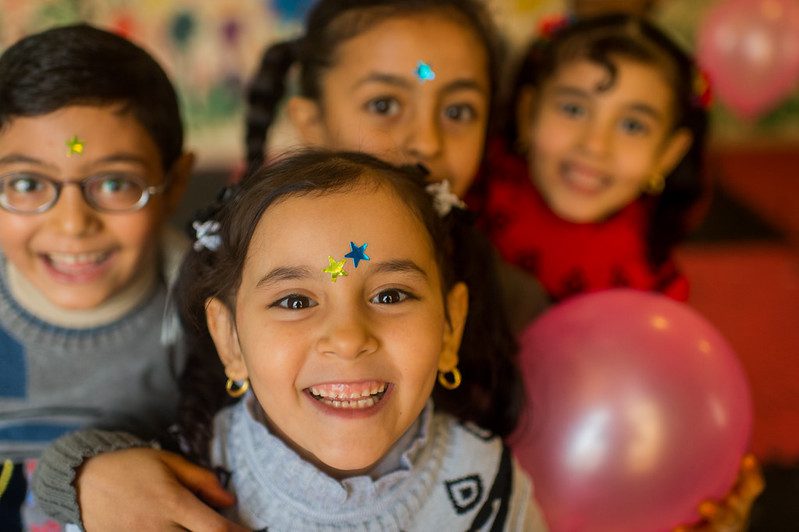
Syrian refugeesThe Syrian Arab Republic is a country in the Middle East with a rich and unique history that goes back as far as 10,000 years. More recently, political instability led to the Syrian civil war, which has created a humanitarian crisis that extends far beyond its borders. Syrian refugees are now found all around the world, having left their country fleeing the war. This has had a particularly severe impact on Syrian children.

The Syrian Refugee Crisis

Many Syrians have been forced to relocate in order to escape violence and the indiscriminate bombings of roads, schools and hospitals at home. The U.N. estimates that more than 6 million Syrians are displaced outside of Syria, while another 6 million have fled to other parts of the country. In the Northwest region of Idlib, nearly 900,000 Syrians have fled since December 2019.

Although many Syrian refugees have fled to overflowing refugee camps for temporary relocation and safety, others flee to unstable urban settings instead in the hopes of permanent relocation. As many as 70% of Syrian refugees are living in severe poverty.

This humanitarian crisis was recently worsened by the COVID-19 pandemic. Syrian refugees’ need for food, medicine and access to clean water has increased. Delays in importing necessities has reduced refugees’ access to these essential items.

The Sesame Workshop: Helping Syrian Children

Of all humanitarian aid for the Syrian refugee crisis, only 2% goes to education. An even smaller chunk goes to support early childhood education. Considering that nearly half of all Syrian refugees are children, this aid is essential.

In 2017, the MacArthur Foundation provided the International Rescue Committee (IRC) and Sesame Workshop with a $100 million grant to fund a childhood education program for Syrian refugees. The IRC is an international NGO that has been providing humanitarian resources in Syria since the conflict first began. Sesame Workshop, the creators of the Sesame Street educational program for children around the world, partnered with the IRC to create “Ahlan Simsim,” meaning “Welcome Sesame” in Arabic.

The show will reach Syria, Iraq, Jordan and Lebanon to provide the refugees in Syria and the surrounding countries with quality education. This new version of Sesame Street is provided in both Arabic and Kurdish.

“Ahlan Simsim” has three main characters. Basma is a six-year-old purple muppet with two pigtails. She loves to sing and dance and is best friends with Jad. Jad is also six years old and is a yellow muppet who just moved into the neighborhood. Finally, Ma’zooza is a funny and hungry baby goat who follows both Basma and Jad on their adventures.

These new characters start with the basics: they teach young refugees about fundamental skills, such as emotions and the alphabet. They help their young audience gain educational skills and understand the world around them in a nurturing way. Despite the COVID-19 pandemic, the IRC and Sesame Workshop are still providing technological learning opportunities, resources for local implementation and preschool spaces for safe learning and playing. They also continue to advocate for these essential education programs.

Moving Forward

The Syrian refugee population is considered to be the most displaced population in the world. At this point, there are many Syrian children who were born into the conflict and do not know a life without it. The IRC and Sesame Workshop are working to ensure that these children have a stable future in which their lives can be defined by new opportunities.

– Camryn Anthony
Photo: Flickr

September 3, 2020
https://borgenproject.org/wp-content/uploads/borgen-project-logo.svg 0 0 Kim Thelwell https://borgenproject.org/wp-content/uploads/borgen-project-logo.svg Kim Thelwell2020-09-03 17:49:582020-09-04 06:45:20How Sesame Workshop is Helping Syrian Refugees in Poverty
COVID-19, Global Health

5 Facts About Healthcare in The Gambia

Healthcare in The Gambia
The Gambia is a growing country with high income inequality and high poverty rates. The poverty rate in rural communities is 70%, while in urban communities it is only 32%. These high poverty rates negatively impact access to healthcare, making healthcare in The Gambia a significant concern. Without access, many people in The Gambia face communicable diseases without the ability to receive proper treatment. This lack of access to healthcare and the impact of communicable diseases have been exacerbated by the recent outbreak of COVID-19. However, organizations are stepping in to help The Gambia improve its healthcare system. Here are five facts about healthcare in The Gambia during COVID-19.

5 Facts About Healthcare in The Gambia During COVID-19

  1. The Gambia announced its first COVID-19 case on Mar. 17. The government responded by preparing the people for travel restrictions, closing schools and suspending public gatherings. The Ministry of Health began providing resources via social media. On Facebook, the number of cases is updated every day. It provides information on how to wear a mask, social distancing and how to reach the coronavirus hotline.
  2. The Gambia received outside support. This happened on Mar. 28, a little more than a week after announcing its first case. The Jack Ma and Alibaba Foundations in China stepped in to help not only The Gambia, but 54 countries in Africa. The foundations donated 20, 000 test kits, 1000, 000 masks, 740 sets of protective clothing and 1000 sets of protective shields.
  3. COVID-19 could exacerbate the situation for those already living in, or close to, poverty. About 48.6% of The Gambia’s population lives below the poverty line. This means that many people are vulnerable to the impact of COVID-19, specifically economically. At the same time, it could also cause people who have made economic advances to move back into poverty. Since poverty negatively impacts access to healthcare, this could mean more of The Gambia’s population is unable to receive the treatment they need.
  4. The World Bank is stepping in. Since the pandemic started, The World Bank has been sending funding to provide support for many countries in need. The bank’s funding in The Gambia will enhance COVID-19 case detection and tracking. It will also improve treatment centers and strengthen disease surveillance and diagnostic capacity.
  5. The government has been working to improve healthcare. The Gambia National Health Sector Strategic Plan 2014-2020 (NHSSP) guides healthcare in the nation. The plan’s goal is to reduce inequalities in health care services and reverse the downward trend in health-related outcome indicators. The Ministry of Health and Social Welfare (MOHSW) conducts annual reviews of the plan to see where improvements still need to be made. The NHSSP is still in effect during COVID-19; however, it will wrap up at the end of 2020. Moving forward, a new plan is needed to ensure a continued focus on improving access to healthcare in The Gambia.


COVID-19 has exacerbated existing problems with healthcare in The Gambia by making those in poverty, or who have just escaped it, more vulnerable. As a result, many organizations have stepped in to help The Gambia during the COVID-19 pandemic. Moving forward, these organizations as well as the government must continue to make improving healthcare a priority.

– Melody Kazel
Photo: Flickr

September 3, 2020
https://borgenproject.org/wp-content/uploads/borgen-project-logo.svg 0 0 Kim Thelwell https://borgenproject.org/wp-content/uploads/borgen-project-logo.svg Kim Thelwell2020-09-03 13:51:582024-05-29 23:22:555 Facts About Healthcare in The Gambia
COVID-19, Global Poverty, Human Rights, USAID

International Law and Global Poverty During COVID-19

International Law and Global Poverty
To understand the relationship between international law and global poverty, it is important to first acknowledge which laws are relevant. Among others, these include the International Covenant on Civil and Political Rights, which provides the right to life; the International Covenant on Economic, Social and Cultural Rights, which provides the right to social protection, an adequate standard of living and access to food, health and education; and the Universal Declaration of Human Rights, which recognizes the right to an adequate standard of living and the right to an education.

Philip Alston, the former Special Rapporteur on extreme poverty and human rights, states that poverty is a political choice that countries make. There is a clear relationship between poverty and failure to fulfill basic human rights. Some indicators of poverty that are relevant to international rights laws and standards include primary school enrollment, nutritional indicators, life expectancy and disease.

Is a Rights-Based Approach Better?

The World Bank indexes poverty rates across countries using the International Poverty Line (IPL). A wide range of institutions use the IPL — including the U.N. — and is based on an absolute line that is well below the national poverty line of some countries. According to Alston, this leads to less than optimal progress and a false perspective of the state of global poverty.

Low-income individuals can rise above the IPL that the World Bank established yet continue to face barriers in accessing basic human rights, which suggests a need for an alternative approach to addressing poverty. David Woodward, a British economist, developed one such alternative, which he claims resolves the problems inherent to the World Bank’s measurement and the wider way in which poverty is addressed. His alternative, termed the Rights-Based Poverty Line (RBPL), recognizes the relationship between income, poverty, and economic and social rights, which are enshrined in international law.

A rights-based approach to poverty eradication garners support across a wide range of international organizations. The Office of the United Nations High Commissioner for Human Rights directly references poverty as the gravest impediment to the fulfillment of human rights globally. The Human Rights Watch and the United Nations Development Programme establishes that a rights-based approach can result in a higher degree of effectiveness due to the legal obligations for states to ensure those rights. The United Nations Economic, Social and Cultural organization maintains that poverty eradication will only occur when poverty receives acknowledgment as a violation of human rights.

Leveraging International Law to Eradicate Poverty

COVID-19 represents a serious challenge to the eradication of global poverty; however, it may also provide an opportunity for utilizing a rights-based approach. Estimates determine that the global population of people who will fall into poverty will increase by 8% as a result of the economic shocks that the pandemic brought on. Other figures estimate an additional 70 million people could fall into extreme poverty due to the impact of COVID-19.

COVID-19 has lifted the veil shrouding the vast social inequalities present in the world. The poorest margins of society that the pandemic most heavily impacted, in terms of both vulnerabilities to the virus and economic consequences. This is the result of socioeconomic inequalities and discrimination faced by those living in poverty. One example is a lack of adequate housing, which leads to a higher risk of contracting the virus because of either cramped living spaces or a lack of adequate water and sanitation.

Given the links between international law and poverty, a rights-based approach may be a suitable option for the global COVID-19 response. Most countries’ current COVID-19 responses fail to adequately protect the rights of those living in poverty. Discriminatory social protection policies are widespread, in direct violation of international rights standards. For instance, food assistance in Uganda is only reaching an estimated 17% of the population living in poverty, thanks to exclusionary policies mandating that assistance goes to specified urban areas. Meanwhile, a recently proposed emergency stimulus bill completely circumvents the 80% of Nigerian workers who are employed in the informal sector, providing support only for those in the formal sector.

The Human Rights Watch provides recommendations for overcoming these shortcomings through the implementation of a rights-based approach. At the government level, there is a need to ensure social protection, access to adequate living and health, among other rights. In terms of international assistance, there is a need to uphold human rights standards through the allocation of funds in favor of socioeconomic programs, minimum basic incomes, adequate housing protections and fiscal policies relating to poverty and inequality.

In Conclusion

Current U.S. policy regarding foreign assistance relating to the COVID-19 response does not detail a rights-based approach. However, USAID’s Feed the Future has adapted its programs to the pandemic, supporting the right to food and alleviating hunger. A number of international organizations and experts suggest that a rights-based approach will be the most effective means of integrating international law and global poverty to protect lives around the world, especially in the face of COVID-19.

– Leah Bordlee
Photo: Pixabay

September 3, 2020
https://borgenproject.org/wp-content/uploads/borgen-project-logo.svg 0 0 Kim Thelwell https://borgenproject.org/wp-content/uploads/borgen-project-logo.svg Kim Thelwell2020-09-03 13:31:302024-05-29 23:22:45International Law and Global Poverty During COVID-19
COVID-19, Global Poverty, Health

Africa Medical Supplies Platform Confronts COVID-19

Africa Medical Supplies Platform
African countries have a new tool in the fight against the COVID-19 pandemic: an online marketplace for medical supplies. The site makes COVID-19 tests and personal protective equipment more accessible. On June 18, South African President Cyril Ramaphosa introduced the Africa Medical Supplies Platform (AMSP), describing it as the “glue that is going to bind the continent together.” The World Health Organization reported that, by July, there had been more than 380,000 COVID-19 cases and 9,500 deaths in Africa. AMSP, a non-profit initiative, aims to help save lives while saving African countries billions of dollars.

Fighting COVID-19 by Connecting the Continent

The African Union, Africa Centres for Disease Control and Prevention (CDC), African Export-Import Bank and ECA, along with other organizations, collaborated to create Africa Medical Supplies Platform. The online marketplace works much like eBay and Amazon, enabling African Union Member States to access COVID-19 medical supplies efficiently. N95 masks, hand sanitizer, ventilators, surgical gloves, face shields, surgical masks, thermometers, oxygen concentrators, isolation gowns and diagnostic test kits are all available for purchase. The website also prioritizes products that are made in Africa. If healthcare providers want to obtain PPE or medical equipment, AMSP will connect them to reliable suppliers as well.

AMSP suppliers are reputable, and the procurement of medical supplies will be transparent and equitable. AMSP also allows African countries to better contain COVID-19 without competing with stronger health systems around the world. Additionally, South African Airways and Ethiopian Airways have committed to ensuring that supplies will be delivered expediently.

On July 17, African Union special envoy Strive Masiyiwa announced that the Bill and Melinda Gates Foundation will support efforts to provide dexamethasone to Africa. The drug functions to treat severely ill COVID-19 patients in the United States and Europe. In Africa, dexamethasone will aid in the treatment of roughly one million people. Furthermore, the MasterCard Foundation has provided the African CDC with $15 million to purchase PCR tests through the platform. After African Union Member States register on the Africa Medical Supplies Platform, they will be able to access these medical supplies.

AMSP’s Potential Impact on Mass Testing

The ability to obtain and utilize a large number of COVID-19 test kits is a key component of containing COVID-19. Increased testing allows countries to better understand which precautions are necessary to reduce the spread of COVID-19. Unfortunately, many African countries lack sufficient resources to administer mass testing. Commercial tests can be expensive and therefore difficult to distribute widely in lower-income countries.

According to Masiyiwa, about 0.17% of people in Africa had been tested for COVID-19 as of June. This rate is notable, especially in comparison to 3.16% in the United Kingdom and 4.41% in the United States. Mass testing can protect health workers and provides information about the groups most vulnerable to the virus. It can also help show whether lockdown measures and social distancing are effective. Masiyiwa attributes the African continent’s low testing rates to global shortages of test kits. AMSP was created in part to address this issue.

Lockdowns, another aspect of COVID-19 containment, are also harming African countries economically. The United Nations Economic Commission for Africa (ECA) estimates that the continent loses about $65 billion every month as a result of stay-at-home measures. Vera Songwe, executive secretary of the ECA, has stated that Africa Medical Supplies Platform “could save [Africa] $40 billion” because it allows for increased testing, which could reduce the need for strict lockdown rules. Less strict lockdown rules would also allow some people to go back to work and earn an income.

AMSP Helps Contain COVID-19 and Works Against Poverty

According to a recent AMSP press release, demand for medical equipment has been high since the Africa Medical Supplies Platform was launched in June. “Member States of the African Union, leading international non-governmental organizations as well as international and African foundations” have all used AMSP. This platform is helping African countries contain COVID-19 and boost their economies. It will also supply the COVID-19 vaccine, once available.

The World Bank estimates that the coronavirus pandemic will push 71 million people into extreme poverty, and people in India and Sub-Saharan Africa will be most affected. By helping combat the spread of COVID-19 and allowing health systems to function at lower costs, AMSP can also reduce the pandemic’s negative impact on individuals and prevent people across Africa from falling into extreme poverty.

– Rachel Powell
Photo: Flickr

September 3, 2020
https://borgenproject.org/wp-content/uploads/borgen-project-logo.svg 0 0 Kim Thelwell https://borgenproject.org/wp-content/uploads/borgen-project-logo.svg Kim Thelwell2020-09-03 08:30:512020-09-03 12:45:46Africa Medical Supplies Platform Confronts COVID-19
COVID-19, Global Poverty

India’s Agricultural Supply Chain During COVID-19

India’s Agricultural Supply ChainThe COVID-19 pandemic has indubitably altered the way goods and services are distributed. India, a country that relies heavily on agriculture, is an example of how agricultural economies falter in the face of a pandemic. India has the second-largest arable land area in the world, with a coastline of over 7,500 kilometers. In fact, agriculture is India’s largest employer, comprising 42% of the workforce. This means that disruptions to India’s agricultural supply chain hurt the wellbeing of its citizens.

Before the coronavirus, India was already experiencing some setbacks in agricultural production. First, India’s economy was growing at a slower rate, compounding existing problems of unemployment, low incomes, rural distress, malnutrition and inequality. Second, India maintains a large informal sector. An informal sector is one in which people do not report their incomes, and hence do not pay taxes on these incomes. Out of India’s 465 million workers, around 91% were informal workers in 2018. This sector is especially vulnerable because it comprises many agriculture workers and migrant workers. If India’s agricultural supply chain is disrupted, then these workers’ sources of income are consequently affected.

Lockdown Regulations

In response to lockdown orders, informal workers migrated back to their rural hometowns. They were hoping to wait out the virus and follow restrictions. As this period overlapped with the harvest season in mid-April, the annual harvest was disrupted. Major liquidity issues ensued, notably with the June crop.

During a lockdown, informal workers do not have access to their usual sources of income. On the other hand, many workers in the formal economy retain regular salaries. It is estimated that in the first wave of the pandemic, almost 10 million people returned to their villages, half a million of them walking or bicycling. As a result of this economic stoppage, the International Labor Organization has projected that 400 million people in India risk falling into poverty.

Transportation Restrictions

Among other industries, COVID-19 is disrupting India’s agricultural supply chains. In order to slow the progression of the virus, authorities heavily restrict movement across state borders, which blocks the movement and sale of crops. In addition, the lack of workers has interfered with the upkeep of machines and modes of transportation. Overall, limits on movement and a reduced workforce restrict the availability of food in India.

The transportation issue also translates into a range of export challenges. India’s agricultural supply chain serves domestic food consumption. In addition, it also is a top exporter of agricultural produce in the world. Unfortunately, many major economies have implemented similar lockdown restrictions, which creates backlogs in supply chains. For instance, around half a million tonnes of Indian rice is locked up in the supply chains, while perishable items cannot be processed due to fear of delayed transit. Nearly $40 billion of India’s agricultural exports are being severely affected by these repercussions of the pandemic.

Recovery

Even with these injuries to India’s agricultural supply chain, the country is expected to remain among the world’s fastest-growing economies. But these agricultural problems still call for new solutions.

Following COVID-19, digital innovations such as the eNAM (electronic National Agriculture Market) offer a pan-India electronic trading platform for farmers. The government recommended that states discourage the direct sale of crops and that farmers opt for rural wholesale markets. The government also launched an app that helps farmers and traders find transport vehicles.

Furthermore, several nonprofit organizations are working to ensure food security in India. For example, Rise Against Hunger India focuses on distributing meals and life-changing aid in rural India, after the organization noticed a lack of food supplies during the COVID-19 pandemic. The executive director, Dola Mohapatra, spoke about the rising hunger and food security concerns in India, giving special mention to the unstable incomes of informal workers and other daily wage workers.

Although India’s agricultural supply chain is currently facing issues, the government is working to overcome these challenges with innovations that expedite the buying and selling of agricultural materials.

– Elizabeth Qiao
Photo: Pixabay

September 3, 2020
https://borgenproject.org/wp-content/uploads/borgen-project-logo.svg 0 0 Kim Thelwell https://borgenproject.org/wp-content/uploads/borgen-project-logo.svg Kim Thelwell2020-09-03 07:57:252020-09-03 07:57:25India’s Agricultural Supply Chain During COVID-19
COVID-19, Global Poverty

What To Know About Rising Poverty in Lebanon

Rising Poverty in Lebanon
Before COVID-19, Lebanon was already facing an economic crisis, and rising poverty in Lebanon was a growing concern. As a result of COVID-19, the country’s economy is failing. The pandemic threatens to push up to 75% of the country’s population to poverty. A country with one of the highest debts in the world, Lebanon has now defaulted on its debts. Inflation has risen, putting many members of the middle class at risk of poverty. The people of Lebanon blame corruption and mismanagement for the problems that are plaguing the country.

Lebanon’s Political Dysfunction

From 1975 to 1990, Lebanon experienced a civil war that religious tensions caused. Ultimately, Lebanon’s new government decided to adopt a system based on confessionalism, which gives religious groups a strong voice. The president of Lebanon must always be a Maronite Christian, the prime minister a Sunni Muslim and the speaker of the house a Shia Muslim. However, government action has been slow as a result. It took Lebanon 12 years (from 2005 to 2017) to pass a state budget. Increasingly, people in Lebanon have been calling for an end to this political system, which is not only fragmented and ineffective but also filled with corruption and meddling from countries like Iran and Saudi Arabia.

Inflation and Rising Poverty in Lebanon

In 2019, the World Bank predicted that Lebanon’s poverty rate would increase as a result of the country’s economic problems. Inflation had already risen — but not by the margins that the country has seen during the COVID-19 pandemic. The Lebanese currency has now lost more than 80% in value. With the devaluing of its currency, Lebanon is experiencing an increase in prices on goods. Many people are struggling to afford meals, as food prices have increased by 190% in comparison to last year. Meanwhile, the price of clothes has increased by 170%.

Inflation is a vicious cycle, influenced by both suppliers and consumers. Suppliers in Lebanon — such as supermarkets and shop owners — are unable to sell as many goods, because people are unable to buy as much. In addition, the pandemic shut down certain aspects of the economy, preventing people from receiving wages and having money to spend. As a result of the economic crisis, banks imposed limits on how much money people could withdraw, which increased financial uncertainty for many citizens. Without sufficient support from their government, the people of Lebanon face a desperate future.

Rising inflation is not the only disruptor to many people’s lives in Lebanon. Access to reliable electricity is becoming more of a concern. According to Human Rights Watch, power cuts are disrupting life in Lebanon. People face hurdles in storing food and disruptions to work, while also worrying about health risks for family members who depend on electrical medical equipment.

Support for Refugees and Citizens

The pandemic is also affecting refugees from Syria. There are close to 1 million registered refugees in Lebanon — more refugees per capita than any other country. The World Food Program (WFP) is currently providing aid to refugee families.

To help with the crisis in Lebanon, local groups like Mission Joy and the COVID-19 Task Force for Lebanon have donated 960 food parcels and 400 hygiene kits. The World Food Program is also working to help hundreds of thousands of citizens, as many families are financially constrained and struggling to meet rising food prices. Currently, Lebanon is negotiating with the IMF for more loans to help its economy. With help from international organizations, Lebanon can hope to provide a more secure economic future for its people.

– Joshua Meribole
Photo: Flickr

September 3, 2020
https://borgenproject.org/wp-content/uploads/borgen-project-logo.svg 0 0 Kim Thelwell https://borgenproject.org/wp-content/uploads/borgen-project-logo.svg Kim Thelwell2020-09-03 07:30:392022-03-17 13:11:06What To Know About Rising Poverty in Lebanon
COVID-19, Global Poverty, Health

South African Poverty and COVID-19

South African PovertyThe battle against poverty has always been a difficult one, but the novel coronavirus pandemic has presented many new challenges. Actions currently being taken to combat South African poverty and COVID-19 have proven that, with new options and renewed commitments, there is still much that can be done to alleviate poverty. Impoverished people around the world need aid now more than ever.

An Ongoing Struggle

Historically, South Africa has struggled to aid its most economically vulnerable citizens. According to the most recent government analysis, almost half of the adult population is living under the poverty line—an alarming figure. It seems apparent that this South African poverty crisis would be seen on nearly every level of society. Sadly, this widespread poverty has had a notable impact on which necessary resources are available to people. While electricity infrastructure is fairly widespread, between 28% and 30% of poor households lack access to water and sanitation services. As is relatively common in cases of inequality, the most vulnerable frequently lack access to basic necessities, making their struggles far more urgent.

COVID-19 Developments

The 2020 COVID-19 pandemic is poised to exacerbate South African poverty. The World Bank has predicted that while the pandemic will increase poverty worldwide, the hardest-hit region will be Sub-Saharan Africa. Although South Africa has been relatively spared from the worst of COVID-19 on a health level, the poverty-inducing effects of the pandemic are daunting—it is projected that some 23 million South Africans will be pushed into poverty in 2020. Beyond the immediate tragedy, this decline will present new challenges. In order to protect them, governments will need to find new ways to offer meaningful support throughout the crisis.

Innovation Brings Hope

Fortunately, the government of South Africa has begun to take steps to properly aid its impoverished citizens during this time. They have rolled out a new, easily accessible digital tool called HealthCheck in order to provide self-assessment resources. Members of the public can download the program, which will ask them a few simple questions and then provide a COVID-19 risk prediction along with a pertinent guideline and suggested actions.

While HealthCheck is designed to be available to the entirety of the South African populace, it aids low-income South Africans in particular. Although only a third of the population uses smartphones, feature phones enjoy more widespread use, so a lack of hardware is not necessarily an issue. For many impoverished people in South Africa—and across the world—receiving the proper healthcare needed to determine a risk of infection may be difficult or outright impossible.

Partnerships Increase Access

To further alleviate this issue, the South African government has coordinated with network operators MTN, Vodacom and Telekom, to have facilitate free access to the USSD line. This way, South Africans who could not typically afford cellular or wi-fi services can make use of the HealthCheck tool. As a matter of fact, they have—authorities have reported that so far, over one million members of the public have used HealthCheck.

The digital tool has been utilized in conjunction with NGOs like Doctors Without Borders.  The NGO has worked to fill the gap in fighting South African poverty by creating impromptu field hospitals in otherwise-ignored townships. In Khayelitsha, it has opened up 70 additional beds in a basketball arena in order to serve as many people as possible in the area. This was part of a broader government plan to have over 1,400 extra beds ready as needed. Providing aid such as this is an important part of the battle against poverty.

Just a Start

The COVID-19 pandemic has disrupted the growth of the continental African economy, and threatens its growing middle class. Across the entire continent, nearly eight million people are predicted to fall into poverty, in many cases due to the lack of a social safety net. By providing essential resources, NGOs like Doctors Without Borders are working to limit the economic burden that falls on the South African populace.

While it’s just a start in terms of supporting the impoverished population, these initiatives have clearly provided accessible ways for low-income citizens to keep themselves and their loved ones safe and healthy. There are still many hurdles to overcome in the fight against South African poverty, but these recent initiatives have shown that we can still work to effectively aid the poor.

– Aidan O’Halloran
Photo: Flickr

September 2, 2020
https://borgenproject.org/wp-content/uploads/borgen-project-logo.svg 0 0 Kim Thelwell https://borgenproject.org/wp-content/uploads/borgen-project-logo.svg Kim Thelwell2020-09-02 11:40:362020-09-02 13:17:18South African Poverty and COVID-19
Page 21 of 25«‹1920212223›»

Get Smarter

  • Global Poverty 101
  • Global Poverty… The Good News
  • Global Poverty & U.S. Jobs
  • Global Poverty and National Security
  • Innovative Solutions to Poverty
  • Global Poverty & Aid FAQ’s
Search Search

Take Action

  • Call Congress
  • Email Congress
  • Donate
  • 30 Ways to Help
  • Volunteer Ops
  • Internships
  • Courses & Certificates
  • The Podcast
Borgen Project

“The Borgen Project is an incredible nonprofit organization that is addressing poverty and hunger and working towards ending them.”

-The Huffington Post

Inside The Borgen Project

  • Contact
  • About
  • Financials
  • President
  • Board of Directors
  • Board of Advisors

International Links

  • UK Email Parliament
  • UK Donate
  • Canada Email Parliament

Get Smarter

  • Global Poverty 101
  • Global Poverty… The Good News
  • Global Poverty & U.S. Jobs
  • Global Poverty and National Security
  • Innovative Solutions to Poverty
  • Global Poverty & Aid FAQ’s

Ways to Help

  • Call Congress
  • Email Congress
  • Donate
  • 30 Ways to Help
  • Volunteer Ops
  • Internships
  • Courses & Certificates
  • The Podcast
Scroll to top Scroll to top Scroll to top