• Link to X
  • Link to Facebook
  • Link to Instagram
  • Link to TikTok
  • Link to Youtube
  • About
    • About Us
      • President
      • Board of Directors
      • Board of Advisors
      • Financials
      • Our Methodology
      • Success Tracker
      • Contact
  • Act Now
    • 30 Ways to Help
      • Email Congress
      • Call Congress
      • Volunteer
      • Courses & Certificates
      • Be a Donor
    • Internships
      • In-Office Internships
      • Remote Internships
    • Legislation
      • Politics 101
  • The Blog
  • The Podcast
  • Magazine
  • Donate
  • Click to open the search input field Click to open the search input field Search
  • Menu Menu

Tag Archive for: Internet Access to Africa

Posts

Global Poverty, Innovations, Technology

Digital Sovereignty in Africa

Digital Sovereignty in AfricaNew inventions within the 21st century have pushed the world into the digital age. Access to technological devices, the internet and social media offers a new set of information for those privileged enough to have it. First-world countries generally control the data centers that power the exchange of information within their territories. This is through tech giants like Google and Microsoft that have asserted their dominance in internet web browsers. Up until now, however, the African continent has been forced to depend on the data centers and internet protocols outside of its borders to send messages between itself. On September 1, 2025, the African continent introduced its own Continental Internet Exchange (CIX), a game-changer towards its digital sovereignty in Africa.

Essentially, if someone sends a message from Lagos to Kenya, the processing would take place in the European continent or in the United States before it returns to the African continent. This would cause high bandwidth costs and the possibility of outside access to personal or government information. The continent’s yearly expense on outside digital services topped $50 billion because of this. The Continental Internal Exchange offers data centers and local search engines for use across the 54 nations within Africa. This implementation could potentially halve the continent’s expense on digital devices, which could offer more finances to benefit people in poverty or in digital blackout areas.

Rural Challenges

More than 200 million people have switched to using CIX within the first three days of its launch. In addition, Cape Town, Nairobi and Lagos are the current early data center locations with coverage across the continent expected by 2027, according to Eurweb. There are some challenges to be met with, however. Rural areas in Central Africa are facing gaps in coverage and high expenses to have access to data in general.

According to the United Nations, 23 of the 28 countries that live in extreme poverty are in the African continent. In addition, the rate of poverty in rural areas within the African continent is 17.2%. There are gaps in coverage within rural areas because of the lack of infrastructure available. In addition, people in poverty do not have the finances to pay monthly fees for data coverage and internet access. On the continent, people in urban areas are 36% more likely to have access to regular internet. Poverty also largely affects internet access. Only 28% of people who live in extreme poverty are able to access the internet.

Extreme poverty in sub-Saharan Africa is meant to remain in the double digits by 2030. Poverty has an impact on digital accessibility and media literacy. New skills that have impacts in the digital age are not accessible to people in Africa due to the lack of mobile and internet access. A large factor in decreased internet access is education and age as well. According to Afrobarometer in 2021, 81% of people with little to no education in 34 countries in Africa did not use the internet frequently. This is lower for people with higher education, as 17% did not use the internet frequently.

Outreach International

One organization that aims to repair internet access in Africa is Partnership for Digital Access in Africa (PDAA). PDAA is an organization that aims to achieve 1 billion Africans having internet access by 2030. They work with nonprofits, policymakers, and global organizations to create plans and initiatives that introduce access to the internet in areas of limited connectivity and lower internet costs for users. Its overall aim through this organization is to improve digital skills and media literacy across the continent’s 54 countries. The organization’s leadership team consists of policymakers within Africa and business leaders dedicated to the cause. Its website also highlights positive stories in relation to internet access from other news organizations, such as Brookings and Business Insider Africa.

The Future of Digital Sovereignty in Africa

The CIX offers digital sovereignty in Africa. It provides data centers and local search engines within its borders to lower bandwidth costs and decrease dependence on foreign digital devices. With the potential for halving these expenses, there is an opportunity for African countries to reinvest in their digital infrastructure. There stands to be challenges to reach populations in rural areas, for example. What was once necessary to spend on foreign digital services can help establish data centers within these rural areas, widen internet access and provide technological devices to households.

– Nickaylia Anderson

Nickaylia is based in Bronx, NY, USA and focuses on Good News, Politics for The Borgen Project.

Photo: Flickr

October 28, 2025
https://borgenproject.org/wp-content/uploads/borgen-project-logo.svg 0 0 Naida Jahic https://borgenproject.org/wp-content/uploads/borgen-project-logo.svg Naida Jahic2025-10-28 01:30:522025-10-27 22:48:51Digital Sovereignty in Africa
Development, Global Poverty

Africa50 Innovation Challenge Tackles Internet Access


Nearly 63 percent of people living in Africa lack internet access. In contrast, 11 percent of North Americans, 13 percent of Europeans and 48 percent of Asians lack internet access. In response to this issue, Africa50, an infrastructure investment organization, has launched an innovation challenge asking for modern innovators to submit their original ideas on how to provide internet to under-served areas in Africa.

The Africa50 Innovation Challenge began May 14, after it was announced at the Transform Africa Summit held in Kigali, Rwanda the same month.

The submitted solutions will be piloted in Rwanda, which Africa50 CEO Alain Ebobissé said was the ideal place to implement and test the solutions.

Rwanda: A Country Evolving in ICT

Ebobissé described the country as having a thriving Information, Communications and Technology (ICT) sector. Cooperation between the challenge and the co-development of the Kigali Innovation City, a project Africa50 invested $400 million in 2018, is evidence of this ICT boom.

Rwanda has increased its internet access to 29 percent, as of 2019. The increase is a marked improvement compared to the less than 1 percent who had access in 2000. This development can, in part, be accredited to the National Information Communication Infrastructure (NICI) policy the country adopted in 2000.

The policy defines four separate stages of increasing internet and communication in Rwanda. The country has already prepared the ICT groundwork and is currently in the fourth and final stage; enhancing the infrastructure and improving the service delivery.

The goal of the final stage is to increase technological skills, develop the community and private sector and enhance the government’s use of the internet and cyber-security. The policy is planned to end in 2020.

The ideas will be implemented more broadly across the continent once the pilot phase in Rwanda is complete.

Winning Criteria and Perks

The judges will be looking for six main criteria in the proposals submitted to the Africa50 Innovation Challenge:

  • Innovation and originality
  • Ability to be implemented on a large scale
  • Affordability for both implementors and consumers
  • Sustainability for the environment
  • Readiness to be piloted in Rwanda
  • Adaptability of the solution for a variety of circumstances

The finalists will be announced mid-October and they will present their solutions at AfricaCom the following month.  Those selected will be announced at the 2020 Transform Africa Summit, but the organization does not specify how many winners will be chosen.

The winners will be awarded a cash prize or project development funding, connections to investors and exposure as an innovator.

If these solutions are implemented, economic growth and job creation are a few of the newfound benefits that may come to these countries. Companies can grow and have an improved role in the competitive market if they have access to the internet.  As a result, these solutions allow them to reach more consumers, labor pools and raw materials, according to a 2012 report by the International Telecommunication Union.

ICT Progress in Other African Countries

There will certainly be interesting proposals from this year’s Africa50 Innovation Challenge entries,  but there are already solutions that have worked in other African countries.

For example, Kenya has had a considerable jump in their internet speed and bandwidth — which increased 43 percent from 2016 to 2017. This increase can be attributed to the National Broadband Strategy for Kenya. Additionally, Nigeria has increased its number of internet users from 72 million in 2017, to 92 million in 2018.

Nigeria’s fiber network, 21st Century, is partnering with Google Station and anticipates the installation of 200 Wi-Fi hotspots by the end of 2019, according to Fortune.

Africa50 aims to spread high-speed internet and improve opportunities for those living in under-served communities, whatever the solution.

– Makenna Hall
Photo: Flickr

August 5, 2019
https://borgenproject.org/wp-content/uploads/borgen-project-logo.svg 0 0 Kim Thelwell https://borgenproject.org/wp-content/uploads/borgen-project-logo.svg Kim Thelwell2019-08-05 08:10:162024-05-29 23:09:59Africa50 Innovation Challenge Tackles Internet Access
Global Poverty, Technology

Google Launches Wi-Fi in Uganda

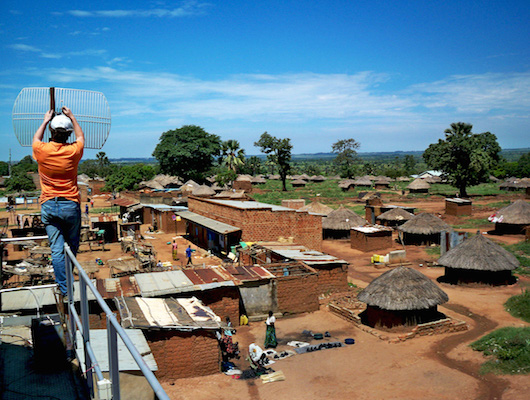
wi-fi_in_uganda
Google launched Wi-Fi in Uganda for the first time as part of a project to broaden access to affordable high-speed Internet.

Google is making the wireless network available to local Internet providers, who can then charge customers for access. Wi-Fi is now available in 120 key locations in Uganda’s capital, Kampala.

According to statistics, Uganda has nearly 8.5 million Internet users, which makes up 23 percent of the population.

The use of smartphones has dramatically increased in Africa, but high-speed Internet access continues to be too expensive for many Africans to enjoy. Google is working to make access to high-speed Internet affordable for them.

Google estimates that one day of unlimited data using the network will cost around 1,000 Ugandan shillings, the equivalent of 30 cents in the United States, but local providers will ultimately decide how much they want to charge customers for access to the network.

Google said they hope that by improving Internet capacity in the city, local companies will be able to offer faster broadband access for cheaper.

Ugandans would like to see Internet access in rural and hard to reach areas as well.

So far, Google has laid 500 miles of cables in Uganda in order to establish a fiber-optic network. They are working on a more expansive project to improve web infrastructure in Africa.

There are plans to expand the project to the Ghanaian cities of Accra, Tema and Kumasi.

Facebook and Microsoft are also working on their own projects in developing countries with hopes that the whole world will soon have access to Internet.

Tech Times said they believe the more connected countries are, the better the world could be. Google is working to do its part to ensure more places around the globe have Internet access. Wi-Fi in Uganda is just the start of what the company said they hope to achieve.

– Jordan Connell

Sources: AllAfrica, BBC News, Tech Times  
Photo: Flickr

January 14, 2016
https://borgenproject.org/wp-content/uploads/borgen-project-logo.svg 0 0 Borgen Project https://borgenproject.org/wp-content/uploads/borgen-project-logo.svg Borgen Project2016-01-14 08:00:412020-06-24 16:32:33Google Launches Wi-Fi in Uganda
Development, Global Poverty, Technology

Cheapest Smartphone: Productivity and Connectivity for All

Cheapest_Smartphone

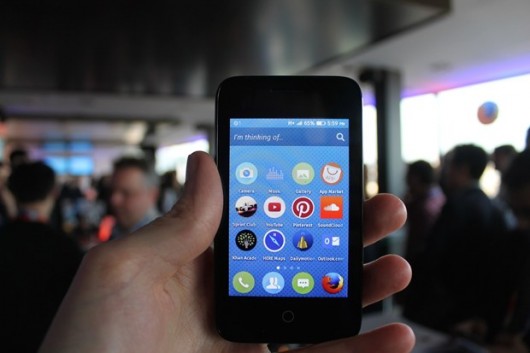
Global mobile carrier, Orange, has just launched the world’s cheapest smartphone. By doing so, they have opened up countless potential opportunities for low-income individuals and their families.

The new device is called Klif and runs on Mozilla’s Firefox 2.0 mobile operating system. Retail has been set at $34, or the equivalent exchange rate in countries where American dollars are not used. Features of Klif include a two megapixel camera, Firefox web browser, an FM radio and full Wi-Fi, GPS and Bluetooth integration.

While smartphones are readily available to Africa’s upper and middle classes, those in lower income brackets are typically unable to afford the devices, let alone the sky-high data plans required to run them. Klif includes a data, text and voice plan, and can be run immediately after activation.

Klif marks a key milestone in the greater tech revolution already occurring across Africa. The device allows for thousands to afford Internet access, and increased connectivity has been shown to increase economic income and output. It also allows for thousands to now contact friends and family in a moment’s notice.

With smartphones and certain apps, farmers can check the weather, nurses and doctors can receive patient updates and students can supplement their learning. As Orange expands its network, even more people will be able to reap the benefits of increased data access.

Orange has released Klif in 13 countries across Africa and the Middle East, with the hopes to enter more markets in the near future.

Executive Vice President of Connected Objects and Partnerships for Orange, Yves Maitre, said of Klif, “By scooping up all the costs into one, incredibly priced digital offer, we hope that critical access to the mobile internet and all the opportunities that that opens up, will be within reach of many more people.”

With Klif and increased mobile access in general, developing countries have more potential to catch up with the top nations of the world.

— Joe Kitaj

Sources: CNET, It News Africa
Photo: Wired

September 30, 2015
https://borgenproject.org/wp-content/uploads/borgen-project-logo.svg 0 0 Borgen Project https://borgenproject.org/wp-content/uploads/borgen-project-logo.svg Borgen Project2015-09-30 12:19:282024-06-05 03:46:43Cheapest Smartphone: Productivity and Connectivity for All
Global Poverty

Supporting the Digital Revolution in Africa

How Digital Infrastructure is Supporting the Digital Revolution in Africa
The spread of mobile technology and the Internet to the developing world has been well covered. More and more people acquire mobile phones and gain access to the Internet every day. But what drives this spread of technology?

While technology like this cannot be substituted for better infrastructure in other areas like healthcare, transportation and finances, it can connect and catalyze economic development. Mobile phones allow for farmers to stay up to date on crop prices and broadband has allowed the Kenyan capital Nairobi to become a hub for IT services and call centers.

A study by the World Bank found that if a 10 percent increase in mobile phone adoption took place, a developing nation’s GDP per capita would increase by 0.8 percent. The spread of broadband in a developing country raises this number to 1.3 percent. According to Christine Zhen-Wei Qiang, the author of a World Bank report on the role of information and communication technology (ICT), mobile technology has the potential to change the lives of many in the developing world: “The mobile platform is emerging as the single most powerful way to extend economic opportunities and key services to millions of people.”

Behind this explosion of digital media, mobile money payments, smartphones and Internet is the infrastructure that makes it all possible. East Africa is an excellent example of the importance of infrastructure for the spread of the digital revolution.

In 2010, three fiber optic cables were installed sub-sea. This ensured that East Africa was no longer the only place on the planet without “super-fast” broadband. Rwanda has also used a fiber-optic tech, putting in a 3,200 km network that connects up to 230 government offices across the country.

To go along with broadband progress in the region, Zambia announced back in April that it would invest $65 million in building new telecom towers that can be used by the country’s three major mobile companies. While fiber-optic is important, most people in Africa get their Internet via their mobile phones, which is why these new telecom towers are so important in Zambia.

The number of mobile users in Zambia is around 10 million, a number that lags behind other countries like Uganda and Kenya. The Zambian government hopes that the new towers will increase subscribers and connectivity. The country’s president, Edgar Lungu, said, “Once implemented, the project will reduce the problems of telephone and Internet connectivity in the country.”

Communications infrastructure is extremely important for countries in the developing world. Without strong infrastructure for mobile and broadband technology, which have essentially become prerequisites for business, countries cannot advance in the global economy.

The benefits of investing in the infrastructure are clear. As most of East Africa’s population – 120 million – lives in rural areas, mobile phones are their key to the Internet. Telecom infrastructure enables countries to get ahead in a way by promoting communication through mobile technology.

Today, mobile phones are the first choice for communication and research. Farmers can gather information on seeds and fertilizers, as well as cooperate with other farmers in their area. The infrastructure also incubates international trade. With more investment will come more benefits in the region.

– Gregory Baker

Sources: Vodafone, PC World
Photo: BUSINESSTECH

August 12, 2015
https://borgenproject.org/wp-content/uploads/borgen-project-logo.svg 0 0 Borgen Project https://borgenproject.org/wp-content/uploads/borgen-project-logo.svg Borgen Project2015-08-12 01:30:232024-12-13 18:04:35Supporting the Digital Revolution in Africa
Global Poverty

Angonix is Connecting Angola to the World Wide Web

AngonixA platform for neutral Internet traffic exchange was set up in Luanda, the capital of Angola. It is called Angonix and it is meant to help serve all Internet users with improved content viewing by structuring a better connection with global networks and content providers. With a previously less optimal experience in Angola, Angonix will expand Internet usage to the South African Development Community and elsewhere.
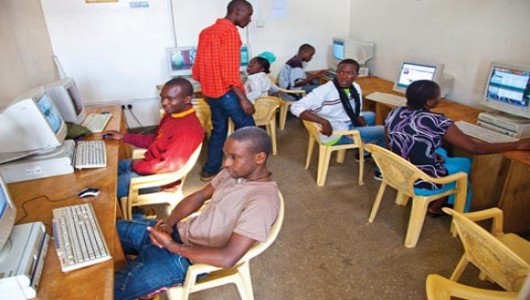
Angonix will change the connection performance. Content delivered by outside sources had provided minimal performance and high latency. The main goal of Angonix is to ensure every member connected to the platform will have low latency and improved content.

Angonix is operated by Angola Cables, who also oversee the connectivity of Angola with the world’s undersea fibre-optic cables. With Angonix, quality service to content will enable the progression of African Internet outreach and global connection. Places in Africa, such as Zambia, still rely on satellite Internet connectivity, which is ultimately unreliable.

Launched March 16, 2015, the expected traffic has enhanced quality content especially in exchanging information between clients and providers. In the past, local clients had to travel some distance to interconnect. This was thanks to configuration problems of network providers.

Working to minimize that distance, providers will have easy access in communicating with clients and vice versa. This development is meant to dramatically change the African Internet landscape. It’s been designed to reach beyond Angola and to help provide low latency between Africa, East Asia and the Americas.

iHub is an online and offline community that hosts a place for 50 companies to connect to clients and has held 500 events. It is a space for online developers working with technology software and is a very well known site in Africa.
Sites like this need to be able to connect elsewhere on the continent. Governments are currently struggling with net neutrality debates and whether or not laws should be in place to support investments that connect rural Africa to enabled environments.

Fibre-optic cables are still needed in South Africa to improve Internet access and link those citizens to the world. The problem is that homes and businesses cannot connect.

Rural Africa is the untapped market. Lesser-developed regions such as Somalia had 200 users in 2000, but 163,185 users in 2014 with a population of 10 million. The Congo Democratic Republic had 500 users in 2000, but 1.7 million users in 2014 with a population of 77 million.

The Communication Commission of Kenya reported 330 thousand mobile users in 2001, and 30 million in 2013. The Angola population had 30 thousand people using the Internet in the year 2000, and 4 million in 2014 with a population of 19 million. Kenya had 200 thousand Internet users in 2000, but 21 million users in 2014 with a population of 45 million.

In sub-Saharan Africa there are over 754 million connections and over 35 mobile networks operators. An SMS-based banking system called M-Pesa in Kenya transfers $24 million daily. Zimbabwe’s EcoCash signed up 2.3 million people in more than a year, after starting in 2011. More than a million accounts push $200 million through EcoCash monthly.

Yet, the continent produces less than one Terabits per second. Angola produces 20 gigabits per second. The demand of improved, constant Internet access is supposed to raise Terabit per second to 10 by 2020, according to TeleGeography.

Projects like West African Cables Systems and South Africa Cable Systems improve connectivity as Angonix improves capacity services. With this, better quality increases capacity of performance, communication and outreach.

The Southern African Development Community has advanced its Internet market. The opportunity for expansion and innovation comes from this improvement. Angola Cables is working to better the growth of Africa with its new technologies in providing services. By improving outreach to the World Wide Web Africa’s communication and business, practices will continue to enhance and expand to rural areas.

– Katie Groe

Sources: IT News Africa, Angola Cables, Angonix 1, Angonix 2, UN, Internet Word Stats
Photo: Africa 21

July 13, 2015
https://borgenproject.org/wp-content/uploads/borgen-project-logo.svg 0 0 Borgen Project https://borgenproject.org/wp-content/uploads/borgen-project-logo.svg Borgen Project2015-07-13 14:12:392024-12-13 17:51:51Angonix is Connecting Angola to the World Wide Web
Global Poverty, Technology

10 Facts About Internet in Africa

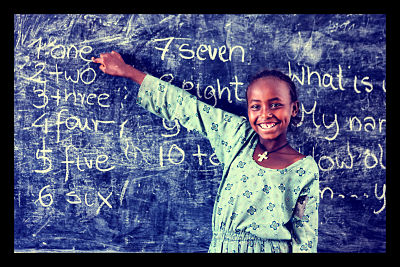
Internet in Africa-TBPWhile most members of developing nations have access to the Internet in their homes, in their workplaces and in various public locations, many Africans struggle to access the Internet. Here are 10 facts about the progress and struggles regarding Internet in Africa:
1. In October 2007, the International Telecommunication Union (ITU) held the first part of its Connect the World series in Kigali, Rwanda to demonstrate its commitment to foster development of telecommunications across Africa, a key aspect of the Millennium Development Goals.

2. As a continent, Africa has seen steady growth in Internet penetration since its rate of .78 percent in 2000. Internet has now reached 20.7 percent of Africa, but there are major disparities in Internet access and use across the continent.

3. The leading countries with the highest Internet penetration rates are Morocco at 56 percent, Egypt at 50 percent and South Africa at 49.8 percent. Meanwhile, various nations throughout the continent are still at rates below 2 percent. Despite these differences, all African nations have experienced Internet growth in recent years.

4. The majority of African countries have Internet penetration rates below 10 percent, which is well below the 20 percent benchmark rate determined for Internet access to benefit countries economically.

5. A total of 10.7 percent of African households have Internet access. Meanwhile, almost half of African Internet users access the Internet via mobile device. Social media usage accounts for about a third of Internet use for these users.

6. Bandwidth is significantly more scarce across Africa than in developing nations, making Internet access much more expensive across the continent. In recent years, increased investment in infrastructure such as national landing stations has allowed some bandwidth expansion, therefore slightly increasing capacity for connectivity.

7. According to Kojo Boakye, policy manager of the Alliance for Affordable Internet, no developing countries have met the ITU’s affordability benchmark of connectivity costing less than 5 percent of monthly income for the world’s potential users that survive on less than two dollars per day. He said that, for many countries in Africa, the cost of fixed broadband comprises almost half of an average citizen’s monthly income.

8. Internet users in Africa pay up to 40 times more for access than users in developed countries. There are many initiatives in place to decrease these rates, but there has been substantial difficulty in implementation. One of these goals involves establishing at least one Internet eXchange Point (IXP) in every African nation in order to promote the construction of infrastructure that makes Internet access cheaper and faster. Another initiative is in place to migrate from analog to digital broadcasting in order to free up unused spectrum, thus increasing access opportunities. However, by June 2014, only 19 countries had begun this transition and only three had completely transitioned. Another initiative is to accelerate adoption of IPv6, which ensures enough availability of IP addresses to allow anything capable of having an IP address to connect to the Internet. South Africa and Egypt account for 97 percent of all of the IPv6 addresses in the continent, which indicates major lagging for the rest of Africa. This development is seen as necessary for long term expansion of Internet.

9. The Internet contributes 1.1 percent to the overall African GDP, which is substantially lower than the global average contribution of over 4 percent. There are large disparities across the continent, with the contribution to GDP being 3.3 percent in Senegal and .8 percent in Nigeria. These rates are measured using iGDP, which evaluates use of networks and services in private consumption, public expenditure, private investment and trade balance.

10. Key players in Africa’s Internet community come together with global members of the industry for the annual Africa Internet Summit. Participants discuss the continent’s challenges and use it as a platform to exchange knowledge. This year’s conference was themed “Beyond connection: Internetworking for African Development,” and took place in Tunisia from May 24 – June 3.

– Arin Kerstein

Sources: All Africa, International Telecommunication Union, Internet Society, Africa Internet Summit, IT Web Africa
Photo: Africa Renewal

July 2, 2015
https://borgenproject.org/wp-content/uploads/borgen-project-logo.svg 0 0 Borgen Project https://borgenproject.org/wp-content/uploads/borgen-project-logo.svg Borgen Project2015-07-02 15:28:292024-06-04 03:53:0310 Facts About Internet in Africa
Education, Global Poverty

Facebook Offers Online Education in Rwanda

facebook_poverty_education
Facebook plans to bridge the digital divide by connecting the remaining two-thirds of the world without Internet to the growing web of information. As a leader in this “knowledge economy,” CEO Mark Zuckerberg partnered with other industry giants to provide access to those who cannot afford it.

He continues to collaborate with leading companies in the technology field: Ericsson, Nokia, Qualcomm and Samsung. These prominent members formed Internet.org to offer connectivity to more than five billion people. In developing countries, his Internet.org initiative aims provide the following:

More affordable access

Collaborative efforts between industry titans, such as Samsung and Nokia, will expand mobile access. To decrease the cost of delivering data, companies seek to develop low-cost smartphones and partner with internet providers to broaden the reach.

More efficient use of data

Global partners also plan to invest in products to limit the necessary amount of data. Along with “data compression tools,” these products may offer the enhancement of network capabilities and mobile frameworks designed to reduce the data use of applications.

Assist businesses in increasing access

These companies plan to incentivize the development and manufacturing of affordable devices for developing countries. The partnerships also aim to “localize services,” offering more languages on mobile devices.

Education Online: SocialEDU

Internet access alone cannot address underlying issues in developing nations. Zuckerberg, as a result, will apply Internet.org to education inequities.

Referred to as SocialEDU, this program offers open online courses to students through a mobile application integrated with Facebook.

With a Facebook account, young Rwandans could learn from professors at the Massachusetts Institute of Technology and Harvard. Facebook prepares to combat the digital and educational barriers these students face and expand online education in Rwanda.

This social media platform partnered with “the Rwandan government, a telecom company, a device manufacturer and an educational content provider.” Such collaboration allows the for the following:

  •  Free content and data
  •  A supportive government
  •  Low-cost smartphones
  •  Innovative education on a local level

For one year, Airtel plans to provide the education content at no cost to participants.

Christian de Faria, the CEO of Airtel Africa, understands education drives social and economic growth. As a local carrier, Airtel will fuel this growth by offering a data subsidy.

Nokia has also joined this corporate collaboration, offering affordable smartphones to the region. This improves access to the Internet, enabling more students to join the open online classes.

The Nokia Vice President of Mobile Phones, Timo Toikkanen notes, “Our affordable smartphones help people make the transition from simple mobility to more sophisticated experiences. Playing a role in helping students get access to these experiences, such as social education through the SocialEDU initiative, is truly an honor.”

To promote further corporate innovation, the Rwandan government offers:

  • Trade-in rebates
  • Interest rate subsidies
  • Micro-loan guarantees
  • Targeted use of its Universal Service Fund

In support of corporate social responsibility, the government plans to expand its Smart Kigali program. This offers free wi-fi on college campuses and as a result, more students can access the multi-media SocialEDU content. The government will further support this initiative by adapting course materials to the needs of local students.

These educational apps require a large amount of bandwidth. To combat this, Facebook promises to provide technical assistance and support the app in a low-bandwidth region. Partnering with Ericsson, the company must test the app capabilities in a 2G environment.

Tailoring services to meet the needs of regions across the globe is but one part of the equation. Through such innovation and corporate cooperation, the digital divide gradually closes. With the expansion of online education in Rwanda, Facebook and its global partners will propel the country into a knowledge-based economy.

– Ellery Spahr

Sources: The Verge
Photo: PCI Podium

March 7, 2014
https://borgenproject.org/wp-content/uploads/borgen-project-logo.svg 0 0 Borgen Project https://borgenproject.org/wp-content/uploads/borgen-project-logo.svg Borgen Project2014-03-07 04:00:372015-01-06 09:24:39Facebook Offers Online Education in Rwanda

Get Smarter

  • Global Poverty 101
  • Global Poverty… The Good News
  • Global Poverty & U.S. Jobs
  • Global Poverty and National Security
  • Innovative Solutions to Poverty
  • Global Poverty & Aid FAQ’s
Search Search

Take Action

  • Call Congress
  • Email Congress
  • Donate
  • 30 Ways to Help
  • Volunteer Ops
  • Internships
  • Courses & Certificates
  • The Podcast
Borgen Project

“The Borgen Project is an incredible nonprofit organization that is addressing poverty and hunger and working towards ending them.”

-The Huffington Post

Inside The Borgen Project

  • Contact
  • About
  • Financials
  • President
  • Board of Directors
  • Board of Advisors

International Links

  • UK Email Parliament
  • UK Donate
  • Canada Email Parliament

Get Smarter

  • Global Poverty 101
  • Global Poverty… The Good News
  • Global Poverty & U.S. Jobs
  • Global Poverty and National Security
  • Innovative Solutions to Poverty
  • Global Poverty & Aid FAQ’s

Ways to Help

  • Call Congress
  • Email Congress
  • Donate
  • 30 Ways to Help
  • Volunteer Ops
  • Internships
  • Courses & Certificates
  • The Podcast
Scroll to top Scroll to top Scroll to top