• Link to X
  • Link to Facebook
  • Link to Instagram
  • Link to TikTok
  • Link to Youtube
  • About
    • About Us
      • President
      • Board of Directors
      • Board of Advisors
      • Financials
      • Our Methodology
      • Success Tracker
      • Contact
  • Act Now
    • 30 Ways to Help
      • Email Congress
      • Call Congress
      • Volunteer
      • Courses & Certificates
      • Be a Donor
    • Internships
      • In-Office Internships
      • Remote Internships
    • Legislation
      • Politics 101
  • The Blog
  • The Podcast
  • Magazine
  • Donate
  • Click to open the search input field Click to open the search input field Search
  • Menu Menu

Archive for category: Charity

Charity, Food & Hunger, Global Poverty

Whole Foods Market Raises $3.26 Million to Alleviate Poverty

Whole foods market
Whole Food Market’s 2016 annual Prosperity Campaign for the Whole Planet Foundation raised $3.26 million to improve global poverty. All of the funds raised by Whole Foods Market will help support the foundation’s work to fund microcredit for poverty relief in 68 countries.

Philip Sansone, president and executive director for Whole Planet Foundation, shared that the “Whole Planet Foundation will be able to give an additional 91,100 people the chance to lift themselves out of poverty through microcredit and change their own lives” because of shoppers’ generosity.

The Prosperity Campaign encourages Whole Food Market supplier sponsors, customers, team members and online donors to donate to the Whole Planet Foundation, a nonprofit organization founded by Whole Foods Market. The foundation provides grants to microfinance institutions in Asia, Africa, the Middle East and the U.S. These countries then develop and offer microloans to the self-employed poor.

Microloans are small loans of usually less than $300 with no contract or warranty. The loans are used to help the world’s poorest create or expand businesses and make an income for their families. The average first loan size in poor countries is $184, but each microloan helps at least five people invest in their families.

Whole Foods Market covers 100 percent of Whole Planet Foundation’s operating expenses to ensure that all donations benefit microcredit clients. Since 2006, the foundation has distributed over $53 million in microloans across the world, giving 7.8 million people a chance at a better life.

In communities without many jobs, credit serves as a direct means for the poor to improve their family’s lives. Without jobs, the poor are left to their own devices to provide for their families. While microcredit loans alone will not end poverty, it will help provide better nutrition, healthcare, housing, education and schooling to families living in poverty. Whole Planet Foundation is committed to supporting life-saving opportunities to help global poverty.

– Jackie Venuti

Photo: Flickr

July 21, 2016
https://borgenproject.org/wp-content/uploads/borgen-project-logo.svg 0 0 Borgen Project https://borgenproject.org/wp-content/uploads/borgen-project-logo.svg Borgen Project2016-07-21 01:30:022024-12-13 17:54:50Whole Foods Market Raises $3.26 Million to Alleviate Poverty
Activism, Charity, Global Poverty, Hunger

Five Charities Working to Stop World Hunger

Charities

Activists often participate in endless debates about what they think will be the key to unlocking a world without hungry children and families. There are numerous charities that work to stop world hunger, and many of them are making real, sustainable impact in countries all over the world. One way to take a step towards a world with healthy, well-fed families is to spread awareness of these foundations. By spreading awareness, there is a higher chance these charities will get the funding they need to continue to meet their goals.

Five Charities Looking to End World Hunger:

1. Action Against Hunger

With more than 6,500 staff workers all over the globe, Action Against Hunger’s programs have been able to reach more than 13.6 million people as of 2014. Its programs not only save lives but also teaches impoverished people how to live safely long-term. With more than 35 years of experience in food crises and disaster, this foundation knows how to keep children healthy and understands where and when to expect malnutrition.

Regarding nutrition and health, Action Against Hunger has treated 5 million people around the world. This includes almost 3 million people from Nigeria, over 104,000 people in the Democratic Republic of Congo and over 93,000 people in South Sudan. They are able to impact millions of hungry people by evaluating nutritional needs, treating acute malnutrition, preventing acute malnutrition and building local capacity. This is done by collecting data on nutritional indicators like geography, infrastructure, local capacities, resources and cultural practices.

2. Bread for the World Institute

The Bread for the World Institute is a voice that urges national leaders throughout the world to end hunger in their own countries and others around the globe. The foundation has been able to help the hunger epidemic in the United States, Asia, Latin America and Africa. The institute works with members of Congress on issues that affect world hunger including immigration reform, incarceration and child nutrition. Basically, Bread for the World Institute wants the goal of eliminating world hunger to be a priority and believes that by doing so, world hunger can be eliminated by 2030.

Through their Vote to End Hunger campaign, Bread for the World Institute encourages voters to make world hunger one of their top priorities during the 2016 election campaigns and in the ballot box. Their goal is to elect a leader who will make ending world hunger a priority in congress.

3. Freedom from Hunger

Freedom from Hunger provides families the resources necessary to build a healthy future. By equipping families with the proper resources, they can live sufficiently on their own and build healthy lives without continuous aid. Freedom from Hunger believes in educating and empowering communities to fight world hunger. Education modules are influenced by the needs of chronically hungry women, a demographic deemed a priority during the research phase. Group activities, training sessions, guidance counselors and interactive discussions are implemented to inform and encourage the women in safe health practices, like HIV/AIDS prevention or breastfeeding practices and hygiene.

4. The Hunger Project

The Hunger Project focuses on ten principles fundamental to ending world hunger: human dignity, gender equality, empowerment, leverage, interconnectedness, sustainability, social transformation, holistic approach, decentralization and transformative leadership.

The Hunger Project believes there are three essential pillars their foundation must follow in order to make an impact on impoverished communities: empowering women as key change agents, mobilizing entire communities into self-reliant action and fostering effective governments to engage local government.

In Africa, India, Bangladesh, Mexico and Peru, The Hunger Project has supported community development and empowered local entrepreneurship.

5. Heifer International

Heifer International works with various impoverished communities to help boost their economies. Their approach focuses on developing income and assets, food security and nutrition, and the environment. They then work on empowering women and social capital in order to multiple the success of their efforts. The foundation has seen much success in bringing sustainable agriculture and commerce to families without food.

Heifer International supports the “passing on the gift” model. By giving a family a goat, a cow or even a water buffalo, a family can build a sustainable life. Cows produce milk, fertilizer for crops or the capacity to plow fields. When these animals create offspring, families are encouraged to pass on the first female baby to another family. This family then does the same with the offspring of their animals.

It is important to raise awareness and donate to these foundations, seeing that they have been making real-time change and investments. Like these vastly different organizations, ending world hunger does not take a single fix-all approach. Different strategies, supported by generous gifts, provide hungry people with the tools and willpower they need to stop world hunger.

–Casey Marx

Photo: Flickr

July 14, 2016
https://borgenproject.org/wp-content/uploads/borgen-project-logo.svg 0 0 Borgen Project https://borgenproject.org/wp-content/uploads/borgen-project-logo.svg Borgen Project2016-07-14 02:00:522024-12-13 17:54:43Five Charities Working to Stop World Hunger
Charity, Global Poverty

Toronto Joins the 2016 World Partnership Walk

Toronto_World Partnership WalkToronto was one of the many major cities that joined the 32nd annual 2016 World Partnership Walk to increase awareness and raise money for global poverty.
Each year the Aga Khan Foundation Canada, (AKFC), an international development organization and registered charity, hosts the event. AKFC is a nonprofit international development agency helping to find solutions to alleviate global poverty. The organization focuses on improving the living conditions of those living in poverty, regardless of faith, origin or gender.

On May 29, there were over 10,000 participants in Toronto, who gathered at the Metro Hall in David Pecaut Square. Last year, more than 40,000 individuals participated in the event from Montreal, Ottawa, Regina, Vancouver and Victoria, helping to raise over $7 million.

Canadians are motivated to mobilize and donate to the event because they want to see global poverty levels reduce even further. According to the World Bank, there are 1 billion fewer people living in poverty globally than there were 25 years ago.

Many families are driven to participate in the annual event, as 100 percent of the donations go toward AKFC programs. In addition, the event offers memorable experiences through activities that inform, educate and entertain all participants from the young to the old.

Based in Canada, AKFC works to promote the discussion of global issues and works to build partnerships with Canadian institutions. The organization began operations in 1980 and kicked off its first walk in 1985 when a group of women from Vancouver raised $55,000. Now, the event is held in 10 cities each year and AKFC has raised $95 million since the first walk.

The 2016 World Partnership Walk is the largest event in Canada supporting international development in 14 countries. AKFC concentrates specifically on improving access to education and healthcare, food security, producing economic opportunities and constructing strong communities and local institutions.

– Kimber Kraus

Photo: Flickr

June 19, 2016
https://borgenproject.org/wp-content/uploads/borgen-project-logo.svg 0 0 Borgen Project https://borgenproject.org/wp-content/uploads/borgen-project-logo.svg Borgen Project2016-06-19 01:30:102020-06-18 13:00:14Toronto Joins the 2016 World Partnership Walk
Charity, Foreign Aid, Global Poverty

The AMAR Foundation Model of Aid Distribution

AMAR_Foundation
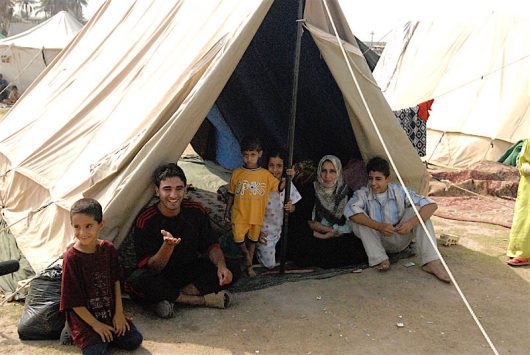
The AMAR Foundation works to improve the conditions of approximately 3.4 million internally displaced Iraqis by utilizing local expertise to build long-term solutions.

The organization, founded in 1991 by Baroness Emma Nicholson, is a London-based charity with the goal of improving education, health care and emergency aid to some of the world’s most disenfranchised and impoverished people.

Their model is simple: AMAR works closely with on-the-ground experts, as well as local leaders, to implement entirely local programs that are tailored to the needs of the community.

In lieu of sending in volunteers from other countries, AMAR cooperates with existing services to locally source the materials and expertise needed to improve living conditions. Outside intervention is kept to a minimum and communities are encouraged to build themselves from the inside out.

Communication is the key to the success of this aid model. In a 2015 Jordan Times article reporting on AMAR’s efforts to stem an outbreak of cholera in Iraq, it is proffered that raising awareness about public health and common diseases is one of the most crucial pieces of improving the health of a community.

Communication is key not only in improving public health but also in ensuring the success of locally-based aid efforts like those the AMAR Foundation organizes.

Local collaboration is by no means a new idea, but the AMAR Foundation’s astonishing success utilizing this model within Iraq provides great hope for the future of foreign aid worldwide.

Without the help of major international funding, AMAR has managed to establish a clinic in northern Iraq that serves more than 600 patients a day, as well as multiple mobile health clinics that can be operated by locals. Since 2005, their clinics have helped over 4 million Iraqis.

Although today only a few organizations embrace a model that favors entirely local implementation, the AMAR foundation continues to provide an example of the great success that can come from on-the-ground solutions.

– Sage Smiley

Photo: Defense Video Imagery Distribution System

June 13, 2016
https://borgenproject.org/wp-content/uploads/borgen-project-logo.svg 0 0 Borgen Project https://borgenproject.org/wp-content/uploads/borgen-project-logo.svg Borgen Project2016-06-13 01:30:522020-06-18 18:49:53The AMAR Foundation Model of Aid Distribution
Charity, Education

Teaching Self-Reliance Worldwide

Self_Reliance_Worldwide
The ultimate goal of charitable aid for the poor should be to help recipients become self-reliant. Teaching self-reliance worldwide means that individuals will no longer need to depend on outside sources to live without the immediate threat of disease and starvation. Achieving self-reliance leads to stability and sustainability.

Many programs try to accomplish this vision by teaching families valuable skills such as efficient farming techniques and literacy. Evidence has shown that these methods are less costly and have a more permanent influence on the communities where they are implemented.

The Church of Jesus Christ of Latter Day Saints teaches self-reliance worldwide.  It attempts to help struggling families achieve this goal by teaching them effective ways to seek employment, manage their time and money, start small businesses and develop leadership qualities.

Volunteers travel to countries in Latin America, Africa, Asia, and Europe to teach free classes and help their students achieve personal goals. These volunteers range from college students to elderly couples, each of them donating up to two years of their lives to support these struggling communities.

The success stories of this program are as diverse as its students. One participant from Ghana, Irene, is a single mother of four children. She uses an old hand cranked sewing machine as her primary source of income. Carrying the sewing machine on her head, Irene goes from house to house and offers to sew traditional Ghanian dresses.

Irene says the classes help her learn how to network and communicate with customers. It has also helped her learn new business strategies, such as going to a busier public place to advertise her services. Most importantly, the classes have taught her how to manage her money and set aside amounts for future growth.

Although she has not even finished the program, Irene has said that her income has already grown noticeably. The economic benefits of teaching self-reliance worldwide could be staggering.

Another student, Susy, uses a small van to transport neighborhood children to and from school. Her business is still small, but LDS’ Self-Reliance has opened her eyes to many aspects of business management, such as record keeping and improving capital. Susy now has plans to work toward buying a larger van to transport more children. She also hopes to expand her business to include day care services.

The employment techniques offered in the Self Reliance classes have also proved incredibly useful. One student, Rafael, had been unemployed for seven months before setting foot in the Self Reliance Center. Volunteers taught him the importance of accruing multiple sources of information, making as many contacts as possible and setting up interviews.

Within six days, Rafael had found a job. “It was a miracle,” he says in an interview produced by the Self Reliance program. “My wife is very happy… I can now provide for our home and our children.”

– Emiliano Perez

Photo: Wikipedia

May 21, 2016
https://borgenproject.org/wp-content/uploads/borgen-project-logo.svg 0 0 Borgen Project https://borgenproject.org/wp-content/uploads/borgen-project-logo.svg Borgen Project2016-05-21 01:30:272024-05-27 09:33:46Teaching Self-Reliance Worldwide
Charity, Development, Global Poverty

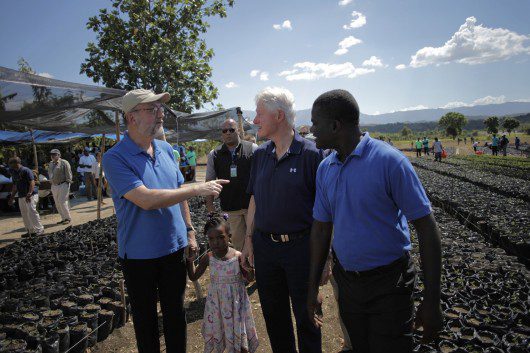
The Clinton Foundation: Bill’s Other Legacy

The Clinton Foundation
Bill Clinton will always be remembered first and foremost for his eight years in the White House, but he has another legacy that deserves just as much attention: The Clinton Foundation.

Founded in 1997 with a focus on Little Rock, Arkansas, the foundation has grown into an international powerhouse that has raised more than $2 billion to fund charity work around the world.

Like most ex-presidents, Clinton initially faded from the public eye. According to the Washington Post, he spent much of his time watching TiVo. Then, in 2002, he moved the Clinton Foundation to Harlem, New York, following Hillary Clinton’s successful election bid for U.S. Senate.

The foundation brought in consultants from Booz Allen Hamilton to give advice to small business owners in the local community, and the projects piled on from there. Using his celebrity power, Clinton was able to consistently recruit top-notch partners. Besides Booz Allen, he also brought in Princeton Review to bolster local students’ SAT scores.

It was not until 2002, however, that Clinton’s international work began. He met an old friend, former President of South Africa, Nelson Mandela, at an AIDS conference. Mandela reminded Clinton of a promise he made while still in office, a promise to help Africa after he left.

That promise materialized into the Clinton Health Access Initiative (CHAI). According to the Clinton Foundation Website, CHAI has helped reduce the cost of lifesaving HIV/AIDS medication from $10,000 annually for one patient to only $100 to $200. This has helped over eight million people in developing countries, many of them in Africa, afford medication without which they’d die.

CHAI was so successful that it became its own organization, but the Clinton Foundation actively promotes nine other initiatives: the Clinton Climate Initiative, the Clinton Development Initiative, the Clinton Foundation in Haiti, the Clinton Glustra Enterprise Partnership, the Clinton Global Initiative, the Clinton Health Matters Initiative, the Clinton Presidential Center and Too Small to Fail and No Ceilings: The Full Participation Project.

The Clinton Foundation is unique in that its initiatives are its own. It consists of over 2,000 employees that serve both as administrators and field workers. As such, it operates more as a nonprofit consulting firm than a grant-making agency. A New York Times story from 2015, for example, reports that the group’s work in Rwanda includes such diverse efforts as teaching farmers to double their yields, training nurses and specialists and supporting factories that turn soybeans into cooking oil.

Behind the power of the Clinton Foundation is Bill’s celebrity. As ex-President of the most powerful country in the world, he truly is a star among stars. With this power, he has been able to raise funds that few others on Earth could hope to achieve and partner with the best organizations to put the money to good use.

As the 2016 presidential election approaches, increasing scrutiny is being paid to the foundation. With Hillary as the first female President and Bill as the first “First Man,” some people would worry about influence-buying through the foundation. Still, the breadth and depth of the good work of the Clinton Foundation cannot be denied. Bill could’ve easily faded into the background after his presidency. Instead, he used his influence and recognition to benefit not just the United States, but the entire world.

– Dennis Sawyers

Sources: New York Times, The Clinton Foundation, The Washington Post

April 3, 2016
https://borgenproject.org/wp-content/uploads/borgen-project-logo.svg 0 0 Borgen Project https://borgenproject.org/wp-content/uploads/borgen-project-logo.svg Borgen Project2016-04-03 01:30:302024-12-13 18:05:54The Clinton Foundation: Bill’s Other Legacy
Charity, Global Poverty, Refugees and Displaced Persons

Helping Refugees Settle in the United States

Helping Refugees Settle
For the 500 refugees that arrive in San Antonio each year, the transition can be difficult. After fleeing violence and persecution at home, refugees face a new set of challenges when trying to settle in the United States, including language barriers, unfamiliar cultures, discrimination and unemployment. Programs helping refugees settle in the U.S. are central to facilitating a successful, new start for refugees.

Catholic Charities of the Archdiocese of San Antonio (CCOASA) offers a comprehensive program helping refugees settle and achieve economic self-sufficiency and cultural integration in San Antonio. When refugees arrive at San Antonio International Airport in central Texas, Catholic Charities volunteers are there to help.

The program begins as soon as refugees touch down. After their reception at the airport, volunteers assist refugees with housing, food, clothing and supplemental financial assistance. From there, they can receive a number of orientation courses covering topics such as American culture and laws, safety, healthcare, childcare, banking and employment.

The majority of CCOASA’s work, however, continues long after arrival. In addition to offering ESL and other courses through its Refugee Services Education Program, the organization provides ongoing case management services to identify and address each refugee’s unique obstacles to employment, community integration and cultural adjustment.

CCOASA’s Refugee Employment Services Program helps refugees join the workforce by linking them with potential employers based on specialized skills and level of employability. The organization also works to help refugees adjust to American work culture once they are employed.

For the children of refugees, the organization offers after-school tutoring and family services to help children acclimate to the American public school system. CCOASA’s School Impact Program helps 200 children per year integrate into educational life.

With support from the Department of Health and Human Services’ Office of Refugee Resettlement (ORR), CCOASA is just one of the hundreds of organizations helping refugees settle in the U.S. The office partners with private organizations in major cities across the country to take on this work.

Through ORR, refugees can also take advantage of numerous federal grants in order to buy homes, start businesses, go to college and develop careers. The office even provides opportunities for refugees to take part in sustainable community farming programs.

Helping refugees settle into a new life in the United States is challenging but, luckily, there are support systems in place to make the process easier. You can find opportunities to help in your own community here.

– Ron Minard

Sources: HHS, Borgen Project, CCAOSA, Immigration Policy
Photo: Washington Post

February 28, 2016
https://borgenproject.org/wp-content/uploads/borgen-project-logo.svg 0 0 Borgen Project https://borgenproject.org/wp-content/uploads/borgen-project-logo.svg Borgen Project2016-02-28 01:30:312024-12-13 18:05:36Helping Refugees Settle in the United States
Charity, Global Poverty

Internet Celebrity Charity Takes Center Stage

Internet CelebrityVideo may have killed the radio star, but increasingly, internet celebrities are supplanting traditional actors and actresses, even in charity drives. PewDiePie, TotalBiscuit, Nerdfighters and others have paved the way for social media celebrities to make an impact, but a new platform is set to take internet celebrity charity to the next level: Reelio Cares.

Reelio specializes in linking companies with Youtube stars to promote their brands, and Reelio Cares specializes in linking charities with social media influencers to promote their causes. CEO Pete Borum believes that the time has come for Reelio Cares, as many nonprofits have difficulty reaching their target audience via traditional methods like mail and television.

Already, online celebrities have become a force in charity work. In 2013, PewDiePie raised over $160,000 in just two weeks for Charity: Water, a nonprofit that specializes in providing clean drinking water to countries all over the earth. LoadingReadyRun has raised more than $450,000 for Child’s Play over several years. Child’s Play brings toys and games to sick children in hospitals worldwide.

Internet celebrity charity is advantageous to all parties involved. For nonprofits, it provides a free way to contact a young, engaged audience willing to give. For online stars, it lets them change the world in a positive way. According to one such star, woodworking sensation Steve Ramsey, “Many have huge audiences that they weren’t really expecting. They start to think ‘Do I want to just keep making videos or do I want to do something with those videos, with this audience and really use it for good?’”

Besides promoting charities, the videos also promote the online celebrity’s site. Reelio reports that videos with a positive, charitable message receive two-and-a-half times as many views as normal videos. This is because of the way these drives usually work.

For the number of views a video receives, the celebrity will donate an ever-increasing number of dollars to a cause. As such, subscribers are encouraged to share with their social network as much as possible. As more people see the video, they also donate their own money to the cause. In the end, the online celebrity only contributes a small portion directly to the charity. It’s the audience who contributes the lion’s share.

Demographically, the shift to internet celebrities makes sense for nonprofit charities. According to CNN in November 2015, teens spend roughly nine hours a day on social media. Advertising agencies such as BrightRoll report that the majority of their customers find online advertising to be at least as effective as television.

While it may be too soon for traditional celebrities to step aside, the time has come for them to share center stage with internet celebrities. Social media lets charitable organizations reach an audience that’s not only willing to give, but willing to share their message with as many people as possible. It lets them reach young people who are as familiar with Youtube sensations as they are with movie stars. As the information age advances, internet celebrity charity is destined to positively change the planet.

– Dennis Sawyers

Sources: CNN, Financial Times, Marketing Land, Reason Digital, Reelio
Photo: Google Images

January 30, 2016
https://borgenproject.org/wp-content/uploads/borgen-project-logo.svg 0 0 Borgen Project https://borgenproject.org/wp-content/uploads/borgen-project-logo.svg Borgen Project2016-01-30 01:30:272020-06-22 08:20:01Internet Celebrity Charity Takes Center Stage
Charity, Global Poverty, Refugees and Displaced Persons

Alan Rickman’s Last Role: Raising Funds for Refugees

British film star Alan Rickman narrated a charity video relating to the aid of refugees shortly before his cancer-related death on Jan. 14.

The 30-second video was created in collaboration with nonprofit OneClickGiving and features a tortoise eating a strawberry.

Throughout the video, Rickman explained that by watching and sharing, viewers have an opportunity to make a difference.

“The more viewers the video gets, the more advertising revenue YouTube will give us,” he said within the voiceover. “All you need to do is watch and share.”

The video, titled “This Tortoise Could Save a Life,” has received well over three million views on YouTube since it was uploaded, with the money raised from each view going to the Refugee Council and Save the Children charities.

Save the Children works worldwide to improve the lives of child refugees through aid and support, and the Refugee Council works to help refugees seek safety and rebuild their lives within the United Kingdom.

“It is an innovative project for an extremely important cause,” OneClickCharity founder Oliver Phillips said in a press release. “Our charities are two of the most effective at helping refugees, who desperately need your support.”

The refugee crisis has become a growing global concern as the number of displaced individuals worldwide continues to grow. According to the UN Refugee Agency, there were 19.5 million refugees worldwide at the end of 2014. That’s 2.9 million more than in 2013. Just over half of those refugees, or 51 percent, were under 18 years old, the highest amount of child refugees in more than a decade.

Phillips recently told the BBC that the charity believes it was one of the last recordings the late actor made.

“I’m so grateful that with all this going on he still agreed to give us his time, it’s really amazing,” he said. “It would not have been the same without him. All the views we’ve got are accountable to him.”

Alan Rickman, best known for his roles in Harry Potter and Die Hard, worked with a variety of charities throughout his lifetime. According to BBC Radio, the well-known actor was the president of the International Performer’s Aid Trust, which focuses on poverty alleviation throughout the world’s toughest conditions.

The link to the YouTube video is as follows, titled This Tortoise Could Save a Life — Ft. Alan Rickman: https://www.youtube.com/watch?v=HkiMz-e2ZcE

– Lauren Lewis

Sources: Youtube, TFN, Look to the Stars, Arts.Mic, Mashable, ABC, BBC, Save the Children, Refugee Council, BBC Radio, One Click Giving
Photo: Flickr

January 23, 2016
https://borgenproject.org/wp-content/uploads/borgen-project-logo.svg 0 0 Borgen Project https://borgenproject.org/wp-content/uploads/borgen-project-logo.svg Borgen Project2016-01-23 01:30:162024-12-13 17:54:10Alan Rickman’s Last Role: Raising Funds for Refugees
Activism, Charity, Global Poverty

A Look at the Chan Zuckerberg Initiative

Chan_Zuckerberg_InitiativeMark Zuckerberg, co-founder and CEO of Facebook, isn’t a stranger to making large donations. He and his wife, Dr. Priscilla Chan, have already donated $1.6 billion to philanthropic causes.

But on Tuesday, Zuckerberg and Chan announced plans for something far greater.

In a Facebook post, the couple disclosed first the birth of their daughter Maxima, and then, more notably, a new project: the Chan Zuckerberg Initiative.

The new philanthropy is Zuckerberg’s pledge to donate 99 percent of his Facebook shares towards charitable donations over the course of his lifetime. It’s a stake that is currently valued at $45 billion.

According to Reuters, Zuckerberg said he intends to invest up to $1 billion of his shares each year over the next three years into the Initiative.

“Our initial areas of focus will be personalized learning, curing disease, connecting people and building strong communities,” wrote the couple. To date, however, they have not outlined specific organizations or causes they will fund.

Their drive in creating this Initiative came from the impending arrival of their new daughter. In a video, Zuckerberg stated, “Having this child has made us think about all of the things that should be improved in the world for her whole generation. The only way that we reach our full human potential is if we’re able to unlock the gifts of every person around the world.”

Overshadowing their intentions is the unique structure of the Initiative. Zuckerberg and Chan elected to create the Initiative as a limited liability company. That means, unlike a traditional charitable or philanthropic foundation, the Initiative can make political donations, lobby lawmakers, invest in businesses and recoup any profits from those investments.

According to Leslie Lenkowsky, professor of public affairs and philanthropy at Indiana University, “They are instead trying to achieve philanthropic purposes using a business model.”

Despite all this, Bill Gates, the wealthiest person in the world (with an estimated net worth of $85.2 billion according to the Bloomberg Billionaires Index) and his wife congratulated Zuckerberg and Chan.

“The example you’re setting today is an inspiration to us and the world,” they said. “We can be confident of this: Max and every child born today will grow up in a world that is better than the one we know now. As you say, ‘Seeds planted now will grow.’ Your work will bear fruit for many decades to come.”

Past donations made by Zuckerberg and Chan include a 2010 donation of $100 million for the improvement of Newark public schools, which met with some controversy. More recent donations include $20 million to EducationSuperHighway, which helps connect classrooms to the Internet, and a new acute care and trauma center at San Francisco General Hospital, where Chan works as a pediatrician.

– Kara Buckley

Sources: BBC News, NY Times, Reuters 1, Reuters 2
Photo: Google Images

January 15, 2016
https://borgenproject.org/wp-content/uploads/borgen-project-logo.svg 0 0 Borgen Project https://borgenproject.org/wp-content/uploads/borgen-project-logo.svg Borgen Project2016-01-15 01:30:522020-06-23 12:32:08A Look at the Chan Zuckerberg Initiative
Page 32 of 42«‹3031323334›»

Get Smarter

  • Global Poverty 101
  • Global Poverty… The Good News
  • Global Poverty & U.S. Jobs
  • Global Poverty and National Security
  • Innovative Solutions to Poverty
  • Global Poverty & Aid FAQ’s
Search Search

Take Action

  • Call Congress
  • Email Congress
  • Donate
  • 30 Ways to Help
  • Volunteer Ops
  • Internships
  • Courses & Certificates
  • The Podcast
Borgen Project

“The Borgen Project is an incredible nonprofit organization that is addressing poverty and hunger and working towards ending them.”

-The Huffington Post

Inside The Borgen Project

  • Contact
  • About
  • Financials
  • President
  • Board of Directors
  • Board of Advisors

International Links

  • UK Email Parliament
  • UK Donate
  • Canada Email Parliament

Get Smarter

  • Global Poverty 101
  • Global Poverty… The Good News
  • Global Poverty & U.S. Jobs
  • Global Poverty and National Security
  • Innovative Solutions to Poverty
  • Global Poverty & Aid FAQ’s

Ways to Help

  • Call Congress
  • Email Congress
  • Donate
  • 30 Ways to Help
  • Volunteer Ops
  • Internships
  • Courses & Certificates
  • The Podcast
Scroll to top Scroll to top Scroll to top