• Link to X
  • Link to Facebook
  • Link to Instagram
  • Link to TikTok
  • Link to Youtube
  • About
    • About Us
      • President
      • Board of Directors
      • Board of Advisors
      • Financials
      • Our Methodology
      • Success Tracker
      • Contact
  • Act Now
    • 30 Ways to Help
      • Email Congress
      • Call Congress
      • Volunteer
      • Courses & Certificates
      • Be a Donor
    • Internships
      • In-Office Internships
      • Remote Internships
    • Legislation
      • Politics 101
  • The Blog
  • The Podcast
  • Magazine
  • Donate
  • Click to open the search input field Click to open the search input field Search
  • Menu Menu

Archive for category: Africa

Africa, Child Marriage, Global Poverty

“I Still Had the Mind of a Child”: Ending Child Marriage in Zambia

Child Marriage in ZambiaAt 14, Doreen was forced to marry a man more than twice her age. Orphaned early, she saw marriage as a way to support her younger siblings. “I didn’t want to get married,” Doreen recalls. “I loved going to school. But I thought if I got married, I could help take care of my siblings.” Like many girls in Zambia, Doreen’s marriage meant the end of her education and the beginning of a life filled with responsibilities far beyond her years. “I should have been in school. I was too young. I still had the mind of a child,” she says. Her day-to-day life quickly shifted to household chores. “I spent most of my time sweeping, washing and doing dishes. I admired my friends going to school while I stayed home.”

Doreen’s story is not uncommon. In Zambia, nearly 29% of girls are married before they turn 18 and 5% before age 15. The impacts are widespread, especially in rural areas like the eastern and northern provinces, where traditions and economic pressures often lead families to marry off their daughters at a young age.

Why Child Marriage in Zambia Continues

Poverty is a major driving force behind Zambia’s high rate of child marriage. Indeed, around 60% of the population lives below the poverty line and for many families, marrying off their daughters can seem like a way to reduce financial strain. A bride price—money or goods paid to the girl’s family—can immediately relieve households struggling to get by.

In Doreen’s case, her grandmother worried about the future after taking on the responsibility of raising five grandchildren. She arranged the marriage, thinking it would secure Doreen’s future. “My grandmother feared she wouldn’t live long enough to care for us all,” Doreen explained.

Cultural practices also contribute. In many communities, marrying young girls is seen as a way to preserve family honor, prevent premarital sex or control a girl’s future.

The Impact on Girls’ Lives

For many girls, getting married means their education is over. Without access to school, they lose the opportunity to gain skills that could help them build a future independent of poverty. Doreen reflects on how her life might have been different: “If I had stayed in school, my life would have been different. I could have become a teacher, earned my own salary.”

Ending child marriage is crucial for reducing severe health risks, especially those associated with early pregnancy. Doreen, who became pregnant at 15, knows this all too well. “I was hurt when I found out I was pregnant. People were pointing at me: ‘That one is pregnant,’” she recalls. Her age caused complications during childbirth and doctors recommended surgery. “I was too young,” she explains.

Health complications from early pregnancies are common among child brides. Young mothers face higher risks during childbirth and are also more vulnerable to sexually transmitted infections, including HIV. The emotional, physical and sexual abuse that often goes with child marriage compounds these challenges, leaving many girls trapped in a life of hardship.

Ending Child Marriage in Zambia: New Legislation

In its fight toward ending child marriage, Zambia passed the Marriage (Amendment) Act of 2023, setting 18 as the minimum marriage age without exceptions. Any marriage involving a child is now void from the start and cultural practices allowing child marriage are no longer recognized. Furthermore, the law also enforces strict penalties, with those involved in child marriages facing up to five years in prison. Under the Education Act, marrying off school-going children carries a minimum 15-year sentence.

The 2023 Amendment builds on Zambia’s earlier laws, including the Education Act of 2011, which banned marrying off school children and the Child Code Act of 2022, which criminalized child marriage. These laws aim to protect girls and align Zambia with international agreements on child rights.

What Comes Next

Zambia’s battle against ending child marriage is far from over. The success of the Amendment will depend on successfully enforcing the law alongside addressing the cultural and economic factors that sustain the practice. In communities where poverty and tradition drive child marriage, laws alone may not be enough to create lasting change.

Traditional leaders are vital in preventing child marriages. As respected figures, they can report cases, promote birth registration and support local authorities in enforcing laws. Schools and educators also have to raise awareness among students and parents about the dangers and legal protections around early marriage.

Health care providers are vital, too. By offering youth-friendly services and educating families on the health risks, they help reduce early marriages and support at-risk girls. Engaging men and boys is often overlooked. Involving them in discussions about gender equality and challenging norms can shift attitudes. When they advocate for girls’ education and rights, the cycle of child marriage has a better chance of being broken.

Final Note

Zambia’s new law marks a significant milestone toward ending child marriage. Yet, with nearly a third of girls marrying before 18, achieving lasting change will require ongoing education, community engagement and support for girls. Doreen’s experiences reflect those of many girls across the country, serving as a reminder of the work still needed. She says, “I wouldn’t want anyone else to go through what I did at 14.”

– Georgia O’Keeffe

Georgia is based in Wiltshire, UK and focuses on Technology and Politics for The Borgen Project.

Photo: Flickr

September 15, 2024
https://borgenproject.org/wp-content/uploads/borgen-project-logo.svg 0 0 Hemant Gupta https://borgenproject.org/wp-content/uploads/borgen-project-logo.svg Hemant Gupta2024-09-15 07:30:412024-09-16 01:16:15“I Still Had the Mind of a Child”: Ending Child Marriage in Zambia
Africa, Global Poverty, Natural Disaster

3D Printed Weather Stations Combats African Data Poverty

3D Printed Weather StationsIn 2019, The Washington Post covered a story about a “relatively inexpensive” weather station developed by the Trans-African Hydro-Meteorological Observatory (TAHMO)—commenting that it was a sign of hope in solving Africa’s climate data poverty in the future. This weather station cost $2000 at the time of reporting. In 2024, an automatic 3D printed weather station from the University Corporation for Atmospheric Research (UCAR) team called 3D PAW costs only around $375-475 including operational costs (through a solar power/battery system). This is a massive advancement. A major obstacle in building a reliable early warning system for the African continent has been outsmarted.

Climate Data Poverty in Africa

Weather Stations do much more than just inform whether an umbrella will be necessary today. It is often overlooked that they make up the integral forecasting infrastructure that saves countless lives, prevents massive economic damages, and protects the livelihoods of the most vulnerable demographic—by providing early warnings of extreme weather events. The availability of early warning systems allows vulnerable people to have enough time to evacuate and better prepare for emergency relief, lowering the number of casualties and deaths.

Advancements in weather forecasting in the last 50 years have contributed to the massive decrease in the number of deaths that extreme weather globally causes. However, statistics at a global scale hide within it the fact that flood-induced deaths were four times more occurrent in Africa per flood for the last 20 years; the fact that 99% of deaths caused by droughts occurred in Africa from 2006 to 2015.

Weather Stations in Africa

Although this indeed is a problem with a variety of causes, the attention of global health agencies, researchers and foreign aid projects synchronously focus on establishing early warning systems in the African continent in response (The World Meteorological Organisation (WMO) and the Biden Administration have all addressed this issue publicly in 2023). The unnerving fact is that the African continent immensely lacks land-based weather observation network coverage and is currently losing existing facilities.

According to Climate Links, 3,300 ground-based weather stations covered the African continent in 1981, but in 2023 only 800 remain functional. This is mainly due to a lack of maintenance and the high cost of those operations. The WMO reports that only 37 Radar stations cover the African continent of 1.2 billion people while 636 stations cover Europe and the United States with 1.1 billion people. Simply having an early warning 24 hours before an extreme weather event can lower damages by 30%

The first part of the answer is that weather stations are incredibly expensive tools and governmental funding is insufficient in many parts of Africa. According to the Kenyan Meteorological Department, each automatic weather station cost them $54,000, The Washington Post reports. The second part of the answer is the fact that the maintenance cost of these weather stations is also high, adding to the height of the financial obstacle. Maintenance costs include manpower for regular maintenance (cleaning the sensors), the cost of operational power, and the cost of replacing broken parts, according to Climate Links. The fact is, constructing a rich network of weather stations and maintaining it in a continent as large as Africa is expensive—especially challenging for a region facing the highest level of poverty globally.

The Good News: 3D Printed Weather Stations

3D Printed Automatic Weather Stations (PAW) is a collection of 3D printable blueprints, instruction manuals and software that experts can use to locally build a fully functioning weather station using minimal resources in even the most distant parts of the globe. Despite its astronomically cheaper construction cost– around $300-500 USD–the system can impressively measure seven meteorological indicators simultaneously at 15-minute intervals: “pressure, temperature, relative humidity, wind speed, wind direction, precipitation and visible/infrared/UV light.” Building the system can take just a week, showcasing its potential for reproduction at an extremely fast pace.

3D PAW has grabbed the attention of the African early warning system space. In late March 2023, this new technological solution received a $10 million commitment as part of the expansion of the FEWS NET network from the Biden administration to establish a strong weather station network in the African continent, according to The White House. 3D PAWs have started to be deployed in Kenya and have currently installed 26 working weather stations at the time of reporting.

Now, the rigidity of the 3D-printed weather stations needs examination and the problem of maintaining a larger network of 3D PAWS is still something that needs a solution. However, it is undeniable that the cost-of-production problem now has an attractive solution. It is an exciting time.

The Conclusion

Working, reproducible and affordable, 3D printed weather stations are just one piece of the puzzle, but also a part of a new wave of innovations—such as AI analysis models—transform the weather forecasting game to be more affordable. The problem is still far from being solved, however, solutions are being proposed and governments and organizations globally are attentive and working together to solve the problem. The early warning issue in Africa is at a dynamic state – it is exciting to anticipate what the future may hold.

– Siwon Kim

Siwon is based in Boston, MA, USA and focuses on Good News and Technology for The Borgen Project.

Photo: Flickr

September 14, 2024
https://borgenproject.org/wp-content/uploads/borgen-project-logo.svg 0 0 Naida Jahic https://borgenproject.org/wp-content/uploads/borgen-project-logo.svg Naida Jahic2024-09-14 01:30:102024-09-13 02:49:443D Printed Weather Stations Combats African Data Poverty
Africa, Global Poverty, Slums

The Wajukuu Art Project in Mukuru, Nairobi

Wajukuu Art ProjectMultidimensional poverty overwhelms the five senses. The smell takes in smoke- and the stench-saturated air. Hearing puts up with never-ending noise pollution. Taste feeds on bits of nutrient-scarce food. Touch is calloused by long working hours. Sight looks at its dilapidated world with agony. However, these senses often come together to reclaim creativity and make sense of their reality through art. The Wajukuu Art Project has pioneered the slum art form of Mukuru, Nairobi, Kenya. Its stunning visual art and commitment to uplifting its community have earned it acclaim locally and globally.

Mukuru’s Living Conditions

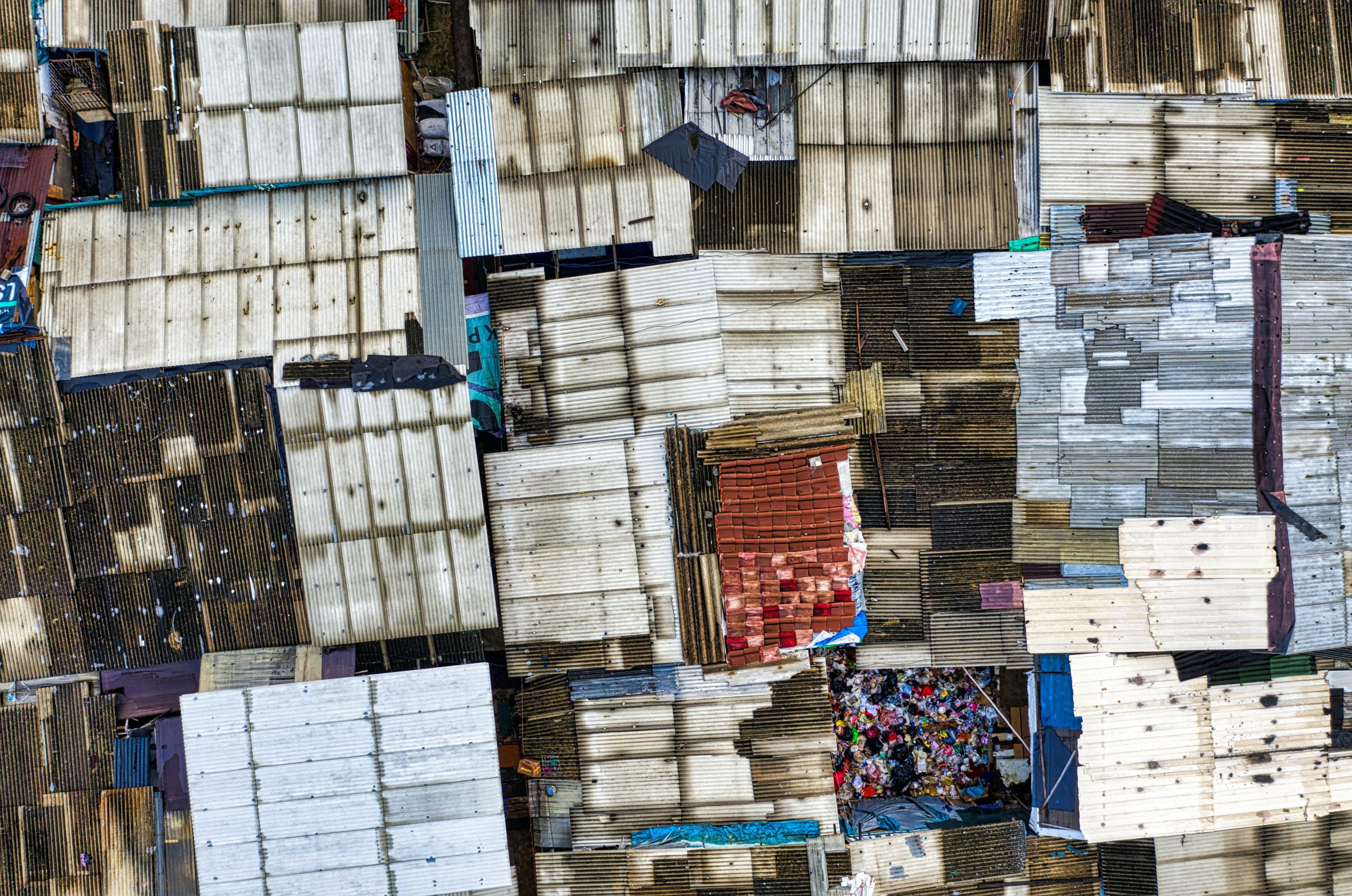
The Mukuru slum is situated on a hillside near the Kenyan capital’s major manufacturing industries. Job opportunities, however, are scant, so many subsist by scavenging for saleable items in the dumpsite that pollutes their locality. Most of the slum’s 700,000 residents live in suffocatingly tiny three-square-meter homes, sheltered only by roofs made of cardboard or plastic.

Diseases like malaria and tuberculosis are rampant, yet most medical facilities are priced out of residents’ reach. However, with the community’s involvement, the area has recently witnessed development, with 32 more miles of paved roads and significantly better access to flushing toilets.

The Slum Art Form’s Roots

In 2003, Lawrence “Shabu” Mwangi and a few other art school graduates from the Lumba-Lumba neighborhood of Mukuru formed an art collective. They wanted to avoid the criminal activities that many around them had succumbed to with the lack of fruitful employment opportunities.

Officially registering it in 2007, they named it “Wajukuu” or “grandchildren,” deriving from a Swahili proverb that says that younger generations feel the actions of parents and grandparents. Having borne the brunt of previous generations’ mistakes, they wanted to shape a happier future.

Bringing the Slum’s Art Form to Its Children

Noticing the many curious children intently looking in from the outside daily, they decided to start a Kids’ Club. This became their chance to find authentic self-expression, as also future employability, amid the deprivation that they were growing up with.

On a pleasant June day this year, perched upon large sheets of paper, the Kids’ Club started painting. Sitting beside the toxin-choked Ngong River, they used bright tangerine and vivid cobalt hues to breathe life into their self-portraits. They showed an intimate understanding of the problems that had broken their world and their dreams of transforming it. One child outlined his forearm and wrote “PEACE” in bold letters right next to it. Another depicted a man distributing bags of rice among locals.

So far, Wajukuu’s 27 members have nurtured more than 1,000 children through the Kids’ Club and art therapy. The team also manages a library that teaches close to 30 children daily. Wajukuu’s scholarship program has enabled 15 students to achieve a high school education. Wajukuu’s other initiatives include sustainable, organic farming and the twice-yearly Slum Art Festival, which hosts exhibitions and performances by well-known musicians and dancers.

Recognition for The Wajukuu Art Project

In 2022, Wajukuu was invited to take its distinctive slum art form to the Documenta Fifteen contemporary art exhibition in Kassel, Germany, which saw a footfall of more than 738,000. Indeed, Wajukuu interactive architectural displays were reminiscent of traditional Maasai homes and the construction patterns typical of its Mukuru, with its trembling corrugated metal walls.

Even after Documenta, Wajukuu was part of a minor core team working to promote collectivity and shared resource building across geographies. Furthermore, Wajukuu’s In The Absence exhibition at Nairobi’s African Arts Trust gallery in August 2024 startled visitors into self-reflection about the irresponsible use of technology and true freedom from colonialism.

– Shiveka Bakshi

Shiveka is based in London, UK and focuses on Good News and Global Health for The Borgen Project.

Photo: Pexels

September 13, 2024
https://borgenproject.org/wp-content/uploads/borgen-project-logo.svg 0 0 Hemant Gupta https://borgenproject.org/wp-content/uploads/borgen-project-logo.svg Hemant Gupta2024-09-13 07:30:012024-09-13 02:33:06The Wajukuu Art Project in Mukuru, Nairobi
Africa, Global Poverty, HIV/AIDS

USAID Programs in Eswatini

USAID Programs in EswatiniEswatini, due to its geographical location, relies on South Africa for the majority of its trade, with 65% of its exports and 75% of its imports going to South Africa, meaning that this is a large contributor to Eswatini’s economy. Despite the GDP per capita in Eswatini remaining relatively high, standing at $3,823 in 2023, nearly 70% of the population lives in poverty, with diseases such as HIV and AIDS having a devastating impact on citizens. With education quality being insufficient, alongside access to education, many do not receive an education that will prepare them for the workplace.

USAID Programs in Eswatini

Whilst there are several USAID programs in Eswatini, most of its work in Eswatini, and Southern Africa as a whole has been a part of the President’s Emergency Plan for HIV/AIDs Relief (PEPFAR), which works to control the HIV/AIDS pandemic in at least 50 countries across the world. The project has four main priorities within its operation: making progress towards HIV/AIDS control in more than 50 countries across the world, helping partner countries in spending every dollar they receive on creating data-driven policies, giving access to support to the populations that the by HIV/AIDs impacts the most and providing them with innovative solutions that are appropriate to their situations while utilizing partnerships in several different sectors to increase their impact.

After partnering with USAID and PEPFAR in 2007, Eswatini’s first Swaziland HIV Incidence Measurement Survey (SHIMS) in 2011 proved HIV rates in Eswatini were relatively high. Only less than 62% of the infected population aged between 18 and 49 knew their status, and out of those, only 73.1% were undergoing treatment and were virally suppressed. However, after SHIMS3 in 2021, these figures had improved significantly, with 93.7% of the population living with HIV knowing their status, and of this, 96.2% were undergoing treatment

DREAMS

USAID introduced the Determined, Resilient, Empowered, AIDS-free, Mentored and Safe (DREAMS) program in Eswatini with help from PEPFAR in 2015, to help teenage girls and young women by addressing factors that make them susceptible to HIV/AIDS. The program offers services such as access to pre-exposure prophylaxis (a drug that can prevent the acquisition of HIV), education subsidies and wider access to HIV screening, testing and counselling. In Eswatini, young girls also have access to business mentorship with Cabrini Ministries, as youth unemployment currently stands at 58%, and this mentorship provides young girls with employment opportunities in a social climate where job opportunities for women are sparse.

In 2024, PEPFAR announced that it is looking to roll out DREAMS NextGen, in partnership with USAID, which will aim to take a specific approach for the situation in each country, by expanding the services already in place and specific services for women in each partner country. This USAID program in Eswatini is the next step within the DREAMS program, which aims to create “supportive environments” for teenage girls and young women, with aims including strengthening families with social protection with subsidized education costs and parent and caregiver programs and mobilizing local communities to promote change through a roll-out of school and community HIV and violence awareness and prevention.

The Future

It is clear that with the help of USAID programs in Eswatini and schemes such as the PEPFAR, the country will be able to sustainably develop beyond USAID programs and control the HIV/AIDs pandemic. With further support from both of these organizations, the people of Eswatini will be able to prosper, with access to things like better and subsidized education that will better prepare young people for the workplace and better healthcare to improve their quality of life.

– Freyja Stone

Freyja is based in Manchester, UK and focuses on Global Health and Politics for The Borgen Project.

Photo: Unsplash

September 13, 2024
https://borgenproject.org/wp-content/uploads/borgen-project-logo.svg 0 0 Naida Jahic https://borgenproject.org/wp-content/uploads/borgen-project-logo.svg Naida Jahic2024-09-13 01:30:542024-09-12 03:18:01USAID Programs in Eswatini
Africa, Education, Global Poverty

Poverty Reduction in Madagascar 

Poverty Reduction in Madagascar 
In 2022, 75.2% of Madagascar’s population was in poverty. There has been a steady decline in poverty within rural areas however, poverty within urban areas has ripened, seeing an increase of 31.5% over the past decade. This shocking growth in poverty within Madagascar’s urban areas is due to several factors with the COVID-19 pandemic and a large quantity of cyclones being the main causes. Fortunately, efforts for poverty reduction in Madagascar are underway and making a difference.

Food Insecurity

This level of poverty has led to a ripening level of food insecurity, seeing 204,000 of the Madagascan population in the highest level of severity (IPC phase 4) and 859,000 in the second highest level of severity (IPC phase 3) in 2020.

In response to this, the Madagascan government received $227 million credit in April 2023 from the World Bank and the French Development Agency to restructure rural infrastructure. This restructuring and development program aims to aid approximately 165,000 farmers and 150,000 homes by implementing training on forms of agriculture to cope with their climate. In addition to blockchain input vouchers and 30,000 hectares of watersheds, it aims to help reduce food insecurity and further develop the rural economy.

Roads and Transport

In addition to tackling food insecurity, the Madagascan government are also rehabilitating roads, with 40 KM of the RN44 already complete and with work on rural roads not yet finished. This may have a knock-on effect on the education sector. As the restructuring is halving the travel time, it is allowing more children to attend school, helping to increase the completion of primary school from 62% for girls and 57% for boys. This will likely allow these children to grasp more skills and attain a higher-level job later in life. It may also benefit trading, as markets would become more accessible to the public allowing more local trade to occur. UNESCO’s research proves this, which infers that world poverty could be reduced by half if all adults finished high school.

Energy Access

Another aspect of Madagascar’s poverty reduction plan is to increase accessibility to electricity as, currently more than 18 million people currently lack electricity. It is crucial to improve the accessibility to electricity to facilitate the growth of enterprises, which is necessary to provide a better job market. Atou Seck, the World Bank Country Manager for Madagascar, has addressed this issue as a crucial aspect to provide improvement as he states, “Addressing poverty in Madagascar requires bold pro-growth reform that will improve the business climate, promote competition as well as build human capital, invest in connectivity, access to energy and digital infrastructure.”

In terms of initiatives, the Madagascan government has been approved for a $400 million credit for the Digital and Energy Connectivity for Inclusion in the Madagascar Project (DECIM). This project will likely increase energy access in Madagascar from 33.7% to 67% and add 3.4 million internet users, helping further Madagascar’s connectivity as a nation and allowing businesses to develop and generate larger profits, thus aiding poverty reduction in Madagascar.

In conclusion, Madagascar is one of the most impoverished countries in the world. However, there are several initiatives helping develop and further Madagascar’s economy, while aiding poverty reduction in Madagascar.

– Max O’Shea

Max is based in Chester, UK and focuses on Business and Technology for The Borgen Project.

Photo: Flickr

September 11, 2024
https://borgenproject.org/wp-content/uploads/borgen-project-logo.svg 0 0 Jennifer Philipp https://borgenproject.org/wp-content/uploads/borgen-project-logo.svg Jennifer Philipp2024-09-11 03:00:352024-09-10 22:47:50Poverty Reduction in Madagascar 
Africa, Global Health, Global Poverty

Monkeypox Outbreak in Africa

monkeypox outbreakCOVID-19 was a difficult time for everyone. Not only did we see extreme drawbacks in the economy, but drawbacks socially and personally as well. The world has worked hard to move on from a time of social isolation, and face masks, but a new problem has begun to arise that threatens the world’s plans for global stability. Monkeypox, now known as Mpox is a rare disease that leads to a rash and flu-like symptoms. There are two strains that affect a multitude of people at different rates and are contracted in various ways. Infected are commonly found in central African countries like the Democratic Republic of Congo (DRC), Uganda, and Rwanda. These countries are now facing high rates of spreading, stirring tensions and concerns of another global crisis and potential monkeypox outbreak.

Countries at Risk

Mpox is causing major outbreak fears in the DRC, Uganda and Kenya as people are starting to experience an increase in cases. Mpox in the DRC has reached over 15,000 reported cases, as of August 2024, making it the largest concentration of infected on the continent, and surrounding countries are at risk. Kenya, Uganda, and Rwanda have now reported their first cases of monkeypox, and have begun taking necessary precautions to isolate the problem before more are infected.

The DRC and other countries are working hard to contain the threat; a mixture of existing economic setbacks and Mpox would be detrimental to the progress and stability Africa has worked hard to achieve. Mpox in the DRC is close to a total outbreak in the eastern provinces of South and North Kivu where millions of displaced people are living in overcrowded conditions, inevitably causing an immediate rise in cases.

Kwazulu Natal reported nine cases of Mpox and two confirmed deaths already in July 2024. Men between the ages of 17 through 43 were among the first groups to contract the disease in July 2024. Exposure can occur through contact with contaminated materials, infected animals or infected people, most notably through sexual contact. South Africa fears of growing community transmission in areas with high concentrations of vulnerable groups.

Monkeypox Outbreak: Solutions

Government organizations like UNICEF, WHO and the African CDC are working in partnerships to provide vaccines, services and information, and health kits to healthcare facilities across Africa. A collaboration with Gavi, the vaccine alliance has led to the approval of several projects aimed at containing and stopping Mpox in the DRC and other African countries.

Beginning in 2026, Gavi will start stockpiling vaccines, but progress will rely on funding, prequalification of a recommended vaccine and the availability of WHO Emergency Use Listing. Gavi will support outbreak response in DRC and surrounding countries in the meantime. The organization will invest in the learning agenda which aims to help inform and improve future vaccination efforts.

In 2022 the CDC Foundation activated the Emergency Response Fund, previously used to bolster support to communities and organizations when Ebola, Zika, and most recently COVID-19 threatened the world. Appealing with government and private entities the CDC aims to raise as much support as possible, the first of many donations coming from the Robert Wood Johnson Foundation.

Going through the COVID-19 pandemic, the world gained an experience. Support in awareness and advocacy of the problem that the monkeypox outbreak poses is necessary for low-income countries to receive help. The world has the chance to stop another pandemic from taking shape.

– Immanuel Wiggins

Immanuel is based in Jackson, MS, US and focuses on Global Health for The Borgen Project.

Photo: Flickr

September 8, 2024
https://borgenproject.org/wp-content/uploads/borgen-project-logo.svg 0 0 Naida Jahic https://borgenproject.org/wp-content/uploads/borgen-project-logo.svg Naida Jahic2024-09-08 07:30:292024-09-08 01:37:58Monkeypox Outbreak in Africa
Africa, Education, Global Poverty

Investing in the Future: Education in Burundi

Education in BurundiThe landlocked African nation of Burundi is commonly known for its history of colonization and ethnic strife, which culminated in genocide against the Hutu majority by the powerful Tutsi minority in the ’90s. Since the resolution of its Civil War in 2005, Burundi has remained plagued by political corruption, specifically the bribing of low-level government officials. For example, 13% of citizens of Burundi reported their interactions in the education sector resulting in a bribe in 2014.

This corruption is especially harmful for the 42.2% population which is below the age of 15, as a lack of government funding and resources has contributed to a poor quality or complete lack of education. Fortunately, both government initiatives and external organizations have recognized this problem and sprung into action, bolstering programs in Burundi to forge an educated generation of citizens and develop the nation’s struggling economy.

Government Initiatives

Recognizing the vitality of an educated citizenry in promoting the development of a recently united nation, in 2005, Burundi’s government made primary education completely free. By 2022, this measure had the effect of a 118.5% gross primary enrollment rate, meaning 118.5% of the theoretical primary school population was actually enrolled in school. Already, immense benefits are visible in fields like mathematics and language; for students in second grade, for example, language proficiency jumped from 46% in 2014 to 79% in 2019.

Furthermore, the program has completely changed the old system, which favored the education of boys. By 2011, primary education enrollment was equal by gender. This change has huge implications for Burundian development. As women become more literate and have fewer children, they are more capable of taking on jobs and contributing to the economy rather than staying home to care for a large family.

While government efforts have been instrumental in increasing enrollment, more resources are still required to improve the quality of education in Burundi. Luckily, international organizations have recognized this need and stepped up to boost educational infrastructure:

Libraries Without Borders

Since 2014, Libraries Without Borders has offered digital learning to the youth in Burundi in the form of “Ideas Boxes” and “Ideas Cubes.” Ideas boxes present digital content with an Internet connection. At the same time, the cubes provide an offline library to students in rural areas. In just six months of operation, the first two ideas boxes in Burundi saw more than 24,000 visits from eager young students, specifically Congolese refugees and Burundians themselves from the village of Makamba. With funding from organizations like the Global Partnership for Education, we can expect to see the expansion of this program and improved multimedia forms of education in classrooms throughout the nation.

The United Nations Children’s Fund

To combat the poor quality of education, which has historically resulted in elevated dropout rates among Burundi’s schoolchildren, The United Nations Children’s Fund (UNICEF) has worked with the nation’s Ministry of Education to both train teachers and build inclusive schools for children with disabilities. Furthermore, a yearly UNICEF “Back to School” campaign has sourced World Bank funding to provide teaching and learning materials such as notebooks and chalk to schools across Burundi. In 2022, for example, the campaign targeted six less-developed areas with higher dropout rates, successfully instilling the value of a quality education in students who had never experienced it before.

Final Note

Although the work is not done, government efforts and international assistance have made strides in education in Burundi. With further investment in education as the nation’s future, we can hope to see these generations mature to form a robust economy and lead Burundi toward more prosperous development.

– Cole Zickwolff

Cole is based in Carlsbad, CA, USA and focuses on Good News, Technology and Solutions for The Borgen Project..

Photo: Flickr

September 8, 2024
https://borgenproject.org/wp-content/uploads/borgen-project-logo.svg 0 0 Hemant Gupta https://borgenproject.org/wp-content/uploads/borgen-project-logo.svg Hemant Gupta2024-09-08 01:30:172024-09-08 01:06:47Investing in the Future: Education in Burundi
Africa, Agriculture, Global Poverty

Innovative Ways to Tackle Food Insecurity in Botswana

Food Insecurity in BotswanaLocated in the centre of Southern Africa, Botswana has become one of the fastest-growing economies. It is now considered an upper-middle-income country, aspiring to soon become a high-income country.  Despite this, although its population is small, approximately 2.5 million people, it is one of the most unequal countries in the world. The World Food Programme (WFP) estimated that food insecurity in Botswana affects 22% population that experiences moderate or severe food insecurity across the country. This is particularly felt in rural areas, with high poverty rates and limited access to fertile land.

Alongside unreliable food chains, approximately 70% of Botswana’s landscape is made up of desert and poor soils. Collectively, this contributes to food insecurity in Botswana. Thus, since the COVID-19 pandemic, the government of Botswana has focused on building resilience in food supply chains and domestic production, to improve food security across the country. Addressing food insecurity in Botswana has become a national priority, especially given the increasing vulnerability of the land to natural disasters such as droughts. It is crucial to use innovative solutions to promote food security for their population.

Project Anton Technology

Anton Tech has grown to become an AI research start-up, aiming to transform Botswana’s agriculture industry. It directly addresses the looming threat of food insecurity across the country. The project uses image data, from drones to satellites to cameras, to detect pests and diseases. It can also predict soil organic carbon levels, in turn giving recommendations on the treatments and interventions needed. Additionally, Project Anton uses WhatsApp and Facebook Messenger to increase its accessibility for farmers across Botswana.

Climate-Smart Agriculture

Climate-smart agriculture includes weather forecasting apps and satellite imagery, which can assist in analyzing weather patterns and social moisture levels. The International Institute of Tropical Agriculture collaborated with the Botswana Ministry of Agriculture to assist local farmers in climate-smart practices. This led to a 30% crop yield increase for small-scale farmers, according to the African Leadership Magazine.

Furthermore, another climate-smart agriculture technology includes the practice of zero tillage. This is a way to conserve soil carbon, soil structure and moisture. This sustainable management of soil resources has improved crop yields. In the long term, this technology has encouraged farmers to innovatively repurpose their old plows into ripper tools.

Bushvet

Across Botswana, veterinary health services are accessible and efficient. The geography of Botswana often made it difficult for rural cattle to access animal health services. Thus, the Botswana Agricultural Marketing Board initiated the “Bushvet” call-out service, providing farmers with on-farm veterinary services. Additionally, many retired veterinary paraprofessionals could support in delivering basic services such as animal drugs and advisory support. This means Bushvet can operate at a community level, increasing the long-term sustainability of this programme, as well as ensuring peak cattle health for farmer’s businesses.

Capacity Building and Knowledge Bridging

Educational online platforms post up-to-date agricultural techniques, the best practices for pest control, and general market information, and much more. This information is invaluable to farmers across Botswana, bridging their knowledge gap. UShare is a social media platform specifically for farmers, allowing them to exchange knowledge, ask questions, and vitally, connect to experts in the field, according to the African Leadership Magazine.

Tackling Food Insecurity in Botswana

The future of the country’s food security is filled with an abundance of innovative and technological solutions that have the potential to successfully eradicate food insecurity in Botswana. As per Mr. Kgabeng, Co-Founder of Anton Tech,  “Put it out there and continue to iterate on it, that is how we improve as innovators and drive toward a better Africa,” the U.N. reports.

– Sian Ameer-Beg

Sian is based in Durham, UK and focuses on Good News and Technology for The Borgen Project.

Photo: Flickr

September 2, 2024
https://borgenproject.org/wp-content/uploads/borgen-project-logo.svg 0 0 Naida Jahic https://borgenproject.org/wp-content/uploads/borgen-project-logo.svg Naida Jahic2024-09-02 07:30:422024-09-02 07:39:34Innovative Ways to Tackle Food Insecurity in Botswana
Africa, Employment, Global Poverty

Reducing Unemployment in Somalia

Unemployment in SomaliaSomalia struggles with one of the highest unemployment rates in the world. As of 2022, unemployment stands at 19.29%, with youth unemployment in Somalia being even higher at 34.66%. This means that more than a third of the Somalian youth are unemployed, neither in work nor education, threatening the livelihoods of many and endangering economic growth for the whole country. A significant aspect of unemployment is a lack of education- nearly half of children in Somalia do not attend school, which further limits their career prospects. Poverty remains a generational issue, with four in every five children living in some form of deprivation.

High rates of unemployment worsen already concerning rates of poverty; more than 60% of the population live on less than $2 a day. This means many struggle to feed their families or access education or healthcare. With low employment rates looming over the country, there seems to be no way out of these cycles of poverty.

The Nation of Poets

Somalia has a chance at a different future; known as “The Nation of Poets,” the country is investing more in the arts to help reduce unemployment, especially for younger people. President Sheikh Mohamud launched the National Youth Development Initiative to get more young people into work, with the help of U.S. investments, the World Bank reports.

The World Bank defines the Orange Economy as “a range of economic activities in cultural and creative industries where the main objective is the production or reproduction, promotion, distribution, or commercialisation of goods, services, and activities of content derived from cultural, artistic or heritage origins” and it generates around 30 million jobs every year. Harnessing this area of the economy could be Somalia’s answer to unemployment.

Unemployment in Somalia

Creative industries in Somalia thrived before the civil war but declined during it – now younger people are reviving them, according to the World Bank. The arts are a particularly effective way of reducing unemployment as they offer opportunities for both women and young people, the most affected by unemployment in Somalia.

The Solutions 4 Youth Employment report notes that four areas require changes to improve unemployment rates: training and mentorship; finance and grants; access to international markets; and local community networks for self-sufficiency.

The British Council’s East Africa Arts program is helping provide necessary financial aid to fund training and support people entering the workforce, according to the World Bank. The arts can provide prospects for so many to escape cycles of poverty, through providing opportunities for women and young people, and those whose careers and livelihoods have been impacted by extreme weather and natural disasters.

Other Initiatives

Alongside this investment in the creative industries, there have also been efforts to improve employment rates in numerous different sectors. The U.N. Joint Programme on Youth Employment worked to provide both long and short-term employment for young people by focusing on key areas like agriculture, resulting in 5,000 new jobs.

Organizations like UNFPA and SOLO have been offering training to young people in Somalia to improve their soft skills, a crucial aspect of being employable. This training means that young people are ready and equipped to take up jobs that other programs are helping to create.

Investing in the arts and creative industries could help reduce unemployment in Somalia and provide life-changing chances for so many living in poverty. This focus on harnessing the skills and gifts of Somalia’s young people is instrumental in securing Somalia’s future.

– Eryn Greenaway

Eryn is based in East Sussex, UK and focuses on Business and New Markets for The Borgen Project.

Photo: Flickr

September 2, 2024
https://borgenproject.org/wp-content/uploads/borgen-project-logo.svg 0 0 Naida Jahic https://borgenproject.org/wp-content/uploads/borgen-project-logo.svg Naida Jahic2024-09-02 07:30:232024-09-02 07:32:04Reducing Unemployment in Somalia
Africa, Agriculture, Global Poverty

The Impact of AI on Agriculture in Kenya and Nigeria

Impact of AI on AgricultureArtificial intelligence (AI) holds considerable promise for redefining agriculture in Kenya and Nigeria, two of Africa’s leading tech hubs. Recent estimates suggest AI could markedly improve Africa’s economy, potentially adding up to $2.9 trillion by 2030. In 2023, African tech startups attracted approximately $4 billion in investments, with Kenya’s AI sector receiving $15 million and Nigeria’s $2.9 million, making them two of the leading recipients. A substantial portion of these funds is being directed to the agricultural sector.

Kenya

Kenya, with a population of about 55 million, has enjoyed relative economic and political stability recently, with a projected growth rate of 5.2% from 2024 to 2026. Despite these positivities, the country faces ongoing issues such as poverty, inequality and natural disasters.

Agriculture, which employs more than 40% of Kenya’s workforce and contributes 33% to GDP, is central to the economy. Smallholder farmers, making up more than 70% of the farming population, are essential for both economic stability and food supply. However, farmers battle unpredictable weather, limited access to information and insufficient resources to cope with the effects of natural disasters.

In 2023, approximately 4.4 million Kenyans experienced severe food insecurity, reflecting the sector’s difficulties with financing, quality inputs and crucial information such as weather forecasts and market prices, according to the 2024 GSMA report.

Nigeria

Nigeria, Africa’s most populous nation with more than 220 million people, is experiencing rapid growth at an annual rate of more than 2.6%. Despite this, the nation faces substantial economic and social challenges, including stagnant GDP per capita, high poverty rates, and inadequate infrastructure. Agriculture, which employs 40% of the workforce and contributes 24% to GDP, is critical to the economy, yet only 35% of arable land is actively farmed.

Nigerian farmers deal with erratic weather, security issues, poor infrastructure as well as problems like poor seeds, labour shortages, and the loss of farmland to urbanisation, according to ICT Works.

In July 2023, Nigeria declared a food insecurity emergency, forecasting that 26.5 million people could face acute hunger in 2024 due to frequent droughts and floods impacting food production.

The Impact of AI on Agriculture in Kenya

Launched in 2023, Digital Green’s Farmer Chat improves farming advice by offering personalized support to extension workers. It uses information from videos, call logs and factsheets to provide real-time assistance, having already sent more than 134,000 messages in Swahili and English, according to the 2024 GSMA report. Plans are underway to expand its coverage to more crops and regions.

Founded in 2023, Amini addresses the lack of environmental data – such as soil quality and rainfall patterns – which the World Bank identified in 2022. Amino’s platform uses AI and satellite technology for crop monitoring, yield predictions and risk assessments.

Partnering with TensorFlow technology, PlantVillage U.S. nonprofit has developed an AI-powered app to identify plant diseases. The app detects issues on plant leaves such as and recognizes patterns indicating disease outbreaks, helping to combat the 33% crop loss Kenyan farmers face each year due to pests and diseases. The app has attracted more than 10,000 users, who have reported an average 40% increase in crop yields.

The Impact of AI on Agriculture in Nigeria

Crop2Cash offers FarmAdvice, a hotline that gives farming advice via a toll-free number. Since its launch in July 2024, FarmAdvice has provided personalized recommendations in local languages to more than 500,000 farmers across 13 states, helping them increase their incomes and crop yields, according to the 2024 GSMA report.

AirSmart provides AI-driven solutions by collecting and analyzing data from drones, satellites, soil sensors and loT devices. The insights help manage water, fertilizer, and pesticide usage, predict yields and offer data-driven farm management recommendations, according to ICT Works.

The World Food Program (WFP) has developed a predictive model that forecasts food shortages up to 30 days in advance, according to the 2024 GSMA report. By looking at past food consumption data alongside market prices and weather conditions, this tool helps provide early warnings of potential food shortages.

Staying on Track

The impact of AI on agriculture is already being felt in Kenya and Nigeria, but keeping an eye on persistent issues is essential to fully realize its potential. AI is advancing especially in data-driven advisory and financial services, but the high costs of precision tools like loT sensors and drones are problematic. Making these technologies more accessible is important for maximizing the impact of AI on agriculture. While generative AI could assist farmers with low literacy or disabilities, improving digital literacy and ensuring AI services are accessible on affordable mobile devices will enable wider adoption of new agricultural practices among smallholder farmers.

– Georgia O’Keeffe

Georgia is based in Wiltshire, UK and focuses on Technology and Politics for The Borgen Project.

Photo: Flickr

September 2, 2024
https://borgenproject.org/wp-content/uploads/borgen-project-logo.svg 0 0 Naida Jahic https://borgenproject.org/wp-content/uploads/borgen-project-logo.svg Naida Jahic2024-09-02 01:30:152024-09-01 00:40:36The Impact of AI on Agriculture in Kenya and Nigeria
Page 12 of 24«‹1011121314›»

Get Smarter

  • Global Poverty 101
  • Global Poverty… The Good News
  • Global Poverty & U.S. Jobs
  • Global Poverty and National Security
  • Innovative Solutions to Poverty
  • Global Poverty & Aid FAQ’s
Search Search

Take Action

  • Call Congress
  • Email Congress
  • Donate
  • 30 Ways to Help
  • Volunteer Ops
  • Internships
  • Courses & Certificates
  • The Podcast
Borgen Project

“The Borgen Project is an incredible nonprofit organization that is addressing poverty and hunger and working towards ending them.”

-The Huffington Post

Inside The Borgen Project

  • Contact
  • About
  • Financials
  • President
  • Board of Directors
  • Board of Advisors

International Links

  • UK Email Parliament
  • UK Donate
  • Canada Email Parliament

Get Smarter

  • Global Poverty 101
  • Global Poverty… The Good News
  • Global Poverty & U.S. Jobs
  • Global Poverty and National Security
  • Innovative Solutions to Poverty
  • Global Poverty & Aid FAQ’s

Ways to Help

  • Call Congress
  • Email Congress
  • Donate
  • 30 Ways to Help
  • Volunteer Ops
  • Internships
  • Courses & Certificates
  • The Podcast
Scroll to top Scroll to top Scroll to top