The Wajukuu Art Project in Mukuru, Nairobi
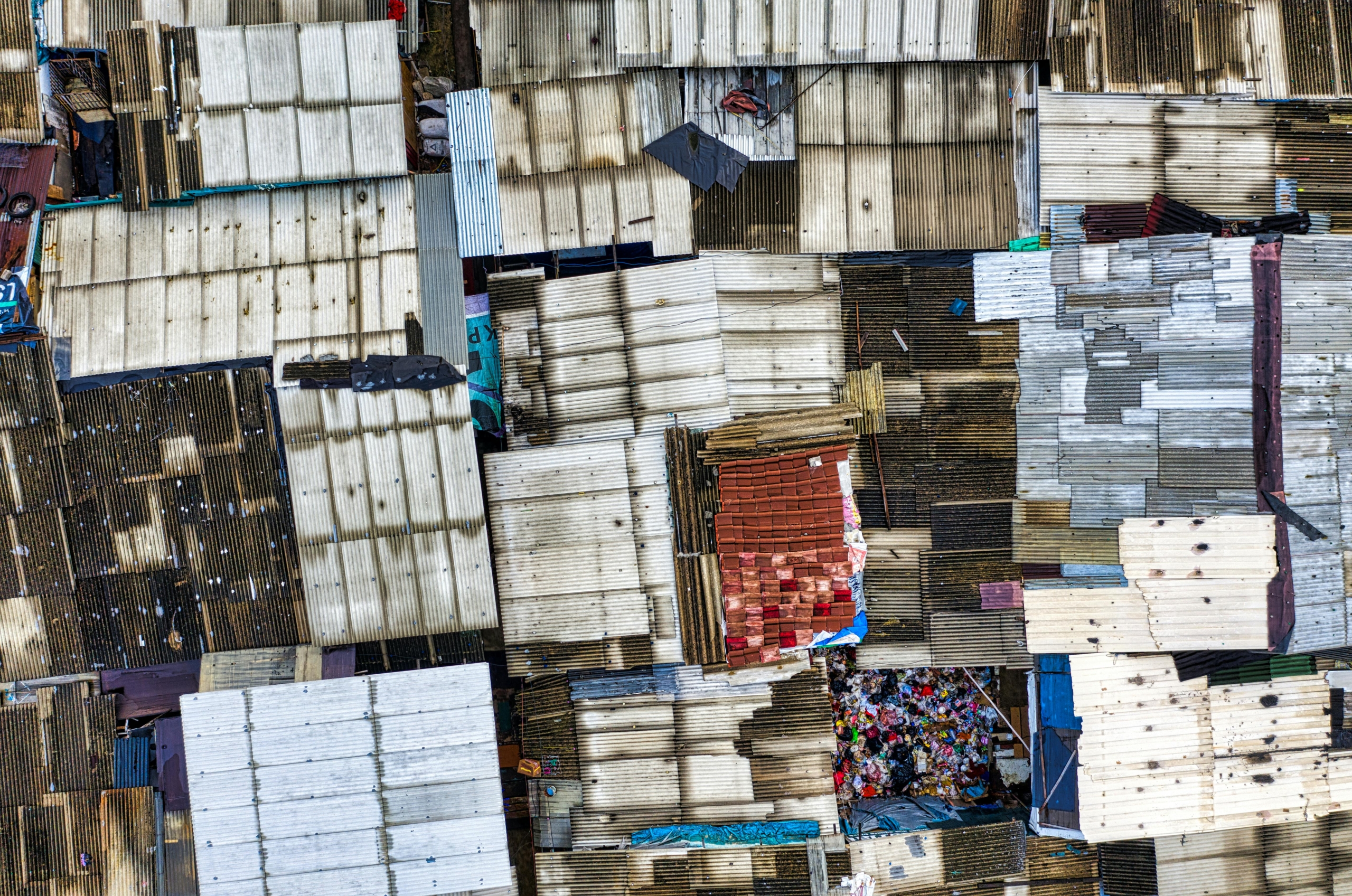 Multidimensional poverty overwhelms the five senses. The smell takes in smoke- and the stench-saturated air. Hearing puts up with never-ending noise pollution. Taste feeds on bits of nutrient-scarce food. Touch is calloused by long working hours. Sight looks at its dilapidated world with agony. However, these senses often come together to reclaim creativity and make sense of their reality through art. The Wajukuu Art Project has pioneered the slum art form of Mukuru, Nairobi, Kenya. Its stunning visual art and commitment to uplifting its community have earned it acclaim locally and globally.
Mukuru’s Living Conditions
The Mukuru slum is situated on a hillside near the Kenyan capital’s major manufacturing industries. Job opportunities, however, are scant, so many subsist by scavenging for saleable items in the dumpsite that pollutes their locality. Most of the slum’s 700,000 residents live in suffocatingly tiny three-square-meter homes, sheltered only by roofs made of cardboard or plastic.
Diseases like malaria and tuberculosis are rampant, yet most medical facilities are priced out of residents’ reach. However, with the community’s involvement, the area has recently witnessed development, with 32 more miles of paved roads and significantly better access to flushing toilets.
The Slum Art Form’s Roots
In 2003, Lawrence “Shabu” Mwangi and a few other art school graduates from the Lumba-Lumba neighborhood of Mukuru formed an art collective. They wanted to avoid the criminal activities that many around them had succumbed to with the lack of fruitful employment opportunities.
Officially registering it in 2007, they named it “Wajukuu” or “grandchildren,” deriving from a Swahili proverb that says that younger generations feel the actions of parents and grandparents. Having borne the brunt of previous generations’ mistakes, they wanted to shape a happier future.
Bringing the Slum’s Art Form to Its Children
Noticing the many curious children intently looking in from the outside daily, they decided to start a Kids’ Club. This became their chance to find authentic self-expression, as also future employability, amid the deprivation that they were growing up with.
On a pleasant June day this year, perched upon large sheets of paper, the Kids’ Club started painting. Sitting beside the toxin-choked Ngong River, they used bright tangerine and vivid cobalt hues to breathe life into their self-portraits. They showed an intimate understanding of the problems that had broken their world and their dreams of transforming it. One child outlined his forearm and wrote “PEACE” in bold letters right next to it. Another depicted a man distributing bags of rice among locals.
So far, Wajukuu’s 27 members have nurtured more than 1,000 children through the Kids’ Club and art therapy. The team also manages a library that teaches close to 30 children daily. Wajukuu’s scholarship program has enabled 15 students to achieve a high school education. Wajukuu’s other initiatives include sustainable, organic farming and the twice-yearly Slum Art Festival, which hosts exhibitions and performances by well-known musicians and dancers.
Recognition for The Wajukuu Art Project
In 2022, Wajukuu was invited to take its distinctive slum art form to the Documenta Fifteen contemporary art exhibition in Kassel, Germany, which saw a footfall of more than 738,000. Indeed, Wajukuu interactive architectural displays were reminiscent of traditional Maasai homes and the construction patterns typical of its Mukuru, with its trembling corrugated metal walls.
Even after Documenta, Wajukuu was part of a minor core team working to promote collectivity and shared resource building across geographies. Furthermore, Wajukuu’s In The Absence exhibition at Nairobi’s African Arts Trust gallery in August 2024 startled visitors into self-reflection about the irresponsible use of technology and true freedom from colonialism.
– Shiveka Bakshi
Shiveka is based in London, UK and focuses on Good News and Global Health for The Borgen Project.
Photo: Pexels
