• Link to X
  • Link to Facebook
  • Link to Instagram
  • Link to TikTok
  • Link to Youtube
  • About
    • About Us
      • President
      • Board of Directors
      • Board of Advisors
      • Financials
      • Our Methodology
      • Success Tracker
      • Contact
  • Act Now
    • 30 Ways to Help
      • Email Congress
      • Call Congress
      • Volunteer
      • Courses & Certificates
      • Be a Donor
    • Internships
      • In-Office Internships
      • Remote Internships
    • Legislation
      • Politics 101
  • The Blog
  • The Podcast
  • Magazine
  • Donate
  • Click to open the search input field Click to open the search input field Search
  • Menu Menu

Archive for category: Africa

Africa, Global Poverty, Health

Improving Health Care in Somalia

Health Care in SomaliaHealthcare has become a critical issue for Somalia. With only one government hospital in the capital, many residents are forced to pay substantial amounts for health care. Additionally, health care services are more accessible in urban areas than in rural regions, creating a disparity between these sectors. By 2024, Somalia had also encountered numerous humanitarian challenges exacerbated by poverty. This has included natural disasters such as droughts and severe flooding in 2023, which devastated crops and infrastructure. However, several organizations are working to rebuild Somalia, focusing on improving its health care system.

Medair

Medair provides free health and nutrition services to those who cannot afford care, significantly reducing mortality and morbidity rates, especially among children. It has also integrated health services with education on disease prevention to improve overall community health. Additionally, recognizing the impact of family issues like domestic violence, family separation and child labor on mental health, Medair has established child-friendly spaces in Somalia. These spaces offer a supportive environment where children can receive therapy and other assistance to alleviate stress.

For instance, Medair has been invaluable for people like Fadumo and her son Hassan. Their family relies on the father’s income as a construction worker, insufficient to cover their health care needs. With few hospitals accessible due to general shortages in Somalia, Medair’s support has been crucial. Fadumo joined the malnutrition program for pregnant mothers, which helped her regain her strength. Her son, who was also malnourished, received prompt treatment and was able to recover.

International Committee of the Red Cross

In extreme natural disasters like droughts, families in Somalia often struggle to reach the nearest hospital. To address this challenge, the International Committee of the Red Cross (ICRC) works to improve access to health care. The ICRC supports four hospitals and 27 primary care centers in Somalia, ensuring they are adequately staffed to prevent check-up delays. Additionally, the organization provides material assistance by ensuring health care facilities have access to clean water and the necessary tools to address malnutrition. The ICRC also offers rapid support for patients who are shot or severely injured.

The ICRC also engages with local citizens to ensure their safety and protection, particularly during conflict. In response to large-scale armed attacks or the use of explosives, the ICRC has a designated plan and delivery strategy to provide extensive support and prioritize care for the most severely wounded.

Somalia’s First Aid and Pre-Hospital Emergency Care program facilitates comprehensive pre-hospital care by recruiting staff and ensuring the correct delivery of medicine. Additionally, the program offers first aid training for communities, empowering individuals to contribute to improving their community’s overall safety and health.

Somali Universal Health Coverage

After three decades of conflict, health care in Somalia has significantly deteriorated, with up to 70% of the population living in poverty. Recognizing the need for improvement, the government has prioritized primary health care as a crucial initiative to enhance community health. This approach aims to provide comprehensive care for individuals throughout their lives, ensuring the highest quality of treatment. Somalia has undertaken several key actions to advance toward universal health coverage.

First, a coordination system was established to ensure adequate staffing at every district level and monitor hospital medicine availability. Emergency preparedness is a critical component of Somali Universal Health Coverage; one approach includes strengthening warning systems to allocate health services before sudden droughts or floods impact food supplies. Additionally, the role of the Ministry of Health has been expanded to regulate better and finance these initiatives effectively.

Final Note

Somalia’s health care system, severely impacted by decades of conflict and high poverty rates, has seen some improvements through various initiatives. Efforts by organizations like Medair and the ICRC, along with government-led actions such as enhanced coordination and emergency preparedness, are working to address critical health needs and provide essential services. Despite progress, significant challenges remain, highlighting the need for comprehensive support and development in Somalia’s health care sector.

– Linda Yoonseo Lee

Linda is based in Phoenix, AZ, USA and focuses on Good News for The Borgen Project.

Photo: Flickr

August 31, 2024
https://borgenproject.org/wp-content/uploads/borgen-project-logo.svg 0 0 Hemant Gupta https://borgenproject.org/wp-content/uploads/borgen-project-logo.svg Hemant Gupta2024-08-31 01:30:342024-08-31 02:05:16Improving Health Care in Somalia
Africa, Development, Electricity and Power

Renewable Energy in Nigeria: Bringing Solar Panels to Locals

Renewable Energy in NigeriaNigeria, Africa’s most populous country, faces a significant energy deficit. The nation’s grid infrastructure is inadequate, leaving vast rural areas and many urban centers without consistent electricity. This reality means that millions of Nigerians rely on polluting and expensive alternatives such as diesel generators, which are not only harmful to human health but also detrimental to the environment. These challenges make the work of the Renewable Energy Association of Nigeria (REAN) critical, it seeks to champion renewable energy solutions in Nigeria that are sustainable, affordable, and accessible to all.

Addressing Energy Poverty

Energy poverty in Nigeria is not just a technical issue; it is deeply intertwined with social and economic inequalities. Women and girls, in particular, bear the brunt of energy shortages, as they are often responsible for household energy procurement, which can be both time-consuming and dangerous. REAN recognizes this and is working to ensure that women in Nigeria are a part of the renewable energy revolution, both as beneficiaries and as active participants in the industry.

Renewable Energy in Nigeria

REAN is at the forefront of addressing Nigeria’s energy crisis, a challenge that significantly hampers the nation’s development. It focuses on making fossil fuels a thing of the past, driving the shift toward renewable energy in a country where only about 55.4% of the population has access to grid electricity. This lack of reliable power affects nearly every aspect of life for millions of Nigerians, contributing to poor health outcomes, limited educational opportunities, reduced socioeconomic mobility and gender inequality.

REAN focuses on promoting solar energy as a viable alternative to fossil fuels. Through partnerships with local stakeholders, it has been instrumental in increasing the deployment of solar panels across the country. This initiative provides cleaner energy and supports local industries’ growth, fostering job creation and economic development. By encouraging the use of locally sourced materials and expertise in the renewable energy sector, REAN aims to boost Nigeria’s self-sufficiency in this critical area.

An impactful example of REAN’s work is evident in its support of Ajima Farms, where solar energy has significantly improved productivity by ensuring a consistent power supply. This story highlights how renewable energy can transform local businesses and communities by providing reliable and sustainable power.

Broader Implications for Society

The impact of REAN’s work extends beyond just providing power. Access to reliable and clean energy has profound implications for improving education, as schools can function more effectively with consistent electricity. It also enhances health care delivery, enabling clinics and hospitals to offer better services, particularly in remote areas. Furthermore, by reducing the reliance on fossil fuels, REAN’s initiatives contribute to a healthier environment, helping Nigeria to meet its commitments to global climate goals.

Promoting Renewable Energy in Nigeria

REAN plays a pivotal role in addressing one of the country’s most pressing challenges. By promoting renewable energy in Nigeria, particularly solar power, REAN is not only providing a solution to Nigeria’s energy deficit but also driving broader social, economic, and environmental benefits. REAN’s efforts are crucial in ensuring that the transition to renewable energy is inclusive, sustainable, and beneficial for all Nigerians, thereby making fossil fuels a relic of the past.

– Lydie Udofia

Lydie is based in London, UK and focuses on Technology and Solutions for The Borgen Project.

Photo: Unsplash

August 25, 2024
https://borgenproject.org/wp-content/uploads/borgen-project-logo.svg 0 0 Naida Jahic https://borgenproject.org/wp-content/uploads/borgen-project-logo.svg Naida Jahic2024-08-25 07:30:382024-08-26 02:36:31Renewable Energy in Nigeria: Bringing Solar Panels to Locals
Africa, Food & Hunger, Global Poverty

Famine in Sudan: WFP, FAO and UNICEF Are Providing Vital Aid

Famine in SudanFamine in Sudan is currently one of the worst hunger crises in its history, with 25.6 million people subject to extreme food insecurity. The situation results from conflicts between parties, as war persists for months without respite. Violent attacks, looting and the destruction of infrastructure are widespread. This leads to interrupted agriculture, transportation of goods and food shortages, driving the price of food up by 83%.

In a recent United Nations (U.N.) report, Edem Mosornu, Director of Operations and Advocacy in the Office for Coordination of Humanitarian Affairs, calls this a reality coming out of a “nightmare.” She reveals the gravity of the situation, with 90% of the population sitting at an advanced stage of food insecurity, trapped in areas that are out of reach of humanitarian agencies.

Famine has already gripped the entire northern region of Darfur and 13 other areas are at high risk of facing the same fate. Sudan’s dire situation requires immediate assistance, making humanitarian aid and initiatives essential for providing crucial support.

Famine in Sudan and WFP Action 

The World Food Programme (WFP) has responded rapidly and effectively to the Sudan emergency. It supports community kitchens around Khartoum in partnership with local organizations, aiming to provide 100,000 hot meals per month. Additionally, WFP’s strategy includes using an “Emergency Telecommunications Cluster” to protect vital communication and establish United Nations Humanitarian Air Services. This successful project connects Sudan to Amman and Nairobi. It has already transported 18.5 metric tons of cargo in the latter half of 2023. WFP is also implementing an emergency wheat production project in areas such as Kassala and Gezira to encourage long-term resilience.

FAO and UNICEF

The Food and Agriculture Organization of the United Nations (FAO) and the United Nations Children’s Fund (UNICEF) also aid Sudan. FAO’s project is closely aimed at supporting farmers and their agriculture and improving the situation through this approach. This involves the distribution of seeds; the U.N. organization has already purchased 8,000 tonnes of millet and sorghum cereal seeds and aims to reach 1.8 million farming families this year.

On the other hand, UNICEF has focused on evaluating and supporting children suffering from severe malnutrition. This effort has included vaccinating 500,000 children and providing more than five million people with clean water. To support education, UNICEF works closely with mothers, offering financial assistance to 350,000 pregnant and lactating women and their families. It is also making efforts to protect vulnerable children from violence, separation and trauma.

Final Note

As long as conflict persists in Sudan, the hunger crisis continues. Predictions from the Integrated Food Security Phase Classification indicate that the situation could lead to severe health issues, including the spread of infectious diseases and increased infant mortality. The humanitarian aid provided by WFP, FAO and UNICEF offers hope for Sudan’s future. However, it also underscores that the situation is far from stable and ongoing assistance remains crucial.

– Grace Sammartini

Grace is based in Rome, Italy and focuses on Good News and Global Health for The Borgen Project.

Photo: Flickr

August 24, 2024
https://borgenproject.org/wp-content/uploads/borgen-project-logo.svg 0 0 Hemant Gupta https://borgenproject.org/wp-content/uploads/borgen-project-logo.svg Hemant Gupta2024-08-24 03:00:092024-08-23 06:25:17Famine in Sudan: WFP, FAO and UNICEF Are Providing Vital Aid
Africa, Economy, Global Poverty

$20 Billion in Funding to Boost Ethiopia’s economic recovery

Ethiopia's economic recoveryEthiopia, Africa’s second most populous country, has faced significant economic challenges recently, including a total debt of $28 million, a foreign currency shortage and the default of its $33 million Eurobond in 2023. In response to these pressures, the National Bank of Ethiopia (NBE) made a decisive move on July 29, 2024, by floating its currency to secure much-needed funding. This shift allows for free trade in the foreign exchange market, which the NBE believes will increase the country’s integration with the global economy.

The International Monetary Fund (IMF) and the World Bank have pledged $20 billion in funding in the next four years to support Ethiopia’s economic recovery and growth. This financial assistance aims to boost the financial sector, enhance investment and trade opportunities and advance the overall economy. The plan also focuses on reforming critical areas such as education, renewable energy, urban development and job creation, laying the groundwork for a more sustainable and prosperous future.

Why Does Ethiopia Need Funding?

The effects of the pandemic were felt worldwide and Ethiopia’s agriculture industry, the most significant contributor to the country’s gross domestic product (GDP), was no exception. Accounting for approximately 75% of the workforce and 80% of exports, the sector faced immense pressure as COVID-19 restrictions disrupted the food supply chain, limiting business operations and employment. These disruptions led to decreased crop production, particularly in rural communities, resulting in reduced household incomes, higher food prices and increased financial instability.

Additionally, tensions between Ethiopian and Eritrean forces escalated into the Tigray War from 2020 to 2022. Although a cease-fire agreement was eventually reached, the aftermath of the conflict left widespread devastation across Ethiopia, displacing many people and damaging critical infrastructure. The situation became particularly dire in the Amhara region, with communities deprived of access to food, water and health care. As a result, the area was declared an emergency zone in August 2023.

Relentless natural disasters have also severely impacted Ethiopia in recent years. In November 2023, heavy rainfall caused floods in parts of the Somali region. This year, floods struck several areas, including Afar, Central Ethiopia and Oromia in May and much of the Horn of Africa in June, leading to widespread damage and further displacement. Last month, two catastrophic landslides buried villages in the Gofa zone, marking the deadliest such events in the country’s history. Recovery efforts are ongoing, with humanitarian aid programs working tirelessly to rebuild and restore these devastated areas.

Ethiopia’s Economic Recovery

Since the announcement of the floating currency, Ethiopia’s birr has faced a sharp decline in value, immediately triggering a rise in inflation and widespread concern. In response, the government lifted import bans on more than 30 products that had been restricted since 2022. While this move could enhance Ethiopia’s competitiveness in the global market, the long-term benefits are yet to be seen.

Prime Minister Abiy Ahmed emphasized the importance of this shift, stating that it is “critical to relieving foreign exchange shortages, removing constraints to private sector investment and growth and aligning the prices of imported and exported goods and services with market realities.” The restructuring is expected to keep Ethiopia on track to becoming a middle-income country within the next several years.

Final Note

The $20 billion funding from the IMF and World Bank will help stabilize Ethiopia’s economic recovery by restructuring debt, boosting key sectors and supporting recovery from natural disasters and conflict. This aid is crucial for enhancing global competitiveness and advancing the country toward middle-income status.

– Tanita Love

Tanita is based in Chicago, IL, USA and focuses on Business and New Markets for The Borgen Project.

Photo: Unsplash

August 23, 2024
https://borgenproject.org/wp-content/uploads/borgen-project-logo.svg 0 0 Hemant Gupta https://borgenproject.org/wp-content/uploads/borgen-project-logo.svg Hemant Gupta2024-08-23 07:30:432024-08-22 13:36:07$20 Billion in Funding to Boost Ethiopia’s economic recovery
Africa, Food Security, Global Poverty

Can Bamboo Restore Africa’s Soil Health?

The Bamboo Magic: Can Bamboo Restore Soil Health in Africa? As of May 30, 2024 unprecedentedly severe flash floods caused by heavy rainfall swept Eastern Africa claiming 528 lives. Additionally, more than 480,000 people have been displaced from their homes. In Southern Africa, the severe drought caused widespread crop failure and livestock death. This has lead to immediate food insecurity and the destruction of agricultural assets damaging future prospects and livelihoods.

As with many large-scale disasters, the poorest demographic received the most fatal damage. The back-to-back sequence of drought and flash floods hint at a degrading land. The lack of forested and organic bindings present in healthy soil is known to diminish the land’s capability to capture and retain water. Additionally, it can slow the pace of water, leading to increased runoff. This increases the likelihood of floods in the event of rainfall.

Impacts of Land Degradation in Africa

Land degradation is a major threat to poverty alleviation in Africa. Since the majority of Africa’s economy relies on agriculture, the economic progress of African nations and the food and income security of individual households rely heavily on agricultural success and productivity. Here are some of the impacts of soil degradation:

  • Effects of soil degradation at a local scale. Soil degradation leads to reduced crop yields, increased vulnerability to meteorological shocks such as droughts and floods, reduced water security and reduced natural resources (access to vegetation and timber) that underpin income generation for certain demographics.
  • Effects of soil degradation at a national scale. Economic development has historically been shown to improve the livelihood of its residents. Therefore, hurdles to Africa’s economic development are a hurdle to improving poverty levels in Africa.  Soil degradation also encompasses the decrease in the total nutrient content of agricultural land. This is significant as the nutrient content of agricultural land has a direct effect on the resulting crop yield. The United Nations (U.N.) Environment Program’s research reports that the cost of inaction toward soil degradation stands at 12.3% of the average annual GDP of 42 African countries. Africa’s economy relies heavily on its agricultural sector’s performance. Tackling Africa’s soil health crisis is critical for the healthy development of Africa’s economy.

Comprehensive assessments of Africa’s soil health reveal that more than 65 % of arable land is degraded and desertification is widespread. Furthermore, 45% of Africa’s landmass is affected. This signals a need for soil restoration efforts throughout Africa to secure a future where food and income security continue to improve.

Deforestation in Africa

Deforestation is one of the leading causes of land degradation in Africa. More than 4 million hectares of forest are lost annually. This intense deforestation is primarily due to the critical role wood plays in African society. Wood serves as a major energy source for households and it is a primary material in product manufacturing and construction. Additionally, forests are cleared to make way for arable land used in mining coal and establishing farms for profitable cash crops. Forests, therefore, rank as one of Africa’s top resources and their rapid depletion continues at an alarming rate.

The Role of Bamboo in Restoring Soil Health

While many strategies exist to secure the health of Africa’s land simultaneously with Africa’s economic needs, one rather simple solution has been gaining attention from governments, governmental organizations and academics—to have a magical crop resistant to deforestation replace the role of wood within Africa’s economy. Bamboo is the crop in question– a woody grass plant that has superior biological properties from the perspective of a sustainable development goal. The benefits of bamboo can be categorized into the following categories: 

  • Bamboo Restores Africa’s Soil Health. Bamboo is a perennial crop that is sustained with a complex root structure that remains alive even if the woody body is harvested. Bamboo regrows for more than 40 years without the need for replantation. This property ensures the soil structure remains supported by a healthy root structure preventing natural erosion to degrade the soil while generating profitable resources. The bamboo plant also has an extremely fast growth rate,  fully maturing in four to eight years.  The bamboo plant is also capable of growing in poor soils being drought and flood-resistant. Compared to common types of trees that expose soil to threats of erosion and require decades to grow, the bamboo plant has clear benefits from the perspective of land restoration.  
  • Bamboo as a Sustainable Alternative to Wood. The bamboo plant produces a woody body that has almost identical properties to wood. In Ethiopia, the bamboo industry produces a variety of furniture, toothpicks, doors, floorings, paper and construction materials. The bamboo biomass makes a great alternative source of energy. Bamboo biomass can be converted into charcoal and firewood, liquid fuels and biogas for electricity generation. From a utilitarian viewpoint, the bamboo plant is a more adaptive, fast-growing, deforestation-resilient, soil-restoring alternative to wood.  

The Potential of Bamboo to Transform Africa’s Economy

The bamboo economy is still at an infant stage in Africa. The primary reason for this underdevelopment is to an extent a cultural matter. Historically, wood has provided Africa with certain resources and there is a lack of awareness of Bamboo’s potential value. This is especially the case when considering the threat of soil degradation. Due to this, there is no sufficient value chain for Bamboo in Africa yet. For bamboo to successfully replace the role of wood, governmental investment into bamboo technology, training in bamboo manufacturing and careful plans for developing bamboo value chains could be implemented. 

Future Prospects for Bamboo in Africa

The bamboo plant shows promise for a brighter future for Africa. Several African countries such as Ethiopia, Kenya, Uganda and Ghana have identified this opportunity and have begun to construct policies to develop the use of bamboo. With careful planning and investment, the continental transition from wood to a more sustainable resource like bamboo can potentially restore Africa’s soil health degradation crisis. 

– Siwon Kim

Siwon is based in Boston, MA and focuses on Business and Technology for The Borgen Project.

Photo: Flickr

August 23, 2024
https://borgenproject.org/wp-content/uploads/borgen-project-logo.svg 0 0 Precious Sheidu https://borgenproject.org/wp-content/uploads/borgen-project-logo.svg Precious Sheidu2024-08-23 07:30:012024-08-22 13:55:28Can Bamboo Restore Africa’s Soil Health?
Africa, elderly poverty, Global Poverty

Elderly Poverty in Tanzania

Elderly Poverty in TanzaniaIn Tanzania, life expectancy rose from 43 years in 1960 to 58 years in 2011. This increase has led to 2.7 million people reaching the age of 60, which has heightened their vulnerability and contributed to a 15.5% rise in disability. Many seniors now rely on their families for support or are forced to seek work. This situation urgently requires attention and intervention.

Causes of Elderly Poverty in Tanzania

Numerous factors contribute to the prevalence of elderly poverty in Tanzania. One of the leading causes of elderly poverty in Tanzania is the lack of financial resources and safety nets. Under Tanzania’s gender policy, “Only 1% of Tanzania’s entire population receives formal social security coverages such as pensions and these are largely older men formerly employed in government services.” In Tanzania, some elderly individuals receiving pensions get small amounts, often leaving them in poverty. Even if they are eligible, pension payments are frequently irregular, delayed or unauthorized.

Due to this situation, countless seniors have no choice but to depend on family support or reenter the workforce in their advanced years. Insufficient resources can lead to health issues, including limited access to health care, resulting in illness and decreased ability to carry out daily tasks, including work. HelpAge International in Tanzania reported that older men and women lacked sufficient access to community resources and services, such as safe latrines and sanitation, increasing their vulnerability to poverty and poor health.

Who Suffers More: Men or Women?

In Tanzania, women experience higher levels of poverty compared to men, mainly due to factors such as limited access to education, lower social status and unequal access to resources. According to the Tanzania gender policy, households headed by older women face a 7% higher risk of poverty than those headed by older men.

Widowed women in Tanzania, who often have low social status, are particularly vulnerable to poverty, lack of opportunities, limited access to support systems and exposure to violence. For instance, the lack of proper education among women and girls leaves them reliant on informal support systems.

Organizations Providing Aid

Several nonprofit organizations are working to end elderly poverty in Tanzania. One key initiative, HelpAge International, has been assisting seniors in Tanzania since 1992. The organization has secured regular income for more than 620,000 older people through the Tanzania Social Action Fund. Additionally, it has advocated for the Zanzibar Government to introduce a universal pension for all individuals aged 70 and above.

Tushikamane Pamoja Foundation (TPF) is another organization supporting Tanzania’s elderly population. The Foundation aims to assist vulnerable older adults by providing access to essential humanitarian, social, material and economic support to help them lead dignified lives. In October 2010, the foundation raised approximately $741, which was used to purchase essential items for older people at Msimbazi Old Peoples’ Home. This effort helped improve living conditions and provided much-needed support to the residents.

Final Remark on Elderly Poverty in Tanzania

Although Tanzania still faces significant development challenges, there is hope that one day, its older people will be able to enjoy the retirement they deserve.

– Destiny Lynn Cobos

Destiny is based in Brooklyn, NY, USA and focuses on Good News for The Borgen Project.

Photo: Pickpik

August 22, 2024
https://borgenproject.org/wp-content/uploads/borgen-project-logo.svg 0 0 Hemant Gupta https://borgenproject.org/wp-content/uploads/borgen-project-logo.svg Hemant Gupta2024-08-22 07:30:262024-08-22 00:54:38Elderly Poverty in Tanzania
Africa, Agriculture, Global Poverty

Cocoa Disease in Ghana Threatens Agriculture and Economy

Cocoa Disease in Ghana While known for its forestry and animal life, cocoa is a major part of Ghana’s economy. With a multidimensional poverty rate of 24.6%, around 850,000 farms in the region participate in harvesting and producing cocoa. The crop brings about $2 billion in foreign exchange and has become a staple in many items like chocolate. Unfortunately, cocoa disease in Ghana is infecting rural areas and is shifting inflation and production values. Inconsistent rates are affecting the primary source of income for farmers, raising concerns about a potential increase in rural poverty.
Cocoa Stats and Disease Updates

Cocoa Swollen Shoot Disease (CSSVD) was first detected in the east of Ghana in 1936 and has remained a problem while spreading to the west. The disease has affected the Ghanaian region for years and has circulated in countries like Togo and Nigeria. The disease is passed through insects, known as mealybugs, and harms the development of cocoa trees within two to three years of infection, indefinitely killing the development of healthy cocoa.

According to the African Development Bank (AfDB) 2018 annual report, the bank supported private sector projects like helping the Ghana Cocoa Board (COCOBOD). CSSVD has remained an issue in rural areas, where the cocoa industry employs around 800,000 families, as the board introduced loans and rehabilitation in 2018. Investing around $600 million in Ghana’s Cocoa Board intended to transform the value chain of cocoa.

In 2018/ 2019, the drop in production fell to 811,250 tonnes due to CSSVD. With the help of AfDB, COCOBOD launched Productivity Enhancement Programmes to help fight the disease outburst and control production. In 2023, COCOBOD announced that PEPs would continue to address production drop.

Despite ongoing efforts to defeat cocoa disease in Ghana, it remains a crucial problem for Ghanaian farmers. A 2024 report from the International Cocoa Organization (ICCO) revealed that around 81% of Ghana’s cocoa-producing area has become affected. The region covers about 410,229 hectares, with 330,456 hectares infected.

Economic Impact

Higher chocolate prices have caused inflation to rise, challenging Ghana’s economy. Not only is this spike harmful, but the rise of illegal mining and smuggling plays a crucial role in a lower economy.

Illegal mining, known as galamsey, has been an ongoing issue in Ghana and continues to affect the cocoa industry. According to COCOBOD, in April 2022, illegal mining had caused significant problems for cocoa farms, as Peter Mac Manu (chairman of COCOBOD) urged action to maintain the problem. COCOBOD and the Minerals Commission discussed the need to collaborate to find solutions. To address this, the Minerals Commission had started a Community Mining Scheme to control mining activities. As of 2023 and 2024, galamsey is still an ongoing issue. COCOBOD is working on new laws to protect rural farmers and their livelihoods.

Cocoa prices have fluctuated in Ghana as product production has caused prices to rise and fall. A 2024 ICCO report showed that the market had tight supplies and shifting prices due to the delay of delivery by Ghana and their poor crop production. Because of the shortage of cocoa, the price rose.

Disease Management

Though CSSVD is not curable, the Ghana government is working to advance agriculture and strengthen the economy. According to the World Bank, in 2023, the Ghanaian Government received $200 million from the World Bank’s International Development Association (IDA). The money has been allocated to support the Ghana Tree Crop Diversification Project. The goal is to modernize farming and increase the production of crops like cocoa. To ensure the project runs efficiently, the Ghana Cocoa Board and the Tree Crops Development Authority will oversee the work.

In COCOBOD’s recent press announcement from July 2024, the board announced it had secured $100 million from the World Bank to help control cocoa and rehabilitate older farms –using the “cutting-out approach” to remove infected dead trees. The cutting-out approach is a common disease management tactic used over the years to minimize disease spreading to newly planted trees.

Closing Remarks

Due to price fluctuations and ongoing tree death rates, cocoa disease in Ghana remains a constant problem, affecting income rates for farmers. There is, however, hope for better crop production thanks to rehabilitation and ongoing efforts advocating for better farming methods.

– Savannah Garza

Savannah is based in New York, NY, USA and focuses on Business and Technology for The Borgen Project.

Photo: Flickr

August 21, 2024
https://borgenproject.org/wp-content/uploads/borgen-project-logo.svg 0 0 Naida Jahic https://borgenproject.org/wp-content/uploads/borgen-project-logo.svg Naida Jahic2024-08-21 07:30:562024-08-21 05:10:35Cocoa Disease in Ghana Threatens Agriculture and Economy
Africa, Global Poverty, Hunger

Food Security in the CAR

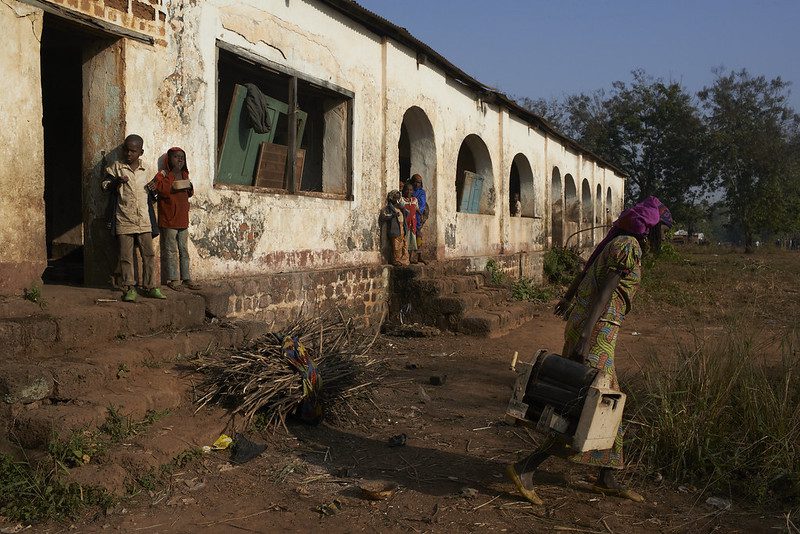
Food security in the CARProgress and growth have long been fundamental aspirations for humanity. However, for many residents of the Central African Republic (CAR), this goal has been obstructed by a critical challenge: food insecurity. In 2023, Concern USA ranked the CAR as the “hungriest country in the world.” Despite a rocky decade of development, recent government initiatives offer hope for a future where hunger is significantly reduced and a more stable, prosperous nation is achievable.

The Background and State of the CAR

In March 2013, an alliance of rebel groups known as “Seleka” usurped power in a lawless fashion of violence, destruction and brutality. The coup had a massive impact on the CAR economy, with one primary example being its exports. The country heavily depends on diamonds and wood exports for economic growth, but due to the continuous conflict, diamond and wood production drastically declined. Many business opportunities for the nation ceased to expand as the continued presence of rebel groups and conflict led to the mass exodus of investors and foreign entrepreneurs. 

The country was left in a general state of economic decline, political instability and a humanitarian crisis, with the issue of hunger being a prime example. Food security in the CAR is at a critical level, with estimates indicating that approximately 2.4 million people suffer from food insecurity and nearly half of the population cannot meet their minimum daily food needs. The ongoing violence in the country has exacerbated malnutrition rates, particularly among displaced individuals. This food insecurity leads to daily hunger and raises serious health concerns. Malnourished citizens are experiencing higher rates of diseases such as measles, malaria, pneumonia and diarrhea.

Initiatives and Progress

In response to the urgent needs of the CAR’s population, several initiatives have emerged to assist, with the Agriculture Recovery and Agribusiness Development Support Project (ARADSP) being a notable example. ARADSP focuses on enhancing agricultural productivity among small-scale farmers throughout the region, thereby bolstering the capacity of small and medium-sized farming businesses and enterprises. As a result, this boost in agricultural productivity delivers immediate and effective responses to food emergencies nationwide. Hundreds of thousands benefit from these initiatives, including more than 100,000 women and more than 15,000 young people.

Another crucial initiative is the IDA-financed Emergency Food Security Response Project (PRUCAC). This project aims to boost food production and enhance the food security of targeted smallholder farmers and vulnerable households in affected areas. More than 300,000 smallholder farmers have received seeds, tools and training in agricultural and post-harvesting techniques to improve crop production and better prepare for climate and conflict-related risks. As of October 2023, local food production has surged by 250%, increasing from 28,000 tons to 73,000 tons within a year.

The Future of the Central African Republic

Addressing the hunger needs of all citizens of the CAR will be a long-term challenge, given the severe impacts of prolonged conflict in the past decades. From the displacement of families to ongoing political instability affecting various parts of the nation, the Central African population remains in search of a more stable and abundant society.

However, with growing initiatives from both governmental and global levels, the future of the Central African population holds promise. Efforts by projects such as ARADSP and PRUCAC, which fund systems to support the country’s economic and food security needs, suggest that significant progress is within reach. These initiatives provide a foundation for substantial improvement and hope for a prosperous future that includes food security in the CAR.

– Oliver Martin

Oliver is based in Honolulu, HI, USA and focuses on Global Health for The Borgen Project.

Photo: Flickr

August 20, 2024
https://borgenproject.org/wp-content/uploads/borgen-project-logo.svg 0 0 Hemant Gupta https://borgenproject.org/wp-content/uploads/borgen-project-logo.svg Hemant Gupta2024-08-20 07:30:222024-08-19 13:44:26Food Security in the CAR
Africa, Global Poverty, Health

Ethiopian Mental Health: Challenges and Progress

Ethiopian Mental HealthThe world is becoming much more aware of mental health issues. Countries all over the world are looking for solutions to mental health issues. However, poorer countries are working at a disadvantage. Ethiopia has been able to overcome this disadvantage and improve its mental health care.

Ethiopian Mental Health Issues

Ethiopia has been looking for ways to improve mental health for years. As recently as 2021, it had included mental health services in the health extension package but had not implemented any changes. The lack of any action was due to many factors. Some include “low political commitment, lack of resources, non-functional referral system, lack of interest from private health care organizations,” stigma within the culture and poor reporting, according to Dove Medical Press.

One of the biggest factors is the stigma and discrimination of mental health issues in Ethiopia. A majority of the people in Ethiopia follow Ethiopian Orthodox Christianity. Some followers of this form of Christianity believe demonic possession is the cause of mental health issues, which could prevent people from speaking up on these issues. This presents a huge hurdle into addressing Ethiopian mental health.

The Ethiopian government is currently using the media for advocacy of mental health issues. Its strategy is to reach the Federal Ministry of Health, general and mental health physicians, mental health service users and providers and the general population.

The battle against the stigma is just half the battle. Even if the stigma issue was removed, Ethiopia does not have enough physicians to sustain an increased volume of patients. In 2022, Ethiopia had 1.08 physicians per 10,000 people.

Solutions

The Federal Ministry of Health in Ethiopia along with the World Health Organization (WHO), European Union and Foundation d’Harcourt have worked together to implement the Mental Health Gap Action Programme (mhGAP). This program aims to help low and middle-income countries scale up their mental health services.

Dr Tedla Wolde-Giorgis, Mental Health Advisor in the Office of the Minister of the Ethiopian Federal Ministry of Health explains that the program’s goal is “to integrate mental health in the existing primary health-care system by leveraging the existing health delivery platforms. The strategy that we developed emphasizes the training of health staff on mental health issues using the mhGAP programme and making sure that they are provided with close supervision and oversight at the different health centres. To this end, the mhGAP training materials and approach was very helpful to us.”

The program has made some huge progress quickly. As of March 2023, a total of 1,230 general health care workers received training from mhGAP.

The Future

The progress in the Ethiopian mental health landscape illustrates the challenges and opportunities that many low- and middle-income countries face. While there are many obstacles like stigma, resource constraints, and limited healthcare infrastructure, the collaboration between the Ethiopian government, international organizations and local communities shows that meaningful change is possible. By continuing to build on these efforts and fostering a more inclusive and understanding society, Ethiopia can pave the way for a healthier future. Furthermore, this is an example for other nations facing similar struggles. The journey is long, but with sustained commitment and international support, the vision of comprehensive mental health care in Ethiopia can become a reality.

– Matthew Mendives

Matthew is based in Colonia, NJ, USA and focuses on Global Health and Celebs for The Borgen Project.

Photo: Unsplash

August 18, 2024
https://borgenproject.org/wp-content/uploads/borgen-project-logo.svg 0 0 Naida Jahic https://borgenproject.org/wp-content/uploads/borgen-project-logo.svg Naida Jahic2024-08-18 01:30:502024-08-17 10:27:21Ethiopian Mental Health: Challenges and Progress
Africa, Employment, Global Poverty

Inequality and Unemployment in South Africa

unemployment in South AfricaIn 2023, more than half of South Africa’s population lived in poverty. According to the World Bank’s upper middle-income poverty line of $6.85 per day, the rate was 61.6%. Over the last decade, South Africa has faced a period of slow economic growth. This has reduced the number of available jobs, preventing many people from securing a stable income and thus reinforcing the high poverty rate. Unemployment is a major problem in South Africa, but the factors that cause and contribute to it are multifaceted.

South Africa has a long history of structural inequality. In the early 20th century, Apartheid legally systematized racial inequality with laws that limited Black people’s productive ownership of land and specified which schools, houses and jobs were available to people based on their race. Though South Africa ended Apartheid in 1994 and eradicated most discriminatory policies of the era, those policies are still impacting society today. This article will focus on how structural inequality exacerbates poverty and unemployment in South Africa.

Unemployment in South Africa

South Africa has an unemployment rate of 32.9%. There could be two main reasons for this: a lack of jobs to accommodate the nation’s growing labor force and structural inequality of opportunity.

Economic growth and employment opportunities are closely related — typically, greater economic growth results in lower unemployment. South Africa’s slow economic growth is thus a major contributor to high levels of unemployment. As of 2023, its economy grew by only 0.6%, and despite the addition of 790,000 new jobs that same year, the rate of job creation was not sufficient to account for the growing labor force, causing the unemployment rate to rise.

Structural inequality of opportunity also reinforces unemployment — this is particularly noticeable when examining the racial demographics of South Africa’s unemployed. In the first quarter of 2024, people of color had noticeably higher rates of unemployment — for example, Black South Africans had an unemployment rate of 36.9%, compared with 9.2% for their white counterparts.

Racial Inequality and Unemployment

In 2022, the World Bank labeled South Africa one of the most unequal countries in the world, based on its levels of economic and educational inequality of opportunity, among other factors.

Economic inequality is a major problem in South Africa. The nation’s income distribution consists of a large number of low-income earners, a small middle class, and only a few high-income earners, according to the World Bank. Al Jazeera reports that the wealthiest 10% of South Africans accounted for 80% of all wealth in 2022.

The World Bank then cited race as a major driver of inequality in South Africa, given its influence on economic and educational opportunity. According to Amnesty International in 2020, Black households in South Africa earned roughly 20% less than white households, and nearly half of the Black population lived below the poverty line, compared with less than 1% of the white population.

Education

Inequality is also pervasive in schools. Students in the top 200 schools achieve more mathematics distinctions than children in the next 6,600 schools combined. The nation’s child literacy rate is equally worrying: more than three-quarters of children aged nine cannot read for meaning.

These numbers are closely tied to racial inequality. An article in Oxford Academic notes that, while South Africa legally abolished segregation in 1994, most schools are still segregated on racial and socioeconomic lines. According to Amnesty International, “schools serving white communities” tend to be more properly resourced than those designed for (and predominantly attended by) students of color.

De facto segregation in South African schools prevents many children of color from accessing quality education. This, in many cases, serves as an obstacle for their attending university and acquiring skills to help them secure jobs. It also exacerbates the unemployment rate. The majority of South Africa’s population are people of color, many of whom come from disadvantaged backgrounds due to Apartheid-era policies and, as a result, do not have access to key economic and educational opportunities. This makes the demand for certain jobs overwhelming.

Fighting Unemployment in South Africa

Several organizations are working to address South Africa’s high unemployment rate, focusing specifically on communities with disadvantaged socioeconomic backgrounds.

Ikamva Labantu is a nonprofit organization that supports community-led projects to harness the nation’s potential and improve the lives of its citizens. It works in townships across South Africa and holds the firm belief that communities can and should lead themselves — the organization only provides the support and resources they need to accomplish their goals. Ikamva Labantu consists of roughly 100 field workers who work at the individual level, focusing specifically on early child development and the well-being of the elderly. The organization partners with other NGOs, community-based organizations, government departments and donors to further their goals.

Siyabonga Africa also aims to reduce South Africa’s poverty rate, focusing specifically on employing disadvantaged people in need. It offers programs and courses to teach its clients the skills and knowledge they can use to become self-supported. Over the past year, Siyabonga Africa has provided 600 households with food vouchers, offered 700 training courses, established 100 home food-gardens and created 242 new jobs. It supports entrepreneurship at the grassroots level to alleviate poverty and unemployment rates in South Africa, creating more jobs for people in need.

Looking Ahead

Inequality and unemployment in South Africa are multifaceted problems rooted in a complex history. But with organizations like Ikamva Labantu and Siyabonga Africa working at the grassroots level to help disadvantaged South Africans become self-supported, the nation can reduce its high unemployment rate and close its gap of income inequality.

– Lana Swindle

Lana is based in Princeton, NJ, USA and focuses on Global Health and Politics for The Borgen Project.

Photo: Unsplash

August 16, 2024
https://borgenproject.org/wp-content/uploads/borgen-project-logo.svg 0 0 Naida Jahic https://borgenproject.org/wp-content/uploads/borgen-project-logo.svg Naida Jahic2024-08-16 07:30:322024-08-16 02:18:57Inequality and Unemployment in South Africa
Page 13 of 24«‹1112131415›»

Get Smarter

  • Global Poverty 101
  • Global Poverty… The Good News
  • Global Poverty & U.S. Jobs
  • Global Poverty and National Security
  • Innovative Solutions to Poverty
  • Global Poverty & Aid FAQ’s
Search Search

Take Action

  • Call Congress
  • Email Congress
  • Donate
  • 30 Ways to Help
  • Volunteer Ops
  • Internships
  • Courses & Certificates
  • The Podcast
Borgen Project

“The Borgen Project is an incredible nonprofit organization that is addressing poverty and hunger and working towards ending them.”

-The Huffington Post

Inside The Borgen Project

  • Contact
  • About
  • Financials
  • President
  • Board of Directors
  • Board of Advisors

International Links

  • UK Email Parliament
  • UK Donate
  • Canada Email Parliament

Get Smarter

  • Global Poverty 101
  • Global Poverty… The Good News
  • Global Poverty & U.S. Jobs
  • Global Poverty and National Security
  • Innovative Solutions to Poverty
  • Global Poverty & Aid FAQ’s

Ways to Help

  • Call Congress
  • Email Congress
  • Donate
  • 30 Ways to Help
  • Volunteer Ops
  • Internships
  • Courses & Certificates
  • The Podcast
Scroll to top Scroll to top Scroll to top