African Women in Science: Alleviating Poverty
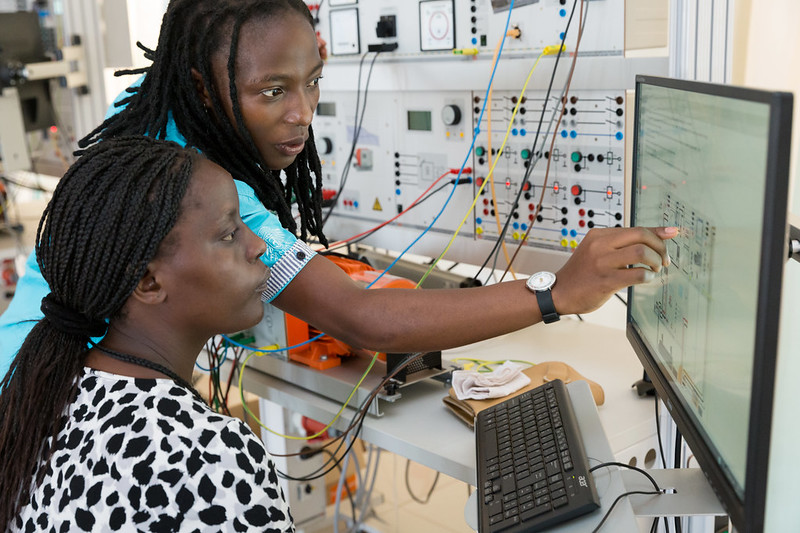 Women and men are equally capable in the fields of science, technology, engineering and mathematics (STEM), yet external barriers continue to marginalize women, exacerbating the gender gap. These disparities are even more pronounced in Africa, where both access to and completion of higher education are limited, with less than 30% of women graduating in STEM fields in sub-Saharan Africa. They are also significantly underrepresented in leadership roles – globally, women hold only 24% of leadership roles in the tech industry.
Despite these challenges, many African women in science work on innovations to alleviate poverty and improve public health. Their efforts highlight the role of women in science and show how scientific advancements can drive social and economic progress. Here are three inspiring examples of women and organizations making a significant impact in the fight against poverty.
Corine Ngufor
Each year, Cameroon reports more than 2.7 million cases of malaria, according to USAID. For its people, this means missing work and school often – significantly impacting both economic and educational opportunities. The fight to eradicate malaria has become a priority for the Cameroonian Government. Corine Ngufor’s work – inspired by her personal experience with malaria growing up in Cameroon – is a remarkable step forward.
As a medical entomologist with a PhD from the London School of Hygiene and Tropical Medicine, Ngufor has innovated mosquito net fabrication. While insecticide-treated nets have saved millions of lives in the past decades, mosquito resistance has diminished their effectiveness. To combat this, many researchers have advocated for dual-insecticide nets. Ngufor’s lab identified chlorfenapyr as the effective second insecticide to pair with pyrethroid, a product already used on nets.
Her improved mosquito nets – officially named Interceptor G2 – have prevented 13 million malaria cases and saved 25,000 lives between 2019 and 2022, as reported by STAT News. Corine Ngufor’s work in reducing malaria cases is also crucial in poverty alleviation because healthier communities lead to increased productivity and less financial strain due to medical expenses.
Revital Healthcare
While vaccines for polio and measles are effective in combating these diseases, many African countries face challenges due to a shortage of syringes, leading to the reuse of needles and the transmission of “blood-borne pathogens” such as HIV and hepatitis B. Additionally, the COVID-19 pandemic exacerbated this issue by creating a shortage of syringes in Africa – where 80% come from Asia – disrupting routine vaccinations for children across the continent. It highlighted the need to improve Africa’s self-reliance in syringe production, an indispensable medical tool.
Thus, to prevent the reuse of needles and ensure the availability of syringes on the continent, Revival Healthcare – Africa’s largest medical device manufacturer based in Kenya – started manufacturing auto-disable syringes in 2021 with a $4 million grant from the Gates Foundation. These syringes become inoperative after the plunger has been used, preventing reuse, and they aim to produce 300 million of them annually.
Beyond providing life-saving medical equipment, Revival Healthcare also supports women in science. With an 80% female workforce, the company creates job opportunities that help reduce poverty by improving families’ financial stability and access to vital resources. Revival Healthcare empowers women economically and encourages them to pursue education and careers in the medical field.
Rachel Sibande and mHub
According to the 2023 UNESCO Global Education Monitoring Report, 89% of learners in sub-Saharan Africa still lack access to a computer and 82% do not have an Internet connection at home. This digital gap limits young people’s ability to gain the skills needed in today’s world, further hindering their employability prospects.
To address this challenge, Malawian computer scientist Rachel Sibande founded mHub in 2014. As Malawi’s first technology and innovation center, mHub has been instrumental in reducing poverty across Africa by empowering young innovators and promoting local technology solutions. As of 2023, mHub has trained more than 40,000 young people in technology, technical and business skills.
In 2020, the hub launched the Digital Malawi project, providing digital skills and business opportunities to youth across the country – supporting more than 500 young people, with some receiving $2,500 in seed capital.
mHub also champions African women in science and technology through its Girls for Code program, which equips young girls with skills in robotics, machine learning, and mobile application development – reaching 323 girls across 15 schools. By advancing technological proficiency and promoting gender equality in STEM fields, mHub fosters innovation and drives economic growth throughout Africa.
Africa Women in Science: Making a Change
African women in science are making a significant impact on reducing poverty through innovation. Despite facing challenges like limited access to education and underrepresentation in STEM, women such as Corine Ngufor, the team at Revital Healthcare and Rachel Sibande are leading the way. Their work in health, technology and medical improvement is bettering lives, boosting economies and promoting gender equality. As they continue to inspire future generations, the role of African women in science will grow, contributing to a better future for the continent.
– Alissa Naydenova
Alissa is based in Colchester, Essex, UK and focuses on Technology and Global Health for The Borgen Project.
Photo: Flickr
