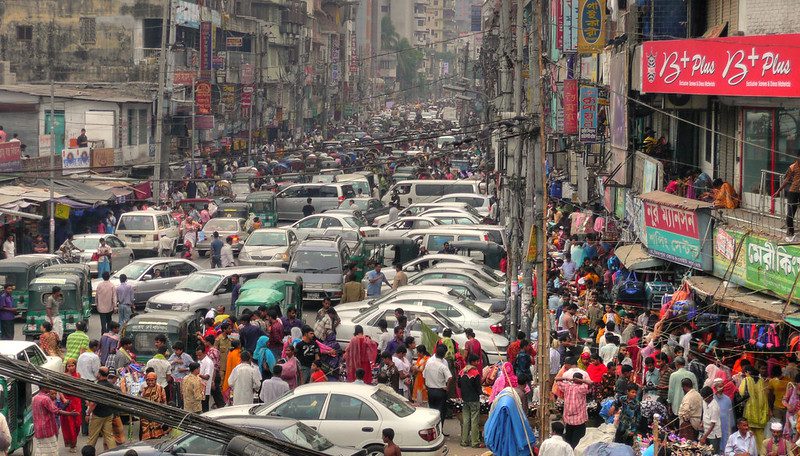
 Pollution impacts people’s air, water and food worldwide. In general, pollution affects impoverished individuals the most. Many individuals in developing countries already struggle to find clean water, edible food and good healthcare. Unfortunately, pollution only exacerbates these pre-existing issues. The city of Nairobi, Kenya is a prime example of this. Its largest garbage dump surrounds and pollutes churches, schools, shops and places of business. As such, poverty and pollution are closely related. Eliminating pollution may be able to help eradicate global poverty.
Poverty and Pollution
Runoff from factories, farms and towns has made drinking water sources dangerous because of contamination. In some places, the effects of pollution also decrease the crop yield and increase food prices, as runoff also contaminates farm land. Additionally, imported food products are often tainted with bacteria, thus making these food products dangerous for consumption. These circumstances could increase the number of people suffering from malnutrition, especially in developing countries. Poverty and pollution are therefore connected through causation: high food prices and food insecurity can both contribute to poverty. Indeed, pollution could contribute to the number of people living in global poverty increasing by 100,000 million.
Pollution and Hunger
There are currently 815 million people around the world suffering from chronic undernourishment. Importantly, one of the main causes of malnourishment and undernourishment is contaminated food. India, for example, lost an estimated 24 million tons of wheat in one year due to an airborne pollutant. More recently, India may also lose 50% of its rice production because of the same pollutant. On a global scale, studies have found that air pollutants decrease the production of staple crops like wheat, rice, maize and soybeans from 5% to 12%. Experts estimate that this is equivalent to the loss of up to 227 million tons of crops, which equals $20 billion in global revenue lost.
However, food is also becoming contaminated through industrial runoff in the ground. Pollution via industrial run-off affects crops in sub-Saharan Africa, East Asia and South America. In these regions, access to foods that are high in nutrients is low and irrigation runoff is high. Runoff especially impacts Africa, where farmers depend on subsistence farming to feed themselves and their families.
Both of these types of pollution can increase food insecurity and hunger. In these conditions, individuals cannot use their land to grow clean food for themselves and their families. Worldwide, 33% of children who come from middle- to low-income countries already endure chronic malnutrition. This contributes to the fact that 45% of all children’s deaths are due to undernutrition or a related cause. Furthermore, there are at minimum 17 million children worldwide who are acutely malnourished, resulting in the death of two million children each year. Thus, pollution and poverty are related through the issue of hunger, which is fatal for children around the world.
Pollution Clouds the Water
Unfortunately, pollution does not only amplify the issue of hunger, it also contributes to a lack of clean water. Globally, 844 million people do not have regular access to clean water. The vast majority of these people live in extreme poverty. In Uganda alone, there are 28 million people who cannot readily access clean water. These Ugandans must drink water polluted by sewage, mudslide debris and other contaminants.
Due to these conditions, 70% of all diagnosed diseases are directly linked to unclean water and poor sanitation and hygiene methods. These diseases include hepatitis, typhoid, cholera, diarrhea and dysentery. Unfortunately, these diseases kill 3.4 million people each year, 43% of whom are children younger than five. In Uganda, these illnesses force 25% of children to stop attending school each year.
Poverty and pollution are directly related through water pollution. On a global scale, the world loses $18 billion when people are to sick with waterborne illnesses to work. Additionally, the time many people must spend finding water results in missed economic opportunities valued at over $24 billion worldwide.
The Fight Against Pollution
Thankfully, many organizations are addressing these pressing connections between poverty and pollution. The Abdul Latif Jameel Poverty Action Lab (J-PAL), based at M.I.T., received a $25 million gift from King Philanthropies to combat many issues that both poverty and pollution create. It plans to do so by launching the King Climate Action Initiative (K-CAI). The K-CAI focuses explicitly on helping those who live in extreme poverty. Its aims include reducing carbon emissions, reducing pollution, acclimating to the climate change and transitioning toward cleaner energy.
The K-CAI plans to accomplish these goals by creating and evaluating many smaller projects. Once the K-CAI determines which projects are the most impactful, it will implement them in impoverished countries on a large scale. Thus far, J-PAL has focused on improving the production of food, education, policy and healthcare in impoverished countries. K-CAI is using J-PAL’s successes to help determine the most efficient ways to achieve these goals.
The correlation between poverty and pollution is clear and direct. As such, pollution can make the fight to end global poverty more challenging. However, with promising initiatives such as the K-CAI, the global battle against pollution and poverty seem like a much easier feat. Defeating pollution will give the world a much-needed advantage in ending global poverty once and for all.
– Amanda Kuras
Photo: Flickr

Alphonso Davies: The Soccer Starlet from Ghanaian Refugee Camp
Born in a Refugee Camp in Ghana
The Davies family is of Liberian origin. Alphonso’s parents, Debeah and Victoria Davies, once lived in Monrovia, the nation’s capital. When the second civil war broke out in Liberia in April 1999, the rebel group Liberians United for Reconciliation and Democracy (LURD) besieged the capital city. The war caused numerous deaths and displaced more than 450,000 Liberians from their homes, including the Davies parents. They soon fled their homeland and arrived in Buduburam, Ghana. Sheltering in a refugee camp, they struggled every day to find clean water and food. Additionally, as Dabeah Davies recollects, he sometimes had to carry guns just to survive. It was into this difficult life that the little Alphonso was born, in the refugee camp on November 2, 2000.
The Canadian Resettlement Assistance Program (RAP)
By the end of the twentieth century, there were approximately 18 million refugees and counting in the world. The global refugee problem is particularly serious in Africa, which harbors nearly half of the world’s refugees. Liberia, for example, was among the countries generating the most displaced persons at this time.
Without external assistance, life as a refugee would have appeared hopeless. Fortunately, the Davies family learned of the Canadian government’s Resettlement Assistance Program (RAP). This initiative helps international refugees resettle in Canada by providing direct financial support and other essential services. These include port of entry and reception, temporary accommodation and life skills training. The Davies family filled out forms, completed an interview and successfully relocated to Ontario when Alphonso was five. They eventually settled down in Edmonton, Alberta.
The Soccer Starlet
As a child in Edmonton, Alphonso Davies first played soccer in school teams. He then played through Free Footie, a local after-school soccer league for elementary schoolers who cannot afford registration fees, equipment or transportation to games. The coaches immediately discovered Davies’ talent and helped him make rapid progress. Davies joined the Vancouver Whitecaps FC’s Residency program at just 14 years old. One year later, he made history as the first player born in the 2000s to play Major League Soccer (MLS). In 2017, only weeks after having obtained his Canadian citizenship, Davies received the call from the Canadian men’s national team. He then became the youngest player to ever play and score on the national team.
The once-in-a-generation talent soon attracted interest from European clubs as well. In January 2019, Davies joined FC Bayern for a then-record transfer fee of $13.5 million. After his soaring season in Germany and strong performance against Chelsea and Barcelona in the European Champions League, the world knows this soccer star by name. On the Champions League Final night, Justin Trudeau, the Prime Minister of Canada, congratulated Davies on Twitter. Trudeau wrote: “A historic moment – you made Canadians proud out there.”
United Nations High Commissioner for Refugees (UNHCR)
Despite gaining global recognition as a soccer prodigy, Davies’ feet are rooted firmly on the ground. He has not forgotten the hard days he faced or the help he received. During his 2018 speech at a FIFA Congress, Davies recounted his moving journey from being a refugee in Africa to a professional soccer player in Canada.
Davies also collaborates with the United Nations High Commissioner for Refugees (UNHCR), endeavoring to inspire more refugees using his own story. In April 2020, in support of UNHCR’s COVID-19 appeal, Davies and fellow soccer player from refugee camp Asmir Begović held an eFootball PES 2020 live stream tournament. Their aim was to raise funds for the U.N. Refugee Agency’s COVID-19 response. This initiative ensures that national health plans include refugees and give them access to necessities like soap and clean water.
“I want to use my platform for causes that I care about,” said Davies. “As a former refugee myself I am very grateful for the help my family received, and the opportunities this opened up for me and where it has brought me. I hope that whilst people are keeping themselves and their families safe, they can also help support refugees who have lost everything.”
The success and promising future of Alphonso Davies as a soccer starlet from a refugee camp are beyond inspiring. Talent shines everywhere, so long as it can grow in an environment of support. With growing amounts of governmental and organizational assistance for global refugees, it is not irrational to expect success from young resettled people from all walks of life.
– Jingyan Zhang
Photo: Flickr
Herbal Remedies for COVID-19 Across the World
The COVID-19 pandemic has created many discussions and debates, especially when it comes to treatments. Though it may take more than a year to create a vaccine, many countries and individuals are using herbal remedies for COVID-19. These remedies have been in their cultures before the new coronavirus and now aid in the prevention and treatment of it. For centuries, especially in countries where medications, prescriptions and hospital visits are inaccessible and/or expensive, people have been creating their remedies. They then pass them on, generation to generation. This article discusses such remedies, both ancient and newly discovered.
Traditional Remedies
When the coronavirus broke out in December 2019, many people in China used various traditional remedies. For centuries, Chinese medicine has been popular across the world. Whether it is with more serious viruses and illnesses, such as COVID-19, or something more common, such as a sore throat. They are believed to alleviate symptoms, reduce the severity of the virus, improve recovery rates and reduce the mortality rate. Herbal remedies for COVID-19 (commonly used) include jinhua qinggan capsules, lianhua qingwen capsules and shufeng jiedu capsules.
In Madagascar, the president endorsed the launch of Covid-Organics, claiming that it was safe enough for children to drink. A key ingredient in these herbal remedies is sweet wormwood (Artemisia annua), which is a traditional ingredient that gave rise to the antimalarial drug, artemisinin. According to the WHO, about 87% of African populations use traditional medicine. This is especially prevalent in poor and rural areas where hospitals, pharmacies and health care professionals are difficult to find. It is common to use herbs and roots as replacements for these medications in many countries in the southern hemisphere. Additionally, modern medicine is often unaffordable, which is why many Malagasies and other African populations use traditional medicine.
Modern Remedies
In Kenya, many people are drinking fruity, gingery dawa as a remedy for the coronavirus. In Kiswahili, dawa means medicine. This drink has become especially popular in Kenyan street markets and vendors arrange the ingredients. They include lemon, ginger and garlic. However, each drink is different — some have aloe vera and some have turmeric. Despite the popularity of this remedy, people have still been taking proper precautions, such as wearing masks and washing hands. In a time of uncertainty, dawa brings comfort to many Kenyans. Markets flood the streets of Kenya, with vendors selling various versions of dawa. Understandably so, it is one of the most popular items.
In the U.S., many people are turning to elderberry, zinc and vitamin C. In fact, along with toilet paper, these vitamins were in the top items consumed on Amazon. Elderberry has long been known to be an immune-boosting vitamin. However, it is unclear whether or not it is effective in treating coronavirus. It may, however, bring a sense of comfort — especially in a time of such uncertainty. Many grocery stores now have their vitamin sections cleared out.
For centuries, herbal remedies have treated viruses and infections, including the common cold, influenza, fever, herpes and more. People around the world rely on traditional medicines, which is understandable given the inaccessibility of modern medicines or medical care in many areas. Though there may be benefits to traditional medicine, it is still unclear whether or not there are any real remedies to the coronavirus. Yet two important factors that these herbal remedies for COVID-19 bring are comfort and hope.
– Naomi Schmeck
Photo: Wikimedia
Vaccines in Developing Countries: Challenges and Solutions
However, developing countries are at greater risk for all infectious diseases than developed countries. The World Health Organization (WHO) documented that the “total number of healthy life years lost per capita was 15-times higher in developing countries than in developed countries.” In addition to this imbalance, vaccines in developing countries also threaten these nations with ineffective treatment. Due to the many factors that impact disease, it is difficult to pinpoint specific causes behind vaccine acceptance or denial. However, the health effects of poverty contribute to the reasons why vaccines in developing countries are often ineffective.
How Poverty Increases Sickness
Poverty is a health epidemic. In 2008, PBS aired an original docu-series called “Unnatural Causes” that outlined the ways diseases disproportionately affect poor and marginalized groups. The show posed one overarching, famous question: “Is inequality making us sick?” In the assessment of vaccine effectiveness in rich versus poor countries, the creators of “Unnatural Causes” say the answer is yes.
A functioning immune system is largely responsible for an individual’s ability to make antibodies, the infection-fighting proteins developed via vaccines. Impoverished people often do not have high-functioning immune systems. This means that they cannot produce antibodies as well as their developed-nation counterparts.
Multiple factors contribute to the prevalence of ineffective immune systems in developing countries. The overpopulation and crowding common in low socioeconomic areas increase the risk of disease exposure. Pre-existing health conditions, resulting from vitamin deficiency and little clean water or sanitation, increase individual susceptibility to sickness. Further, unreliable health care places systemic, structural constraints on impoverished communities. In this way, poverty and disease continually reinforce each others’ negative effects.
Comparison Studies: Developed Nations vs. Developing Nations
Water-borne diseases, malaria, tuberculosis and HIV/AIDS continually afflict developing countries. They may be responsible for damaging people’s natural immunity, thus decreasing the likelihood of vaccine acceptance. Indeed, one study found that these diseases “may damage lymph node structures that are crucial to developing immunity after a vaccine.”
This study from the University of Minnesota compared Americans to Ugandans. Researchers discovered all the Ugandans had “significantly higher levels of inflammation in their bodies and a depleted supply of protective T cells.” In addition, the Ugandan’s lymph nodes (which help filter infections and respond to vaccines) were inflamed and scarred. None of the American participants had these issues. After administering a yellow fever vaccine to the Ugandan test subjects, researchers discovered a positive correlation. The more damaged their lymph nodes, the less likely it was for antibodies to form.
Another series of studies in Dhaka, Bangladesh discovered that a poor response to vaccines in developing countries could be correlated to the small intestinal bacteria endemic to low-income countries. Petri’s team surmised that “inflammation [in the intestine] could prevent vaccines from lingering in the gut and could keep the immune system from reacting to them.” The team also identified a similar issue with rotavirus vaccine response. In contrast, 98% of children in the developed world do not have complications after vaccination.
The Future of Vaccines
According to the World Bank, “nearly half of the world lives on less than $5.50 a day.” In addition, only 59 of the 195 countries in the world possess a Human Development Index (HDI) at or above 0.8, making them developed countries. This means that ineffective vaccination responses affect the majority of the world’s nations. Thus, the world needs a systemic change in public health to fix this issue. Studies in Bangladesh and Africa “are testing whether sanitation interventions such as installing hand-washing stations in rural homes” can relieve the gut inflammation thought to be causing poor responses to vaccination.
However, even though vaccines in developing countries are sometimes ineffective, routine vaccination for infants and children may help. Young children are less likely to have the long-term health effects responsible for ineffective responses to vaccines, with the exception of illnesses inherited from a mother’s womb. WHO estimates that approximately 70% of the 9 million deaths from children under five “could be prevented or treated with access to simple, affordable interventions,” including vaccines.
Vaccinating Children in Developing Countries
Still, the complicated relationship to vaccines in the developing world is palpable. One study in India found that there is only a 55% rotavirus vaccine efficacy rate in young children. However, India’s plan to make the rotavirus vaccination routine may “save 27,000 of the 78,000 young lives that infections claim every year.”
Thus, expanding coverage of vaccines in developing countries has proven successful in many cases. Various programs work to extend this success. Since 1990, WHO’s Expanded Programme on Immunization has helped decrease mortality rates among infants and children via vaccination. The Global Vaccine Alliance has also “vaccinated more than half a billion additional children since its founding in 2000,” often in developing countries. While routine vaccination is not a panacea, it helps prevent disease before long-term health issues develop.
Improving World Health
Obviously, this is a hefty challenge. Changing human response to vaccines will take years of improving sanitation and living conditions. In addition, developed countries often receive vaccines first and in larger quantities due to having more money. In the meantime, scientists and doctors are experimenting with speedier methods to the vaccine problem. Take mesalazine, a drug that treats the bowel inflammation preventing antibody response to vaccines. This drug could possibly treat unreliable oral vaccines for stomach illnesses. Recognizing the issue of vaccines in developing countries is the first steps in improving global health.
– Grace Ganz
Photo: Flickr
Fighting Poverty and Pollution
Poverty and Pollution
Runoff from factories, farms and towns has made drinking water sources dangerous because of contamination. In some places, the effects of pollution also decrease the crop yield and increase food prices, as runoff also contaminates farm land. Additionally, imported food products are often tainted with bacteria, thus making these food products dangerous for consumption. These circumstances could increase the number of people suffering from malnutrition, especially in developing countries. Poverty and pollution are therefore connected through causation: high food prices and food insecurity can both contribute to poverty. Indeed, pollution could contribute to the number of people living in global poverty increasing by 100,000 million.
Pollution and Hunger
There are currently 815 million people around the world suffering from chronic undernourishment. Importantly, one of the main causes of malnourishment and undernourishment is contaminated food. India, for example, lost an estimated 24 million tons of wheat in one year due to an airborne pollutant. More recently, India may also lose 50% of its rice production because of the same pollutant. On a global scale, studies have found that air pollutants decrease the production of staple crops like wheat, rice, maize and soybeans from 5% to 12%. Experts estimate that this is equivalent to the loss of up to 227 million tons of crops, which equals $20 billion in global revenue lost.
However, food is also becoming contaminated through industrial runoff in the ground. Pollution via industrial run-off affects crops in sub-Saharan Africa, East Asia and South America. In these regions, access to foods that are high in nutrients is low and irrigation runoff is high. Runoff especially impacts Africa, where farmers depend on subsistence farming to feed themselves and their families.
Both of these types of pollution can increase food insecurity and hunger. In these conditions, individuals cannot use their land to grow clean food for themselves and their families. Worldwide, 33% of children who come from middle- to low-income countries already endure chronic malnutrition. This contributes to the fact that 45% of all children’s deaths are due to undernutrition or a related cause. Furthermore, there are at minimum 17 million children worldwide who are acutely malnourished, resulting in the death of two million children each year. Thus, pollution and poverty are related through the issue of hunger, which is fatal for children around the world.
Pollution Clouds the Water
Unfortunately, pollution does not only amplify the issue of hunger, it also contributes to a lack of clean water. Globally, 844 million people do not have regular access to clean water. The vast majority of these people live in extreme poverty. In Uganda alone, there are 28 million people who cannot readily access clean water. These Ugandans must drink water polluted by sewage, mudslide debris and other contaminants.
Due to these conditions, 70% of all diagnosed diseases are directly linked to unclean water and poor sanitation and hygiene methods. These diseases include hepatitis, typhoid, cholera, diarrhea and dysentery. Unfortunately, these diseases kill 3.4 million people each year, 43% of whom are children younger than five. In Uganda, these illnesses force 25% of children to stop attending school each year.
Poverty and pollution are directly related through water pollution. On a global scale, the world loses $18 billion when people are to sick with waterborne illnesses to work. Additionally, the time many people must spend finding water results in missed economic opportunities valued at over $24 billion worldwide.
The Fight Against Pollution
Thankfully, many organizations are addressing these pressing connections between poverty and pollution. The Abdul Latif Jameel Poverty Action Lab (J-PAL), based at M.I.T., received a $25 million gift from King Philanthropies to combat many issues that both poverty and pollution create. It plans to do so by launching the King Climate Action Initiative (K-CAI). The K-CAI focuses explicitly on helping those who live in extreme poverty. Its aims include reducing carbon emissions, reducing pollution, acclimating to the climate change and transitioning toward cleaner energy.
The K-CAI plans to accomplish these goals by creating and evaluating many smaller projects. Once the K-CAI determines which projects are the most impactful, it will implement them in impoverished countries on a large scale. Thus far, J-PAL has focused on improving the production of food, education, policy and healthcare in impoverished countries. K-CAI is using J-PAL’s successes to help determine the most efficient ways to achieve these goals.
The correlation between poverty and pollution is clear and direct. As such, pollution can make the fight to end global poverty more challenging. However, with promising initiatives such as the K-CAI, the global battle against pollution and poverty seem like a much easier feat. Defeating pollution will give the world a much-needed advantage in ending global poverty once and for all.
– Amanda Kuras
Photo: Flickr
How an NGO Refocused Amid COVID-19 to Assist the Philippines’ Poorest
When Philippine President Rodrigo Duterte imposed an “enhanced community quarantine” in response to COVID-19, life changed dramatically for those people whom ICM designates as “ultra-poor.” To assist the Philippines and these people and families who live on less than 50 cents a day, ICM has reached out in significant and measurable ways.
The Problem
For many Filipinos, the quarantine has been devastating. In more remote areas, for instance, restricting travel also restricts job opportunities. In late June, the National Economic and Development Authority predicted that 12 million people would be out of work in the Philippines by year’s end, which is over one-tenth of the country’s population.
Having a reliable income can be the difference between manageable food security and malnutrition for countless Filipinos. For some communities, such as those in the persistently poverty-stricken Bangsamoro and Bicol regions, the continued loss of income opportunities means rising hunger, which can also foster dangerous situations in areas more vulnerable to violence.
ICM’s Shift
Because of International Care Ministries’ history in the Southeast Asian archipelago, the organization was able to shift its focus and utilize an already well-developed system of local volunteers and aid to assist the Philippines in combatting the effects of COVID-19 on the ultra-poor. Regional locations where ICM already had a foothold, like the Visayas and Mindanao, received significant emergency assistance. As of the end of September, ICM had delivered more than 14 million meals to hungry Filipinos.
The CEO of ICM, David Sutherland, sees the NGO as a way to reach those who are currently being overlooked, particularly through ICM programs such as the Rapid Emergency and Disaster Intervention (REDI) system. “We estimate that 8 million poor people live in areas where ICM operates, so that means ICM has already distributed food to more than a third of poor Filipino families across vast areas of the country,” Sutherland said.
Partnered Impact
ICM has also partnered with the Filipino Department of Health to assist the Philippines in feeding nearly 20,000 malnourished children. In addition, ICM has distributed more than 350,000 gardening kits and 130 million seeds to help poor Filipinos grow their own food. Capitalizing on the breadth of its connections in the Philippines, ICM distributes both general and selective aid. It actively looks to connect with families and children most at risk of starvation or facing critical levels of malnourishment. Calls for help can even come in the form of texts. That way, local volunteers and pastors, partnering with the government, can direct aid where it is most needed.
The alleviation of hunger in the short term is essential for communities to survive in the days to come. However, the propagation of farming and gardening initiatives signals a long-term plan to create a steady supply of nourishment. As the effort continues, larger problems remain. Still, this partnership between ICM and the government has been a saving grace for millions around the Philippines.
– Alan Mathew
Photo: Unsplash
Hope for the Epidemic of Tobacco in Myanmar
The Feedback Loop: Tobacco and Poverty
Worldwide, 1.8 billion people smoke, with 84% of smokers from underdeveloped countries. The world’s poor are prone to spending their limited income on tobacco. However, smoking comes at a high opportunity cost. Money spent on tobacco could instead go toward food, education and health care. In countries such as Bangladesh, the poorest households spend 10 times more on tobacco than they would on education. In Mexico, the poorest 20% of households spend at least 11% of their income on tobacco. Overall, the world’s poor sacrifice significantly more of their income to satiate tobacco addiction than do richer households.
In addition to being a financial drain, tobacco also presents numerous health risks. Users of tobacco are at risk for cancer, respiratory diseases and heart problems. These illnesses create higher medical and insurance costs, which could cause households to spiral deeper into poverty.
Tobacco in Myanmar
Currently, around 1.6 million people in Southeast Asia die from tobacco-related illnesses each year. Myanmar currently has the region’s highest prevalence of tobacco use. Approximately 80% of men use tobacco in Myanmar. In this country alone, over 65,600 people die from tobacco-related diseases annually. Regardless of this risk, more than 5 million adults in Myanmar continue to use tobacco every day.
The lack of regulation of tobacco in Myanmar puts millions of individuals at risk of exposure to secondhand smoke. Currently, 13.3 million smokers and individuals exposed to secondhand smoke are at risk of developing tobacco-related diseases such as CVD (cerebrovascular disease). CVDs are one of the most common ways tobacco claims lives. They are also the leading cause of death in the country, contributing to 32% of all deaths.
Premature deaths have also greatly affected Myanmar’s economic growth, severely limiting income opportunities for the nation’s poor and middle-class families. In 2016, economic losses due to tobacco-related mortality were estimated at MMK 1.32 trillion. Overall, the economic loss caused by tobacco-related health complications places a huge strain on Myanmar. Most importantly, without explicit programming efforts, very few users have successfully quit tobacco in Myanmar.
So, What’s Next?
A number of efforts are looking to minimize the harmful effects of tobacco in Myanmar. For example, Myanmar’s government created various changes to its Tobacco Control Laws upon joining the World Health Organization’s FCTC (Framework Convention on Tobacco Control) in 2005. Despite these changes to the law, however, there are insufficient funds for smoke-free enforcement in public spaces. Currently, smoking remains legal in pubs and bars, indoor offices and public transportation.
A comprehensive tobacco control program is therefore necessary to limit the prevalence of tobacco in Myanmar. Luckily, many organizations are willing to assist in this fight. The World Health Organization released plans for its Tobacco Control 2030 campaign, which includes Myanmar. It will be one of the 15 countries chosen to receive aid from the U.N. to support its battle against tobacco.
In 2019, the People’s Health Foundation also implemented a four-year plan to turn Yangon, the largest city in Myanmar, completely smoke-free. This organization plans to raise public awareness of the dangers of smoking and passive smoking on various media platforms. The People’s Health Foundation also partnered with the Ministry of Health and Sports to minimize smoking and overall tobacco usage in the country. Already, the organization has converted regions including Ayeyarwady, Bago and Mon into smoking-free zones. While much work still remains, Myanmar these efforts to minimize the use of tobacco among its citizens are showing some signs of success. This provides hope that the epidemic of tobacco in Myanmar may soon end.
– Vanna Figueroa
Photo: Flickr
Evolution of Women’s Rights in Saudi Arabia
Saudi Arabia has one of the world’s biggest oil supplies and is also home to the holy Mecca. However, Saudi Arabia also has one of the most oppressive regimes, comparatively speaking. Women’s rights in Saudia Arabia are close to being non-existent. Although women in Saudia Arabia have been granted certain basic rights, there is a long way to go. Here is a history of women’s rights in Saudi Arabia.
Early History
Saudi Arabia is a predominately Islamic nation and the law system follows Sharia law. Ever since the Iranian Revolution, laws against women in Saudi Arabia have been stricter. In the early 50’s, Saudi Arabia finally opened a school that focused exclusively on girls. Then, 20 years later, women in Saudi Arabia could attend college as well.
It would not be until three decades later that women would see more changes in Saudi laws. When women received personal licenses, their ownership of such licenses was not as it is in European or American nations, for example. Women’s guardians received the identification cards on behalf of the woman. In the following years, Sharia law and government played a key role in the development of women’s rights in Saudi Arabia. These structures forced women into marriage, domestic abuse was a wide-spread issue and basic human rights eroded, year after year. Women started to see a change in the 2000s and 2010s with the enrollment of females elected into the government. Furthermore, women could vote in 2015 and the driving ban ceased in 2018.
Women’s Rights Since 2018
Women in Saudi Arabia do not have certain freedoms that may seem trivial to most women around the world. In 2019, it became legal to allow women to obtain passports or to travel without the permission of a male guardian. Though these reforms do not completely solve the oppression women face, they are a step in the right direction. These reforms allow a sense of freedom to women.
Saudi Arabia is gradually moving closer to removing its “guardianship system” that subjects women’s rights to their male relatives. A new regulation includes the right for a women’s hiring without the need for a male guardian’s permission. Notably, the law is intended to target and ban employment discrimination laws.
One of the biggest changes for women in Saudi Arabia is allowing women to be able to register their children’s births. Previously, a male guardian or the father of the child did this act. Human rights changes such as these in Sharia law allow for women to be looked at as equal and as “heads of the household”.
Celebrating the Victories But Eyeing the Future
These regulations are a positive step towards empowering women and providing them with more opportunities for leadership roles. Much progress remains, in terms of women’s rights in Saudi Arabia as the women lack many pivotal rights and liberties afforded to men. However, progress deserves celebration and these new regulations have given women freedoms they previously did not enjoy.
– Hena Pejdah
Photo: UN Multimedia
5 Organizations Shoring Up Sanitation During COVID-19
Water Crises and Sanitation During COVID-19
More than one half of people around the world do not have access to high-quality sanitation facilities. Furthermore, COVID-19 has exacerbated this already tenuous water and sanitation situation in many parts of the world. Areas with hotspots, like Cairo and Mumbai, are often crowded with restricted public services.
To manage the immediate effects of COVID-19, governments in developing countries have turned to various short-term solutions. For example, Rwanda has installed mobile hand washing stations, while South Africa has begun to use water trucks. The Chilean government has also suspended water and sanitation charges for citizens. In a pandemic, automated water management systems are especially helpful in reducing loss, expanding access and preserving social distancing. In addition to these governmental reforms, many companies have used technology to shore up water and sanitation during COVID-19 in developing countries. Here are five organizations looking to improve sanitation during COVID-19.
Five Companies Improving Water and Sanitation During COVID-19
The Future of Sanitation in Developing Countries
COVID-19 has exposed weaknesses in global abilities to provide safe, clean water and sanitation in developing countries. Now, many people lack the water they need to combat the coronavirus. While it is not clear if COVID-19 can spread through human waste, proper sanitation also stops the spread of infectious disease in general.
By shoring up water services and sanitation during COVID-19 in developing countries, governments and other organizations in have provided stop-gap solutions to water and sanitation issues. Technologies like digital water meters, water ATMs, container-based toilets are now saving lives in a new way. Because they help people stay home and keep clean, these solutions allow developing countries to better fight the coronavirus pandemic.
– Joseph Maria
Photo: Flickr
How BraineHealth Is Revolutionizing Healthcare
How BraineHealth Can Help
This problem may seem insurmountable, but not to BraineHealth. The Swedish company is hoping to use artificial intelligence and robotics to make healthcare more accessible for people throughout the world. BraineHealth’s healthcare innovations can apply many areas of healthcare, such as primary healthcare, senior healthcare and mental health services. In all these areas, BraineHealth hopes to connect doctors and other medical professionals with their patients in a way that is easy, affordable and safe.
With BraineHealth’s system, patients could potentially receive diagnoses and expert medical consultations without having to leave their homes. This would reduce medical costs and travel expenses for patients, and it would provide a safer alternative to in-person appointments. Here are four BraineHealth programs that seek to revolutionize healthcare.
4 BraineHealth Programs Revolutionizing Healthcare
Looking to the Future
Millions worldwide lack adequate access to healthcare. Even in areas that have hospitals, the costs of health services are often too high for poor communities. Using technological innovation, BraineHealth is working to revolutionize healthcare so that the people in these communities can have access to healthcare that would otherwise be out of reach.
– Marshall Kirk
Photo: Flickr
Improving Food Security in Africa with ZeroFly Storage Bags
Understanding Post-Harvest Loss
Recent efforts geared toward improving food security in Africa have revealed the key causes of food insecurity. In Kenya, perhaps most alarming is the country’s high rate of post-harvest food loss. While food waste refers to edible food that is thrown away, food loss refers to food that is not even edible for human consumption. In Kenya alone, 20% of grain cereals are lost after harvest. Specifically an estimated 12% of maize ends up as post-harvest loss. This is an astounding figure for a region that relies heavily on agriculture as a primary food source.
Furthermore, Kenya is a model for other countries in the region, which exposes the depth of food insecurity in Africa. While Kenya has begun to address this issue, post-harvest food loss still contributes to food insecurity throughout sub-Saharan Africa. Thirty-three million smallholder farms are responsible for producing up to 90% of the food supply in some Sub-Saharan African countries. Despite these millions of farmers, however, post-harvest losses lead to severe food shortages. While grain loss can equal up to 20% of supply, up to half of fruits and vegetables do not even make it to the marketplace.
Improving Food Security in Africa by Overcoming Food Loss
Post-harvest food losses result from a lack of food safety measures, inadequate sanitation and poor storage methods. The methods taken so far to combat these issues are expensive. These include regular pesticide treatments, which are time-consuming, dangerous and questionably successful. As such, sub-Saharan Africa still loses $4 billion a year as a result of post-harvest food losses. The ZeroFly Bag could drastically transform that number.
A recent technological invention, ZeroFly Storage Bags, works toward improving food security in Africa. Public health innovation company Vestergaard developed the product to ameliorate food storage methods. Embedded with FAO- and WHO-certified pesticide deltamethrin in its fibers, the ZeroFly Storage Bag protects the stored grain from insects. Because the bag slowly releases the pesticide over two years, it remains effective for at least that long. With pests unable to taint the quality of the food, these bags keep post-harvest food loss to a minimum.
Impact on a Global Scale
While this innovation is improving food security in Africa, it also has the potential to reduce poverty worldwide. Only two-thirds of food produced for human consumption actually make it to the marketplace. As 12.5% of people worldwide are without food, limiting post-harvest food loss can improve food security around the globe.
The ZeroFly Storage Bag could be an essential part of bettering both food security and poverty. For example, the World Bank estimates that a 1% reduction in post-harvest food losses would save $40 million. This could directly benefit smallholder farms. While many people in Africa and elsewhere struggle to access food, the ZeroFly Storage Bag is a sustainable solution to improving food security in Africa and around the world.
– Eliza Cochran
Photo: Flickr