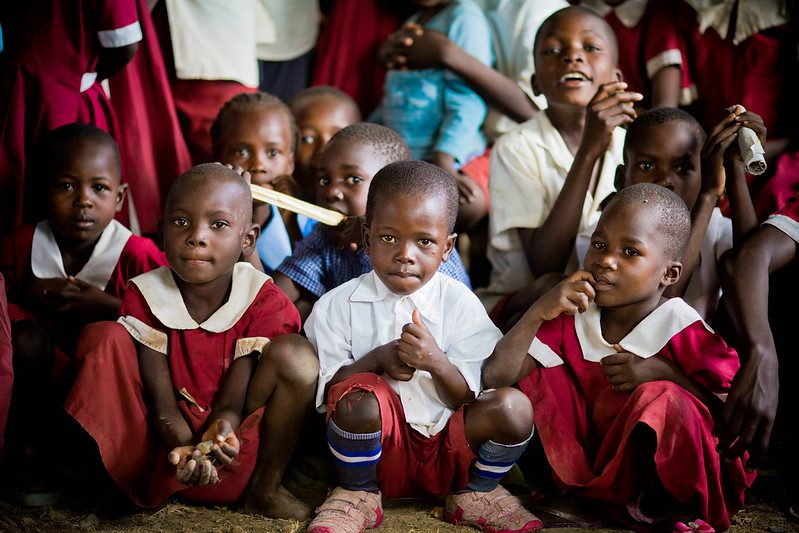
 Doing away with certain high-stakes exams could help alleviate poverty. The pandemic has forced many to consider alternatives to what was the status quo, including high-stakes exams used in education systems around the world. These popular exams have roots as far back as the selection of civil servants in ancient China. During the past two centuries, the number of educational systems that make use of high-stakes testing has grown. Exams may be useful as a means of helping students, parents and educators understand how the student is doing. However, they become high-stakes when decisions regarding admissions and advancement rely on exam results. Eliminating high-stakes exams could reduce both testing and poverty.
The Positive and Negative Consequences of Testing
Research has shown that there are positive and negative impacts of high-stakes testing. The benefits of high-stakes examinations include concrete educational standards and assistance for students who perform poorly. On the other hand, disadvantages include a narrowed curriculum, cheating and policies that disproportionately impact minority students.
According to the World Bank’s Public “Examinations Examined,” “[It] is difficult to make the case that examinations, whatever the motivation in their introduction, played a major role in the promotion of equity.” With an emphasis on testing and poverty in contemporary education, understanding how high-stakes exams reflect inequity may help educators better assist disadvantaged students.
Testing and Poverty
High-stakes testing puts pressure not just on students, but also on parents, educators, schools and governments. These pressures affect those with low socioeconomic status the most. Students from low-income families often face cognitive, emotional and social developmental deficits induced by poverty and stunting. The effects of poverty and stunting turn into a 19.8% deficit in adult annual income.
Low-income families also often lack the financial resources to pay for their student’s academic success with tutors, textbooks and materials. Moreover, educators and schools may focus their efforts on more advantaged students. Studies in Zambia, for example, reveal that advantaged students tend to do better than poor students.
Furthermore, public spending on education is higher in wealthier communities. One reason may be because the government rewards schools that perform better in high-stakes exams with additional funding. Many of these schools, comprised of students from high socioeconomic statuses, tend to have more resources than their low-income counterparts.
This lack of spending directly connects testing and poverty, as using testing to measure success gives fewer resources to underprivileged students. A report by the International Commission on Financing Global Education Opportunity reports that 330 million students are in school but are not learning the basics. This may be connected to poor quality teaching or poor resources, which can result from measuring success with tests. Ultimately, being poor has become closely connected to poorer exam performance. Indeed, “Large scale assessments in exam subjects and grades routinely show a steep ‘social gradient’ in performance,” according to the Center for Global Development.
Doing Away with High-Stakes Exams
Education is central to reducing poverty. For example, individual income increases by 8% for every year that one goes to school. More specifically, having a secondary education in Tanzania decreases by 60% the chance that a working adult will be poor.
Recognizing the benefits of education and the consequences of testing and poverty, schools could eliminate some high-stakes exams. Countries such as Kenya and Singapore, as well as most Caribbean countries, use tests to determine a student’s placement in secondary schools. Yet those who made it into secondary schools in Kenya obtained employment benefits, decreasing low-skill self-employment, compared to those who did not. According to the IMF, “increasing [the] average years of schooling and [the] reducing [of] inequality of schooling” can significantly reduce economic inequality.
If primary and secondary education were universal, extreme poverty could lessen by half. To make this happen, developing countries dealing with the pandemic should consider doing away with certain high-stakes exams. This will allow poorer students to contribute to human capital.
The Good News
While it took 40 years for American girls’ enrollments in education to increase from 57% to 88%, it took Morocco 11 years. Yet, in 2013 there was a disparity in the net enrollment rate in lower secondary education. Though 79% for boys in urban areas were enrolled, the rate was only 26% for girls in rural areas.
Since 2007, Education for All (EFA) has provided girls in Morocco’s rural communities of the High Atlas mountains the opportunity of secondary education. The organization’s provision includes nutritious meals, hot showers, beds and access to computers. EFA has at least 50 girls who are enrolled at university.
While this work is laudable, governments may be able to provide similar results by doing away with high-stakes testing. When exams act as a gatekeeper to advanced education, they reproduce cycles of poverty. All students must have access to equal education in order to escape from poverty.
– Kylar Cade
Photo: Flickr

Ending Child Labor in Pakistan
Child labor is a prevalent issue in the world’s most impoverished countries, including Pakistan. Pakistan ranks in the top 20 for countries with the worst rates of child labor. This measurement does not include children with general employment or beneficial jobs. People frequently only deem employment for children as “child labor” when it results in deprivation. Child labor is work that denies children education and other vital childhood opportunities. This type of exploitative work poses detrimental effects on their mental and physical health. The effects linger later in life and create a cyclical pattern. In Pakistan, unemployment, lack of education and high poverty rates contribute to a higher prevalence of forced labor. There needs to be an end to this devastating cycle, an end to child labor in Pakistan. Luckily, the Pakistani government and NGOs are working toward ending child labor in Pakistan.
Unemployment Takes a Toll
As of 2020, the unemployment rate in Pakistan was 4.4%, which is a substantial decrease from the 2018 rate. However, this is an increase from the 2019 4.1% unemployment rate. The country needs to get back on the path of boosting its employment. One way to achieve this is by ending child labor in Pakistan as child labor increases adult unemployment. One of the main reasons why children have to work at such a young age is due to their parents not being able to find substantial work. Another cause of unemployment is the rapid growth in population. Multiple reasons exist for the increase in population and they all contribute to the high unemployment rate, exacerbating child labor. Some of the factors include a lack of education, high fertility rates and poverty.
Lack of Education
Pakistan ranks second highest in terms of the number of children not in school. UNICEF estimates that 22.8 million children aged 5-16 are not attending school. One of the primary reasons Pakistani children do not receive an education is due to a lack of funding for school systems. Further, educational disparities exist across different demographics. Pakistani girls fall behind boys at every stage in the schooling process. Also, underdeveloped regions in Pakistan experience more of an economic struggle when it comes to education than more developed parts. This leaves the disadvantaged more vulnerable to working at a very young age instead of receiving an education. To combat this, UNICEF is working closely with Pakistan’s government to help create effective educational programming. The plans include quality alternatives to traditional learning pathways, equitable planning and budgeting, strengthening data and assessment systems and policy advocacy.
The Impact of Poverty
Nearly a quarter of Pakistani natives live below the poverty line. Many families in Pakistan struggle financially. As a result, children are often vulnerable to numerous developmental struggles, such as inconsistent access to clean drinking water and malnutrition. The fight to end child labor in Pakistan has become increasingly difficult due to childhood poverty and the lack of governmental support. According to Humanium, the Pakistani government allocated only 3% of its budget to health services and only 3% to education in 2018. The government needs to take more steps to provide aid for children. Increased funding is necessary so children can access essential resources for mental and physical development. Families should have the finances to be able to allow their children to experience childhood rather than the woes of child labor.
Looking Toward the Future
The Pakistani government has made strides towards ending child labor in Pakistan, such as creating labor laws. Pakistan’s constitution prohibits minors working in dangerous conditions, such as factories and mines. The constitution also requires that children receive an education from the state. However, Pakistan’s economy is suffering and many in the country still see child labor as a culturally acceptable practice. Moreover, economic challenges force many households to rely on their children’s income, making child labor a prevalent issue today.
Fortunately, organizations like the Child Care Foundation of Pakistan (CCFP) are taking steps to mitigate the issue. The Foundation has a mission to offer Pakistani children a more stable life through “education, health and vocational training sectors for the poverty alleviation, women’s empowerment and elimination and rehabilitation of all forms of child labor in the country.” Founded in October 1996, CCFP has helped serve 235,161 people through its instrumental programs. More accountability and acknowledgment from Pakistan’s government, in conjunction with aid from CCFP, will help make child labor in Pakistan a thing of the past.
– Montana Moore
Photo: Flickr
CBT Eliminating Violence in Liberia
What Is CBT?
According to the American Psychological Association, Cognitive Behavioral Therapy (CBT) is a type of psychological treatment that aims to change behavioral and thinking patterns. CBT understands that complications in our psychological makeup result from learned behavior and thought processes.
People treated using Cognitive Behavioral Therapy work on improving their self-confidence, adopting effective coping mechanisms and altering harmful patterns of thinking. Clients also exercise modifications in habits, such as confronting rather than avoiding difficult situations. Additionally, they practice self-control and prepare for real-life scenarios that they may find challenging.
One of the distinguishing factors of CBT is its focus on the current and future aspects of the client’s life. Although this method takes a person’s past into account, it aims to create effective techniques that deal with the client’s present issues.
The Situation in Liberia
The Overseas Security Advisory Council’s (OSAC) Liberia 2020 Crime and Safety Report states that violent robberies and home invasions have increased. The Council also reports that “[s]exual assault and rape are the most commonly reported violent crimes.” Simultaneously, Liberia also faces a rise in social upheaval due to escalating difficulties in the economy, healthcare and employment.
As urban poverty surges in Liberian cities, so has homelessness, pollution and deteriorating infrastructure. Impoverished citizens face a lack of opportunity and inequality. Discrimination, poor education and epidemics such as Ebola all have the hardest impacts on the poor. Overall, these unstable environments catalyze the high rates of crime and violence, especially among young Liberian men.
CBT Eliminating Violence in Liberia
A study in Monrovia, the capital of Liberia, revealed the benefits of CBT eliminating violence in Liberia. More than 1,000 men participated in this experiment, all of whom were at risk for crime and violence. The men were placed in one of four different groups. These included receiving only therapy, only cash, both therapy and cash and nothing at all. The cash provided enough to start a small business. As such, it was an incentive for participation.
Therapy alone improved behaviors significantly, and much of participants’ objectionable behavior decreased. However, the men who received both therapy and cash saw the longest lasting results. These men could practice what they learned in therapy while feeling like a “normal” member of society. Providing them with means, motive and opportunity helped improve their lives and their place in their communities.
CBT eliminating violence in Liberia is not the only approach necessary to ending poverty. However, it does contribute to progressive change. It also highlights the importance of the long-lasting and widespread measures that can help communities plagued by violence.
– Amy Schlagel
Photo: Flickr
Ending the Data Drought: 3 Apps Improving Access to Clean Water
The Problem
The World Health Organization defines safe water as 20 liters per person per day of accessible, clean drinking water within one kilometer of a household or business. Without safe water, families must spend more time caring for sick loved ones and fetching water from far-away sources. This often prevents them from joining the workforce and earning an income. Businesses and schools that are unable to provide safe water often struggle to retain staff and students. Overall, communities without safe water are more susceptible to illnesses and destruction from natural disasters. Indeed, diarrheal diseases stemming from unsafe water usage and poor sanitation kills nearly 1,000 children per day.
Thankfully, technological innovation for accessing clean water is on the rise. New technological solutions range from fog-to-water conversion systems to easy-to-use water filters. Below are three apps improving access to clean water by collecting, harnessing and sharing important water systems data around the world.
mWater
John Feighery, a former NASA employee, and his wife Annie Feighery created mWater in the mid-2000s for Android devices. After working for a company testing well water in El Salvador, Mr. Feighery learned that the process of testing for clean water was cumbersome and expensive. He collected samples with heavy machinery, transported them to a far-away lab for testing and recorded locations by hand. Mr. Feighery decided he could simplify the process using technology he used with the International Space Station.
He and his wife created mWater, which records the results and precise locations of water quality tests on a mobile device. Anyone with the app can view the data. Users can add pictures and write notes on scent and appearance. Additionally, they can add data from new tests they’ve conducted using the $10 water testing kit available from the app.
With its global water quality database and expedited process of identifying safe water, mWater is one of the most comprehensive apps improving access to clean water. Today, more than 75,000 governments, NGOs, health workers and researchers use mWater for free in 180 countries. They include UN-Habitat, UNICEF, the World Health Organization, and The Water Project. Altogether, mWater receives and records 250,000 water surveys per month for public use.
Akvo Flow
One of the few apps improving access to clean water is Akvo Flow. Peter van der Linde and Jeroen van der Sommen founded Akvo Flow after meeting at the World Water Week conference, in Stockholm. They wanted to improve the way that water quality data was presented via open-source technology. This allows governments and organizations to better address the issue of finding safe water. Akvo works with users to design projects, capture meaningful data, understand the data and act to improve conditions. To date, Akvo has implemented software in 70 countries by working with more than 20 governments and 200 organizations.
It aims to increase accountability, transparency and productivity for each partner organizations. Akvo Flow does this by streamlining the data collection process, which allows for quicker decision making. Some of its partnerships include setting up a sanitation monitoring system in Mauritania and working with Water for People in Peru to design solutions. Additionally, it works with UNICEF and the Ministry of Water Resources to test water quality nationwide in Sierra Leone.
Open Water Data
As the name suggests, Open Water Data makes water data available to the public. Founded in 2017 by a group of software engineers and data scientists from Datameet, Open Water Data only applies to India, where it is based. Extreme flooding followed by water-source depletion in India led the group to question the country’s water management systems. They found that the public is unable to access much of India’s water data, despite the fact that local governments need extensive data to implement water management systems.
In response, the founders created an easy-to-use map-based web app with available data from Google’s Earth Engine. It includes datasets from NASA and the Japan Aerospace Exploration Agency (JAXA). Now, the app is one of a few improving access to clean water. It is a one-stop-shop for information on daily rainfall, soil moisture, groundwater and reservoir shortages. Researchers and local governments can create simple models in water-scarce regions and plan for flood mitigation using Open Water Data’s tools. Additionally, plans are in place to create a database that all parties can contribute to.
The Future of Apps Improving Access to Clean Water
In July 2020, the United Nations Secretary-General António Guterres expressed concern about the progress of Sustainable Development Goal 6. Specifically, he cited climate change, pollution and increasing demand as obstacles. If clean water and sanitation remain problems in 2030, global health, education and climate change will suffer. These apps improving access to clean water through data management are just one way that technology can crowdsource solutions to the global water crisis.
– McKenna Black
Photo: Flickr
5 Ways Cultural Survival Empowers Indigenous Communities
Cultural Survival was founded in 1972. Its work now follows the United Nations Declaration on the Rights of Indigenous People (UNDRIP), adopted in 2007. Based in Massachusetts, this organization aims to streamline social justice efforts by connecting Indigenous people’s needs to resources. Indigenous people often have a hard time accessing resources due to isolation, linguistic barriers or lack of political representation. Here are five ways that Cultural Survival empowers Indigenous people.
5 Key Ways Cultural Survival Empowers Indigenous People
The Future of Cultural Survival
Cultural Survival requires continuous support to maintain its mission to defend the UNDRIP. Although every Indigenous group possesses the right to be both autonomous and involved in state affairs that affect them, political leaders do not always observe these rights. Cultural Survival is one-of-a-kind in its commitment to defending Indigenous ways of life. With support, it can continue to use its global reach to fast-track solutions to the unique needs of Indigenous people around the world.
– Andrea Kruger
Photo: Flickr
How are Foreign Aid, Pork and Poverty Related?
ASF in Nigeria
Pig farming is connected to the livelihoods of people around the world. In Nigeria, pig farming helps Nigerians get out of poverty. An outbreak of ASF during the summer of 2020, however, already affected Nigerian farmers. Farmer Ayo Omirin told the BBC that four farmers died as a result of shock. Two of these farmers, who slumped over and died on the farm, leave their dependents facing an uncertain future. Thankfully, the state government has offered help to the farmers impacted by ASF.
Foreign Aid, Pork and Poverty
To successfully combat ASF, foreign aid flows must not stop. The Nigerian state government may have been able to provide help in part to such flows. To help us better understand foreign aid, The Borgen Project interviewed Professor Waya Quiviger, an IE University professor. Quiviger told The Borgen Project that “[Foreign aid] … could be defined as the international transfer of capital, goods or services from a country or international aid agency to a recipient country or its population. That would be a simple definition. Foreign aid consists of all resources transferred from donors to recipients.” This would include military aid and private aid, such as NGOs and individual donations.
ASF: Damaging Pork and Poverty
In 2009, scientists authored a report that said “[international] agencies and donors should promote local capacity development, research activities including risk assessment, and regional coordination of emerging swine disease surveillance including ASF.” Now in 2020, foreign aid is more essential than it was then. This may be because the majority of official foreign aid is allocated with respect to public goods.
Quiviger told The Borgen Project that “[Official Development Assistance (ODA)] … is basically public aid.” Foreign aid flows target the economic development and welfare of designated recipient developing countries. Many of the countries in which ASF is or could be present will need support in order to adequately control the disease. In particular, these countries have insufficient Veterinary Services and/or policies.
In 2019, the Organization for Economic Cooperation and Development (OECD) designated the World Organisation for Animal Health (OIE) as an ODA-eligible international organization. Consequently, ODA can contribute to to the Regular Budget of the OIE. Additionally, designated countries can receive assistance through the OIE.
Why Should Donor Countries Provide Foreign Aid?
ASF can generate or make more pronounced socio-economic problems, such as food insecurity. These problems could lead to suffering and instability, which other countries may wish to address. Additionally, others may feel sympathetic or worry about their country’s national security. Countries may then send funds to address the problem.
As an incentive, donor countries could see how the OIE is involved in other activities. For example, peste des petits ruminants (PPR), a disease of goats and sheep, threatens the livelihoods of 300 million rural families around the world. In 2019, the OIE Vaccine Bank delivered 10.1 million doses of a vaccine to deal with the disease. Funding for this program came from the World Bank, the E.U., Italy, France and the U.K. Together with international agencies, national actors, can use foreign aid to help control ASF. Thus, people around the world can enjoy pork, maybe even as they move past poverty.
What Can You Do?
Quiviger mentioned in the interview that “Another type of aid is private aid … Private aid is aid given from NGOs or donors, like you and me. Bill Gates for instance.” However, during the COVID-19 pandemic, donor countries may scrutinize and cut their foreign aid. Importantly, the U.S. is a donor of the OIE. As an individual, you can contact your senators and representatives in Congress to ask them to support the International Affairs Budget.
– Kylar Cade
Photo: Flickr
Gender Inequality During COVID-19: Problems and Solutions
Gender Inequality During COVID-19
According to United Nations Secretary-General Antonio Guterres, “Already we are seeing a reversal in decades of limited and fragile progress on gender equality and women’s rights. And without a concerned response, we risk losing a generation or more of gains.” Guterres also touched on the rise of unpaid care work due to school closures. The care of seniors and children disproportionately falls on women who must abandon paid work to care for these individuals. This is one example of gender inequality during COVID-19, as an existing inequality has worsened amidst the pandemic.
Inadequate PPE is another pre-existing condition that has worsened for women during the pandemic. About 70% to 90% of healthcare workers are women, yet protective equipment is usually made to fit men. This means that women who are putting their lives at risk every day to care for those infected with COVID-19 are at a higher risk of infection. Guterres put out a call to action to protect women’s rights globally and make sure that the pandemic does not reverse progress on gender equality. The U.N.’s response to this has three phases. These include the health response, the mitigation of the social and economic crises and building a more equal future for women after the pandemic.
U.N. Women’s Response
U.N. Women is focusing on many different areas to respond to gender inequality during COVID-19. It is working to raise awareness about these issues and supporting data collection and assessments. U.N. Women also provides access to essential services, supports women-run enterprises and engages the private sector for aid. With these actions, U.N. Women hopes to mitigate the effects of the pandemic on increased domestic violence, unpaid care work and economic inequality. U.N. Women also hopes to involve women affected by COVID-19 in decision-making and leadership positions to fight for gender equality.
A Global Effort
U.N. Women has offices around the globe that connect with as many countries as possible. For example, U.N. Women Afghanistan has launched a COVID-19 prevention program called Salam for Safety. This program engages women as central leaders in containing the spread of the disease. U.N. Women Vietnam is working with UNICEF to ensure the safety of women and stop the spread of COVID-19 in quarantine centers. Similarly, U.N. Women China has created programs to engage women and raise awareness about gender inequality during COVID-19. U.N. Women also has existing programs that it is scaling up to support women during this time.
It is clear that this pandemic is harming progress made on gender equality in the past few decades. However, the support of the private and public sectors globally can help maintain this progress. The inequalities highlighted by COVID-19 may provide a good opportunity to recognize all the work that remains before we can achieve total gender equality.
– Giulia Silver
Photo: Flickr
Force-Feeding in West Africa: 5 Facts About Leblouh in Mauritania
5 Facts About Leblouh in Mauritania
As these five facts about leblouh in Mauritania demonstrate, force-feeding is a widespread and serious issue. The cultural emphasis on obesity poses severe threats to women’s health and social wellbeing. However, this culture seems to be changing in favor of healthier lifestyles, especially in cities.
– Sydney Leiter
Photo: Flickr
Influenza in Sub-Saharan Africa
Influenza in Sub-Saharan Africa
While sub-Saharan Africa only accounted for an estimated 7,000 influenza deaths in 2015, this remains the most common and deadly global disease. The mortality rate of influenza in sub-Saharan Africa affects children under the age of five and those over 75. Though the mortality rate seems low compared to the U.S., it does not take into account the presence of healthcare services in Africa versus the U.S. In contrast to Africa, the U.S. had 22,705 influenza deaths in 2015. While these statistics are higher, the U.S. also has more accessible healthcare.
Furthermore, studies have shown that influenza affects many more people than accounted for. Research from the World Health Organization (WHO) shows 40% of antibodies for flu (B) were found in community members 40 years of age and older. This reveals that the virus continued to circulate with no monitoring processes. Importantly, this lack of surveillance contributes to countries’ and NGO partners’ ability to prepare for the next outbreak.
Higher rates of influenza in sub-Saharan Africa are typically found in low to middle-income regions with little resources and access to sanitation and healthcare. In particular, influenza puts nearly “two-thirds of the 34 million” persons infected with HIV at a higher risk for infection and mortality. Existing diseases such as HIV thus put a significant amount of the African population at risk for influenza.
Healthcare in Africa
Africa continues to possess one of the world’s worst healthcare infrastructures, despite funding from the U.S. In 2006, the U.S. gave R100 billion to the South African National Health Insurance (NHI). However, the U.S. provided $28.8 billion to those uninsured in the U.S. during that year, nearly twice the amount granted for all international health.
Rural regions in sub-Saharan Africa account for 60% the population, while urban areas contain 40%. Rural regions lack accessible healthcare compared to urban regions. Due to industrialization, urban areas have greater access to healthcare facilities and university hospitals.
Across many parts of Africa, the ratio of doctors to patients “is below 1/1000 population, with the ‘ratio of physicians per 1000 population essentially unchanged between 2004 (0.77) and 2011 (0.76).” Demand for physicians within these regions is increasing. However, although Africa is producing more physicians, many migrate to the U.S. This leaves rural regions of sub-Saharan Africa with few qualified healthcare providers.
Solutions and Aid
Awareness and aid are crucial to improving infrastructure and healthcare in Africa, so that it can respond to influenza outbreaks. The W.H.O. has created the Africa Flu Alliance, finding factors leading to the underfunding of healthcare to assess its overall impact. Similarly, the Africa Flu Alliance created a “strategic road map” of targets to control influenza in sub-Saharan Africa. It hopes to influence organizations, private funding and projects to support the organization’s initiatives.
Private sectors and nonprofits contribute to approximately half of Africa’s total healthcare funding and expenditures. Twenty-two organizations and nonprofits are working to combat the gap between health services in rural and urban areas. In addition, The African Network for Influenza Surveillance and Epidemiology (ANISE) was created in 2009, with a growing network alongside the CDC. Continual meetings from 2009 to 2012 allowed officials and representatives to discuss achievements and areas of improvement.
Reducing Aid Dependency: Can It Work?
Despite the reliance on Western assistance for years, President Trump’s foreign aid budget cuts could be incredibly harmful or begin for Africa. Given the situation, governments within Africa will need to strive for improvements in monetary policies, transparency and reduced corruption. To improve self-sufficiency, experts recommend regional integration, or “the process by which two or more nation-states agree to co-operate and work closely together to achieve peace, stability and wealth.” Initiatives like Africa’s Continental Free Trade Area (CFTA) will enable 54 countries to trade freely. This will improve Africa’s economic stability by an estimated 50% increase in trade.
The battle of influenza in sub-Saharan Africa correlates directly with the absence of monitoring for significant health concerns. Expanding upon the existing healthcare infrastructure can not only contain and treat disease but also help grow Africa’s economy. Surveillance will be key in this process, as statistics tell actors what they need to improve. But with the support NGOs, funding can help control influenza in sub-Saharan Africa.
– Allison Lloyd
Photo: Flickr
Fighting for the Future: Women’s Rights in Israel
In Israel, the battle for gender equality continues to rage. Despite being the third country in the world to have a female head of state, women were forced to sit at the back of the bus as recently as 2018. In the face of gender equality legislation, religious figures continue to promote and enforce gender segregation in public spaces.
Israel, a fairly new country in the Middle East, identifies as a democratic state. The country gained its independence in 1948, passing the Women’s Equal Rights Law in 1951 to ensure gender equality. The Israeli Declaration of Independence states that the nation “…will ensure complete equality of social and political rights to all its inhabitants irrespective of religion, race or sex.” However, the Israeli government has found it difficult to combat gender segregation.
Women’s Rights in Israel Today
Presently, Israel ranks 25th on the Gender Inequality Index. Although the Israeli Declaration of Independence sought to establish gender equality, there has been an increasing demand for enforcing gender segregation in public spaces by Ultra-Orthodox Jewish communities. There have been instances in which women have been denied access to a public bus for wearing shorts deemed “immodest.” In many situations, if women can access a bus, they are forced to sit in the back. In some universities, women are even forced to drink from separate water fountains.
Many lawsuits in Israel have been filed in the name of gender inequality. Although gender segregation in cemeteries is illegal, the Israeli government and the Ministry of Religious Affairs do not uphold the law. As a result, women sit separately from their male family members and are not permitted to be a part of funeral ceremonies.
Women hold esteemed positions in Israeli society. As of 2017, women comprised 59% of the university student population and 53% of the Ph.D. student population. Israel’s Supreme Court has had three female presidents, with women comprising 54% of judges in Israel as of 2017.
Despite the prevalence of female leaders, female lawmakers have been deemed “indecent” by their religious associates and admonished for wearing sleeveless dresses. Although the majority of college degrees are held by women, women academics are not allowed to instruct ultra-Orthodox men at universities. Female lawyers are seated separately and at the back of the room for training programs. Female army cadets are separated from their male counterparts by partition during graduation ceremonies. However, several organizations are advocating for equal treatment.
The Future of Women’s Rights in Israel
Many organizations are fighting for gender equality in Israel. For example, the Israel Religious Action Center (IRAC) fights gender segregation and religious extremism. IRAC has made great progress in the field of anti-segregation legislation, including filing a class action suit against public radio stations for refusing to put women on-air. IRAC’s work has also lead to a Supreme Court ruling making gender segregation on public transportation illegal.
Founded in 1984, The Israel Women’s Network advocates for gender equality through education and awareness. They are currently advocating against gender segregation in public transportation and gender violence. The Women of the Wall are fighting to secure women’s religious rights to pray at the Western Wall through education, empowerment, and advocacy. When gender equality laws will be upheld, the visions for gender equality can be achieved.
The Future is Equality
As the first woman to serve as president of the Israeli Supreme Court, Dorit Beinisch said, “We are commanded to act with tolerance and to promote the protection of human rights.”
The gap between the visions for gender equality and the reality women face is vast. Gender inequality is crucial to the advancement of Israel and the rest of the world, being essential to peace and development. Ultimately, the work of organizations such as IRAC and The Israel Women’s Network continues to empower women and allows Israel to look toward a brighter future.
– Tara Hudson
Photo: Pixabay
Testing and Poverty: The Role of High-Stakes Exams
The Positive and Negative Consequences of Testing
Research has shown that there are positive and negative impacts of high-stakes testing. The benefits of high-stakes examinations include concrete educational standards and assistance for students who perform poorly. On the other hand, disadvantages include a narrowed curriculum, cheating and policies that disproportionately impact minority students.
According to the World Bank’s Public “Examinations Examined,” “[It] is difficult to make the case that examinations, whatever the motivation in their introduction, played a major role in the promotion of equity.” With an emphasis on testing and poverty in contemporary education, understanding how high-stakes exams reflect inequity may help educators better assist disadvantaged students.
Testing and Poverty
High-stakes testing puts pressure not just on students, but also on parents, educators, schools and governments. These pressures affect those with low socioeconomic status the most. Students from low-income families often face cognitive, emotional and social developmental deficits induced by poverty and stunting. The effects of poverty and stunting turn into a 19.8% deficit in adult annual income.
Low-income families also often lack the financial resources to pay for their student’s academic success with tutors, textbooks and materials. Moreover, educators and schools may focus their efforts on more advantaged students. Studies in Zambia, for example, reveal that advantaged students tend to do better than poor students.
Furthermore, public spending on education is higher in wealthier communities. One reason may be because the government rewards schools that perform better in high-stakes exams with additional funding. Many of these schools, comprised of students from high socioeconomic statuses, tend to have more resources than their low-income counterparts.
This lack of spending directly connects testing and poverty, as using testing to measure success gives fewer resources to underprivileged students. A report by the International Commission on Financing Global Education Opportunity reports that 330 million students are in school but are not learning the basics. This may be connected to poor quality teaching or poor resources, which can result from measuring success with tests. Ultimately, being poor has become closely connected to poorer exam performance. Indeed, “Large scale assessments in exam subjects and grades routinely show a steep ‘social gradient’ in performance,” according to the Center for Global Development.
Doing Away with High-Stakes Exams
Education is central to reducing poverty. For example, individual income increases by 8% for every year that one goes to school. More specifically, having a secondary education in Tanzania decreases by 60% the chance that a working adult will be poor.
Recognizing the benefits of education and the consequences of testing and poverty, schools could eliminate some high-stakes exams. Countries such as Kenya and Singapore, as well as most Caribbean countries, use tests to determine a student’s placement in secondary schools. Yet those who made it into secondary schools in Kenya obtained employment benefits, decreasing low-skill self-employment, compared to those who did not. According to the IMF, “increasing [the] average years of schooling and [the] reducing [of] inequality of schooling” can significantly reduce economic inequality.
If primary and secondary education were universal, extreme poverty could lessen by half. To make this happen, developing countries dealing with the pandemic should consider doing away with certain high-stakes exams. This will allow poorer students to contribute to human capital.
The Good News
While it took 40 years for American girls’ enrollments in education to increase from 57% to 88%, it took Morocco 11 years. Yet, in 2013 there was a disparity in the net enrollment rate in lower secondary education. Though 79% for boys in urban areas were enrolled, the rate was only 26% for girls in rural areas.
Since 2007, Education for All (EFA) has provided girls in Morocco’s rural communities of the High Atlas mountains the opportunity of secondary education. The organization’s provision includes nutritious meals, hot showers, beds and access to computers. EFA has at least 50 girls who are enrolled at university.
While this work is laudable, governments may be able to provide similar results by doing away with high-stakes testing. When exams act as a gatekeeper to advanced education, they reproduce cycles of poverty. All students must have access to equal education in order to escape from poverty.
– Kylar Cade
Photo: Flickr