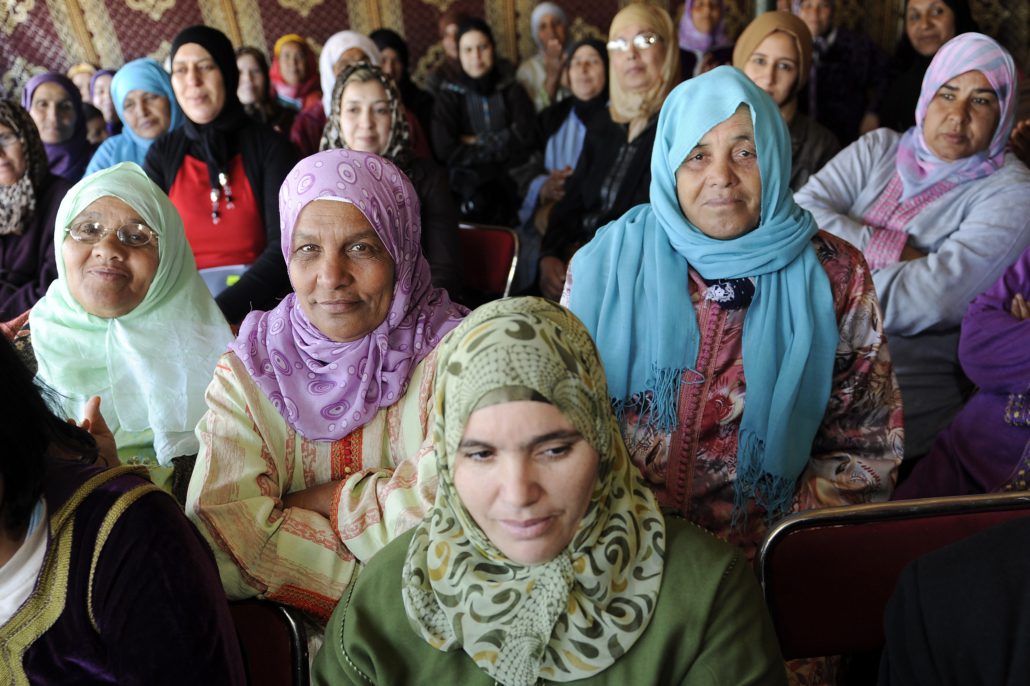
Since Morocco gained its independence from France in 1956, there have been many changes to women’s rights. Across the nation, women continue to fight for their rights in legal, social, political and economic contexts. Although work remains, local organizations have made great strides in improving the status of women’s rights in Morocco.
Women’s Rights On Paper
Morocco’s Constitution addresses the issue of women’s rights. Article 19 of the 2011 Constitution states, “The man and the woman enjoy, in equality, the rights and freedoms of civil, political, economic, social, cultural and environmental character.” This is a general guarantee of gender and matrimonial equality. Moreover, there have been numerous other ratifications in the Moroccan legislature that correlate to this statement.
Moroccan women now have protections against male guardian requirements, rape-marriage allowances and sexual harassment. The government passed all of these laws after 2004, with one as recent as 2018. Yet, there are still a few loopholes in the legal system. For example, the Family Law allows forced marriage if a judicial waiver is provided. Many believe that there is still progress to be made.
Status of Women’s Rights in Morocco (Social Contexts)
While the Moroccan Constitution is promising and shows progression, conservative ideals remain common in social institutions. This includes the hierarchy of power held by males and gender-based discrimination. Socially, the need is the greatest for reform and change, which law or legislation do not often achieve.
Women are fighting for equality in Morocco today by seizing opportunities, including education, economic and financial freedom and leadership positions. By holding higher positions in society, these conservative assumptions may begin to dissipate in family and cultural contexts.
Status of Women’s Rights in Morocco (Political Contexts)
Women gained both the right to vote and the right to stand in an election on the same date in May 1963. The assumption of leadership by women is historical and considered to be a great gain for Moroccan women. Bassima Hakkaoui, a veiled political leader, is now in charge of the Ministry of Solidarity, Women, Family and Social Development. She is the first veiled woman to hold this position.
Unfortunately, most women struggle to gain access to political leadership positions today. As of 2018, only 81 out of 395 parliamentary members were held by women. This begs the question of whether Moroccan women can be accurately and meaningfully represented by their government voices. Many activists call for more female representation in parliament and other positions of power.
Status of Women’s Rights in Morocco (Economic Contexts)
According to USAID Morocco, ranks 141 out of 149 countries in women’s economic participation and opportunity. Women make up 50% of Morocco’s population but only 26% of the labor force. Also, the female labor force participation rate in Morocco decreased by 6% between 1999 and 2010. Moroccan women remain a largely untapped resource within the very borders of the country.
One of the results of the 2011 Constitution includes positive advancements in girls’ education. Increasing access and encouraging girls to finish school has led to more women contributing to the labor market and the economy. The accumulation of generational wealth is an example of this influence.
Fighting for Women’s Rights
To continue improving the status of women’s rights in Morocco, the strengthening of the justice system is crucial. Addressing social and cultural barriers is also important, as many gender limitations stem from conservative or patriarchal views.
Two notable organizations are fighting to raise the status of women’s rights in Morocco and both reside in Rabat. The Democratic Association for Moroccan Women and the Mobilizing for Rights Associates (MRA) work within the community and advocate for legal reforms. These reforms promote women’s social, economic and political equality, monitor international human rights compliance and assist women’s rights campaigns.
MRA also tracks the implementation of the newly signed Elimination of Violence Against Women law, which was recently enacted in September 2018. This law has shown the world that Morocco is willing to make progress in gender equality. Furthermore, it exemplifies the importance of these women’s rights organizations in making progress.
Moving Forward
Although Morocco has made improvements in women’s rights, work remains. Women across the country are continuing to fight for equality in all contexts. Moving forward, women’s rights organizations continue to advocate for the safety and liberty of all Moroccan women.
– Savannah Gardner
Photo: Flickr

Facts About Poverty in the Marshall Islands
Poverty in the Marshall Islands is a major issue, with 30% of the population in the island’s two cities living below the basic-needs poverty line. With the threat of rising sea levels and the lack of quality health care, education and jobs, a third of the nation has migrated to the west in search of a better life. Here are some facts about poverty in the Marshall Islands.
Unemployment
Unemployment is rampant with a rate of 40%. There is a scarcity of younger workers (20-45 years old) due to this demographic leaving the islands for higher-paying jobs in the United States. The primary job sectors are fishing and agriculture, which made up three-fourths of the labor force in 1958. This has changed drastically to 21% in recent years. This reliance on overseas imports is one of the main factors of poverty in the Marshall Islands.
The 1986 Compact of Free Association Law Treaty
The United States and the Marshall Islands have close ties due to the 1986 Compact of Free Association Law (COFA). This treaty grants citizens of Micronesia, Palau and the Marshall Islands to live in the U.S. without visas or work permits. Marshallese citizens have permanent non-immigrant status, distinguishing them from refugees who only receive temporary asylum.
COFA emerged in response to nuclear weapons tests during the post-World War II period from 1946 to 1958, testing 67 nuclear bombs on these Pacific Islands and atolls. The treaty serves as reparations for the loss of lives, resources, forced migration and land destroyed during the times of the nuclear testing. As a result of these tests, a number of islands–like the famous Bikini Atoll of the Marshall Islands–are uninhabitable due to the high levels of radiation still prevalent to this day.
Inefficient Health Care and Malnourishment
The insufficiency in health care is another pervasive issue on the islands, specifically in the outer islands where poverty in the Marshall Islands is high. Many citizens have to leave the Marshall Islands to receive treatment due to the limited health care facilities and programs in place. These off-island referrals are costly, further depleting government finances.
PBS interviewed Isaac Marty–a Marshallese journalist who shared how his wife was not able to get proper treatment for her chronic anxiety and depression. Marty claimed that there is a shortage of qualified medical professionals living on the Marshall Islands, and oftentimes citizens receive medication that is inadequate for their ailments.
Additionally, many Marshallese children are malnourished due to reliance on highly processed imported foods. This has led to a high percentage of diseases such as diabetes, high blood pressure, obesity and gout. With a lack of exports and locally grown food, the country continues to rely on unhealthy and cheap imported foods–widening the deficit and increasing poverty in the Marshall Islands.
Environmental Challenges
In recent years, environmental changes have permeated the globe, but the Marshall Islands specifically has had to bear the brunt of these adverse weather changes. Many have found that small island states, specifically in the Pacific, are the most prone to the variability in sea-level rises. The incremental increase could gradually rise by one to four feet–to the potential cessation of some island states by 2050.
Droughts are a persisting issue with 92% of households indicating that one had affected them. During droughts, household members become dehydrated and sick because their only source of water is salty well water. When water reserves are down, those who cannot afford to buy clean water have to beg.
The Ebeye Water Supply and Sanitation Project
The ADB has worked together with Australia and the Marshall Islands to form the Ebeye Water Supply and Sanitation Project. This project sets out to improve freshwater systems and has done so with success. A new desalination plant implemented in 2017 has increased people’s access to safe, reliable water. The incidence of waterborne disease, particularly gastroenteritis, has decreased, and water supply and sewerage networks have expanded to an additional 300 households.
These facts about poverty in the Marshall Islands indicate that in its fight against poverty, the Marshall Islands has to first tackle the issue of improving various internal sectors, lessening its dependency on others, while increasing the country’s GDP. By working with natural resources abundant in the country, as well as implementing governmental programs, there can be significant changes in health care, quality of education and the economy, as well as improved climate provisions. This would further pull the population out of poverty in the Marshall Islands and increase the island’s viability.
– Mina Kim
Photo: Flickr
Updates on SDG Goal 8 in Spain
The Sustainable Development Goals (SDGs) are a set of 17 objectives that the United Nations created to measure a country’s progress in the journey towards sustainability. The focus of SDG Goal 8 is economic growth and quality jobs. By creating decent jobs, a country can significantly improve the living standards of its citizens. The COVID-19 pandemic has slowed the positive progression of this goal for many countries. Meanwhile, the countries that were falling behind in economic growth before COVID-19 hit are even farther from their objectives now. This article will focus on providing updates on SDG goal 8 in Spain.
6 Indicators of How a Country has Progressed Toward SDG Goal 8
These are the six indicators of a country’s progress toward SDG Goal 8:
SDG Goal 8 in Spain
Currently, Spain has achieved the SDG for adjusted GDP growth, victims of modern slavery, adults with a bank account and employment-to-population ratio. “Significant challenges” remain in the work-related accidents category, but Spain is currently on track to reach the SDG. “Major challenges” remain for the youth in employments or education indicator. Though Spain has made significant progress towards a sustainable economy, it continues to face these challenges. The Mediterranean country has specifically struggled to create opportunities for its youth. With about one in five people between the ages of 15-29 unemployed and not in any type of education or training, Spain still has some ways to go before it can achieve economic sustainability. However, the country is on track to achieving the SDG.
The Reasons Spanish Youth Struggle to Find Employment
The two largest contributors to the lack of opportunities for young people are overqualification and a high dropout rate (relative to other E.U. countries). In 2010, the school dropout rate in Spain was 31.6%. For comparison, the rate for both Finland and Germany was about 12%. Meanwhile, young people who have obtained a formal education tend to lack an understanding of how to find a job and market themselves. Unfortunately, Spain’s methods of preparing young people to enter the labor force do not appear to be as effective as some of its surrounding European countries.
Plan of Action
Spain’s labor ministry has developed a plan of action to combat youth unemployment. By 2021, Spain hopes to achieve the following objectives:
Youth Business Spain
Some organizations are on the ground working to create employment opportunities for Spanish youth. One of those organizations is Youth Business Spain, a branch of Youth Business International (YBI). YBI helps young people begin or further their careers. The organization does this by providing training, mentorship and financial support to young entrepreneurs. Through this program, young Spanish entrepreneurs have received over 28,400 hours of mentorship dedicated to improving skills in business management. From 2013 to 2017, over 1,000 people benefitted from Youth Business Spain. The program has a multitude of inspiring success stories, but it hopes to reach out to even more young entrepreneurs in the future.
Looking Ahead
While significant challenges remain, the country is on track to achieve SDG Goal 8 in Spain. After the Spanish financial crisis of 2008, Spain’s economy was struggling to stay afloat. However, the Spanish government and many non-governmental organizations have gradually improved economic opportunities for young people in the country. Though COVID-19 has caused a bit of a setback in most countries, Spain continues to work on improving employment situations for Spanish youth.
– Jillian Reese
Photo: Flickr
The Fight for Women’s Rights in the Netherlands
Gender-based discrimination takes on many masks around the world. However, in recent years, activists and legislatures have made strides for the advancement of women’s rights in the Netherlands.
Advancing Women’s Rights in the Netherlands and the World
Women’s rights in the Netherlands are a central focus of local politics as people work for the betterment of women not only in the Netherlands but around the world. Through lobbying and the passage of legislation, the Netherlands is ahead of many countries around the world in terms of the betterment of women, and women’s rights. Betterment of women includes, but is not limited to:
The Nuclear Family and Poverty
It is true that for many years, the Netherlands trailed behind much of the world in women’s rights and advancements. Women received encouragement to stay home with house and child and occasionally hold small jobs, with no opportunity for advancement in the profession or in Dutch society. As of 2013, 24.2% of women with children lived below the poverty line in comparison to 0% of men with children.
The nuclear family model around the world has been promoting the idea that the male in the family has to be the one to provide for the family, while the mother stays at home to take care of the children and the house. This frequently leaves women in a financially unstable position without the ability to provide for themselves and creating a gendered financial disparity.
Dismantling Gender Roles
The Netherlands has spent time working to dismantle the gender roles that people associate with the nuclear family. By better incorporating Dutch women into the labor market and government positions, women are finally finding ways to support themselves and their families. Organizations like the McKinsey Project work to advance women’s participation in the labor market through lobbying and creating opportunities for the betterment of women.
Beginning with the Work and Care Act implemented in 2001, part of supporting families for Dutch women include up to 16 weeks of paid maternity leave in which they were entitled to 100% of their median earnings as calculated over the previous year. Meanwhile, their partners can take one week with pay, and up to five partially-paid weeks.
Parent leave is another beneficial measure that a parent can take up until a child’s 8th birthday. Parental leave is when parents can take up to 26 times their working hours. Take, for example, if a parent works 40 hours per week, they have 1,040 working hours to take for the sake of their child in the event they need to take time for/with their child. Additionally, they can spread the time out however they may need.
The implementation of programs like the Work and Care Act, and work with organizations like the McKinsey Project are just a few of the ways the Netherlands has been making strides in promoting the economic, political and social advancement of its women over the last several years. It is important to acknowledge that while gender-based oppression still exists around the world, the Netherlands included, the strides the country has made is admirable.
– Jessica Raskauskas
Photo: Flickr
3 Ways to Help Alleviate Child Poverty in Mexico
Right now, more than a quarter of Mexican children live in poverty. Many of these children lack the basic necessities for success, such as education, food and housing. As a result, the cycle of poverty continues. Mexico possesses a two-sided economy in which one side thrives with a growing GDP, while the other is overwhelmingly impoverished. This socioeconomic disparity results in devastating consequences for Mexico’s most vulnerable demographic- its children. Here are three important ways to help alleviate child poverty in Mexico.
3 Ways to Help Alleviate Child Poverty in Mexico
Looking Ahead
Child poverty in Mexico is flourishing as a substantial portion of the Mexican population lives below the poverty line. A lack of education, food insecurity and homelessness plague many of their lives. While organizations work toward aiding these vulnerable individuals, an abundance of work still needs to occur to help the impoverished children of Mexico.
– Hope Shourd
Photo: Flickr
Harnessing Hope: Humanitarian Aid in South Sudan
As the world’s youngest nation, South Sudan has amazing potential to be an emerging economy in East Africa. Unfortunately, conflict has plagued the newly formed country, as it emerged as a result of a war for independence, and continues to see regional conflicts as it remains politically unstable, resulting in weaker public institutions and infrastructure. Due to this instability, it has been difficult for a strong and developed economy to take hold. However, with South Sudan’s access to natural resources and untapped human capital, a strong economy is definitely possible if there is enough of an investment in humanitarian aid in South Sudan.
Many nations and organizations, such as the United States and UNESCO, have planned solutions and committed resources to help South Sudan remedy its largest issues. The most prominent issue facing South Sudan is the continued conflict the fledgling country faces. These issues cannot be fixed purely from foreign donations and humanitarian aid but there has been a concentrated effort to help relieve the worst impacts the continued fighting has caused.
Peacekeeping
In a U.S. backed mandate, the U.N. has committed to providing humanitarian aid in South Sudan by maintaining a peacekeeping force in the country till at least March 2021. These peacekeeping forces have the task of maintaining the stability of the new peace agreement as well as assisting the roughly 3.9 million displaced South Sudanese citizens. The U.N.’s forces will have the job of monitoring the new transitional government for abuses of international humanitarian law.
While a lack of political stability is the root cause of most of South Sudan’s economic struggles, a lack of dependable infrastructure also hampers the country’s ability to combat poverty. Humanitarian aid workers have found difficulty reaching rural populations in South Sudan during regular flood seasons. Roughly 70% of South Sudan’s population lives in rural areas and as many work in the agricultural sector, meaning that for a lengthy portion of the year, they are inaccessible to humanitarian workers in addition to not having access to urban centers.
Education
Another difficulty facing South Sudan is a lack of a comprehensive education system. In 2018, South Sudan had the lowest rate of adult literacy in the world at 27%. This is partly due to its reliance on agriculture and the sparse rural communities where many South Sudanese people live. As a response, UNESCO is promoting non-formal educational spaces to not only educate South Sudanese youth but also illiterate adults. Expectations have determined that over 2,000 learning spaces will emerge by the year 2023, which will serve 330,000 children who cannot attend a traditional school due to displacement from conflict.
As of 2018, 70% of South Sudan’s population was under the age of 29 years old which has the potential to lead to exponential growth in the country. The young nature of the country’s population means that they can receive training in specialized skills and can create a sudden surge of development in certain sectors of industry. Combined with developing a stronger educational network for young adults, South Sudan can see a major increase in educated and skilled workers.
The United States, recognizing the potential for South Sudan to become a strong economy in East Africa, has continued to provide humanitarian aid in South Sudan as it develops. The United States has dedicated $97 million from the State’s Department’s Bureau of Populations, Refugees, and Migration as well as an additional $11 million from the U.S. Agency for International Development’s Bureau for Humanitarian Assistance in an effort to aid those displaced due to the conflict in South Sudan.
Looking Forward
South Sudan has all the makings of a stable and prosperous economy, a substantial amount of natural resources, access to undeveloped land and a population that is young enough to receive thorough training and education. All the country needs to do is to create and maintain political peace within its borders and continually receive humanitarian aid from global leaders such as the United States.
– Christopher McLean
Photo: Flickr
The Process of Reducing Hunger in Kosovo
Obstacles
Kosovo is Europe’s youngest country, just inland of the Adriatic sea and is home to around 1.85 million people. Available poverty data from 2011 shows that almost one-third of the population (29.2%) lives on less than $2 per day and an additional 10% live in extreme poverty ($1.20 per day). Many households reported that aside from property, food was their most significant expense. Research indicates that in many low-income houses, as much as 40% of a household’s income went toward food.
In the 1990s, Kosovo suffered from a prolonged civil war and as a result, its economy is still recovering. Long term stability seems distant with high unemployment rates. As the USCIA reported, youth unemployment sits at 51.5% for males and 64.8% for females, making it the second-highest in the world at 55.4% (ages 15-24). Meanwhile, reports determined that the unemployment of the working-age group was 32.9%. Due to a lack of economic reforms and investments, these unemployment rates remain high and unwavering.
Healthcare
Nutrition insecurity is widespread. In addition to lacking consistent access to food, it is even more difficult for people to find foods with adequate nutrition. Unsurprisingly, obesity and anemia rates have risen due to a lack of consistent access to nutritious foods. The World Bank states that “[food] producers also face large losses on perishable and nutritious food as consumption patterns shift towards cheaper staples.” The loss of local nutritious foods further contributes to the problem of nutrition security and perpetuates health conditions like obesity and anemia.
Historically, chronic hunger as a result of poverty has characterized Kosovo. “In 1999 in Kosovo, 11,000 children older than 5 years were estimated to be acutely malnourished and about 17,000 would be affected by stunting. Over 5% of the surveyed mothers had a BMI below 18.5 and more than 10% were obese.” The same report stated that “58% of the children were anemic.” These statistics are significant obstacles to the country’s development.
Solutions
While there have been considerable improvements in Kosovo’s development, there is still plenty of room to grow. Until Kosovo can reach a point of self-sufficiency, aid should go to those in need.
Along with functioning nonprofit organizations, the U.N. has implemented a plan, the Stabilization Association Agreement (SAA), which establishes an official relationship between Kosovo and the E.U. Through this agreement, Kosovo has received more aid and is on a more sustainable path. “This agreement is a milestone for the E.U.-Kosovo relationship. It will help Kosovo make much-needed reforms and will create trade and investment opportunities.” The economic stability produced through this agreement will provide jobs and allow for progress within the country, eventually leading to more independent governance.
Photo: Flickr
4 Initiatives to Alleviate Poverty In Syria
Syria has been in a state of civil war for nine years, since March 2011. Dire consequences meet civilians from all sides; from danger and violence if they stay and closed borders due to an overflow of refugees if they try to leave. Due to this humanitarian crisis, poverty has affected more than 83% of the population. In this same vein, 8 million Syrian children are in need —both inside and outside the country. As of April 2020, the WFP reported that the cost of a staple basket of food has risen by 111% in comparison to the previous month, due to Syria’s COVID-19 crisis. With these factors at play, initiatives to alleviate poverty in Syria are a welcome respite.
While it may seem that good news is hard to come by, there are a few initiatives in Syria working against the effects of high poverty rates. They tackle these issues from several angles, such as rewriting stereotypes, entrepreneurial education, resource allocation and community development. Here are four initiatives that are working to alleviate poverty in Syria, today.
4 Initiatives to Alleviate Poverty in Syria
Washing Away the Stain of War
Two million Syrians alone have benefited from the improvement of basic services. The remnants of war and violence are being cleaned up and removed. Moreover, the stones in the debris that were removed from Bab Al-Hadid were collected on-site. Notably, these stones will be reused in future rehabilitation projects in the same area.
After nine years of civil war and the health and economic consequences of COVID-19, the contributions of these organizations provide relief to Syrians.
– Savannah Gardner
Photo: Pxfuel
The Status of Women’s Rights in Morocco
Since Morocco gained its independence from France in 1956, there have been many changes to women’s rights. Across the nation, women continue to fight for their rights in legal, social, political and economic contexts. Although work remains, local organizations have made great strides in improving the status of women’s rights in Morocco.
Women’s Rights On Paper
Morocco’s Constitution addresses the issue of women’s rights. Article 19 of the 2011 Constitution states, “The man and the woman enjoy, in equality, the rights and freedoms of civil, political, economic, social, cultural and environmental character.” This is a general guarantee of gender and matrimonial equality. Moreover, there have been numerous other ratifications in the Moroccan legislature that correlate to this statement.
Moroccan women now have protections against male guardian requirements, rape-marriage allowances and sexual harassment. The government passed all of these laws after 2004, with one as recent as 2018. Yet, there are still a few loopholes in the legal system. For example, the Family Law allows forced marriage if a judicial waiver is provided. Many believe that there is still progress to be made.
Status of Women’s Rights in Morocco (Social Contexts)
While the Moroccan Constitution is promising and shows progression, conservative ideals remain common in social institutions. This includes the hierarchy of power held by males and gender-based discrimination. Socially, the need is the greatest for reform and change, which law or legislation do not often achieve.
Women are fighting for equality in Morocco today by seizing opportunities, including education, economic and financial freedom and leadership positions. By holding higher positions in society, these conservative assumptions may begin to dissipate in family and cultural contexts.
Status of Women’s Rights in Morocco (Political Contexts)
Women gained both the right to vote and the right to stand in an election on the same date in May 1963. The assumption of leadership by women is historical and considered to be a great gain for Moroccan women. Bassima Hakkaoui, a veiled political leader, is now in charge of the Ministry of Solidarity, Women, Family and Social Development. She is the first veiled woman to hold this position.
Unfortunately, most women struggle to gain access to political leadership positions today. As of 2018, only 81 out of 395 parliamentary members were held by women. This begs the question of whether Moroccan women can be accurately and meaningfully represented by their government voices. Many activists call for more female representation in parliament and other positions of power.
Status of Women’s Rights in Morocco (Economic Contexts)
According to USAID Morocco, ranks 141 out of 149 countries in women’s economic participation and opportunity. Women make up 50% of Morocco’s population but only 26% of the labor force. Also, the female labor force participation rate in Morocco decreased by 6% between 1999 and 2010. Moroccan women remain a largely untapped resource within the very borders of the country.
One of the results of the 2011 Constitution includes positive advancements in girls’ education. Increasing access and encouraging girls to finish school has led to more women contributing to the labor market and the economy. The accumulation of generational wealth is an example of this influence.
Fighting for Women’s Rights
To continue improving the status of women’s rights in Morocco, the strengthening of the justice system is crucial. Addressing social and cultural barriers is also important, as many gender limitations stem from conservative or patriarchal views.
Two notable organizations are fighting to raise the status of women’s rights in Morocco and both reside in Rabat. The Democratic Association for Moroccan Women and the Mobilizing for Rights Associates (MRA) work within the community and advocate for legal reforms. These reforms promote women’s social, economic and political equality, monitor international human rights compliance and assist women’s rights campaigns.
MRA also tracks the implementation of the newly signed Elimination of Violence Against Women law, which was recently enacted in September 2018. This law has shown the world that Morocco is willing to make progress in gender equality. Furthermore, it exemplifies the importance of these women’s rights organizations in making progress.
Moving Forward
Although Morocco has made improvements in women’s rights, work remains. Women across the country are continuing to fight for equality in all contexts. Moving forward, women’s rights organizations continue to advocate for the safety and liberty of all Moroccan women.
– Savannah Gardner
Photo: Flickr
Elderly Poverty in Mexico: The Forgotten Generation
In today’s society, people sometimes see the elderly as excess baggage rather than actual human beings. A place where this unfortunate reality is present is in Mexico, where 7.8% of the population is above the age of 65. Within this percentage, 41.1% live in poverty, 34.6% in moderate poverty and 6.6% ($1.90 a day) live in extreme poverty. Here is some information about elderly poverty in Mexico.
Poverty and Mental Health
About 29.2% of all elderly people live alone or with their spouses, be that in a small house or on the streets. The government covers only 46% (which only consists of the formal economy) of the elderly; the other 54% must struggle on their own. With no welfare, retirement plan and aid from the government, more than 32 million have no choice but to work past their prime. It is not uncommon for these elders to experience abuse, or for customers, employers or employees to take advantage of them. Due to this, many elderly are vulnerable to mental health issues such as depression, stress and loneliness that come from poverty.
The day-to-day struggle to scrape up money and food for themselves and their families is at times a burden too heavy to bear. Results from an analysis of suicide rates in Mexico go as follows; from January 2014 to December 2015, 990 residents died from suicide, with 78.28% being males and 21.72% being females. The highest death rates amongst males were 20-24 and 75-79. For females, the highest mortality rate was from 15-19 years old.
Of course, there are ways both the elderly and their families can do to improve mental health. For the elderly that live with families, positive family dynamics (conversations, actions of kindness and a feeling of contribution) can greatly aid their mental health. For many seniors, nothing compares to the support from family. Another type of support is social support, which is the support that comes from outside the immediate family. This commonly comes in the form of encouragement from community members, co-workers and strangers.
Solutions
One reason elderly poverty in Mexico persists is that only 46% of them (within the Formal economy) have access to assistance programs. Nevertheless, it would be unfair to state that Mexico does nothing to help its elderly. INAPAM (Instituto Nacional para las Personas Adultos Mayores) is a popular program that allows any Mexican resident (above the age of 60) to acquire worthwhile discounts (10%-50%) on a wide range of goods and services such as food, medicine, transportation, clothing and recreational activities. Mexicans can apply easily if they have the necessary requirements. One specific requirement states that the person in question must present a form to confirm their address. Many elderly have no official home, so that fact can immediately disqualify them from applying.
Aztin is a nonprofit organization that focuses on providing needs such as education, nutrition, water and health. Since 1977, Aztin has worked closely with families trapped in poverty in the village of Tlamacazapa, Guerrero, Mexico, providing programs that vary from helping with dental hygiene, providing aid to those with special needs and implementing sanitation programs. Locals run Aztin with the idea of social participation in the hope that a sense of personal empowerment will begin with an inner spark of possibility and continue to grow.
Informal Workers and Poverty
For formal workers (workers officially hired, have a set salary, receive health benefits and work benefits), taking a day off is an option. However, 60% of Mexico’s workforce is informal and within this percentage there are 32 million elderly that work informally, thus eliminating any chance of receiving the benefits listed above. It is not uncommon to find a woman well past her 80s working 60-hour shifts in a supermarket without it officially hiring her. As a result, her only way to earn money is from the tips from her customers. For informal workers old and young, this is the lifestyle that poverty has burdened them with. Some may have money, but it is often not enough to call savings. At most, the money may last a week, but after that, these individuals may not have any choice but to work. Necessity and poverty corner the elderly.
A popular program that helps the informal population is called Seguro Popular. This program is an income-based health-insurance program that is available to all non-salaried people who cannot access social security due to not having employment under the government. This includes independent workers (freelancers), people with disabilities and the elderly who do not participate in the labor force. This program provides financial assistance to more than 50 million Mexicans and is slowly improving access to health care, especially for the poor.
The Mexican government and its people are diligently working to find ways to provide for their elderly population. Through the continued work of Aztin and the Mexican government, elderly poverty in Mexico should reduce.
– Aaron Samperio
Photo: Flickr
5G Wireless to Improve Education in Rural Areas
The COVID-19 pandemic has impacted the world in many ways. Not only has the pandemic generated a loss of life and economic growth, but it has also shifted social dynamics. One of the most affected sectors has been education. Today, more than ever, education is dependent almost entirely on internet access or wireless cellular network coverage. Unfortunately, 51% of the world population lacks access to the internet. Many of those without internet access live in rural areas and low-income regions. In most cases, these areas lack investment in key infrastructure such as internet access. Fortunately, 5G wireless has the potential to guarantee a fast and efficient connection. The subsequent increase in access to high-speed internet will likely spur socio-economic growth worldwide, especially in rural areas.
Efficiency and Cost Reduction
The 5G network enhances WIFI capabilities; it is 10 times faster than any average WIFI network and has 100 times more capacity than 4G. The pandemic and the uptick in remote education have intensified the need to improve internet access. 5G Technology can take homeschooling to another level as it can eliminate the downside of face-to-face classes. The changing demands of the world’s population is an opportunity to transform rural communities through technologies, such as 5G wireless. Previous generations of wireless aimed to revolutionize the mobile phone sector. 5G, however, can deeply transform a wide range of industries.
The use of 5G will allow students immediate access to educational content without the common hindrances of Wi-Fi connectivity. The students will be able to enjoy a completely new form of education. Technologies that 5G powers, like virtual reality, could provide immersive experiences to develop professional skills. 5G wireless would improve the range and quality of educational activities and teaching methods. These improvements will not only expand the students’ educational experience but also their capabilities.
Many rural areas face teacher shortages and a lack of proper classroom equipment. This leads to a discrepancy between the quality of education in rural and urban schools. 5G would reduce the quality gap in education due to its universality. No matter where a teacher and their students are located, 5G can transmit the lesson quickly and clearly. For these reasons, 5G will work as a social equalizer by reducing the access cost of educational information and improving classroom technologies.
The Need for Public-Private Partnership
It has become clear that 5G can ameliorate the economic and social repercussions of the educational divide. However, this solution to a systemic social issue is only feasible when the public and private sectors collaborate. This partnership is necessary to equitably implement this new generation of broadband across both urban and rural areas. The ultimate goal is to evenly provide 5G coverage to remote areas around the world. India, for example, has prioritized its digital agenda to provide broadband connectivity in rural areas and communities that will benefit from digital inclusion.
The Indian Government, through the Department of Telecom (DoT), has been working on an action plan for the installment of 5G wireless services. The DoT has joined key stakeholders specialized in the industry to develop an ecosystem feasible for 5G commercialization and application. The government is promoting partnerships to guarantee innovation through a regulatory environment that incentives investments in the necessary infrastructures. The parties involved acknowledge that the shift toward 5G is crucial for the modern age. This technology will reduce the digital divide and the urban-rural educational gap while also producing growth and innovation.
5G as a Social Equalizer
All students in the world, regardless of their circumstances, need quality education to ensure a higher quality of life. 5G wireless is an innovative solution that can generate a dramatic impact. This network has the power to improve the quality of life for rural communities by guaranteeing opportunities for educational growth and general economic development. This means that 5G wireless can connect everything and everyone, and students can have access to all the tools necessary to succeed in several areas of interest.
For widespread 5G wireless to become a reality, government bodies and stakeholders must ensure a sufficient level of investment in national infrastructure to make the possible societal improvements a reality. The use of 5G means closing the urban-rural educational and digital gap and reducing poverty and insecurities. It is a social equalizer that will enable a smooth learning experience for students in rural areas who yearn for a better future.
– Isabella León Graticola
Photo: Flickr