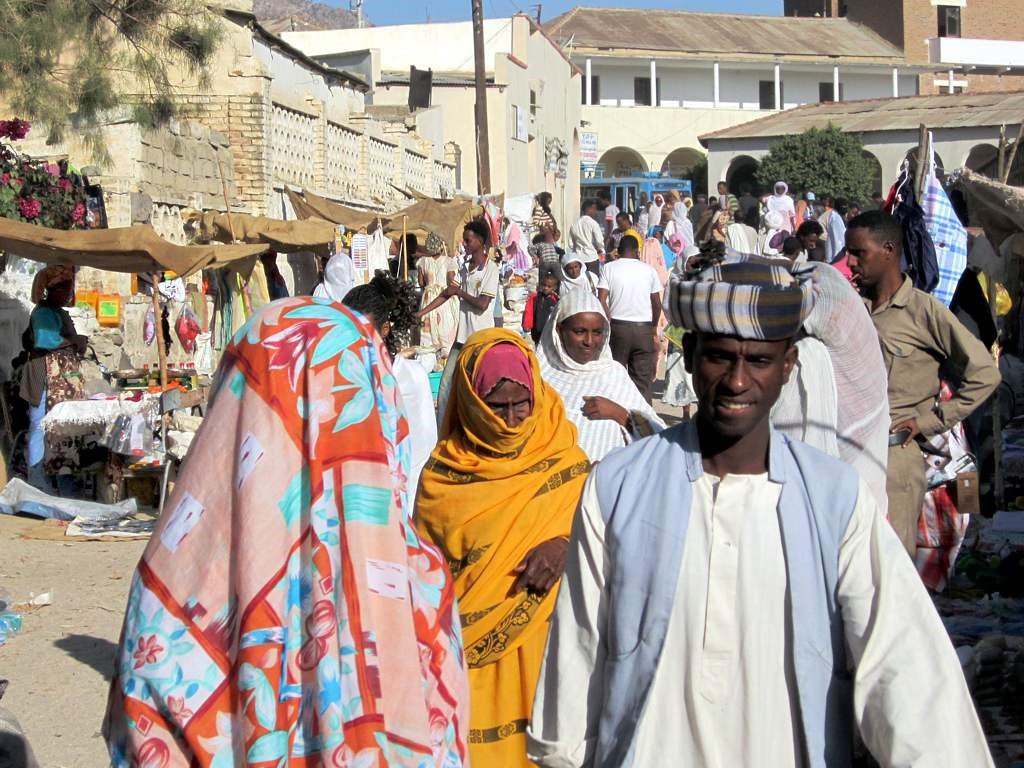
Eritrea is an isolated, one-party state where children must frequently leave school for mandatory military training along with a large percentage of farmers and agricultural workers. This leaves food, water, education and shelter from violence almost inaccessible. For these reasons, many Eritrean citizens seek shelter in neighboring countries or refugee shelters where human trafficking is the most rampant. Human trafficking in Eritrea is very common due to over 30 years of violence between neighboring countries leaving it extremely militarized and vulnerable.
Human trafficking is a serious crime and a violation of human rights that occurs in almost every country in the world. The United Nations defines human trafficking as the recruitment, transportation and harboring of people for the purpose of forced labor, prostitution, slavery or any other means of exploitation. Trafficking runs rampant in underdeveloped nations, highly militarized and war-torn states and countries without sufficient protection systems in place.
Current State of Human Trafficking in Eritrea
Eritrea is classified as a source country. This means that the majority of human trafficking in Eritrea happens within the country’s borders, mainly for forced domestic labor with sex and labor trafficking happening abroad to a lesser extent.
Most trafficking occurs inside Eritrea’s borders because citizens face “strict exit control procedures and limited access to passports and visas,” trapping them in the country or forcing citizens to flee to refugee camps where they have a high chance of getting kidnapped and returned. Kidnappers commonly try to coerce victims with a promise of reuniting families, food or shelter.
Sinai Desert Trafficking
Between 2006 and 2013, non-domestic human trafficking in Eritrea increased exponentially. Smugglers of neighboring countries were kidnapping Eritreans from refugee camps in order to hold them in the Sinai Desert for ransom. Victims often experienced extreme violence like torture, organ harvesting and rape. Of the estimated 25,000 to 30,000 victims of Sinai trafficking, estimates have determined that about 90% are Eritrean.
Current Protection in Place
According to the U.S. Department of State, the Eritrean government has not reported significant efforts to identify and protect human trafficking victims in the 2020 Trafficking in Persons Report: Eritrea.
The government has not reported any systems in place to protect victims and the Eritrean court used to only require perpetrators of human trafficking to pay restitution and/or fines, but now it offers jail time along with a fine of $1,330-$3,330. The government has not identified or persecuted any government officials of human trafficking but did arrest 44 military officials for conspiracy to commit trafficking crimes in 2015.
Prevention and Progress
The U.S. Department of State ranks Eritrea as a Tier 3 country in human trafficking matters meaning that it does not meet the minimum anti-trafficking standards and is not making an effort to do so. The government did not report any protection systems in place for trafficking victims, it does not provide services directly to victims and it does not show significant effort to create legislation to punish traffickers.
Even though the Eritrean government continues to subject its citizens to forced national service, in 2019, it increased international cooperation on human trafficking and similar matters. Officials were active in an international anti-trafficking workshop that created a regional and national level action plan to combat trafficking.
In the past decade, Europe has offered to reinstate aid to Eritrea to help stimulate the economy and reduce the number of people attempting to leave the country. Europe is a destination point for many migrants who stop through Sudan and Libya on the way, but many do not make it through due to the difficult journey.
More recently, the Eritrean government has been educating its citizens on the dangers of irregular migration and trafficking through events, posters, campaigns and conventions to hopefully prevent men, women and children from entering high-risk trafficking zones. This is one of the best things the government can do for its citizens as it better informs them of their surroundings on a day to day basis.
The U.S. Department of State has also recommended the continuation of anti-trafficking training to all levels of government, as well as the enforcement of limits on the length of mandatory national service for citizens and the enactment and enforcement of anti-trafficking laws that criminalize the act and prosecutes the perpetrators of human trafficking in Eritrea.
One of the most important ways to slow or stop human trafficking would be to end mandatory national service or impose strict time limits on such service. Many Eritreans attempt to flee or experience trafficking by military officials because they are in service for an indefinite amount of time with no way out. Once Eritrea begins to persecute any and all human traffickers and can break free from an authoritarian one-party political system, it can begin to be a safe country for its citizens.
– Julia Ditmar
Photo: Flickr

The Fight Against Human Trafficking in Peru
Peru is home to world-famous cultural sites, exquisite dishes and a vast array of bright-colored fabrics. However, beyond the nation’s appealing attractions and delectable meals, human trafficking in Peru is leading to the exploitation of the most vulnerable individuals in society.
Victims of Human Trafficking in Peru
Around 863,000 Venezuelans fled their country and entered Peru in order to seek refuge. Peruvian traffickers exploit refugees when traveling to Peru or shortly after their arrival. In 2019, 301 Venezuelan adults and children worked as prostitutes or engaged in forced labor.
Traffickers exploit adolescents due to their eagerness to work. When Peruvian schools close down from December to February for the holidays, many students seek employment to obtain extra pocket money. However, traffickers lure these individuals in with false promises of work and high financial compensation. Exploiters take the adolescent males to remote areas of the Amazon rainforest, like the Madre de Dios region, to engage in forced labor in the illegal extraction of gold. Additionally, traffickers obligate female teenagers to offer sex services to the adult miners in the area.
Lastly, exploiters target children due to their willingness to follow directions. However, some Peruvians living in poverty willingly sell their children to human traffickers to receive financial compensation. The infamous terrorist group called The Shining Path steals children and trains them to become soldiers for its organization. Also, some children work as farmers, housekeepers, produce and transport drugs or engage in terrorism. Traffickers who do not belong to the terrorist group force young individuals to engage in panhandling, sell products in the streets, become housekeepers, produce and sell cocaine or other illegal activities.
Challenges with the Judicial System
Individuals found guilty of human trafficking in Peru spend eight to 15 years in prison for exploiting adults, 12 to 20 years for exploiting adolescents and at least 25 years for exploiting children according to Article 53 of the penal code. However, human traffickers almost never receive adequate punishment for their crimes. More often than not, criminals receive light sentences because judges find it difficult to prosecute more complicated crimes.
Solutions
The Peruvian government offered training and workshops on how to identify human trafficking to almost 1,000 government employees and regular citizens. Over 100 members of law enforcement learned how to better identify victims of human trafficking. Also, officials offered training to 22 regions of the country that receive a high amount of foreign visitors in order to reduce exploitation in the tourist sector. Lastly, the government provided support to initiatives that help raise awareness to students and children. These initiatives provide workshops, hand out flyers and engage in conversation with young individuals at transit stations. For example, since its establishment in 2017, A Theater Against Human Trafficking traveled to schools to promote awareness and advocate for the prevention of human trafficking in Peru.
With the in-kind support of the government, nonprofit organizations provided adequate training to 253 members of the judicial system on human trafficking, 821 lawyers and almost 1,000 shelters on how to deal with trafficking victims. They also taught classes to members of law enforcement on how to approach victims. One of the main organizations receiving help from the government is Capital Humano y Social Alternativo. Since its establishment in 2004, CHS Alternativo protected the rights of human trafficking victims and reached more than 1,400 victims.
The Catholic Relief Services in Peru provide shelter and protection to individuals who escaped their traffickers. CRS came to Peru in 1950 and impacted the lives of 15,224 victims. Social workers who work for these organizations go to areas that human trafficking most affects, like Madre de Dios, to provide counseling services to victims. Also, social workers go to local schools to provide workshops about trafficking to students.
Although human trafficking persists in Peru, the government and nonprofit organizations take serious efforts to raise awareness about the issue and to provide help for victims. With the increased efforts to stop human trafficking in Peru, the country can expect a decrease in the exploitation of vulnerable individuals.
– Samantha Rodriguez-Silva
Photo: Flickr
Combating Child Labor in Djibouti
The Nation of Djibouti
According to Humanium, an NGO focused on protecting children’s rights across the globe, 42% of Djibouti’s population lives in extreme poverty. Child labor is primarily caused by extreme poverty, as parents force their children to work so that they can survive. Therefore, Djibouti’s children are some of the most vulnerable to child labor due to poverty throughout the nation.
As a result of their families’ financial situation, over 12% of children ages 5-14 work. Working can isolate children socially or prevent them from having the time to pursue their academic interests. Only 60-65% of children complete primary education in Djibouti. With many children unable to obtain an education due to work or other circumstances, child labor in Djibouti perpetuates the cycle of poverty generation after generation.
Government Efforts Toward Child Labor
Djibouti’s government has taken an active role over the past decade in reducing child labor. The active role is shown through establishing workgroups and various programs focused on identifying the contributing factors of child labor. One of the main projects is the Anti-Trafficking Working Group, which has improved cross-agency government collaboration to counteract human trafficking. The Prime Minister leads the National Council for Children in its efforts to secure birth certificates for immigrants, ensure education for refugees and reunify separated migrant families. Furthermore, the Council successfully established a temporary shelter for children living on the street in 2018. Therefore, it made these at-risk kids less likely to be coerced into child labor. The government established the National Family Solidarity program to decrease child labor. They supported Djiboutian households in extreme poverty via cash transfers. These programs represent a start to ending child labor in Djibouti, something that future leaders of Djibouti can continue to prioritize.
Despite the government’s efforts, various legal loopholes remain that benefit those who exploit child labor. Many of the statutes only apply to children working in the formal business sector. Therefore, Djibouti’s laws are less comprehensive than international standards. This is especially problematic because most child labor cases occur in the informal business sector. Some examples are working in small shops, selling items on the street and working in family-owned businesses in rural communities. Without true legislative changes, Djibouti’s laws will continue to fail in identifying and eliminating most child labor cases.
Additionally, there were only five labor law inspectors in Djibouti as of 2018. This means that Djibouti’s labor force of almost 300,000 has approximately one labor law inspector for every 60,000 workers. Without the resources or personnel necessary to expose and eradicate child labor, child labor will continue. This brings harm to Djibouti’s long-run humanitarian situation, living conditions and economic growth.
International Support
Yet, despite the shortcomings so far to end child labor in Djibouti, UN-sponsored efforts and aid from various countries/NGOs, present an optimistic future. UNICEF currently works with the government of Djibouti, the United States and the Humanitarian Action for Children Project to increase access to education for the most vulnerable Djiboutian children (orphans and those in poorer areas). This program has helped over 4,500 children obtain pre-primary, primary or secondary education in Djibouti. The U.S. government has also funded a $500,000 program to train law enforcement and expand communication capabilities between the private and public sectors, regarding ending forced labor/human trafficking. Finally, the World Bank oversees numerous programs that deal with the root causes of poverty and child labor in Djibouti by promoting human capital development and education.
Cooperation and a Promising Future
Going forward, it will be pivotal for the government to continue focusing on lowering the extreme poverty rate. Reforming legislation to meet international standards, then enforcing it as well as protecting children of all ages and backgrounds, is the next step in Djibouti’s fight against child labor. Improving human rights means better access to education. This will likely help the economic situation of Djibouti by breaking the cycle of poverty. However, the international community plays a crucial role in helping Djibouti. Some of the most successful initiatives have come from international partnerships and UN-sponsored programs. Cooperation is critical in Djibouti, whereas complacency will be catastrophic.
– Alex Berman
Photo: Flickr
Human Trafficking in the DRC
With a population of over 98 million people, the Democratic Republic of the Congo (DRC) is the second-largest country in Africa. The country’s rich natural resources, such as copper, kept its economy afloat for several years and facilitated alliances with other nations. Unfortunately, corruption within the government and instability and violence from internal conflicts led to a wave of humanitarian crises and human trafficking in the DRC.
The Problem
The DRC is among the least developed countries in the world. Approximately 72% of the population lives in extreme poverty leaving the country’s people powerless and unprotected against the violence from internal armed conflict. Human trafficking in the Democratic Republic of the Congo is prevalent as a result. Armed groups use sexual violence as an expression of power and weapon of war to degrade communities. Traffickers also take thousands of children and adults from their homes and force them into modern slavery and military service, but few victims file reports due to fear and coercion.
The standards set by the Trafficking Victims Protection Act (TVPA) classifies the DRC in the Tier 2 Watch List. This means that while the country is taking action to meet the TVPA’s standards, it still has high numbers of human trafficking victims, with 3,107 documented cases of children escaped from armed groups in 2019. The government has also failed to provide evidence of increasing efforts to counter severe forms of trafficking. Here is what some are doing to rectify the human trafficking in the DRC.
Combating Human Trafficking
The Free the Slaves Project is an international organization and lobby group that campaigns against modern slavery. Its initiatives in the DRC include supporting local groups to promote and improve access to education and increased transparency by companies that import minerals from the DRC. Transparency is increasingly important as mining companies are guilty of using forced labor and consumers have the power to pressure companies to use ethically sourced materials through their choices. Additionally, the Free the Slaves Project teaches communities to mobilize to eliminate slavery and educates government officials about anti-trafficking laws and their duty to enforce them. Thus far, the project has increased resistance to slavery in 15 mining communities and trained dozens of security officials and civilian prosecutors on trafficking laws.
Another project that is helping reduce human trafficking in the DRC is The Children, Not Soldiers campaign. The Special Representative of the Secretary-General of the UN started The Children, Not Soldiers campaign to encourage international action against child recruitment and use in conflict. As part of the campaign, countries that have committed grave violations against children have to sign an Action Plan committing to the enforcement of criminal laws that prohibit and punish the recruitment and use of children in armed conflict. After the UN identified thousands of grave violations in the DRC in 2012, which included the abduction and recruitment of children, the country signed an Action Plan. In 2017, the campaign delisted the DRC from the Action Plan because of compliance to end and prevent the recruitment of children. For example, the DRC put several commanders of armed groups on trial for child recruitment and signed 21 commitments with armed groups to end the use of child soldiers, which led to the release of 920 children.
Continuing the Fight
While the DRC has moved up a Tier on the TVPA’s standards, there is still more the government can do to enforce international and domestic laws preventing and prohibiting human trafficking. The 2020 Trafficking in Person Report lists several recommendations to continue the progress the DRC has made to end human trafficking. This includes passing and enforcing legislative programs, training officials to identify victims and developing procedures for collecting data. However, these initiatives will require funding and guidance from experts that the DRC does not have access to. Evidently, ending human trafficking is a collective effort that requires help from everyone in the international community.
– Giselle Ramirez-Garcia
Photo: Flickr
Homelessness in Guatemala
Street Children
Young children are considered lucky if they are not part of the large homeless population. Among the homeless population, 7,000 of them are children and adolescents left to survive on their own. Many of them turn to drugs or alcohol as a coping mechanism, perpetuating the cycle of homelessness in Guatemala. Violence directed towards street children is not uncommon. The Guatemalan police force’s deathly violence towards these children had remained unchecked until the early 2000s but the threat of physical harm has not been abolished to this day.
Homelessness in Guatemala is a ripple that ends at the children of the impoverished. For example, they are needed for work and are often unable to go to school, if they can afford public schooling to begin with. The little income they make does not stretch far. A quarter of the population of children are actively involved in child labor out of necessity. In addition, one in four children under the age of fifteen are illiterate. Chronic malnutrition and hunger are a consistent part of life. Without access to proper education or nutrition children of the impoverished do not have the ability to move forward. As a result, they are trapped in a cycle of poverty and homelessness in Guatemala.
Inadequate Housing Plagues Families
Traditionally, Guatemalan culture revolves around family. It is a tight-knit community that is hindered by the lack of funds, nutritional food and educational opportunities. Those who are fortunate enough to have shelter are stuffed into small huts with a tin roof and dirt floors. Children, parents and grandparents often live together without running water or electricity. Diseases plague newborns and small children due to people’s inability to keep housing sanitary, leading to high infant death rates. Medical care is all but nonexistent.
Cooking is done over an open fire kept inside the home. This leaves the women and children of the families to breathe in smoke for hours at a time with no ventilation. Some houses are made from straw or wood both of which are extremely flammable and pose another risk to families inside. Respiratory illness affects a large portion of the poor population. Since most houses are one room, the idling soot from cooking fires becomes toxic for the entire family. Without running water, there is no way to properly clean the soot and without electricity, there is no other option for families to cook food.
The Plight of the Indigenous Woman
Half of the country is homeless and of that population, half of those people are indigenous women. Impoverished indigenous women not only suffer the fallout of poverty, they face racism and violence because of their sex. Compared to the rest of the country, including Guatemalan women, indigenous women have a higher chance at having multiple unplanned children, living in poverty and being illiterate. In addition, the birth mortality rate for women of native heritage is double and non-indigenous women have a greater life expectancy by an average of 13 years. They are malnourished and underpaid. The inequality trickles down to their children who face food insecurity, lack of education and if they are young girls the same fear of violence and racism their mothers endure.
Taking Action
Homelessness in Guatemala engulfs half of the 15 million people living in the country. Basic human necessities are not available and haven’t been for generations. The Guatemala Housing Alliance focuses on providing proper shelter to families. They work in tandem with other groups aiming to help education, food insecurity and sexual education for the poor of Guatemala.
The Guatemala Housing Alliance has built 47 homes with wood-receiving stoves that eliminate the danger of open fire cooking. They’ve put flooring in 138 homes that had been previously made of dirt. Also, the foundation offers counseling for young children and has hosted workshops for women for them to speak openly and learn about sanitation, nutrition and their legal rights.
For more information visit their website.
– Amanda Rogers
Photo: Pixabay
ColaLife in Zambia: Preventing Diarrheal Deaths
ColaLife in Zambia
ColaLife in Zambia marked the beginning of an impressive effort to save the lives of children with diarrhea. The solution had to be immediate since the high numbers of diarrheal deaths in the region revealed that global efforts were insufficient and ineffective. A whole three decades ago, Oral Rehydration Salts (ORS) and zinc were known as an effective combination treatment for patients with diarrhea. However, 99% of children do not receive these treatments.
ColaLife Operational Trial Zambia (COTZ): Kit Yamoyo
COTZ was created as a custom project for Zambia under the recommendations of the WHO and UNICEF. The project aimed to distribute diarrhea treatment kits, called Kit Yamoyos, that contain Oral Rehydration Salts and zinc and promote the importance of handwashing by adding soap. The project implemented the founding logic of the organization and analyzed Coca-Cola’s distribution model to distribute the treatments in the most rural and remote areas of the country, specifically to mothers and children under 5 years of age.
ColaLife in Zambia, with the consent of Coca-Cola and its bottling company, SABMiller, coined the “AidPod” package, designed to fit into the unused portion of the crated bottles. This innovation proved that the supply chain could play a fundamental role in the accessibility of these treatments.
Currently, the initiative no longer needs the innovative hand of ColaLife. Kit Yamoyos are being produced and sold by local companies, reaching 1.2 million sales by the end of 2019. This number represents one million people whose lives have been saved. The Zambian Government is the largest customer for the kit and has contributed significantly to this cause. These kits are now easily found in supermarkets and are also sold by informal street vendors.
Extended Scope
The WHO has included in its Essential Medicines List (EML) the combination of ORS and zinc as a treatment for diarrhea. This milestone shows commitment, but above all, the success that the organization has had. The success of COTZ has shown that the solution pursued by ColaLife in Zambia has had a substantial impact. The organization would like to replicate the self-sustained impact that was made in Zambia in other parts of the world. ColaLife wants to continue promoting the treatment to save the lives of millions of children globally. Access to these kits could be the global solution to preventable deaths caused by diarrhea.
– Isabella León Graticola
Photo: Flickr
The Fight Against Human Trafficking in Syria
In March 2011, protests against the Bashar al-Assad regime began in Syria. Since then, more than 500,000 people have lost their lives. About 5.6 million people are refugees in Syria and 6.2 million people have experienced displacement from the war within the country. These factors make human trafficking in Syria for the purpose of both labor and sex more prevalent due to the Syrian people’s vulnerability.
The Situation
The Syrian government has not held anyone accountable for these crimes. In fact, the government is often complicit in trafficking. Traffickers often force children displaced within Syria’s borders into combat as child soldiers. On the battlefield, regime soldiers use children as human shields or suicide bombers. The regime soldiers also trap women and young girls into marriage or force them into prostitution.
Due to the size of refugee populations, surrounding countries have reduced the number of visas they grant, leaving refugees with no choice but to cross borders illegally. Doing so means their fate is in the hands of smugglers. But, staying in Syria would mean having to survive unconscionable levels of violence and struggling to attain even the most basic resources.
How to Prevent Human Trafficking in Syria
The U.S. Department of State laid out the groundwork for breaking the cycle of abuse in its 2019 report on human trafficking in Syria. The first step is to identify the victims as quickly as possible followed by holding the government of Syria accountable for its own part in the problem. In addition, the report determined that victims should not receive prosecution for any crimes they committed. The final stretch to ensuring human trafficking becomes part of the past is for all those guilty of trafficking to experience prosection. So far, Syrian officials have not enacted any of these policies.
A large part of the issue is that there are no official laws banning human trafficking in Syria. This makes it difficult to identify victims, let alone perpetrators. When prosecuting criminals (such as prostitutes or beggars), the Syrian government does not make efforts to differentiate between trafficking victims and true criminals. Too often, it punishes people for crimes they would not have willingly committed. The government has not spoken out against human trafficking, making it easy for victims of human trafficking in Syria to fall through the cracks, especially given the state of the civil war.
The Implementation of Sanctions
The lack of attention that Syria has paid to human trafficking has put it at risk of facing American sanctions. This means that the country could potentially face steep tariffs or limits on trading with the U.S. Currently, Syria already faces sanctions due to its association with and sponsorship of terrorist organizations.
Sanctions only worsen the state of poverty in Syria, causing the prices of necessities and goods to skyrocket. Organizations such as Caritas aim to provide food and shelter to anyone who war has affected, but it is an uphill climb. Human trafficking victims receive assistance from organizations like Caritas, but only when victims come forward themselves. Syrian officials make no effort to refer victims to organizations that may help them.
Despite the efforts of the U.S. government and charitable organizations, human trafficking in Syria remains an alarming situation. The government of Syria prevents meaningful change by not taking efforts to aid victims or prosecute traffickers. In order for the situation to improve, the government must stand up to protect its own people. Until then, the state of affairs will continue.
– Maddey Bussmann
Photo: Flickr
Combating Human Trafficking in Greece
Meet Alicia. At 16, she took a trip from Africa to Greece to receive medical treatment. Upon her arrival, her dad’s friend took her passport and ID and locked her in an apartment with a woman she did not know. After the woman attacked her, Alicia learned that her dad’s friend sold her into prostitution. Alicia was one of the estimated 40,000 victims of human trafficking in Greece for prostitution. Fortunately, Alicia escaped the apartment and received the medical attention she desperately needed along with safety and shelter. Thanks to the shelter, Alicia became a legal citizen of Greece within a year and found a job.
What is Human Trafficking?
Alicia is one of the millions of women, men and children who become trafficking victims across the world each year. Human trafficking is the illegal trade of people to acquire labor or commercial sex. Victims of human trafficking are often economically and socially marginalized. Traffickers take advantage of their vulnerability and use force and deception to set traps, such as faulty jobs and romantic relationships.
Human Trafficking in Greece
Human trafficking in Greece has become the country’s top crime over the years for many reasons. For starters, trafficking data has significantly increased due to standardized data collection and reporting. Also, Greece has the 11th longest coastline globally, making it popular for organized crime groups. The coast borders many parts of Europe, Asia and Africa and is a fitting transit and destination location. In 2018, the organization A21 estimated that there were 89,000 victims of human trafficking in Greece and over half were victims in the sex trade.
The majority of traffickers in Greece are Greek. Meanwhile, most sex trafficking victims are women and children, and labor victims are men and children. The most trafficked victims in Greece are migrants and asylum-seekers who depend on smuggling and forced labor.
Human trafficking is unlawful and punishable at the state, federal and international levels. Greece’s response to human trafficking currently ranks at Tier 2. According to the U.S. Department of State, a country that falls in Tier 2 lacks the minimum standards for addressing human trafficking. The U.S. Department of State has prioritized several recommendations for Greece, many of which A21 is already pioneering.
A21 Fights Human Trafficking in Greece
A21 is a global anti-human trafficking organization that has the mission “to end slavery.” Since its launch in 2008, A21 has nearly one survivor enter its care every four days. In 2019, A21 rescued and secured freedom for hundreds of victims and won 20 trafficking lawsuits. This is impressive as prosecution numbers for human trafficking are small. For example, in 2019, the Greek government only prosecuted 25 defendants. If all A21’s lawsuit victories occurred in Greece, every three out of four cases would have ended with justice.
A21 currently has two offices in Greece, one in Athens and one in Thessaloniki. As mentioned, A21 has initiated many efforts to eradicate human trafficking in Greece. All of these efforts address the U.S. Department of State’s “prioritized recommendations,” significantly improving identification measures and restitution.
A21 Greece has significantly increased victim identification efforts in the country including training first-responders, judges, prosecutors and law enforcement, etc. A21 Greece provides presentations, awareness programs and campaigns about human trafficking, how to identify signs and reduce risk.
A21 Greece works with Greek authorities to secure survivors’ safety and justice that enter their care. This collaboration formed Greece’s national hotline for human trafficking, Line 1109. A21 Greece also provides legal assistance and resources for victims.
Although the U.S. Department of State did not recommend implementing restoration and rehabilitation programs for victims, A21 in Greece already has a headstart. A21 Greece has holistic care and support services such as the Guesthouse of A21 and A21 Greece Freedom Center. The Guesthouse of A21 is a short-term hostel for rescued victims. The A21 Greece Freedom Center is long-term housing, providing survivors with resources and support to become fully independent. Some services include counseling, job searching and vocational skills training.
Let Freedom Ring!
On Thursday, November 12, 2020, another victim of human trafficking in Greece entered freedom. Like many other victims, someone she trusted tricked her into sexual exploitation. Thanks to Line 1109, A21 Greece’s sponsored human trafficking hotline, the authorities intervened and brought her to safety. Now she is receiving the necessary care and support and representation in court.
Human trafficking is a $150 billion industry, with over 40 million enslaved victims. Governments around the globe are working diligently to improve eradication efforts. However, they cannot do it alone. Organizations like A21 have immense resources, training and services that aid in rescuing and restoring victims.
– LaCherish Thompson
Photo: Flickr
Tackling Human Trafficking in Eritrea
Eritrea is an isolated, one-party state where children must frequently leave school for mandatory military training along with a large percentage of farmers and agricultural workers. This leaves food, water, education and shelter from violence almost inaccessible. For these reasons, many Eritrean citizens seek shelter in neighboring countries or refugee shelters where human trafficking is the most rampant. Human trafficking in Eritrea is very common due to over 30 years of violence between neighboring countries leaving it extremely militarized and vulnerable.
Human trafficking is a serious crime and a violation of human rights that occurs in almost every country in the world. The United Nations defines human trafficking as the recruitment, transportation and harboring of people for the purpose of forced labor, prostitution, slavery or any other means of exploitation. Trafficking runs rampant in underdeveloped nations, highly militarized and war-torn states and countries without sufficient protection systems in place.
Current State of Human Trafficking in Eritrea
Eritrea is classified as a source country. This means that the majority of human trafficking in Eritrea happens within the country’s borders, mainly for forced domestic labor with sex and labor trafficking happening abroad to a lesser extent.
Most trafficking occurs inside Eritrea’s borders because citizens face “strict exit control procedures and limited access to passports and visas,” trapping them in the country or forcing citizens to flee to refugee camps where they have a high chance of getting kidnapped and returned. Kidnappers commonly try to coerce victims with a promise of reuniting families, food or shelter.
Sinai Desert Trafficking
Between 2006 and 2013, non-domestic human trafficking in Eritrea increased exponentially. Smugglers of neighboring countries were kidnapping Eritreans from refugee camps in order to hold them in the Sinai Desert for ransom. Victims often experienced extreme violence like torture, organ harvesting and rape. Of the estimated 25,000 to 30,000 victims of Sinai trafficking, estimates have determined that about 90% are Eritrean.
Current Protection in Place
According to the U.S. Department of State, the Eritrean government has not reported significant efforts to identify and protect human trafficking victims in the 2020 Trafficking in Persons Report: Eritrea.
The government has not reported any systems in place to protect victims and the Eritrean court used to only require perpetrators of human trafficking to pay restitution and/or fines, but now it offers jail time along with a fine of $1,330-$3,330. The government has not identified or persecuted any government officials of human trafficking but did arrest 44 military officials for conspiracy to commit trafficking crimes in 2015.
Prevention and Progress
The U.S. Department of State ranks Eritrea as a Tier 3 country in human trafficking matters meaning that it does not meet the minimum anti-trafficking standards and is not making an effort to do so. The government did not report any protection systems in place for trafficking victims, it does not provide services directly to victims and it does not show significant effort to create legislation to punish traffickers.
Even though the Eritrean government continues to subject its citizens to forced national service, in 2019, it increased international cooperation on human trafficking and similar matters. Officials were active in an international anti-trafficking workshop that created a regional and national level action plan to combat trafficking.
In the past decade, Europe has offered to reinstate aid to Eritrea to help stimulate the economy and reduce the number of people attempting to leave the country. Europe is a destination point for many migrants who stop through Sudan and Libya on the way, but many do not make it through due to the difficult journey.
More recently, the Eritrean government has been educating its citizens on the dangers of irregular migration and trafficking through events, posters, campaigns and conventions to hopefully prevent men, women and children from entering high-risk trafficking zones. This is one of the best things the government can do for its citizens as it better informs them of their surroundings on a day to day basis.
The U.S. Department of State has also recommended the continuation of anti-trafficking training to all levels of government, as well as the enforcement of limits on the length of mandatory national service for citizens and the enactment and enforcement of anti-trafficking laws that criminalize the act and prosecutes the perpetrators of human trafficking in Eritrea.
One of the most important ways to slow or stop human trafficking would be to end mandatory national service or impose strict time limits on such service. Many Eritreans attempt to flee or experience trafficking by military officials because they are in service for an indefinite amount of time with no way out. Once Eritrea begins to persecute any and all human traffickers and can break free from an authoritarian one-party political system, it can begin to be a safe country for its citizens.
– Julia Ditmar
Photo: Flickr
Improving Mental Health in India
The COVID-19 pandemic has brought the crisis regarding mental health in India to the forefront. COVID-19 has led to various versions of isolation and insecurities for many Indian citizens.
Amid this crisis, the Indian Psychiatric Society’s survey has noted a significant increase in reported mental illness since the lockdown. This is an opportunity for the country to rework its mental healthcare system for its diverse population. The pandemic has affected the poor the most. The World Health Organization (WHO) has stated that mental health illness and poverty have a cyclical relationship in that extreme poverty triggers mental illness, which leads to further financial crises.
Government Initiatives
The government of India launched the National Mental Health Programme (NMHP) in 1982 and the Mental Health Care Act in 2017. The National Mental Health Programme focused mainly on increasing the reach of minimum mental health services for the poor. This encourages social development in general healthcare. After a gap of more than 20 years, the Mental Health Care Act mandated affordable mental health care, the right to make decisions and informed consent, the right to live in a community and the right to confidentiality. This Act more importantly decriminalized suicide.
The Mental Health Care Act is a step in the right direction with the aim of bringing mental healthcare to those who cannot afford it. Yet, almost 14% of the population still suffers from mental health disorders. While stigma and social stereotypes play a major role in the aggravation of these numbers, the nation’s budget invests very little into mental health. India as a developing country, spends only 0.05% of its subtotal health care budget on mental health.
De-stigmatizing Awareness
A study from 2017 suggested that 87% of the population was aware of mental illness and that 71% inculcated terms that propagate stigma. In 2015, Bollywood and Hollywood actress Deepika Padukone talked about her battle with depression on Indian television. By speaking about her struggles, she started a conversation about mental health in the nation. She also founded the Live Love Laugh Foundation which facilitates research and outreach on various levels. The Live Love Laugh Foundation provides free mental health care to the rural poor, educates caregivers and creates a community of awareness in rural Karnataka and Orissa. As of now, close to 3,000 direct beneficiaries have received treatment through the Foundation.
Organizations like The MINDS Foundation, Manas Foundation, The Banyan and Aasra along with many others are key in de-stigmatizing mental health in India. They often work as gap-fillers in a system that is out of reach for many. The World Health Organization (WHO) noted in a report in 2017 that there are less than two mental health professionals for every 100,000 people in the country. The Banyan, with its branches in Kerala, Tami Nadu and Maharashtra is an NGO that focuses on holistic mental health solutions for those who live in poverty in these states. It has over 16 centers and has reached a population of over 100,000.
Tele-health Initiatives
Universities, nonprofits and several hospitals have facilitated workshops, online counseling sessions and helplines. Tele-health calls have helped to bridge the gap between those who would normally shy away from in-person visits. However, it has been detrimental to those who lack access to these online facilities. The rural poor in India do not own the technology to be able to access facilities like e-prescriptions or telehealth calls. The transition of online healthcare into rural areas in India is a promising developmental venture.
Community-based Approaches
India’s allocated mental healthcare budget and prevalent social stigma surrounding it have emerged as the two major problem areas. Encouraging studies have paved the way for a community-oriented approach to practicing psychosocial therapy in the country. This will entail training community-based healthcare workers to serve as supervised non-specialist mental healthcare workers by following standard protocols. Sangath, an NGO based in Goa, New Delhi and Bhopal, is implementing this model through its programs. Sangath provides affordable mental healthcare by strengthening state and private sector services by training the community. Sangath is also working with policymakers to further develop as well as implement this model of care.
Resources During COVID-19
The India Research Center of the Harvard T.H. Chan School of Public Health has recounted a few tips for mental well-being during the pandemic. Mindfulness, breathing exercises, meditation, limiting news consumption, generosity and empathy are practices that are effective along with other useful resources that the school emphasizes. Here is a list of numbers one can contact during a mental health emergency in India.
In a country as plural as India, innovative approaches are essential factors of growth. The nation has a long way to go in order to climb up on the mental health and well-being ladder. However, NGOs and foundations are paving the way toward improved mental health in India.
– Anuja Mukherjee
Photo: Flickr
Empowering Women Improves Maternal Health
Empowering Women Improves Maternal Health
Although the role of women’s empowerment as a social determinant of maternal and child health outcomes has not been as widely acknowledged as other social determinants such as education, it is a leading opportunity to improve the well-being of women and children around the world. Women’s empowerment is positively associated with an array of positive maternal and child health outcomes, such as improved antenatal care, contraceptive use, child mortality and nutrition levels.
Improved Maternal Health in Guinea and India
Another facet of maternal health that is linked with women’s empowerment is increased access to quality maternity care. The Republic of Guinea has committed to alleviating maternal and child health disparities by increasing women’s liberty. According to the 2018 Guinea Demographic Health Surveys, mothers who received higher quality antenatal care (ANC) also exhibited several aspects of women’s empowerment, such as having a proactive role in healthcare decisions and being employed.
In Varanasi, India, women’s autonomy and empowerment were also found to positively influence maternal health. A study of 300 women found that women with greater autonomy were more likely to deliver their baby in a clinic and employ higher levels of antenatal care.
Improved Maternal Health in Africa
Uniformly, a regional analysis of Africa revealed that dimensions of women’s empowerment impacted maternal health and utilization of health services. Researchers found that having greater control over money or household decisions correlated with higher Body Mass Index (BMI) in the Democratic Republic of Congo, Ghana, Uganda and Zambia. This is important because low maternal weight is a risk factor for low birth weight babies and adverse infant outcomes. Additionally, facility delivery was significantly associated with positive attitudes toward gender roles in Nigeria. Delivering in a clinic plays a large role in reducing maternal mortality as the majority of fatal pregnancy complications can be prevented if intervened by a skilled clinician.
Empowering Women Improves Child Health
In addition to improving maternal health, empowering women improves and enriches the health of their children. Studies have found a nexus between women’s empowerment and good child health outcomes, including higher utilization of health care services and immunizations, improved nutritional status and lower child mortality.
Women in Nepal who own land are significantly more likely to have authority over household decisions,and similarly, children of mothers who own land are significantly more likely to be a healthy weight. The connection between land ownership and feelings of empowerment mean women are more likely to use income to contribute to the well-being of the children and the family overall.
Organizations for Women’s Empowerment
Mending educational and economic inequalities and disadvantages that women and girls face are fundamental in empowering women and marking long-term and sustained improvements in women’s health. Offering scholarships, making schools a safe environment for girls and transforming beliefs and gender-biased social norms that perpetuate discrimination and inequality are avenues to create equal education opportunities. Additionally, governments and policymakers are pertinent to allocate resources necessary for gender equity and improving female health.
Self Help Groups (SHGs) are a great example of a simple yet effective solution to empower women who live in lower-income communities. Find Your Feet is an organization based in the U.K. that is working in Malawi and rural India to end rural poverty. The organization works with families in remote areas of Asia and Africa by helping them earn incomes and expand access to vital services. A key facet of its work is geared toward women’s empowerment and it has created SHGs throughout the poorest districts in India.
The Way Forward
Empowering women is a catalyst for not only better maternal and child health outcomes, but investing in a woman’s health and empowerment has a ripple effect, helping families, communities and countries to rise out of poverty.
– Samantha Johnson
Photo: Flickr