Homelessness in Guatemala
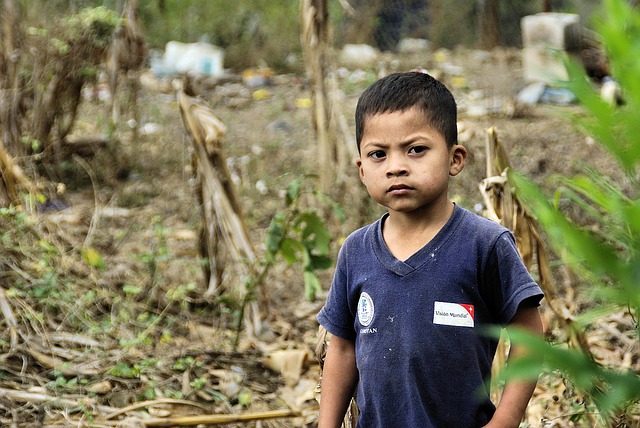 In Guatemala, over 50% of the population live below the poverty line. Families of four or more live in small one or two-room huts if they have shelter at all. On average every four days a child, usually a newborn, is abandoned because families do not have or can not access the means to take care of another child. Homelessness in Guatemala harshly impacts children, families and indigenous women.
Street Children
Young children are considered lucky if they are not part of the large homeless population. Among the homeless population, 7,000 of them are children and adolescents left to survive on their own. Many of them turn to drugs or alcohol as a coping mechanism, perpetuating the cycle of homelessness in Guatemala. Violence directed towards street children is not uncommon. The Guatemalan police force’s deathly violence towards these children had remained unchecked until the early 2000s but the threat of physical harm has not been abolished to this day.
Homelessness in Guatemala is a ripple that ends at the children of the impoverished. For example, they are needed for work and are often unable to go to school, if they can afford public schooling to begin with. The little income they make does not stretch far. A quarter of the population of children are actively involved in child labor out of necessity. In addition, one in four children under the age of fifteen are illiterate. Chronic malnutrition and hunger are a consistent part of life. Without access to proper education or nutrition children of the impoverished do not have the ability to move forward. As a result, they are trapped in a cycle of poverty and homelessness in Guatemala.
Inadequate Housing Plagues Families
Traditionally, Guatemalan culture revolves around family. It is a tight-knit community that is hindered by the lack of funds, nutritional food and educational opportunities. Those who are fortunate enough to have shelter are stuffed into small huts with a tin roof and dirt floors. Children, parents and grandparents often live together without running water or electricity. Diseases plague newborns and small children due to people’s inability to keep housing sanitary, leading to high infant death rates. Medical care is all but nonexistent.
Cooking is done over an open fire kept inside the home. This leaves the women and children of the families to breathe in smoke for hours at a time with no ventilation. Some houses are made from straw or wood both of which are extremely flammable and pose another risk to families inside. Respiratory illness affects a large portion of the poor population. Since most houses are one room, the idling soot from cooking fires becomes toxic for the entire family. Without running water, there is no way to properly clean the soot and without electricity, there is no other option for families to cook food.
The Plight of the Indigenous Woman
Half of the country is homeless and of that population, half of those people are indigenous women. Impoverished indigenous women not only suffer the fallout of poverty, they face racism and violence because of their sex. Compared to the rest of the country, including Guatemalan women, indigenous women have a higher chance at having multiple unplanned children, living in poverty and being illiterate. In addition, the birth mortality rate for women of native heritage is double and non-indigenous women have a greater life expectancy by an average of 13 years. They are malnourished and underpaid. The inequality trickles down to their children who face food insecurity, lack of education and if they are young girls the same fear of violence and racism their mothers endure.
Taking Action
Homelessness in Guatemala engulfs half of the 15 million people living in the country. Basic human necessities are not available and haven’t been for generations. The Guatemala Housing Alliance focuses on providing proper shelter to families. They work in tandem with other groups aiming to help education, food insecurity and sexual education for the poor of Guatemala.
The Guatemala Housing Alliance has built 47 homes with wood-receiving stoves that eliminate the danger of open fire cooking. They’ve put flooring in 138 homes that had been previously made of dirt. Also, the foundation offers counseling for young children and has hosted workshops for women for them to speak openly and learn about sanitation, nutrition and their legal rights.
For more information visit their website.
– Amanda Rogers
Photo: Pixabay
