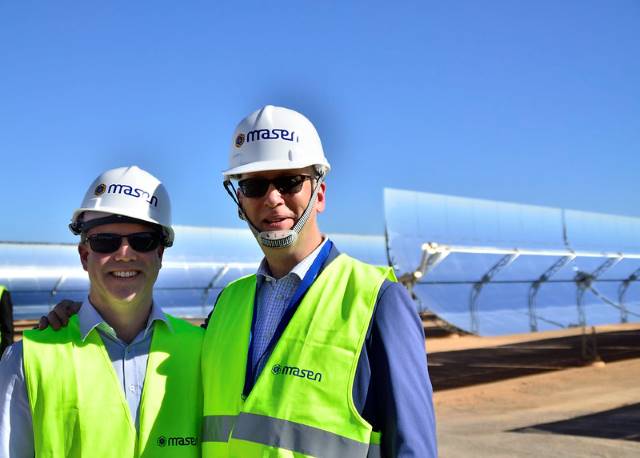
 In 2018 and 2019, Morocco became a powerhouse in renewable energy, exporting an increased 670% of energy and decreasing imports by 93.5%. This can be attributed to the nation constructing the largest concentrated solar farm in the world. The solar plant, known as the Noor Complex, has the capability to power one million homes and greatly reduce the use of fossil fuel.
Solar Energy in Morocco
Prior to this renewable attitude, 97% of Morocco’s energy was produced by fossil fuels. The construction of solar farms is able to offset the nation’s energy usage, lessening the demand for energy imports and creating opportunities for more exports, ensuring a self-sufficient nation.
The decrease in energy consumption in the country has saved funds on energy costs. In 2018, the Moroccan Government decided to move to the GMT+1 timezone resulting in less electricity consumption by citizens. This shift toward sunnier days allows Morocco to overproduce energy and afford to export energy.
The advantages of solar energy in Morocco extend into multiple areas, creating a positive impact for not only Morocco but the African continent as a whole.
Poverty Eradication Benefits
In past years, poverty in Morocco has seen a significant decrease. While an optimistic stride for the nation, the decline in poverty was disproportionate between rural and urban areas.
This disparity between the living areas is often attributed to the difficulty in distributing energy to the rural regions. The hope is that the efficiency of solar energy in Morocco will allow for energy distribution to residents living outside the city to be feasible.
In 2016, poverty in Morocco was reduced to 23% from 45% in 2014. As solar energy in Morocco becomes more efficient, the living conditions of the average resident should improve as solar power makes electricity more affordable and easier to access. The solar farms popping up across the country also create jobs for the population to earn a living wage.
Economic Benefits
Solar energy in Morocco helps the nation be less reliant on energy imports and capable of exporting more energy, boosting the economy and relationships with other nations.
As Morocco’s economy strengthens with its excess of energy, it looks to make connections with European countries. In 2016, the construction of the Morocco-Nigeria gas pipeline project was announced. This pipeline perfectly positions Morocco to become an energy hub for the Mediterranean, African and European nations.
These connections to other nations allow Morocco access to flourishing markets and new business opportunities. As Morocco forms these foreign connections, it is becoming a greater political power in Africa.
Political Benefits
The continent of Africa currently has a leadership vacuum that Morocco is preparing to fill. As it produces more energy and builds stronger relationships with European nations, it is seen as a serious economic and political figure for the continent.
In 1984, Morocco left the African Union (AU) because of a disagreement over the recognition of the Sahrawi Arab Democratic Republic (SADR). After many years, Morocco now seeks to rejoin the AU and strives to make the continent of Africa a robust, independent continent.
Now, the country is setting an example for the other nations of Africa to become self-sufficient and gain economic ground with foreign countries. Morocco has invested 85% of its foreign funds to other countries in Africa in an attempt to boost its leadership role as well as improve the struggling African economies.
The current Moroccan King, King Mohammed VI, has confidence in the continent’s abilities and wishes to lead Africa to success. He has made Morocco the second largest investor in African affairs.
Environmental Benefits
The positive environmental impact is often considered when looking at renewable energy. Morocco is heavily invested in combatting climate change and the environmental crisis the world is facing. Along with many green policies, Morocco is implementing the Green Generation 2020-2030 plan to help farmers conserve water and energy and grow crops more efficiently.
In addition to its pivot toward solar energy, Morocco is developing an environmental code to reduce pollution and work toward a greener society.
A Brighter Future
Morocco’s turn to solar energy is improving the living standards of its residents and empowering the country in the political arena all while reducing the harmful effects fossil fuels have on the planet. While Morocco has seen hard times, it is propelling forward and bringing the continent of Africa along with it. As Morocco constructs more solar resources and spreads its influence to other African nations, it plays a significant role in poverty reduction.
– Veronica Booth
Photo: Flickr

Fighting Female Genital Mutilation in Somalia
Female genital mutilation (FGM) impacts more than 200 million women all around the world. The practice, which girls mostly experience between their infancy and teenage years, encompasses a range of procedures that involve the partial or total removal of external genitalia. It usually occurs in an informal setting without anesthesia. FGM is a global concern, but sadly there is a collection of nations in Africa, the Middle East and Asia that grant it legitimacy. One of these nations is Somalia, and as the COVID-19 pandemic forces many people to stay at home, circumcisors are subjecting women to door-to-door mutilation. Here is some information about female genital mutilation in Somalia and how the COVID-19 pandemic is impacting it.
A Universal Ritual
While the prevalence of FGM varies greatly across the many countries that practice it, Somalia has the highest percentage at 98% according to UNICEF. Many nations, including the United Republic of Tanzania and Togo, have met the practice with disdain and objection; however, more than half the women in Somalia think it should continue.
To most people, this would seem outside the realm of possibility, but tradition runs deep in Somalia, and disputing the practice of genital mutilation holds a gravity on par with blasphemy. The procedure itself is a family experience and a rite of passage where, according to Islamic Relief Worldwide, local women use “knives, scissors or razor blades to remove parts of the genitals, while female relatives hold the girl down.”
Cutting Season
There is no law in the Somali Constitution that specifically criminalizes and punishes the practice of female genital mutilation in Somalia, so the tradition remains stable; so much so that experts recognize summer vacation as “cutting season” for girls. Breaking from school means they have time to undergo and recover from the procedure before the next school year starts.
While there is little formal data to strengthen this case, Somali circumcisors agree that the months of July and August are their peak season for FGM. They even pride themselves on the fact that girls travel from other countries like Djibouti to undergo circumcision in Somalia; however, the United Nations Population Fund (UNFPA) saw a “massive” jump in the number of girls who underwent the procedure in 2020 due to coronavirus lockdown.
COVID-19 and FGM
The UNFPA projected that 290,000 girls experienced cutting in 2020 and that an extra 2 million girls could undergo cutting in the next decade due to the setbacks of prevention programs along with the vitality of circumcisors in their efforts to lobby the public into believing that FGM is a healthy rite of passage into womanhood. The lockdown has also led to this massive increase in FGM and the economic state has driven circumcisors to go from door to door, offering to cut the girls stuck inside. While the frequency of mutilation rises, the awareness declines as advocates cannot access communities where FGM is popular.
Solutions
The pandemic has had detrimental effects on efforts to eliminate female genital mutilation in Somalia, but the country has not lost hope. Young women from all across the region are taking a stand against female genital mutilation and those who perpetuate it. The Y-Peer Youth Network is one such group. In 2002, the UNFPA founded the network to educate young people, communities and even health care workers about sexual and reproductive health. Other topics of advocacy are gender-based violence and child marriage.
While FGM is a widespread issue in Somalia, the young girls working to stop it are making waves and shaking the status quo to its core. To learn more about the Y-Peer Youth Network, check out its website.
– Matthew Hayden
Photo: Flickr
The Importance of the Netherlands’ Foreign Aid
The Netherlands leads in refugee advocacy, COVID-19 relief and environmental protection and occupies a significant place on the world stage because of its commitment to foreign aid. The Netherlands is the world’s seventh-largest donor country, spending 0.59% of its gross national income, or $5.3 billion, on official development assistance (ODA) in 2019. The Dutch government plans to increase ODA by $2.7 billion between 2019 and 2022 to compensate for budget cuts the previous administration made and increased its development budget by $354 million in September 2020 in response to the ongoing COVID-19 pandemic. The Netherlands aims to assist unstable regions of West and North Africa and the Middle East through a focus on four major priorities: law and security, water management, food security and reproductive health. The Netherlands’ foreign aid is a key aspect of the country’s public policy and shapes its reputation for philanthropy worldwide.
Human Rights in the Netherlands
Human rights are a cornerstone of the Netherlands’ foreign aid. The country has a commitment to increasing protection for marginalized communities both at home and abroad. The Netherlands welcomed 94,430 refugees and asylum seekers in 2019 and more than 100,000 each of the preceding three years. The government has also taken steps to support refugees, allocating $453 million, or 9% of the ODA budget, to refugee housing costs in 2021. Additionally, the Netherlands allocated additional funding to fight the root causes of poverty, migration, terrorism and environmental challenges in Africa and the Middle East. The Netherlands hopes to address the root causes of these problems in their countries of origin to reduce the number of refugees and improve the quality of life for the global impoverished.
The Netherlands leads the world in advocacy for gender equality and sexual health through funding for international organizations such as the United Nations Population Fund, UNAIDS and the Global Financing Facility. These organizations work to prevent infant and maternal mortality, end HIV/AIDS and end child marriage and female genital mutilation in developing countries. For example, the Global Financing Facility provides high-quality affordable health care to women and children focused on ending infant and maternal mortality and providing necessary health services to children and teenagers. Since its founding in 2015, GFF has made significant strides in advancing health care in its partner countries. Tanzania improved from an average of 35.8% of pregnant women receiving antenatal care visits in 2014 to 64.1% in 2018.
COVID-19 Relief in the Netherlands
During the COVID-19 pandemic, the Netherlands’ foreign aid is important in protecting global health in vulnerable regions. The Netherlands has taken the initiative to allocate pandemic relief aid to the world’s most impoverished countries, joining other EU states to contribute $459 million to COVAX, which helps ensure universal access to the COVID-19 vaccine. COVAX aims to distribute 2 billion COVID-19 vaccines to developing countries by the end of 2021, ensuring global protection against the virus. The country also donated $590 million to global COVID-19 relief efforts in 2020 and plans to contribute a further $548 million from its budget for the upcoming years.
In January 2021, the Netherlands announced it would donate a further €25 million to COVID-19 relief following an appeal by the World Health Organization (WHO). Together, the WHO and its global partners will earmark $5 billion to ensure the distribution of 1.3 billion vaccines in countries with limited or insufficient funds. Development minister Sigrid Kaag emphasized the responsibility of the Netherlands to help more vulnerable countries by providing vaccines, diagnostic tests and medicine, which will also help to protect Dutch interests. The €25 million will come from the development cooperation budget and will cover 5 million vaccine doses.
The Netherlands uses its global platform to advocate for marginalized communities, particularly at-risk populations in North and West Africa and the Middle East. Foreign aid is a cornerstone of Dutch foreign policy that has grown the wealthy country’s reputation for philanthropy. By welcoming refugees, advocating for human rights and funding global efforts to combat COVID-19, the Netherlands affirms its commitment to foreign aid and funds solutions for some of the most pressing global problems.
– Eliza Browning
Photo: Wikipedia Commons
The 2022 World Cup: Human Trafficking in Qatar
The U.N. defines human trafficking as, “the recruitment, transportation, transfer, harboring or receipt of persons by improper means (such as force, abduction, fraud, or coercion) for an improper purpose including forced labor or sexual exploitation.” Human trafficking in Qatar is a longstanding concern among international nonprofit organizations and human rights groups. The wealthy Gulf State’s ongoing campaign to bolster its soft power on the world stage and brand its capital Doha as a financial and investment hub comparable to its UAE neighbors Dubai and Abu Dhabi has gathered considerable momentum in recent years. The country is using large-scale construction projects such as an extravagant airport and lavish tourist attractions to cement the city’s position as an oasis of luxury and opulence. However, the dark cloud cast over how exactly the small but ambitious kingdom is achieving these construction feats remains a critical question mark.
The crown jewel of the Al Thani monarchy’s publicity campaign is undoubtedly the 2022 Qatar World Cup, which the country attained under questionable circumstances in a 2010 bid involving a high-profile bribery scandal and a multi-billion dollar proposal to secure the rights to host the upcoming soccer tournament. With the desert state’s day in the sun on the horizon, the kingdom began ramping up construction to prepare stadiums and indeed the city of Doha itself for its month in the spotlight of international attention.
Why Import Labor?
For a country like Qatar, one of the smallest sovereign states in the world covering an area roughly the size of Connecticut, such a large-scale undertaking presents one very crucial problem – labor. This is where human trafficking and labor exploitation are rearing their ugly heads time and time again in the development of the Gulf States. The ruling family and sponsors of Qatar’s development projects are seeking to meet the country’s manual labor needs by employing millions of vulnerable men and women from countries like India, Bangladesh, Kenya, Nepal, Pakistan, the Philippines, Sri Lanka and Sudan seeking work abroad to send remittances back to their families. Today, of the 2.6 million people currently living in Qatar, 2.3 million are migrant workers from abroad working primarily in the domestic and construction sectors.
Abuse and Exploitation
Unscrupulous, predatory and loan-sharking recruiters in laborers’ home countries often work closely with contractors in Qatar to lure workers to the peninsula for extended periods of time under false pretenses. Upon arrival in the country, migrants are at the mercy of Qatar’s Kafala system of laws that govern the relationships between migrants, their employers and the Qatari state, placing economic migrants in a dangerous position of dependency. Under this structure of rules, the migrants’ visa and work permit status ties to a sponsor or employer which makes it illegal for workers to leave their employer or indeed the country itself without the employer’s official permission, creating a situation that is ripe for economic bondage and human trafficking in Qatar.
According to the U.S. State Department, workers suffer abuses such as:
Progress and Promises
There is hope, though. Facing mounting international pressure from democratic governments and NGOs such as the United Nations and Amnesty International, the Qatari government is making “significant promises of reform ahead of the 2022 World Cup” according to Stephen Cockburn, Amnesty International’s deputy director of global issues. Such reforms include the establishment of a workers support and insurance fund, the announcement of a new minimum wage, dissolution of the laws necessitating employer permission for workers to leave the employer or the country, and a signed commitment to the International Labour Organization (ILO) to combat the brutal exploitation of workers and human trafficking in Qatar.
The Good News
Although the reforms on paper still lack the unwavering enforcement that is necessary to implement the new laws to their fullest extent, their creation signals a willingness of the Qatari government to meet certain labor standards ahead of the 2022 World Cup, which at this time should proceed as scheduled. The good news is that the country’s need to build and preserve its reputation at the center of its soft power initiatives allows for a motivated international community to demand immediate reforms and changes in labor laws and policies. In the context of growing calls to boycott the tournament if it does not meet standards and increasing international attention as the tournament nears, the Qatari government is likely to respond to sustained pressure if others apply it with strength and in numbers.
– Cem Gokhan
Photo: Wikipedia Commons
Updates on SDG 1 in New Zealand
World leaders adopted the U.N.’s Sustainable Development Goals (SDGs), the first of which is to “end poverty in all its forms everywhere,” in 2015. In 2019, New Zealand leaders published the findings of the Voluntary National Review as New Zealand’s Progress Towards the SDGs – 2019. Through this report, others can learn the challenges facing the people of New Zealand, the strides the country has made thus far and improvements to come for each SDG, including updates on SDG 1 in New Zealand.
A key challenge New Zealanders face comes in the form of the inequities that can exist in poverty-related measures. According to New Zealand’s 2018 Census, 16.5% of the population are Māori (indigenous New Zealanders) and 8.1% are Pacific Islanders, who poverty disproportionately affects. Poverty is also worse among those living with disabilities. The updates on SDG 1 in New Zealand to follow, contextualized by the challenges the country faces and the goals for the coming years, yield a broad picture of the nation’s approach to poverty alleviation and successes thus far. Here are seven updates on SDG 1 in New Zealand.
7 Updates on SDG 1 in New Zealand
As with many countries, these updates on SDG 1 in New Zealand serve to share measures of the success achieved thus far, and as motivation to continue this important work. Other nations and leaders can also consider these points inspiration for strategies to combat poverty worldwide.
– Amy Perkins
Photo: Flickr
The New Digital Payment System in Pakistan
Pakistan has a primarily cash-based economy that thriving illegal markets and low government revenue plagues. A new digital payment system in Pakistan could change this. The State Bank of Pakistan (SBP) and the Pakistani government worked in collaboration with the Bill and Melinda Gates Foundation to launch this brand new digital cash transfer system. Additional support came from the United Nations, the World Bank and the United Kingdom.
This new digital payment system called Raast or “direct way” can instantly transfer money between two entities. Although the idea is not new and there are several other financial transaction systems on the market, Raast is the first one that received sponsorship from the Pakistani government, linking financial institutions and government entities. The government’s main goals are to make money transfers more transparent and thereby reduce corruption, increase government revenue and create a more inclusive economy.
Increased Transparency, Tax Revenue and a Less Corrupt Economy
A payment system such as Raast records every transaction in real-time and establishes a log of payments. This allows users to keep track of their transfers, and since the information is visible to all involved parties, users can report complaints or mistakes much more easily. When the Pakistani government and its citizens use Raast, it makes it possible for citizens to receive their pensions, salaries or other payments from the government much more quickly. The increased efficiency and transparency also supports small businesses and other micro-enterprises. Instead of paying cash or sending checks through the mail, they can instantly pay suppliers and distributors. This makes running a business more efficient, reliable, accessible and less prone to corruption.
The new digital payment system in Pakistan also makes it easier for the government to collect taxes by using the technology to track how much people owe and when they made payments. In 2019, the World Bank reported that Pakistan’s government collected half of what, theoretically, it should have been able to take based on its economy. Tax evasion is widespread, but it is also complicated and timely to file taxes in Pakistan. The World Bank found that there are many individuals and companies that would like to file taxes, but do not because of the time and money the process requires.
A More Inclusive Economy
In 2018, the Global Findex reported that only 7% of women age 15 and older had a bank account, and of the most economically disadvantaged 40% (men and women), 14.2% had an account. Particularly during the pandemic, it has been difficult for these underserved groups to receive government support without a bank account. Raast has the potential to serve vulnerable groups because it does not require people to travel to a physical bank, and is cheaper and easier for individuals to set up than a traditional bank account. In a report about payment systems, the World Bank stated that “secure, affordable, and accessible payment systems and services help expand financial inclusion, foster development and support financial stability.” However, without proper implementation, an endeavor such as this digital payment system in Pakistan could fall short of its goal.
In a statement at the launch, the United Nations Secretary-General’s Special Advocate for Inclusive Finance for Development (UNSGSA) Queen Máxima, discussed how important it is for all banks and service providers to adopt the new technology and to encourage individuals to use it instead of cash. If enough people and institutions use the program, it will reach its accessibility potential and spur economic growth. As Queen Máxima stated in her keynote address, the hope for this new digital payment system in Pakistan is above all to create a more digital and accessible economy.
– Caitlin Harjes
Photo: Flickr
Poverty: The Potential of Video Games in Africa
Video Gaming Industry in Africa
Every year, the African gaming industry grows by more than 8%, with new gaming companies opening frequently. The Festival of Electronics and Video Games of Abidjan (FEJA), is a video gaming event in Africa with the main aim of creating jobs in the industry. The event’s organizers see the three-day event as an opportunity to exemplify the immense potential the industry has in Africa.
Although there are already innovative African gaming companies such as Work’d and Paradise Game, video games in Africa are often overlooked. However, Paradise Game founder and CEO, Sidick Bakayoko, predicts that by 2025, West Africa alone will have room to create over one million jobs in the gaming sector and the continent as a whole could create five million jobs.
Urgent Evoke Video Game
A game designer named Jane McGonigal has developed a game specifically promoted to African gamers called “Urgent Evoke”. The game exists both online and in the real world. To progress in the game, players must complete real-life activism such as reaching out to government leaders, researching environmental solutions, contributing time to alleviate poverty and other acts of contribution. Players must document these actions and submit them to advance in the game.
McGonigal’s goal with “Urgent Evoke” is to empower Africans to become active problem-solvers and tackle poverty and other issues in their communities. In addition to promoting and requiring activism, the game awards prizes to winners, including mentorships, scholarships, internships and startup money to foster entrepreneurship.
Video Games and Perception
Game developers like McGonigal and Bakayoko aim to use video games in Africa to change the way Africans view themselves and their continent as well as change how the world views Africa. The continent is often seen as a dangerous place filled with hunger and war. By creating games set in Africa led by positive African characters, developers can change perceptions and help Africans see themselves through a more confident, leadership lens.
These games have the power to reduce prejudice toward poverty and help people understand impoverished nations and join the fight to help them. Many hold the false belief that poverty is something self-inflicted or personally controllable. Cultivation theory states that the media that people absorb affects the way they perceive the world.
Video games in Africa have the influence to create a more accepting and representative industry. Games such as “Urgent Evoke” change perceptions, allowing African gamers to be their own heroes both online and in the real world.
Potential for Poverty Reduction in Africa
The growing industry of video games in Africa has created a plethora of jobs but there is a lack of skilled labor. Unfortunately, many Africans have not realized the immense potential that video games in Africa have for the continent.
Most parents do not see video games as a lucrative skill-building task. For the video game industry in Africa to truly flourish, the younger generation must have access to coding and tech education.
This is not yet at the forefront of mainstream education, but the continent, especially South Africa, is abundant with resources to educate Africans in the gaming industry. Even without money for a proper university, coding boot camps or proximity to a city, Africans can take online coding courses to get their foot into the tech industry and contribute to Africa’s immense gaming growth.
– Veronica Booth
Photo: Unsplash
Protesting for Farming Reform in India
The Indian Agricultural Sector
The agricultural sector is an essential part of the Indian economy, as it generates livelihood for nearly 60% of the Indian population. Despite the vital role of Indian farmers, the agricultural sector only makes up 15-16% of the subcontinent’s GDP, leaving farmers grappling for livelihood. According to the National Crime Records Bureau of India, almost three million farmers have committed suicide in India since 1995. Having one of the highest suicide rates in the agricultural sector, Indian farmers have long suffered despair from tyrannical policies, debt, low income and climate change inducing production risks. On September 28, 2020, the Parliament attempted farming reform in India by passing three bills that the government and Modi claim will benefit farmers’ livelihoods by decreasing financial burdens and increasing profit.
The 3 Farming Acts Passed
Farmers’ Produce Trade and Commerce (Promotion and Facilitation) Act
Allows for intra-state trading, inner-state trading, electronic trading and e-commerce of produce.
Abolishes the imposition of government-determined financial burdens.
Farmers (Empowerment and Protection) Agreement on Price Assurance and Farm Services Act
Promotes pre-established legal agreements, including price determination between farmers and buyers.
Outlines the dispute settlement arrangement procedure.
Essential Commodities (Amendment) Act
Withdraws the previously determined list of essential commodities.
Removes stockholding restriction on essential commodities.
Demands that levying of stockholding limit on produce emanates from increased price.
The Reason Behind Protests
With support for farming reform in India from all over the world, hundreds of thousands of farmers and those in solidarity have taken to the streets with a common goal: to have the acts repealed. The laws spark deep worry that transitioning to a free market will enable powerful agricultural businesses to take advantage of the farmers, potentially leading to loss of land, income and autonomy. Indian farmers, who sell their produce at a set rate, are certain that a market-aligned system will solely increase private equities welfare while continuing to forbade domestic benefits. Farmers are also concerned that differences in business objectives could leave farmers at risk of financial consequences from market unpredictability. Finally, farmers are fearful that the abolition of stockholding limits will empower corporations to distort prices for personal monetary reward.
Global Support for Indian Farmers
There is a consensus among Indian farmers that their agricultural sector requires reform. Although the new laws of farming reform in India promise to improve farmers’ livelihoods and freedom, the lack of trust in a market-friendly reform and the government’s incentive has prompted a collective demand for change. As the protestors persist with force, the demand for alternative farming reform in India is being heard by Prime Minister Modi who is beginning to listen to farmers’ concerns. The exploitation of farmers continues to spark global support for farming reform in India from organizations, advocates, politicians and humanitarians until fairness and justice is achieved.
– Violet Chazkel
Photo: Flickr
Blackouts: The Issue of Electricity in Venezuela
Blackouts in Venezuela
Regrettably, this blackout was not an isolated incident, although it was the longest. Blackouts have become a routine aspect of Venezuelan life, dating back to as early as 2010. In a country where 96% of the Venezuelan population lives in poverty, these blackouts serve only to exacerbate the struggles of a vulnerable population. They strip people of access to basic necessities like water, food and fuel. Their root causes are often unclear although the key contributing factors are widely agreed-upon.
Understanding the Power System
In 2007, Venezuela’s private power companies were nationalized and transformed into one state-run monopoly known as Corpoelec. The company is underfunded, rife with corruption and unable to recover its own operating costs. The factors creating this untenable situation for Corpoelec date back even further to 2002 when national electricity rates were frozen. In Venezuela, “consumers pay only 20% of the real costs of producing power, delivering Venezuelans the lowest electricity prices in Latin America.” The drawback to these low rates is that energy is extremely overused and that Corpoelec is unable to generate sufficient revenue to fund infrastructure investments or even basic maintenance of its facilities.
Overdependence on Hydropower
The aforementioned problems are exacerbated by Venezuela’s near-complete reliance on hydropower from just one dam. The Guri Dam located in the eastern state of Bolívar accounts for 80% of the country’s electricity production and its systems are woefully neglected. The dam currently operates at a capacity considered unsustainable, “jeopardizing the machine room in the case of a flood,” according to experts. In a region where flooding is common, this is cause for concern.
Whereas other countries that rely heavily on hydroelectric power like Brazil and China have made large investments into other forms of energy, Venezuela’s ability to shift away from hydropower is crippled by underfunding, a lack of engineering power from within the country and corruption.
Corpoelec has stagnated progress as well. The company, “paid millions of dollars in no-bid contracts to political connections,” to maintain its dominance. Projects to build new dams and other forms of electricity production like thermal or wind have routinely been stalled due to a lack of funding and inadequate staffing.
The Cause of the Blackout
The March 7 blackout that heavily circulated the news was caused by a system failure at the Guri Dam. It was initially painted as a terrorist attack by president Nicolás Maduro, who tweeted, “The electrical war announced and directed by the imperialist United States against our people will be defeated.”
The Venezuelan president’s claim was that the U.S. had caused the power outage through a cyberattack on the hydroelectric plant. However, engineers who worked on the dam later clarified that the plant’s electronic monitoring system is not actually connected to the internet, proving a foreign attack to be an unlikely root cause. The plant has been poorly maintained and neglected for a very long time. In actuality, failure to properly manage the electricity grid may have caused a fire has been deemed the likely cause, and unfortunately, there is no quick-response system in place at the facility to protect its systems from damage.
The Future of Electricity in Venezuela
To ensure the return of consistent electricity to the people of Venezuela and protect against future blackouts, massive overhauls would be beneficial. However, such agendas seem unrealistic given the current economic and political climate in the country. Rather, a focus on increased upkeep and basic maintenance of power plants offers a more realistic path forward. This requires access for NGOs to bring in engineers and consistent revenue toward infrastructure repair. Without this basic funding and commitment from the government, the Venezuelan people will continue to suffer through blackouts.
– Scott Mistler-Ferguson
Photo: Flickr
3 Ways Nanotechnology is Alleviating Poverty
Using Nanosensors for Water Management in Agriculture
Whether mechanical or chemical, nanosensors use tools to detect minor changes in chemical composition and relay information to change the dynamics of whatever they are monitoring. Nanosensors use artificial intelligence and computing to make adjustments as soon as any predicaments arise. Because of their sensitivity and small scale, nanosensors can detect problems well before other outdated instruments.
In a study for sustainable agriculture, the Organisation for Economic Co-operation and Development (OECD) asserts nanotechnology is alleviating poverty issues such as food insecurity. The OECD study concluded that nanosensors effectively detect changes in moisture across fields of crops. They then automatically adjust the disbursement of water and eliminate water waste while preventing crop losses. Farm machines outfitted with nanosensors detect moisture levels in different crops and suggest better-suited areas for specific crops allowing farmers to change planting patterns or change water allocations to other land plots.
Nanofiltration Membranes Provide Clean Drinking Water
Access to clean water is a crisis that many developing countries face. Usually, the first issue dealt with when fighting poverty is economic development so regulations are not often in place to protect against pollution. In some countries, scarcity of clean groundwater becomes problematic too. However, nanotechnology is alleviating poverty in these areas by providing clean drinking water.
Ghana was the center of a study on the effectiveness of nanofiltration membranes conducted by the International Water Association (IWA) and members of the Indian Institute of Science. The IWA chose to test Ghana’s groundwater due to the high level of pollutants present. During the study, it tested the levels of contaminants, bacteria and natural materials that render water non-potable before and after utilizing nanofiltration membranes.
The results of the IWA study were impressive. Not only did the study determine that nanofiltration reduces pollutants to potable levels, but executed efficiently enough, rural areas could produce enough water for more than 100 households. Ultimately, the conclusion was that nanofiltration was a low-cost solution for drinking water access and production in impoverished rural regions worldwide.
Nanotechnology to Fight Infectious Disease
Most original concepts of nanotechnology’s usefulness focused on medical care. The World Health Organization (WHO) has long been fond of utilizing nanotechnology in health care and fighting infectious diseases. The WHO now recognizes that nanotechnology is alleviating poverty in developing nations through scientific medical breakthroughs.
The first need for nanotechnology to address in developing countries is the diagnosis of disease. Nanobiotechnology allows for an inexpensive option to find multiple dangerous microbes using a single test. These technologies have improved over time and are being used in developing nations to detect most viral and bacterial infections, including tuberculosis.
The COVID-19 vaccine development shows the importance of nanotechnology in the prevention of disease too. The Pfizer and Moderna vaccines use a nanocarrier system designed to activate the immune system to fight COVID-19 by assisting antibody production. The distribution of the vaccine to developing nations is now underway.
The Future of Nanotechnology for Poverty Reduction
Nanotechnology is alleviating poverty in developing nations, and with continued scientific inquiry and advancements in nanotechnology, new applications for poverty reduction will improve. Nanotechnology’s cost-effectiveness and versatility make it one of the most viable technologies to assist in the struggle against poverty.
– Zachary Kunze
Photo: Flickr
Solar Energy in Morocco: Lighting Up the Continent
Solar Energy in Morocco
Prior to this renewable attitude, 97% of Morocco’s energy was produced by fossil fuels. The construction of solar farms is able to offset the nation’s energy usage, lessening the demand for energy imports and creating opportunities for more exports, ensuring a self-sufficient nation.
The decrease in energy consumption in the country has saved funds on energy costs. In 2018, the Moroccan Government decided to move to the GMT+1 timezone resulting in less electricity consumption by citizens. This shift toward sunnier days allows Morocco to overproduce energy and afford to export energy.
The advantages of solar energy in Morocco extend into multiple areas, creating a positive impact for not only Morocco but the African continent as a whole.
Poverty Eradication Benefits
In past years, poverty in Morocco has seen a significant decrease. While an optimistic stride for the nation, the decline in poverty was disproportionate between rural and urban areas.
This disparity between the living areas is often attributed to the difficulty in distributing energy to the rural regions. The hope is that the efficiency of solar energy in Morocco will allow for energy distribution to residents living outside the city to be feasible.
In 2016, poverty in Morocco was reduced to 23% from 45% in 2014. As solar energy in Morocco becomes more efficient, the living conditions of the average resident should improve as solar power makes electricity more affordable and easier to access. The solar farms popping up across the country also create jobs for the population to earn a living wage.
Economic Benefits
Solar energy in Morocco helps the nation be less reliant on energy imports and capable of exporting more energy, boosting the economy and relationships with other nations.
As Morocco’s economy strengthens with its excess of energy, it looks to make connections with European countries. In 2016, the construction of the Morocco-Nigeria gas pipeline project was announced. This pipeline perfectly positions Morocco to become an energy hub for the Mediterranean, African and European nations.
These connections to other nations allow Morocco access to flourishing markets and new business opportunities. As Morocco forms these foreign connections, it is becoming a greater political power in Africa.
Political Benefits
The continent of Africa currently has a leadership vacuum that Morocco is preparing to fill. As it produces more energy and builds stronger relationships with European nations, it is seen as a serious economic and political figure for the continent.
In 1984, Morocco left the African Union (AU) because of a disagreement over the recognition of the Sahrawi Arab Democratic Republic (SADR). After many years, Morocco now seeks to rejoin the AU and strives to make the continent of Africa a robust, independent continent.
Now, the country is setting an example for the other nations of Africa to become self-sufficient and gain economic ground with foreign countries. Morocco has invested 85% of its foreign funds to other countries in Africa in an attempt to boost its leadership role as well as improve the struggling African economies.
The current Moroccan King, King Mohammed VI, has confidence in the continent’s abilities and wishes to lead Africa to success. He has made Morocco the second largest investor in African affairs.
Environmental Benefits
The positive environmental impact is often considered when looking at renewable energy. Morocco is heavily invested in combatting climate change and the environmental crisis the world is facing. Along with many green policies, Morocco is implementing the Green Generation 2020-2030 plan to help farmers conserve water and energy and grow crops more efficiently.
In addition to its pivot toward solar energy, Morocco is developing an environmental code to reduce pollution and work toward a greener society.
A Brighter Future
Morocco’s turn to solar energy is improving the living standards of its residents and empowering the country in the political arena all while reducing the harmful effects fossil fuels have on the planet. While Morocco has seen hard times, it is propelling forward and bringing the continent of Africa along with it. As Morocco constructs more solar resources and spreads its influence to other African nations, it plays a significant role in poverty reduction.
– Veronica Booth
Photo: Flickr