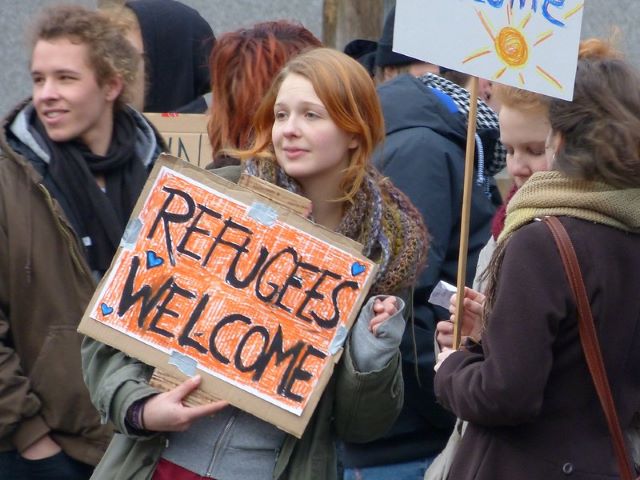
 In 2019, the U.N. Refugee Agency reported that there were about 26 million refugees globally. An estimated 68% of refugees come from just five countries: Syria, Venezuela, Afghanistan, South Sudan and Myanmar. Refugees exist in a state of flux, with their futures and fates in the hands of potential host countries. Refugees are one of the world’s most vulnerable groups yet the idea of hosting refugees comes with hesitancies due to misinformation and misconceptions. There are several benefits of hosting refugees.
Refugees Bring Productivity
There is a misconception that refugees come into a host country and subsist on benefits instead of working. Though not every country allows refugees to work, those that do allow this, see just how productive refugees are. Often unable to use their credentials in other countries, refugees are known for starting from the ground up and they are effective at it. Economic advisor, Phillipe Legrain, estimates that 1,000 refugee businesses could generate $100 million each year. If host countries loosen restrictions and allow refugees to expand their job opportunities, it could significantly improve the economies in host countries.
This would also mean making language learning classes and integration courses more accessible, but in the long run, the fiscal rewards outweigh the cost. Countries that allow refugees to work and open up businesses know that the influx of productivity is one of the major benefits of taking in refugees.
Refugees Enrich Culture
Some fear that accepting refugees means that the native culture will disappear. According to Anna Crosslin of the International Institute in St. Louis, cross-cultural understanding is vital for integration. Events like the annual Festival of Nations, which is run by the International Institute, not only help expose St. Louis residents to other global cultures but also help immigrants feel more at home. Even though there are differences between each culture, most cultures are incredibly similar at their core. Refugees are fleeing the same things ordinary citizens fear: families being torn apart, the right to vote being taken away, lack of education and more.
Refugees do not aim to disrupt the culture of their host countries but enrich it. They may bring with them different practices, foods and religions, but in the end, most people have similar ideals.
Refugees Stimulate the Economy
The more people participating in a country’s economy the better. Economic activity alone is one of the many benefits of taking in refugees. There is an initial investment required when allowing refugees into a country. Housing, language classes, healthcare, sustenance. All of these things cost a significant amount of money to provide, but once refugees are established in their host country, the initial investment pays off.
Refugees start businesses that employ locals, pay taxes and generate wealth. In countries with an aging workforce, young refugees entering the workforce complement their work and allow them to retire, while also contributing to social security or pension funds. Being able to work and make money, in general, allows refugees to stimulate the economy of their host country. Refugees allowed to work and enterprise are great for an economy, much more so than refugees that are not allowed in or not allowed to work.
Refugees Complement the Job Market
There is a misassumption that refugees take jobs away from their host country’s job market. Most studies conclude that refugees have very little effect on the job market at all. The U.S. State Department’s analysis of the labor market over a 30-year period showed that not only did refugees not negatively impact the job market, but they had no effect when compared to regions with no refugee population.
The work migrants do actually fill in the job market. In the United States, it is migrants doing much of the hard, physically demanding work like farming and cleaning meat and fish for consumption. These are jobs that not many native citizens want to do. The economic benefits of taking in refugees are also seen in areas with low domestic migration. In these places, migrants offer an economic boost that native citizens do not.
Refugees Bring Novel Skillsets and Knowledge
Many cultures make rugs, but who makes them like the Persians? Who can delicately remove the meat from a poisonous pufferfish like a Japanese sushi chef? Every country and culture has something that makes them stand out, something that they can teach and share with others.
Refugees offer language skills that natives might not. Many already have professional qualifications from their home countries. Most refugees exhibit a high degree of adaptability, a skill that is important in every industry. To top it off, organizations benefit greatly from diversity, experiencing greater profits, collaboration and retention than organizations that are not as diverse. Though refugees are not the only way an organization can become more diverse, the experiences, skills and perspectives gained are some of the greatest benefits of hosting refugees.
Welcoming Refugees
Resistance to accepting refugees is often due to misconceptions. Native citizens fear a disruption in their economy and culture. But in actuality, refugees stimulate the economy, enrich culture and supplement the job market. Better understanding the benefits of hosting refugees will hopefully mean that countries globally will be more accepting of this vulnerable group, realizing that benefits are provided on both sides.
– Maddey Bussmann
Photo: Flickr

Updates on SDG 1 in Guatemala
The United Nations put the Sustainable Development Goals (SDGs) in motion in September 2015. World leaders put the SDGs into place to reach worldwide financial equality while protecting the world’s environment. To reach this globally beneficial achievement, the United Nations created 17 goals for every country, poor and rich, to focus on transforming the world into a healthier, safer and prosperous place. Guatemala has joined its fellow countries in the United Nations to try and meet the requirements for goals one to 17. Here is some information on what Sustainable Development Goal 1 is along with updates on SDG 1 in Guatemala.
About SDG 1
SDG 1 is for no poverty and to end poverty by 2030. While this may seem like an outrageous goal with limited hope of success, past records show that it is very possible. In fact, 1.9 billion people lived in extreme poverty in 1990, but 25 years later in 2015, that number was less than half of what it had been. In the span of 25 years, more than a billion people are not living in extreme poverty anymore.
Poverty in Guatemala
Approximately 60% of Guatemalan people live in poverty and that number is even higher for indigenous people. Additionally, more than half of Guatemala’s population living in poverty and 95% of employed people are unable to make enough money to meet their family’s basic needs.
Mayan Families
The World Bank and COVID-19
Guatemala still has significant challenges to overcome, but the U.N.’s index shows moderate progress in reaching SDG 1 of no poverty. The COVID-19 pandemic has made it more difficult to achieve SDG 1 in Guatemala because the country has been directing money towards preventing an outbreak instead. However, thanks to institutions like the World Bank, Guatemala and countries alike are receiving the financial support they need to deal with the worldwide pandemic.
Some of the indicator targets include 16 laboratories with COVID-19 equipment, 10 health care facilities with isolation capacity, 5,000 health staff trained in infection prevention and 22 hospitals that received equipment for COVID-19 response services. With this loan from the World Bank helping Guatemala control the coronavirus pandemic, Guatemala should be able to return its focus to the SDGs.
Guatemala is still currently off-track to reach SDG 1 according to the World Poverty Clock. However, with the loan from the World Bank and organizations like Mayan Families, Guatemala is receiving the help it needs to grow its economy and make it possible to reach SDG 1 of no poverty.
Photo: Flickr
Poverty and Slow Fashion in Mexico
Mexico is rich with indigenous craftsmanship but it is slowly disappearing because of fast fashion. Without artisanal work, indigenous communities have had to work in different markets or migrate to seek jobs overseas. This has caused highly skilled artisans to leave behind their craft and their unique culture in exchange for underpaid jobs with inhumane working conditions. Brands and consumers that prioritize Mexican artisanal work help preserve the textile heritage and techniques unique to indigenous communities. Here is some information about the relationship between poverty reduction and slow fashion in Mexico.
Slow Fashion
The concept of slow fashion takes into account the resources and processes necessary to make clothing with a positive social and environmental impact. It means valuing the fair treatment of people, animals and the planet. Slow fashion in Mexico has been most effective through the small-scale, ethical and eco-friendly production of textiles and garments that artisans make. Carla Fernandez, designer and pioneer of slow fashion in Mexico, set the framework to prioritize a bottom-up creation process rooted in studying the artisanal textile-making techniques so that artisans can be the protagonists in the production and design process. This allows respect to go to ancestral production techniques and designs and helps preserve traditional pre-hispanic craftsmanship.
The Partnership with Conaculta
In 2013, Fernandez and her team partnered with the Mexican Secretary of Culture to systemize a methodology to work with artisan cooperatives. The Barefoot Designer Manual published the research and the General Directorate of Publications of Conaculta edited it. Partnership with Conaculta meant greater institutional responsibility for preserving Mexico’s cultural heritage through fashion. It also allowed more designers to take part in slow fashion through the detailed training manual. This has empowered rural artisans because they can receive fair wages for their labor and greater market access as more designers acquire knowledge on sustainable production techniques in indigenous communities and how to fairly integrate them into the fashion industry.
As indigenous artisanry secures more commercial success at international value chains, it also helps shift the industry to slow fashion. This transition especially supports Mexican artisans based in rural areas. In 2016, Mexican Household Income and Expenditure Survey data revealed that citizens within major federal entities earned more than 50% in comparison to those in rural areas. Artisanal cooperatives would help bring economic growth within Mexico’s most remote areas, which was previously not achieved by top-down NGO and governmental development programs aimed at supporting and training artisans.
Benefits of Slow Fashion
At the beginning of the pandemic, Mexico’s federal government and two companies committed to purchasing handmade face masks produced in Mexican communities that the pandemic hit the hardest. The National Fund for the Promotion of Handicrafts managed 139 artisanal groups which included Mayan, Mixtec and Zapotec artisans to make cloth masks using their traditional techniques. This initiative provided $85,560 USD for materials and provided training to ensure masks met health requirements. Every mask produced has had the name of the maker and the name of their town embroidered on it. This initiative is an example of how artisans are capable of producing essential goods during COVID-19 while still promoting cultural diversity through slow fashion.
By understanding the problems of unemployment and artisanal skills unique to each region, it has allowed for economic opportunities to open up. This helps preserve traditional artisanal activities, supports the growth of slow fashion and empowers forgotten and invisible rural artisans.
– Giselle Magana
Photo: Pexels
Sesame Street’s Rohingya Muppets Help Children
Stunting and Malnutrition in Rohingya Children
The Rohingya people are a stateless Muslim minority group who have lived in a state of flux, between Myanmar and Bangladesh, since they were forced to flee Myanmar. They were violently persecuted by the Myanmar military, an instance of ethnic cleansing. Close to 800,000 Rohingya refugees have escaped to Bangladesh. It is common for refugees to live in refugee camps within Bangladesh.
A group of refugee camps, located in Cox’s Bazar, was the subject of a 2017-2018 study on the rates of stunting and malnutrition in Rohingya children. The study found that the rate of stunting “dropped from 44% to 38% in the main camp.” Although it is positive that the rate of childhood stunting declined, the rate of childhood stunting still remained dangerously close to the World Health Organisation’s (WHO) critical health emergency threshold of 40%.
Additionally, the rate of acute malnutrition dropped from close to 20% to nearly 10%. Childhood deaths declined. The rate of diarrhea, caused in some instances by dehydration or bacterial infection, also declined. Nonetheless, these rates remain too high to relieve concerns and the situation is still described as dire.
Malnutrition affects a child’s developing brain, impacting education and reducing the ability of a person to lift themselves out of poverty.
Sesame Street’s Rohingya Muppets
The majority of humanitarian funding is deployed to address acute effects of poverty like stunting and malnutrition. Sesame Street aims to address the effects of poverty by focusing on education and intellectual development. Sherrie Westin is the president of social impact for Sesame Workshop and she identified that “less than 3% of all aid is used for education.”
Sesame Street’s Rohingya muppets consist of two characters, Noor Yasmin and Aziz, to connect with Rohingya children on an intellectual and emotional level. Westin feels that without intervention by Sesame Street, Rohingya children risk growing up unable to read and write or do simple math.
Westin cited scientific research as the basis for her concern. Similar to the way inadequate dietary nutrition and disease lead to physical stunting, stress and trauma stunt brain development. Sesame Street aims to address the effects of poverty by providing emotional and intellectual support to Rohingya children who have endured trauma.
BRAC’s Humanitarian Play Lab
In Bangladesh, Sesame Street partnered with BRAC. BRAC’s Humanitarian Play Labs are designed to help children learn through play and recover from emotional trauma in the process. BRAC designs its play labs to resemble settings that are familiar to the children it works with. In Bangladesh, this means that Rohingya children are surrounded by “motifs and paintings significant to Rohingya culture.”
Sesame Street’s Rohingya muppets reflect an integral part of BRAC’s approach. Children relate best to characters that they can identify with and they flourish in settings that are familiar and comfortable. BRAC’s success speaks for itself. Close to 90% of the kids that BRAC works with complete the fifth grade of schooling.
Sesame Street Addresses Rohingya Poverty
While the humanitarian crisis among Rohingya refugees is ongoing, recognition of the long-term effects of stress and trauma on intellectual development is crucial to lifting the Rohingya out of poverty. Education alleviates poverty and negating the effects of trauma will allow for proper intellectual development to take on educational endeavors. Sesame Street aims to address the effects of poverty by focusing its attention on the intellectual development of Rohingya children.
– Taylor Pangman
Photo: Flickr
Harmless Harvest: Sustainable Coconut Farming
Fair Wages for Workers
In addition to its commitment to clean practices and natural coconut products, Harmless Harvest guarantees social accountability through its Fair for Life certification. Fair for Life certification demonstrates the organization’s efforts to provide fair wages for its workers in Thailand. Fair for Life advocates for financial resiliency for all its workers and reallocates funds to support communities of farmers to found mobile health clinics and provide dental checks and water filtration systems. The certification promises social responsibility and fair trade to all the people involved in the production, which starts with farmers that harvest in the very beginning to the consumers that take home the products.
Regenerative Coconuts Agriculture Project (ReCAP)
In December 2020, Harmless Harvest announced its partnership with Deutsche Gesellschaft für Internationale Zusammenarbeit (GIZ) to introduce a new agricultural project called the Regenerative Coconuts Agriculture Project (ReCAP). This project aims to ensure a sustainable farming model with innovative coconut harvesting and the training of farmers to maximize their overall productivity. With plans to implement new regenerative farming methodology and agricultural management training for Thailand farmers, ReCAP considers many aspects of the harvesting process other than just the coconut’s quality.
Sustainable Farming and Education for Farmers
The main aspect of the project is to reinvent coconut farming and produce more eco-friendly efficiency. Harmless Harvest aims to implement new sustainable coconut harvesting practices by utilizing cover crops, which then increases the soil’s water absorption and reduces soil erosion during heavy rainfall. Other methods such as intercropping, bee-keeping and organic inputs were included in the coconut farm regeneration in efforts to promote clean farming.
The project also seeks to provide farmers with education in farm management and innovative agricultural practices that target longevity and resistance against climate change. By teaching farmers new strategies to increase biodiversity and resilience, sustainable coconut harvesting becomes a stepping stone to transitioning modern farming to regenerative agriculture. The brand’s overall goal is to rediscover a more environmentally sustainable and resistant farming methodology while also promoting farmers’ wages by the end of 2023.
Addressing Poverty Through Coconut Farming
Harmless Harvest’s project ReCAP shifts the coconut industry and other farm-dependent brands away from chemical-laden monoculture crop farming, which is susceptible to climate change and is inefficient environmentally. The project alleviates ecological stress and utilizes a more efficient system of production, which corresponds with Harmless Harvest’s overall mission of ethical practices. ReCAP seeks to encourage new methods of sustainable coconut harvesting and aims to increase the income of farmers by 10% or more by the end of 2023. From celebrating zero coconut waste in September 2020 to up-cycling and utilizing all parts of the coconut up to the husk, the brand continues to introduce techniques to better the planet and help farmers lift themselves out of poverty.
– Linda Chong
Photo: Flickr
5 Innovative Ukrainian Inventions
5 High-Tech Ukrainian Inventions
Ukrainian Inventions: Potential for the Economy
Ukraine ranked second place in the Top Three Innovation Economies by lower-middle-income group according to the Global Innovation Index. It is also ranked 45th in the world by the Global Innovation Index. There is massive potential for Ukrainian technology to continue its path of innovation and unlock itself to the European market. International investment can help improve the poor infrastructure that drives creative minds and job opportunities out of the country.
Google Ukraine’s CEO recognizes the brilliant minds of the country, but notes that many of them choose to work in the U.S. because of more “favorable conditions.” Favorable conditions include better infrastructure, better pay and a market that attracts investors. Ukraine is closed off to the international market because of its poor societal conditions, which is detrimental to its working-class and the overall economy.
How Supportive Infrastructure Will Improve the Economy
Ukrainian infrastructure is one of the main reasons that working in the country is difficult. The majority of the roads in Ukraine are too poor to carry cargo and passengers, limiting trades in the country and making it difficult to get to work. Ukraine has set an infrastructure plan for 2030 that includes improvement of all transportation systems with a high price tag. Over the next 10 years, Ukraine requires up to $25 billion of investment to complete the plan as it can only fund $.1.5 billion per year on its own.
Transforming Ukraine: Inventions and Infrastructure
Putting technological growth in the spotlight will attract more investors that want to see the Ukrainian technology sector thrive. Much-needed funding can come from international attention to the infrastructure problem. Improvement will create construction job opportunities and motivate the government to tend to the sectors that are struggling.
Ukrainian inventors should be able to work in their own country without having to migrate to another. Not to mention that infrastructure improvement will help many other citizens easily find work and improve the economy. Ukrainian inventions have the potential to kickstart the country’s economy and help with its development.
– Julia Ditmar
Photo: Flickr
Other Global Health Concerns During COVID-19
HIV/AIDS in South Africa
In 2019, it was estimated that more than seven million people in South Africa were living with HIV. Roughly 200,000 of those people were newly diagnosed in 2019, and in that same year, 72,000 people died. Though 70% of people receive antiretroviral therapy (ART), the disease remains incurable. Its prevalence makes it one of the priority health concerns during COVID-19.
Though South Africa has the largest population of people living with HIV in the world, it has made a lot of progress. Data indicates that in 2018, 90% of infected individuals were aware of their status and 87% of people receiving treatment were virally suppressed, meaning they do not transfer the virus. Despite this success, rates continue to increase and it disproportionately affects women and young girls.
In 2016, South Africa made treatment for HIV free to all, where it used to be available only to those with advanced infections. This comes after South Africa made pre-exposure prophylaxis (PrEP) available to all sex workers to prevent HIV contraction in the first place. Though it did take years for South Africa to acknowledge this epidemic, the country is making progress. However, more focus and attention needs to go toward addressing HIV/AIDs in South Africa as it is a significant health crisis.
Malaria in sub-Saharan Africa
COVID-19 severely affected sub-Saharan Africa’s access to insecticide-treated nets (ITN) and malaria treatments. The World Health Organization (WHO) urged nations to resume the distribution of these things, in fear that mortality rates in 2020 would reach 769,000, which is double the rates of 2018.
Preventative treatments, which deliver antimalarial medication to asymptomatic people, aimed at school-aged children, has shown to significantly reduce the risk of contracting malaria. Health officials in sub-Saharan Africa have been urged to take heed of this, but the poverty affecting the region limits progress.
A whole 90% of global malaria deaths happen in sub-Saharan Africa, and of that figure, 78% of victims are children. Malaria is a treatable condition, but those most susceptible to it usually live in a state of poverty, unable to afford treatment. Malaria in sub-Saharan Africa is one of the most pressing global health concerns besides COVID-19.
Toxic Gold Mine in Ethiopia
Gold mining is an important industry in Ethiopia. The export of gold and similar minerals makes up 7-10% of Ethiopia’s export earnings. Hundreds of thousands of people are employed in the mines, both skilled and unskilled.
But, in Ethiopia’s most populous region, Oromia, a gold mine has released harmful contaminants that have severely affected people. Serious deficiencies in mine management have left the soil and water contaminated with dangerous levels of cyanide, arsenic and mercury. This contamination resulted in high rates of miscarriage, stillbirths and infant mortality, birth defects, the destruction of livestock and crops and locals are afflicted with debilitating illnesses. Residents say there was no warning about potential toxins,
The mine was considered so toxic that the situation was deemed a violation of human rights. After pushback from the citizens, it was temporarily shut down, but there was no accountability or treatment for those affected. There remains doubt whether the air and water are now safe and residents anticipate that the mine will be reopened. In August 2020, mineworkers were asked to attend a meeting, cementing this assumption. In collaboration, human rights organizations submitted a document to the Human Rights Committee entailing Ethiopia’s violations of rights in regard to the contaminated mine. It documents Ethiopia’s failures and necessary reparations that should be made to people.
To safeguard the well-being of the Ethiopian people and ensure that aid is provided to the affected people, it is essential for the international community to get involved.
COVID-19 and Other Global Health Concerns
The COVID-19 pandemic has upset the health of nations globally, no matter the resources a country has. But, it has also overshadowed some pressing issues. There are other major health concerns during COVID-19 that need international attention and aid as well.
– Maddey Bussmann
Photo: Flickr
The Benefits of Hosting Refugees
Refugees Bring Productivity
There is a misconception that refugees come into a host country and subsist on benefits instead of working. Though not every country allows refugees to work, those that do allow this, see just how productive refugees are. Often unable to use their credentials in other countries, refugees are known for starting from the ground up and they are effective at it. Economic advisor, Phillipe Legrain, estimates that 1,000 refugee businesses could generate $100 million each year. If host countries loosen restrictions and allow refugees to expand their job opportunities, it could significantly improve the economies in host countries.
This would also mean making language learning classes and integration courses more accessible, but in the long run, the fiscal rewards outweigh the cost. Countries that allow refugees to work and open up businesses know that the influx of productivity is one of the major benefits of taking in refugees.
Refugees Enrich Culture
Some fear that accepting refugees means that the native culture will disappear. According to Anna Crosslin of the International Institute in St. Louis, cross-cultural understanding is vital for integration. Events like the annual Festival of Nations, which is run by the International Institute, not only help expose St. Louis residents to other global cultures but also help immigrants feel more at home. Even though there are differences between each culture, most cultures are incredibly similar at their core. Refugees are fleeing the same things ordinary citizens fear: families being torn apart, the right to vote being taken away, lack of education and more.
Refugees do not aim to disrupt the culture of their host countries but enrich it. They may bring with them different practices, foods and religions, but in the end, most people have similar ideals.
Refugees Stimulate the Economy
The more people participating in a country’s economy the better. Economic activity alone is one of the many benefits of taking in refugees. There is an initial investment required when allowing refugees into a country. Housing, language classes, healthcare, sustenance. All of these things cost a significant amount of money to provide, but once refugees are established in their host country, the initial investment pays off.
Refugees start businesses that employ locals, pay taxes and generate wealth. In countries with an aging workforce, young refugees entering the workforce complement their work and allow them to retire, while also contributing to social security or pension funds. Being able to work and make money, in general, allows refugees to stimulate the economy of their host country. Refugees allowed to work and enterprise are great for an economy, much more so than refugees that are not allowed in or not allowed to work.
Refugees Complement the Job Market
There is a misassumption that refugees take jobs away from their host country’s job market. Most studies conclude that refugees have very little effect on the job market at all. The U.S. State Department’s analysis of the labor market over a 30-year period showed that not only did refugees not negatively impact the job market, but they had no effect when compared to regions with no refugee population.
The work migrants do actually fill in the job market. In the United States, it is migrants doing much of the hard, physically demanding work like farming and cleaning meat and fish for consumption. These are jobs that not many native citizens want to do. The economic benefits of taking in refugees are also seen in areas with low domestic migration. In these places, migrants offer an economic boost that native citizens do not.
Refugees Bring Novel Skillsets and Knowledge
Many cultures make rugs, but who makes them like the Persians? Who can delicately remove the meat from a poisonous pufferfish like a Japanese sushi chef? Every country and culture has something that makes them stand out, something that they can teach and share with others.
Refugees offer language skills that natives might not. Many already have professional qualifications from their home countries. Most refugees exhibit a high degree of adaptability, a skill that is important in every industry. To top it off, organizations benefit greatly from diversity, experiencing greater profits, collaboration and retention than organizations that are not as diverse. Though refugees are not the only way an organization can become more diverse, the experiences, skills and perspectives gained are some of the greatest benefits of hosting refugees.
Welcoming Refugees
Resistance to accepting refugees is often due to misconceptions. Native citizens fear a disruption in their economy and culture. But in actuality, refugees stimulate the economy, enrich culture and supplement the job market. Better understanding the benefits of hosting refugees will hopefully mean that countries globally will be more accepting of this vulnerable group, realizing that benefits are provided on both sides.
– Maddey Bussmann
Photo: Flickr
Celebrities Who Donated During the Pandemic
The year 2020 saw a rise in altruism with celebrities across the globe donating to charities of all shapes and sizes as a way to do their part and give to those who require extra support due to the COVID-19 pandemic. Food banks are a top priority for many celebrities, recognizing the large number of families that are going hungry across the globe, but celebrities also donated to several other organizations during the first year of the COVID-19 pandemic. Here are seven celebrities who donated during the pandemic.
7 Celebrities Who Donated During the Pandemic
Celebrity donations during the pandemic ensure that those in need across the globe get the food, health care and shelter they require to thrive. It is important that individuals continue to support groups that give back well past the end of this pandemic and continue to focus on ways to help those in need in 2021 and beyond.
– Claire Olmstead
Photo: Flickr
Mental Health in Bosnia and Herzegovina
In the past half-century, mental health treatment has become a hallmark of national development and Europe is no exception. Nations of the former Soviet Bloc have seen major developments in the last several years. Before violence broke out in the former Yugoslavia, Bosnia and Herzegovina had a fairly strong psychiatric care system with wards in larger hospitals. However, since the stabilization of the region, the system has undergone rebuilding with a focus on not only hospital wards, but also community mental health care clinics.
Despite its small population of only 3.5 million, Bosnia and Herzegovina has been a model of mental health care in the Balkan region. Mental health care in Bosnia and Herzegovina has been extremely important since the deadly conflicts within the former Yugoslavia, particularly the Bosnian Genocide from 1992 to 1995. Mental health continued to hold significant importance in the 20th century with high rates of mental illness among survivors of the conflict.
The Situation
While mental health in Bosnia and Herzegovina has not received a lot of study, it is clear that post-war Bosnia and Herzegovina has comparatively high levels of mental illness stemming from trauma. This includes but is not limited to mental illnesses such as post-traumatic stress disorder, depression and personality disorders.
Many citizens have experienced internal displacement or repatriation or suffered violent trauma during the period of unrest in the Balkans in the 1990s and early 2000s leading to an extensive need for mental health care both long term and in crisis situations. While this suffering is certainly not ideal, it has encouraged a number of organizations to assist in not only the implementation of systems of accessible mental health care but also campaigns to destigmatize mental illness in new and innovative ways.
These systems have been highly successful and have provided care for thousands of individuals through 74 community mental health centers, several teaching clinical centers in major cities and nine full psychiatric wards all of which can handle both acute and chronic mental health concerns.
The involvement of the Swiss Federal Department of Foreign Affairs has helped make these achievements possible. It has made a major effort to structure and fund the creation of vast mental health programs and networks along with the help of several international NGOs including HealthNet International, the World Health Organization (WHO), Medica Zenica and the Red Cross.
All of these organizations have contributed to funding, training and organizing clinics around the country. This has allowed for a complete restructuring of the mental health care system in the country including international advocacy groups’ collaboration on legislation to improve the lives of mentally ill citizens.
Government-Provided Mental Health Care
While Bosnia and Herzegovina has an absolute poverty rate of more than 16%, which is above the global average, citizens can rely on government-provided mental health care through the Ministry of Health and Social Welfare. The Ministry of Health and Social Welfare operates through a decentralized system and receives funding through citizens’ mandatory national health insurance.
In addition to improvements in mental health care, new programs have seen extensive success in destigmatizing psychiatric illness. In the last several years, mental health in Bosnia and Herzegovina has improved through the implementation of mental health promotion programs in schools as well as in communities, which serve to normalize mental illness and discuss mental health. The success of these systems offers an example by which to construct mental health systems in smaller nations that desperately need access to these services.
Despite the struggles of the past half-century, Bosnia and Herzegovina has become an example of positive mental health care restructuring. Moreover, it seems likely that the system will continue to make improvements over time.
– Che Jackson
Photo: Flickr
Healthcare in Germany: The Future of Treatment
Only months before the World Health Organization (WHO) declared the COVID-19 outbreak a global pandemic, Germany motioned to reconstruct its national healthcare system, starting with the Digital Healthcare Act. Passed in September 2019, tasks that once required an in-person visit to a physician’s office can now occur online. Options available to patients and doctors through telehealth include:
Maintaining a Digital Healthcare System
Through government support, healthcare in Germany has successfully transitioned to a digital format. The government dedicates €200 million per year for the development of medical technology. Additionally, healthcare providers have received encouragement to comply with the national system, the Telematics Infrastructure. Physicians who do not offer virtual options receive a charge of a 2.5% fee. The charge ensures that providers are staying up-to-date with emerging technology and meeting the national standards for healthcare. Despite the complications which accompany telemedicine, to guarantee care is available for everyone, the Digital Healthcare act covers all fees incurred virtually under insurance.
How Telehealth Benefits Impoverished Populations
The benefits of digital healthcare in Germany differ depending on the unique needs of each individual. Groups who benefit the most from digital healthcare include but are not limited to:
Catastrophic spending occurs when families must pay out of pocket for emergency medical services, often leaving them in debt. Low-income individuals as well as those without insurance are most likely to experience negative effects from catastrophic spending. Although it only affects a small percentage of the population, catastrophic spending to cover medical expenditures is very much a marginalized issue, as two out of three households who catastrophic spending effects are already in poverty.
Telehealth benefits impoverished families because virtual healthcare comes with a smaller price tag than many in-person services. Insurance plans place a cap on the number of inpatient services a patient may receive before an increase in pricing. However, there is currently no cap on outpatient visits, such as telehealth calls, which still provide a medical service but do not require a hospital visit.
Healthcare in Germany, specifically telehealth, is also more affordable for lower-income patients due to the Hospital Care Structure Reform Act of 2016. The legislation aims to cut back on unnecessary charges for medical services for patients. For example, a low-income family would be more likely to afford a telehealth appointment than a different service that requires lab testing or an in-person visit to a physician’s office.
Influences on COVID-19
Telehealth serves as a model for countries seeking solutions for healthcare in a time that requires less direct contact. The influence of German telehealth allows countries that did not previously utilize a virtual system to continue to safely provide care throughout the pandemic. Ways in which digital healthcare protects both doctors and patients include:
Evolution of Healthcare
German contributions to telehealth reflect the way in which the United States, as well as many other countries, are handling the COVID-19 pandemic. The German Digital Healthcare Act paves the way for the future of medical treatment and offers new options for healthcare that are not only efficient but also introduce a new aspect of convenience for patients. Although some individuals may be reluctant to adopt a digital healthcare system due to the unique challenges it poses, Germany has proven that transitioning to virtual medicine is not only possible but beneficial as well as it continues to deliver flexible options for healthcare during the pandemic.
– Calla Howard
Photo: Flickr